The Science Behind Mushroom Coffee: What Research Actually Shows
New research reveals why most mushroom coffees fail to deliver — and what actually works for sustained energy without the crash.

It's that moment around 2:30pm when you feel it coming. The coffee high from your morning cup is wearing off, and your eyelids start getting heavy. You reach for another cup, knowing full well what's coming next: the jitters, the racing heart, and then the inevitable crash that leaves you more exhausted than before.
You've probably heard about mushroom coffee as the solution — the supposed solution that promises sustained energy without the rollercoaster. But if you've tried it before, you might have been left wondering what all the hype was about. Most people report the same thing: "It tastes okay, but I don't really feel any different."
So what's really happening here? Is mushroom coffee just another wellness trend, or is there actual science behind the claims?
Here's the uncomfortable truth: most mushroom coffee brands are using ingredients that barely qualify as "functional." They're loading their blends with cheap fillers, using weak extracts, and hoping you won't notice the difference. The result? Products that taste like coffee but deliver none of the promised benefits.
"I've tried so many mushroom coffees and most just taste like regular coffee with a higher price tag. You're paying for the marketing, not the mushrooms."
But the research on functional mushrooms is legitimate. The question isn't whether these ingredients work — it's whether the product you're buying actually contains enough of them to make a difference.
Breaking Down the Science
Part A: How Functional Mushrooms Actually Work
Unlike regular coffee that floods your system with caffeine all at once, functional mushrooms work through what researchers call "adaptogenic pathways." They work gradually to modulate your body's response, rather than creating an immediate spike. Lion's Mane stimulates nerve growth factor (NGF) to enhance focus and memory. Reishi modulates your stress response to prevent the anxiety spike that comes with caffeine. Chaga provides antioxidant support that helps your body process stimulants more efficiently.
The key is that these compounds work synergistically with caffeine, not against it. When combined properly, they can extend caffeine's benefits while minimizing its drawbacks.
Part B: Why Most Mushroom Coffees Don't Work
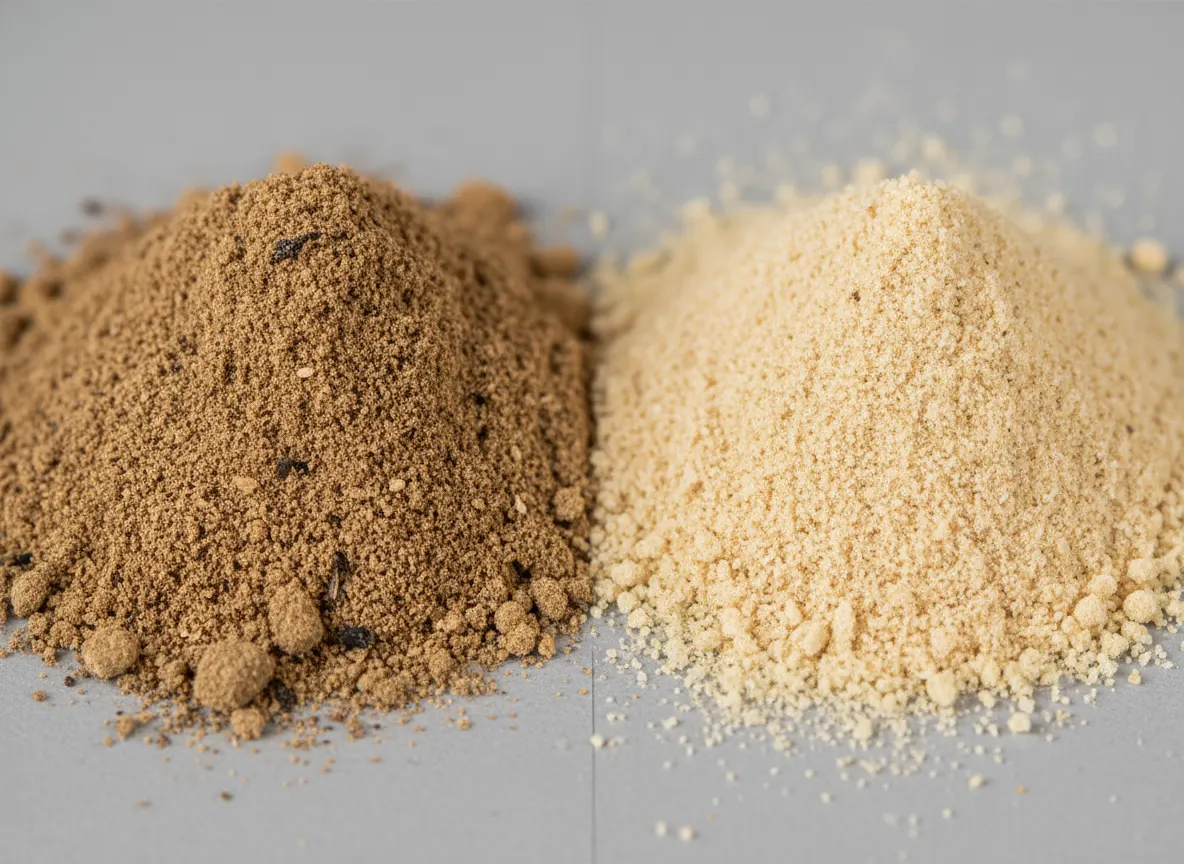
Here's where the industry gets sketchy. Many brands use "mycelium" instead of actual mushroom fruiting bodies. Mycelium is essentially the root system of the mushroom, grown on grain substrates like rice or oats. The problem? You're getting more grain filler than actual mushroom compounds. It's like buying orange juice and getting mostly water with a hint of orange flavor.
Even worse, most products use 1:1 powder ratios — meaning one gram of mushroom powder equals one gram of actual mushroom. But the therapeutic compounds are highly concentrated in nature. Clinical studies use extract ratios of 8:1 or higher, meaning eight grams of raw mushroom are concentrated into one gram of extract.
Part C: What to Look for in a Quality Product
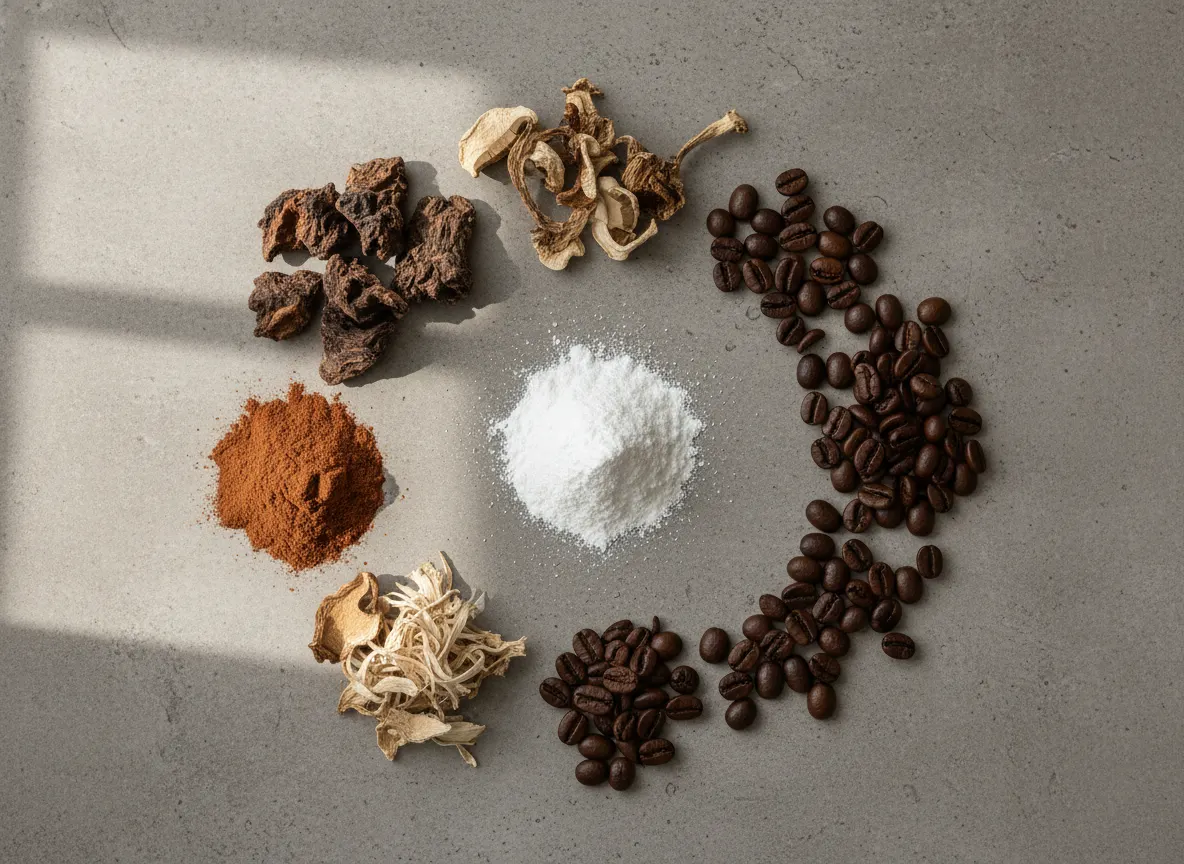
If you're serious about getting results, here's your checklist:
- Fruiting body extracts only — avoid anything that mentions mycelium or "full spectrum"
- High extract ratios — look for 8:1 or higher concentration ratios
- Clinically relevant doses — at least 1000mg of Lion's Mane and 500mg+ of Reishi per serving
- Third-party testing — heavy metals, purity, and potency verification
- Minimal ingredient list — avoid proprietary blends that hide actual dosages
That's where Pow Wonder Coffee comes in. After testing dozens of mushroom coffee blends over the past year, this is the first one that actually delivered on its promises — and the numbers explain why.
Instead of using cheap mycelium, Pow uses 8:1 fruiting body extracts exclusively. Their Lion's Mane delivers 1200mg (equivalent to 9600mg of raw mushroom), while their Reishi and Chaga provide 840mg each of concentrated extract. Combined with 60mg of organic caffeine and 120mg of L-theanine, it's formulated to customers report smooth, sustained energy throughout the morning.
What Makes This Different
Why Wonder Coffee Works

8:1 fruiting body extract delivers 2880mg equivalent per serving
Most mushroom coffee brands use mycelium-on-grain, which is mostly filler. Wonder Coffee uses 8:1 fruiting body extract -- meaning eight pounds of raw mushroom concentrated into one pound of finished powder. Each serving delivers 360mg of Lion's Mane, 280mg of Reishi, and 280mg of Chaga in their most potent form.
That's the extraction ratio that lets a single cup hit the clinical doses studies actually measure, instead of the token 100mg sprinkles competitors hide in their blends.

3000mg+ of mushrooms per cup, not a dusting
The total mushroom content in Wonder Coffee adds up to over 3000mg per serving -- the range published research uses when measuring cognitive and immune outcomes. Most functional coffees use 200-500mg total and call it a day.
Dose is what separates a product that creates measurable change from one that sounds functional but delivers token amounts.

L-theanine pairs with 60mg caffeine to eliminate the crash
60mg caffeine is significantly less than regular coffee, but paired with 120mg of L-theanine it extends the energy curve into a smooth, sustained release. L-theanine blocks the adenosine spike that causes jitters while adding a calm-focus quality that caffeine alone can't produce.
This is why customers report sustained energy without the 2pm crash or afternoon anxiety -- the caffeine is there, but it's buffered and prolonged by the amino acid that coffee never had.

Six hero ingredients, zero grain fillers or mycelium padding
Wonder Coffee contains only organic coffee, three 8:1 fruiting body mushroom extracts, L-theanine, and either grass-fed collagen or vegan Tremella + MCT. There's no mycelium-on-grain filler, no maltodextrin, no ingredient padding to inflate the label.
Every gram does something -- which is why 88.9% of customers reported improvement in physical or mental health and 81.1% specifically reported sharper focus, better energy, or improved mood.

Eurofins third-party tested and made in USA
Every batch is tested by Eurofins for heavy metals, pesticides, and active compound potency. The testing isn't hidden behind a vague "third-party tested" claim -- it's the same lab standard used for pharmaceutical manufacturing.
Made in the USA with this level of verification means you're not guessing whether the 8:1 extract claim is real or whether the mushroom content actually landed in your cup.
What Real Customers Are Saying
How It Compares
- Use mycelium grown on grain filler -- not the actual mushroom fruiting body
- Token doses of 500-1000mg that look impressive but lack clinical strength
- High caffeine (120-150mg+) that recreates the jittery crash cycle
- Proprietary blends hiding actual ingredient amounts and ratios
- Made overseas with minimal testing or quality verification
- Taste heavily masked with flavor additives to hide mushroom bitterness
- 8:1 concentrated fruiting body extracts -- the bioactive part with actual compounds
- 3000mg+ clinically dosed mushrooms (Lion's Mane, Reishi, Chaga) per serving
- 60mg caffeine + 120mg L-theanine eliminates jitters and afternoon crash
- 6 hero ingredients listed with exact doses -- no fillers, no proprietary blends
- Made in USA, third-party tested by Eurofins for safety and potency
- 88.9% of customers reported measurable improvement in physical or mental health
Try Wonder Coffee Risk-Free

Common Questions
Remember that 2:30pm energy crash we talked about? Imagine replacing it with sustained focus that carries you through the rest of your day. No jitters. No anxiety. Just clean, consistent energy that feels as natural as your morning routine.
Try Wonder Coffee Risk-Free →60-day money-back guarantee. If you don't feel the difference, return it for a full refund.