
You've probably watched this happen in real time. A cold shopper clicks a promising Meta ad, lands on a product page, adds the item to their cart, and then vanishes before paying. The campaign still reports traffic, the product still attracts interest, and the checkout dashboard records another lost opportunity.
That pattern doesn't mean every shopper was ready to buy. It does mean your funnel is leaking intent, often at a specific moment that can be identified and fixed. Effective cart abandonment solutions start before the recovery email, with the ad promise, the presell experience, the cart, and each checkout interaction working as one system.
Table of Contents
- Why Carts Empty Before the Checkout Button Clicks
- The Hidden Costs Behind the 70 Percent Drop-off Rate
- Optimizing the Checkout Experience to Reduce Friction
- Building an Automated Recovery Sequence That Actually Works
- The Power of Presell Pages in Protecting Cart Value
- Creating a Continuous Optimization Framework for Long-term Growth
Why Carts Empty Before the Checkout Button Clicks
A shopper who never adds a product to the cart has a different problem from one who enters payment details and leaves after an error. Treating both as “cart abandonment” produces vague reports and weak fixes.
Consider two visitors from the same paid-social campaign. The first clicks a short video promising relief from a familiar problem, scans the product page, and leaves without adding anything. The second adds the product, opens the cart, sees a shipping charge that wasn't visible earlier, and closes the tab. The first may lack conviction. The second had intent but encountered friction.
That distinction changes the work. The first visitor needs a clearer promise, stronger proof, better objection handling, or a more relevant landing experience. The second needs transparent pricing, predictable delivery information, and a checkout that doesn't make the buyer re-evaluate the purchase at every step.
Practical rule: Treat abandonment as a location in the funnel, not a personality trait of the shopper.
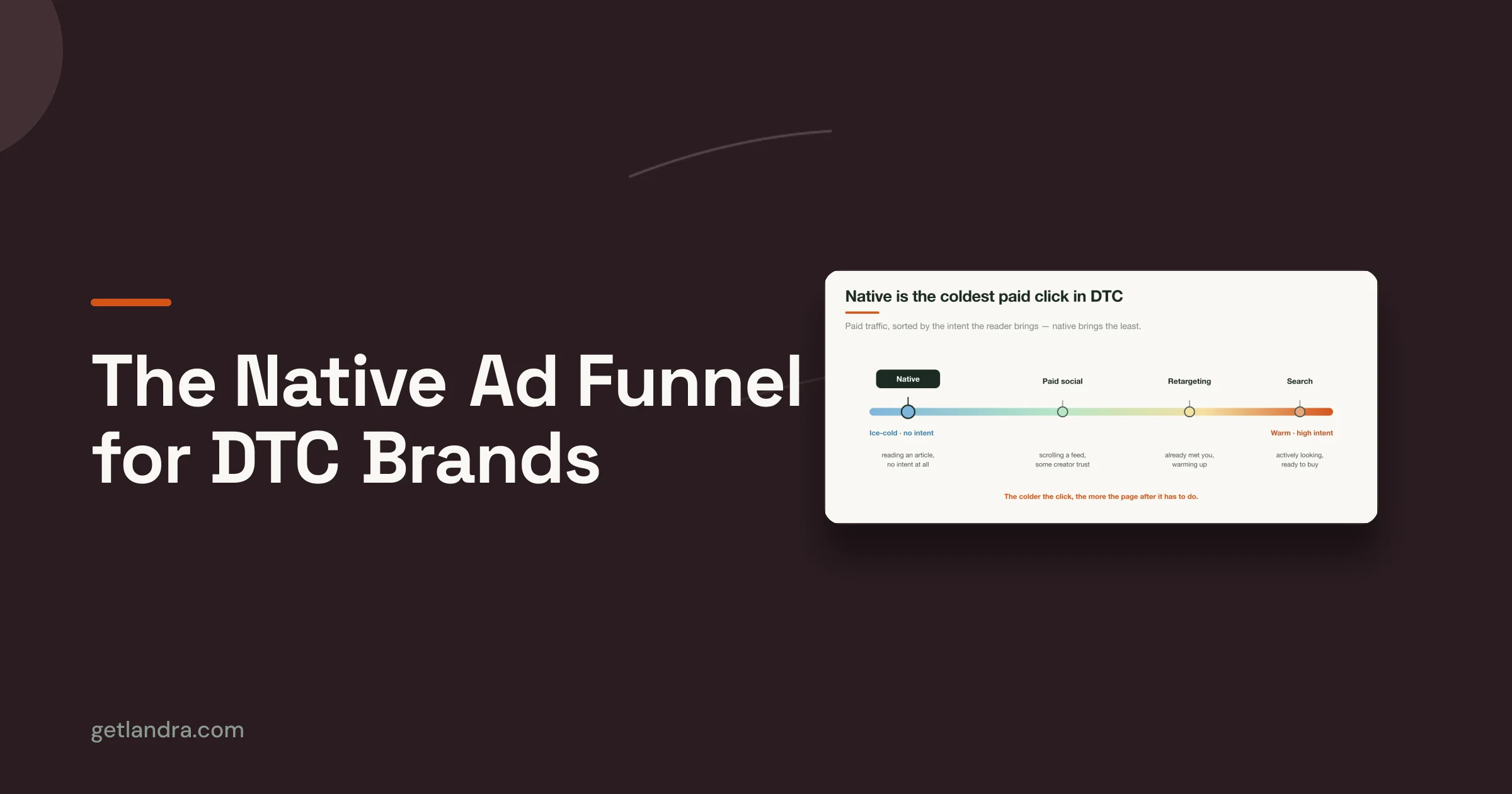
Paid social makes this especially important. Meta traffic often arrives cold, with limited brand familiarity and little patience for hunting through navigation, interpreting claims, or searching for answers about returns and delivery. If the ad creates a strong emotional expectation but the product page opens with generic merchandising copy, the shopper has to rebuild the argument for buying from scratch.
A useful diagnostic view maps the session from ad click to purchase:
- Ad to landing page: Does the page continue the exact promise, problem, and audience implied by the creative?
- Landing page to product view: Does the visitor understand who the product is for, how it works, and why it deserves consideration?
- Product view to cart: Are price, variants, shipping, returns, and proof easy to find?
- Cart to checkout: Does the total cost remain predictable?
- Checkout to payment: Can the shopper complete the form quickly on their device?
- Payment to confirmation: Do errors explain what went wrong without discarding entered information?
Use session recordings and heat maps to see where attention collapses, then convert insights with Landra into specific page or flow changes. If payment disputes and post-purchase uncertainty are also creating operational drag, it's useful to review how Disputely stops chargebacks as a separate part of the customer experience.
The Hidden Costs Behind the 70 Percent Drop-off Rate
A shopper clicks a Meta ad, adds the product to a cart, and leaves after seeing the final total. Another reaches payment and stops because the delivery date is unclear. These exits look identical in analytics, but they require different fixes.
Baymard's long-running benchmark places average global cart abandonment at 70.19% to 70.22%, based on roughly 49 to 50 studies spanning 2006 to 2023. Baymard also says it has tracked the metric for 14 years, indicating a persistent pattern rather than a temporary anomaly. In practical terms, about seven carts are started and dropped for every three completed orders, as summarized by Stripe's cart abandonment statistics.
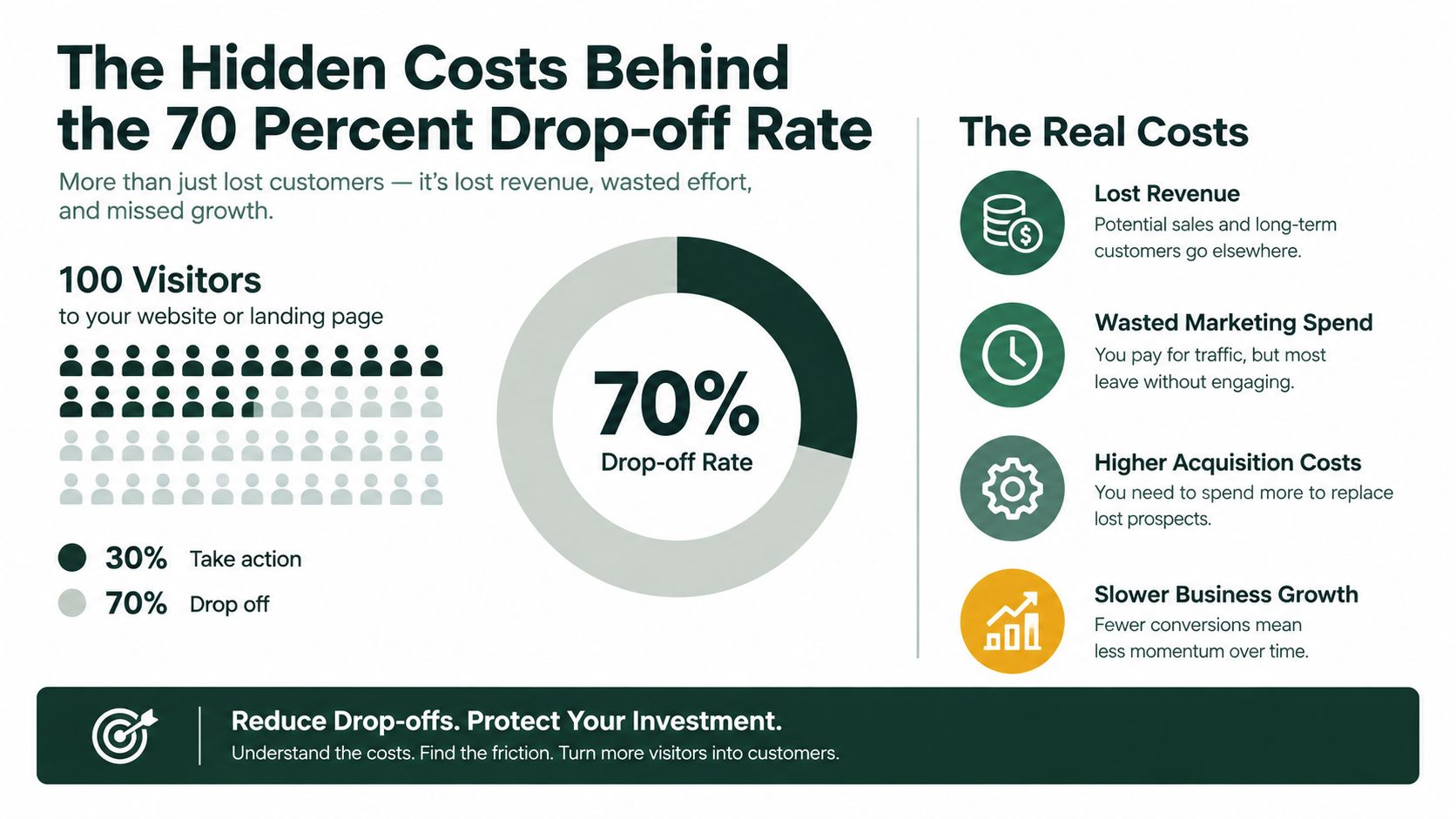
The benchmark is a warning signal, not a diagnosis. Some visitors are browsing or comparing alternatives. Others have strong purchase intent but encounter uncertainty after the ad has already done the persuasive work. Paid social makes that distinction important because cold traffic often arrives with little brand familiarity. If the ad promise is clear but the product and cart experience hide delivery, returns, or total cost, the funnel loses trust late.
Unexpected costs create a trust break
Unexpected extra costs are a major cited cause, accounting for 40% in the benchmark data. Shipping, taxes, handling charges, and compulsory fees can turn a confident “add to cart” decision into another price comparison. The issue is the timing as much as the amount. Buyers feel that information was withheld until commitment was already high.
Show the order total, shipping logic, and relevant delivery options as early as the cart experience allows. If location is needed for an exact calculation, explain why and provide an estimate. A pre-sell page can also set expectations before the shopper reaches the cart, especially for Meta campaigns with a strong offer or emotional hook.
Delivery and payment concerns compound hesitation
Slow delivery is cited at 20%, while distrust in sharing payment details accounts for 19% in the same Stripe summary of the benchmark data. These objections share one underlying problem: uncertainty. A shopper may accept a slower delivery window when the date is explicit, and may complete payment when security, returns, and support information are easy to verify.
Forced account creation and a checkout that feels too long or complicated are also cited causes, at 18% and 17%, respectively. On mobile, each field increases typing, scrolling, and error risk.
Audit the exact exit step, device, displayed error, and whether the shopper had already seen delivery and total-cost information. The Shopify cart abandonment 2026 playbook provides a practical reference for organizing prevention and recovery work. Use a conversion rate calculator for CVR to model how completion changes affect commercial outcomes.
A discount can address price resistance. It cannot repair a payment field or explain an undisclosed delivery charge. Identify the leak first, then choose the intervention.
Optimizing the Checkout Experience to Reduce Friction
Checkout optimization works best when the team removes decisions, fields, and surprises that don't help the buyer complete the order. Don't begin by changing button colors. Begin by placing yourself in the shopper's path on the device and browser that generate the most paid-social activity.
Start with the minimum viable form
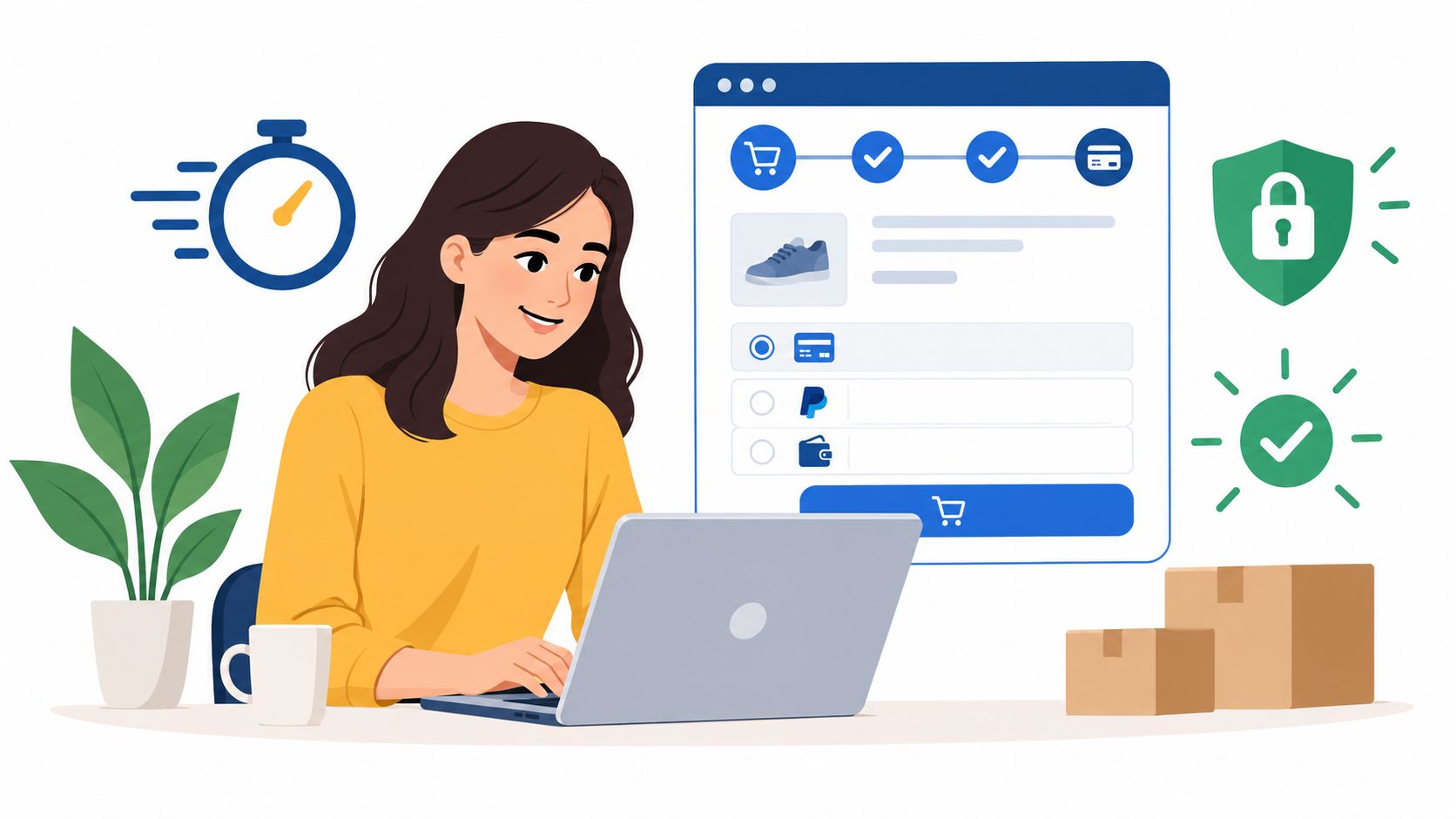
Offer guest checkout prominently. Account creation can happen after the order, when the buyer has a reason to save details and access order history. If a login screen makes “create an account” visually dominant while hiding “continue as guest,” the store has added a hurdle without gaining meaningful commitment.
Remove fields that aren't necessary for fulfillment, tax, fraud prevention, or customer communication. Use browser autofill, appropriate input types, clear labels, and inline validation. A form can have fewer screens and still feel exhausting if it presents a dense wall of fields, so judge the experience by perceived effort, not page count.
Make payment and delivery choices explicit
Present the payment methods shoppers use in the relevant market, but don't turn the checkout into a gallery of badges. Each option should be clearly labeled, load reliably, and return the buyer to the same order state if authentication or verification is required.
Put delivery expectations near the decision point. “Standard shipping” is weaker than a clear estimated delivery date, especially for a cold shopper who doesn't yet trust the brand. Keep the cart summary visible, show the selected variant and quantity, and make changes possible without forcing the buyer to restart.
A practical QA pass should cover:
- Mobile input: Test keyboard behavior, autofill, dropdowns, address entry, and sticky purchase controls.
- Error recovery: Submit incomplete or invalid information and confirm that the message identifies the field and preserves everything already entered.
- Payment interruption: Test declines, authentication, back navigation, and refreshes without losing the cart.
- Price visibility: Verify that shipping, taxes, discounts, and the final total appear before the payment commitment.
- Guest flow: Complete the purchase without creating an account or accepting unnecessary marketing permissions.
A faster checkout isn't one with fewer screens by definition. It's one where every screen answers the buyer's next question.
Keep cross-sells and promotional distractions subordinate to the primary purchase action. A relevant add-on can raise order value, but an aggressive offer at checkout asks the shopper to reconsider when the store should be helping them finish. For additional usability perspectives, review the Wonderment Apps UX tips and compare the recommendations against recordings from your own store.
Building an Automated Recovery Sequence That Actually Works
Recovery is necessary because even a well-designed checkout can't eliminate distraction, device changes, hesitation, or interrupted payment sessions. The mistake is treating every abandoned cart as an invitation to send the same message at the same delay.
Klaviyo benchmark data reports an average 6% click rate for abandoned-cart emails, rising to 11.3% for the top 10% of ecommerce brands. The same guidance recommends sending the first message within 1 to 4 hours after abandonment, while intent remains fresh. Messages sent after 24 hours underperform earlier sends, according to the benchmark guidance provided in the brief.
Build a short sequence around intent
The first message should restore the path to the exact product and cart, not force the shopper to search again. Use a clear reminder, reinforce the most relevant benefit, and answer one likely objection, such as delivery timing, returns, sizing, or payment security.
A later message can add proof or clarify the offer. Don't introduce a discount automatically. If the shopper abandoned because the form failed or the shipping total surprised them, a coupon may reduce margin without addressing the reason they left.
Segment the flow where the data supports it:
- Known customer: Reference prior relationship or compatible products without over-personalizing.
- New shopper: Lead with reassurance, product education, and easy access to support.
- High-value cart: Consider human review, customer service outreach, or a more careful incentive policy.
- Payment failure: Send help-oriented messaging rather than generic urgency.
- Low-engagement visitor: Avoid escalating frequency just because the cart remains open.
Suppress the sequence after purchase, and test subject lines, send delays, creative, message count, and incentive strength. Measure recovered revenue per recipient and completed purchases, not open rate alone. Email can recover the symptom, but the reason code from the original session should feed the next checkout improvement. For broader list-building and nurture context, see Landra's email marketing guide.
The Power of Presell Pages in Protecting Cart Value
A product detail page often serves several jobs at once. It must support branded search, returning customers, comparison shoppers, organic visitors, and cold traffic from a fast-moving Meta feed. That makes it efficient for the catalog, but not always persuasive enough for someone encountering the brand for the first time.
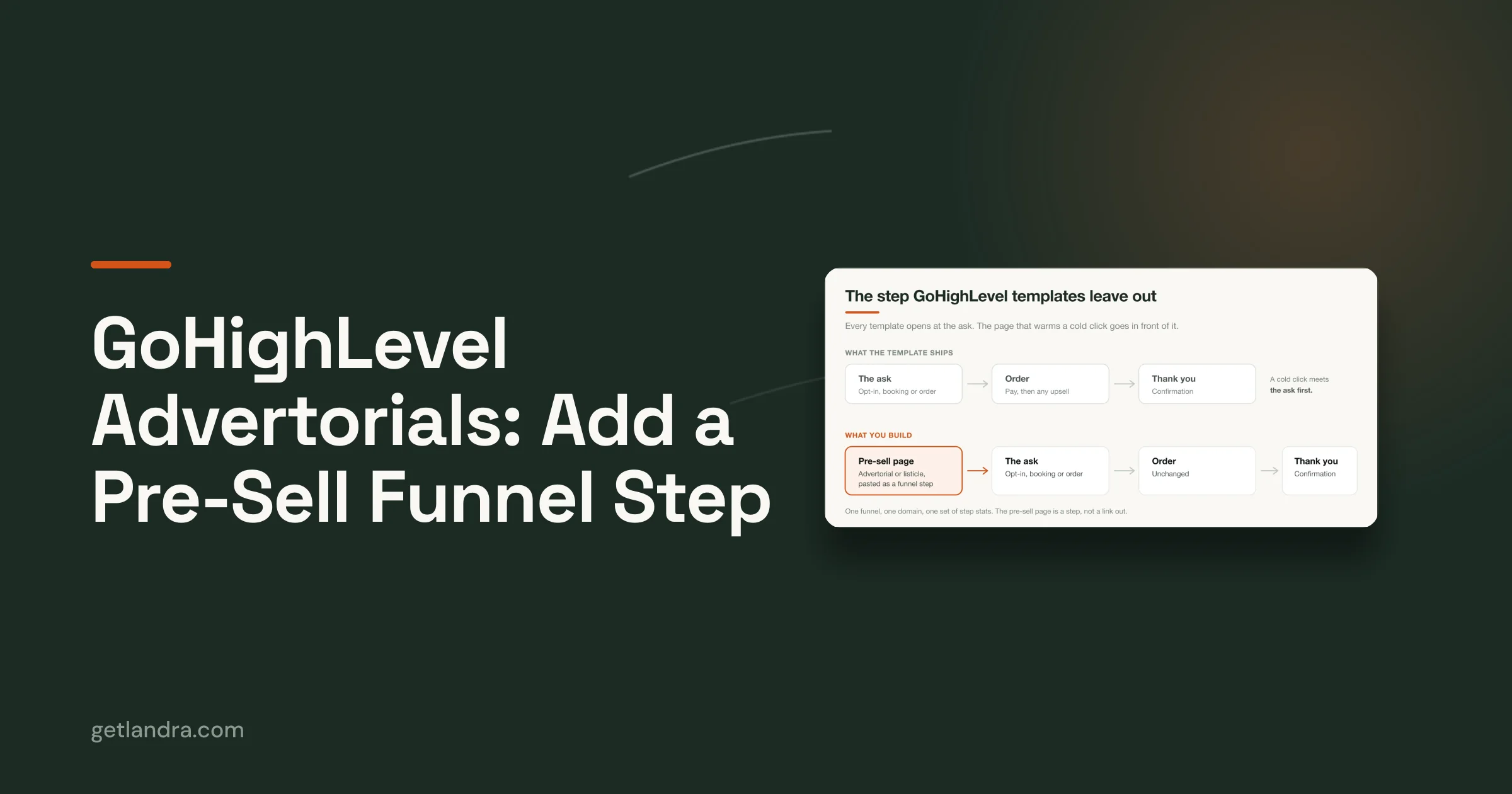
A presell page changes the sequence. Instead of sending a cold click directly into product specifications and a purchase module, the funnel first gives the shopper a reason to care, explains the problem in familiar language, handles objections, and introduces the product as a credible solution.
Direct-to-product versus warmed-up traffic
| Direct product funnel | Presell-led funnel |
|---|---|
| Sends the visitor straight to product information and purchase options | Builds context before presenting the purchase decision |
| Works well when the shopper already knows the brand or product | Fits cold traffic that needs education and reassurance |
| Keeps the path short, but can expose unanswered objections at the PDP or checkout | Adds a step, but can reduce the amount of persuasion demanded from the PDP |
| Makes ad-to-page mismatch easy to miss | Lets the team align the opening with the exact ad angle |
The additional page isn't automatically better. If it repeats the ad, loads slowly, buries the product, or uses exaggerated editorial framing, it adds friction instead of removing it. The page should earn its place by answering questions the product page leaves unresolved.
Match the presell to the Meta angle
A cold social visitor may need to understand why a product exists, how it differs from familiar alternatives, whether the claim applies to their situation, and what happens after purchase. An advertorial can develop a narrative around the problem. A listicle can organize alternatives or use cases. Neither should make unsupported promises or conceal essential commercial information.
The critical measurement is the whole funnel. Track the presell view, qualified offer click, add to cart, checkout start, purchase, and revenue per visitor. A presell page that increases clicks but sends unqualified traffic into checkout hasn't solved abandonment. It has moved the leak.
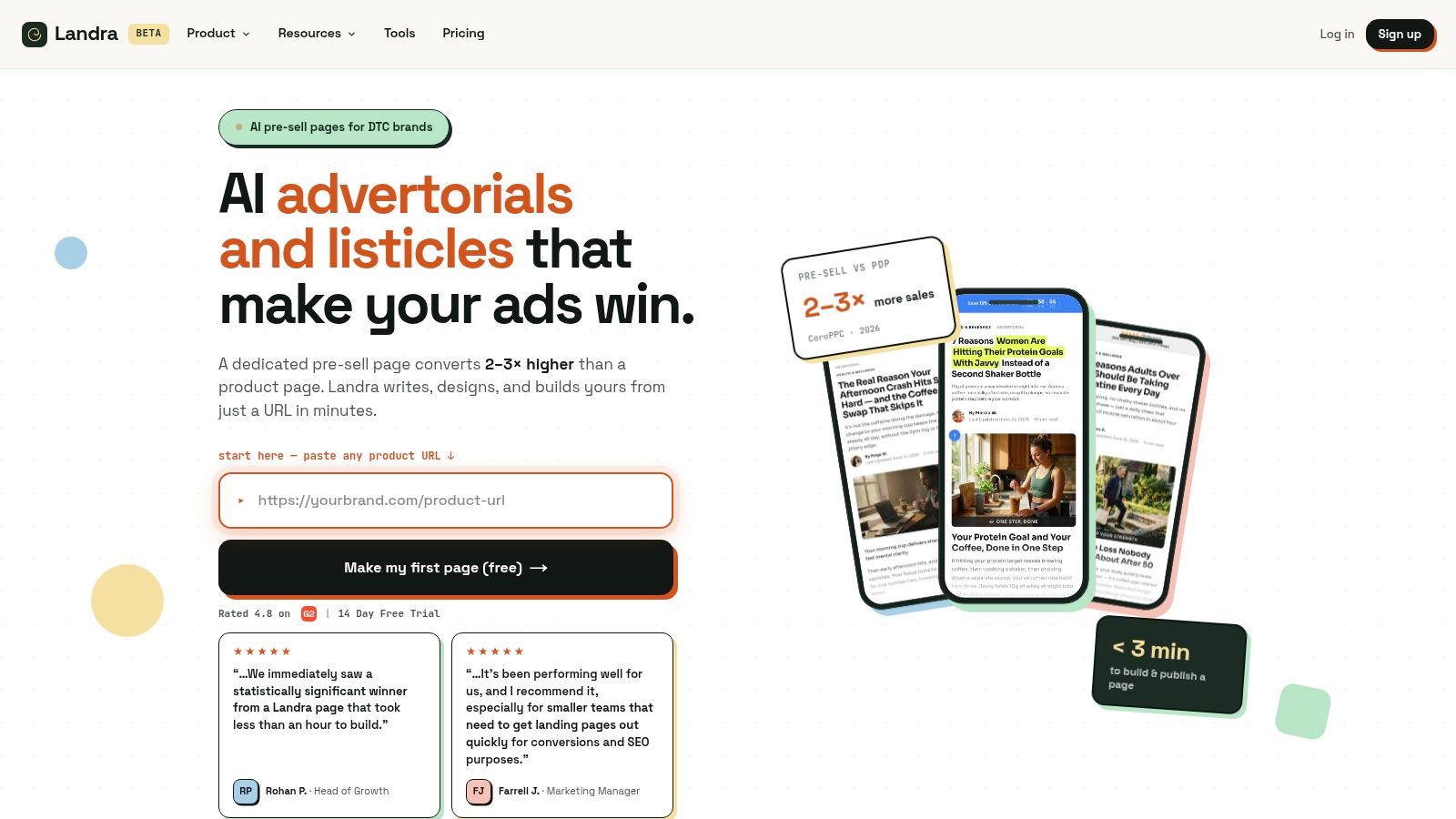
Landra is one option for this workflow. It generates editable, mobile-first advertorial and listicle pages from a product URL, then supports publishing to Shopify, a Landra-hosted URL, Webflow, or HTML. The useful CRO principle isn't “always add a presell page.” It's “give cold traffic the information it needs before asking checkout to carry the entire argument.”
Creating a Continuous Optimization Framework for Long-term Growth
Cart abandonment solutions become expensive when they operate as isolated tools. An email platform may claim recovered orders while the checkout continues to reject valid payments. A popup may collect addresses while the landing page attracts visitors with the wrong expectation. A presell page may improve engagement while its added load time hurts mobile completion.
Create one measurement layer that connects the journey. Use consistent events for landing-page engagement, product interaction, cart creation, checkout start, payment attempt, purchase, and recovery. Break each event down by traffic source, campaign angle, device, browser, product, and new versus returning customer status. The aim is to find the smallest meaningful failure point, not to celebrate a blended conversion rate.
Use a weekly friction review
A practical review can follow this order:
- Verify the funnel: Confirm that event tracking, cart contents, purchase values, and recovery suppression work correctly.
- Read the evidence: Combine analytics with recordings, support tickets, payment errors, and customer comments.
- Rank the leaks: Prioritize issues that affect high-intent users and can be fixed without creating a new obstacle elsewhere.
- Ship one clear change: Avoid bundling unrelated checkout, email, and landing-page edits into a single test.
- Measure the complete outcome: Watch completed purchases, revenue per visitor, margin after incentives, and support impact.
- Document the learning: Record the hypothesis, audience, implementation, result, and decision for the next test.
Testing should reflect the source of the traffic. A new presell opening may matter for cold Meta users but do little for branded search. A guest checkout change may affect all devices, while an address-field improvement may matter most on mobile. Segmenting results prevents a strong experience for one audience from hiding a weak one for another.
The durable system is prevention first, recovery second, and learning throughout.
Don't let attribution turn recovery into a false sense of progress. A message that receives credit for a purchase isn't proof that it caused the purchase, especially if the shopper was already returning to complete the order. Use holdouts or conservative attribution where possible, and compare recovered revenue with discount cost, unsubscribe behavior, and repeat purchase quality.
The best roadmap usually moves from diagnosis to repair, then to prevention. Fix the checkout state that fails, clarify the presell promise that attracts the wrong expectation, build a restrained recovery sequence, and keep testing as products, campaigns, devices, and customer questions change.
Landra helps DTC teams create editable, mobile-first presell pages that warm cold paid-social traffic before it reaches the product page and checkout. Visit Landra to turn a product URL into an advertorial or listicle, publish it to your storefront, and test a clearer path from ad click to purchase.