Offer page examples
Real, live DTC pages — captured and torn down for the one move each executes best. See all examples, the listicle examples, the advertorial examples.





















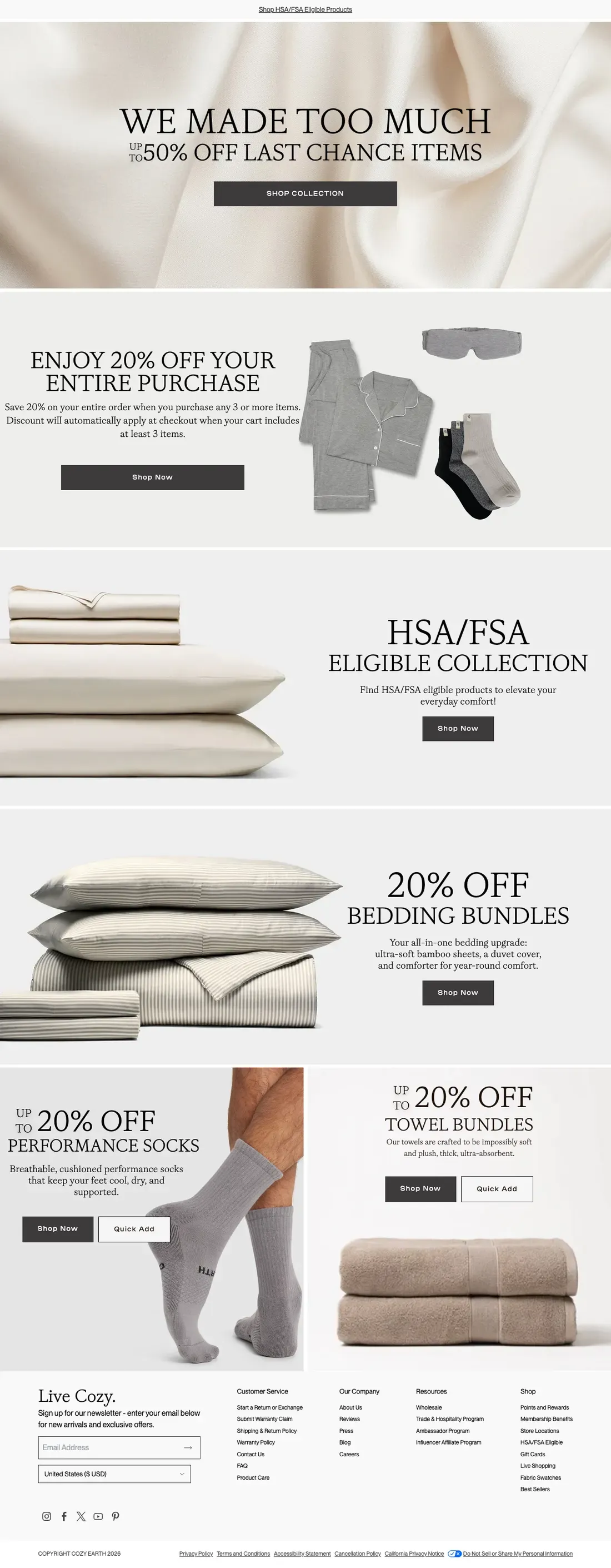






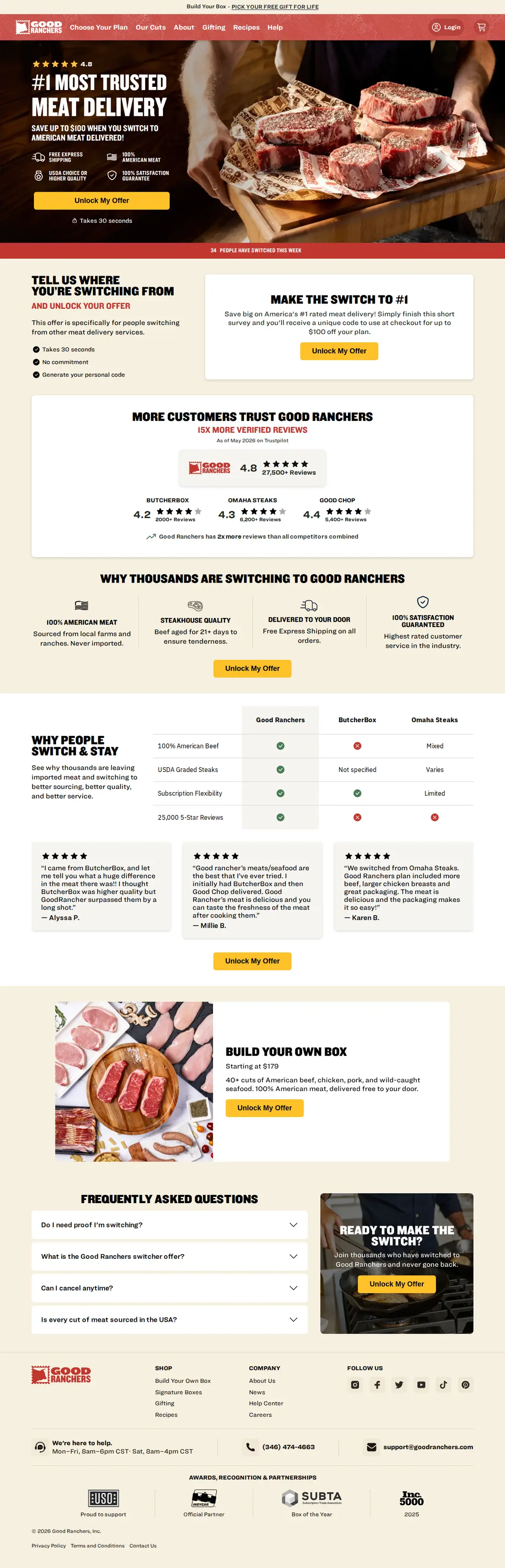


Key patterns across these 38 offer pages
The offer is not the opening move
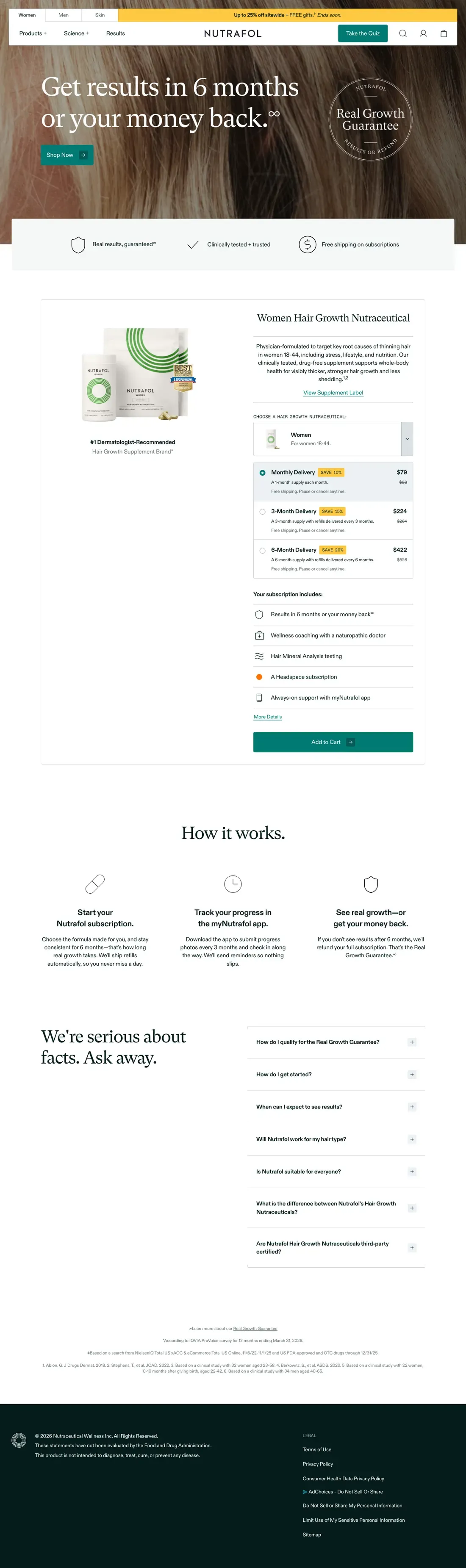
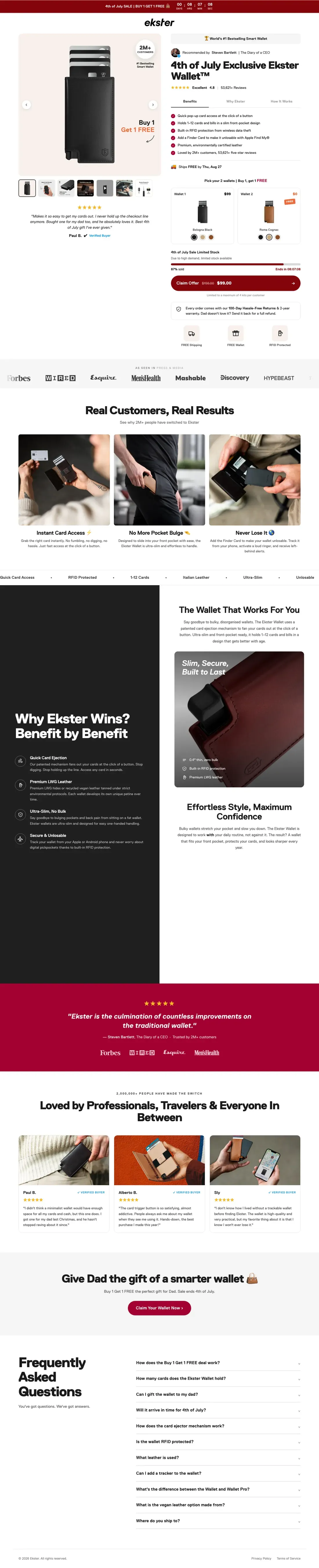
The headlines that lead these pages have nothing to do with the deal. “BURN FAT 24 HOURS A DAY.” “Your Kid’s New Favorite Healthy Habit.” They promise an outcome, or a different kind of morning, and the discount waits. On one page here the offer does not appear until the eleventh of fourteen sections, behind a results timeline, a how-to-use ritual and an ingredient breakdown. An offer page still has to argue; it just does it in a different shape than an advertorial.
A section explains what has been failing the reader
Before the product arrives, the strongest pages name the problem mechanically. “Why Does Everything Feel Harder?” answered with lower testosterone, drained energy, rising cortisol and weaker performance. “Kids Need Nutrition More Than Ever.” “Too many pills. Too little proof.” Something the reader had felt but never named gets a mechanism attached to it, and a problem with a named cause is one you can go looking to fix. Ingredient and mechanism blocks then do the work a benefit list cannot.
The headings are the argument, not labels
Ingredients, Benefits, Reviews tells a scanner what a block contains. These pages spend the same space on the case itself: every heading on one is a conceded objection written as a statement, “Protein shouldn’t wreck your stomach,” “You should recognize everything on the label.” Another runs a single sentence across five consecutive headings so scrolling completes the thought. Most readers only ever read headings, and these pages are built for that.
Slow results get a schedule, and it ends inside the guarantee
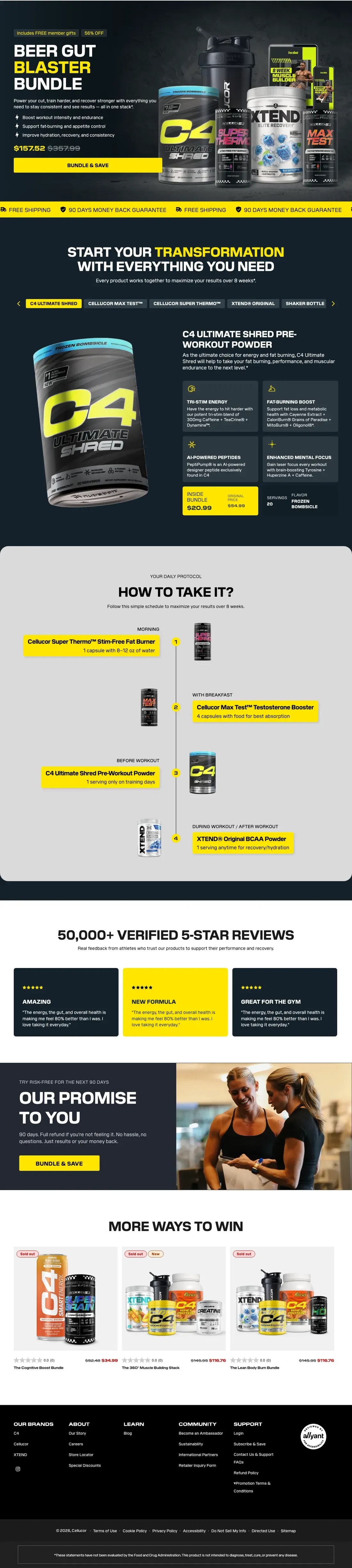
Where the product takes weeks, the page says so and dates it. Day 1, Day 7, Day 30, Day 56 against a 60-day refund window. A week-by-week timeline under a section headed “This takes time. And that’s okay.” Expectation-setting is the block most pages skip and the one that protects the sale, because the disappointment that arrives in week two is what takes the refund with it.
There is a comparison block, and the best third column is doing nothing
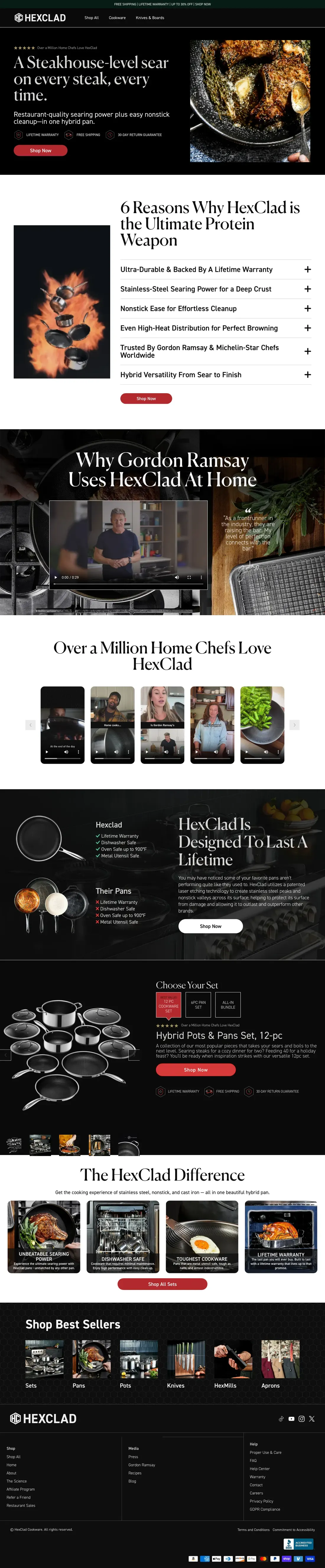
Almost every page here scores itself against something. What varies is the opponent. The weakest choice is an unnamed rival — one page runs “Hexclad” against “Their Pans,” which asks the reader to imagine the competitor for you. The strongest gives the status quo its own column: a travel kit compared against a cheap vacuum kit AND against no vacuum bags at all, an icon of folded clothes taking a cross on all six rows. Most buyers are not choosing between you and a rival, they are choosing between you and carrying on as they are, and a two-column table quietly concedes they have already decided to buy something.
The bundle and the guarantee are argued, never asserted
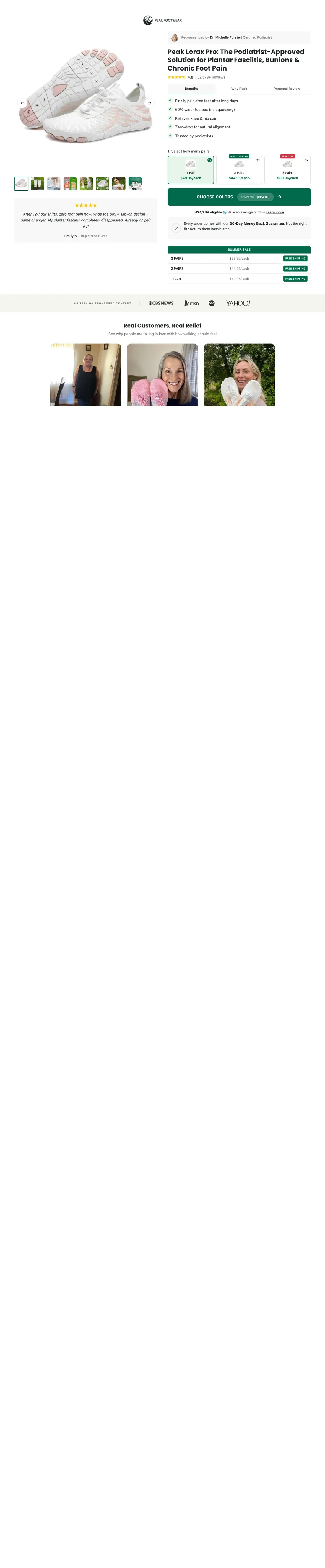
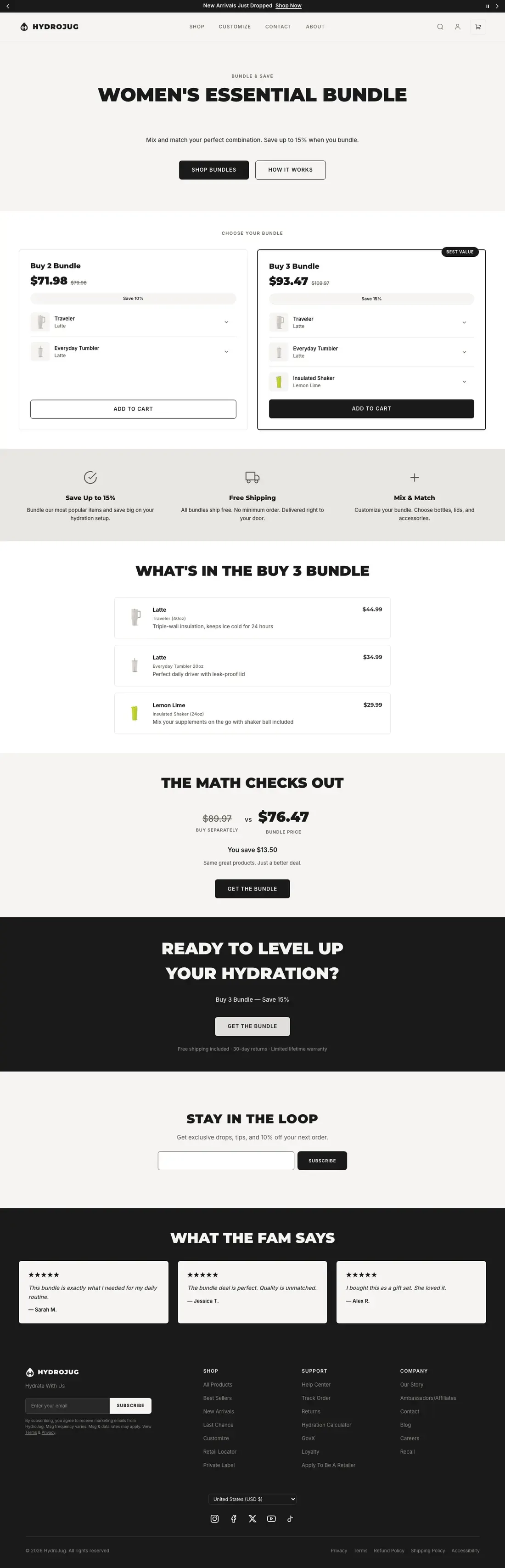
The deal mechanics still matter, but only where they carry a reason. Three products because the routine has three slots, or four because they map onto a training day. A guarantee that invites the empty container back, or lets you keep the gift after a refund, or turns its conditions into the usage instructions. A ladder quoted in cost per serving rather than a percentage the buyer cannot check. The rung and the refund are arguments too, and the ones here that work are the ones that say why.
Frequently asked questions
What is an offer page?
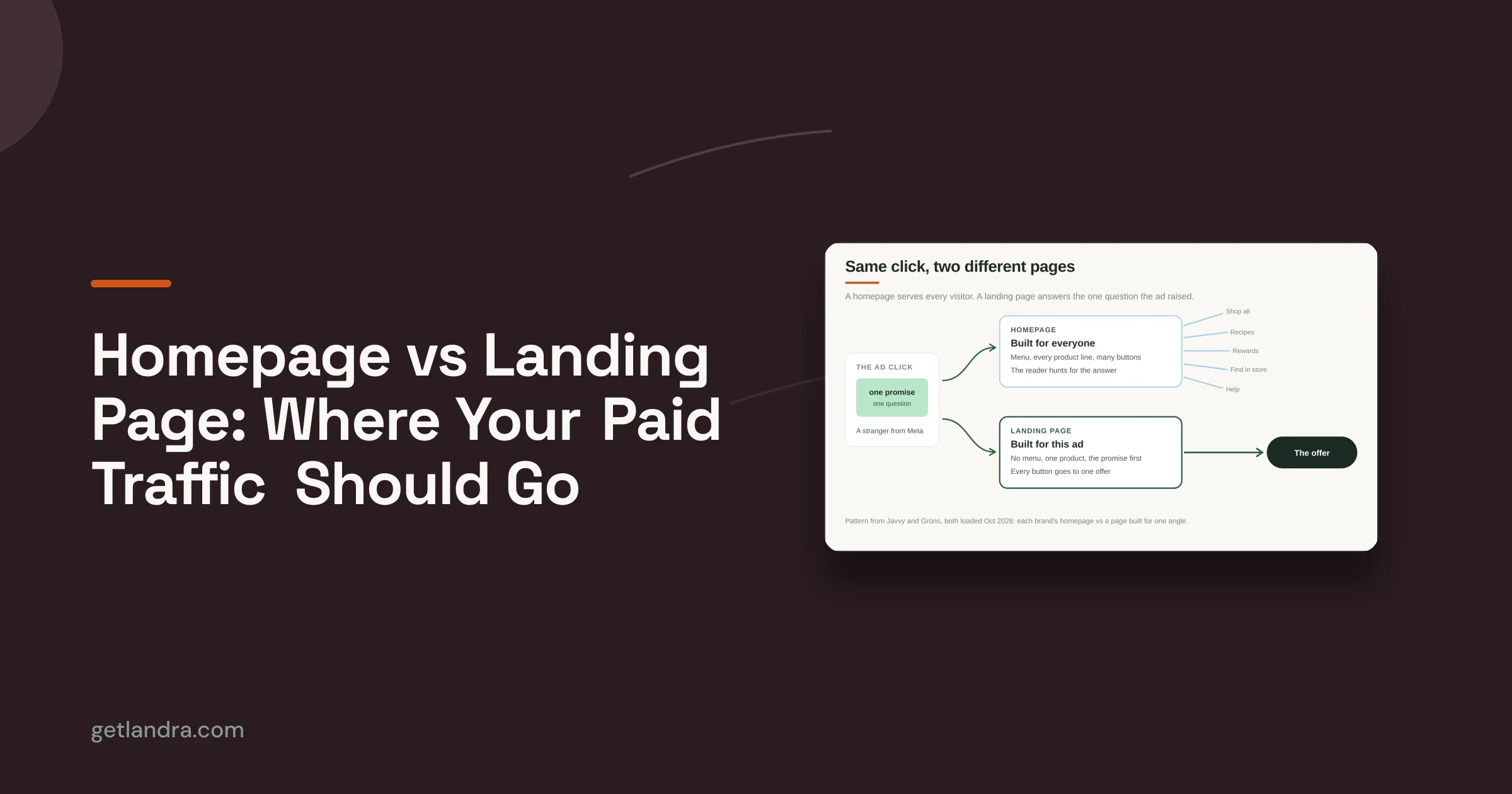
An offer page is a landing page built around a specific deal rather than an editorial argument: a bundle, a quantity ladder, a free-gift stack, a BOGO, a first-order subscription price. It assumes the reader already accepts they want the product and makes the terms the thing being decided. That is what separates it from the other two formats here — an advertorial argues you should want this at all, a listicle gives you reasons to, and an offer page asks which package.
How is an offer page different from a product page?
A product page presents a catalogue item and has to serve every visitor who lands on it, so it carries navigation, related products and a neutral tone. An offer page is built for one campaign and one decision, usually strips the navigation, and structures the whole page around a single set of terms with the proof and the guarantee arranged to support them. In practice the tell is the choice on offer: a product page lets you browse away, an offer page only lets you pick a tier.
Does an offer page need a guarantee?
Most of the pages in this collection carry one, and the ones that do the most work are engineered rather than boilerplate. Sending back an empty container, keeping the free gift even after a refund, setting the refund window to the same number of days the headline promised — each removes a specific hesitation instead of adding a line of reassurance. A guarantee that quietly requires the product to be unopened asks the buyer to decide before they have any evidence, which is the opposite of what a trial is for.
How many products should a bundle offer?
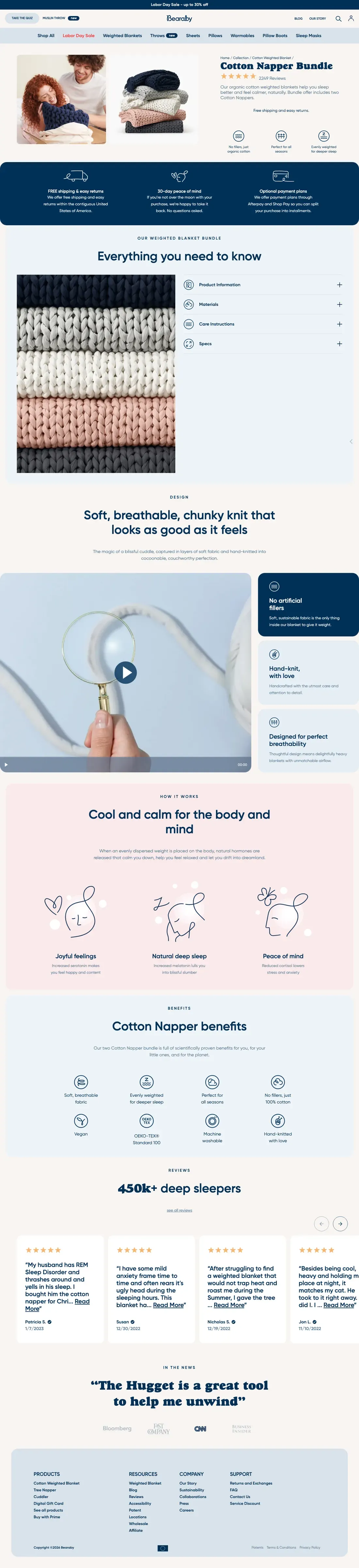
The pages here do not agree on a number, and that is the useful finding: what they share is that the count is justified by something other than the discount. Three because the routine has three slots. A pack sized by how many people are in the household. A set named after the problem it solves rather than its contents. Where the bundle exists only to raise the order value, the page has to fall back on the saving, and a saving off a multi-item comparison price is the one number a buyer cannot check.