

Instapage used to be the default answer for paid traffic landing pages, but that advice is too blunt for 2026. If you're running DTC on Meta or TikTok, the core question isn't which builder has the prettiest editor. It's which Instapage alternatives help you ship faster, match the ad promise better, and support the page type your funnel needs, whether that's an advertorial, a test page, a Shopify campaign page, or a full sales flow. For a broader look at adjacent AI tools, you can also compare ImagineVid AI alternatives.
That matters because the market has shifted hard toward lower entry prices and more included traffic. One comparison puts Instapage at $199/month for 15,000 visits, while LanderLab offers 100,000 visits for $89/month. The same comparison lists Unbounce from $99/month, Leadpages from $27/month, and Systeme.io with a free plan, which shows how much pressure price and traffic packaging now put on the category. According to 6sense, adjacent ecosystem tools like Mailchimp, Klaviyo, and HubSpot Marketing Hub also shape buying decisions, so the best alternative often depends on how well it plugs into your stack, not just how fast it publishes pages. If you're replacing Instapage with Landra, start there: replacing Instapage with Landra.
Table of Contents
- 1. Landra
- 2. Unbounce
- 3. Leadpages
- 4. Swipe Pages
- 5. Landingi
- 6. Webflow
- 7. Framer
- 8. ClickFunnels
- 9. Shogun (Shopify)
- 10. GemPages (Shopify)
- Top 10 Instapage Alternatives, Core Features Comparison
- The Right Tool for the Right Job
1. Landra
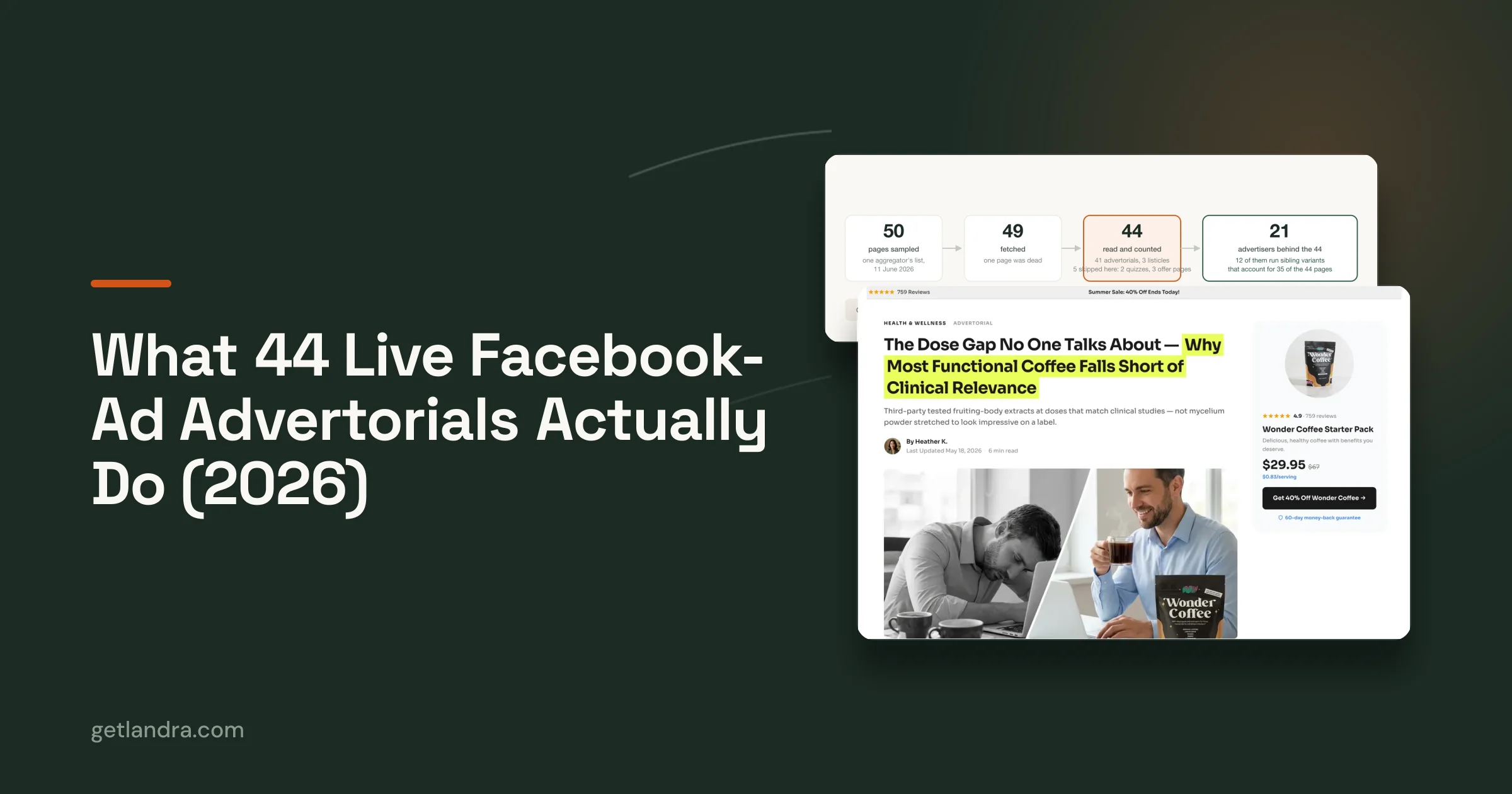
Landra is the most direct answer for DTC teams that need advertorials and listicles that sell. It takes a product or brand URL, reads the offer, proof, reviews, ingredients, and voice, then turns that into an editable, mobile-first pre-sell page you can publish to Shopify, Webflow, a Landra-hosted URL, or export as HTML. The practical win is speed. Instead of waiting on an agency build that can run roughly $2,000 and take 1 to 2 weeks, you can get a working page live in minutes, which changes how often you can test angles and offers.
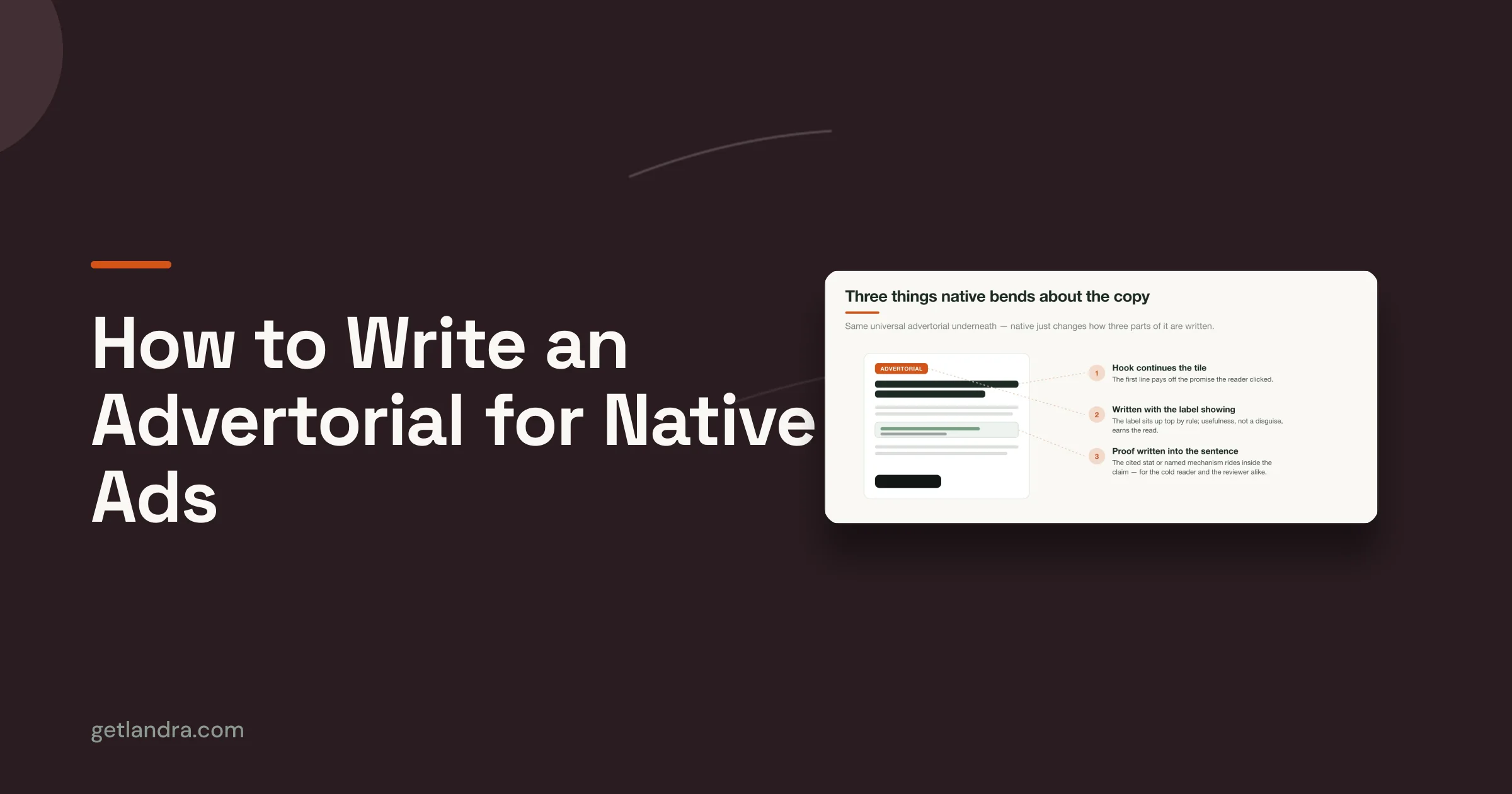
Landra also fits the cold-traffic job better than a generic page builder. It's built around direct-response frameworks used by 8-figure and 9-figure DTC teams, so the output feels like editorial content, not an ad slapped into a form. That matters on paid social, where the page has to earn attention before it asks for the click through to product.
Practical rule: If your campaign needs a pre-sell story before the product page, start with an advertorial, not a homepage clone.
Why it works for paid social
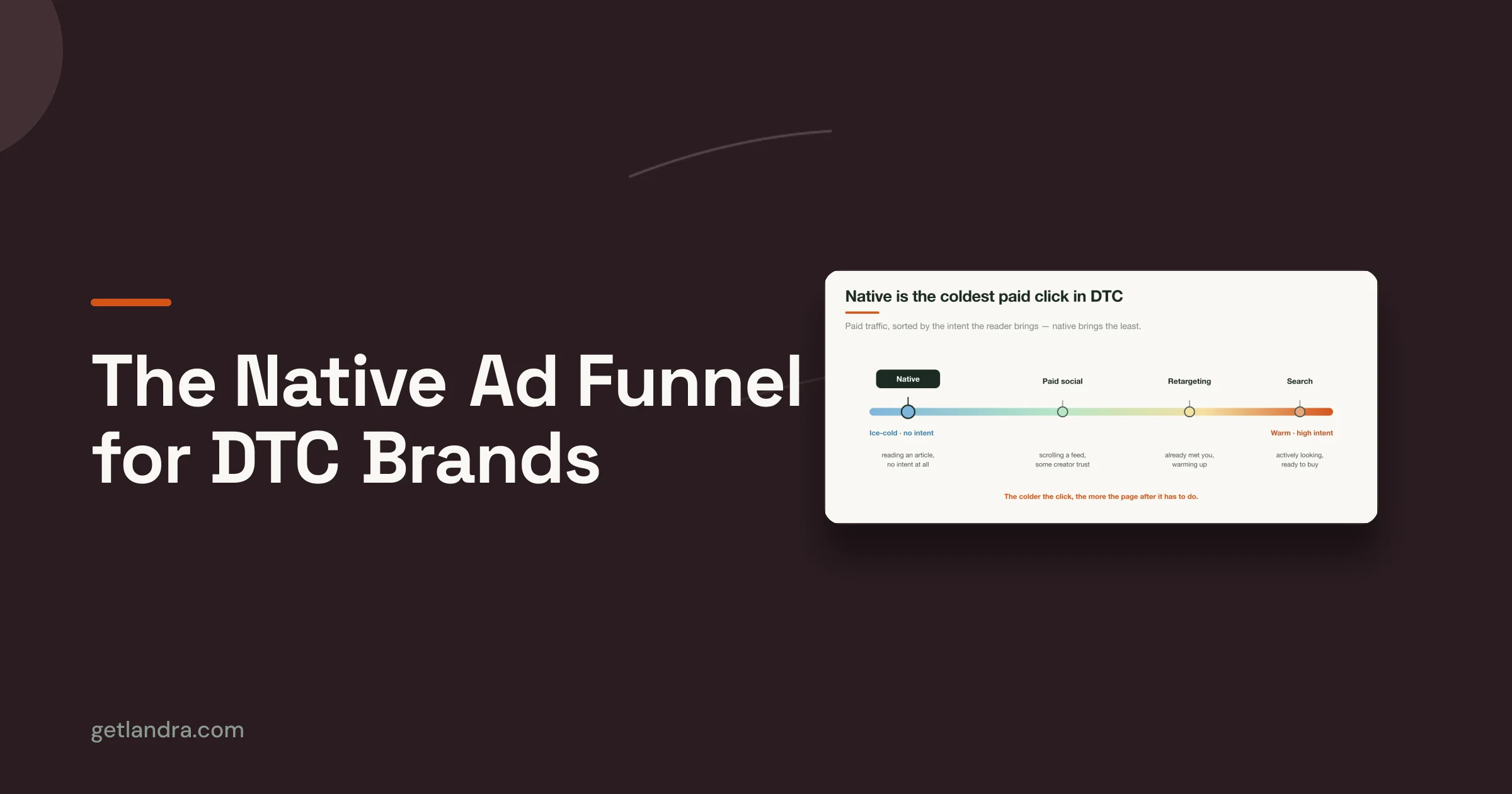
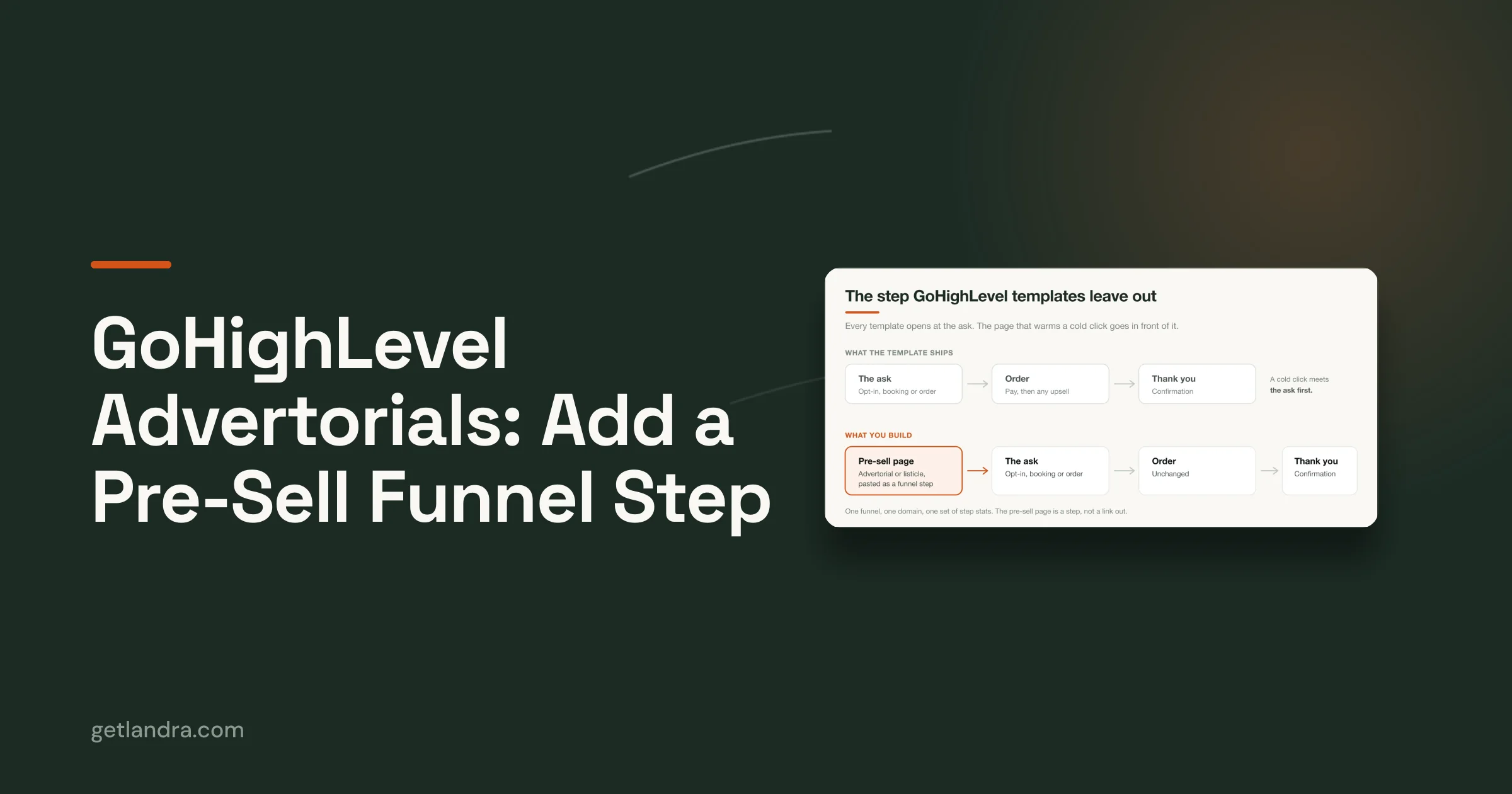
The strongest reason to pick Landra is that it's built for message match and iteration, not just page assembly. The platform's own materials cite 2 to 3 times higher conversions versus product pages and a first-party test that cut CAC by 46% when the same ads pointed to a Landra advertorial, so the job here is clear, warm up cold traffic before the product page has to do all the work. For teams that live in Meta and TikTok, that's a real operational advantage.
A few things make it especially useful in practice:
- AI Advertorial and AI Listicle generation: Good for pre-sell angles, comparison-style pages, and quick offer testing.
- Inline visual editing: Useful when marketing wants control without waiting on design or dev.
- Saved brand context: Helps first drafts stay close to your tone and proof points.
- Free companion tools: The Headline Analyzer, Conversion Rate Calculator, and Advertorial Compliance Checklist help tighten the page before launch.
The main trade-off is simple. Landra is optimized for speed, structure, and testing, not for handcrafted creative that needs weeks of art direction. For most paid social teams, that's exactly the point. Website: Landra
Image:
2. Unbounce
Unbounce is still the safest pick when your main job is pure A/B testing on paid traffic. It has a mature builder, a familiar CRO workflow, and Smart Traffic, which routes visitors to the variant most likely to convert. Hackceleration's 2026 assessment ranks Unbounce as the best overall alternative, and that tracks with what performance teams usually want from it, a reliable page testing engine with enough flexibility to keep moving. Website: Unbounce
Image: 
How Unbounce fits paid social testing
The upside is clear. You get a drag-and-drop builder, a large template library, popups, sticky bars, and a testing flow that feels made for PPC teams. If your growth loop is “launch, test, route traffic, learn, repeat,” Unbounce is a sensible fit.
The downside is that traffic and optimization can get expensive as you scale. The available research says pricing rises with traffic capacity, and the platform's plan structure can force upgrades when campaigns get busier. That makes it a better fit for teams that value testing discipline over bare-bones cost savings.
A key distinction is this. Landra is better when the page itself needs to be a persuasive pre-sell asset. Unbounce is better when you already know the offer and need to test which version wins. If your team already has a testing culture and wants a mature single-page optimization workflow, Unbounce still belongs near the top of the list. If your biggest gap is advertorial production speed, it's not the first pick.
3. Leadpages
Leadpages is the low-friction option for smaller teams that need to ship pages without turning the whole process into a CRO project. It's a practical fit for solo marketers and lean DTC operators who want a clean builder, basic optimization tools, and less setup overhead than a bigger platform. Website: Leadpages
Image: 
Where Leadpages is strong and where it stalls
The appeal is straightforward. You can get pages live fast, keep the packaging simple, and use the free trial to see whether it fits your workflow before you commit. For a small team that just needs lead capture, a basic launch page, or a simple product waitlist, that's often enough.
The limitation shows up as soon as the funnel gets more demanding. Advanced CRO features sit on higher tiers, and the platform can feel less granular than tools built specifically for PPC experimentation. For paid social, that matters because speed alone doesn't solve message mismatch or creative fatigue.
Leadpages is also the kind of tool people pick for the wrong reason. They see the price and assume the cheapest builder is the best budget move. In reality, the cheapest platform is the one that keeps your traffic from leaking into underperforming pages. If you need a quick page with minimal complexity, Leadpages works. If you need AI advertorials, deeper testing, or a pre-sell format built for cold traffic, you'll outgrow it fast. For Shopify teams comparing simple page builders, the Shopify landing page builders discussion is worth a look.
4. Swipe Pages
Swipe Pages is the strongest speed-first choice in the group. Its AMP pages load in under 2 seconds, and that positioning is exactly why it works for mobile-heavy paid social campaigns. Hackceleration's 2026 ranking puts Swipe Pages as the best for speed, which lines up with what DTC teams care about when Meta or TikTok traffic is expensive and impatient. Website: Swipe Pages
Image: 
Practical rule: If the traffic is cold and mobile-heavy, speed beats decorative complexity almost every time.
Its appeal here is fit. Swipe Pages is built for quick-loading pages, server-side A/B testing, dynamic text replacement, and agency-friendly subaccounts. That makes it a good option for teams that need to move many campaigns without turning every launch into a custom build.
What it does not try to be is a full story-first advertorial platform. Compared with Landra, it's less opinionated about pre-sell structure and less specialized around editorial-style conversion pages. It's better when your core problem is performance under load, not when you need the software to draft the narrative for you.
The pricing story also matters. The brand positions plans from $29/month annually and frames them as delivering 60%+ cost savings versus higher-priced builders, which is part of why it sits in a different buying conversation than legacy tools. If your team values speed, mobile performance, and a cleaner paid-social landing page workflow, Swipe Pages is one of the most credible alternatives. If you want a built-in advertorial engine, it's not the first stop.
5. Landingi
Landingi is the practical middle ground for teams that need more than a basic builder but don't want the overhead of a heavyweight system. It combines a classic drag-and-drop editor with AI-assisted page generation, programmatic pages, server-side testing, and built-in analytics. Website: Landingi
Image: 
What Landingi is good at
Landingi fits teams that value operational breadth. You can publish through multiple paths, use subaccounts, and lean on programmatic pages when you need many localized variants. That makes it useful for agencies and in-house growth teams that run more than one campaign type at once.
It also has a notable place in the market because its A/B testing is available on all plans, including the free tier, according to the available comparison data from Heyflow. That's a big deal if your team wants testing without immediately paying for a higher platform tier.
The trade-off is learning curve and scale. Entry plans have modest visit limits, and the interface gives you more to manage than a stripped-down builder. For some marketers, that's a fair trade for capability. For others, it becomes one more platform to babysit.
If your job is producing a lot of standard pages, Landingi is sensible. If your job is building cold-traffic advertorials that need a distinct editorial voice, Landra is usually the sharper fit.
6. Webflow
Webflow is the right answer when design freedom matters more than landing-page convenience. It gives brand and web teams a visual system with CMS depth, custom code support, and enough flexibility to build campaign pages that look like part of the larger site rather than a bolt-on asset. Website: Webflow
Image:
The strength of Webflow is control. If your product marketing team wants pixel-level precision, CMS-driven content, and a layout that doesn't feel boxed in, Webflow is still hard to beat. It also has a broad ecosystem of integrations, which matters when your stack is already full of analytics, form, and testing tools.
The weakness is that Webflow asks you to assemble more of the optimization workflow yourself. Testing and personalization can require add-ons or integrations, so it's not the fastest path if you need to launch a pre-sell page this afternoon. That makes it a strong fit for teams with design resources, and a weaker one for operators who want a one-click advertorial workflow.
In DTC terms, Webflow is best when the campaign page needs to feel like a real brand asset and not just a conversion vehicle. For pure paid-social pre-sell work, it's usually more flexible than necessary. For teams that care about design system consistency and site-wide control, it's a serious contender.
7. Framer
Framer is the design-first option for teams that want to ship polished pages quickly without the weight of a larger system. It's popular with startups and agencies because the visual editor makes it easy to move from idea to page without a long build cycle. Website: Framer
Image:
Why Framer works for some DTC teams
Framer makes sense when the page has to look premium and ship fast. That's useful for launch pages, waitlists, and branded campaign pages where visual polish drives trust. The modular approach also helps teams add testing or localization only when they need it, instead of paying for a bloated stack up front.
The limitation is that advanced CRO still lives behind add-ons. If A/B testing is central to your workflow, that matters. If you're mainly trying to ship a beautiful page and avoid developer bottlenecks, Framer can be a very efficient choice.
The simplest way to think about it is this. Framer is about fast design execution. Landra is about fast direct-response execution. If your page needs to behave like an advertorial, Landra is the better weapon. If it needs to feel like a brand experience with a modern visual finish, Framer deserves a look.
8. ClickFunnels
ClickFunnels is less of a landing page builder and more of a funnel operating system. It includes pages, upsells, email, course hosting, checkout, and domain management, so it's useful when the landing page is only one part of a direct-response flow. Website: ClickFunnels
Image:
The upside is obvious. If you want one tool for opt-ins, sales pages, upsells, and simple CRM-style follow-up, ClickFunnels covers a lot of ground. That makes it appealing for creators and brands that sell a bundled offer or need a full purchase path without stitching together multiple platforms.
The drawback is that it's opinionated. The layouts are more funnel-shaped than brand-shaped, which can feel restrictive if your team wants freeform design control. It also isn't the best fit when the only thing you need is a fast pre-sell page for paid social.
For DTC, ClickFunnels is strongest when the page has to do more than convince. If it also has to sell, upsell, and route the buyer through a larger flow, it earns its keep. If the job is advertorial testing, Landra is more focused and less cumbersome.
9. Shogun (Shopify)
Shogun is one of the most practical Shopify-side choices for teams that want campaign pages inside the store without touching themes directly. It's a visual page builder for product, collection, blog, and landing pages, and it plugs neatly into a Shopify workflow. Website: Shogun
Image:
Why Shopify teams still use Shogun
The main reason is familiarity. Shopify teams and agencies already know how to think in terms of sections, reusable blocks, and app integrations, and Shogun fits that pattern well. It also integrates with common DTC tools like Klaviyo, Yotpo, and Google Analytics, which keeps the stack tidy.
The catch is that feature availability has shifted for some advanced personalization capabilities after November 12, 2025, so new deployments need a careful feature check before signing off. That kind of fine print matters because Shopify teams often choose a builder assuming the catalog won't change underneath them.
If your campaign pages need to live close to the storefront and behave like part of the commerce experience, Shogun is a natural candidate. If your main challenge is getting cold traffic to convert before it sees the product page, a dedicated pre-sell tool still tends to work better. For teams comparing Shopify-specific options, the best landing page builder for Shopify guide is a useful companion.
10. GemPages (Shopify)
GemPages is the Shopify-native pick for brands that want landing pages and conversion flows inside the commerce stack. It combines drag-and-drop page building with CRO elements, theme sections, Instant Landing Page options, and upsell features, which makes it especially useful for campaign pages tied to the store. Website: GemPages
Image:
What makes it compelling is how directly it serves Shopify merchants. The headless Instant Landing Page option is built for faster standalone campaign pages, and the builder includes funnel-style upsells and A/B testing options. For brands that want both campaign pages and post-purchase revenue capture, that's a strong practical combo.
The trade-off is that the more advanced features sit higher up the plan stack, so you need to read the fine print carefully. That's normal in this category, but it matters here because the initial appeal is so value-oriented. If you only need a handful of fast campaign pages, the base value can be strong. If you need more ambitious headless or section-heavy builds, the cost and complexity rise.
GemPages is a good option when your workflow is tightly tied to Shopify and your team wants to keep all the commerce logic close to the storefront. It's less compelling when the page itself needs to act like a standalone advertorial. For that, Landra still has the sharper direct-response focus.
Top 10 Instapage Alternatives, Core Features Comparison
| Product | Core features ✨ | Performance & UX ★ | Value & Price 💰 | Target audience 👥 | Standout USP 🏆 |
|---|---|---|---|---|---|
| 🏆 Landra | AI Advertorials, Listicles, Presell pages; visual inline editor; Shopify/Webflow/HTML publish | ★★★★★, mobile-first, fast drafts, direct-response copy | 💰 Tiered (Starter/Pro/Pro Plus), 14‑day trial, free first page; cheaper than agencies | 👥 DTC brands & small teams focused on paid social | 🏆 Generate on‑brand, conversion‑optimized pre‑sell pages in minutes; proven 2–3× lift & CAC ↓46% |
| Unbounce | Drag‑drop builder, A/B testing, Smart Traffic AI, templates | ★★★★, reliable for paid traffic, strong testing flow | 💰 Mid‑range; add cost for higher traffic/optimization | 👥 Performance marketers & PPC teams | ✨ AI routing + robust optimization workflow |
| Leadpages | Drag‑drop + AI page creation, A/B testing, analytics | ★★★★, easy to ship, beginner‑friendly | 💰 Lower‑cost tiers; free trial available | 👥 Solo creators & small teams | ✨ Simple, fast setup for quick campaigns |
| Swipe Pages | AMP support, server‑side A/B testing, agency subaccounts | ★★★★, speed‑optimized, AMP advantage | 💰 Competitive pricing; traffic caps apply | 👥 Paid‑social & affiliate campaigns, agencies | ✨ Rare AMP landing pages for ultra‑fast mobile UX |
| Landingi | AI page generator + classic editor, server‑side tests, multi‑publish | ★★★★, feature‑rich, operational focus | 💰 Mid; transparent add‑ons (AI credits, domains) | 👥 Teams needing programmatic pages & subaccounts | ✨ Broad optimization & localization tools |
| Webflow | Visual designer + CMS, custom code, hosting & integrations | ★★★★★, pixel control, scalable sites | 💰 Mid‑to‑high; per‑site plans and add‑ons | 👥 Designers, agencies, content‑rich brands | ✨ Pixel‑level control + scalable CMS |
| Framer | Design‑forward editor, CMS, staging/branching, add‑on testing | ★★★★, high‑polish pages, fast hosting | 💰 Modular pricing, pay for testing/localization | 👥 Startups & agencies focused on design | ✨ Strong design output with staging workflows |
| ClickFunnels | Funnel templates, built‑in email/checkout, multi‑workspace | ★★★★, end‑to‑end direct‑response flows | 💰 Pricer tiers; all‑in‑one value for funnels | 👥 Direct‑response marketers needing funnels | ✨ Launch full funnel (pages → upsells → email) quickly |
| Shogun (Shopify) | Visual Shopify editor, reusable sections, DTC integrations | ★★★★, familiar Shopify workflow | 💰 App pricing; good for Shopify Plus teams | 👥 Shopify merchants & agencies | ✨ Native Shopify editing without theme dev |
| GemPages (Shopify) | Drag‑drop CRO elements, Instant Landing Page (headless), funnels | ★★★★, Shopify‑native CRO & upsells | 💰 Strong value for Shopify; tier limits on advanced features | 👥 Shopify brands needing fast campaign pages | ✨ Headless Instant Landing Page + built‑in upsells |
The Right Tool for the Right Job
Choosing among Instapage alternatives is really a choice about workflow. If your biggest problem is getting cold social traffic to slow down and read, the tool should help you ship pre-sell content fast. If your biggest problem is testing page variants with rigor, you want a builder that supports disciplined experimentation. If your pages live inside Shopify, the right answer usually stays inside Shopify.
That's why the best tool changes by job. Landra is the best fit for AI advertorials and listicle-style pre-sell pages because it turns a product URL into a conversion-focused draft quickly, with mobile-first structure and direct-response framing. Unbounce is the strongest traditional pick for pure A/B testing and optimization workflow. Swipe Pages is the speed-first option when page load matters most. GemPages and Shogun make the most sense when Shopify integration is the priority. Leadpages, Landingi, Webflow, Framer, and ClickFunnels each solve a narrower version of the problem, and that's fine if the job is clear.
A common mistake teams make is choosing the cheapest builder or the prettiest editor first. That usually ignores the true cost, which is wasted traffic on a page that doesn't fit the campaign. The better approach is to match the tool to the funnel stage, the traffic source, and the level of control your team requires.
If you're running paid social for a DTC brand and your current pages feel too slow, too generic, or too expensive to iterate, start with the job, not the software category. Then pick the platform that helps your team launch faster, learn faster, and keep the message aligned from ad to page. For a broader growth lens beyond landing pages, Arlo Inc. on e-commerce growth strategy is a useful next read.
Landra helps DTC teams build advertorials, listicles, and pre-sell pages without waiting on an agency or a developer. If your current Instapage workflow is too slow for paid social testing, visit Landra and see how quickly you can turn a product URL into a mobile-first page you can test.