
A shopper taps a Meta ad for a $140 skincare device. They land on a clean product page — hero shot, price, variant selector, an Add to Cart button waiting. Everything works. Nothing is broken. And they bounce in four seconds.
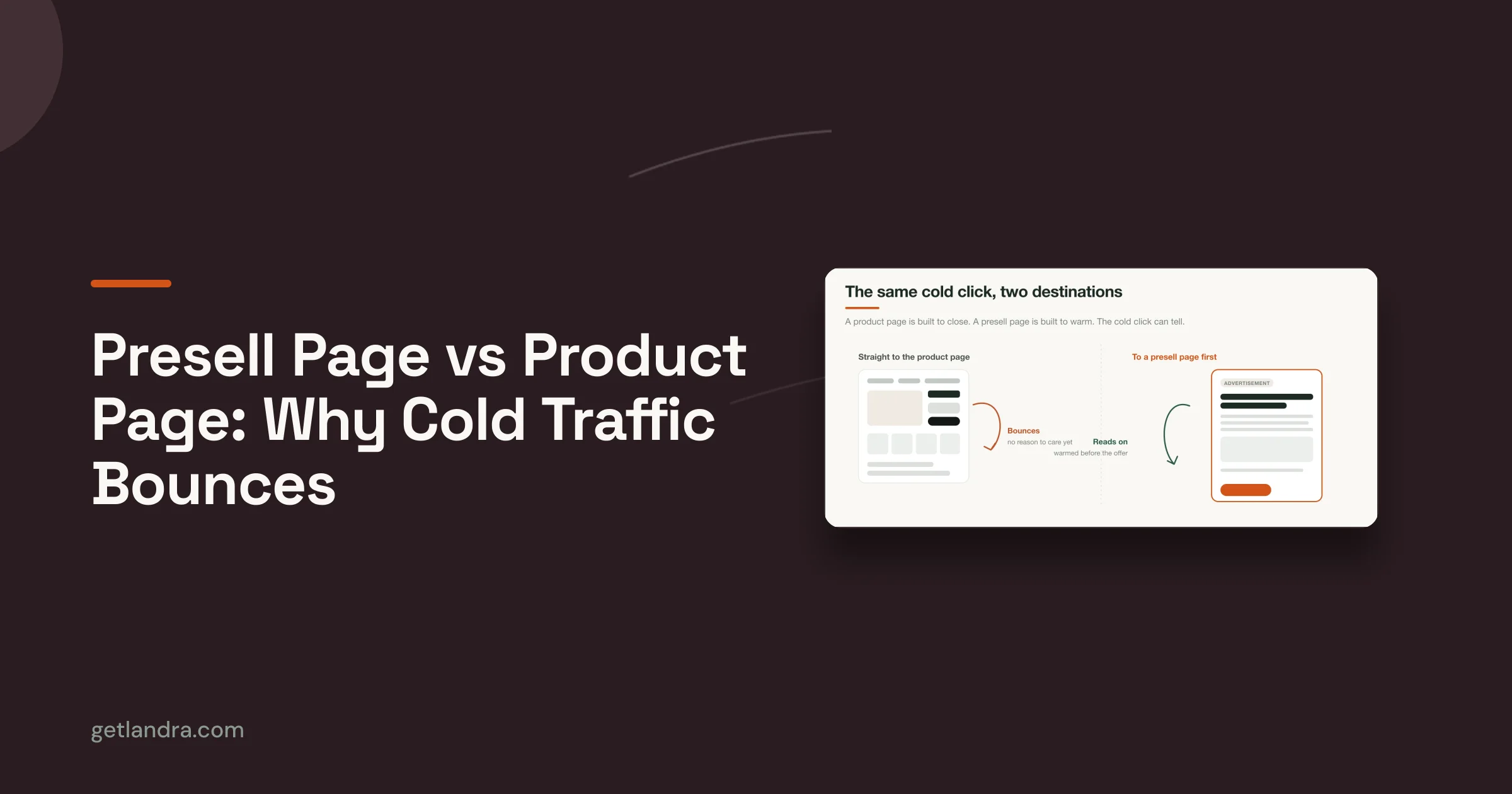
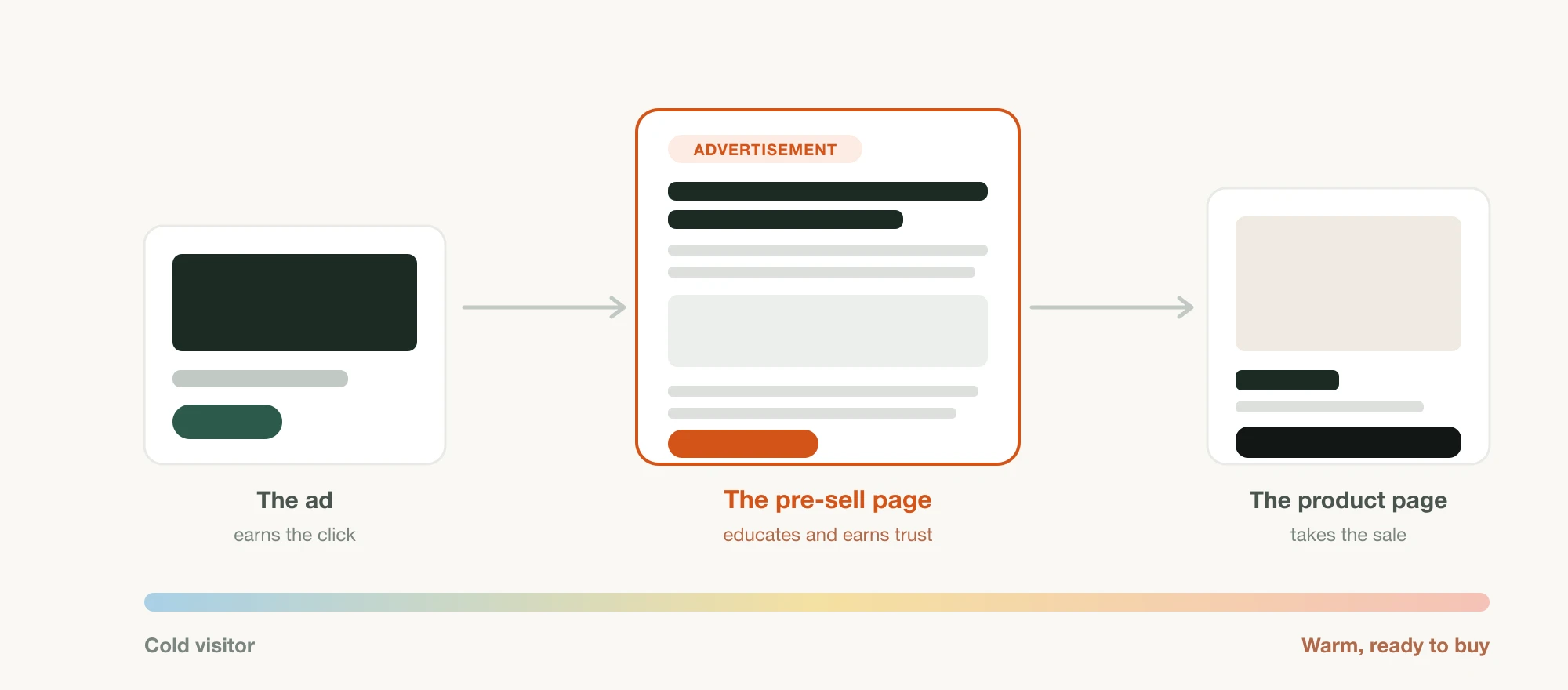
The page didn't fail because it was built badly. It failed because it was a closing argument delivered to someone who just walked in. That's the thing the "presell page vs product page" question usually misses: the PDP isn't a worse page than a presell page; it's a page for a different reader. So the real decision isn't "should I build a presell page?" It's narrower and far more useful: has this reader earned the closing page yet? Sometimes the answer is no, and you build the presell page. Sometimes the answer is yes, and the presell page is just friction. This guide is about telling the two apart. (New to the term? Start with what a presell page is.)
Why a product page leaks cold traffic
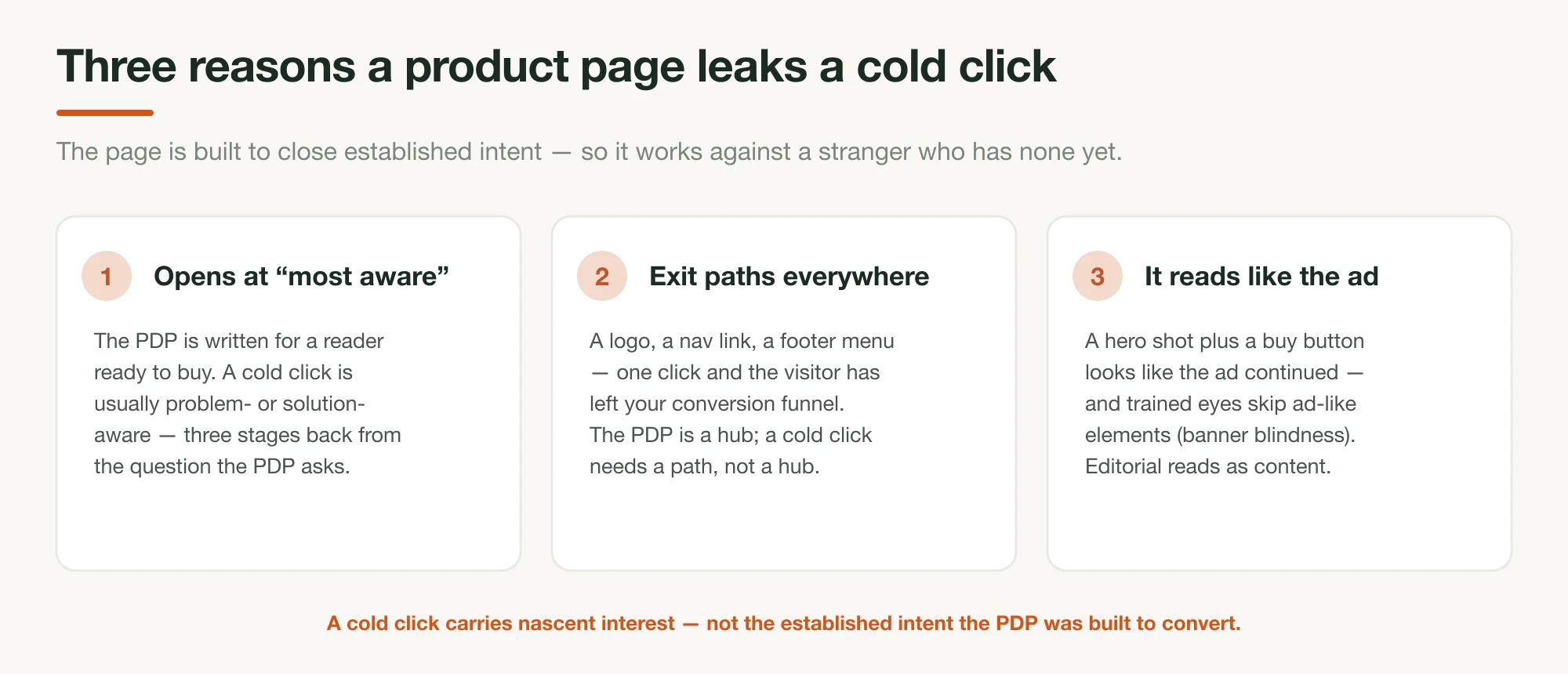
A product page leaks cold traffic because it is engineered to convert established purchase intent, and a cold paid-social click doesn't carry any. As Jordan Glickman, a performance marketer who has written about the split (May 2026), frames it, a cold visitor arrives with "nascent interest generated by an ad, not an established purchase intent." The PDP is the right page for the wrong moment.
That distinction is the whole post, so it's worth sitting with. Your product page is a brilliant closer. It's built for the reader who already searched your brand, already read the reviews, already decided — it just needs to take payment cleanly. Glickman's point is that the post-click experience, not the campaign, is usually the conversion bottleneck on cold traffic: switching cold prospecting from a PDP to a dedicated landing page can lift reported ROAS "without changing any campaign variable," because the page was the leak all along. The PDP isn't broken. It's doing a job nobody on cold traffic is asking it to do yet.
The three reasons the PDP fails a stranger
A product page fails a cold stranger for three concrete, mechanical reasons: it opens at the wrong stage of awareness, it offers a dozen exits before it makes its case, and its very structure reads as "the ad continued," which trained eyes skip. None of these are fixable by polishing the PDP, because they're properties of what a PDP is.
1. It opens at "most aware," the one stage a cold click isn't
The PDP is written for the most-aware reader: someone ready to buy who just needs price and a button. A cold paid-social click is almost never most-aware. It's usually problem-aware or solution-aware: the reader feels the problem (that's what the ad spoke to) but doesn't yet know, or trust, your answer. Opening at "ready to buy" for a reader who's three stages back asks a question they haven't reached. The mismatch isn't temperature; it's stage. (Paid social is cold; the coldest source of all is native — a reader who left a news article, not a feed. See the native ad funnel for why a PDP fails it twice over.)
2. Every PDP element is an exit
A product page is a hub. Logo, navigation, search, collection links, related-product widgets, footer menus: each one is a door out of the page you paid to land the reader on. Glickman is blunt about the cost: "a cold visitor who clicks your logo or a navigation link has left your conversion funnel." A presell page strips those doors down to one: read on, then go buy. The PDP can't, because navigation is what makes it a store.
3. It reads as "the ad continued," and eyes skip that
Here's the least obvious reason, and the one I find most underrated. Nielsen Norman Group's research on banner blindness (Kara Pernice, 2018) documents that people have learned to skip page elements that look like ads; the eye routes around them automatically. A cold reader who taps an ad and lands on a hero shot plus a price plus a buy button experiences visual déjà vu: this looks like the ad I just tapped. The ad-like structure triggers the exact pattern-skipping NN/g describes. An editorial presell page sidesteps it by not looking like an ad at all: it reads as content, so the trained eye actually engages. (To be clear, NN/g doesn't say "PDPs fail" — they study how people skip ad-like elements; the application to cold-traffic PDPs is mine.)
The one test: has this reader earned the closing page?
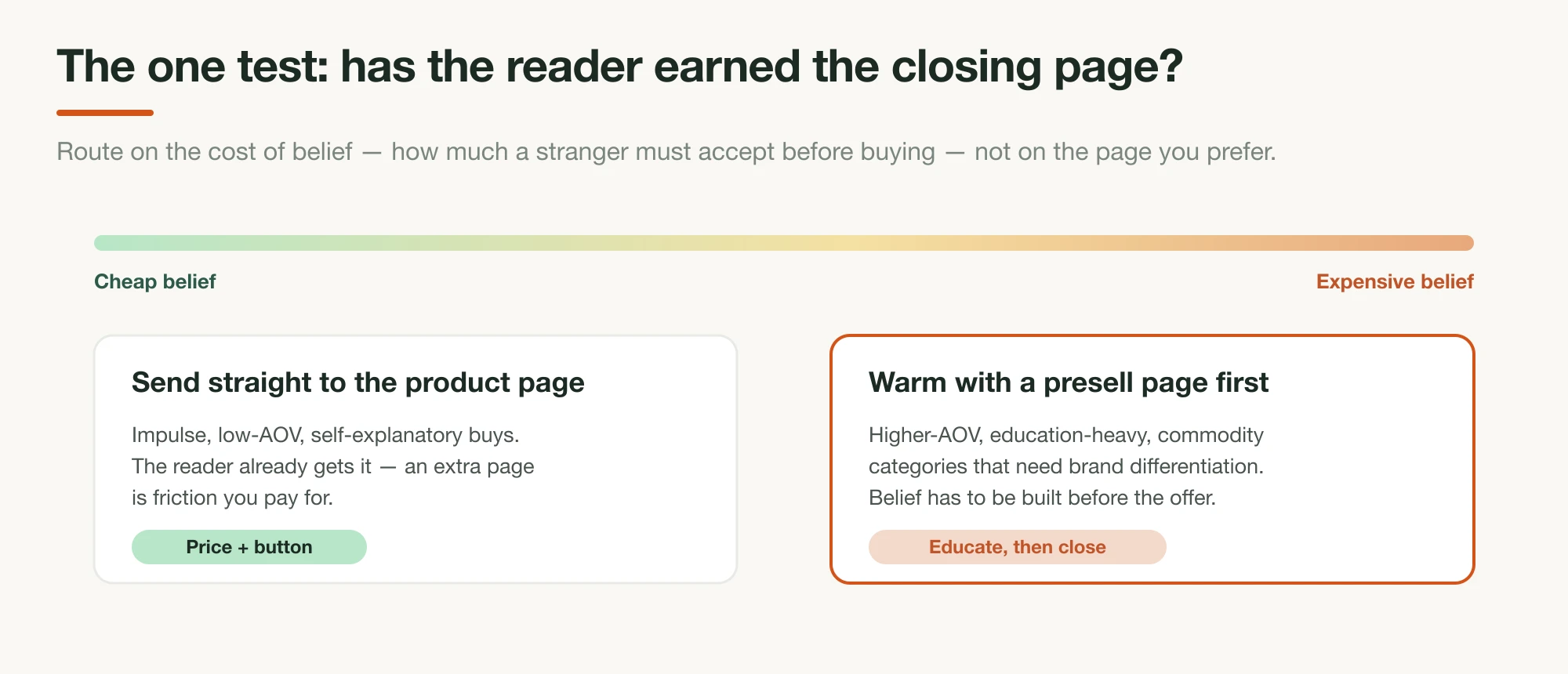
Forget "should I build a presell page?" The single question that routes every page is: how expensive is belief for this purchase? If a stranger needs convincing before they'll buy — education, trust, proof — then belief is expensive, and the PDP can't manufacture it; you put a presell page in front to do the warming. If the product sells itself on a price or a glance, belief is cheap, the reader has effectively already earned the close, and the presell page is a tollbooth between them and checkout.
Three signals drive the cost of belief up, and they're the same three the practitioner consensus keeps landing on:
- Price and consideration. The more a purchase costs, in money or in commitment, the more trust a stranger needs before they'll spend. A $12 item and a $200 device are not the same decision.
- How much explaining the product needs. A mechanism a reader has never heard of (a novel ingredient, a new device category) needs a page to teach it. A familiar product doesn't.
- Category skepticism. Some categories carry built-in resistance (supplements, weight loss, anything health-adjacent) where a stranger's first instinct is doubt. Belief is expensive there by default.
When all three are low, the reader has earned the close: send them to the PDP. When any of them is high, they haven't, and the presell page does the earning.
Where presell pages earn their keep
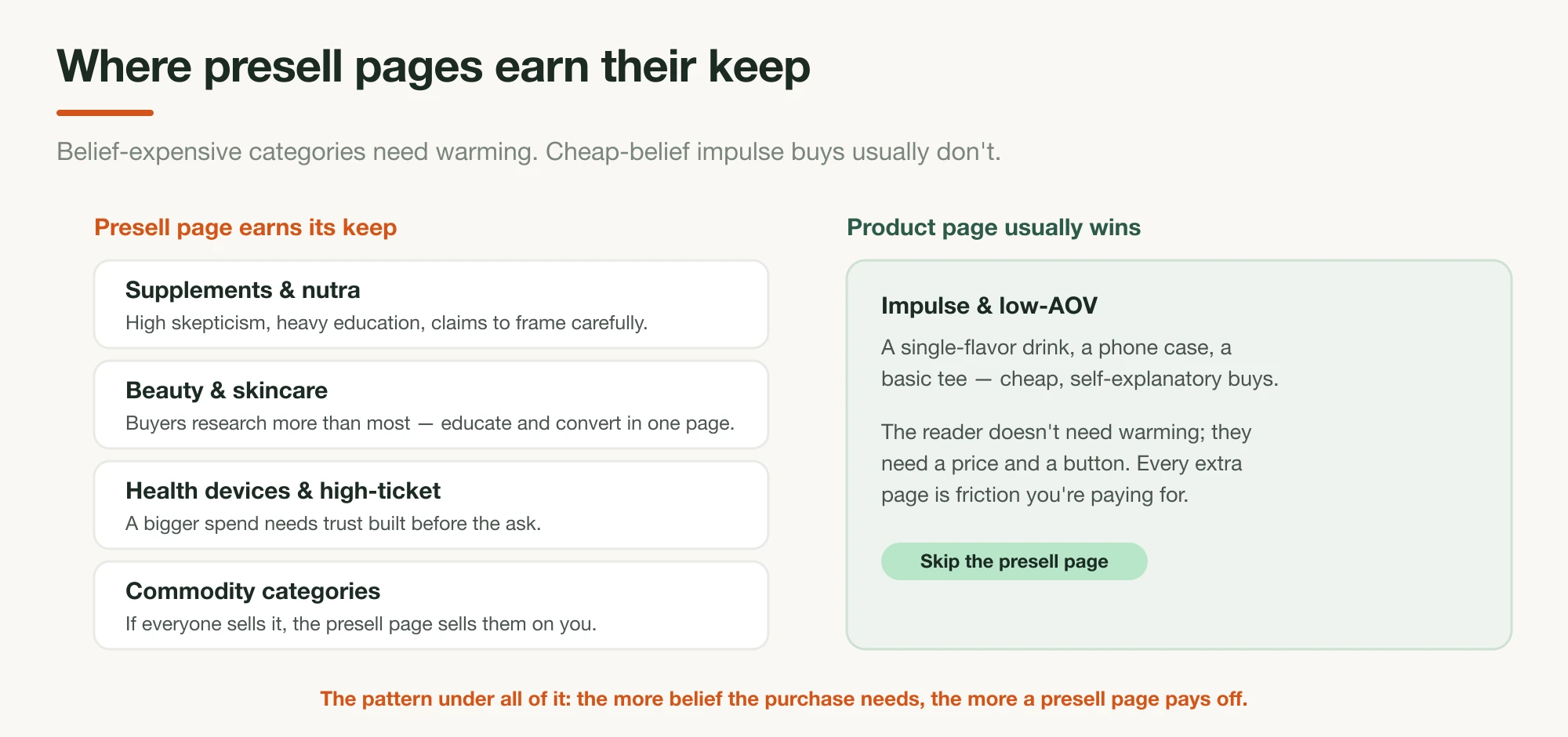
Presell pages earn their keep in the verticals where belief is structurally expensive — where a stranger's default is skepticism, the product needs explaining, or the spend is significant enough to demand trust first. Across DTC, a handful of categories show up again and again as the natural home for the presell page, and each for a specific reason worth naming.
Supplements and nutra: the canonical advertorial vertical
Supplements stack every belief-cost signal at once: high skepticism (a stranger assumes it won't work), emotional and often urgent demand, a mechanism that needs teaching, and FTC/FDA claims constraints that force you to educate rather than just assert. The editorial presell frame is what lowers the guard: it earns the read before it makes a claim, which is exactly why nutra is the category advertorials were practically invented for. (We go deeper on the supplement-specific decision in its own guide.)
Beauty and skincare: research-heavy buyers
Beauty buyers research more than most categories before they purchase — they read, compare, and look for a reason to believe a result is real. BigCommerce's reading of beauty buying behavior points at the same thing: the buyer wants education and a reason to convert in one asset. A presell page is the one format that does both: a transformation or tutorial frame teaches and sells in a single read, where a PDP only sells.
Health and wellness devices: trust and transparency
Functional devices and wellness hardware sit higher on the consideration curve and carry real trust and transparency demands — a stranger is being asked to believe a physical thing does what it claims, often for a meaningful price. As practitioners who sell health products with presell pages note, that combination of higher consideration and trust burden is precisely where the warming step pays for itself. The PDP can show the device; it can't earn the belief that it works.
High-ticket and considered purchases: the spend needs warming
The bigger the spend, the longer the relationship the reader needs before committing. A high-ticket considered purchase can't be closed on a cold click to a PDP; there's too much trust to build and too much to explain for a price-and-button page to carry it. The presell page is where that longer-form education and relationship-building happens before the significant ask.
Commodity categories that need brand differentiation
If you sell what everyone else sells — cookware, basics, a category where the specs are identical down the shelf — the PDP can only compete on price and photos. As DTC.co frames it, the presell page is where you sell them on you: the story, the standard, the reason to pick your version over the identical one next to it. When the product can't differentiate, the page has to.
A broader pattern sits underneath all five: high-resistance, high-skepticism verticals reward an editorial frame. It's why presell-style pages also show up in finance, insurance, and legal: categories that carry built-in distrust an article-shaped page can lower. For DTC ecommerce, the five above are where it matters most, but the principle generalizes: the more a stranger's first instinct is doubt, the more the presell page earns its place.
Presell page wins vs product page wins
The decision comes down to a clean two-column split. A presell page wins when belief is expensive: high AOV, education-heavy, skeptical, or commodity-undifferentiated. The product page (or collection) wins when belief is cheap: impulse, low-AOV, self-explanatory, and warm. The DTC Newsletter, asking whether presell pages are still relevant (December 18, 2025), draws the same line, and is refreshingly direct about the half the vendor SERP skips: "for impulse purchases and low AOV products, PDPs and collections pages typically outperform."
| Send cold traffic to a presell page when… | Send straight to the PDP / collection when… |
|---|---|
| AOV is high (roughly $150+) — the spend needs warming | AOV is low — the extra step costs more than it warms |
| The product needs explaining (novel mechanism, new category) | The product is self-explanatory at a glance |
| The category is high-skepticism (supplements, health, anti-aging) | The category carries little built-in doubt |
| You sell a commodity and need to sell the brand, not just the product | The product differentiates itself on a spec or a price |
| Traffic is cold and problem- or solution-aware — interest is nascent | Traffic is warm, branded, or retargeted — intent is established |
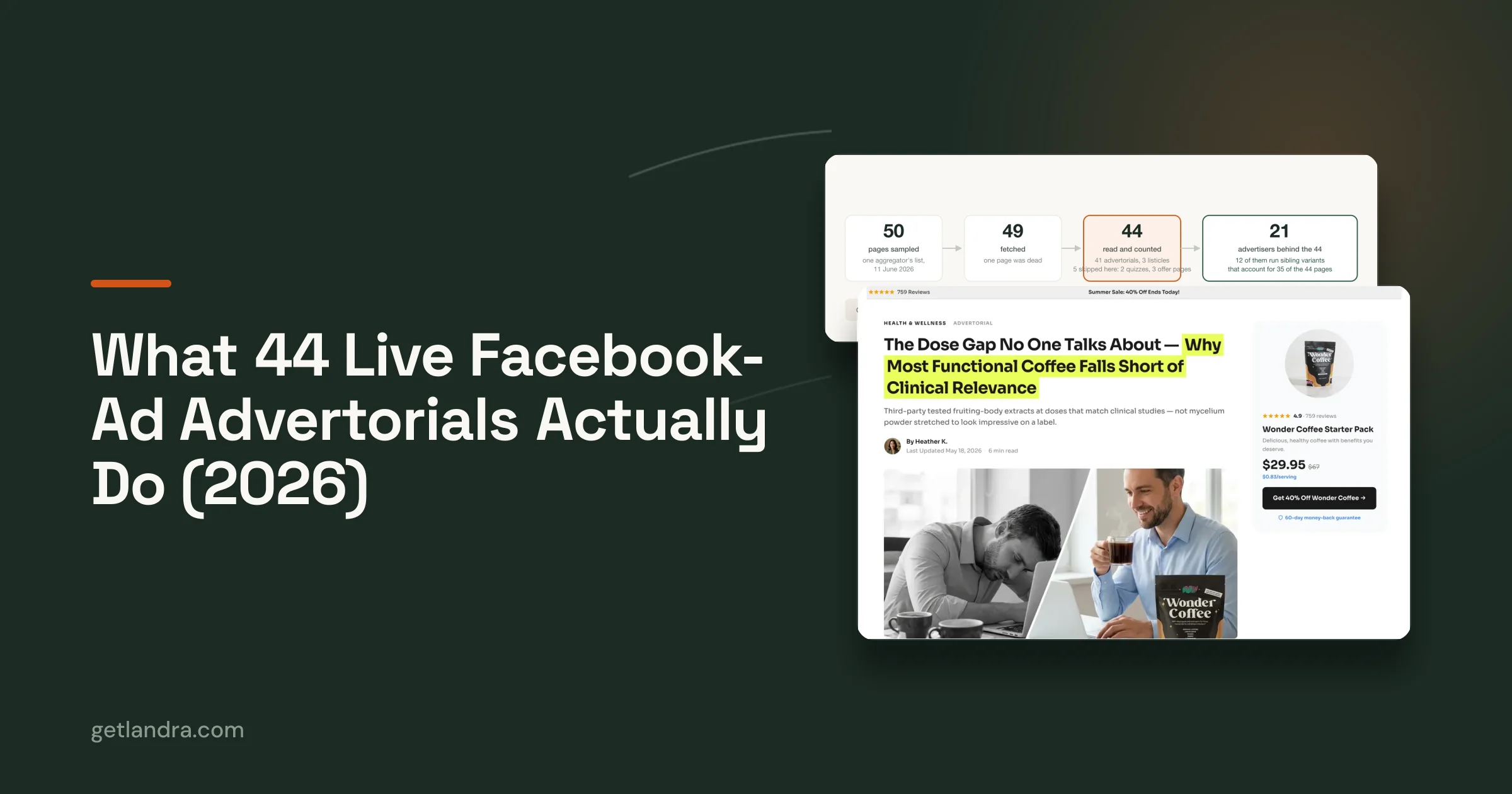
The directional data points the same way. Practitioner benchmarks from MHI Growth Engine (February 2026) put advertorial/editorial landing pages around 2–5% on cold traffic versus roughly 1.5–3.5% for sending the same cold traffic straight to a PDP (directional, not a controlled trial, but consistent). Vendor figures stretch the gap further: TrueProfit reports cold-to-PDP near 0.5% versus 3–5% through an advertorial, and ConversionWise reported a +47.29% A/B win swapping a PDP for an advertorial (July 2025), both vendor numbers, so read them as directional only. The throughline across all of them: the colder the traffic and the more expensive the belief, the more the presell page earns. (For the full sourced set, see our DTC conversion benchmarks.)
Real examples make the split concrete. On the presell-wins side, HexClad runs a "5 reasons why" listicle presell for cookware — a considered, brand-differentiation category where a stranger needs convincing the pan is worth the premium (observed live, June 2026; these pages change, so verify before borrowing). On the PDP-wins side, a cheap, self-explanatory impulse buy (a single-flavor sparkling water, a phone case, a basic tee a shopper already understands) is exactly the kind of cheap-belief purchase where sending traffic straight to the product or collection page usually beats adding a step. The reader doesn't need warming; they need a price and a button, and every extra page between the ad and the cart is friction you're paying for.
The honest answer the SERP buries: when to skip the presell page
Sometimes the right move is to not build a presell page — and almost no page ranking for this query will tell you that, because most of them are selling you a presell-page builder. For an impulse, low-AOV, self-explanatory product the shopper already wants, the presell page is a step that adds friction without adding belief. The reader didn't need warming; you cooled them down by making them read first.
The math is plain ROI. A presell page is a second asset to build, maintain, test, and load; it earns its keep only when the warming it does is worth more than the click it costs. For a $12 snack a shopper already recognizes, that extra page is pure drag; the PDP or collection closes them faster. For a $150 device a stranger has never heard of, the PDP alone asks for trust it hasn't earned, and the presell page is where that trust gets built. Same brand, two products, two different right answers.
This is also where the vendor incentive and the operator's interest diverge, so it's worth saying without hedging: the presell page is a tool, not a religion. The brands that win on paid traffic aren't the ones that put a presell page in front of everything; they're the ones that decide, per product and per audience, whether this reader has earned the close. Defaulting to "always presell" wastes build time and adds friction to your easy wins; defaulting to "always PDP" leaks your hard ones. The discipline is in routing, not in picking a side.
How Landra handles the routing for you
Everything above is a routing problem: pick the reader, judge the cost of belief, then point cold traffic at the right page — a presell page when belief is expensive, the PDP when it's cheap. The hard part isn't knowing the rule; it's building both sides well enough to test them, for every product and every angle. That's the constraint Landra removes.
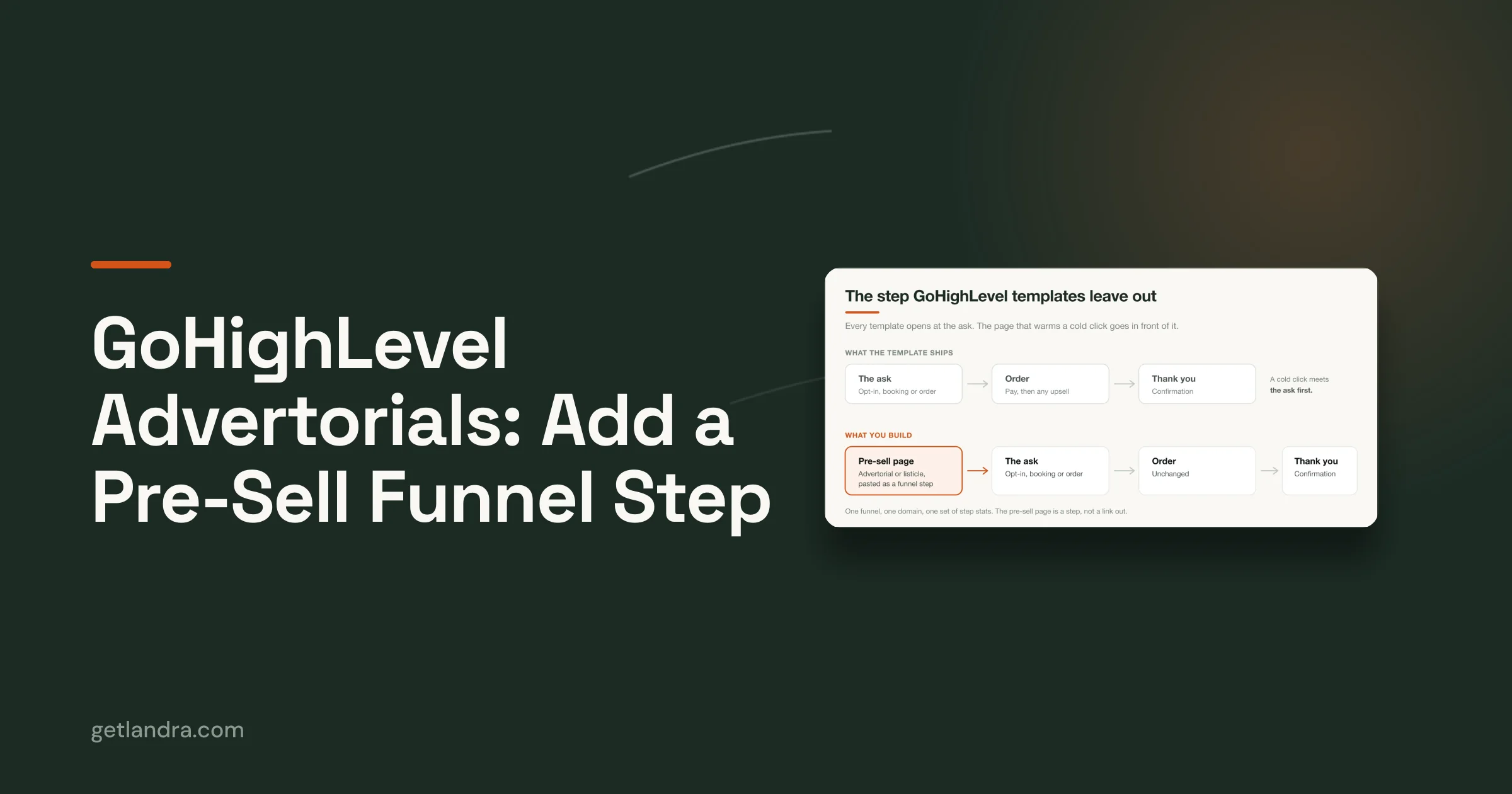
Give Landra your brand URL and the audience you're targeting, and it reads your brand and products, then writes the whole optimized presell page: the advertorial or the listicle, copy and structure and images, laid out in proprietary DTC components built to convert, tuned to the reader you named, and published straight to Shopify (or a Landra URL or HTML export). And because it builds both presell formats, the decision this whole post is about — which page warms which reader — becomes a setting you flip, not a project you scope. You're not assembling a page in a blank-canvas builder and hoping it's optimized; you get the best-practice page for that audience, then a click-anything editor to refine it.
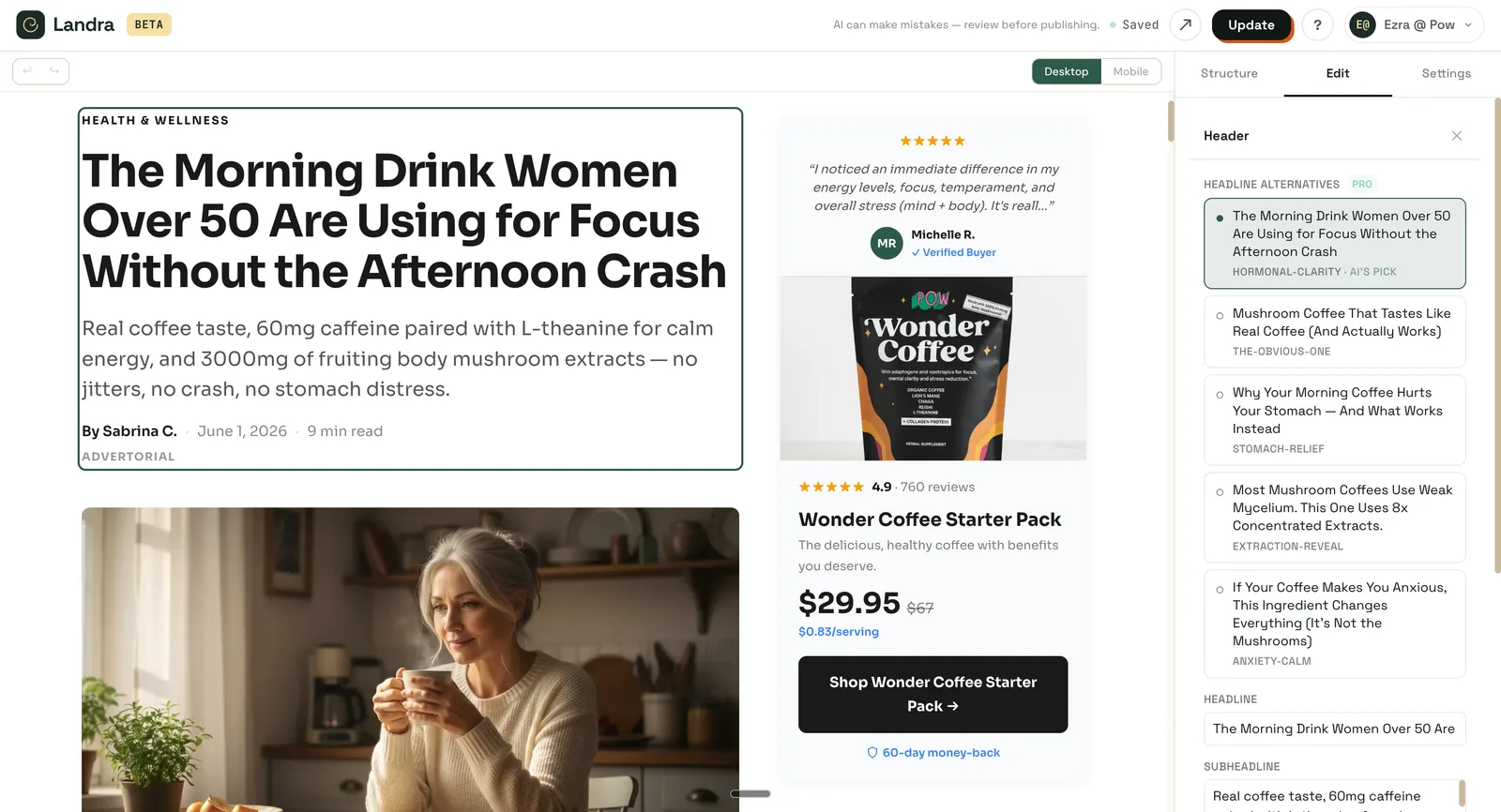
The honest framing matters here as much as in the post: Landra builds the presell page and assumes you sometimes shouldn't use one. What moves the number is matching the page to the reader — and a presell page generator that builds both formats fast is what makes that match cheap to test instead of expensive to commit to. Plans start with a 14-day free trial, then from $19/mo.
How to decide where to point your cold traffic
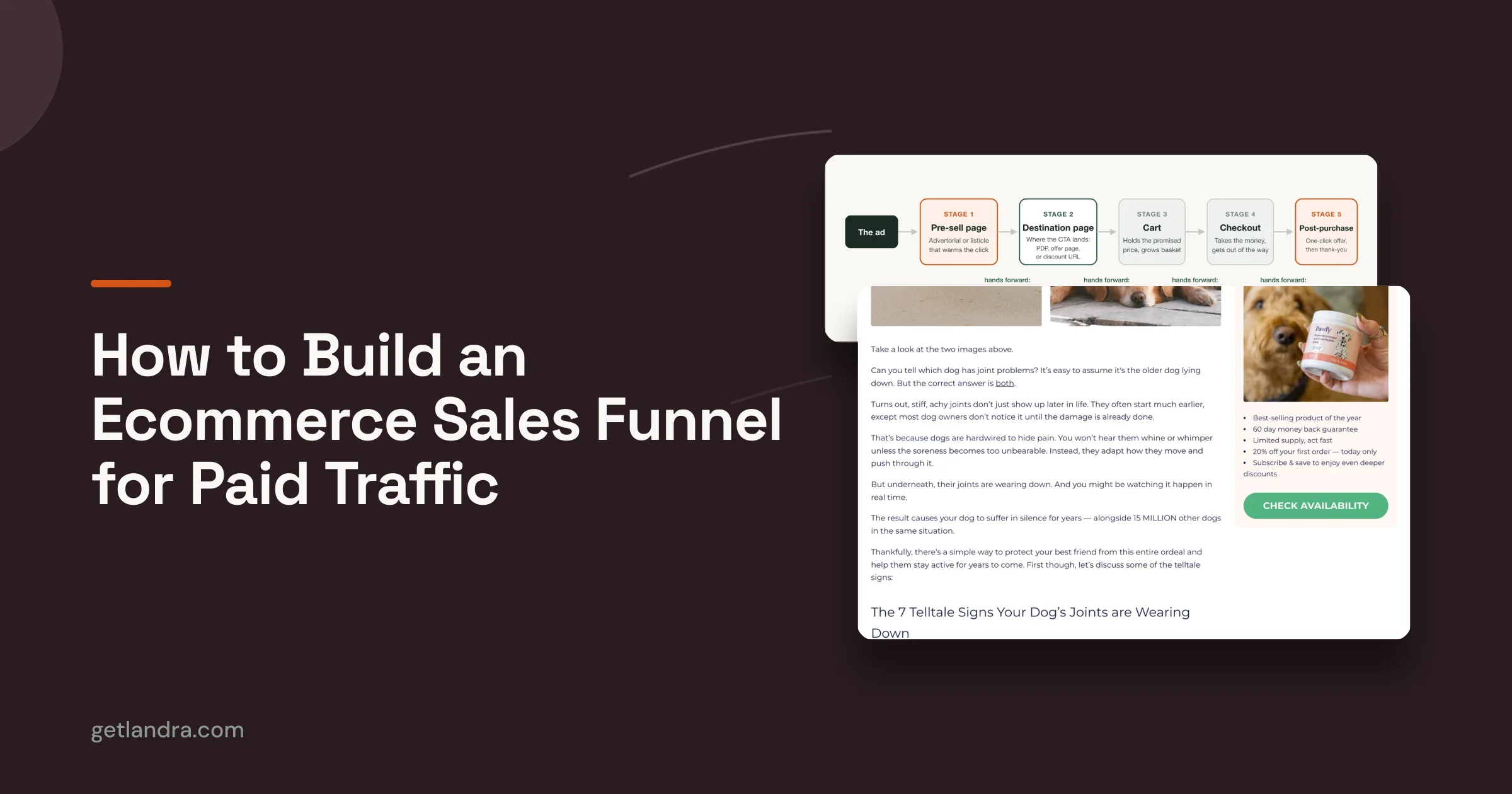
Before you build anything, run the click through one question: has this reader earned the closing page? Score the purchase on three things: price and consideration, how much the product needs explaining, and category skepticism. If all three are low, the reader has earned the close: point cold traffic straight at the PDP or collection and don't add a step. If any one of them is high, belief is expensive and the PDP can't manufacture it, so put a presell page in front to do the warming, then send the warmed reader to the PDP to buy. And when you're genuinely unsure, the answer isn't to guess; it's to split the traffic and let conversion rate decide, because the cost of belief is ultimately a number your own audience tells you. Once you've decided you do need one, here's how to write a presell page that warms without padding — and which format to reach for, advertorial or listicle, once you know the reader.
Frequently asked questions
What is the difference between a presell page and a product page?
A product page (PDP) is your store page built to close someone who is already sold — price, variants, Add to Cart. A presell page sits between the ad and the PDP and warms a stranger first: it names the problem, educates, and earns trust before the offer. The PDP converts established intent; the presell page manufactures the intent the PDP needs.
Why do product pages not convert cold traffic?
A product page is a closing argument written for someone who already wants the product. A cold paid-social click carries only nascent interest — the ad created it seconds ago. The PDP opens at the buying stage, overwhelms a stranger with variants and navigation and exits, and reads as 'the ad continued,' which trained eyes skip. It is the right page for the wrong reader.
When should I use a presell page instead of sending traffic to the PDP?
Use a presell page when belief is expensive: higher-AOV (roughly $150+), education-heavy categories (supplements, devices), high-skepticism verticals, and commodities that need brand differentiation. Skip it when belief is cheap — impulse, low-AOV, self-explanatory products — where the extra step is friction and the PDP or collection usually converts cold traffic better on its own.
Which industries benefit most from a presell page?
Supplements and nutra (high skepticism, heavy education, claims constraints), beauty and skincare (buyers research heavily before buying), health and wellness devices (trust and transparency demands), high-ticket considered purchases (a significant spend needs warming), and commodity categories that need to sell the brand, not just the product. High-resistance verticals broadly benefit because the editorial frame lowers the guard.
Is it ever a mistake to add a presell page?
Yes. For an impulse, low-AOV, self-explanatory product the shopper already wants — a $12 snack, a cheap accessory — the presell page is an extra step that adds friction without adding belief. The DTC Newsletter (December 2025) puts it plainly: for impulse and low-AOV products, product and collection pages typically outperform. The presell page only earns its keep when the warming is worth more than the click it costs.