

A shopper taps a TikTok ad for a $59 sleep supplement. They land on a product page — a hero shot, a price, an Add to Cart button — that assumes they already want it. They have known the brand for four seconds. They bounce.
The brands that convert that same click do something different: they put a page in between. Before the product page, the visitor reads a short article that names their problem, explains why it happens, and earns a little trust, and only then meets the offer. That in-between page is a pre-sell page, and for cold DTC traffic it is often the difference between spend that converts and spend that evaporates. (If "advertorial" is the word you know, hold that thought: it is the same page wearing a different name. And if you're not sure you even need one, settle that first with presell page vs product page — sometimes the PDP wins.)
What is a pre-sell page?
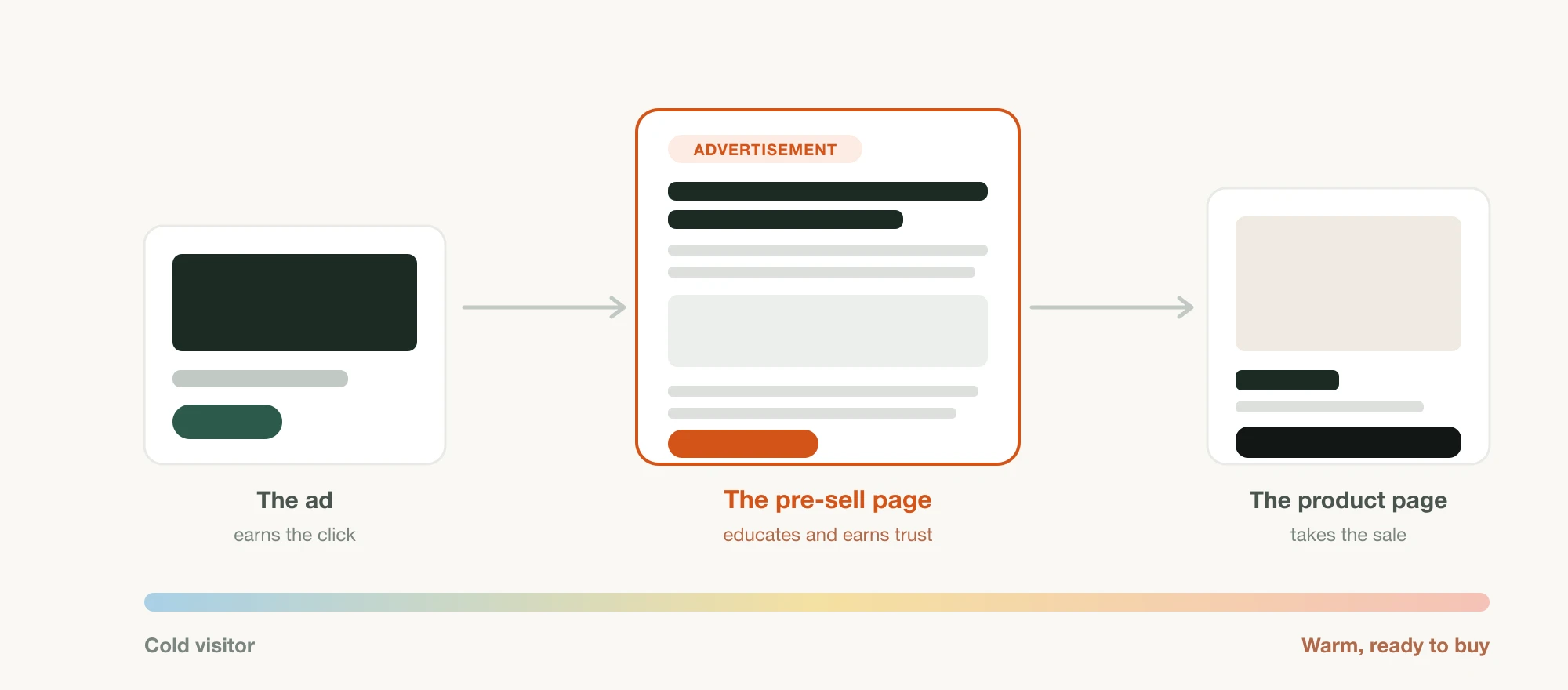
A pre-sell page is a landing page that sits between a cold ad and the product page. It educates a stranger and earns trust first, then sends a warmed-up visitor to the product page to buy. The same page type goes by several names: pre-lander, pre-cart, pre-sale, and advertorial all describe it (ConvertCart, 2025). The job never changes: do the warming the product page cannot. (For the category definition and how the synonyms map, see what is a presell page.)
The reason it exists is that a cold visitor has three separate jobs to do before they buy — understand the product, trust the brand, and decide to purchase — and a product page only really handles the last one. A pre-sell page takes the first two off the product page's plate. The ad earns the click, the pre-sell earns the belief, the product page takes the sale.
Pre-sell page vs advertorial vs product page
These three terms get tangled, so here is the clean split. A product page is your store's PDP, built to convert someone who is already sold. A pre-sell page is defined by its job and funnel position: the educational page between the ad and the PDP. An advertorial is defined by its style: editorial copy written like an article. Most pre-sell pages are written as advertorials, which is why people use the words interchangeably.
The practical takeaway: "pre-sell page" tells you where the page goes and what it is for; "advertorial" tells you how it reads. A listicle ("5 Reasons…") is another style a pre-sell page can take. For the long-form narrative version, the deep dive is how to write an advertorial. This guide is about the page as a page: its anatomy and its place in the funnel.
Why DTC brands put a pre-sell page between a cold ad and the PDP
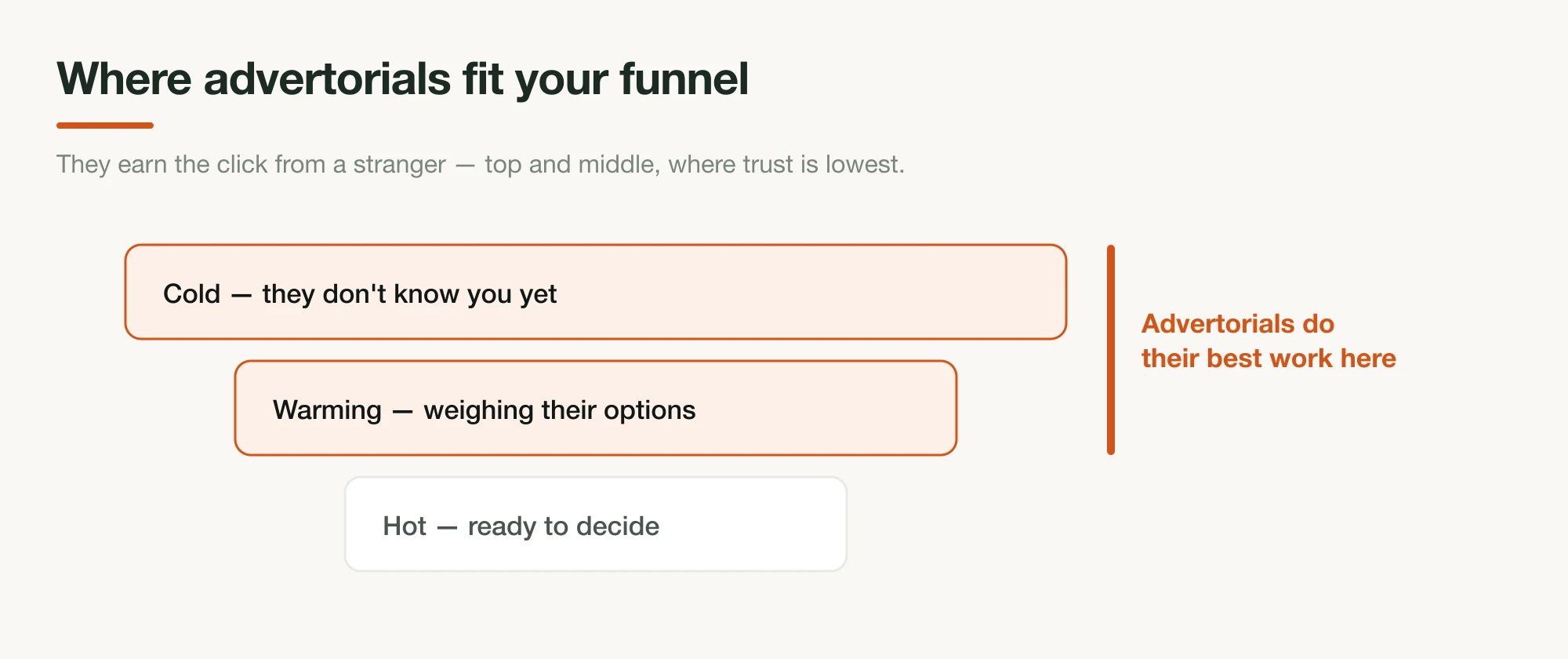
Because most cold traffic is not ready to buy. ConvertCart estimates only about 1 in 4 store visitors arrive with real buying intent (2025), so roughly three in four need warming the PDP cannot give them. A pre-sell page splits the decision into two lower-friction steps, which is what lifts conversion rate and, downstream, blended ROAS.
There is a usability principle underneath this. Nielsen Norman Group's work on the hierarchy of trust (2016) is blunt: "Don't make demands at higher levels of commitment until you've addressed all the trust needs at the inferior levels." Asking a stranger from a $9 TikTok click to buy a $59 product immediately is exactly that mistake. The pre-sell page addresses the lower-commitment trust needs first.
It also matters more than it used to. Since the iOS/ATT signal loss made ad targeting blunter, the page itself has to do more of the qualifying the algorithm used to do for you. Vendor figures here are directional — TrueProfit reports cold traffic converting near 0.5% straight to a product page versus 3–5% through an advertorial — but the direction is consistent across our own DTC conversion benchmarks. The warmed page wins on cold traffic.
Anatomy of a pre-sell page
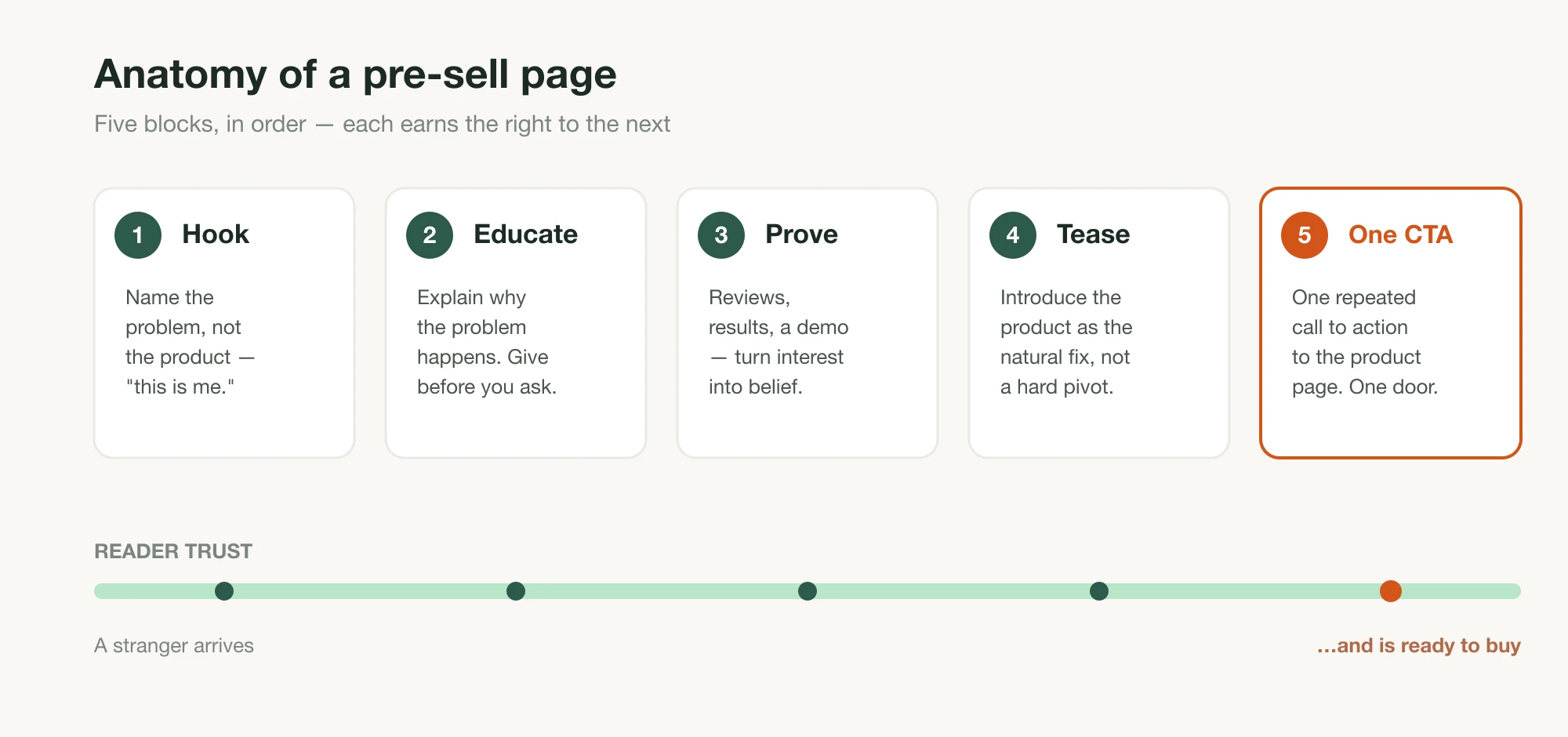
Strong pre-sell pages run the same five blocks, in order. Each one does a job the next one depends on:
- The hook: a stat, a symptom, or a pain point that makes the right reader think "this is me." It names the problem, never the product.
- Educate: the why behind the problem. This is where you earn the read by teaching something true and slightly non-obvious.
- Prove: reviews, results, a demonstration, before/afters. The block that turns interest into belief.
- Tease the offer: introduce the product as the natural resolution of everything above, not a hard pivot.
- One CTA: a single, repeated call to action that sends the warmed reader to the product page. One destination, not five.
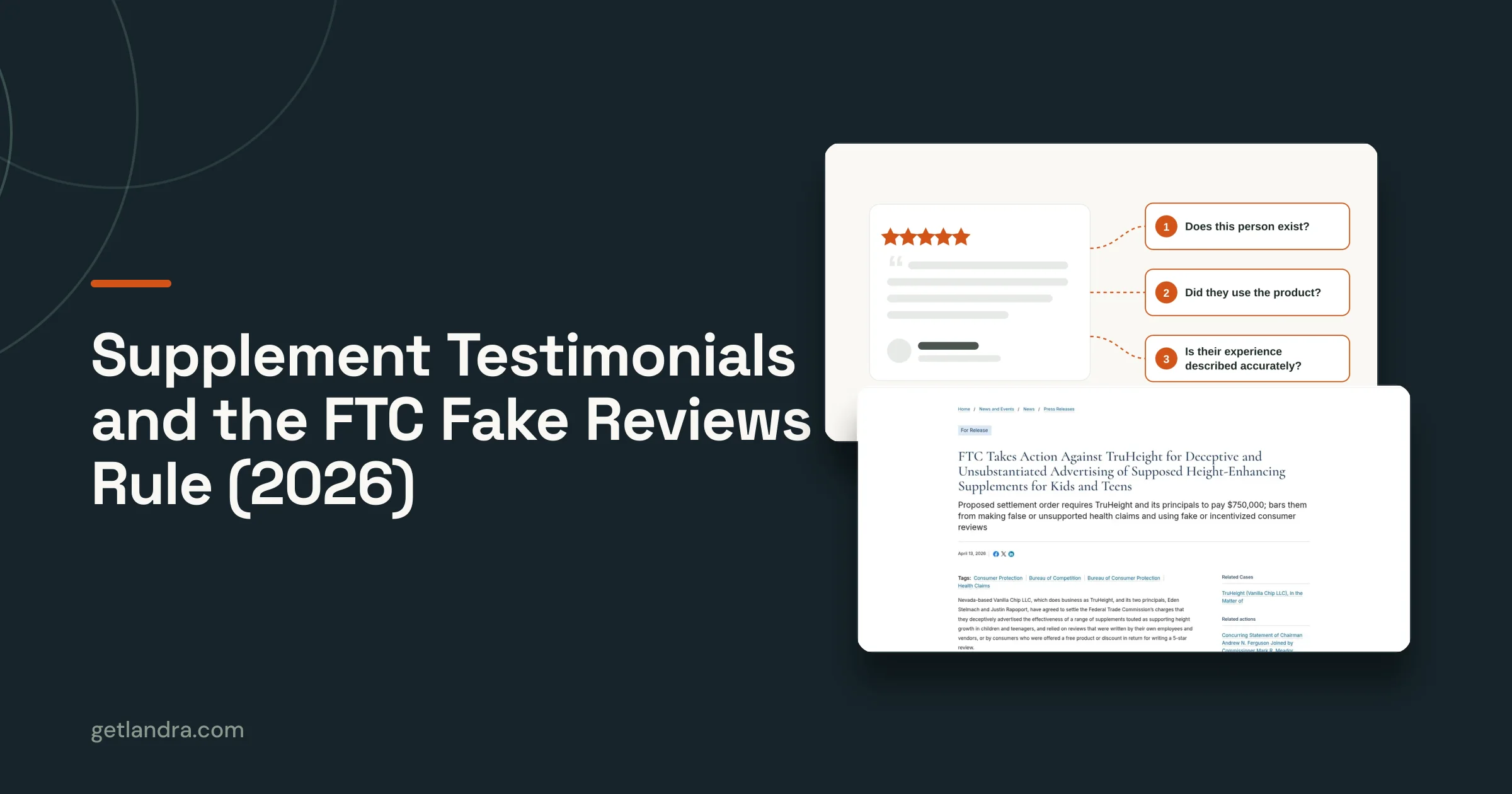
The other half of the anatomy is tone. Gary Halbert's old direct-mail rule still holds: make the page read like something a person would actually read, not like an ad. The credibility comes from the editorial feel, and, legally, from being honest that it is an ad anyway (more on that below).
How to write a pre-sell page, step by step
You do not need to invent any of this. Here is the build, in order.
1. Pick one reader and one promise
Write to a single person with a single problem — "women over 40 who wake up at 3am," not "people who want better sleep." One reader sharpens every line that follows. If you want the full treatment of audience and angle, the advertorial guide covers it; for a page, one reader and one promise is enough to start.
2. Open with the hook, not the product
The first screen decides whether the rest gets read. Lead with the reader's symptom or a specific, believable stat: the thing that makes them stop and recognize themselves. Your brand name does not belong in the first line. For a swipe file of openings that work, see advertorial headlines that convert.
3. Educate: explain why the problem happens
Teach the mechanism. Why does magnesium matter for 3am wake-ups? Why is your shower water hard on skin? A reader who understands the cause is primed to accept your product as the fix. This is the section that separates a pre-sell page from an ad: it gives before it asks.
4. Stack specific proof
This is the conviction step, the part of the classic AIDCA formula (Attention, Interest, Desire, Conviction, Action) that most pages skip. Use real reviews, real numbers, real before/afters, a real demonstration. Specific and verifiable beats superlative and vague every time.
5. Tease the offer and point to one CTA
Introduce the product as the obvious resolution, then send everyone to the same place. Repeat the CTA down the page, but keep it pointing to one destination — your product or cart page. Competing CTAs leak the conversion you just earned.
6. Make it look like editorial, and disclose it
The editorial feel is the format's advantage; the disclosure is the law. A paid pre-sell page that reads like an article must carry a clear label such as "Advertisement" near the top. It barely dents conversion and it keeps you out of trouble. The full rules are in advertorial disclosure and FTC compliance.
7. Place it in the funnel and test angles
Point your cold ad traffic at the pre-sell page, not the PDP, and treat the hook like a portfolio: write several openings for the same product and let conversion rate pick the winner. The page is one asset you will iterate, not a one-time build.
Measure it, then iterate
A pre-sell page is working when it sends more warmed-up visitors to the product page and more of them buy. Watch four numbers: click-through from the pre-sell page to the PDP, scroll depth (does anyone reach the proof block?), first-screen bounce (is the hook landing?), and the only one that pays the bills, conversion rate and blended ROAS through to purchase, not on-page engagement.
On-page metrics diagnose; the sale decides. Great scroll depth but a weak click-through to the PDP is a tease-and-CTA problem; a high first-screen bounce means the hook isn't matching the traffic. And read the whole thing on a phone first: cold Meta and TikTok traffic is overwhelmingly mobile, so the hook has to land above the fold on a small screen, the page has to load fast (paid mobile traffic bounces on slow pages), and the CTA has to be thumb-reachable. Fix the part the numbers point at, not the part you feel like rewriting. For realistic targets, see our DTC landing-page conversion benchmarks.
Pre-sell page examples
For a deeper set of formats and an element-by-element teardown, see presell page examples that convert cold traffic. The canonical example is BOOM! by Cindy Joseph. Its "5 Makeup Tips for Older Women" page reads as a genuine tips article, then introduces the Boomstick products as the payoff: a textbook hook → educate → prove → tease → CTA. A widely cited BDOW! case study credits a single pre-sell page with generating, by its account, tens of millions in sales (one figure put at roughly $18M). Treat the number as reported, not gospel, but the structure is the lesson.

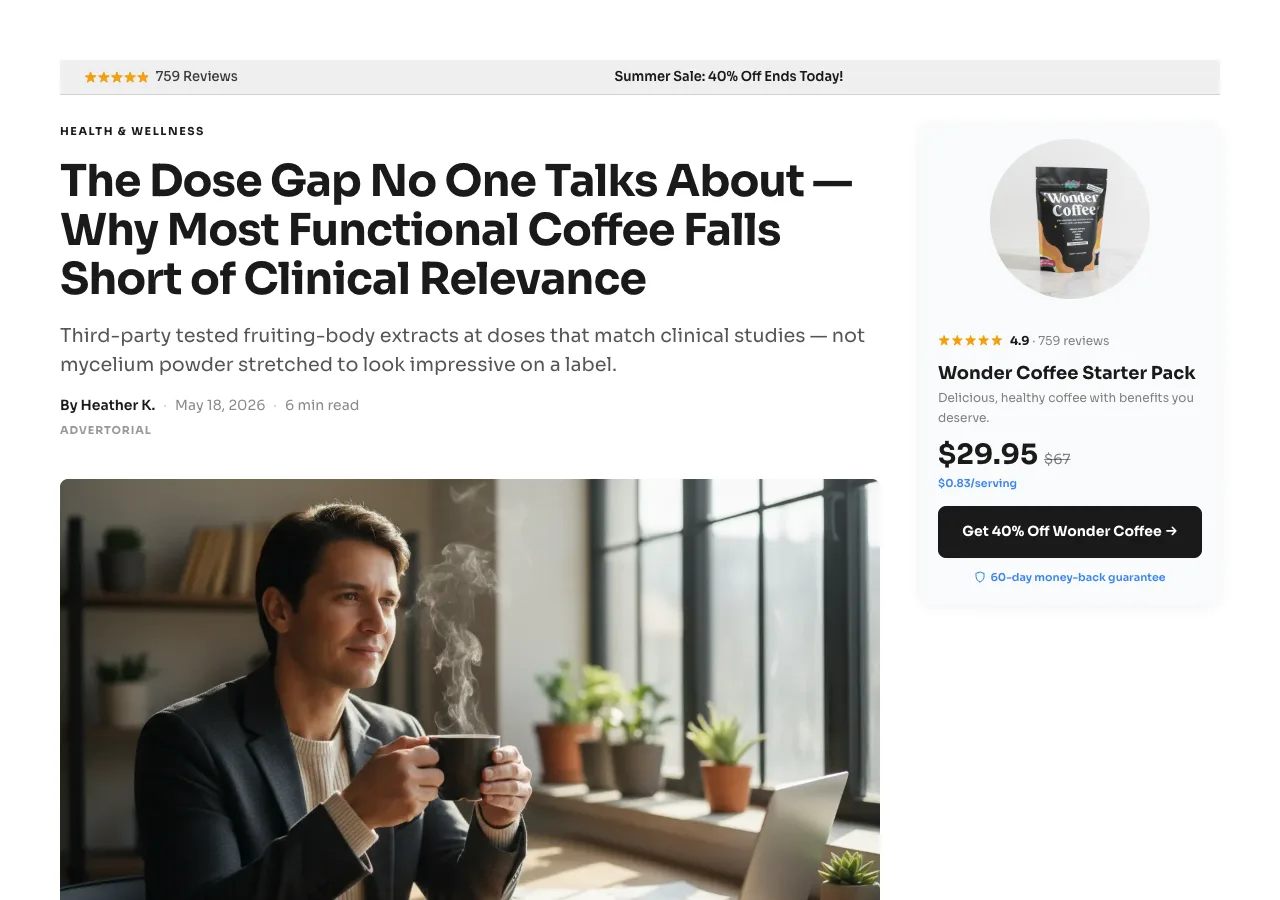
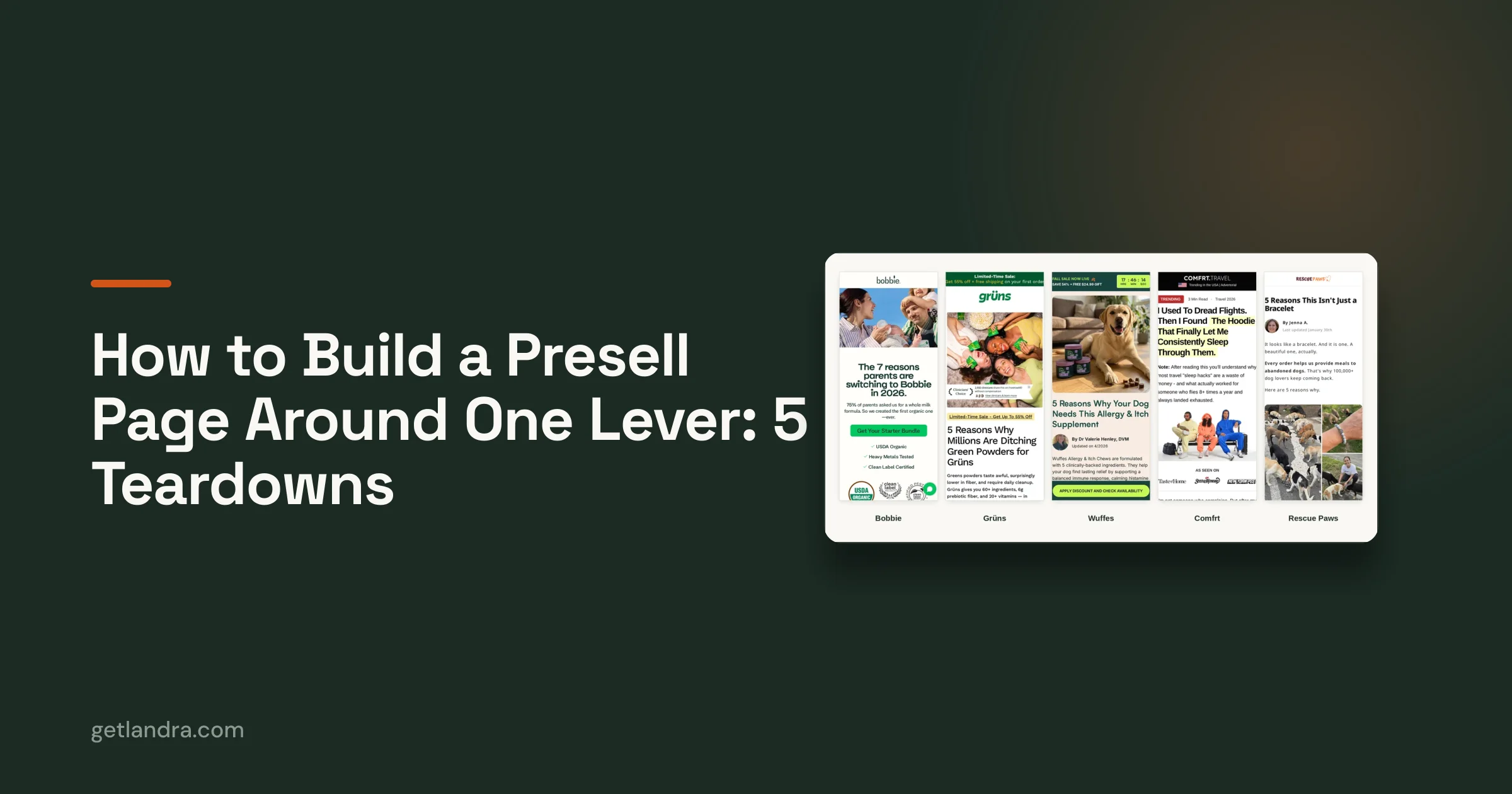
A few more, live as of June 2026 (these pages change often, so verify before you borrow): Perfy runs a listicle pre-sell for a better-for-you soda; Clarifion opens by naming an enemy and discloses cleanly that it is an advertorial; HexClad stacks social proof in a "5 reasons" format. For more teardowns, see advertorial examples that convert.

Where to start
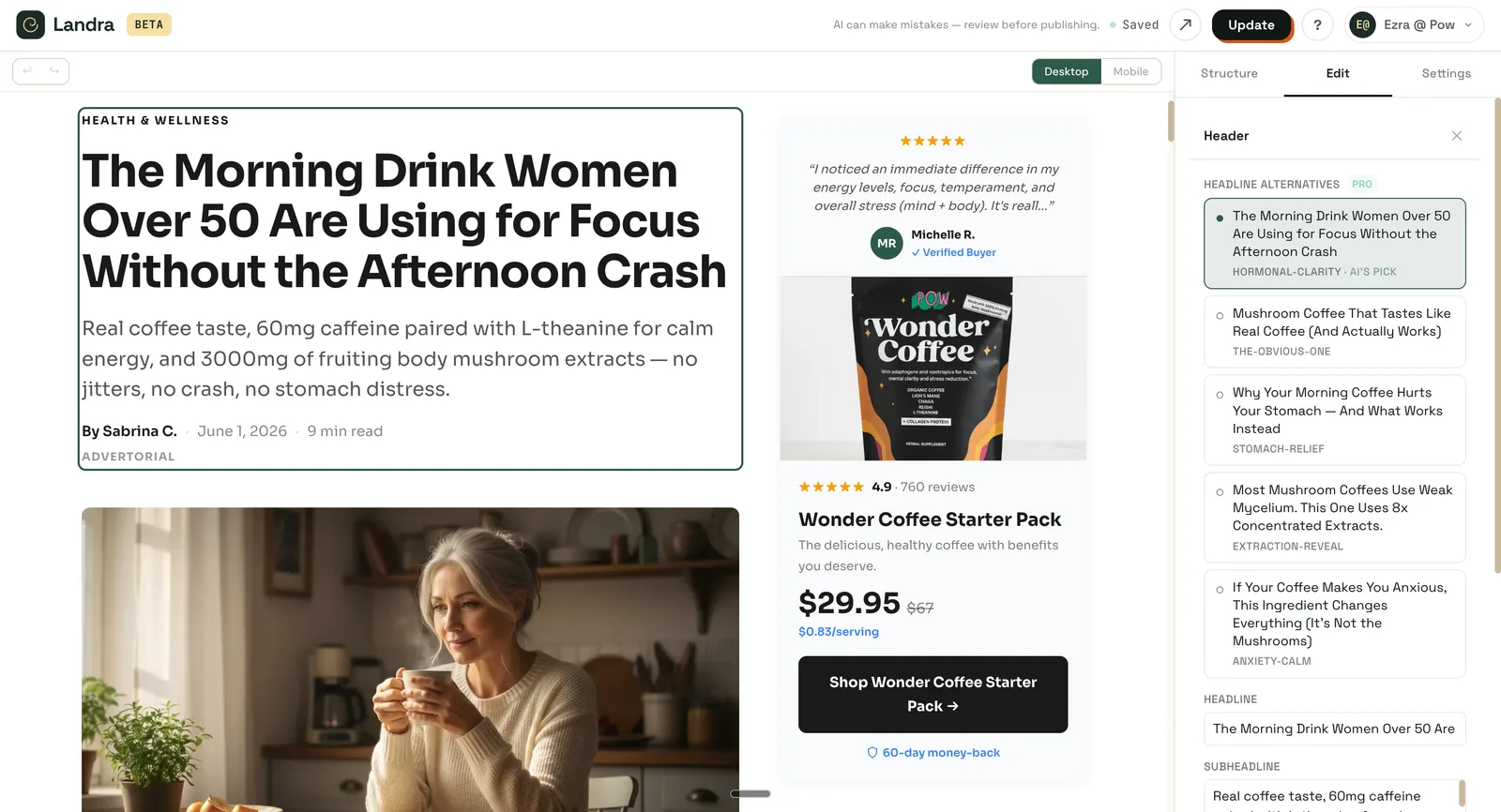
A pre-sell page is one page that has to do five things well (hook, educate, prove, tease, and send the reader to buy), tuned to one cold reader and honest about being an ad. That is a lot of craft to assemble by hand for every angle you want to test, which is where Landra comes in.
Whatever you build it in, the rules are the same: one reader, a hook that names their problem, real proof, one CTA, and a clear label that it is an ad. Get those right and the page does the warming your product page never could.
Frequently asked questions
What is the difference between a pre-sell page and an advertorial?
"Pre-sell page" names the page's job and funnel position (between the ad and the product page); "advertorial" names its editorial style. Most pre-sell pages are written as advertorials, so the terms are often used interchangeably.
Is a pre-sell page the same as a pre-lander or pre-cart?
Yes. Pre-lander, pre-cart, pre-sale, and pre-sell page all describe the same intermediary page between a cold ad and the product or cart page.
Where does a pre-sell page go in the funnel?
Between the ad and the product or cart page. The ad drives the click, the pre-sell educates and builds trust, then sends a warmed-up visitor to the product page to buy. It is best for cold and problem-aware traffic, not checkout-ready buyers.
Do pre-sell pages actually increase conversions?
Practitioners report meaningful lift because the page warms cold traffic the product page cannot. Vendor benchmarks like TrueProfit put cold-traffic conversion near 0.5% straight to a product page versus 3–5% through an advertorial — directional vendor figures, not a guarantee.
What should a pre-sell page include?
Five blocks: a hook (a stat or pain point), education (why the problem happens), proof (reviews, results, a demo), an offer tease, and one clear CTA to the product page.
Do I have to disclose a pre-sell page as an ad?
Yes. When the page is a paid advertorial, the FTC requires a clear label such as "Advertisement" near the top. See our advertorial disclosure guide for the specifics.
How do you measure if a pre-sell page is working?
Watch four numbers: click-through from the pre-sell page to the product page, scroll depth (does anyone reach the proof block?), first-screen bounce (is the hook landing?), and the one that decides it — conversion rate and blended ROAS through to purchase, not on-page engagement.
How long should a pre-sell page be?
Long enough to hook, educate, and prove without padding — most run 800–2,000 words, scaled to how much warming your cold traffic needs. A familiar, low-priced product needs less; an unfamiliar or higher-priced one needs more.