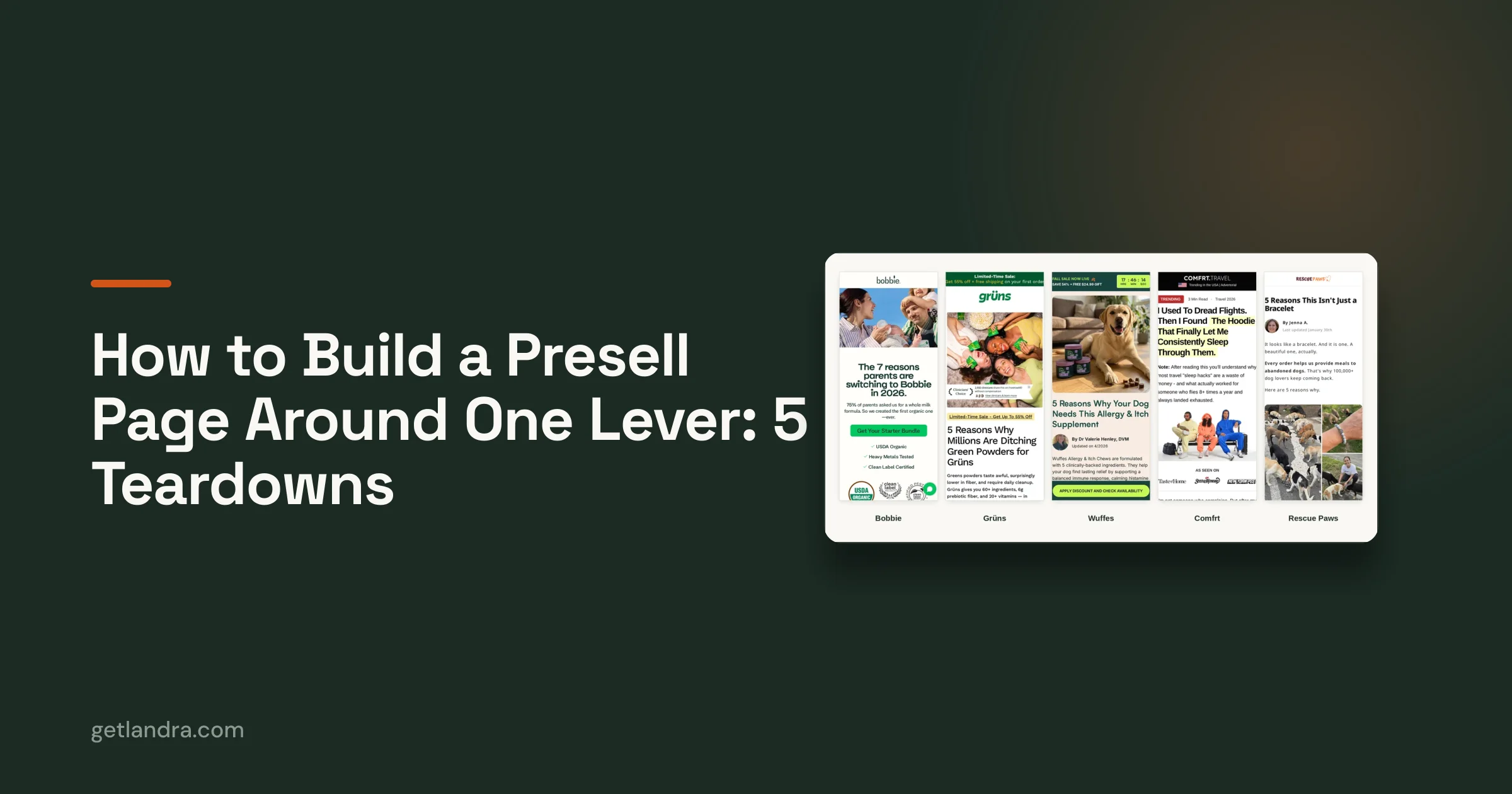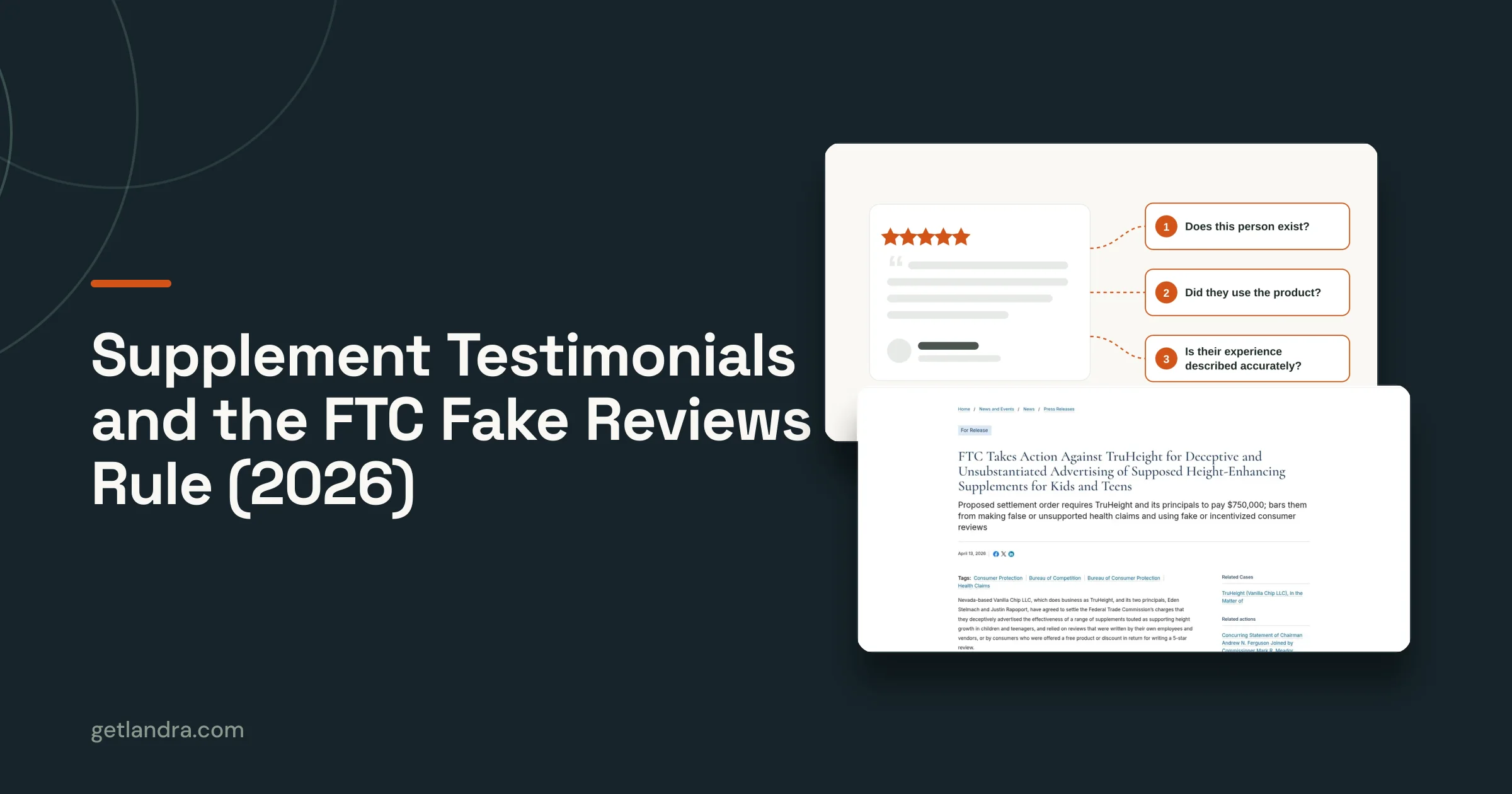

Are advertorials even legal? And what happens if you run one that looks like a news article? It is the question every DTC operator asks the first time they write a page that reads like editorial, and the answer is reassuring but firm. Yes, advertorials are legal. The line is one thing: being transparent that the page is an ad. Cross that line and a true, well-written page can still get you a warning letter; stay on the right side of it and you are fine. (New to the format? Start with what an advertorial is.)
Are advertorials legal?
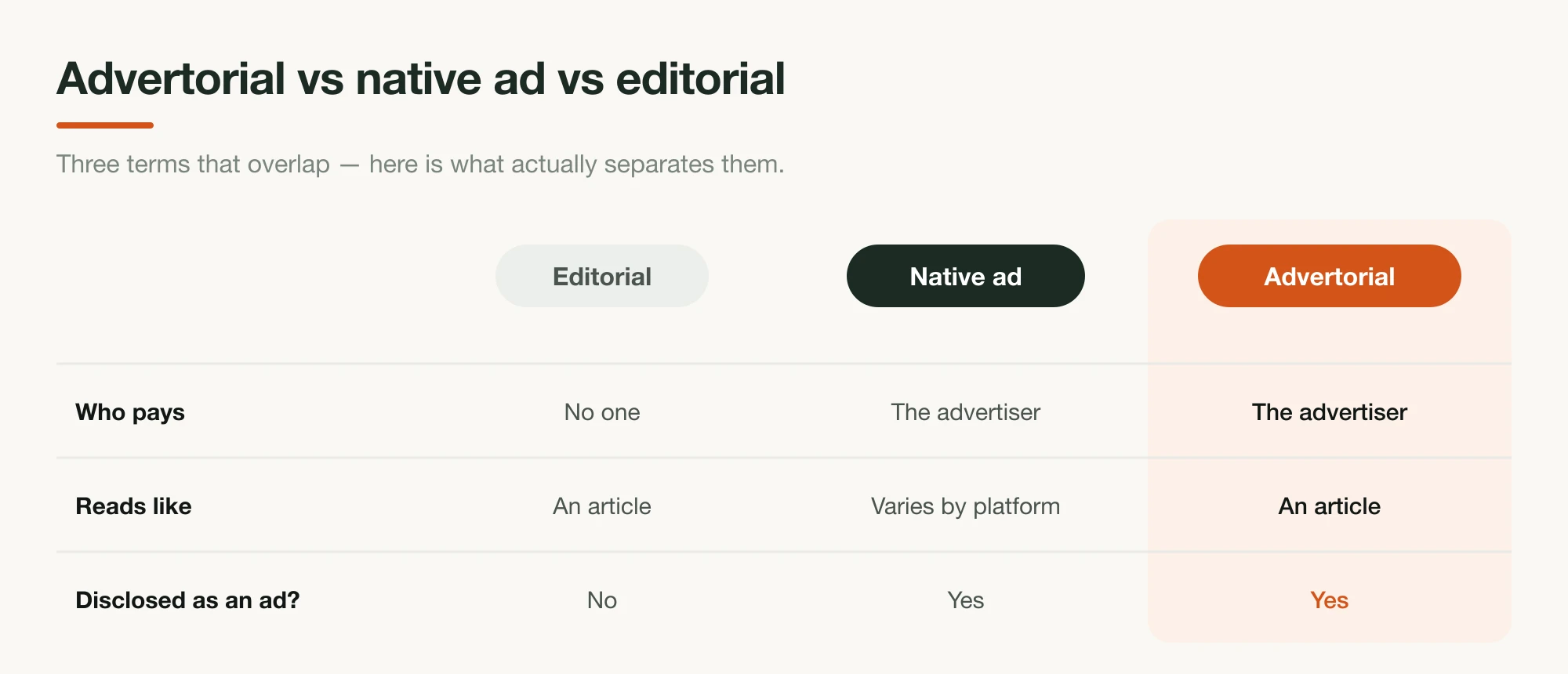
Yes. Advertorials are legal in the United States as long as they are clearly disclosed as advertising. The FTC's position is plain — in its words, people "have a right to know if they're seeing editorial content or an ad" (2015 Enforcement Policy Statement). What is illegal is the deception: a paid page passing itself off as independent editorial. Disclose it, and the format is entirely legitimate.
What the FTC actually requires
One rule sits underneath everything: an ad cannot mislead consumers about its commercial nature. The FTC's Native Advertising: A Guide for Businesses (2015) puts it directly — it is "deceptive to mislead consumers about the commercial nature of content." If a reasonable reader could mistake your page for independent editorial, you need a clear, prominent disclosure that it is an ad.
The deception standard
The FTC's test is whether there is "a material misrepresentation or omission of information that is likely to mislead the consumer acting reasonably in the circumstances," judged by the "net impression" of the page — "both what the ad says and the format it uses." Format is not a detail here; it is part of the message.
True claims, still deceptive
This is the part operators miss: the FTC "considers misleadingly formatted ads to be deceptive regardless of whether the underlying product claims that are conveyed to consumers are truthful." A 100%-accurate advertorial can still break the rule purely by hiding that it is an ad. Honesty about the product does not buy you out of honesty about the format.
The label has to be there before the click
The FTC calls misleading lead-ins "deceptive door openers": advertisers "are responsible for ensuring that native ads are identifiable as advertising before consumers arrive at the main advertising page." So the disclosure belongs both on whatever drives the click and on the page itself — "no matter how consumers arrive at advertising content, it must not mislead them about its commercial nature."
Where and how to label it
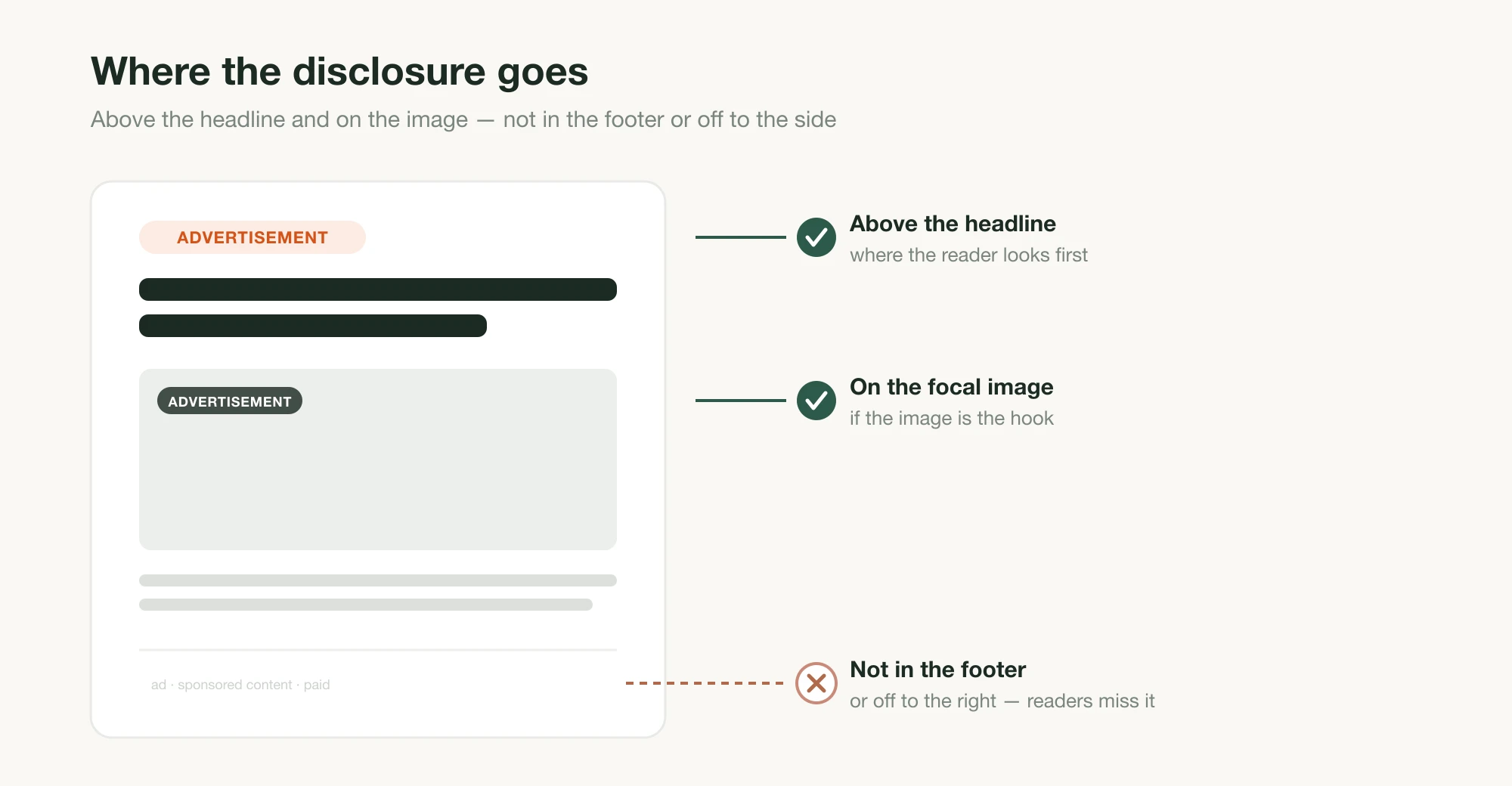
Put the disclosure in front of or above the headline, where the reader looks first, and on the focal image if that image is the hook. The FTC is specific: place it "in front of or above the headline of the native ad," and "if a native ad's focal point is an image or graphic, a disclosure might need to appear directly on the focal point itself." The test is not whether the label technically exists; it is whether a reader actually notices it.
That means the practical failure modes are predictable. Readers are "less likely to notice disclosures positioned to the right," and putting one below "increases the risk that consumers will click on the ad without seeing the disclosure." A footer disclosure on an editorial-style page is the classic miss. Make the label readable — "in a font and color that's easy to read; in a shade that stands out against the background," and "large and visible enough for consumers to readily notice."
What label do I use? (the exact words)
Use a word readers understand as advertising. The FTC's recommended terms are exact: "Terms likely to be understood include 'Ad,' 'Advertisement,' 'Paid Advertisement,' 'Sponsored Advertising Content,' or some variation thereof." It explicitly warns off "Promoted" or "Promoted Stories," which it calls "at best ambiguous," and notes that "company logos and names on their own are not likely adequate."
Two traps worth naming. Softer "funder" phrasings — "Presented by," "Brought to you by," "Sponsored by" — can read as though a sponsor merely underwrote content it did not create; for a brand-written advertorial, that understates your authorship. And the word "Advertorial" itself is industry jargon that is not on the FTC's recommended list, so a normal reader may not parse it as "this is a paid ad." If you use it, pair it with "Advertisement."
Honest vs deceptive: the do/don't split
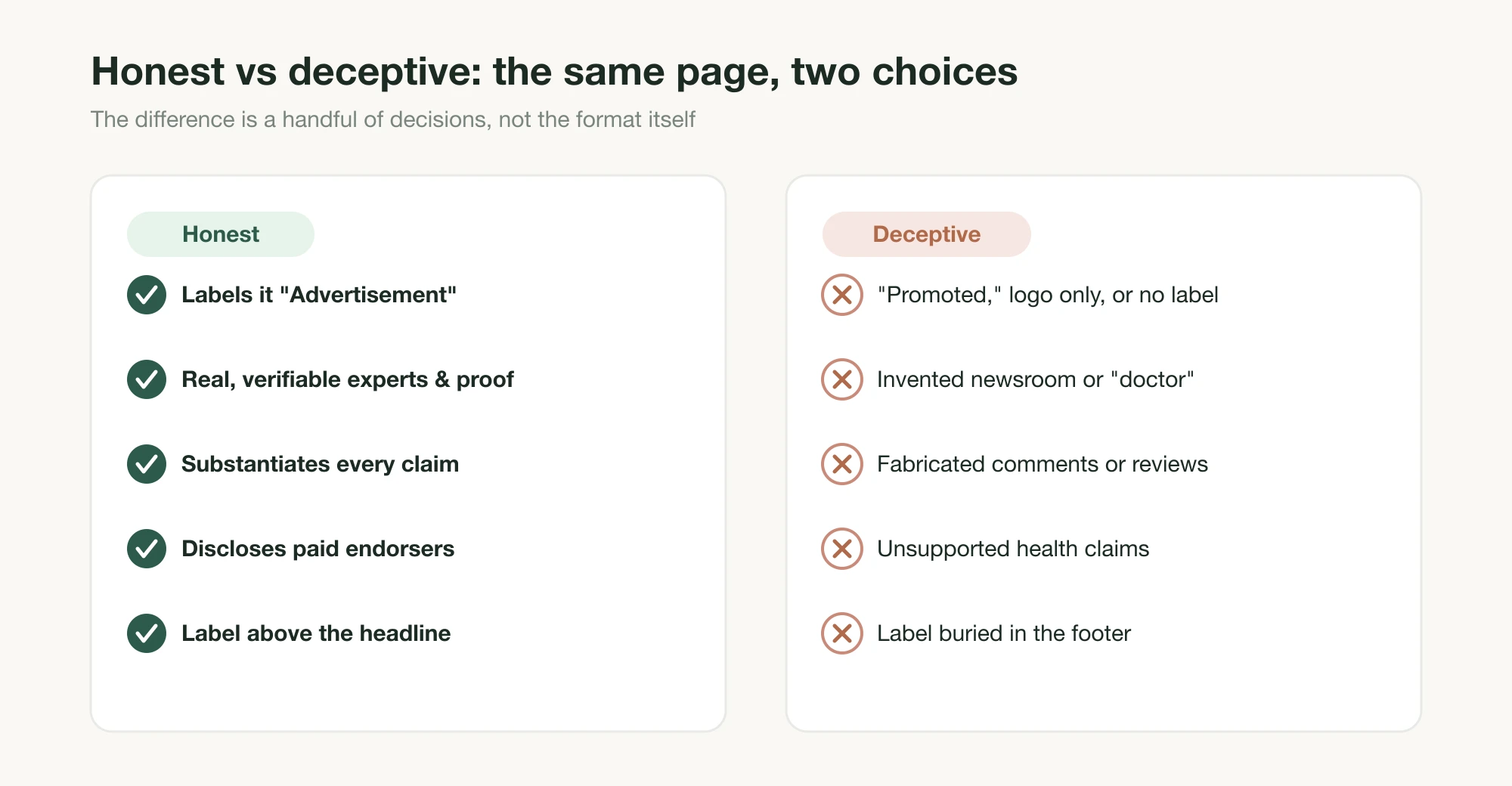
The same advertorial can be compliant or deceptive depending on a handful of choices. Here is the line, side by side.
Honest pages do this:
- Label the page "Advertisement" (or "Paid Advertisement" / "Sponsored Advertising Content").
- Put the label above the headline, and on the focal image if that is the hook.
- Make it stand out — readable size, strong contrast, never greyed-out or footer-buried.
- Use real, verifiable experts, testimonials, and data. Here's what the Fake Reviews Rule asks of every testimonial.
- Substantiate every claim before publishing.
- Disclose any paid endorser or affiliate relationship clearly.
Deceptive pages do this:
- Use ambiguous words — "Promoted," or the brand logo alone — or no label at all.
- Hide the label below, to the right, or in the footer.
- Invent a publication, masthead, or newsroom, or imply news-network endorsement.
- Use an expert or "doctor" a reader cannot verify, or fabricated comment threads.
- Make health or performance claims with no substantiation.
This is not abstract. In 2011 the FTC moved against operators running fake "news" sites for acai-berry weight-loss supplements — pages styled as outlets like "Health News Health Alerts," displaying real news-network logos and fabricated "consumer" comments while hiding their financial ties. That is the fake-newsroom pattern in its fully illegal form, and it is exactly what a careful DTC brand stays far away from.
The edge cases: influencers, affiliates, and fabricated authority
Three places brands trip even with a labeled page.
Paid influencers and material connections
In 2016 the FTC charged Lord & Taylor over a paid "seemingly objective article" in an online magazine and 50 influencers paid $1,000–$4,000 each to post the same dress, none disclosed. The order bars it from "misrepresenting that paid commercial advertising is from an independent or objective source." An undisclosed material connection — money, free product, a relationship — is deceptive on its own.
Affiliate links
Per the FTC's endorsement guidance, a bare "affiliate link" or a "buy now" button is not an adequate disclosure — consumers may not know it means the linker gets paid. "'Paid link' right next to an affiliate link should be an adequate disclosure." Put it where the reader sees it with the link, not in a distant footer. (The codified rule is 16 CFR Part 255.)
Faking the newsroom
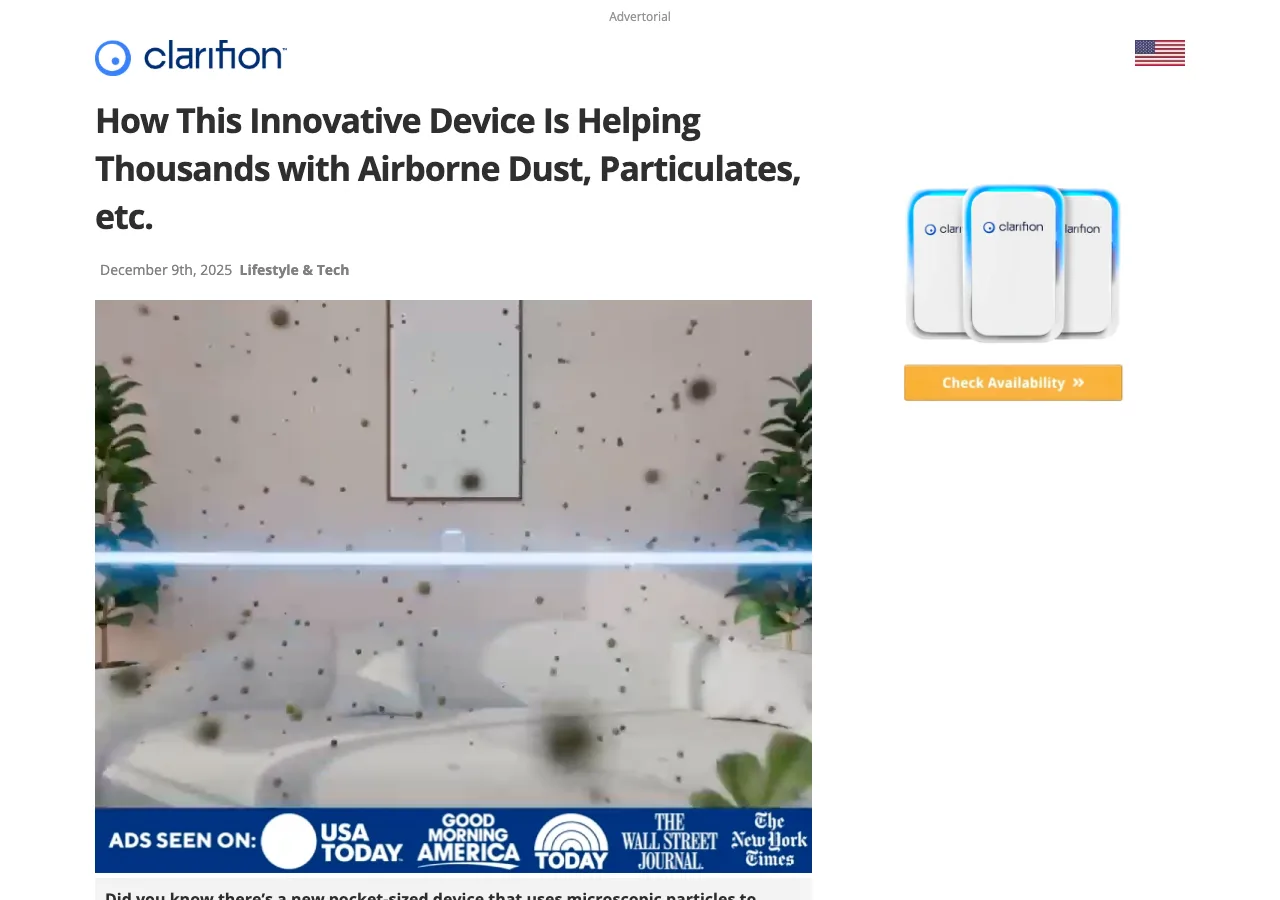
This is the title's payoff. Inventing a publication name, an unverifiable "Top Dermatologist" byline, or a synthetic comment thread is the move that turns an editorial-style page into a deceptive one. You can borrow the structure of editorial — a stat, a discovery, a clear narrative — without faking the source. If you cannot verify an expert or a result, do not imply it. For a worked example of a page that drifts over this line, see our shower-filter advertorial teardown.
Substantiate the claims (what "substantiated" means)
Disclosure keeps the page honest about being an ad; substantiation keeps its claims legal. The FTC requires "competent and reliable scientific evidence" for objective product claims — and for health, weight-loss, or performance claims, that means well-designed human clinical testing. Testimonials, expert quotes, and "studies show" hand-waving do not substantiate a claim you could not make outright.
The bar scales with the claim, and it is highest exactly where DTC advertorials live: supplements, skincare, and functional food. "Clinically shown to improve sleep" needs randomized, controlled human trials; animal or in-vitro studies and customer surveys do not clear it. The FTC's Health Products Compliance Guidance (2022) is the reference for supplements, foods, and devices. The rule of thumb: if you could not say it on the product page, you cannot say it in the advertorial. The editorial wrapper does not lower the evidence bar.
Build a compliant advertorial without losing conversion
Disclosure barely dents conversion; deception is what triggers fines and chargebacks. Once a brand is on notice — and the FTC has put hundreds of companies on formal notice over deceptive endorsements — civil penalties can reach $53,088 per violation (2025). The advertorials that convert do it with a label on; see advertorial examples that convert. And the page underneath the label still has to do its job: Landra builds the advertorial on a proven structure from your real product and audience, and for supplement and functional categories it auto-adds the FDA-style health disclaimers, though the "Advertisement" ad-label above is still yours to place.
Before you publish
Run this before any advertorial goes live. The 5-second test: could a reasonable reader mistake this page for independent editorial? If yes, it needs a disclosure.
Do
- Label it "Advertisement" (or "Paid Advertisement" / "Sponsored Advertising Content").
- Put the label above the headline, and on the image if the image is the hook.
- Make it stand out: readable size, strong contrast, never footer-buried.
- Disclose before the click and on the page.
- Substantiate every claim: the honest format does not legalize an unsupported claim.
- Disclose paid endorsers; label affiliate links "paid link."
- Use real, verifiable experts, testimonials, and data.
Don't
- Use "Promoted," your logo alone, or bare "Advertorial" as the only label.
- Hide the disclosure below, to the right, or in the footer.
- Invent a publication, masthead, expert, or comment thread.
- Bury a recurring subscription or other material term.
Compliance is cheaper than a clawback, and on a well-built page it costs you almost nothing in conversion. For the page itself, see how to write an advertorial.
Frequently asked questions
Are advertorials legal?
Yes, as long as they are clearly disclosed as advertising. The FTC's 2015 Enforcement Policy Statement and Native Advertising Guide require that an ad not mislead readers about its commercial nature; an undisclosed advertorial styled as editorial is deceptive.
What label do I use on an advertorial?
A term readers understand as advertising — "Advertisement," "Ad," "Paid Advertisement," or "Sponsored Advertising Content." The FTC says to avoid "Promoted," which it calls ambiguous, and not to rely on a logo alone.
Where does the disclosure go?
In front of or above the headline, where readers look first — and directly on the focal image if that is the hook. It must stand out in size and contrast, and appear before the reader engages, not buried in a footer.
Can an advertorial be deceptive even if every claim is true?
Yes. The FTC considers misleadingly formatted ads deceptive regardless of whether the underlying product claims are truthful. Hiding that the page is an ad is itself the violation.
Do I have to disclose paid influencers or affiliate links?
Yes. An undisclosed material connection — payment, free product, a relationship — is deceptive. Affiliate links need a clear "paid link" label; "affiliate link" or "buy now" alone is not enough.
What happens if I do not disclose?
The FTC can act. It charged Lord & Taylor in 2016 over an undisclosed paid magazine article and 50 influencers, and shut down operators of fake "news" sites promoting acai-berry supplements in 2011–2013. Once a company is on notice, civil penalties can reach $53,088 per violation (2025).
Is "Advertorial" a good enough label?
On its own it is risky — it is industry jargon, and it is not on the FTC's list of recommended terms. Pair it with "Advertisement" so a typical reader clearly understands the page is paid.
What does the FTC consider "substantiated" for a health claim?
Objective claims need "competent and reliable scientific evidence"; for health, weight-loss, or performance claims that means well-designed human clinical testing. Testimonials, expert quotes, and animal or in-vitro studies do not substantiate a claim you could not make on the product page.
Will Meta or TikTok approve an advertorial?
Often, if it is honest. Meta and TikTok both review the ad against its landing page and reject misleading headlines, fake-news styling, unsupported health claims, and cloaking. A clearly labeled advertorial whose page matches the ad generally clears review; a fake newsroom or an unsupported claim does not.