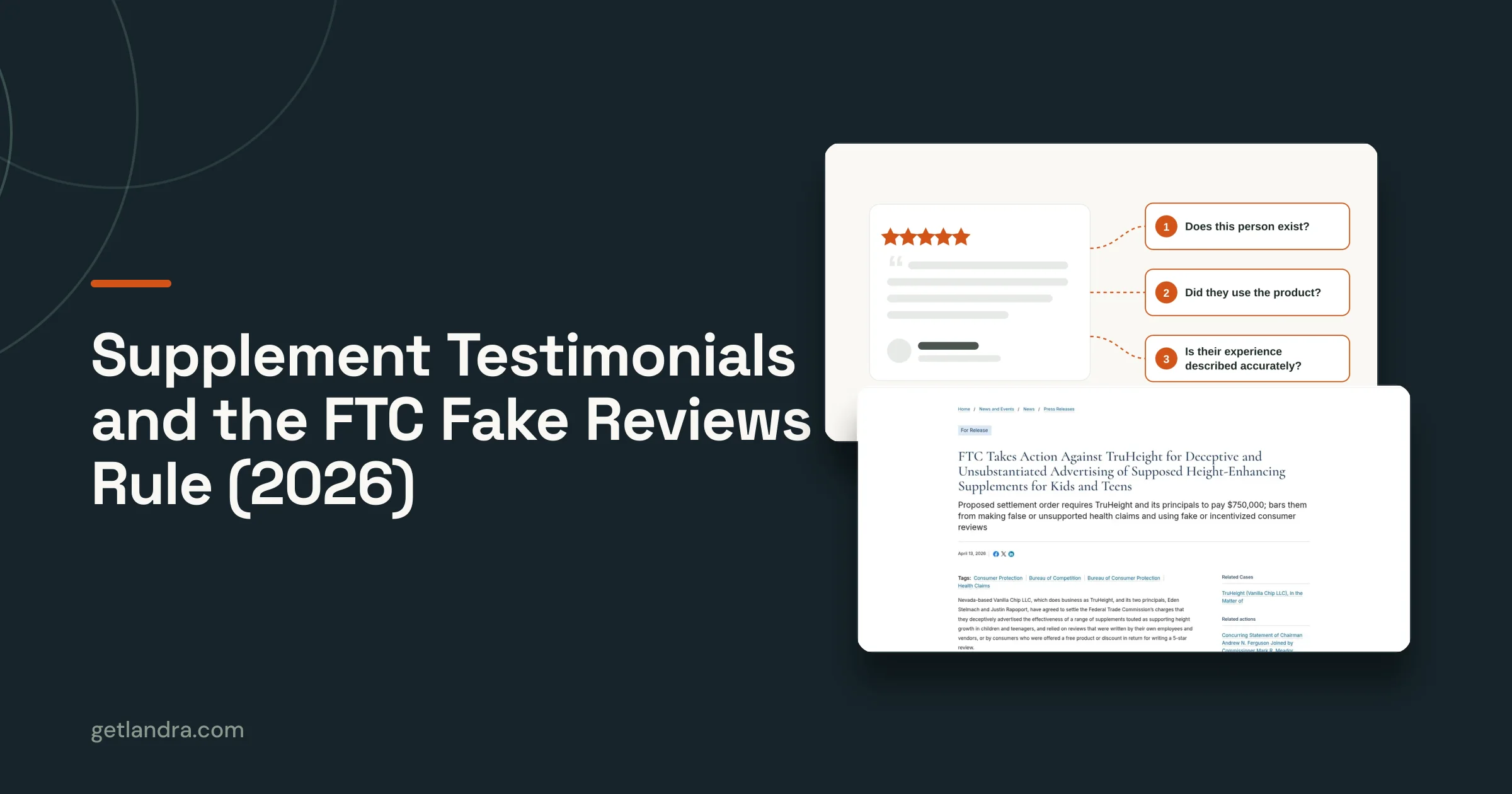


This is the first in a series: we take one real, live DTC advertorial apart, section by section, to learn what makes it convert, and where it crosses from persuasion into deception. The subject is a filtered-showerhead pre-sell page that's been running on paid social: well-built, high-pressure, and instructive in both directions. New to the format? Start with what an advertorial is and our advertorial examples roundup.
The page at a glance
The page sells the "IonDrops 2.0" filtered showerhead (brand "Drivse"). The headline does the heavy lifting: "Your Shower Is Slowly Destroying Your Skin, Hair & Health — And You Don't Even Know It," with a subhead promising "a top U.S. dermatologist finally exposes the real cause." It reads like an exposé, runs several scrolls of editorial-style copy, and only arrives at the offer after a long build.
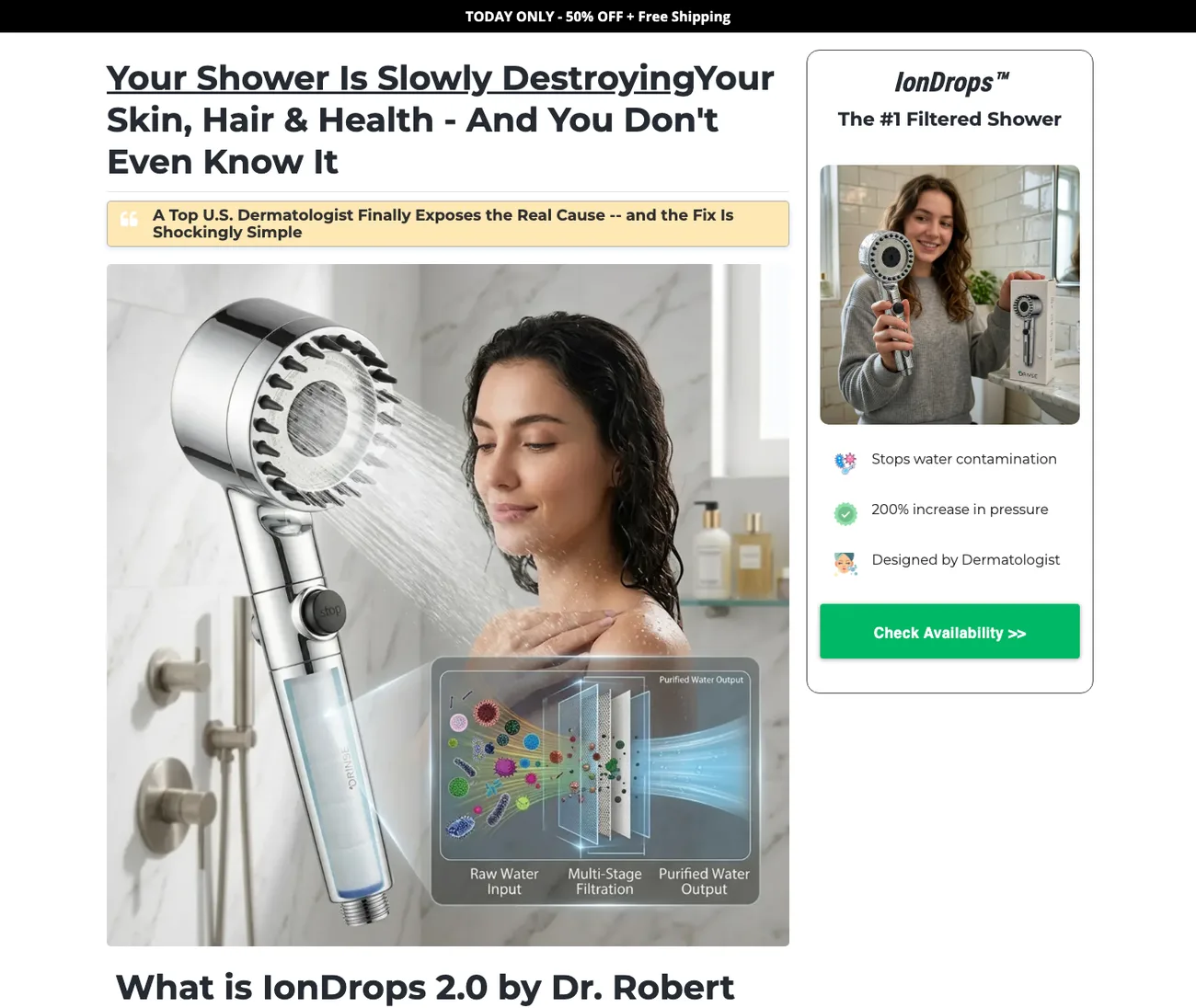
It's a clean piece of direct-response craft. It's also, on close inspection, mostly unsubstantiated. Both halves are worth studying, so let's do the "why it works" first, then the "what's wrong."
Why it works: the persuasion architecture
Underneath the specifics, this is the classic advertorial arc — problem, mechanism, proof, objections, offer — executed with discipline. (For the clean version of that arc, see how to write an advertorial.)
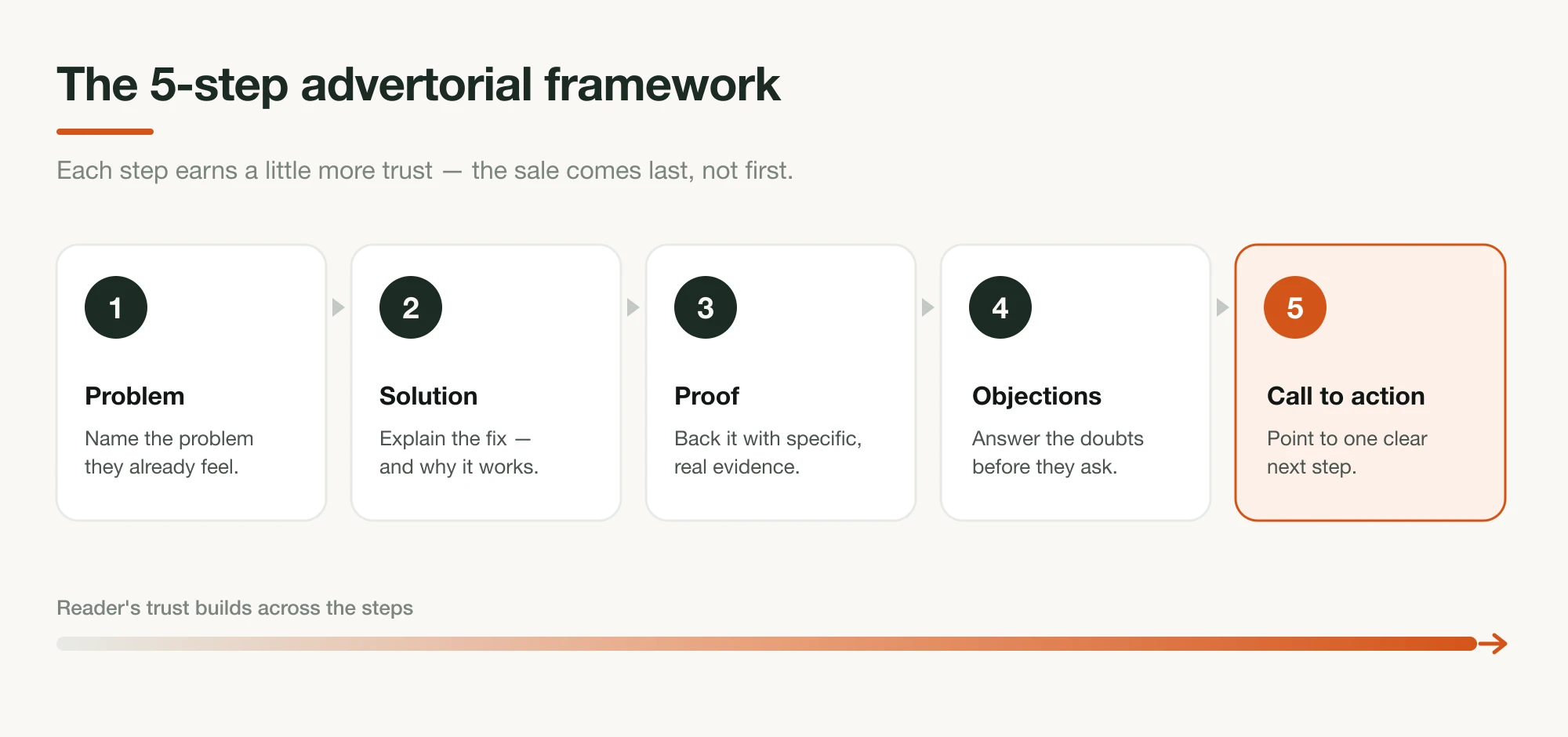
1. A fear hook that interrupts a daily habit. "Your shower is destroying your skin" turns something you do every morning without thinking into a hidden threat, and "you don't even know it" manufactures both curiosity and urgency. It's a pattern interrupt: the reader expected a product ad and got an alarm.
2. Borrowed authority. The whole page is framed as a "top U.S. dermatologist" exposing the truth, attributed to a named "Dr. Robert Ballas." A white coat transfers credibility the brand hasn't earned on its own. This is the load-bearing element — and, as we'll see, the one that most needs to hold up to a reader who checks.
3. The "attack the cause, not the symptom" reframe. The copy tells the reader their skin and hair problems aren't their fault and aren't their products; they're the water. That does two powerful things: it absolves the reader ("you've been applying clean products with dirty water") and it creates a single clean villain the product conveniently defeats.
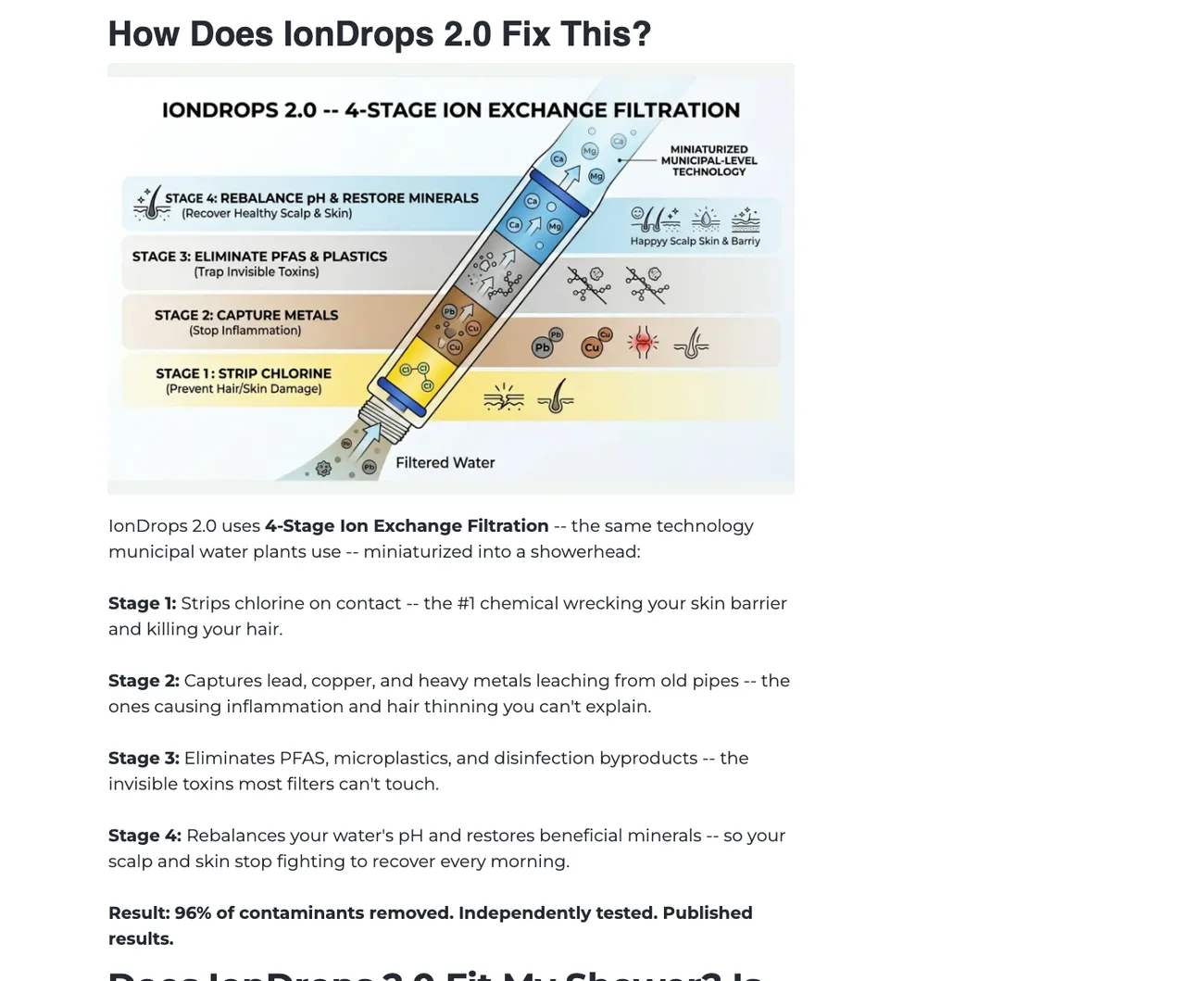
4. A mechanism with the look of science. A diagram lays out "4-Stage Ion Exchange Filtration — the same technology municipal water plants use," and the copy lists exact figures: 96% of contaminants, "97% of tap water," "100-year-old pipes," "$0.10/day." Specific numbers feel like proof.
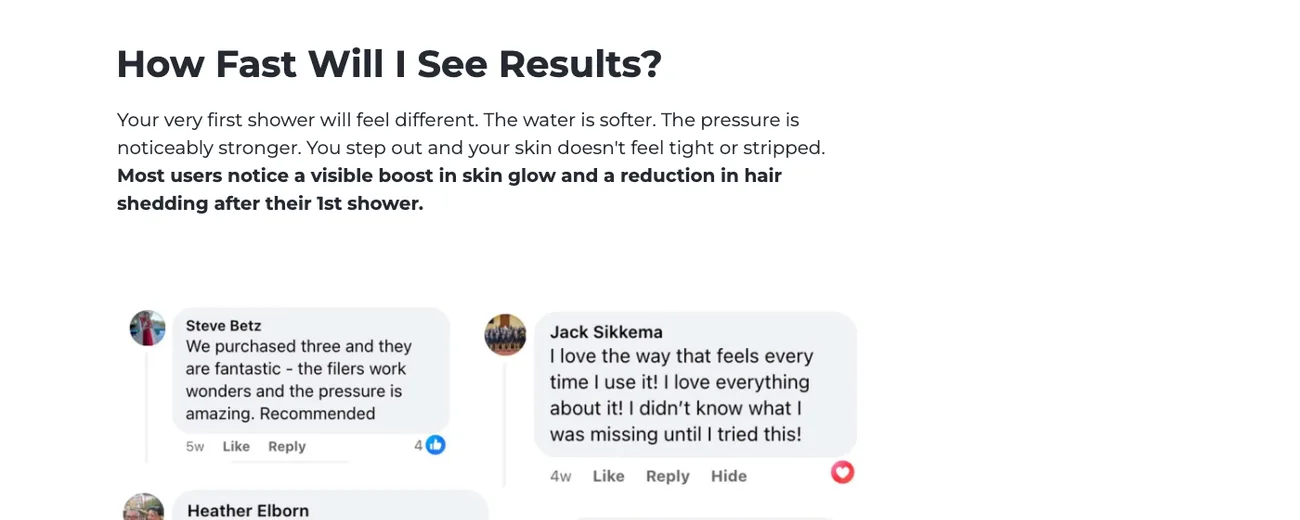
5. Social proof. A "How Fast Will I See Results?" section is followed by a Facebook-style comment thread — "Steve Betz," "Jack Sikkema," "Heather Elborn" — each conveniently praising a different benefit.
6. Urgency and risk reversal. A "TODAY ONLY — 50% OFF" bar, a "we sell out fast" line, a slashed "regular price," and a 60-day money-back guarantee. The deadline pushes action; the guarantee removes the reason to wait.
7. An offer reframed against an inflated alternative. The price work is subtle and effective. The cost is reframed to "$0.10/day," which makes the filter feel trivial, and it's anchored against whole-home filtration "costing $2,000+," which makes $30 feel like a steal. Both moves shrink the perceived price without lowering it, anchoring the reader against a number you chose, not the number that matters (what a comparable shower filter actually costs). It's a clean demonstration of how an offer section sells the frame, not just the price.
Taken together, it's a genuinely effective machine: a well-sequenced problem-to-offer build that does everything a cold-traffic pre-sell is supposed to do. The reason it's effective is also the next problem: the machine is running on claims that don't hold up.
What's wrong: where it crosses the line
A page can be persuasive and still be misleading, and this one is, in four specific ways. (This is the half that makes the difference between a great advertorial and an FTC problem; see our advertorial examples for how honest pages pull off the same moves.)
The authority isn't verifiable. We could not confirm that "Dr. Robert Ballas" is a real, board-certified dermatologist associated with this product, and to be clear, we're not claiming he isn't real. We're saying a reader has no way to tell: the page offers no license number, institution, publications, or checkable bio, and the same name appears on the same product across several unrelated dropship domains where the supposed figures shift page to page (96% on one, 99% on another; 200% on one, 300% on another). Whether or not the person exists, an authority the reader can't verify does the brand no favors; it invites exactly the scrutiny a real, citable expert would let you avoid.
The headline claims aren't substantiated. "96% of contaminants removed — independently tested, published results" links to no test and no publication, and the device carries no NSF/ANSI certification, the standard that would back a contaminant-reduction claim. A carbon/KDF filter can meaningfully reduce free chlorine; lumping lead, PFAS, and microplastics into one "96% of all contaminants" number is not the same thing, and cheap shower filters generally don't remove those at certified levels. The page also states the filter "boosts your immune system by 300%" — a figure with no scientific basis at all.
There's a real kernel, which is exactly why it works. Give the page its due: chlorinated and hard shower water genuinely damages the skin's lipid barrier and raises transepidermal water loss, worsening dryness and eczema, and PFAS can absorb through skin (though ingestion is the dominant exposure route). A chlorine-reducing shower filter is a legitimately reasonable purchase. The dishonesty isn't the premise; it's inflating a real, modest benefit into "destroying your health," "96% of everything," and a "300% immune boost." A version of this page built on the honest claim — "chlorine dries out your skin; this reduces it" — would still convert cold traffic, because the underlying problem is real. The brand didn't need to lie; it chose to.
There's no disclosure, and the claims invite scrutiny. The page is styled as an editorial exposé with comment-thread social proof, but carries no clear "Advertisement" or "Advertorial" label. The FTC's native-advertising guidance requires a clear, conspicuous disclosure exactly when content could be mistaken for independent editorial, and its health-products guidance requires health and performance claims to be substantiated before publishing. An immune-boost percentage with no backing, plus an undisclosed recurring filter subscription that independent reviewers (e.g. MalwareTips) report buyers were billed for, is a stack of exactly the things regulators pursue.
How to keep the craft without the lies
The useful part of a teardown isn't the dunk; it's the fix. Every technique on this page is reusable honestly:
- Use a real, verifiable expert, or drop the white coat. A named founder, a citable practitioner, or your own first-party data beats an unverifiable "doctor." If you can't verify it, don't claim it.
- Substantiate or soften the numbers. Anchor the claim to the one thing that's true (chlorine and the skin barrier), cite a real source, and lose the "96% of everything" and "300%" figures you can't back.
- Add a clear disclosure. A clear label above the headline keeps you compliant and, done honestly, barely dents conversion; the honest pages in our roundup prove it. See advertorial disclosure & FTC compliance for the exact rules and the label the FTC actually recommends.
- Be honest about price. Disclose the recurring subscription up front. A surprise charge is the fastest way to turn a sale into a chargeback and a complaint.
The lesson
This page is a useful study precisely because it's good at the craft and bad at the truth. The persuasion stack — fear hook, authority, villain reframe, mechanism, proof, urgency, risk reversal — is transferable to any honest DTC brand. The weak points (an unverifiable authority, unsubstantiated numbers, a missing disclosure, a hidden subscription) aren't techniques to copy; they're the line that turns a high-converting page into a legal and brand liability. Keep the structure. Tell the truth inside it.
Build it honestly with Landra
The good news for an honest brand: you don't have to choose between conversion and compliance. Landra builds advertorials on exactly this proven structure — the fear-aware hook, the mechanism, the proof, the single offer — from your real product and audience, and it keeps the claims grounded in what you can actually say (for regulated categories it even adds the required disclaimers). You get the craft of a page like this, tuned to your customer, without the parts that get a brand in trouble.
The bottom line
A great advertorial and an FTC complaint can look almost identical from a distance: same hook, same authority, same mechanism, same offer. The difference is whether the claims are true, the expert is real, and the page admits it's an ad. This shower-filter page nails the first job and fails the second. Steal its structure, study its moves, and then do the one thing it didn't: keep it honest. Next up, learn to build the arc yourself in how to write an advertorial.
Frequently asked questions
What is an advertorial teardown?
A teardown is a section-by-section analysis of a single advertorial landing page — naming the persuasion techniques that make it convert and the places it overclaims or misleads. The goal is to learn the transferable craft while spotting the line where a pre-sell page crosses into deception.
Does this shower-filter advertorial actually work?
As a conversion page, it's well-built — a textbook direct-response stack. As a product claim, much of it is unsubstantiated: the named dermatologist isn't verifiable, the "96% of contaminants" and immune-boost figures have no published backing, and the filter shows no NSF certification. The one legitimate kernel is that chlorinated, hard shower water can harm the skin barrier.
Is it legal to run an advertorial like this?
Advertorials are legal, but this page has two compliance problems: it carries no clear FTC advertising disclosure despite being styled as editorial, and it makes health/performance claims ("boosts immunity," "96% of contaminants") that the FTC requires you to substantiate before publishing. Unsubstantiated health claims and a missing disclosure are exactly what regulators pursue.
What would make this advertorial better?
Keep the structure; fix the truth. Use a real, verifiable expert (or drop the white coat), substantiate or soften the numbers, add a clear "Advertorial" label, disclose the recurring subscription up front, and anchor the claims to the one thing that's actually true — chlorine's effect on the skin barrier.