
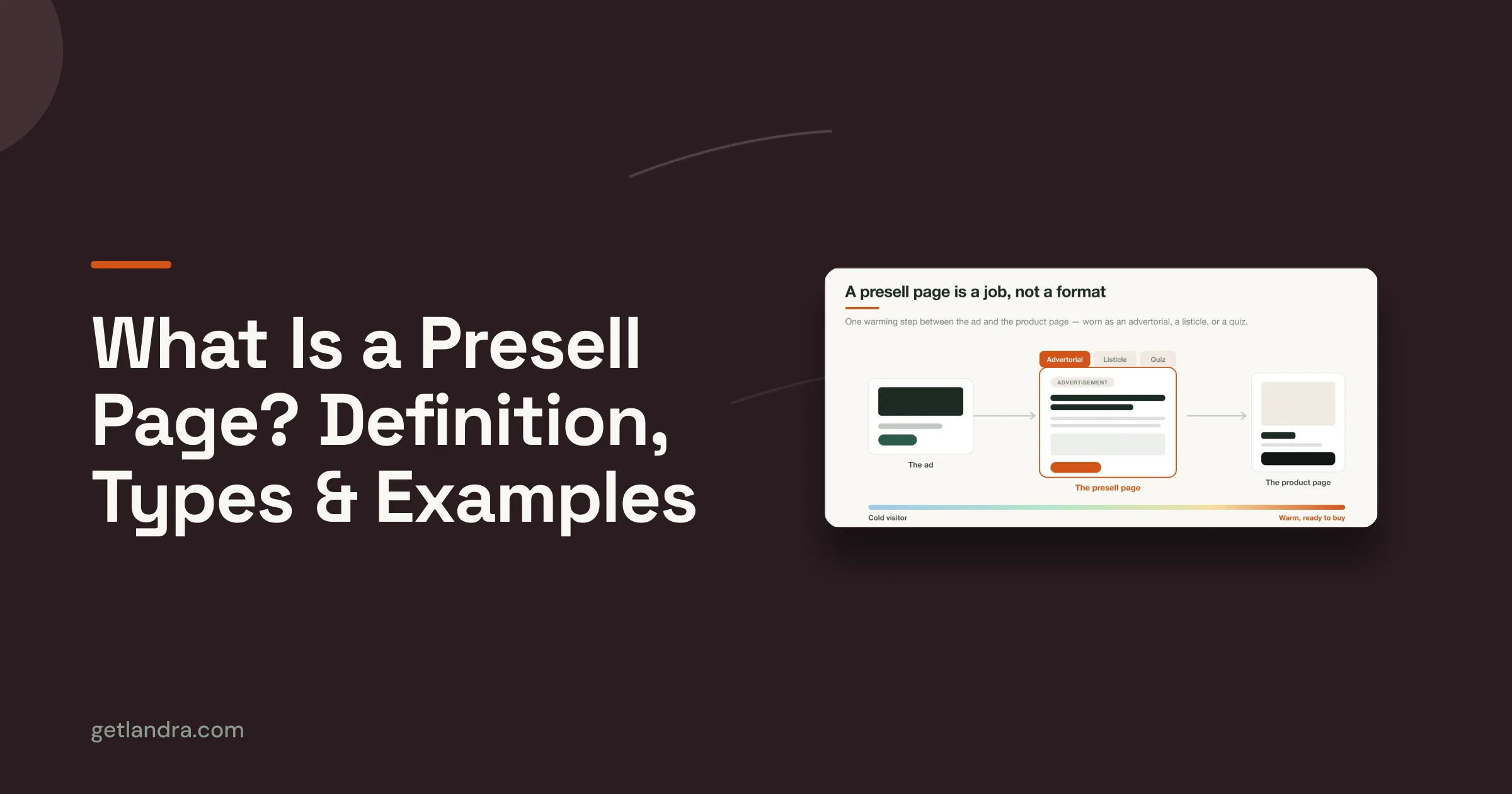
"Presell page" is one of those terms that means slightly different things depending on who you ask: a pre-lander to a media buyer, a bridge page to an affiliate, an advertorial to a copywriter. They are all describing the same thing. This page defines the category cleanly, untangles the synonyms, routes you down to the formats a presell page can take, and tells you when one wins. The thing worth getting straight up front: a presell page is a job, not a format, and that one distinction is what makes every other decision about it easy.
What is a presell page?
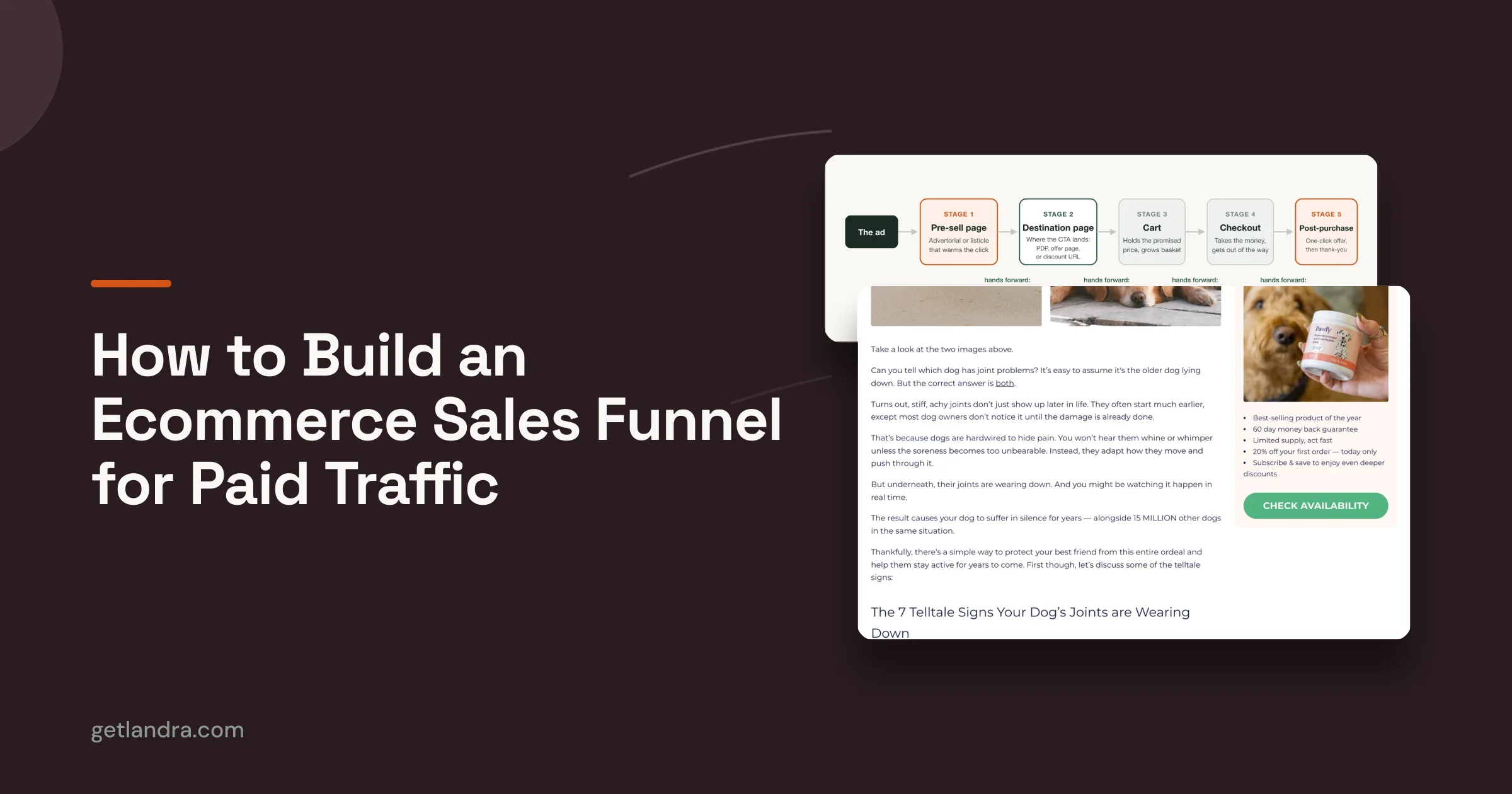
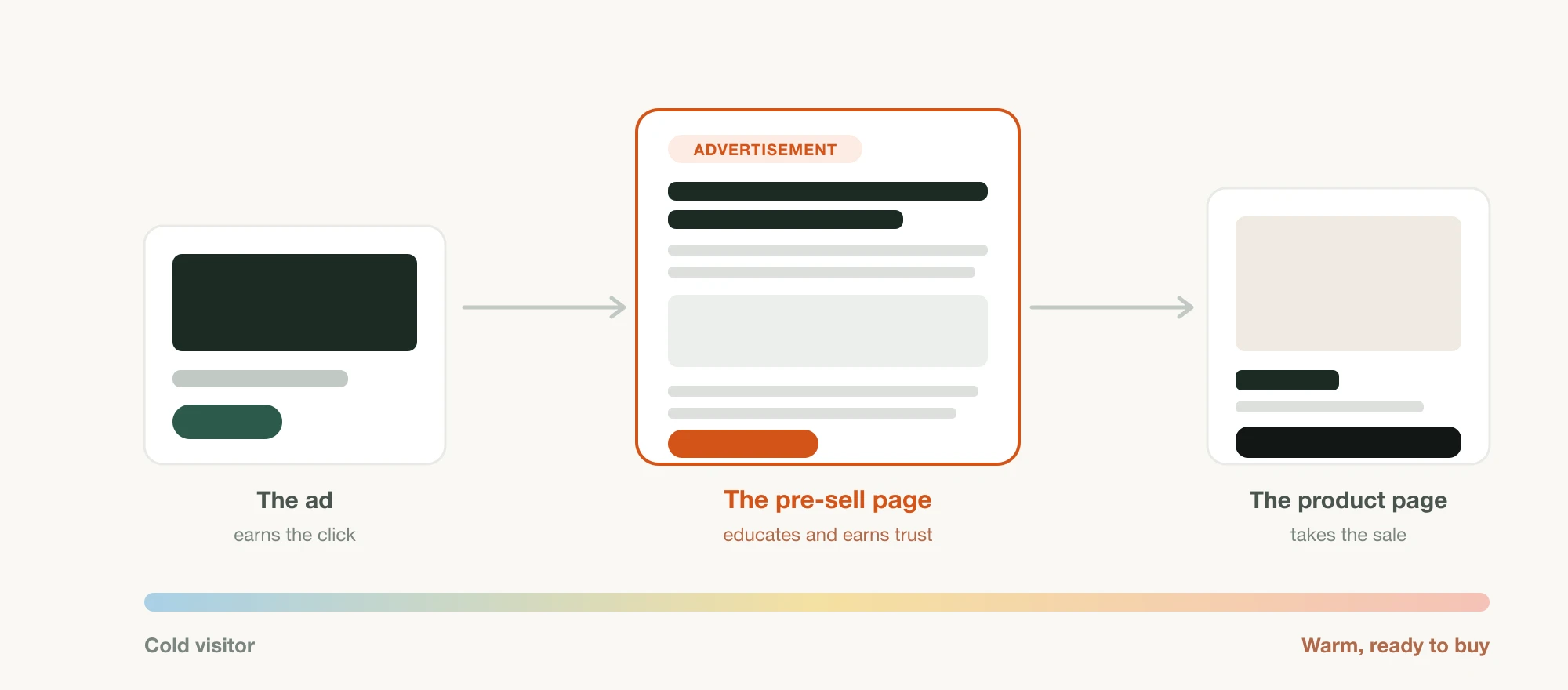
A presell page is a landing page that sits between a cold ad and the product page, and its only job is to warm a stranger before they meet the offer. It educates, builds a little trust, and teases the product — so the product page can do what it is built for: close someone who is already sold. The verb presell means to precondition a customer for a later purchase, and that is exactly the page's role.
The cleanest way to see where it fits is by what each page asks of the reader. As LanderLab puts it: "a regular landing page asks for the conversion upfront. An advertorial earns it. A presell page teases it." The presell page is the part of the funnel that does the warming — the work a cold visitor needs before the offer can land, and the work a product page can't do on its own.
Presell page vs pre-lander vs pre-cart vs bridge page
These are not different things — they are different names for the same page. Ad network MaxWeb calls them "pre-sell/lander pages" and notes that "some of the popular ones are pre-cart pages, bridge pages, and advertorials." The label usually tells you which corner of the industry the speaker came from, not what the page does differently.
Here is the disambiguation in one place. Every row points at the same job — warm a stranger between the ad and the offer:
| Term | Where it's used | What it actually means |
|---|---|---|
| Presell page | DTC / ecommerce | The page between a cold ad and the product page; names the job and funnel position. |
| Pre-lander | Media buying / paid social | The page traffic "lands on" before the offer page. Same page, buyer's term. |
| Pre-cart | Ecommerce / Shopify | The page before the cart or product page. Emphasizes the step before checkout. |
| Bridge page | Affiliate / performance | The page that "bridges" the ad and the offer. Affiliate term for the same intermediary. |
| Advertorial | Copywriting / direct response | One editorial format a presell page takes — names how it reads, not where it sits. |
| Listicle | Copywriting / direct response | Another format a presell page takes — a scannable numbered list. |
The one row that behaves differently is advertorial (and its sibling, listicle). Pre-lander, pre-cart, and bridge page are all synonyms for the position; advertorial and listicle name the format that fills it. Which brings us to the decision that actually matters: which format the page should be.
The formats a presell page can take
A presell page is a job — and there are several formats that do that job. The three dominant ones are the advertorial (a flowing editorial article), the listicle (a scannable numbered list), and the quiz (a short set of questions that personalizes the recommendation). Joinative catalogs the wider family — quizzes, customer stories, video tutorials, how-to articles, founder origin stories, tip lists — but most of those are variants of those three.
Here is the part most tools selling a "presell page builder" won't tell you: which format you reach for is not a style preference. It's decided by reader awareness — how much the person clicking already understands their problem, your category, and your product. We built Landra to generate both dominant presell formats, which forced us to make this routing explicit rather than leave it to taste. Pigeon Digital frames the same mapping from the agency side:
- Listicle: for problem-aware and product-aware readers who are close to buying and want to weigh reasons fast. The scannable list helps a decided-ish reader pick.
- Advertorial: for colder, more skeptical readers, and for saturated markets where you have to earn attention before the product can land. The long-form article does the deeper convincing.
- Quiz: when the product genuinely needs personalizing (shade, formula, fit, routine). The questions do the qualifying, then hand the reader a recommendation that feels theirs.
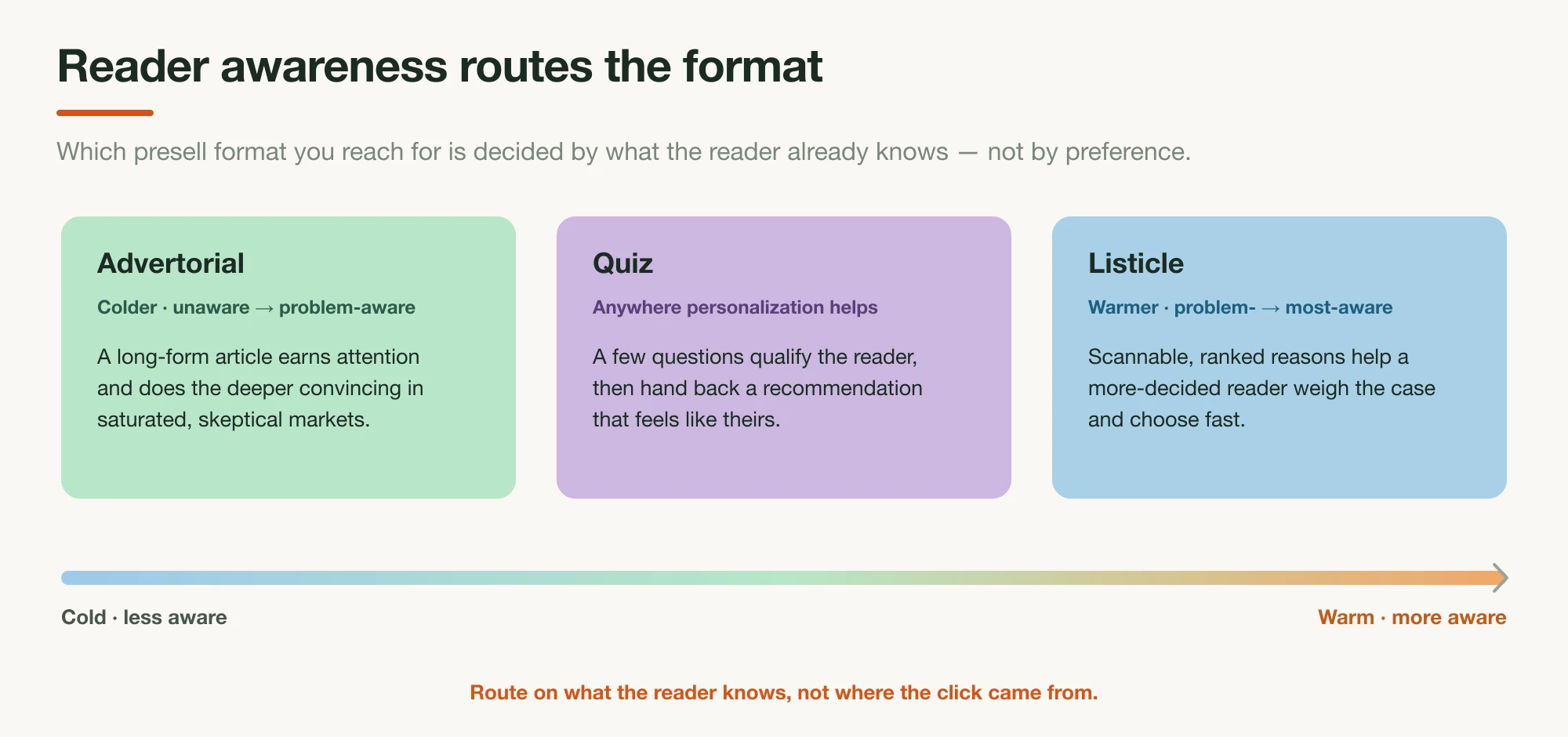
To go a level deeper on the two text formats, the format glossaries route from here: what is an advertorial for the long-form article, and what is a listicle for the scannable list. Note the framing we use throughout: awareness, not temperature. "Cold traffic" is a useful shorthand for a media buyer, but cold doesn't always mean unaware. A problem-led listicle reaches colder traffic just fine. Route on what the reader knows, not on where the click came from.
When a presell page wins (and when a PDP wins instead)
A presell page wins when the purchase needs explaining and loses when it doesn't. The DTC Newsletter, asking whether presell pages are still relevant (December 18, 2025), lands on a clean rule: they win for higher-AOV products (roughly above $150), for education-heavy categories like supplements and medical devices, and for commodities that need brand differentiation. They lose for impulse buys and low-AOV products — "for impulse purchases and low AOV products, PDPs and collections pages typically outperform."
The logic is straight ROI. A presell page is a second page to build, maintain, and test; it earns its keep only when the warming it does is worth more than the friction of an extra step. For a $12 impulse item the shopper already wants, that extra step is pure drag; send them to the PDP. For a $150 device a stranger has never heard of, the PDP alone asks for trust it hasn't earned, and the presell page is where that trust gets built.
| Use a presell page when… | Skip it (send to PDP/collection) when… |
|---|---|
| AOV is high (roughly $150+) | AOV is low |
| The purchase is considered and education-heavy (supplements, devices) | The purchase is impulse and self-explanatory |
| The category is a commodity that needs brand differentiation | The product sells itself on a spec or a price |
| Traffic is cold or skeptical and needs warming | Traffic is warm and already decided |
There's a useful directional signal underneath this. Vendor figures put cold traffic sent straight to a product page near 0.5%, versus 3–5% through an advertorial first (TrueProfit); read it as directional, not a benchmark, since it's a vendor's number. And ConvertCart estimates only about 1 in 4 store visitors arrive with real buying intent (2025), which is the whole reason the warming step exists for the other three in four.
Where DTC brands use presell pages
Presell pages show up everywhere cold paid traffic meets a product that needs a moment of explaining — most often on Meta and TikTok, where the click is cheap and the visitor knows the brand for about four seconds. The format the brand reaches for tracks the awareness of the reader it's buying.
A few patterns, with the formats they use:
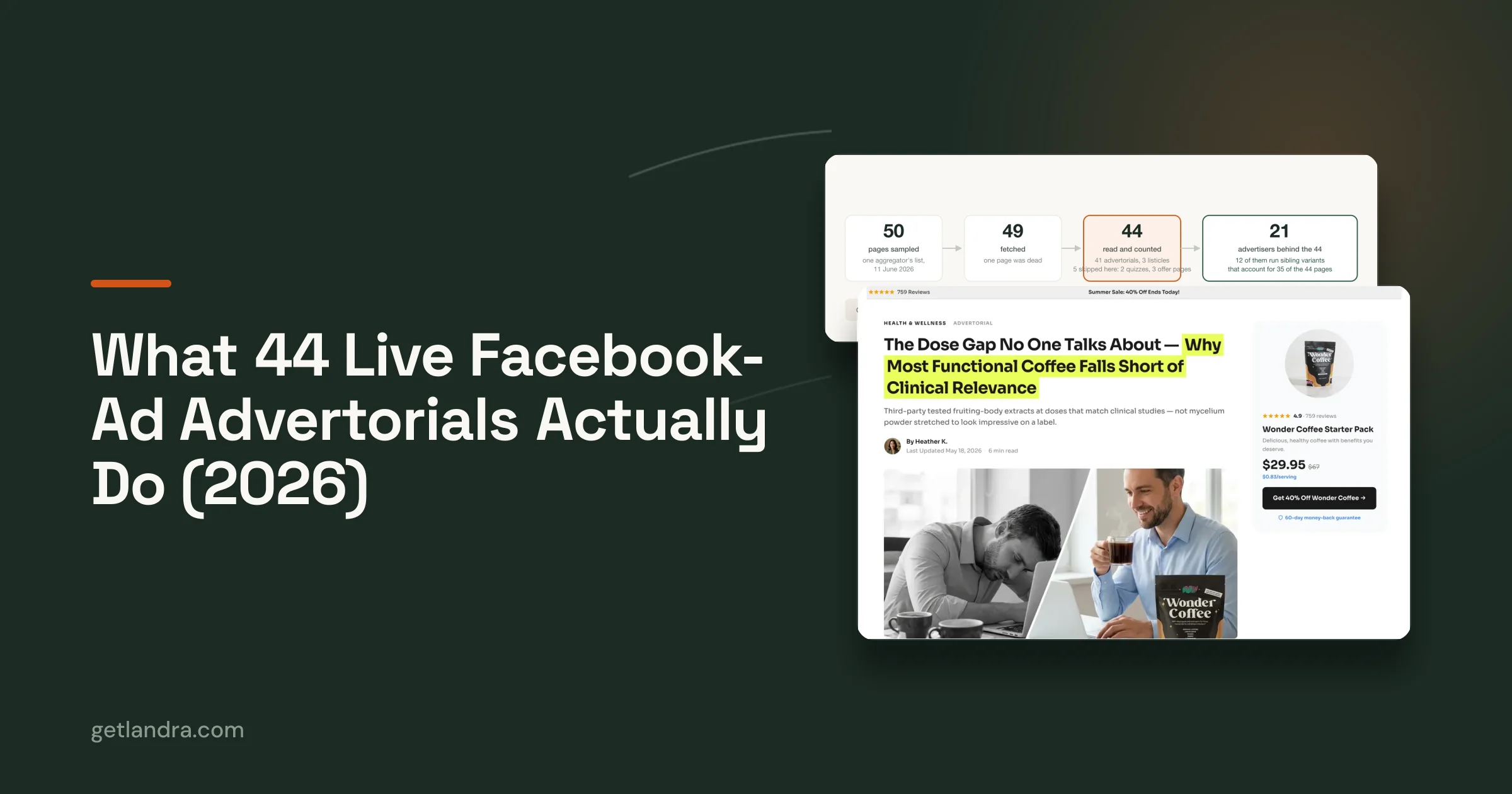
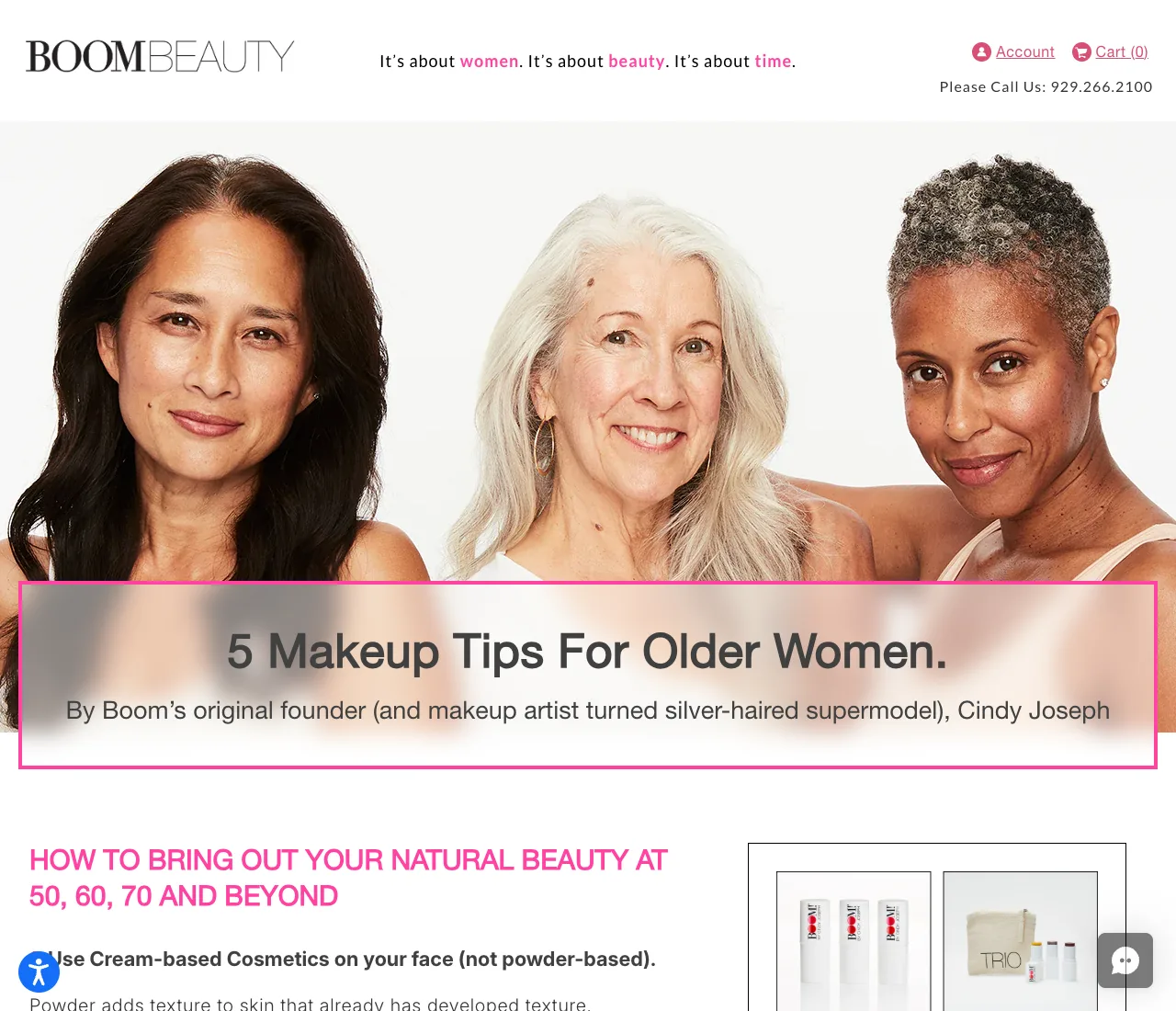
- Advertorial: the canonical specimen is BOOM! by Cindy Joseph, whose "5 Makeup Tips for Older Women" reads as a genuine tips article before introducing the Boomstick products (live as of June 2026). ConvertFlow documents HelloFresh running an advertorial-style presell, cited as ConvertFlow's documentation, not something we independently verified.
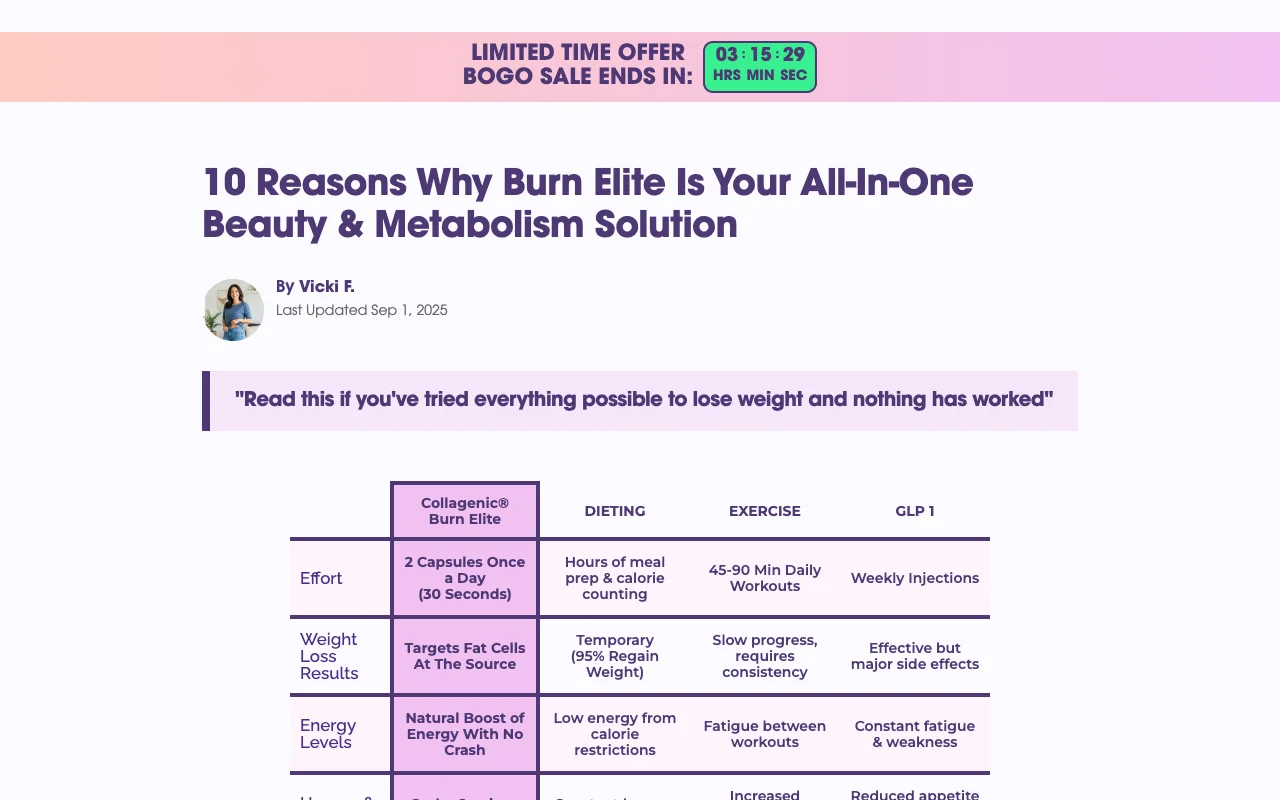
- Listicle: Jones Road runs "5 Reasons Why You Need To Try Jones Road Beauty" as a presell page for makeup aimed at mature skin, and cookware brand HexClad stacks proof in a "5 reasons why" listicle (both observed live, June 2026). Supplement brand Obvi runs a "10 Reasons Why" listicle presell that pits its formula against dieting, exercise, and GLP-1s in a comparison table (observed June 2026).
- Quiz: ConvertFlow also documents Function of Beauty using a quiz to personalize the recommendation, and Stitch Fix leaning on an FAQ/feature presell.
What unites them is the job, not the look. A tips article, a "10 reasons" list, and a four-question quiz are three different formats doing the identical thing: warming a stranger to the point where the product page can close them.
How brands create presell pages
Brands write presell pages by hand, hire a CRO or media-buying agency to build them, or generate them. The hand-built path is real craft: you pick one reader, choose the format their awareness calls for, write the hook and the education and the proof, source images, and disclose the page as an ad, then do it again for every angle you want to test. That's a chunk of a day per page, and the format decision (advertorial vs listicle vs quiz) is the part most people get wrong because they pick by habit, not by awareness.
That format-routing problem is exactly why we built Landra's presell page generator to produce both dominant presell formats rather than one. Give it your brand URL and the audience you're targeting; it reads your brand and products, then writes the whole optimized presell page — the advertorial or the listicle, copy and structure and images — laid out in proprietary DTC components built to convert, tuned to the reader you named, and published straight to Shopify (or a Landra URL or HTML export). You're not assembling a page in a blank-canvas builder and hoping it's optimized; you get the best-practice page for that audience, then a click-anything editor to refine it.
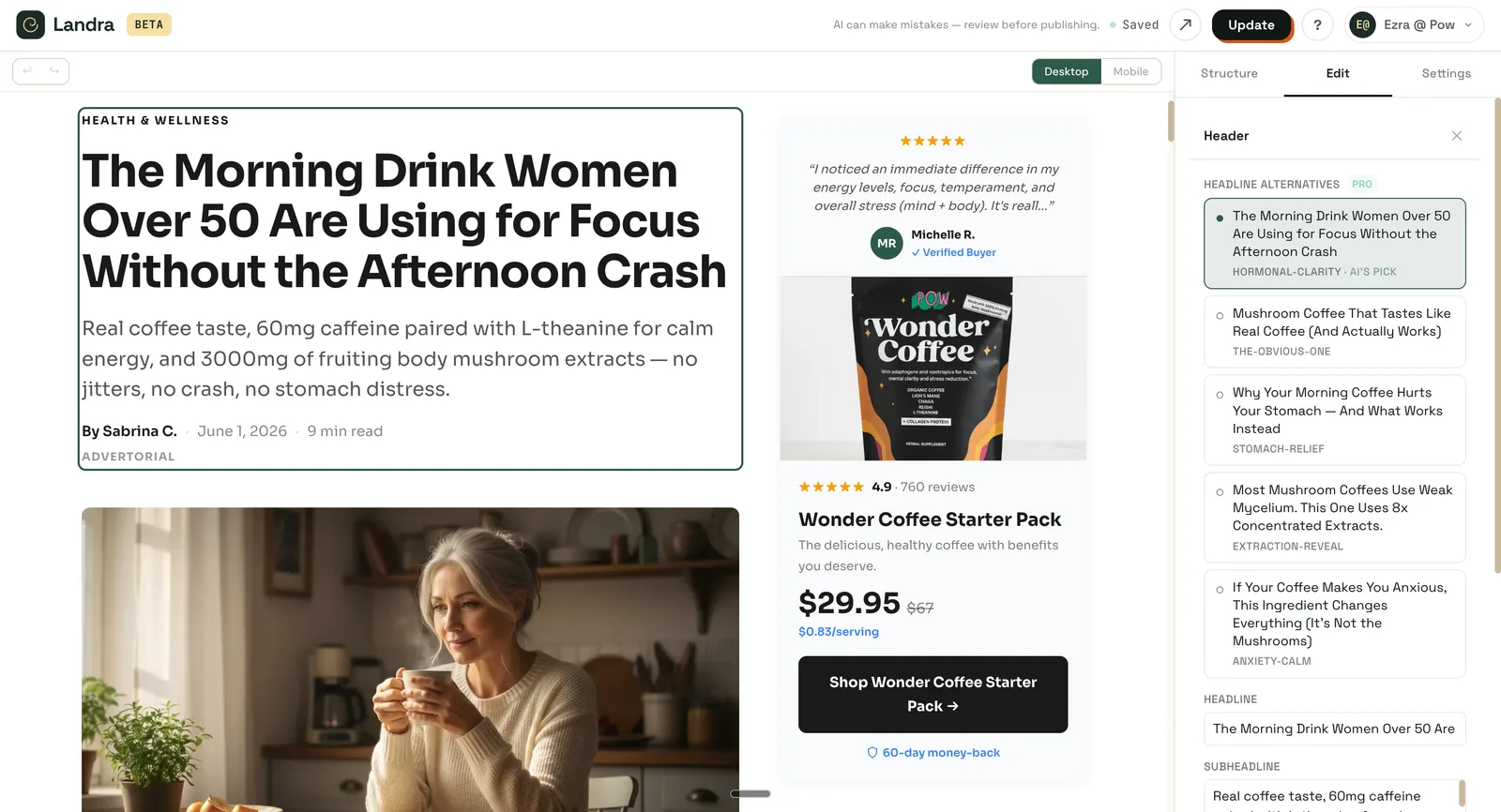
To go deeper, see how to write a pre-sell page for the full build, then the two format glossaries: what is an advertorial and what is a listicle.
Frequently asked questions
What is the difference between a presell page and an advertorial?
"Presell page" names the page's job and funnel position — the page between a cold ad and the product page that warms a stranger. "Advertorial" names one editorial format that does that job. Most presell pages are advertorials, which is why the words get used interchangeably, but a presell page can also be a listicle or a quiz.
Is a presell page the same as a pre-lander, pre-cart, or bridge page?
Yes. Pre-lander, pre-cart, pre-sale, bridge page, and advertorial all describe the same intermediary page between a cold ad and the product or cart page. The names come from different corners of the industry; the job is identical.
What formats can a presell page take?
The three dominant formats are the advertorial (a flowing editorial article), the listicle (a scannable numbered list), and the quiz (a short set of questions that personalizes the recommendation). Founder stories, customer stories, and how-to articles are variants of these.
When should you use a presell page instead of sending traffic to the product page?
Use a presell page when the purchase needs explaining — higher-AOV, education-heavy, or commodity categories that need brand differentiation. Skip it for impulse and low-AOV products, where product and collection pages typically convert cold traffic better on their own.
Do presell pages need to be disclosed as advertising?
When the page is a paid advertorial, yes — the FTC requires a clear label such as "Advertisement" near the top so readers are not misled into thinking it is independent editorial. Undisclosed paid content is deceptive and can carry penalties.