
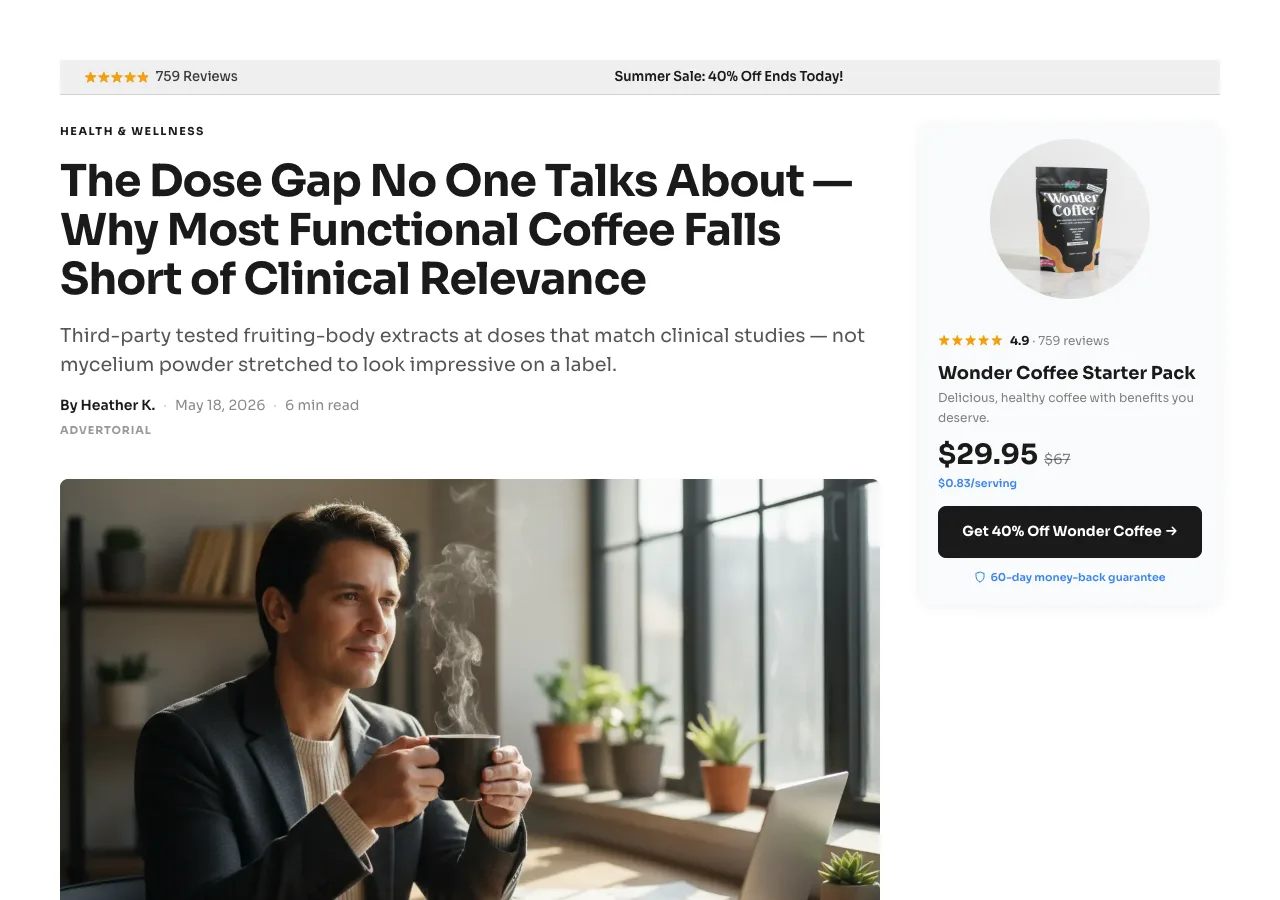
"The Dose Gap No One Talks About." That is the headline on a live mushroom-coffee advertorial — and notice what it does not do. It does not name the product. It does not make a claim. It names a gap you did not know existed and dares you to keep reading. On a cold-traffic page, the headline is the only line guaranteed to be read, so it carries the whole bet. This is a swipe file of the patterns that earn the read — every example real, live, and quoted as it appears. (For the full page the hook sits on top of, see how to write an advertorial.)
Why the headline carries the whole page
On a cold-traffic advertorial the headline is the page's hook, the page-side equivalent of an ad's thumb-stop. David Ogilvy's old estimate still frames the stakes: "On the average, five times as many people read the headline as read the body copy. When you have written your headline, you have spent eighty cents out of your dollar." If the headline does not make the right reader think "this is about me," nothing downstream gets read, and the click you paid for is gone.
What makes a hook work on cold DTC traffic
Three mechanics recur in the winners. Specificity: a precise number or timeframe reads as truth where a vague claim reads as filler (Copyblogger). A curiosity gap: George Loewenstein's information-gap theory holds that curiosity is the felt gap between what you know and what you want to know, and a small, bounded gap pulls hardest. Recognition: lead with the reader's symptom, never the product. The best hooks do all three at once.
Six hook mechanisms, with a rewrite for each
Six patterns cover most winning advertorial hooks. Each one below pairs a live DTC example with a weak-to-strong rewrite; swap the brackets for your product and audience.
1. Pain-point callout
Name the symptom the reader lives with, and the everyday thing causing it — before any pitch.
- Real example (eskiin): "Stop Poisoning Your Skin! This Revolutionary Shower Filter Eliminated My Skin Problems In 24 Hours…" The "URGENT" register is aggressive, a useful reminder that honest agitation persuades and manufactured fear invites a clawback.
- Real example (Drivse): "Your Shower Is Slowly Destroying Your Skin, Hair & Health — And You Don't Even Know It": pain plus "you don't even know it" curiosity. Note the cautionary side: on the page we reviewed (June 2026; live pages change), its "Top U.S. Dermatologist" byline is unattributed and it carries no clear ad label, the authority-hook-without-substantiation move to avoid.
- Rewrite:
"Introducing the eskiin shower filter"→ "[The everyday thing they don't suspect] is quietly [causing the problem they feel] — and [the usual fix] can't stop it."
2. Specific-timeframe promise
A concrete clock lowers skepticism. "24 hours" is falsifiable; "fast results" is filler.
- Real example (LuxuryConfidence): "I Tried Everything For My Acne And Blackheads… Until This Gross Italian Ritual Cleared My Skin For Good": "for good" is the durational promise; "gross Italian ritual" withholds the mechanism.
- Rewrite:
"See results fast"→ "[Specific result] in [specific timeframe]."
3. Curiosity gap
Name a specific, bounded blind spot and withhold the resolution.
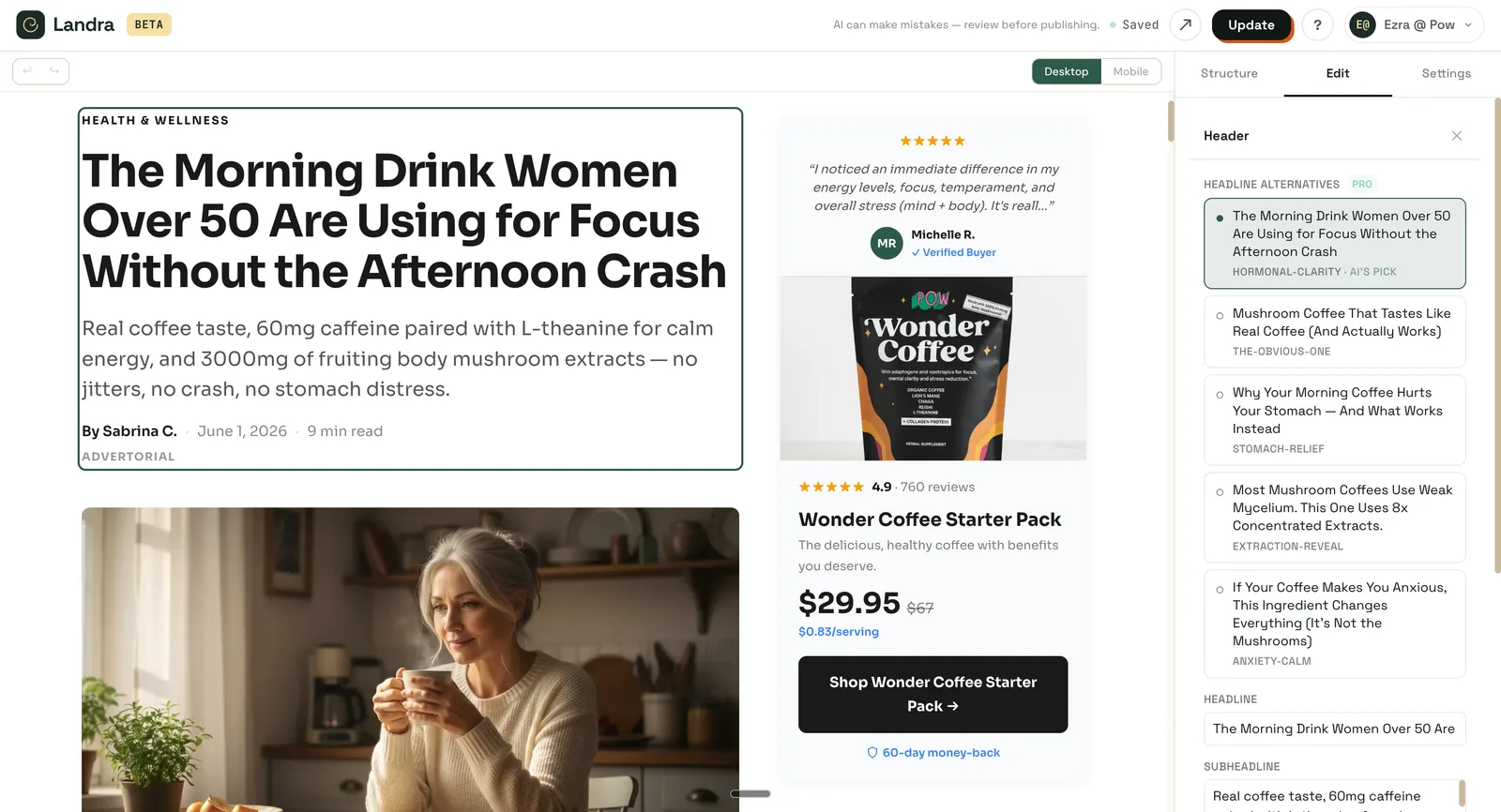
- Real example (Pow): "The Dose Gap No One Talks About — Why Most Functional Coffee Falls Short of Clinical Relevance" names a specific missing thing the reader did not know to ask about. (Built with Landra.)
- Rewrite:
"Our mushroom coffee is clinically dosed"→ "The [specific gap] no one talks about — why most [category] quietly falls short."
4. News / discovery framing
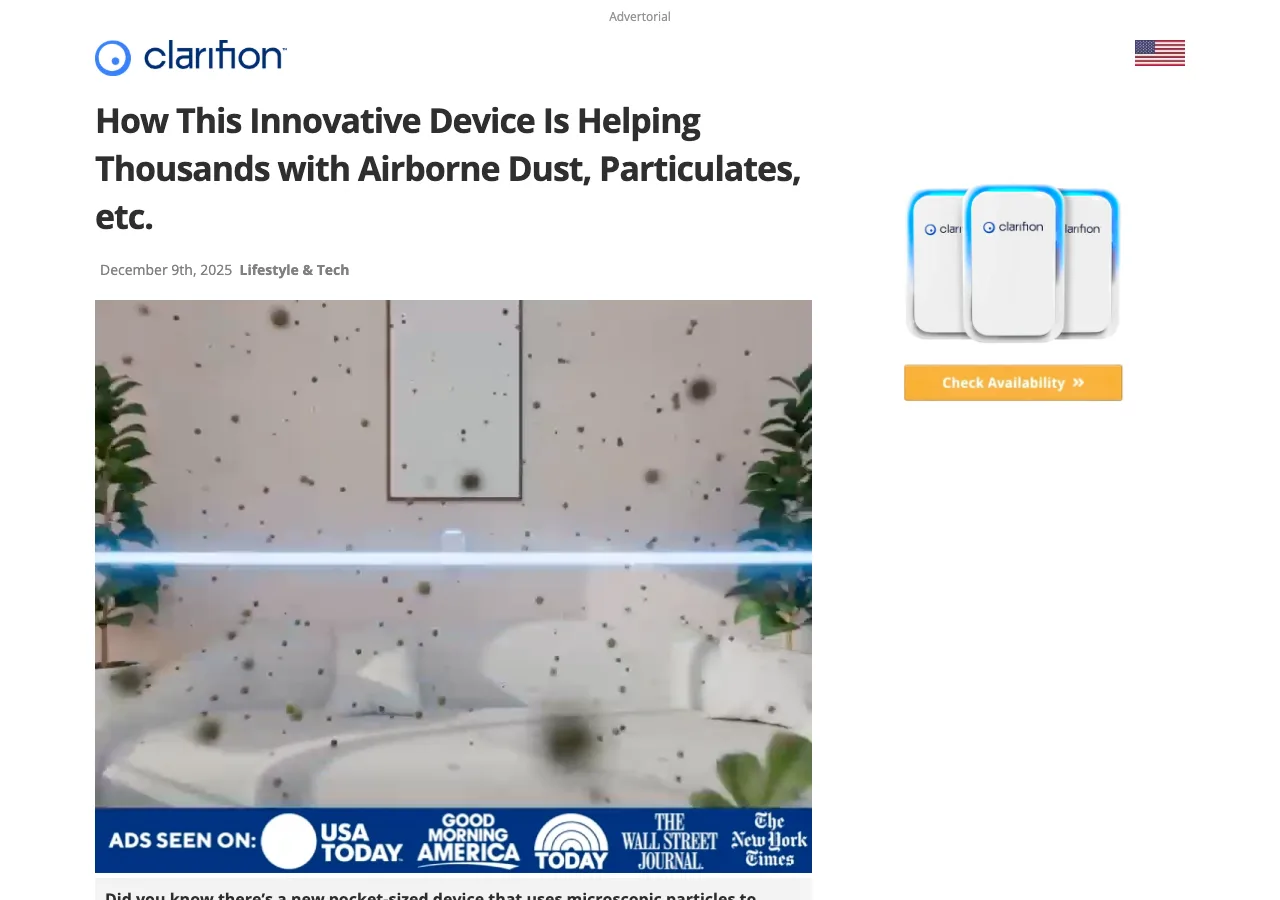
Frame a discovery in reportorial third person — "this device," "new" — not a sale.
- Real example (Clarifion): "How This Innovative Device Is Helping Thousands…", and it labels itself cleanly ("THIS IS AN ADVERTORIAL AND NOT AN ACTUAL NEWS ARTICLE"). That is the model: news framing, honest label.
- Real example (Serious Skincare): "The NEW Non-Injectable Epidermal Filler…" (labeled "Ad by Serious Skincare"): "The NEW" plus a category-defining noun frames a breakthrough, and it discloses honestly.
- Cautionary contrast (Obvi): "Why 89% of Women Can't Lose Weight After 30 (It's Not What You Think)" styles itself as editorial and invokes an expert a reader can't check; only cite a stat you can substantiate, and never fake the newsroom (see FTC compliance).
- Rewrite:
"Buy our air purifier"→ "How this [new or overlooked] [device/method] is helping thousands with [problem]."
5. First-person "I tried it"
A first-person struggle and a turn reads like a person, not a brand.
- Real example (Obvi): "I Was Killing Myself with Diet and Exercise—Then I Learned the Truth About Losing Weight": the "then I learned the truth" turn sets up the reveal.
- Rewrite:
"Lose weight with our product"→ "I was [exhausting failed effort] — then I learned the truth about [goal]."
6. Credibility / contrarian
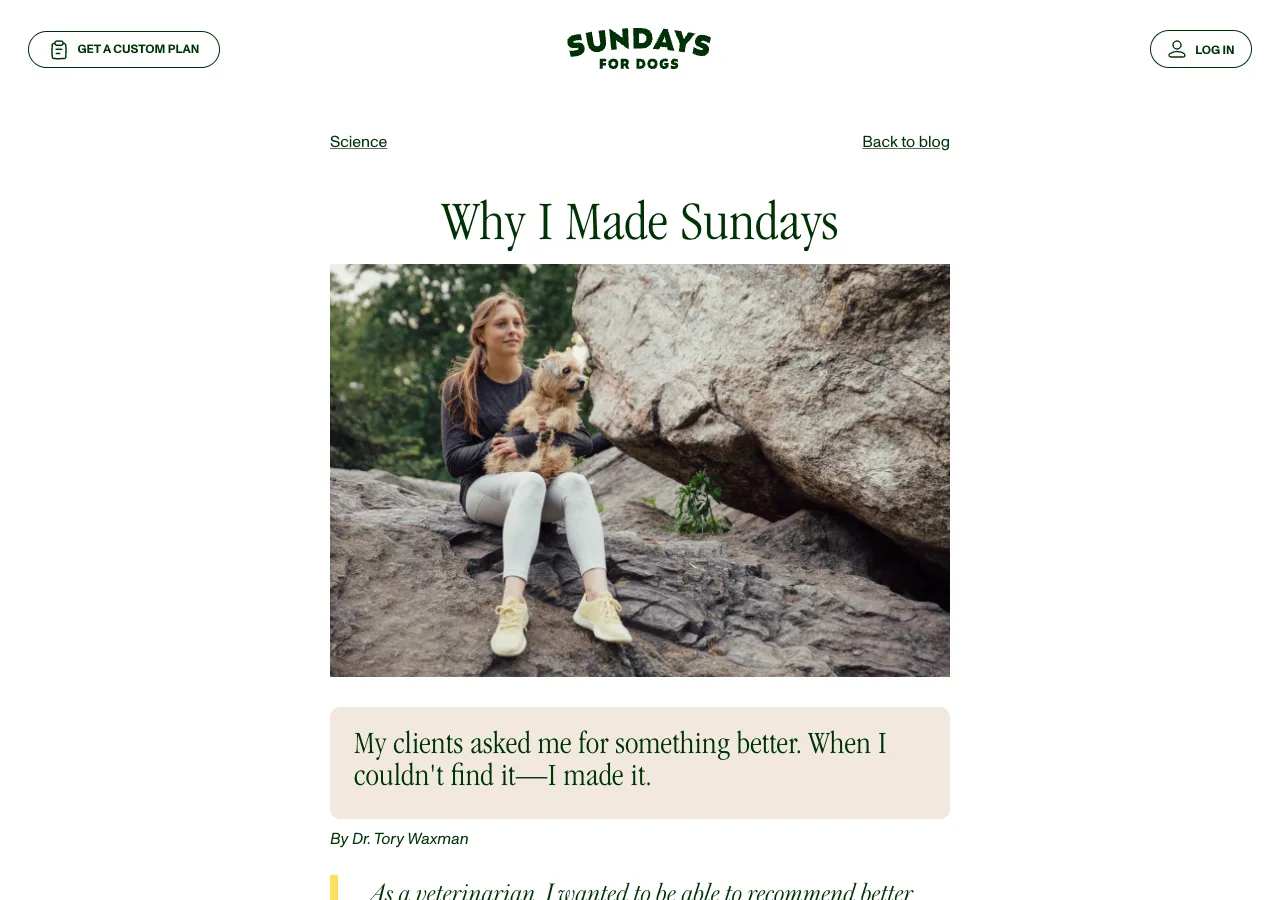
A real founder's voice, or a "why most X fails" takedown that positions you as the exception.
- Real example (Sundays for Dogs): "Why I Made Sundays", by veterinarian Dr. Tory Waxman: the real credential is the credibility, the honest counterpart to an anonymous "Top Dermatologist."
- Real example (Pow): "Why Most Mushroom Coffee Doesn't Work (And How to Find One That Does)": the contrarian takedown promises the reader they will stop being fooled.
- Real example (Snow): "7 Reasons Why Celebrities Prefer This Whitening Routine Over The Dentist": authority plus a contrarian "over the dentist" frame; a listicle-advertorial hybrid (and, on the page we reviewed in June 2026, a reminder to add the ad label it lacked).
- Rewrite:
"The best fresh dog food"→ "Why I made [product] — [real credential] and the gap I couldn't fill."
Write the subhead, too
The hook rarely works alone. Nearly every page above pairs the headline with a subhead (the dek) that adds the specific the headline withheld. Clarifion's "how this innovative device is helping thousands" hands off to a subhead naming the device; Obvi's stat headline hands off to a "shocking discovery" promise. The pattern is consistent: the headline earns the stop, the subhead earns the scroll. Write them as a pair: the headline names the problem or the gap, the subhead adds the one concrete detail that makes the reader commit to the first paragraph.
Common ways a hook fails
Most weak advertorial hooks share the same handful of mistakes:
- They lead with the product. "Introducing [brand]" surrenders the format's only edge before the reader decides to care.
- They are vague. "Better sleep, naturally" could be any brand; "asleep in 20 minutes, or your money back" could only be one. Specificity reads as truth.
- They promise everything. A hook that names three benefits names none; pick the one the reader feels most.
- They manufacture fear or fake authority. An aggressive "stop poisoning yourself" register and an unverifiable "Top Doctor" byline both move clicks short-term and invite a clawback long-term.
The fix for all four is the same: one real reader, one real problem, one specific true detail.
Anatomy of a hook
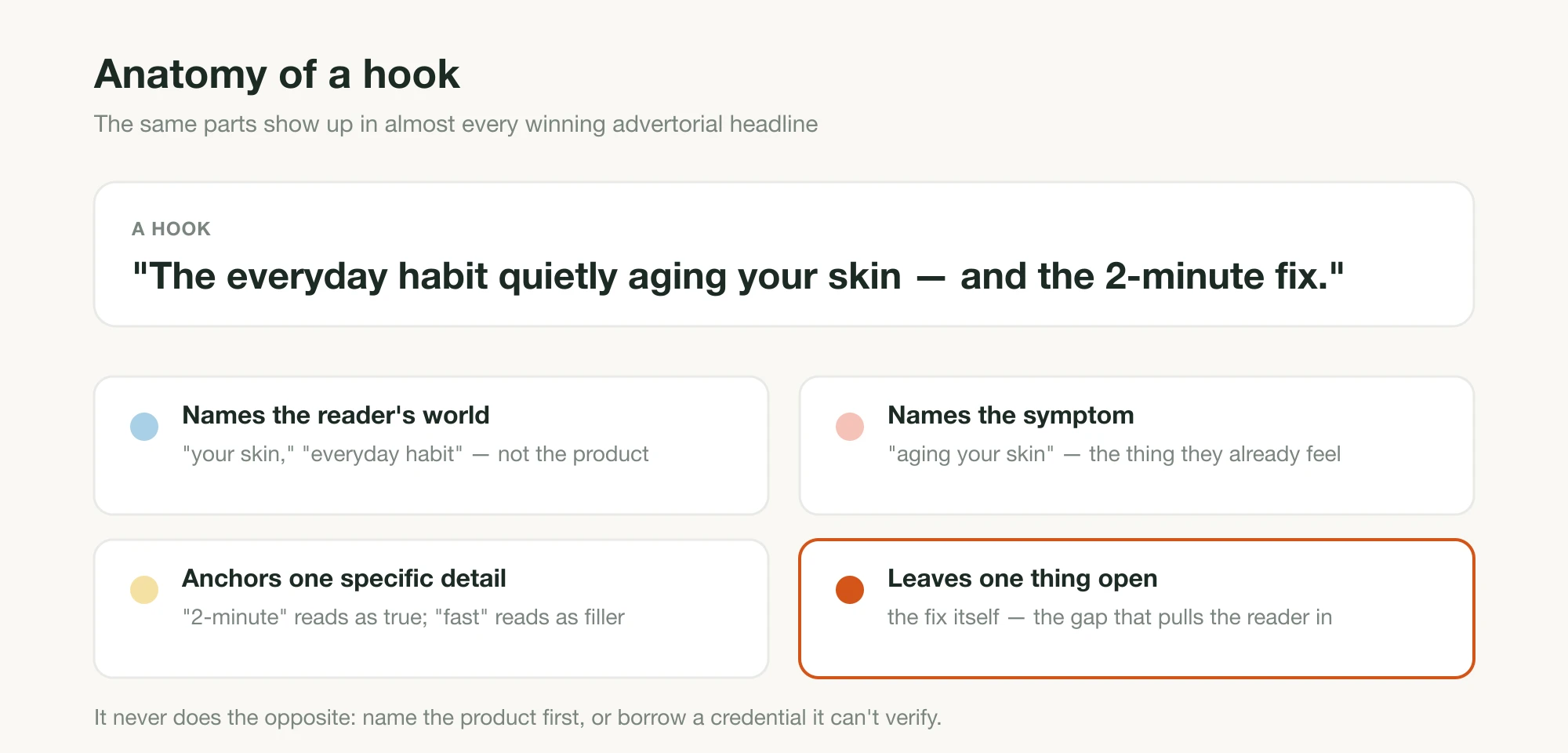
Pull any winner apart and you find the same parts. It names a reader and a symptom; it anchors one specific detail that reads as true; it leaves exactly one thing open to pull the reader in; and it never names the product or fakes a credential. A useful gut-check: the listicle format moves the click too. In one Anyword analysis, ~70% of titles saw higher CTR after switching to a listicle shape (a reported vendor figure), so the form of the headline matters, not just the words. For the numbered-verdict version, see how to write a high-converting listicle.
Steal these
Here are the six skeletons in one place. Fill the brackets, write five per angle, and let conversion rate pick the winner. A hook lives or dies on the problem it leads with, so test several rather than perfecting one.
- Pain-point: "[Everyday thing] is quietly [causing the problem] — and [the usual fix] can't stop it."
- Specific-timeframe: "[Specific result] in [specific timeframe]."
- Curiosity gap: "The [specific gap] no one talks about — why most [category] quietly falls short."
- News / discovery: "How this [new or overlooked] [device/method] is helping thousands with [problem]."
- First-person: "I was [failed effort] — then I learned the truth about [goal]."
- Credibility / contrarian: "Why most [category] doesn't work — and how to spot one that does."
For a fuller set of opening structures the hook hands off to, see advertorial templates. And match the format to the reader's awareness: an advertorial educates the genuinely unaware or skeptical; a listicle suits a reader who already feels the problem, including cold traffic, when the headline leads with the problem rather than the product. Either way the hook is the line worth testing most: Landra reads and understands your brand from the URL, then drafts the whole page and a set of headline alternates, so you can test angles instead of staring at a blank one.
Frequently asked questions
What makes a good advertorial headline?
It names the reader's problem (not the product), anchors one specific, believable detail, and leaves one thing open to pull the reader in. On cold traffic it is the page's hook — the line that decides whether the ad's click survives the jump to the page.
Should an advertorial headline mention the product or brand?
No. Leading with your brand surrenders the format's only advantage — borrowed editorial credibility. The headline should promise a story, a problem, or a discovery; the product name belongs much later, after you have earned the read.
How long should an advertorial headline be?
No fixed length — long enough to name the reader and the payoff, short enough to grasp in one glance. Many winners run 10–20 words with a subhead that adds the specifics. Clarity and specificity beat brevity for its own sake.
What is the difference between an advertorial headline and a listicle headline?
A listicle headline leads with a number and promises a verdict ("5 Reasons…"); an advertorial headline leads with a problem, story, or discovery and promises an education. Match the shape to the traffic.
Do I need to disclose an advertorial even if the headline looks like news?
Yes. The FTC requires paid content not to masquerade as independent editorial. A news-style hook is fine; a fake newsroom, invented publication, or unverifiable "Top Doctor" byline is not — and the headline area is where brands most often cross that line.
How many headlines should I write before picking one?
Write at least five per angle. A hook lives or dies on the problem it leads with, so test several problems and audiences against live traffic and let conversion rate decide — do not agonize over perfecting a single line.
Should the advertorial headline match the ad that drove the click?
Yes — keep the scent trail. A page headline that continues the promise of the Meta or TikTok ad the reader just clicked converts more of that click; an abrupt switch loses it. The platforms also review ad-to-page consistency, so a matched headline helps with approval too.