

You've got a paid social ad with a strong hook, clean creative, and a click-through rate that looks healthy. The problem appears after the click. Cold visitors land on the product detail page, don't understand why the product matters, question the claims, and leave before they're ready to buy.
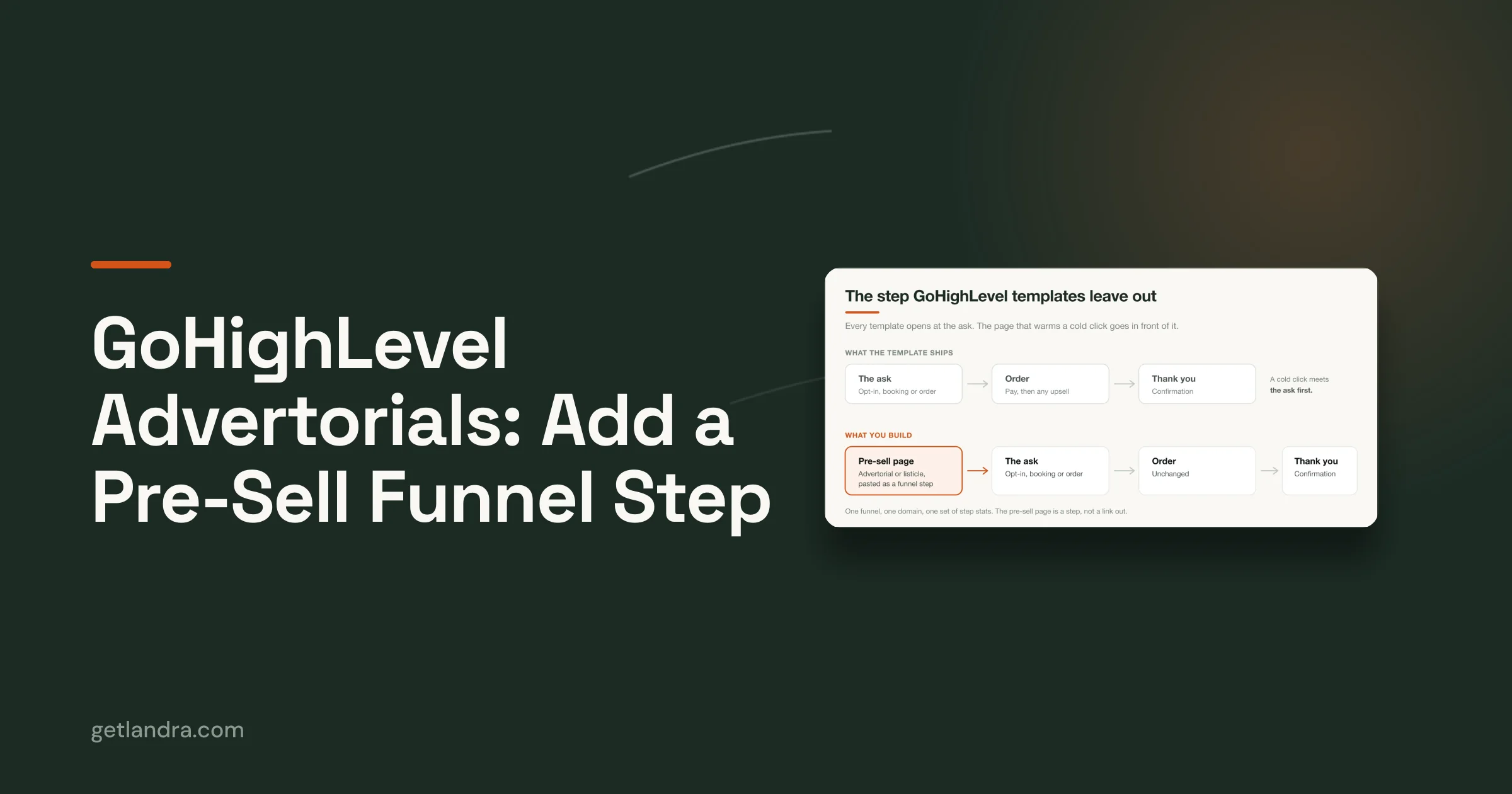
That doesn't always mean the product page is poorly designed. Often, the ad has created curiosity while the page asks for a purchase before the visitor has built enough belief. The missing asset is a pre-sell experience, a page that connects the ad's promise to the product's proof, mechanism, use case, and offer.
An AI marketing content generator can help build that middle layer, but only if you judge it as more than a copywriting tool. For DTC growth, the important questions are whether it understands the visitor's awareness stage, ingests your real brand context, creates a persuasive page structure, and publishes quickly to the stack you already use.
The real cost of cold traffic isn't the click. It's asking a skeptical visitor to do too much belief-building alone.
This guide shows how these systems work, where they add value, where human review remains essential, and how to evaluate one against performance criteria rather than word count or tone sliders.
Table of Contents
- Why Cold Traffic Needs More Than a Product Page
- What an AI Marketing Content Generator Really Is
- How AI Marketing Content Generators Work Behind the Scenes
- How to Evaluate an AI Marketing Content Generator for DTC Performance
- Common Pitfalls and Compliance Concerns You Must Address
- Real Use Cases and ROI Examples From Advertorials to Listicles
- How Landra Transforms Product URLs Into High Converting Pre Sell Pages
Why Cold Traffic Needs More Than a Product Page
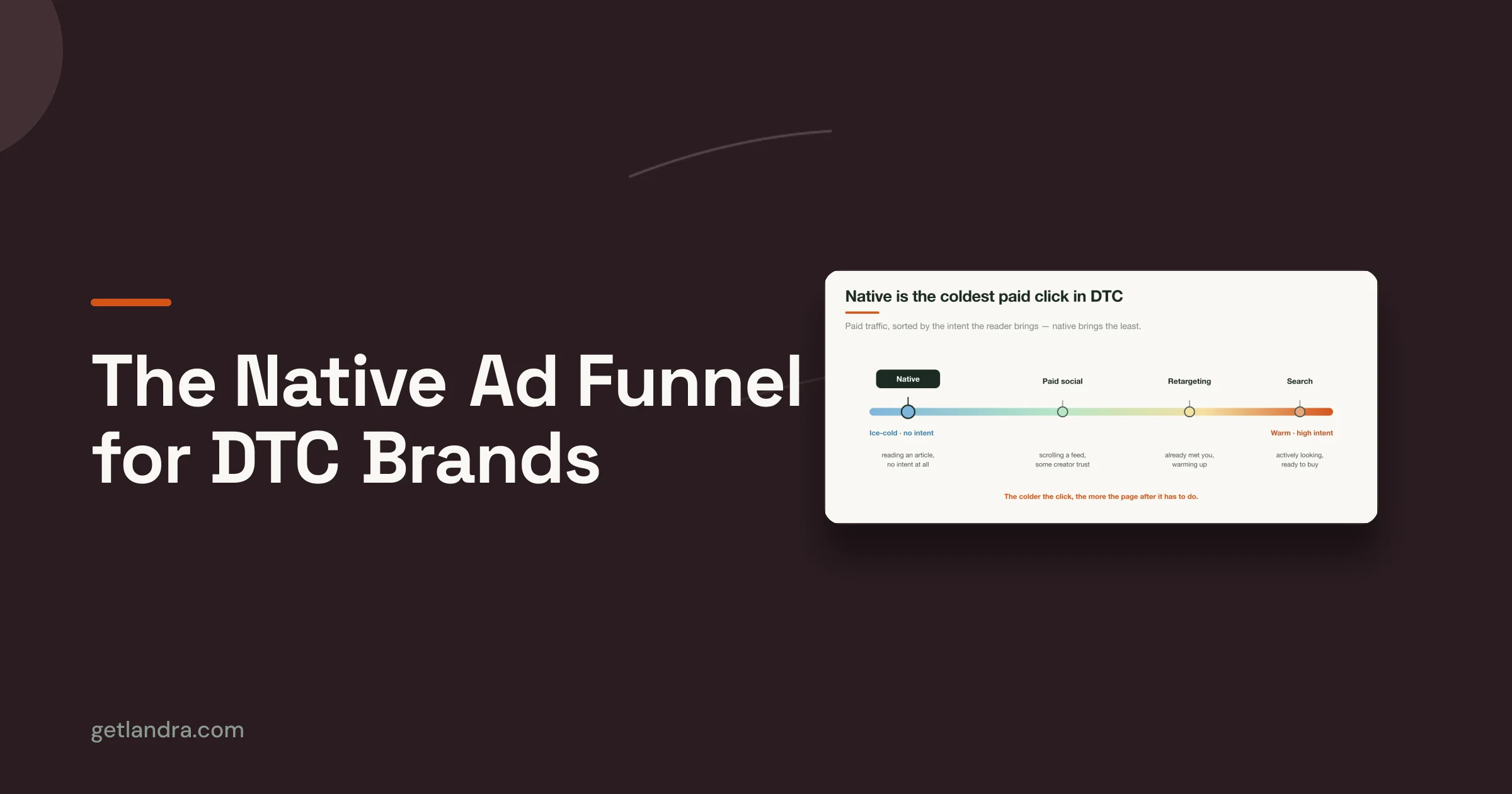
A cold visitor arriving from Meta or TikTok usually doesn't behave like someone searching your brand name. They may recognize the problem described in the ad, but they might not understand the product category, trust the brand, believe the promised outcome, or know why your product is different.
A product detail page is often designed for visitors who already have some intent. It presents the product, price, variants, reviews, shipping information, and purchase options. That structure can work well for warm traffic. It can feel abrupt for someone who clicked an editorial-style ad because a problem or idea caught their attention.
Consider a skincare brand promoting a barrier-support serum. The ad discusses irritation after over-exfoliation. The product page opens with the serum name, a product photo, a few benefit bullets, and an add-to-cart button. Nothing is necessarily broken. The page skips the explanation that a cold visitor needs: what may be causing the discomfort, why the problem persists, which ingredients matter, and how this product fits into a routine.
An advertorial or listicle can supply that explanation without forcing the shopper straight into a transaction. The page can introduce the problem, frame the solution, explain the product's role, add proof, handle objections, and then hand the visitor to the product page with more informed intent.
The missing middle layer
For DTC teams, this creates a production challenge. Each paid-social angle may need a matching opening, narrative, visual hierarchy, and call to action. Copywriters and designers can build those assets, but the process often becomes too slow for active testing.
That's where an AI generator becomes useful. It can assemble a first-pass pre-sell page from the information your brand already owns, then give your team an editable structure for review. The value isn't that a machine has replaced strategy. The value is that your team can move from a product URL to a testable page without starting from a blank canvas.
The shift toward operational use is already visible. In 2024, more than 1 in 4 organizations had implemented generative AI to expand capacity and capability across content marketing operations, with that share expected to reach 71% by the end of 2024, according to Adobe's AI marketing trends report. The same report found that 49% of respondents used generative AI mostly or almost always in marketing activities.
For a performance marketer, the implication is practical. Evaluate the generator by whether it helps you match ad angle to awareness stage, preserve brand truth, and launch useful page variants quickly. Generic writing quality matters, but it's only one part of the conversion system.
What an AI Marketing Content Generator Really Is
Think of an AI marketing content generator as a direct-response editor who starts by reading your store. A generic chatbot waits for a prompt such as “write a product advertorial.” A purpose-built system should first understand what you sell, who it's for, what proof exists, which claims are supported, and how the brand speaks.
That difference changes the output. If the system knows only the product name, it tends to produce broad benefits and familiar marketing language. If it can work from product pages, reviews, offers, ingredients, visual assets, and brand guidelines, it has a better foundation for constructing a page that feels connected to the business.

It reads your store before it writes
The first job is context ingestion. The generator gathers the raw material that a human copywriter would normally request during a briefing:
- Product details: Ingredients, specifications, usage instructions, variants, and pricing.
- Brand signals: Vocabulary, tone, positioning, visual style, and promises the brand repeatedly makes.
- Customer evidence: Reviews, testimonials, objections, questions, and language customers use to describe their experience.
- Commercial context: Offers, bundles, guarantees, shipping information, and the next action you want visitors to take.
This doesn't mean every input is automatically correct or legally usable. It means the system has more relevant material to work from than a blank prompt.
It assembles a response, not just paragraphs
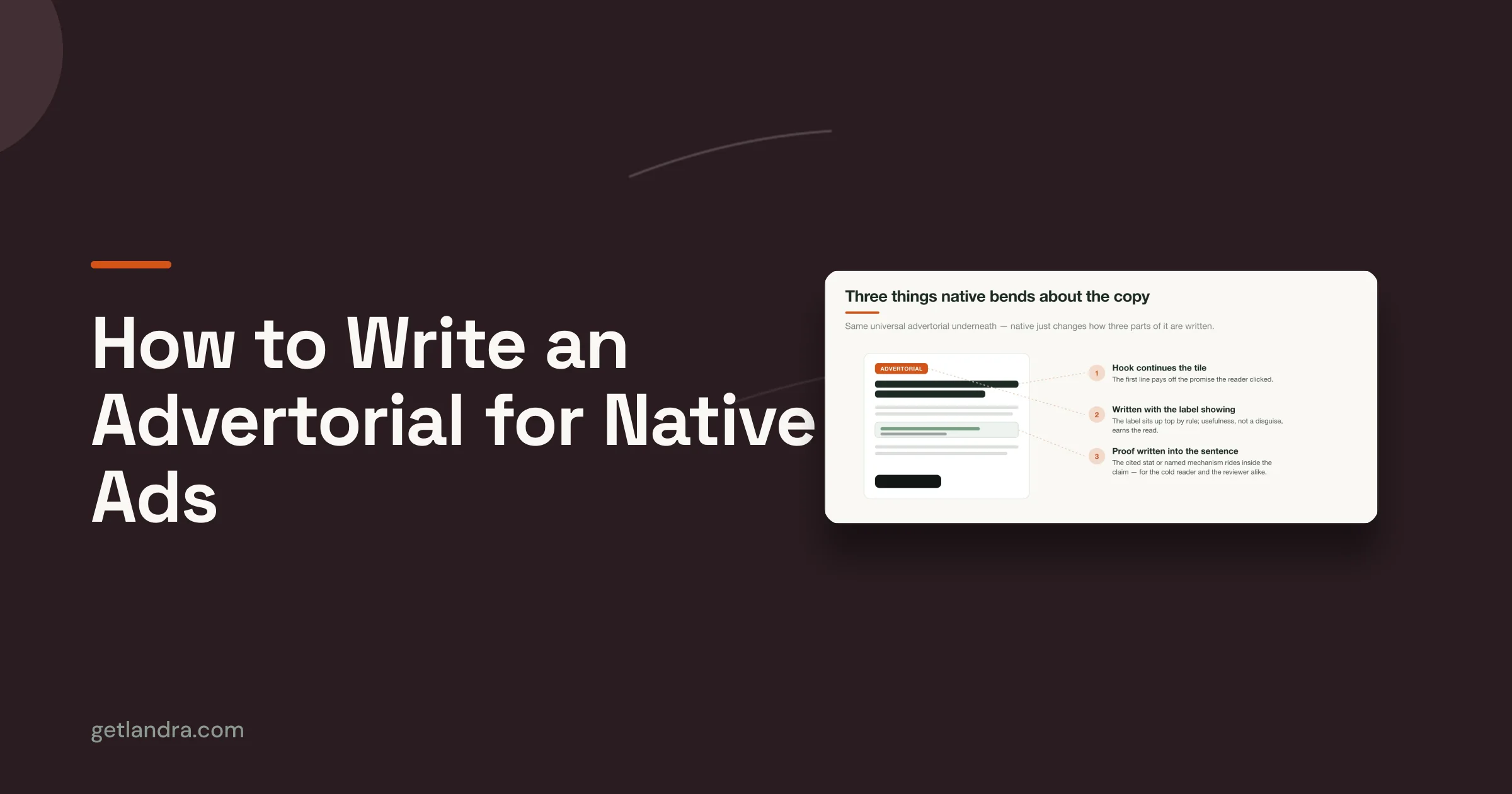
The second job is narrative assembly. A pre-sell page needs an order of ideas. The generator may create an opening that reflects the ad, a problem explanation, a product mechanism section, proof, objections, and a transition toward purchase.
That structure is especially useful when your team needs multiple angles for the same product. You can ask for a problem-led listicle for visitors comparing options, or an editorial advertorial for visitors who respond to a discovery narrative. The output should remain editable because the first draft is a starting point, not a final approval.
Teams exploring the wider business case can also compare this workflow with the broader discussion of AI for B2B content marketing ROI, particularly around capacity, repeatability, and human oversight.
It produces drafts your team can shape
The third job is editable production. A useful generator should let marketers revise headlines, sections, images, calls to action, and claims without rebuilding the page from scratch.
That distinction separates a one-off copy tool from a repeatable pre-sell system. A copy tool gives you text to paste somewhere else. A pre-sell system gives you a structured asset that can be reviewed, adapted to an ad angle, and prepared for publishing.
The strongest use case isn't “write everything for me.” It's “turn verified brand inputs into a persuasive, reviewable page that my team can improve and ship.”
How AI Marketing Content Generators Work Behind the Scenes
The simplest way to understand the workflow is to separate inputs, transformation, and outputs. The quality of the final page depends less on the presence of AI than on the quality and relevance of the information the system can use.
From URL to usable context
A typical process starts with a product or brand URL. The system reads accessible site content and may organize details such as product benefits, ingredients, offers, customer language, reviews, and brand positioning.
That reading step prevents a common failure mode: the generator inventing a generic category story because it doesn't know the specific product. A supplement page that mentions ingredients, serving guidance, and substantiated benefits gives the system a different foundation from a beauty page built around texture, routine, and sensory experience.
The generator then maps those details to a messaging goal. A cold visitor might need education before comparison. Another audience might already understand the category but need proof that your formula or construction is different. The page structure should reflect that context rather than use the same template for every campaign.
From context to page structure
After mapping, the system assembles recurring direct-response components. These can include:
- A headline aligned with the ad's central idea.
- An opening that names the reader's problem or curiosity.
- Sections explaining the mechanism, ingredients, or product logic.
- Reviews and proof placed where skepticism is likely to appear.
- Objection handling around use, suitability, price, or expectations.
- A call to action that moves the visitor toward the relevant product page.
The system isn't “thinking” like a strategist in the human sense. It's applying learned patterns to the context it has been given. That's why marketers still need to decide whether the angle is commercially sensible and whether the page makes a promise the brand can support.
A useful reference point is brand-safe content automation, which focuses attention on repeatable workflows and safeguards rather than generation alone.
Refinement is where responsibility returns
Inline editing lets a marketer correct phrasing, remove unsupported claims, change the order of sections, or adjust the page to match the ad. Saved brand context can make later drafts more consistent, but it doesn't eliminate review.
The output can then be adapted for multiple destinations. Depending on the platform, that may include a Shopify storefront, Webflow, a hosted URL, or an HTML export. Publishing integration matters because copy that sits in a document is not yet a live experiment.
The workflow can be summarized like this:
| Stage | What the system does | What the marketer must check |
|---|---|---|
| Ingestion | Reads available brand and product material | Whether the source information is current and approved |
| Analysis | Identifies claims, offers, proof, and brand signals | Whether important context was missed or misunderstood |
| Mapping | Connects facts to an awareness-stage narrative | Whether the angle fits the traffic and ad promise |
| Generation | Produces page copy and structure | Whether the draft is clear, distinctive, and accurate |
| Refinement | Supports editing and publishing | Whether the final asset meets brand, legal, and UX standards |
How to Evaluate an AI Marketing Content Generator for DTC Performance
A generator can produce polished prose and still fail your paid social program. Judge it by the quality of the complete path from ad click to informed purchase.

Accuracy and fact handling
Start with truth. Give the tool a product page containing ingredients, usage guidance, reviews, and an offer. Ask it to create a page, then inspect every factual statement.
A serious system should keep claims tied to available source material. Red flags include invented certifications, stronger health outcomes than the source supports, altered ingredient descriptions, and testimonials that sound plausible but don't exist. Your test should include a detail that matters, such as a usage limitation or qualification, to see whether the generator preserves it.
Brand context retention
Ask the system to produce two pages for different audience angles. Compare vocabulary, promise strength, customer language, and treatment of the product's differentiators.
A good tool should change the narrative without losing the brand. It shouldn't turn a restrained clinical brand into exaggerated direct response, or flatten a distinctive voice into interchangeable ecommerce language. Review whether saved context remains useful across later drafts rather than applying only to one session.
Awareness-stage fit and output structure
This is the criterion generic content tools often miss. A cold visitor may need a story, a problem explanation, or a comparison before a product pitch feels natural.
Request different formats for the same product and inspect the opening. Does the advertorial lead with discovery and education? Does the listicle organize options or mistakes clearly? Does the page explain enough before asking for the click? A generator that only changes the headline while leaving the underlying persuasion sequence untouched won't create meaningful test variants.
Publishing and workflow integration
Copy-pasting introduces friction and creates opportunities for formatting errors. Check whether the tool can publish or export in a way that fits your stack, including Shopify, Webflow, hosted pages, or HTML.
Also inspect the editing experience. Can a marketer change a section, replace an image, duplicate a page, and update a call to action without asking a developer? Resources covering AI content creation tools by Satura AI can help broaden your comparison, but your final test should happen inside your own production workflow.
Mobile performance for paid social
Most cold paid-social visitors arrive on a phone, so the page needs to communicate quickly without becoming cramped or visually repetitive. Test the first screen, headline wrapping, image load behavior, button placement, and reading rhythm on an actual mobile device.
| Evaluation question | Weak result | Useful result |
|---|---|---|
| Does it preserve product facts? | Adds unsupported detail | Keeps claims tied to approved inputs |
| Does it retain brand context? | Generic category language | Consistent brand vocabulary and boundaries |
| Does it match awareness stage? | Product pitch for every visitor | Structure changes with the ad angle |
| Can the team publish quickly? | Manual rebuild required | Existing ecommerce stack supported |
| Does it work on mobile? | Slow, dense, awkward layout | Clear hierarchy and readable sections |
Common Pitfalls and Compliance Concerns You Must Address
Adoption doesn't equal trust. A 2025 benchmark from the Content Marketing Institute found that only 4% of B2B marketers had a high level of trust in AI output, while 67% reported medium trust and 28% low trust. The same research found that only 17% rated AI-generated content excellent or very good, even though 81% were already using generative AI tools. The full B2B content marketing research captures the central tension: teams use AI because it creates capacity, but they remain cautious about quality.
The trust gap has operational causes
AI can state an unsupported claim with the confidence of a finished advertisement. It can also combine separate facts into a conclusion your brand never approved. In health, beauty, food, and supplements, that creates more than an editing problem. It can create regulatory and reputational exposure.
Off-brand voice is another quiet failure. The sentences may be grammatically clean, but the page can sound like every other advertorial online. Cold traffic needs clarity and belief-building, not theatrical claims that make the brand feel less credible.
Build guardrails before scaling output
Use a claim register that separates approved facts, customer opinions, demonstrations, and statements that require legal review. Then make the generator work from that material instead of asking it to improvise.
A practical review ritual includes:
- Verify every measurable claim: Check the statement against an approved product source.
- Separate proof from promise: Label reviews and testimonials clearly, and don't present customer experience as a guaranteed outcome.
- Review sensitive categories manually: Health, beauty, financial, and safety-related claims need human approval before publication.
- Read the page aloud: Awkward intensity, repeated phrases, and artificial transitions become obvious when spoken.
- Check ad-to-page continuity: The page should answer the question created by the ad, not switch to an unrelated promise.
- Inspect the final mobile view: Compliance and clarity still matter after responsive formatting changes the layout.
Use AI to expand the draft queue. Keep humans responsible for truth, risk, and the final promise.
The best workflow isn't full automation. It's controlled automation, where low-risk structural work moves quickly while high-stakes claims, proof, and customer-facing approval stay with accountable people.
Real Use Cases and ROI Examples From Advertorials to Listicles
The format should follow the visitor's state of mind. A cold audience often needs a reason to care before it needs a reason to compare. A warmer audience may already understand the category and want help choosing.
Narrative advertorials for problem discovery
A narrative advertorial works when the ad introduces a problem, observation, or surprising explanation. For a skincare brand, the page might begin with a routine mistake that contributes to visible irritation, then explain the skin barrier, introduce the product's role, and finish with proof and a product transition.
For supplements, the narrative could focus on a daily habit or overlooked source of discomfort. The page earns attention by explaining the problem in plain language before presenting the product as a relevant response. This format is useful when the audience doesn't yet have a strong product-category vocabulary.
Problem-led listicles for fast scanning
A listicle gives cold visitors a clearer reading path. “Common reasons your evening routine isn't working” or “Ways shoppers compare recovery products” creates multiple entry points without forcing a long narrative.
The listicle should still teach rather than pad the page with generic points. Each item needs a connection to the product, a supporting explanation, or an objection it helps resolve. The best versions feel like useful editorial content first and a product recommendation second.
Comparison pages for considered purchases
A best-of or comparison page suits visitors who know the category and are narrowing options. It can organize differences in formulation, materials, use cases, routine fit, or buying criteria.
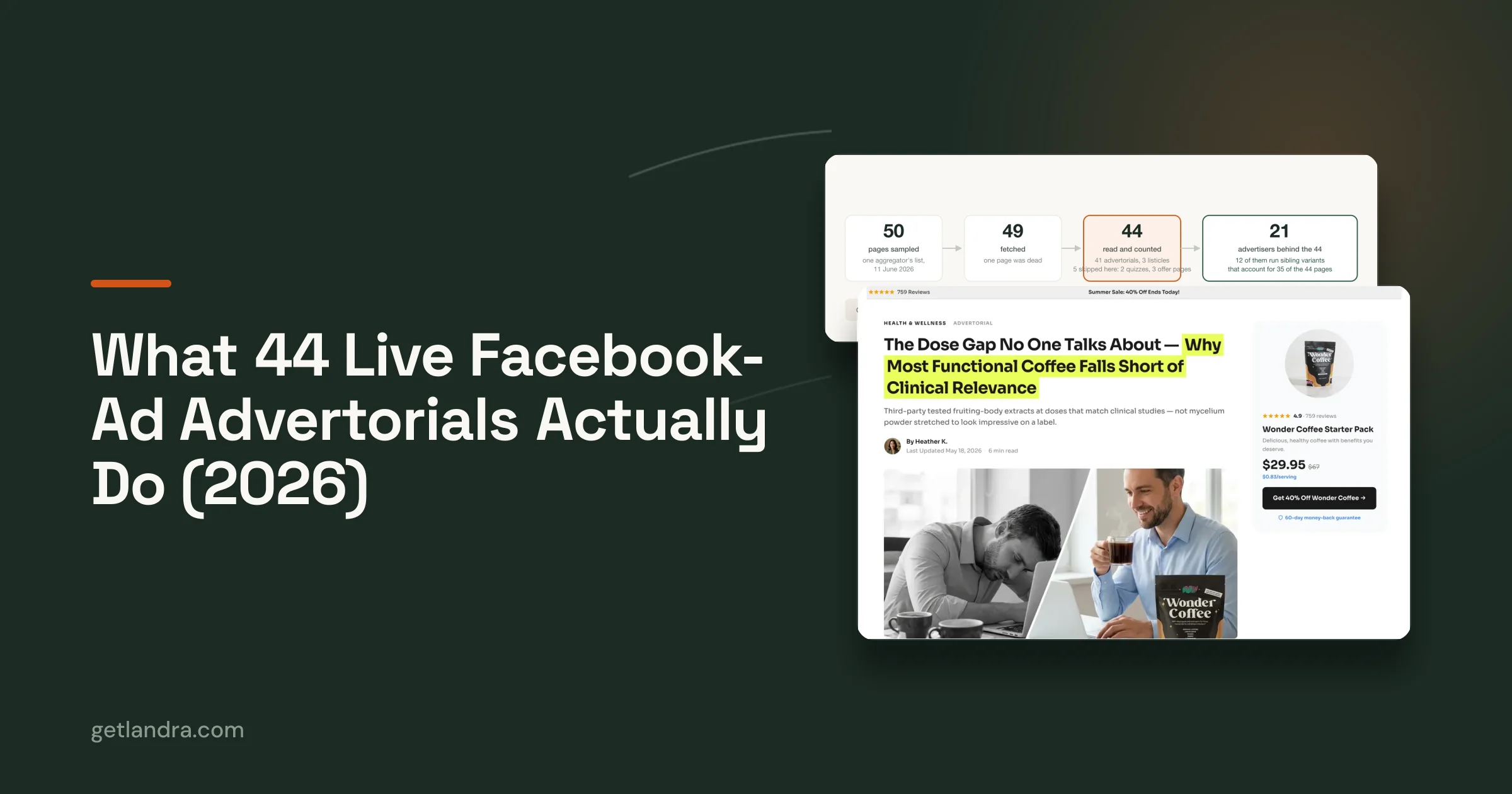
The opening should signal comparison intent. A page that begins with a broad educational story may feel slow for a visitor who clicked an ad promising a direct evaluation. Research on advertorial conversion rate insights can inform how you think about page formats, but the right choice still depends on your audience, offer, and ad promise.
Where the economics appear
AI changes the economics by reducing the amount of manual assembly required for each draft. A Deloitte Digital study reported that production could fall from about four hours for a human copywriter to roughly 30 minutes for an AI draft plus human editing, representing a greater than 90% reduction in labor time for SEO-style content; it also estimated a 91% reduction in average SEO content creation cost. These findings are from Deloitte Digital's generative AI marketing workflow research.
That doesn't mean every page deserves automation. It means the strongest return comes from using AI for structure and first drafts, then spending human time on angle selection, fact validation, visual judgment, and conversion-focused editing.
How Landra Transforms Product URLs Into High Converting Pre Sell Pages
Landra applies the URL-to-page workflow directly to DTC pre-sell production. A marketer can start with a product or brand URL, let the system read available site content, offers, reviews, proof, and ingredients, then review an editable advertorial or listicle draft.
The practical advantage is the handoff from generation to publishing. The page can be edited visually, duplicated for a different angle, and prepared for Shopify, Webflow, a hosted Landra URL, or HTML export. That matters when paid social teams need to test the same product against different awareness-stage openings without commissioning a separate agency build for every variation.
The editor also keeps the marketer close to the final asset. Headlines, copy, images, sections, and calls to action can be changed inline, so the team can remove an unsupported claim or tighten the connection between an ad and its landing experience. The workflow supports mobile-first pages, which is important when Meta and TikTok traffic reaches the page on smaller screens and with limited patience.
Landra is one option for teams that want to create Shopify pre-sell pages from product context rather than assemble a page manually. Its free Headline Analyzer, Conversion Rate Calculator, and Advertorial Compliance Checklist can also support the review and iteration process.
The strategic point is simple. An AI marketing content generator becomes valuable when it shortens the path from ad angle to credible pre-sell page to checkout, while leaving your team in control of truth, brand fit, and final approval.
Landra turns a product or brand URL into editable advertorials, listicles, and pre-sell pages designed for DTC paid traffic, with publishing options for Shopify, Webflow, hosted URLs, and HTML export. Visit Landra to create your first page, test a new cold-traffic angle, and see whether a stronger pre-sell experience improves the path from click to purchase.