
A paid-social click lands on your product page. The visitor reads a few lines, joins the email list for a discount, and disappears. Your dashboard reports a lead, the campaign looks efficient, and nobody can explain why those subscribers never become customers.
That's the broken definition of B2C lead generation. A form submission isn't the outcome. The outcome is a permissioned, addressable prospect who receives relevant education, offers, reminders, and product recommendations until they're ready to buy.
Table of Contents
- What B2C Lead Generation Means in 2026
- Defining the Right Audience and Intent Stage
- Choosing the Channels Worth Your Budget
- The Presell Page Playbook for Cold Traffic
- Lead Capture Flows That Do Not Leak
- Nurturing, Measurement and the Numbers That Matter
- Trust, AI Discovery and Your Week-One Checklist
What B2C Lead Generation Means in 2026
A cold visitor reaches a mobile landing page after seeing a paid-social ad. Within seconds, the page must explain the offer, establish trust, and give that visitor a reason to share useful information. The result is not a form-fill count. It is a permissioned prospect with enough context to support relevant follow-up and a measurable path to revenue.
Email became a foundational B2C acquisition channel because it turns anonymous or lightly engaged visitors into first-party contacts a brand can develop over time. Benchmark data reports that approximately 65% of B2C companies use email-marketing software, while 80% of B2C marketers use email to nurture audiences. The same benchmark reports that 87% of B2C marketers used some form of email automation in 2021 (email marketing benchmark data). Treat those figures as an operating requirement: capture only matters when the follow-up reflects the prospect's interest.
That makes the landing page a pre-sell system, not a coupon gate. On mobile, it has to communicate the product's use case, answer objections, and pass clean context into the next interaction. Record the source campaign, product interest, consent status, and meaningful behavior so each later message has a reason to exist.
A lead is a relationship with context
A discount seeker and a product researcher can submit the same form while needing entirely different next steps. One may respond to an immediate offer. The other may need a comparison, ingredient explanation, demonstration, review, or reminder sequence. Store more than an email address, or your automation cannot distinguish intent.
A captured contact is a reusable audience asset, and its value is realized in the nurture sequence that follows. One cited 2024 consumer study found that 52% of consumers had made a purchase directly from an email, while the same benchmark reported an average B2C email click-through rate of 2.57%. These figures do not guarantee sales. They show why qualified revenue per lead is a better decision metric than raw capture volume.
Practical rule: Capture the reason someone converted, not just the contact detail.
The page serves two readers. Humans need clarity, proof, relevance, and an obvious next step. Search engines and AI systems need explicit product facts, use cases, comparisons, ingredients, pricing logic, and evidence they can interpret accurately. Write and structure the page for both. Vague claims create friction for sceptical buyers and weak machine-readable signals.
For teams exploring conversational capture, capturing more leads with AI chatbots provides useful context. Chat can answer questions and reduce friction, provided the flow explains consent and offers a clear human handoff.
Run the funnel as a lifecycle system:
- Acquire: Bring in a defined audience through paid, organic, referral, or partner traffic.
- Explain: Use a mobile-first pre-sell experience to answer real questions.
- Capture: Exchange useful value for permission and relevant first-party data.
- Nurture: Send messages based on intent, not a generic broadcast schedule.
- Qualify: Connect stated interest and behavior to a likely buying path.
- Convert: Measure revenue and customer quality, not just the initial form fill.
Defining the Right Audience and Intent Stage
Demographics are a weak starting point for most DTC lead funnels. Two people of the same age and location can arrive with completely different levels of awareness, urgency, and trust. Build the audience matrix around awareness stage and traffic temperature, then use demographics as a refinement layer.
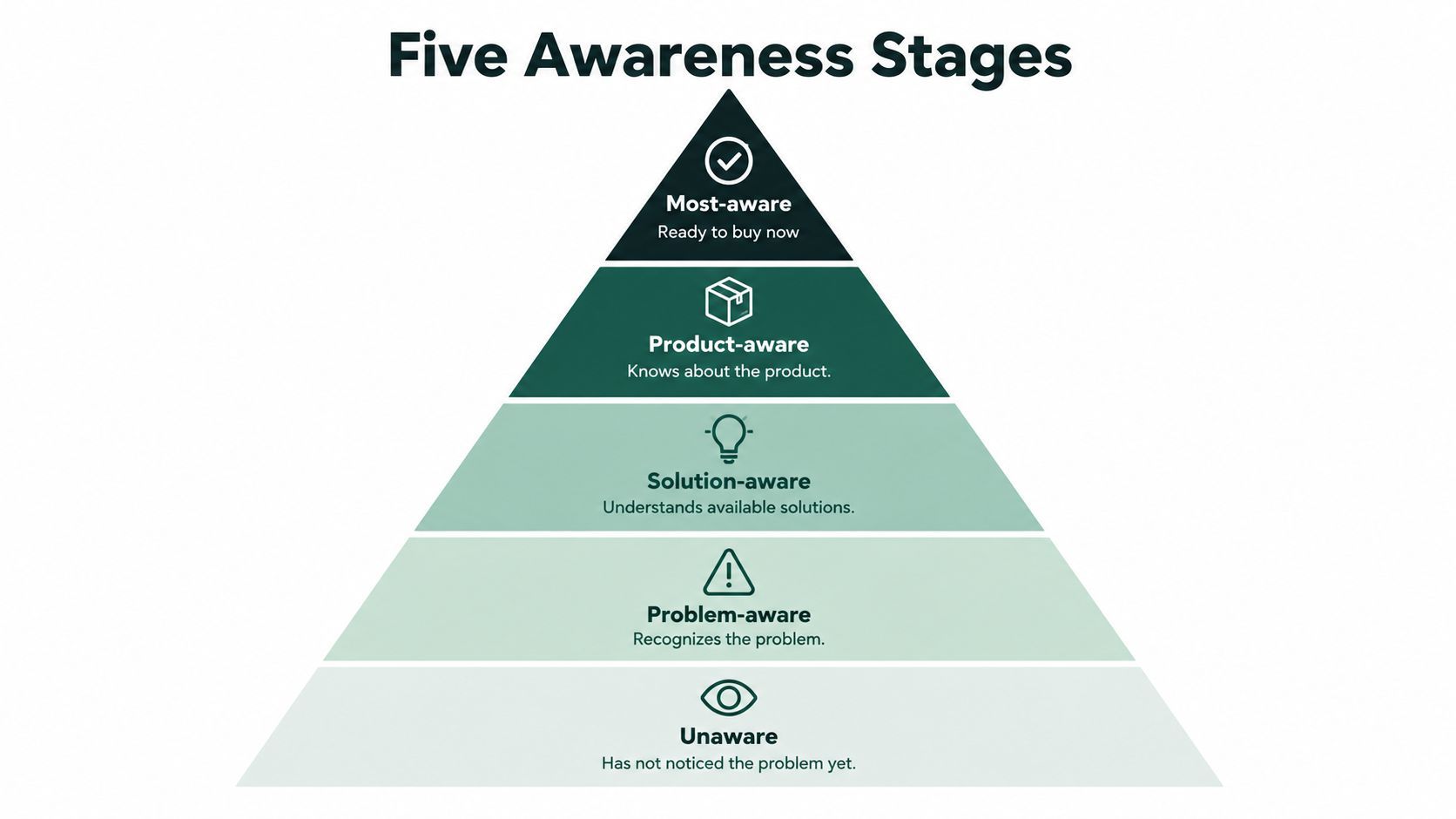
Start with awareness
Use these five stages as a practical copy and offer system:
- Unaware: The visitor hasn't recognized the problem. Lead with an observation, lifestyle tension, or educational story. Don't open with a product pitch.
- Problem-aware: The visitor knows something is wrong but may not know the solution. Explain the problem, its causes, and what a credible solution must do.
- Solution-aware: The visitor understands the category. Compare approaches, explain trade-offs, and show why your product fits a particular use case.
- Product-aware: The visitor knows your brand or product. Focus on proof, objections, reviews, ingredients, delivery, guarantees, and the next action.
- Most-aware: The visitor is ready to buy. Remove friction with a direct offer, clear availability, and a simple path to checkout.
Traffic temperature adds the second axis. Cold paid social needs a stronger belief-building frame than branded search or a recent site visitor. Organic content can answer a specific question. A referral may need reassurance that the recommended product is legitimate. A retargeted visitor usually needs an objection resolved, not another introduction.
Build the matrix before writing the page
Take a higher-AOV skincare brand as an example. A cold, problem-aware audience might receive an educational advertorial about persistent dryness, followed by a skin-needs quiz. A warm organic visitor searching for barrier support could land on a comparison page explaining ingredients and routines. A product-aware retargeting audience should see reviews, usage instructions, shipping details, and a direct product offer.
A low-AOV impulse product needs a different economics and message. Cold traffic may respond to a short problem-led listicle with demonstrations and social proof. The capture offer could be early access, a bundle alert, or a useful product guide rather than a lengthy consultation. Asking for extensive personal information would add friction without improving qualification.
Use this worksheet:
- Audience: Who arrived, and from which source?
- Awareness: What does this person already understand?
- Concern: What question prevents the next action?
- Frame: Which page structure answers that question fastest?
- Exchange: What useful value justifies permission?
- Next step: What should happen after capture?
Keep the page frame aligned with the visitor's state. A cold visitor doesn't need the same page as an email subscriber, even if both are interested in the same product.
Choosing the Channels Worth Your Budget
A paid-social campaign can produce leads all day and still fail to create qualified revenue. The problem usually starts when teams treat every channel as interchangeable. Each source has a different job, cost pattern, and definition of a useful lead.
Paid social is the fastest testing ground for cold audiences. Use it to identify which problems, hooks, and creative angles earn attention, then send that learning into the presell experience. The traffic arrives with limited context, so judge performance by qualified actions and revenue by creative, not cheap form fills. A low-cost subscriber who never engages is less valuable than a costlier contact showing clear product intent.
Organic content compounds more slowly and suits products that need explanation. Search articles, creator-style demonstrations, educational videos, and comparison pages can resolve questions before a visitor reaches the capture step. Build each asset around a specific problem and intent stage. Broad reach may increase sessions, while focused content gives your landing page stronger signals about what the visitor wants to know.
Partnerships and affiliates borrow trust from a creator, community, publisher, or complementary brand that already has access to the right audience. For brands assessing creator-led acquisition, influencer marketing for ecommerce brands offers useful channel context. Treat the partner as a source of distribution and credibility, then measure partner-level qualified revenue instead of impressions alone.
Referrals can deliver strong intent because the introduction comes with an existing recommendation. Volume and control are limited, so build a simple referral mechanism after the customer experience gives people a genuine reason to recommend the product. If customers hesitate to explain the value, a referral incentive will not repair the underlying experience.
Email and automation form the owned conversion layer. They develop permission after acquisition and protect the value of paid, organic, partner, and referral traffic. As the earlier benchmark showed, email plays a major role in audience nurture. If your paid campaigns generate contacts but the follow-up sequence does not address objections, you are paying for attention without building an asset.
| Channel | Best role | Cost pattern | Lead quality signal |
|---|---|---|---|
| Paid social | Message discovery and scalable acquisition | Spend rises directly with traffic and testing | Qualified actions and revenue by creative |
| Organic content | Demand capture and education | Time-heavy before compounding | Search intent, engaged sessions, assisted revenue |
| Partnerships and affiliates | Borrowed trust and targeted reach | Commission, fee, or negotiated placement | Partner-level qualified revenue |
| Referrals | High-trust introductions | Incentive or operational cost | Referred purchase and repeat behavior |
| Email and automation | Permission-based nurture and conversion | Platform, creative, and lifecycle effort | Engagement, qualification, and attributed revenue |
Start with two paid channels, one owned channel, and one partnership or referral channel. Give each test enough spend to produce a meaningful signal, but do not fragment the budget across every new platform. Keep the allocation flexible. Move budget toward qualified revenue per lead, not the cheapest acquisition event, and make every landing page easy for mobile users and machine-readable systems to interpret.
The video below walks through how one DTC team structured its lead-generation system end to end, useful for seeing the channel stack in action.
The Presell Page Playbook for Cold Traffic
Cold visitors usually under-convert on product detail pages because PDPs assume too much. They show the product, list features, and ask for a purchase before the visitor has decided that the problem matters, the solution is credible, or the brand deserves trust.
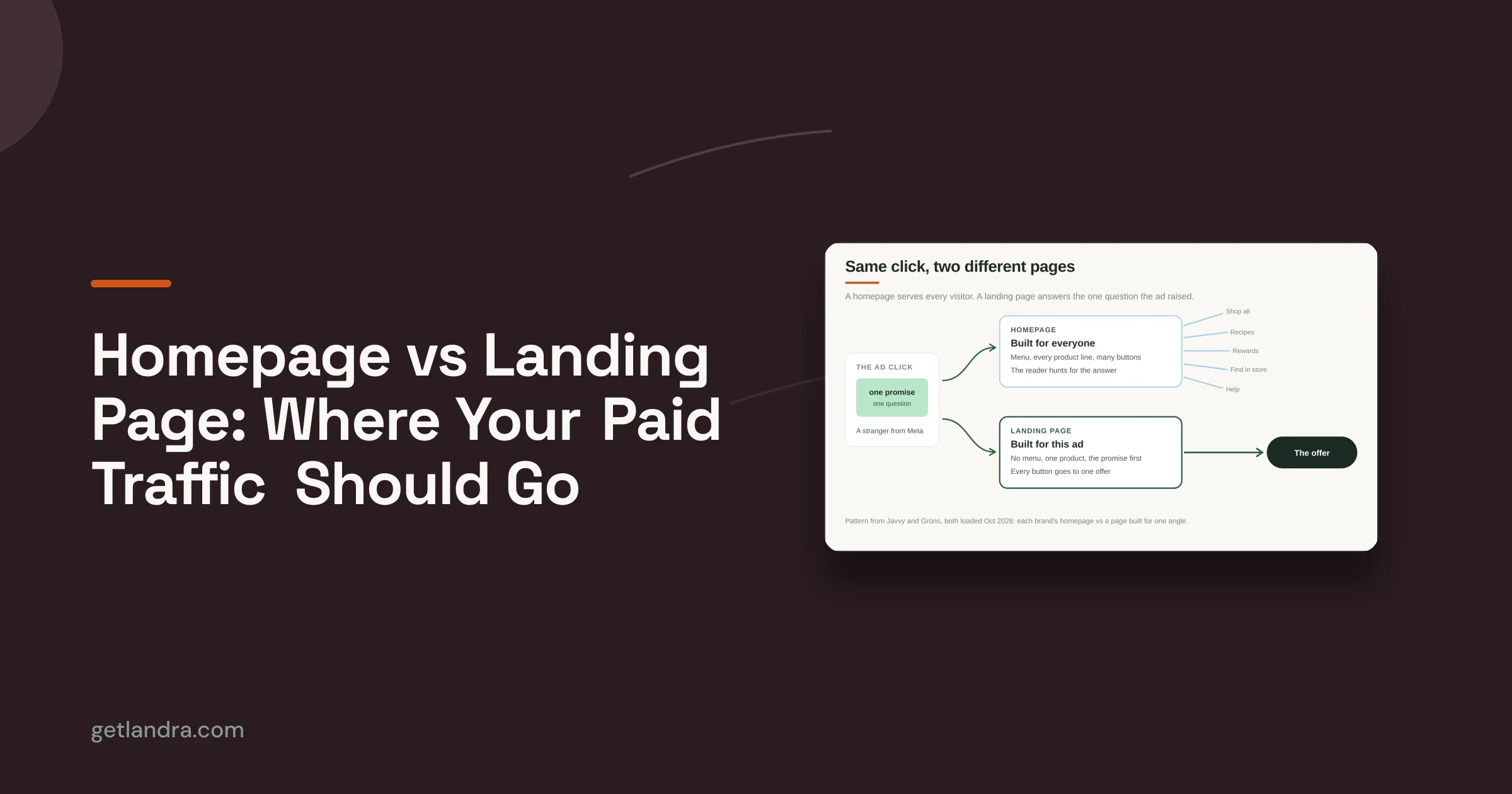
A presell page earns that belief first. It connects the ad promise to the product, answers the questions that block action, and creates a controlled next step. The page shouldn't distract visitors with a full store navigation system or unrelated products. It should guide one audience toward one relevant action.
Choose the frame that matches the click
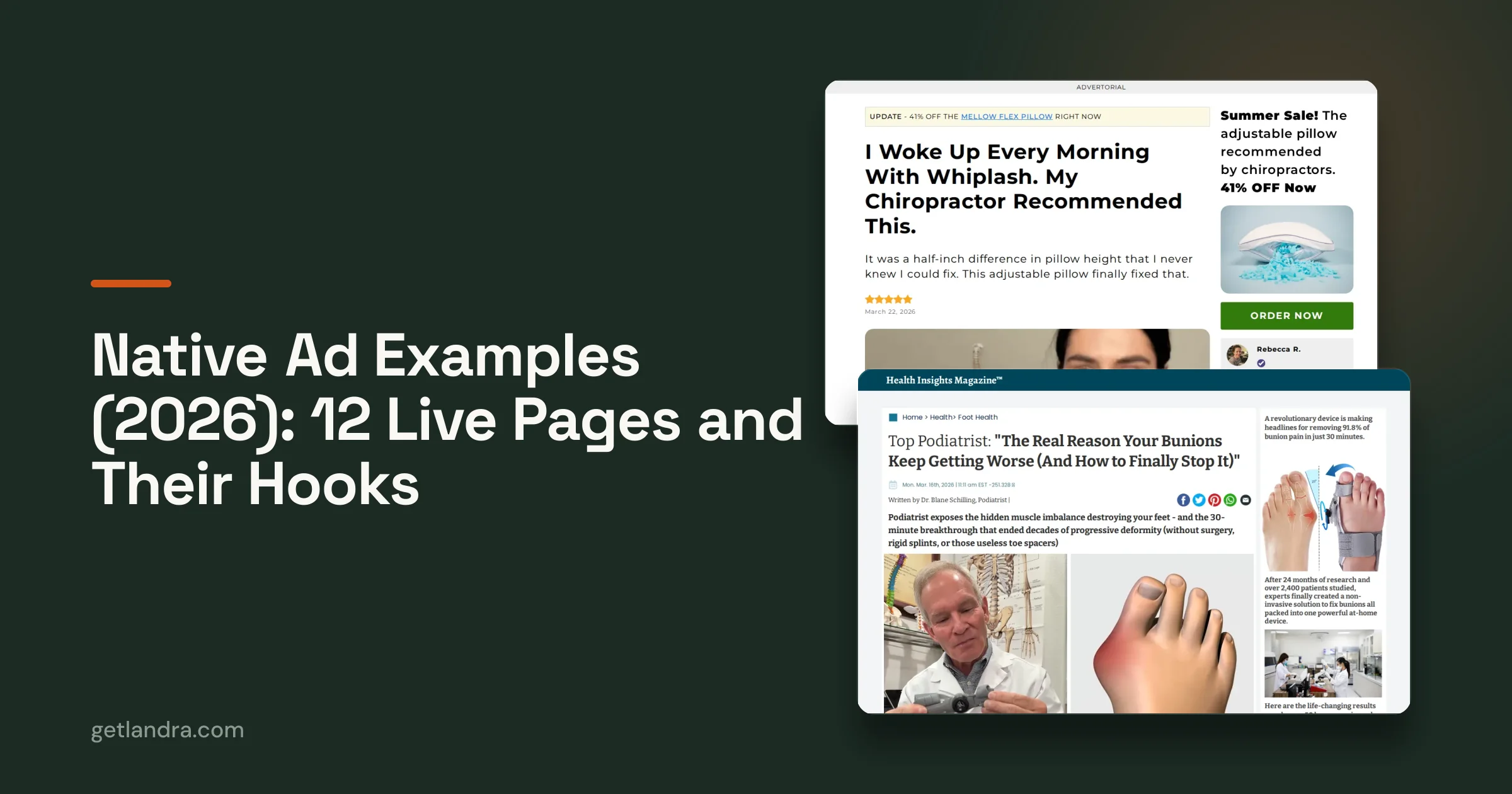
An advertorial works when the audience needs a narrative. It can introduce a problem, explain why common approaches disappoint, present a solution, and use evidence to move the reader toward the product. This frame suits cold traffic that doesn't yet recognize your brand.
A listicle works when the visitor wants structure and comparison. Use a problem-led listicle to explain options, a product-led listicle to organize benefits and proof, or a best-of format to help shoppers narrow a category. The headline should make the selection logic obvious.
A warm-up page sits between the two. It gives a familiar audience a focused explanation before sending them to checkout. Use it for retargeting, email traffic, or a product with meaningful objections.
Make the mobile path ruthless
Mobile behavior now shapes both research and conversion. HubSpot consumer research cited in industry reporting found that 63% of consumers preferred mobile devices to find information about brands and products in 2024, while benchmark data reports that 41% of email views occur on mobile devices compared with 39% on desktop (B2C lead-generation benchmark data).
Build the page around the thumb:
- Match the opening headline to the ad promise.
- Use one primary CTA instead of competing actions.
- Keep controls large enough to tap comfortably.
- Ask for only the fields needed at that stage.
- Put proof near the claim it supports.
- Make the next step visible after submission.
- Track view, scroll depth, CTA click, form start, submission, and qualified outcome.
Mobile performance deserves its own test plan. Research across 37 brands and more than 30 million mobile sessions found that a 0.1-second improvement in mobile site speed was associated with 8.4% higher retail conversion and 9.2% higher average order value (mobile performance research). The association doesn't prove that every brand will achieve the same result, but it makes slow mobile pages impossible to dismiss as a design detail.
A skincare brand could publish the same serum three ways. The advertorial might explain why a damaged skin barrier stays reactive. The problem-led listicle might compare common routine mistakes. The warm-up page might present the serum's ingredients, usage sequence, reviews, and shipping information to a returning visitor. Build each version around the same product truth, then test the frame, opening, and CTA against the same audience and offer.
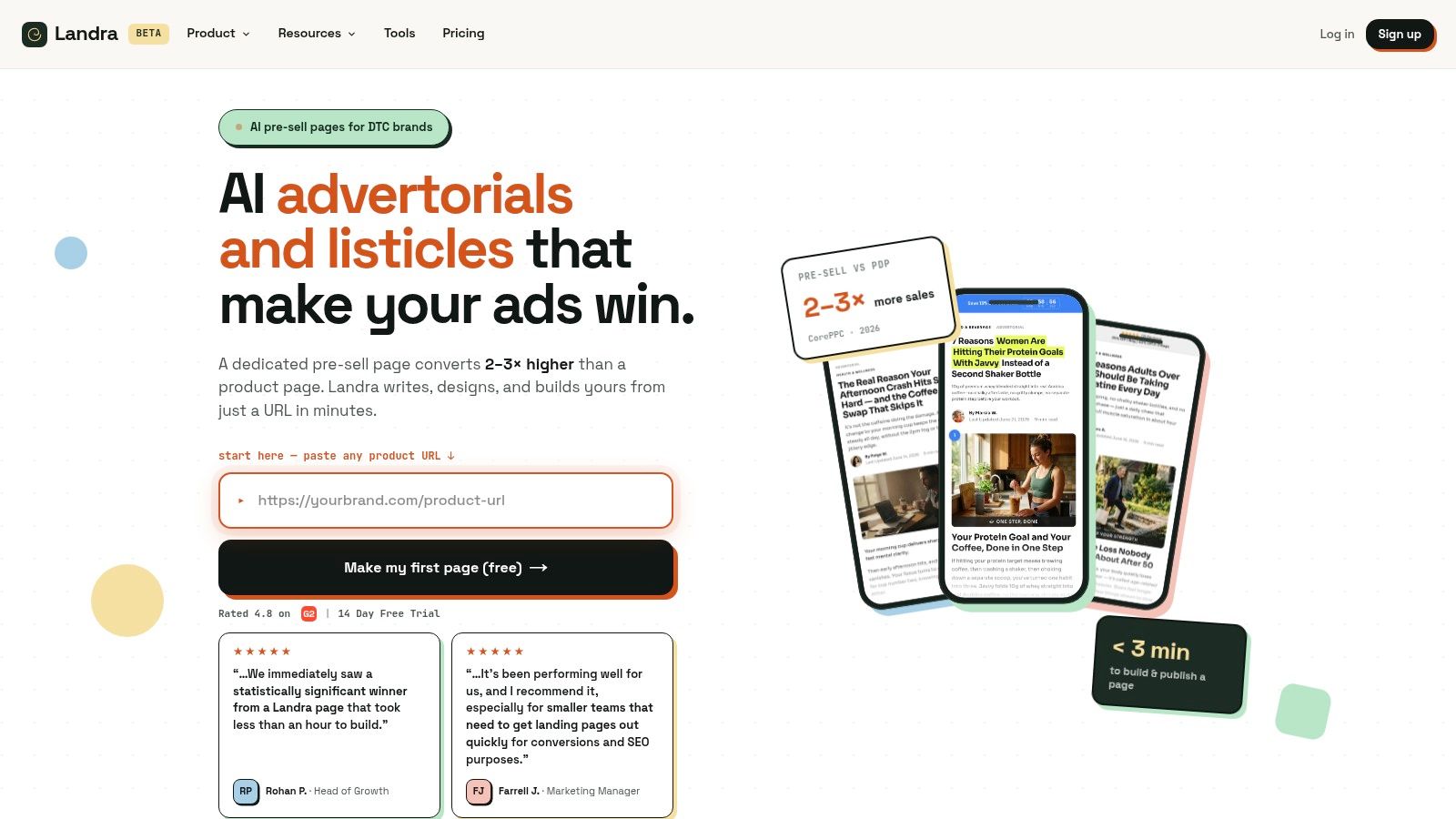
Landra is one option for generating and editing these pre-sell formats from a product or brand URL. Teams can also use a custom CMS, Webflow, Shopify sections, or an internal page system. If you need examples of video-led acquisition creative, review the best video formats for B2B leads and adapt the underlying structure to your consumer buying context. To create a listicle variant quickly, browse listicle page templates.
Lead Capture Flows That Do Not Leak
The form is only one component of capture. A reliable flow answers four questions: what will the visitor receive, what information is necessary, how is consent recorded, and who acts next?
Start with the smallest useful request. An email may be enough for a guide, product education, or a welcome sequence. A quiz can collect stated preferences before asking for more identity data. A phone number belongs in the flow only when SMS or a human conversation provides clear value.
Design the exchange before the fields
A discount is familiar, but it isn't always the strongest offer. Match the incentive to intent:
- Education: Give a buying guide, routine, checklist, or product explanation.
- Personalization: Return a quiz result or recommendation based on answers.
- Access: Offer early notice, limited availability information, or a relevant launch update.
- Confidence: Provide comparisons, reviews, guarantees, or usage guidance.
Consent should be clear and proportionate. Tell people what they'll receive, how often the brand may contact them, and how they can opt out. Don't hide marketing permission inside vague language or force a visitor to guess whether a quiz result comes with a sales sequence.
Consider a DTC flow with three entry points. A quiz records answers and product interest. An advertorial captures an email after the reader reaches a relevant proof section. A listicle captures an address after the visitor selects a category or wants a recommendation. Each submission stores source, campaign, page variant, product interest, consent status, and timestamp.
Then automate the handoff:
- Validate: Check required fields, consent, duplicate contacts, and obvious submission errors.
- Deduplicate: Merge against the existing CRM record instead of creating a second profile.
- Score: Use source, answers, page behavior, and product interest to prioritize follow-up.
- Assign: Route to the correct owner or nurture sequence based on category and intent.
- Confirm: Send the promised resource immediately and state what happens next.
- Monitor: Alert the team when a lead has no owner, no response, or conflicting consent.
Speed isn't a sales preference. It's part of conversion design.
In a study of 1.25 million leads across 29 B2C and 13 B2B companies, organizations contacting leads within one hour were nearly seven times more likely to qualify them than organizations waiting another hour, and more than 60 times more likely than organizations waiting at least 24 hours. The same research found that only 37% of audited U.S. companies responded within an hour, while 24% took more than a day and 23% never responded (lead response-time research).
Connect every form to a CRM or automation layer with timestamp monitoring, SLA alerts, fallback ownership, and deduplication. For practical experimentation, use A/B testing sign up page layouts to test the value exchange and page structure, not just button color.
Nurturing, Measurement and the Numbers That Matter
Form-fill rate is only an input metric. It counts completed forms, not reachable contacts, genuine interest, qualification, or profit. A funnel can raise capture while weakening the business by attracting low-intent prospects or delaying follow-up.
Measure the entire path from first visit to revenue:
| Metric | What it tells you | Healthy signal |
|---|---|---|
| Time to first response | Whether the operation acts while intent is fresh | Fast, consistently monitored handoff |
| Contact rate | Whether captured contacts can be reached and engaged | Stable reachability by source |
| Qualified-lead rate | Whether the acquisition message attracts viable prospects | Improving quality without inflated friction |
| Revenue per lead | Whether leads create commercial value | Positive trend by source and page variant |
| CAC | What it costs to acquire a customer | Sustainable against contribution margin |
| LTV | What customers contribute over time | Increasing through retention and repeat purchase |
| LTV/CAC | Whether acquisition economics can support scale | A ratio that fits the brand's payback requirements |
A generic benchmark cannot set your target. Industry, intent, device mix, offer, lead definition, and traffic source all change the denominator. Set targets from your own qualified revenue, cohort quality, and payback requirements, then compare sources and page variants against those targets.
Measure mobile reality
Desktop Lighthouse scores cannot show how a paid-social visitor experiences a page on a mobile connection. Set a performance budget, collect real-user load data, and segment conversion by speed cohort. If slower visitors submit fewer forms, fix the page even when its lab score looks acceptable. The presell page is a machine-readable, mobile-first pre-sell experience, so speed and clear structure affect both human confidence and how discovery systems interpret the offer.
Use controlled tests. Randomize users between a control PDP and a presell page while holding audience, bid strategy, creative, offer, and attribution window constant. Evaluate qualified outcomes and downstream revenue with confidence intervals. Change one major variable at a time. If copy, speed, audience, and offer all change together, you cannot identify the cause.
Nurture sequences should match the entry point. A quiz entrant needs the promised result and a relevant recommendation. An advertorial reader may need proof and education. A listicle visitor may need comparison detail and a reason to choose now. Use engagement and product signals to adjust the sequence, then suppress purchasers so acquisition messages stop after conversion.
For a practical measurement framework, use this lead generation KPI guide. Report performance by traffic source and page variant, then connect every lead to qualified revenue where possible. Form-fill rate remains useful for diagnosing capture friction, but qualified revenue per lead is the number that should guide budget decisions.
Trust, AI Discovery and Your Week-One Checklist
A shopper may discover your product through AI, then reach a mobile page looking for proof before sharing contact details. Your presell experience must satisfy both audiences: machine-readable facts for discovery systems and clear evidence for sceptical buyers.
An IAB and Talk Shoppe study found that 80% of shoppers use AI during product research and comparison, while BCG reported that 64% use AI across at least three product or service categories (Microsoft analysis of AI-mediated discovery). A Razorfish study cited in the same Microsoft analysis found that only 8% of consumers who began with AI felt comfortable purchasing immediately after the initial recommendation, while 78% wanted AI to narrow options but retain the final decision. State product facts plainly, then support them with demonstrations, reviews, policies, and human-readable proof.
Permission depends on value and transparency. Adobe's global 2026 consumer research found that 58% of customers say convenience strongly affects willingness to share personal information. One-third would stop interacting with a brand after discovering content was AI-generated, while 37% would stop if an expected human interaction was with AI (Adobe consumer research).
Ship this week:
- Pick one product with a clear margin and buying problem.
- Define two audience and intent combinations.
- Build three page frames: an advertorial, a listicle, and a warm-up page.
- Create one transparent capture exchange that states the follow-up and benefit.
- Connect forms to deduplication, routing, confirmation, and SLA monitoring.
- Review a daily report showing qualified rate, response time, lead status, and revenue per lead by source and page.
Judge the system by qualified revenue per lead, not form fills alone.
Landra generates editable, mobile-first advertorials, listicles, and presell pages from a product or brand URL, with publishing options for Shopify, Webflow, hosted pages, and HTML export. Use Landra to build the page frames and measure qualified revenue.