

Free to join is not the same as free to grow. That's where most advice about free websites for affiliate marketing goes wrong. It treats sign-up cost as the main hurdle, when the harder part is getting approved for offers, publishing something useful, earning search or audience trust, staying compliant, and measuring which clicks turn into commissions.
That distinction matters because affiliate marketing is already a mainstream channel, not a side alley. One industry summary says the global affiliate marketing industry was valued at about $18.4 billion in 2025 and is projected to reach $20.07 billion in 2026, while U.S. advertisers are expected to spend $13.81 billion on affiliate marketing in 2026 and affiliate-driven commerce is projected to generate $241 billion in U.S. e-commerce sales in 2026, according to Wix's affiliate marketing statistics roundup. If you're building free websites for affiliate marketing, you're not entering a novelty market. You're entering a crowded one.
This list focuses on free-to-join affiliate websites and marketplaces, not free site builders. The lens is practical: advertiser fit, approval friction, usable link tools, reporting, compliance exposure, recurring or category-specific earning potential, and how well each option supports a publisher who still needs content, disclosure, traffic, and some kind of presell workflow. If you're building offers for a startup or DTC brand, it also helps to keep a separate directory for founders handy when you're mapping adjacent partner channels.
The categories split naturally. Some platforms are broad retail networks. Some are better for digital offers. Some are stronger for SaaS and B2B. One is mainly useful when your real asset is an existing archive of content.
Table of Contents
- 1. Amazon Associates
- 2. CJ
- 3. impact.com
- 4. Rakuten Advertising
- 5. Awin
- 6. ClickBank
- 7. PartnerStack
- 8. FlexOffers
- 9. Sovrn Commerce
- 10. eBay Partner Network
- Top 10 Free Affiliate Networks Comparison
- Choose the Offer Before You Build the Site
1. Amazon Associates
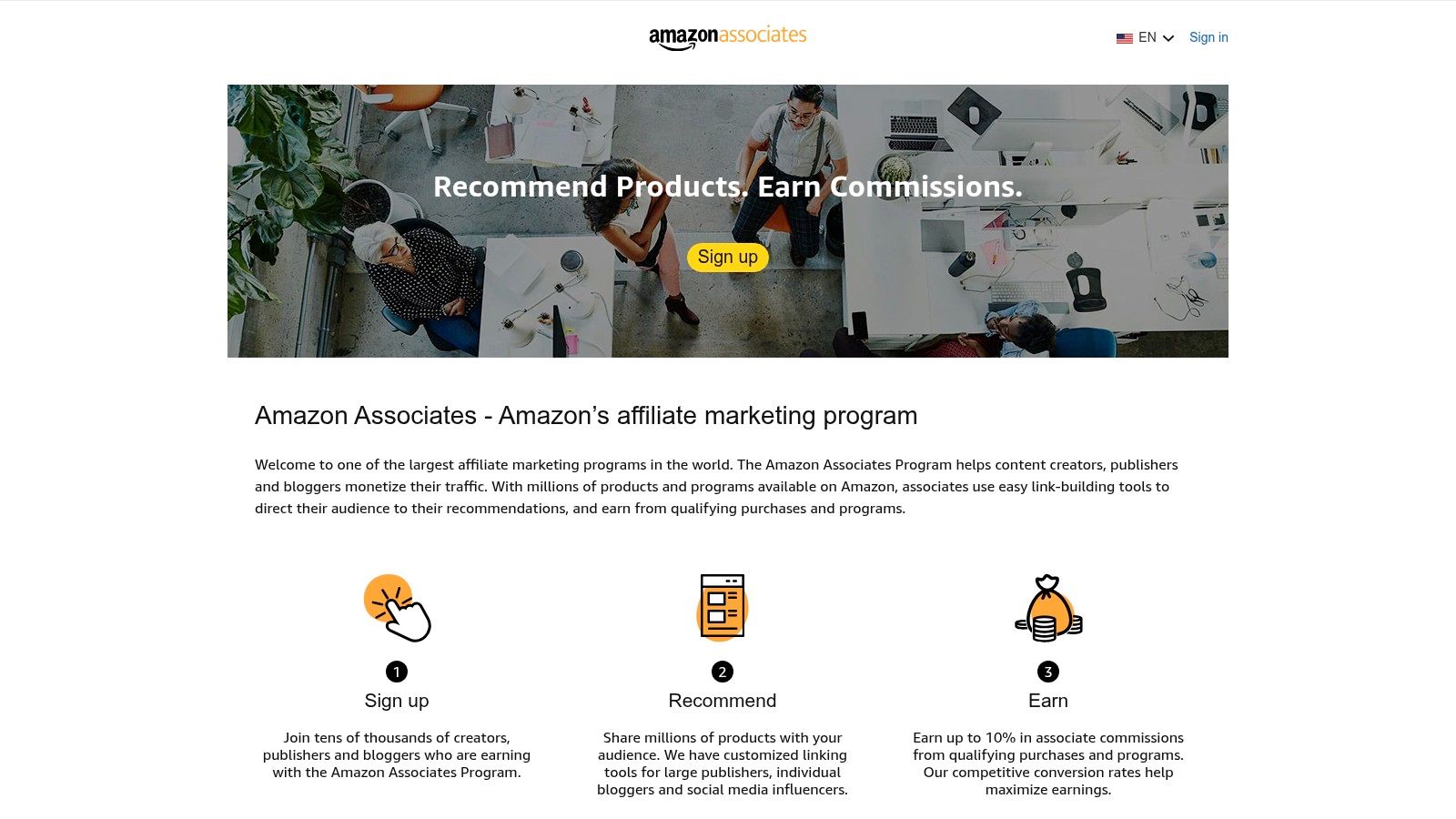
Amazon Associates is still the easiest answer when the hard problem is product availability. If you run gift guides, gear roundups, home-office lists, hobby content, or replacement-part content, Amazon usually removes the “can I even find this item?” problem fast.
Its biggest strength is coverage. You can move from idea to live product links quickly with SiteStripe and direct product deep links, which is why many beginners start here before they understand merchant-level approvals on larger networks.
Where Amazon works best
Amazon fits publishers who need broad SKU access more than they need category exclusivity. It's strongest when the article solves a buying decision that already exists, not when you're trying to create demand from scratch.
That makes it good for:
- Broad comparison posts: Think “best espresso accessories,” “tools for remote workers,” or “starter camera kits.”
- Rapid content testing: You can validate whether readers click before spending time applying to multiple brand programs.
- Mixed catalogs: If one article references ten different brands, Amazon is usually the shortest path to monetizing all of them.
One practical use case is publishing a mobile-first ranked roundup built with an AI listicle creator for e-commerce, then linking readers to the exact Amazon product pages rather than a generic storefront.
Practical rule: Use Amazon when product breadth matters more than commission control.
The friction and the ceiling
The sign-up path is straightforward. Friction shows up later in compliance. Amazon is stricter than many beginners expect about link use, disclosures, and how you present pricing or product claims. If your site is thin, templated, or sloppy with disclosures, Amazon is not forgiving.
Another limit is strategic, not technical. A recent stats roundup says Amazon Associates is reportedly used by over 58% of affiliates, according to ClickMinded's affiliate marketing statistics. That tells you Amazon isn't a moat. It's a default. If you rely on it alone, your site can become interchangeable with hundreds of others.
2. CJ
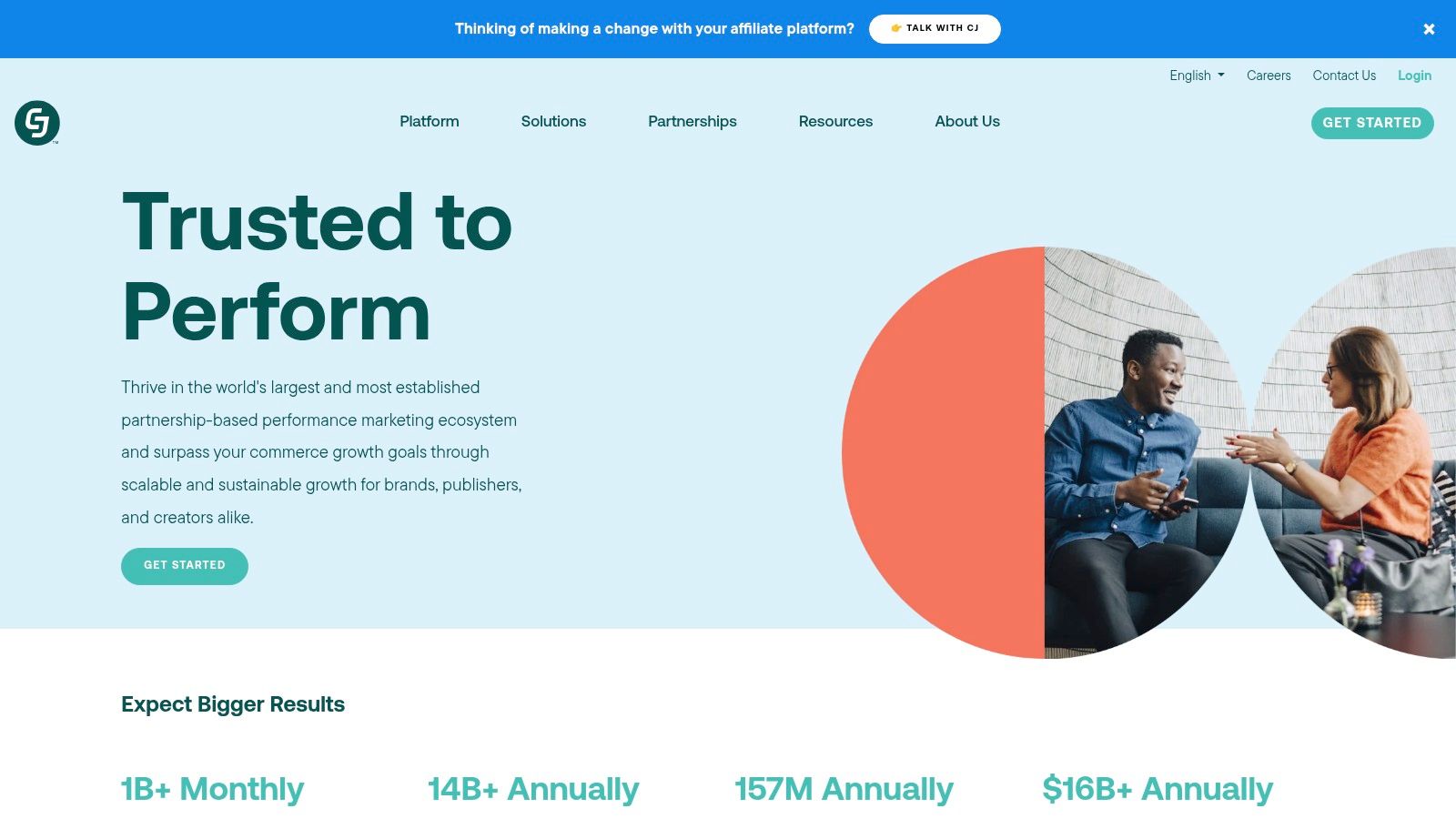
CJ works best for publishers who already know what they want to promote and need access to established brands, not just a free place to paste links.
That distinction matters. CJ is a network, not the website strategy. You still need a site that can rank, presell the click, and prove to advertisers that your traffic source fits their terms. Signing up is free. Getting from account approval to a link you can use often takes longer than beginners expect, because many merchants review each application separately.
For that reason, CJ suits a specific publishing setup more than a generic "start affiliate marketing for free" use case. It tends to fit:
- comparison publishers targeting brands readers already recognize
- finance, travel, tech, and service content where advertiser trust affects click-through
- editors who need merchant-level reporting and page-level optimization, not just raw link generation
If you want a quick view of the kinds of programs available, this list of CJ Affiliate partners helps before you build content around offers you may not get approved for.
The trade-off is straightforward. CJ usually gives you better merchant quality and better reporting than broad beginner-friendly options, but there is more friction between account creation and first revenue. Some advertisers approve fast. Others want a real site, clear traffic sources, working disclosures, and content that already matches their category. A thin review site with placeholder posts often stalls here.
That makes CJ a better second step than a first step for many publishers. Once you have a few pages getting traffic, a clear niche, and a measurement workflow in place, the extra approval friction becomes manageable. Before that, it can feel slow.
The upside is control. Deep linking is useful on high-intent comparison pages, and the reporting is good enough to spot whether a page has a weak merchant match or just weak copy. That is the kind of detail that helps a publisher improve revenue over time instead of swapping links blindly.
The ceiling is also clearer on CJ. Competition is high, and many advertisers already work with experienced publishers. Generic listicles with no angle rarely hold up. CJ performs best when the site already has a reason to exist beyond "here are some affiliate links."
3. impact.com
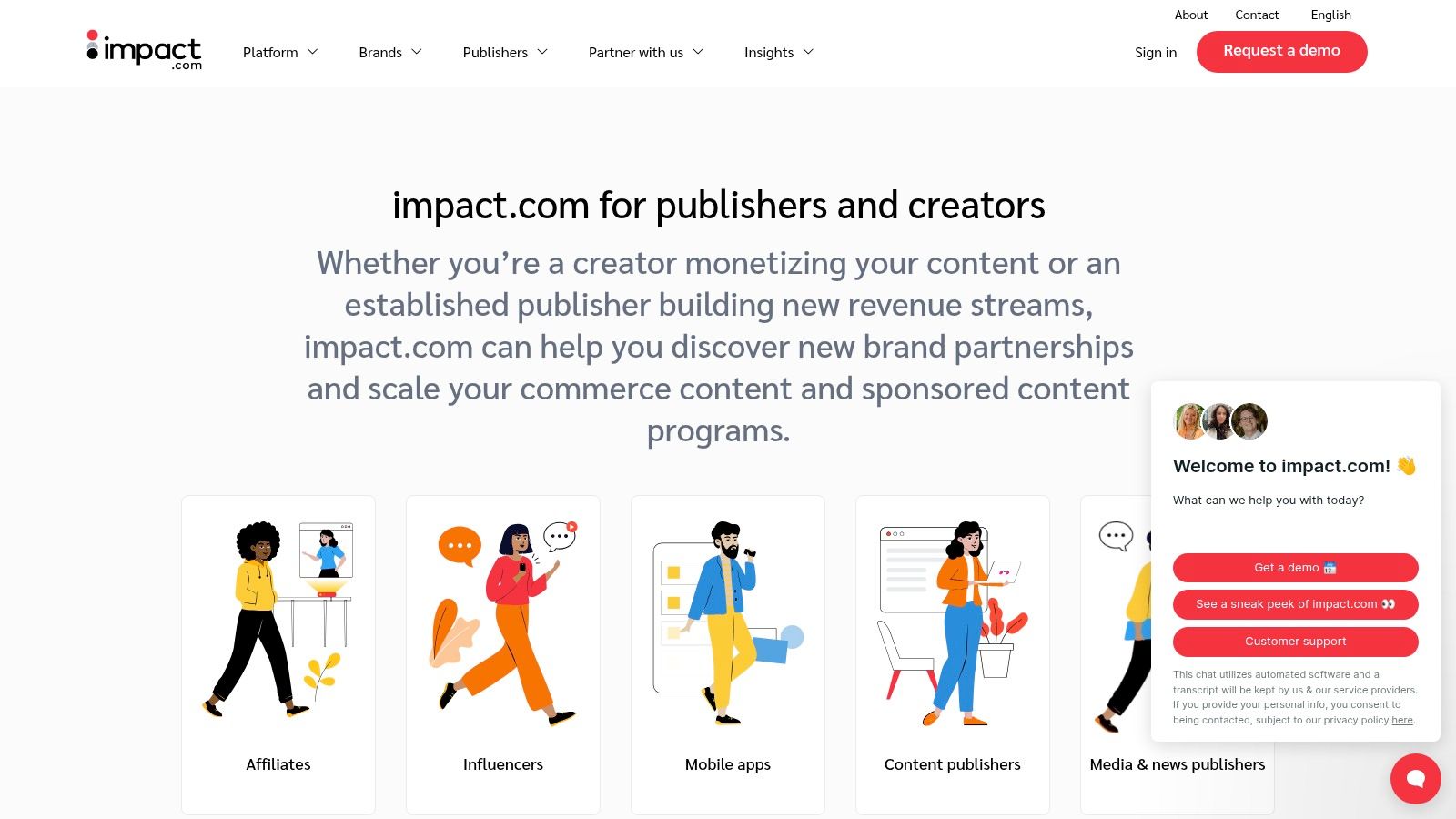
impact.com Partner Marketplace makes more sense once you separate two decisions: where you get merchant access, and where you build pages that rank, presell, and convert. impact solves the first part well. It does not remove the need for a real publishing workflow.
That distinction matters because impact is often a better fit for publishers who already distribute content across more than one channel. Software reviewers, newsletter operators, DTC-focused affiliates, and creators running content plus codes usually get more value here than a brand-new affiliate trying to publish a few generic blog posts and wait for SEO traffic.
The friction sits in the middle. Creating an account is one step. Getting approved into programs that fit your site, audience, and traffic source is the step that determines whether the platform is usable.
A practical way to judge fit is to ask what kind of site you are running.
If the site is a narrow review or comparison property with clear commercial intent, impact can work well because many brands on the platform want controlled partner placement and cleaner attribution. If the site is broad, thin, or still unfinished, approvals can slow down fast. Merchants often want to see working pages, a defined audience, and some sign that the publisher can present an offer properly.
That makes impact stronger for these scenarios:
- DTC and software publishers: Better when the offer needs explanation, not just a link drop.
- Mixed-channel operators: Useful if clicks come from content, email, creator placements, or coupon-assisted campaigns.
- Publishers testing different payout models: Some programs are easier to work with when they combine affiliate, lead-gen, or creator terms.
The long-term limit is not the interface. It is selectivity and merchant expectations. impact has good infrastructure, but many advertisers still screen partners carefully, so the path from sign-up to first usable link is not as short as beginner-focused networks make it look.
Used well, that is a positive. Better brands tend to care who represents them. Used too early, it becomes friction with no revenue behind it.
4. Rakuten Advertising

Rakuten Advertising is rarely the fastest path to a first affiliate link. It is often a better fit once a site already looks publishable and the publisher knows how they will turn branded retail traffic into clicks.
That distinction matters. Rakuten is a merchant network, not the whole operating setup. You still need pages that can rank or get distributed, a presell format that matches shopping intent, and a way to measure which merchants earn placement.
Where it tends to work best is branded consumer commerce. Fashion, beauty, home, electronics, department-store style retail, holiday shopping, and gift-led content are the obvious fits. Publishers in those categories usually get more value from recognizable merchants than from high-payout offers with weak brand trust.
A simple test helps here. If the article idea sounds like "best summer dresses," "Mother's Day gifts under $100," or "which blender is worth buying," Rakuten is in its comfort zone. If the plan is a thin coupon page, an unfinished niche blog, or a hard-sell direct-response angle, the path from signup to usable links gets less attractive.
Rakuten suits a specific type of operator:
- Publishers building shopping guides around known brands
- Editorial sites that need retail advertisers across seasonal campaigns
- Email or content teams that can reuse the same merchant relationships across web, newsletter, and promotions
The trade-off is time. Approval friction usually shows up after account creation, when you start applying to individual advertisers and wait on brand decisions. That makes Rakuten less useful for a brand-new site that needs quick monetization and more useful for a site with live category pages, clear disclosures, and enough structure to present offers cleanly.
Free entry does not remove that work. It only removes the network fee. Publishers still need control over page layout, affiliate disclosures, outbound links, and tracking, which is why hosted social profiles and other lightweight "free website" options often break down once content starts scaling.
5. Awin
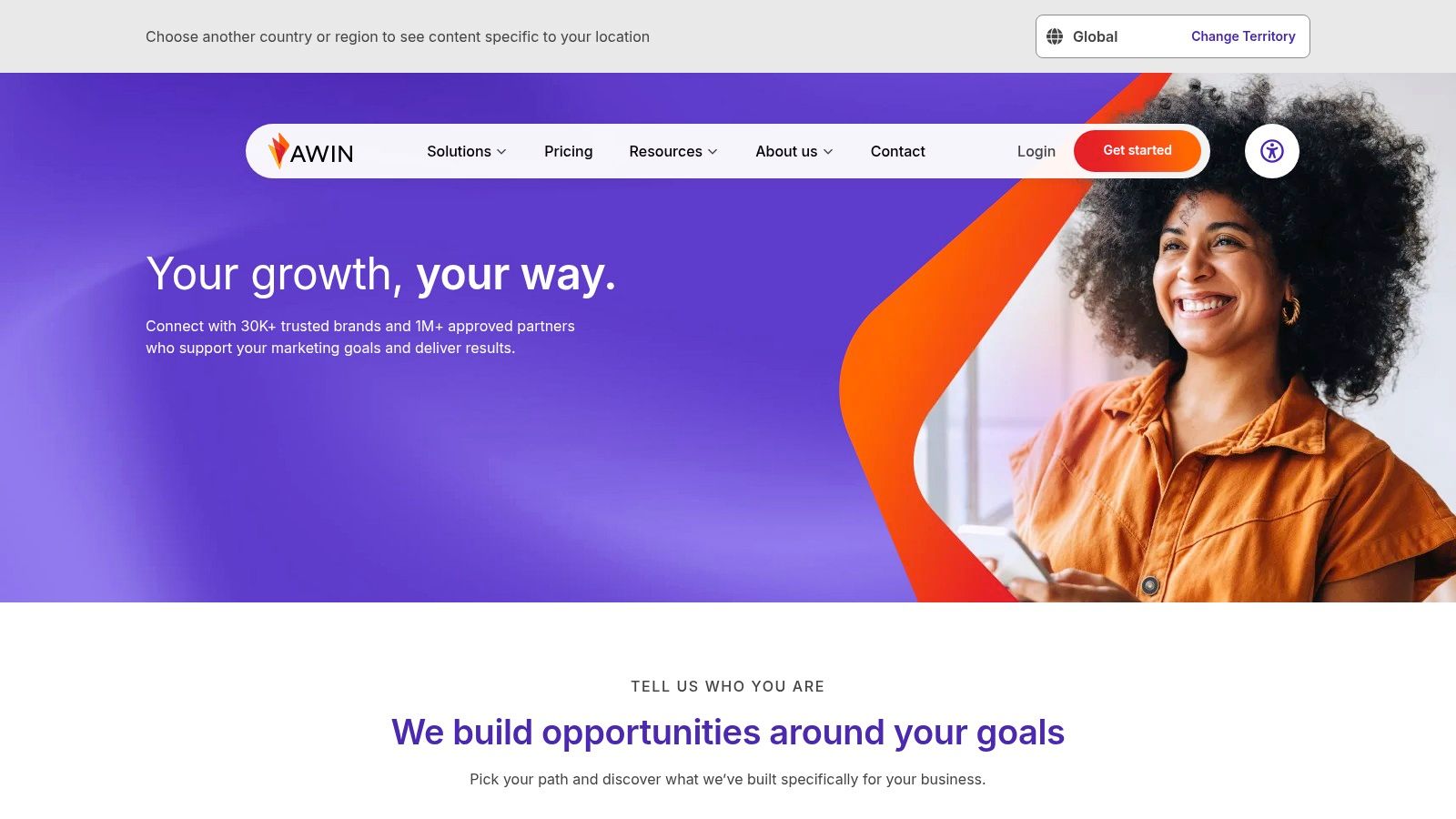
Awin works best for publishers who already know their monetization model and need merchant breadth more than a beginner-friendly path. The appeal is obvious. One account can cover retail, travel, software, and a lot of cross-border programs. The friction is also obvious once you start using it. Getting approved to the network is only the first step. Getting a link you can publish often depends on which advertisers accept your application and how complete your site looks.
That distinction matters in a "free website" discussion. Awin is the network, not the publishing system. You still need pages that can rank, disclosures that are visible, outbound links you control, and a way to measure which merchant placements earn clicks and sales.
Awin tends to make sense in three scenarios:
- A site replacing lost merchant coverage after the ShareASale transition
- A publisher running several content types across different categories
- A commercial content workflow that tests merchants inside comparison pages, listicles, or presell pages
I would not treat it as the fastest option for a brand-new affiliate site. I would treat it as a better fit once the site already has category structure, some editorial depth, and a reason for advertisers to say yes.
Its tooling helps once that foundation exists. Deep linking and browser-based link creation save time for teams updating older content or building lots of merchant-specific pages. If your workflow includes custom presell content, using Landra for advertorials can help you turn an approved offer into a page that does more than send cold clicks.
The trade-off is operational, not technical. Awin gives you access to many merchants, but access is uneven across niches and regions, and manual advertiser review can slow down launch timelines. Publishers who need instant links usually get frustrated. Publishers with a real content and measurement process usually get more value from the range.
6. ClickBank
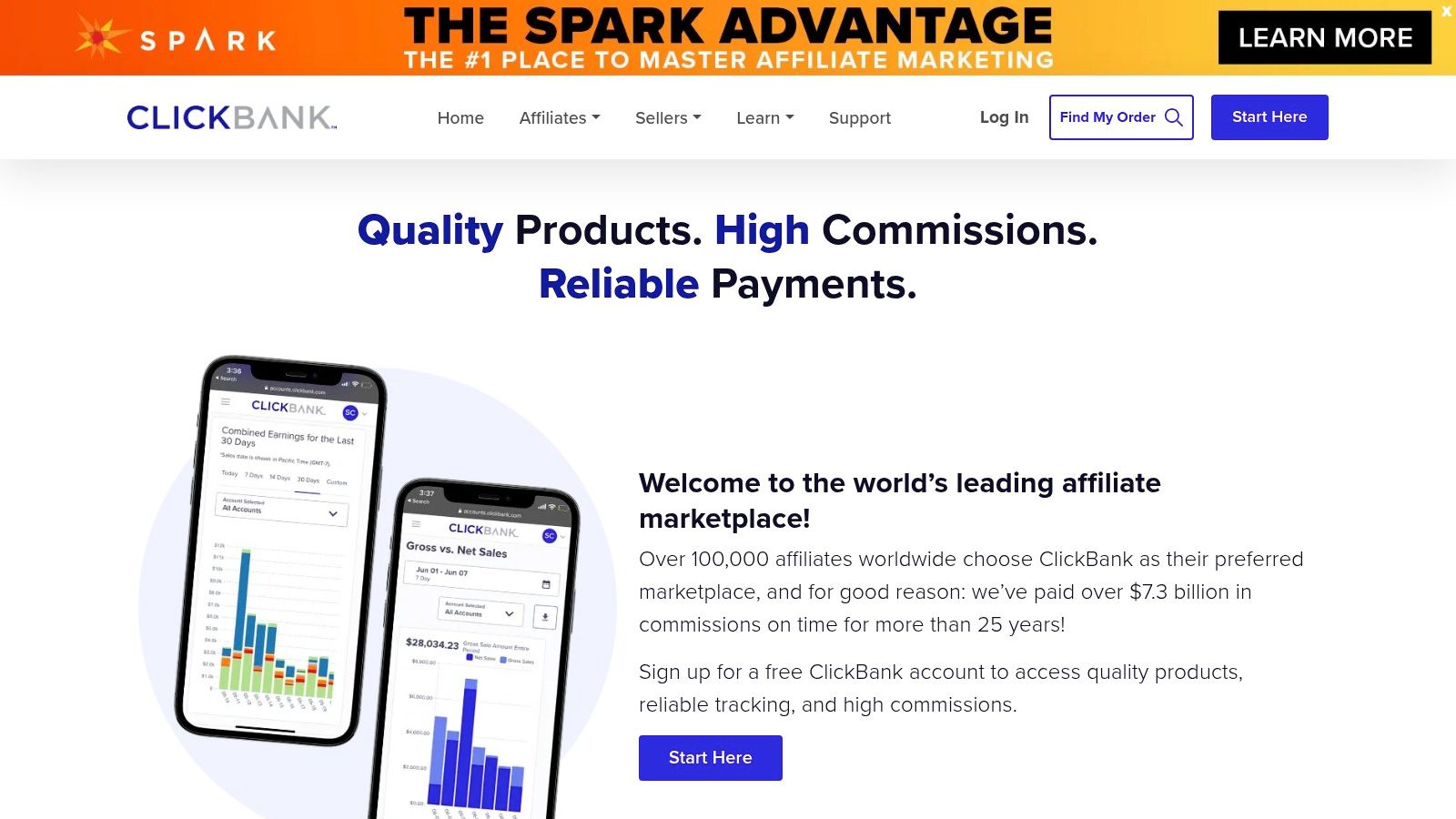
ClickBank is one of the fastest ways to go from account setup to a usable affiliate link. That speed makes it attractive to new publishers. It also hides the work. ClickBank gives you offer access. It does not solve the parts that usually decide whether affiliate content earns anything: a believable presell angle, compliant claims, pages you control, and tracking that shows which hook produced the click.
The best fit is a publisher who already knows the buyer problem and wants to test messaging quickly. That can mean a niche site built around one problem, a direct-response article, a tutorial with a strong pain point, or an email-driven funnel that sends readers to a focused page instead of a broad category archive.
ClickBank is weak for publishers who want brand-safe merchant selection done for them. Offer quality varies a lot. So do refund risk, sales page quality, and the gap between a product's promise and the content you can defend on your own site.
A simple filter helps before you write anything:
- Check whether the sales page matches the promise you plan to make
- Read the product as a buyer would, not just as an affiliate
- Look for a clear audience, a specific problem, and a credible reason the offer should convert
- Skip offers that need hype to work
This matters more on ClickBank than on stricter retail networks because the friction is low. Low friction is good for testing. It is bad for publishers who confuse easy access with a durable business.
If you are using ClickBank for presell content, build the page before you scale the traffic. A focused advertorial, comparison page, or problem-solution article usually gives you more control than dropping links into a generic review post. Landra's AI advertorial tutorial is a practical reference if you need a repeatable way to turn one offer angle into a page you can edit, test, and measure.
Vet the offer first. Then decide whether it belongs in SEO content, email, paid traffic, or a narrow landing-page test. On ClickBank, that order saves time and protects the site.
7. PartnerStack
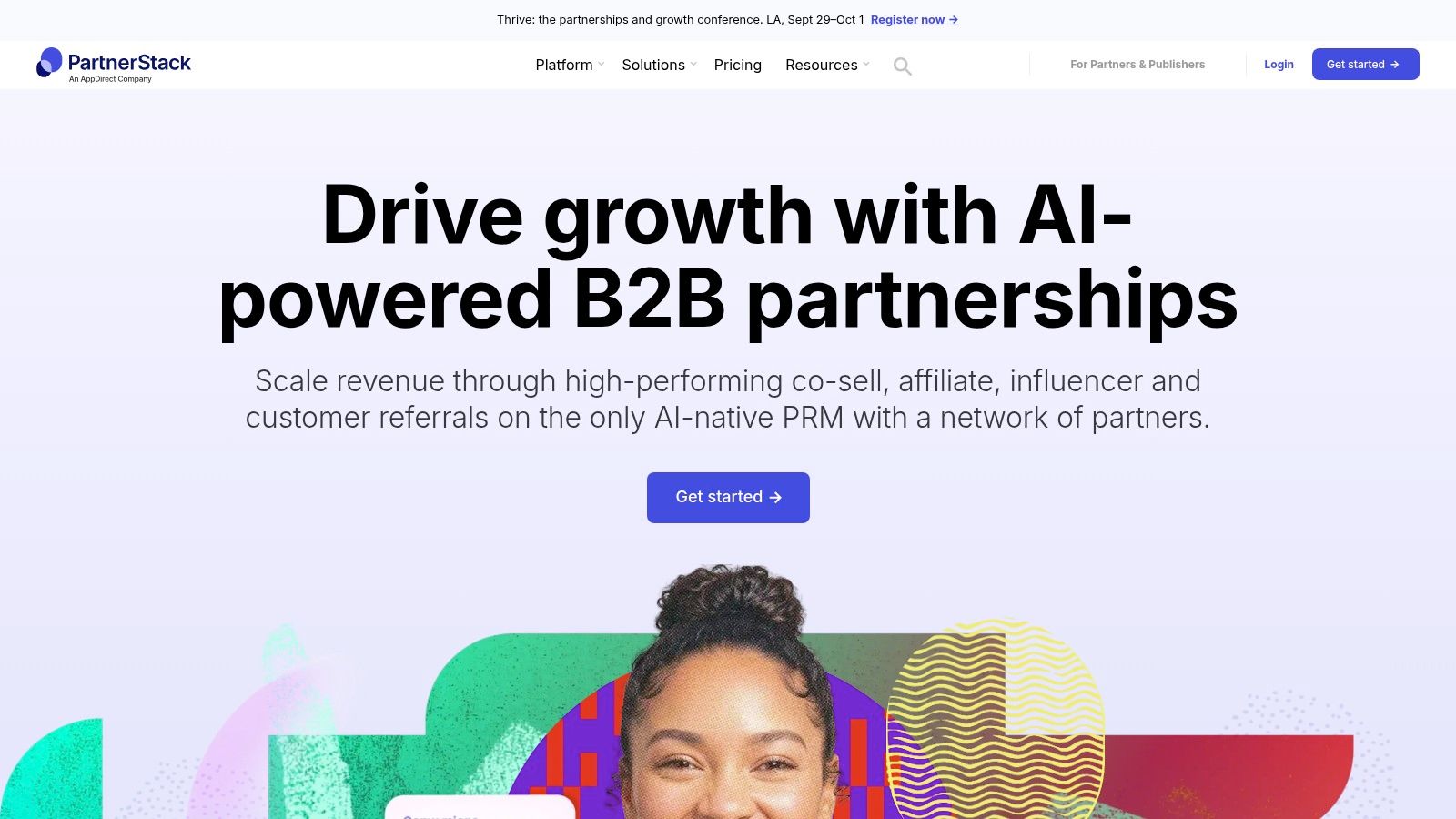
PartnerStack makes sense only if your site already speaks to a business buyer. A free account is easy enough to create. Getting from signup to a link you can publish with confidence is the harder part, because many programs sit behind merchant review and expect a real audience, clear positioning, or both.
That friction is not a flaw. It filters out a lot of low-intent publishing.
PartnerStack works best for publishers covering software with a defined use case: email tools, CRMs, analytics, ecommerce apps, finance software, or team workflow products. If you write software comparisons, migration guides, setup tutorials, or stack recommendations for operators, the network fits the buying journey better than broad consumer platforms do. Readers in those categories usually want proof, trade-offs, screenshots, and implementation detail before they click.
The practical question is not "can I join?" It is "can I produce the kind of presell page that helps a merchant approve me and helps a reader convert?" On PartnerStack, those are often the same thing.
A thin "best tools" article rarely carries enough weight. Useful formats include a side by side comparison, a role-based roundup for a specific buyer, or a walkthrough built around one painful task the software solves. That gives you a cleaner path from search intent to affiliate click, and it gives you something measurable. You can track which category, use case, or buyer stage produces trials or demos instead of treating all software traffic as equal.
There is a ceiling, though. PartnerStack is a merchant access layer, not your website strategy. It does not solve SEO competition in software terms, weak product positioning, or the long sales cycle common in B2B. It also suits narrower sites better than generalist blogs. A publisher chasing broad lifestyle traffic will usually struggle to turn that audience into qualified SaaS referrals.
For long-term growth, that trade-off is fair. One software article that ranks for a high-intent problem can outperform a larger batch of generic posts. But the bar is higher, approvals can take longer, and some programs will not be usable until your site looks established.
Use PartnerStack if you already know the buyer, the workflow problem, and the page type you plan to publish. If those pieces are still fuzzy, build them before you spend time applying program by program.
8. FlexOffers
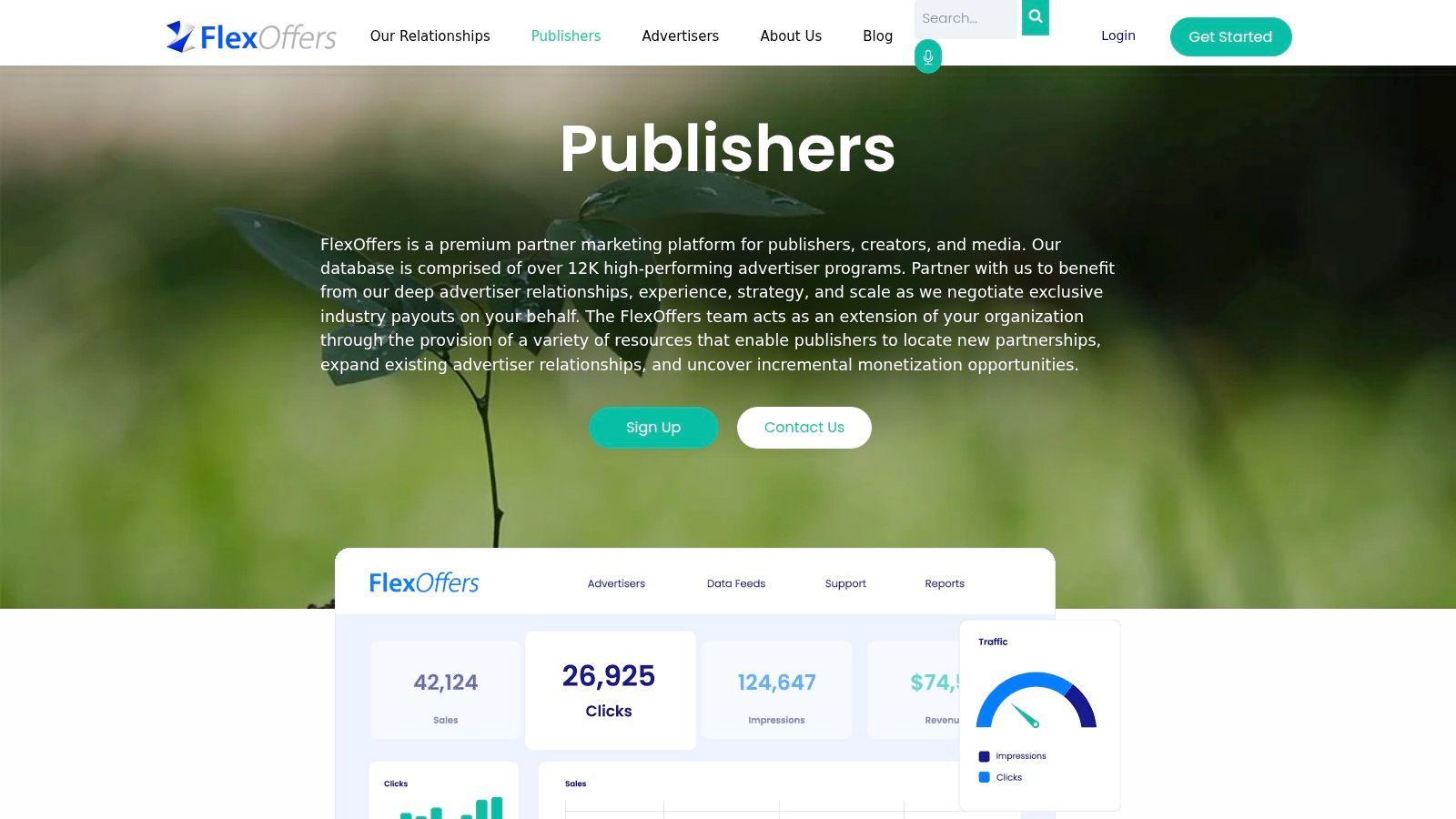
FlexOffers fits publishers who cover more than one buying context and need merchant coverage fast. The practical appeal is not branding. It is the gap between opening an account and finding a usable link for the page you already want to publish.
That gap is narrower here than on many direct programs, but it still exists. You can get network access for free. You still have to check whether the specific advertiser is open, whether approval is automatic or manual, and whether the payout terms justify writing the page at all.
A simple test helps. If your site publishes "best" lists across home, travel, personal finance, and subscriptions, FlexOffers can save time because you are sourcing from one network instead of hunting brand by brand. If your plan is a focused authority site with ten cornerstone pages and a handful of ideal merchants, direct relationships usually age better.
The trade-off is breadth versus control.
Breadth helps in three cases: replacing rejected programs, covering seasonal merchants quickly, and filling out comparison tables where readers need options across adjacent categories. That makes FlexOffers more useful for publishers running content operations than for beginners building a first niche site.
Long-term limits matter, though. Network access does not solve ranking, weak presell, or poor tracking. Some offers will still need separate approval. Some categories feel crowded with lookalike merchants. Some links are easy to get but hard to turn into meaningful EPC unless the page has clear commercial intent.
I would use FlexOffers after choosing the page type first. Coupons, deal hubs, gift guides, broad consumer comparisons, and "alternatives to X" content are the cleanest fits. A publisher who needs one premium merchant and deep brand alignment should usually start elsewhere.
Use it when merchant variety is the bottleneck. Skip it when traffic quality, content depth, or a niche that only converts with direct advertiser trust is the issue.
9. Sovrn Commerce
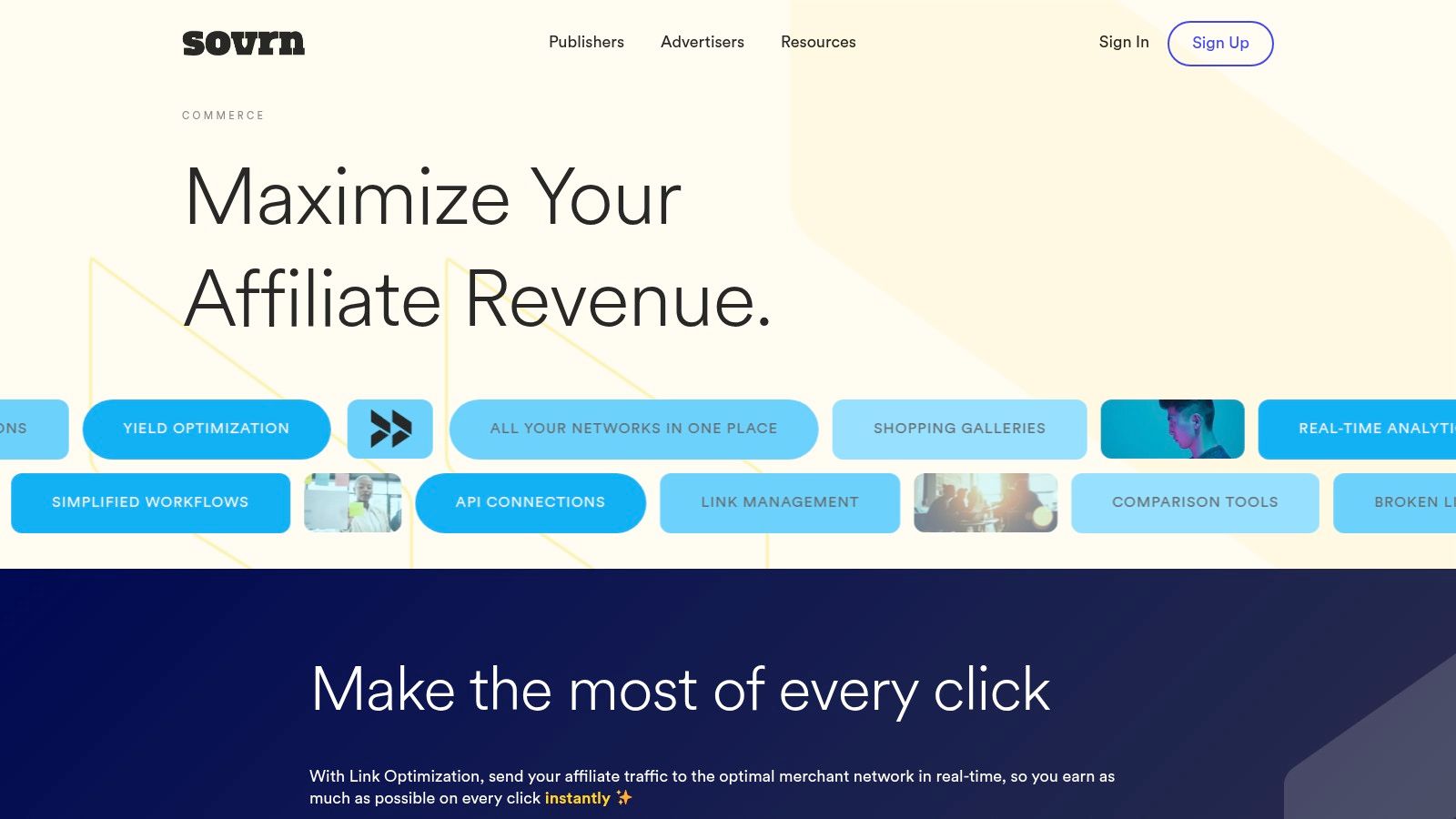
Sovrn Commerce is one of the few free affiliate options that makes more sense after the site already exists.
A new publisher can sign up, but the value shows up when there is an archive full of merchant mentions, product references, and old outbound links that were never monetized properly. The gap between account creation and a usable affiliate link is often shorter here than on traditional networks because the workflow is built around converting existing links, not pitching each merchant one by one.
That changes the publishing scenario.
For an editorial site, forum, deals publisher, or content business with years of articles, Sovrn can turn dormant commercial intent into revenue faster than a direct-network cleanup project. For a first niche site with ten pages and no traffic, it solves the wrong problem. You do not need link monetization infrastructure if the page still lacks rankings, buyer intent, and a clear presell path.
The operational appeal is simple:
- Old articles can start earning without manual link replacement on every page
- Broad merchant coverage helps when your archive mentions many brands
- Social, newsletter, and editorial workflows stay simpler under one account
I use Sovrn as a speed tool, not a strategy.
The cost of that speed is control. Sub-affiliate setups usually give the publisher less visibility into merchant-level terms, weaker reporting than a direct relationship, and fewer options to negotiate once a page starts producing real volume. If a category becomes important, direct merchant access usually wins later because content, testing, and measurement get easier when the relationship is not routed through a middle layer.
So the decision is less about whether Sovrn is "good" and more about where the friction sits. If the bottleneck is getting thousands of existing links monetized, Sovrn is a practical fix. If the bottleneck is merchant approval for a handful of high-value pages, direct programs tend to age better.
10. eBay Partner Network
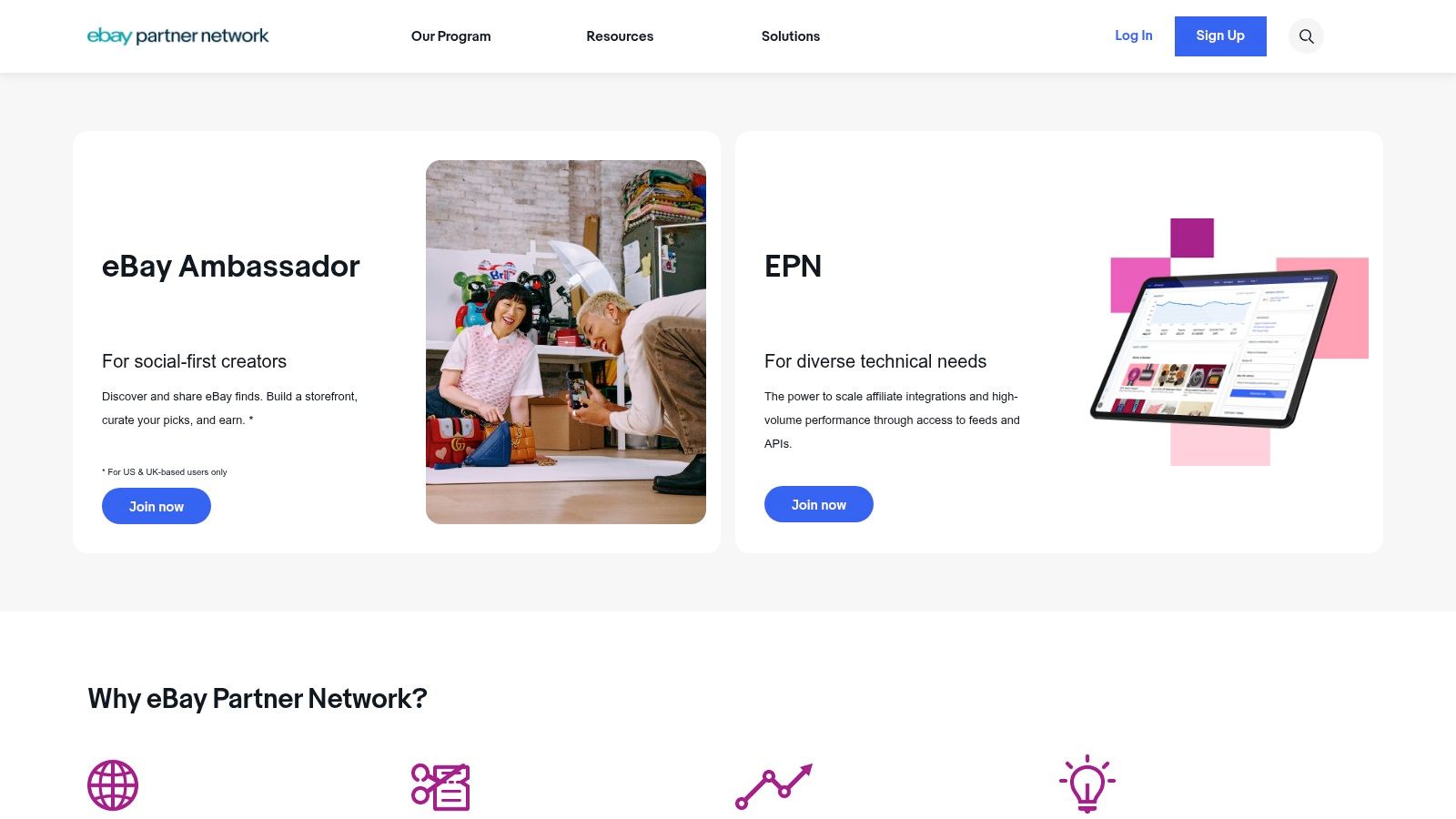
eBay Partner Network makes sense only if the content matches how people buy on eBay. Publishers often add it too late or dismiss it too early. The right question is simpler: does the reader want a stable retail SKU, or are they hunting for a deal, a used part, a rare item, or a refurbished replacement?
That publishing scenario matters more here than on most networks.
A free site built around collectibles, auto parts, sneakers, watches, vintage fashion, refurbished tech, or price-led product comparisons can get to a usable affiliate link quickly because the inventory already exists on the marketplace. You do not need a direct brand relationship to test demand. For early-stage publishers, that lowers the gap between account setup and the first monetizable page.
The catch shows up after publication, not at signup.
eBay is strongest when the content format accepts changing inventory. Roundups, deal pages, gift guides with secondary-market options, and model-specific parts content tend to fit. A static "best product" article aimed at ranking for the same SKU all year is harder to maintain because listings expire, sellers change, and identical products can vary in condition, price, and trust signals.
I would separate EPN into two use cases:
- Fast validation for niches where used, refurbished, discontinued, or rare inventory drives the click
- Ongoing monetization for publishers willing to refresh links and check listing quality regularly
That makes EPN less of a general retail network and more of a fit-based tool. It can outperform cleaner retail programs in categories where buyer intent is driven by availability and price movement, not brand loyalty.
The long-term limit is operational. SEO pages need stable destinations, presell pages need consistent offers, and measurement gets messier when the exact listing behind the click keeps changing. Publishers who want durable rankings can still use eBay, but the workflow has to include link checks, listing replacement, and tighter editorial review than a standard merchant page usually needs.
Used well, eBay fills a gap that many affiliate sites miss. Used casually, it creates maintenance debt.
Top 10 Free Affiliate Networks Comparison
| Platform | Core focus & reach | UX & tools | Value 💰 | Best for 👥 | Standout ✨/🏆/★ |
|---|---|---|---|---|---|
| Amazon Associates | Massive SKU coverage; global storefronts | SiteStripe, deep links, reporting | 💰 Variable (often modest) commissions | 👥 Publishers & creators needing universal inventory | 🏆 High buyer trust; fast setup, ★★★★ |
| CJ (Commission Junction) | Large network with brand-name advertisers | Reliable tracking, granular reporting, deep links | 💰 Free to join; brand deals may require approval | 👥 Publishers targeting established brands | ✨ Mature compliance & fraud controls, ★★★★ |
| impact.com (Partner Marketplace) | Modern partner marketplace for DTC & enterprise | Curated discovery, SSO, mobile app, flexible contracting | 💰 Free to join; flexible payout/contract models | 👥 DTC brands, creators, SaaS/B2B partners | ✨ Flexible contracting & onboarding, ★★★★ |
| Rakuten Advertising | Global network strong in retail & fashion | Central dashboard, multi-channel promotion, onboarding | 💰 Free registration; stable support & tracking | 👥 Retail-focused publishers & deal sites | ✨ Reputable brand partnerships, ★★★★ |
| Awin | Vast global advertiser base (ShareASale migration) | Express sign-up, deep links, global compliance tools | 💰 Broad program access; regional sign-up nuances | 👥 Global publishers and networks | 🏆 Wide catalog & migration support, ★★★★ |
| ClickBank | Public marketplace for digital/info products | Quick link generation, offer stats, recurring models | 💰 Free to start; offer quality varies (vet EPC/refunds) | 👥 Funnel testers & digital product promoters | ✨ Recurring commissions common, ★★★ |
| PartnerStack | Marketplace focused on SaaS & B2B partners | Central dashboard, co-marketing assets, lifecycle tracking | 💰 Recurring-revenue focus; many programs require approval | 👥 SaaS/B2B newsletters, tool roundups | ✨ Strong SaaS focus & recurring payouts, ★★★ |
| FlexOffers | Large network across retail, travel, finance | Deep links, PublisherPro reporting, account-team curation | 💰 Free to join; curated campaigns via account teams | 👥 Deal sites & publishers seeking breadth | ✨ Account-team curated offers, ★★★ |
| Sovrn Commerce (VigLink) | Script-based auto-affiliate monetization | Auto-link monetization, consolidated payouts, easy setup | 💰 Quick monetization; sub-affiliate rates can be lower | 👥 Content-heavy sites with large archives | ✨ Auto-affiliate monetization for legacy content, ★★★ |
| eBay Partner Network (EPN) | Marketplace affiliate for auctions, unique listings | Simple link/campaign tools, category depth (collectibles) | 💰 Free to join; commissions & cookie windows vary | 👥 Deal/collector content and auction-focused sites | ✨ Auction dynamics & unique/refurbished listings, ★★★ |
Choose the Offer Before You Build the Site
The best free websites for affiliate marketing aren't universal winners. They're routing decisions. The right one depends on what you publish, who you attract, and how close your content sits to a real buying decision.
If your model is product-led content, broad reviews, gift guides, collectibles, refurb, or deal-driven intent, start with Amazon Associates or eBay Partner Network. Amazon is easier when you need broad SKU coverage and fast deployment. eBay is better when the buying trigger is scarcity, used inventory, collector behavior, or auction-style urgency.
If advertiser breadth and brand fit matter more than instant link access, CJ, Rakuten Advertising, Awin, FlexOffers, and impact.com are stronger choices. They make more sense for publishers who want real merchant selection, category depth, and more control over which brands appear on the page. The trade-off is approval friction. Joining the network is easy enough. Earning access to the right merchant programs is the actual work.
ClickBank belongs in a narrower bucket. It can work well for digital products, education offers, and direct-response content, but only when you vet the offer carefully. Fast link generation is useful. It isn't the same as offer quality. If a product needs a stronger argument before the click, a presell page usually matters more than the marketplace dashboard.
PartnerStack is the clearer choice for SaaS and B2B. If your audience reads tool comparisons, migration guides, founder notes, or operator-style newsletters, software affiliate programs often fit better than retail links. The content has to match business intent, but when it does, the economics and longevity are usually better than trend-chasing consumer content.
Sovrn Commerce is different from the rest because it's less about choosing offers and more about drawing value from an existing archive. If you already have a large content library and lots of merchant mentions, it can speed up monetization without forcing dozens of separate applications. That's useful. It just shouldn't be confused with full merchant ownership.
The rollout sequence is simple. Pick one audience and one offer category first. Publish useful problem-led and comparison-led content. Add clear affiliate disclosure. Create deep links to the exact product or offer. Measure clicks and downstream outcomes. Review compliance before you scale.
Mobile experience matters more than many beginners assume. One 2026 roundup says 62% of affiliate traffic comes from mobile, according to ClickMinded's statistics summary. If your page loads awkwardly, buries the recommendation, or makes link intent unclear above the fold, you're losing the dominant traffic source before the merchant page even opens.
It also helps to separate website cost from acquisition cost. A lot of content says you can start with free platforms, social channels, or free blogging tools, and that's true at the sign-up level. But the harder problem is still traffic, SEO, content production, and platform dependence, which Ecomobi's overview of free-start affiliate marketing paths indirectly highlights. Free access doesn't remove the need for an owned site, content updates, diversified traffic, or a paid stack once operational friction starts slowing you down.
For publishers or DTC teams that need a faster presell or listicle page for an offer, Landra is relevant as a workflow tool, not an affiliate network. It can turn a product URL into an editable, mobile-first presell page and publish to Shopify, a Landra URL, Webflow, or HTML. That helps when the merchant exists, the offer is clear, and what you need is a better page between the traffic source and the sale. For measurement setup after launch, this Google Analytics 4 tutorial for bloggers is a practical companion.
Landra helps you build the part most affiliate beginners skip: the page that warms up the click. If you're promoting a DTC offer and don't want to send traffic straight to a product page, Landra lets you generate and edit mobile-first advertorials, listicles, and presell pages from a product URL, then publish them without a full custom build.