

Leadpages is still a solid landing page builder, but the advice to “just pick the most popular tool” misses how modern acquisition teams work. A paid social marketer optimizing cold TikTok traffic, an agency juggling client approvals, and an eCommerce brand trying to connect ads to Shopify all need different systems. The best Leadpages alternatives aren't interchangeable, because the job changes once you move from a simple page to the rest of the funnel stack, especially after launch and handoff, as noted in broader comparison coverage of the category browse lead capture tools.
question isn't which builder makes a decent page. It's whether you need enterprise A/B testing, AI-assisted pre-sell pages, a Shopify-native workflow, or an all-in-one funnel stack that keeps checkout and follow-up in one place. That shift is why the market now splits between page specialists and broader conversion platforms, with current comparison pages highlighting tools like Unbounce, Instapage, and ClickFunnels alongside simpler builders and Shopify-native options Leadpages competitors compared.
Table of Contents
- 1. Landra
- 2. Unbounce
- 3. Instapage
- 4. Swipe Pages
- 5. ClickFunnels 2.0
- 6. Webflow
- 7. Replo Shopify
- 8. GemPages Shopify
- 9. PageFly Shopify
- 10. Landingi
- Leadpages Alternatives, Top 10 Feature & Pricing Comparison
- Making Your Final Choice A Quick Decision Framework
1. Landra

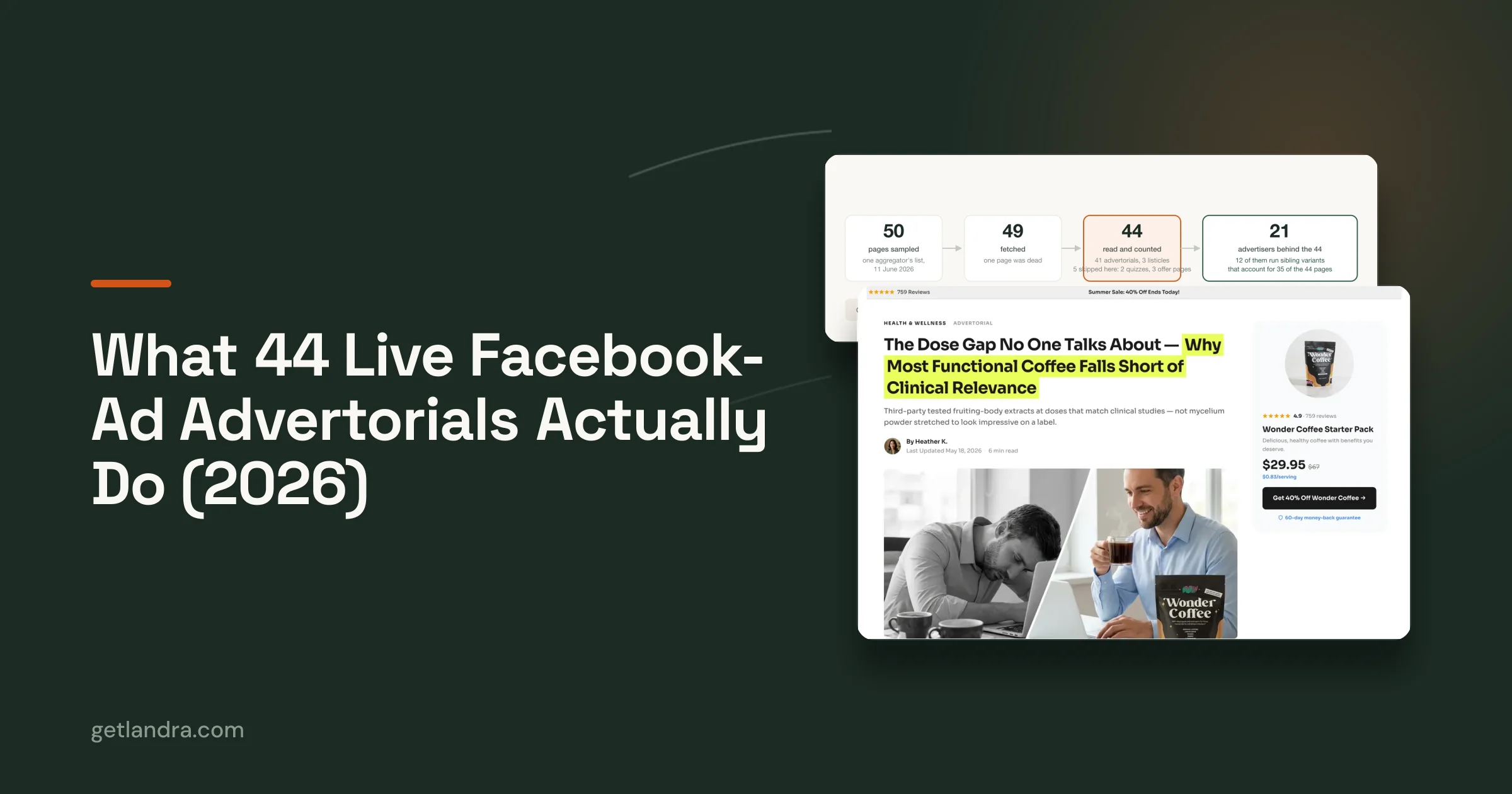
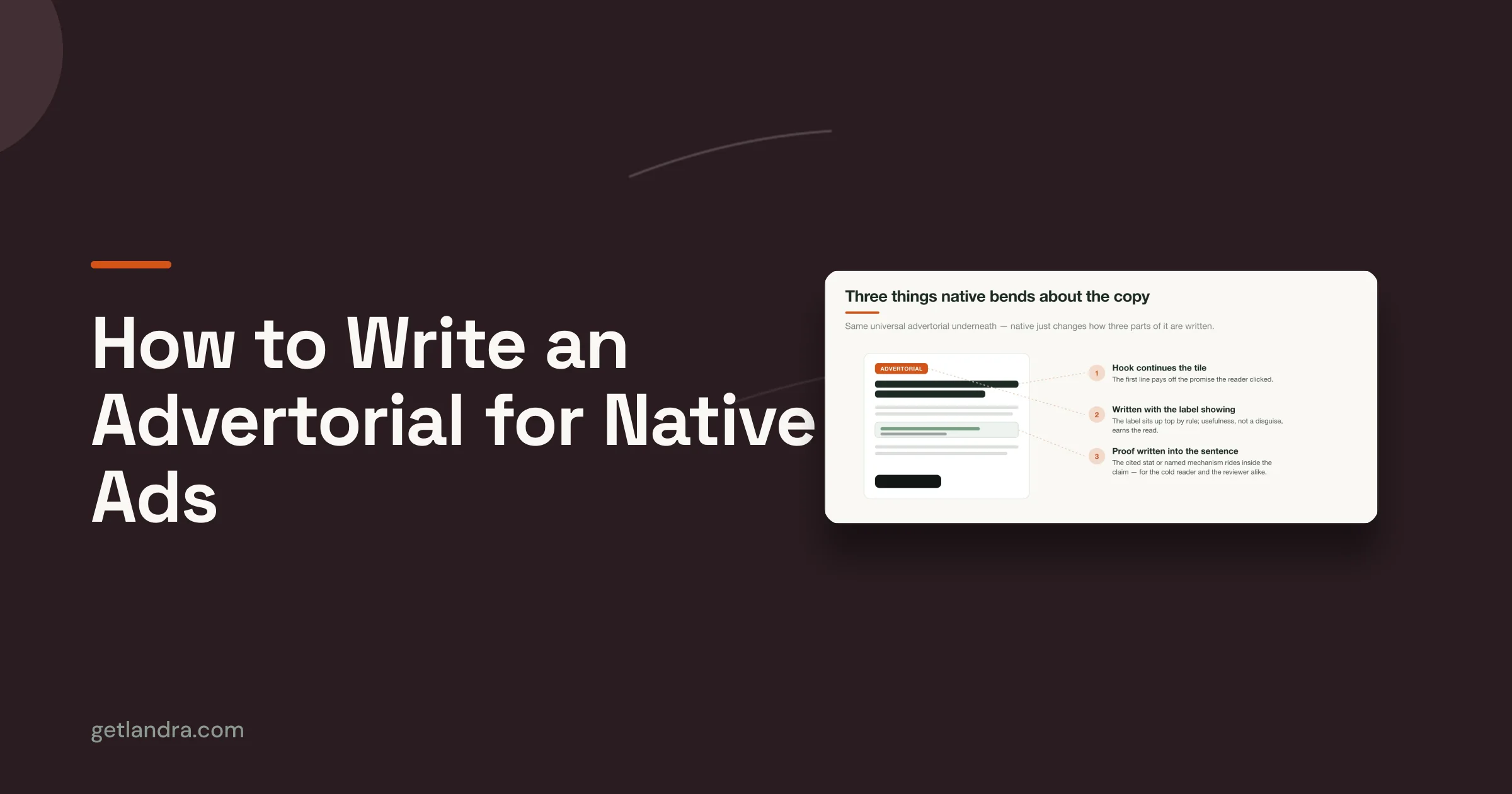
Landra makes the strongest case when your traffic is cold and your offer needs warming up before the click to buy. Instead of starting from a blank canvas, it reads a product or brand URL and turns that into an editable advertorial, listicle, or pre-sell page you can publish to Shopify, Webflow, HTML, or a Landra URL in minutes. For DTC teams that live in Meta and TikTok acquisition, that speed matters because the page is built to feel like editorial, not a banner ad.
The platform's real edge is that it behaves like a working performance marketer's draft machine, not a generic page editor. You get AI Advertorial, AI Listicle, and AI Presell generators, plus inline editing, saved brand context, hero templates, multiple headline options, and variant duplication for tests. Landra also offers free tools like its Headline Analyzer, Conversion Rate Calculator, and Advertorial Compliance Checklist, which makes it useful even before you commit to a full build.
Practical rule: if the ad promise needs a narrative bridge before checkout, a pre-sell page usually beats sending cold traffic straight to a product detail page.
What makes Landra stand out is the direct-response orientation. The site positions its drafts around patterns used by large DTC programs, and it publishes claim-like outcomes on its own pages, including a 2 to 3 times conversion benchmark versus product pages and a first-party 46% CAC reduction when the same ads were routed to a Landra advertorial instead of a PDP, both cited on Landra's product materials Landra compare page. It also offers a free first page and a 14-day trial, which lowers the risk for teams experimenting with advertorials for the first time Landra website.
The trade-off is simple. Landra is excellent for paid acquisition, pre-sell storytelling, and rapid testing, but it's still a specialist tool. If you need a full CMS replacement or a deep post-purchase funnel stack, you'll likely pair it with other systems.
A page that matches the ad angle and reads like a magazine story can outperform a plain product page, but only if the first draft is fast enough to test.
2. Unbounce
Unbounce is the safer pick when your team already knows how to optimize pages and wants a mature testing workflow without bringing developers into every iteration. It's built for marketers who care about A/B testing, dynamic text replacement, and experiment-friendly publishing, and it remains one of the clearest Leadpages alternatives for paid search and paid social teams that live inside weekly variant cycles.
The 2026 comparison data matters here. Unbounce is presented with AI traffic routing, Smart Traffic, and a Starter tier at $29/month in one comparison page, while the same comparison shows higher tiers scaling by traffic limits and experimentation needs Leadpages competitors compared. That pricing structure tells you what kind of buyer it serves, teams that want a conversion platform rather than a bare page builder Unbounce website.
Where Unbounce fits best
Unbounce works best when the landing page is part of a repeatable acquisition system. You can build a page, swap headlines, run traffic splits, and keep learning without rebuilding the entire funnel each time. For teams buying clicks on keywords or interest-based social targeting, that's often more valuable than fancy design controls.
The real advantage is not the editor. It's the speed at which you can isolate one variable and move budget toward the winning angle.
The downside is familiar to anyone who has used a specialized landing page platform. Advanced optimization features live higher up the plan stack, and the broader workflow still assumes you'll wire in your own follow-up tools if you need them. That's fine for performance marketers, but it's not ideal if you want email, checkout, or memberships under one roof.
Use Unbounce when the core job is test, measure, iterate. Skip it if your team is trying to collapse the entire funnel into one application.
3. Instapage

Instapage is the most natural fit for teams that need stakeholder alignment as much as they need conversion optimization. It's one of the few Leadpages alternatives that makes collaboration part of the product story, which matters when performance, design, and media buying all have to approve the same page before launch. The platform is still a landing-page specialist, but it feels built for heavier campaign operations.
The 2026 comparison data positions Instapage for larger teams, with plans such as Create at $99/month and Optimize at $199/month in one current comparison set, while another source maps the same product family to traffic-based tiers and enterprise options Leadpages competitors compared. That makes the usage model pretty clear, this is not the tool you buy for a one-off page. It's the tool you buy when campaign throughput starts becoming the bottleneck Instapage website.
Why performance teams choose it
Instapage earns its keep through workflow, not just page design. Reusable blocks, AdMap, server-side A/B testing, heatmaps, personalization, and a large integration set let teams align ad groups to page variants with less manual drag. That's exactly what paid teams need when search, social, and display campaigns all have different message hierarchies.
The downside is cost and complexity. Traffic-based tiers mean higher-volume testing can push you into more expensive plans, and the product makes more sense when several people are collaborating than when one operator just needs to ship a lead form. If your workflow is simpler, you may be paying for governance you don't use.
Best use case
Instapage is strongest for enterprise-style testing, approval-heavy marketing teams, and agencies that need polished page ops. It's less compelling if you're chasing speed over structure or trying to launch editorial pre-sell pages quickly.
If multiple people touch the same campaign before it goes live, collaboration becomes a conversion feature, not a nice-to-have.
4. Swipe Pages
Swipe Pages sits in the practical middle ground between lightweight builders and enterprise platforms. It's a good fit when you want fast pages for PPC or paid social, but you don't need the heavier process stack that comes with tools like Instapage. For teams that value speed and simplicity, it's one of the more straightforward Leadpages alternatives.
The appeal is mostly operational. Swipe Pages emphasizes page speed, drag-and-drop building, A/B testing, dynamic text replacement, popups, and forms, with a template library aimed at lead gen, sales, and webinar pages Swipe Pages website. That combination works best when the page itself is the main conversion asset and you're trying to keep friction low for mobile visitors.
What it does well
A speed-minded tool can be the right answer when your campaigns live or die on the first second of load time and the first scroll. Swipe Pages keeps the workflow lighter than bigger suites, which makes it easier to ship landing pages quickly without learning an entire ecosystem.
- Fast launch cycles help small teams respond to creative fatigue.
- Template-first builds reduce the time spent on layout decisions.
- Simple funnel pages are easier to maintain than sprawling multi-tool stacks.
The trade-off is the ecosystem. Smaller tooling usually means fewer deep integrations and less breadth for broader funnel operations. If you need memberships, checkout, or full post-lead automation, you'll still be stitching together more of your stack elsewhere.
Swipe Pages works best for marketers who want a focused page builder and don't want the software to become the project. If your campaigns are mostly page-to-form, and speed is more important than complex orchestration, it fits well.
5. ClickFunnels 2.0
ClickFunnels makes sense when the landing page is only one step in a larger revenue sequence. It's not a page-specialist tool, it's an all-in-one funnel platform with pages, checkout, email, automations, courses, and memberships bundled together ClickFunnels website. That's why it keeps showing up in Leadpages alternatives searches, even though the decision is really about funnel ownership, not just landing page design.
This is also where the market shift becomes obvious. Comparison pages now frame tools like ClickFunnels alongside landing-page builders because buyers want more than launch-day pages, they want what happens after the opt-in. If you need order bumps, upsells, or email follow-up wired into the same account, this category starts making sense Perspective comparison.
Where it wins
ClickFunnels wins when the business model depends on structured monetization. Course sellers, digital product teams, and businesses that want to keep checkout and follow-up inside one system can reduce platform sprawl. That's a real operational advantage if your team is tired of connecting page builders to separate carts, email tools, and course platforms.
The trade-off is that the product has an opinionated funnel stack. If you only need a simple landing page, it can feel like buying a whole delivery truck to move a small box. The interface and architecture are also less attractive for teams that prefer design freedom over prebuilt funnel logic.
Use ClickFunnels when the page is part of a purchase journey, not just lead capture. If the business needs upsells, memberships, and email in one place, it's a rational choice. If not, it's probably more tool than you need.
6. Webflow
Webflow is the choice for teams that want creative control and cleaner front-end output than most traditional landing page tools can offer. It's not a marketing-only platform, it's a visual web design environment that can produce polished landing pages, campaign microsites, and full websites with much more design latitude than template-led builders Webflow website. That makes it a strong alternative when brand presentation matters as much as conversion mechanics.
The 2026 pricing simplification and increased static page limits were highlighted in Webflow's May 2026 update, along with a split between Workspace and Site plans Webflow website. That split matters because it tells you how the product is built, one layer for collaboration and one for hosting. For teams used to simple landing page pricing, that can feel more complex than it should.
Best fit and trade-off
Webflow is best when the page needs to look custom without hand coding. Agencies like it because they can build reusable systems and hand over polished output that doesn't feel locked into a conversion-template aesthetic. It also scales beyond a single campaign page, which matters if marketing and brand want one visual system across the site.
The downside is operational clarity. The Workspace versus Site plan structure can create friction, and each hosted site needs its own Site plan, which affects how you think about campaign sprawl. That's fine for design-led teams, but less ideal if your only goal is rapid page testing.
Use Webflow when design ownership is the goal. Use a more specialized landing page tool when testing velocity matters more than front-end control.
7. Replo Shopify

Replo is one of the best answers for Shopify brands that want landing pages without leaving the storefront stack. It's built for DTC teams that care about campaign pages, advertorial-style layouts, and section-level control inside Shopify, which makes it especially relevant for brands that want tighter continuity between ads, landing pages, and product pages Replo website.
That native fit is the point. You're not exporting from a separate landing page app and then trying to make the page feel like it belongs to the store. You're building in the same environment your commerce team already understands. For brands with a Shopify-first motion, that reduces friction.
Why it works for DTC teams
Replo gives you a visual, section-based workflow and theme-level control, which makes it easier to test campaign pages that still look and feel like part of the store. That matters when the job is more than lead capture. If the page has to support product education, bundle framing, or pre-sell logic before checkout, a Shopify-native builder keeps the experience consistent.
The trade-off is straightforward. Replo is strongest if you're already on Shopify, and its value drops if your stack lives elsewhere. It's also positioned more as a premium workflow than a low-cost starter tool, so you should expect to pay for the convenience of native publishing and deeper control.
Replo is a smart pick for brands that want campaign landing pages, on-theme sections, and fast store-aligned iteration without leaving Shopify. It's less useful if you need a general-purpose builder for multiple CMS environments.
8. GemPages Shopify
GemPages is the more accessible Shopify page builder for teams that want a fast start and broad page coverage. It supports landing pages, product pages, collection pages, and home pages, which makes it useful when a store wants more freedom than the theme editor gives it GemPages website. The availability of a free plan also lowers the barrier for smaller brands or newer operators.
That matters because a lot of Shopify teams don't need a complex builder on day one. They need a place to launch a campaign, make a product page more persuasive, and test ideas without waiting on dev resources. GemPages fits that kind of workflow well.
What it's good for
GemPages is built for non-technical teams that still care about conversion-oriented structure. The editor is straightforward, the template base is broad enough to get moving, and higher tiers add AI-assisted elements and conversion components. For brands that want a balance between speed and flexibility, it hits a useful middle ground.
The downside is that the stronger CRO features live higher up the plan stack. That's normal, but it means teams should treat the free plan as a starting point, not the final destination. If you're running serious page testing, you'll probably need to move into paid features sooner than you expect.
GemPages works best when Shopify is already the center of gravity and the goal is to get pages live quickly. If your team needs full-funnel orchestration or cross-platform publishing, a more general conversion platform will be a better fit.
9. PageFly Shopify
PageFly has staying power because it gives Shopify teams a familiar builder with a broad template base and enough CRO functionality to support real experimentation. It offers 320+ templates, AI helpers like AI Smart Page, AI Page Checkup, and AI Translator, and paid-plan CRO tools such as A/B testing and heatmaps PageFly website. For Shopify brands that want control without leaving the ecosystem, that's a practical mix.
The free-forever angle also matters. Many teams want to validate a concept before they invest in a bigger page stack, and PageFly lets them do that without immediately committing to a heavy workflow. That can be enough for a brand running early-stage campaigns or testing landing-page concepts alongside its product catalog.
Best use case
PageFly fits teams that need more control than a theme editor but don't want to rebuild their entire Shopify experience. It works across landing, product, and collection pages, so the builder can support both campaigns and store optimization. That flexibility is valuable when one team owns both traffic and merchandising.
The limitation is the usual one. The deeper CRO functions and higher publish slots sit behind paid tiers, so the free option is more of an on-ramp than a long-term operating model. It's also best viewed as a Shopify-native page tool, not a replacement for broader conversion platforms.
PageFly is a sensible choice if you want a long-established Shopify builder with enough AI and CRO features to support ongoing iteration. It's not the flashiest tool in the list, but it gets the job done.
10. Landingi
Landingi is the landing-page specialist for teams that care about throughput. It's designed for marketers and agencies that need to launch pages quickly, manage multiple brands, and push variants at scale, with features such as Programmatic Pages, Smart Sections, AI copy aids, multilingual support, and broad integrations Landingi website. In a crowded field of Leadpages alternatives, that operational focus makes it easy to understand who it's for.
The comparison data also shows how Landingi sits in the market. One source places its core plan at $29/month, while other materials emphasize a template base of 300+ to 400+ templates depending on the source Leadpages competitors compared Leadpages competitors compared. That mix tells you it's trying to serve both budget-conscious teams and organizations that need scalable page ops.
Why agencies like it
Landingi is attractive when you're launching many pages or localized variants and don't want the process to get messy. Smart Sections reduce repetitive editing, Programmatic Pages support scale, and the WordPress plugin makes publishing easier for teams that sit between CMS and landing page workflows. It's the kind of product that makes sense once page volume becomes a real operational metric.
The trade-off is scope. Landingi is excellent for dedicated landing-page operations, but it isn't trying to replace a full site CMS. If you need a broader content system or a more specialized pre-sell workflow, another tool may fit better.
For agencies, the best landing page builder is usually the one that minimizes handoff pain between brief, build, and publish.
Landingi earns its place by making high-volume page work feel manageable. If your team lives on landing pages, variants, and client-specific workflows, it's a credible alternative.
Leadpages Alternatives, Top 10 Feature & Pricing Comparison
| Product | Core features | Quality (★) | Price / Value (💰) | Target (👥) | Unique selling points (✨) |
|---|---|---|---|---|---|
| Landra 🏆 | AI Advertorial, Listicle & Presell generators; visual inline editor; publish to Shopify/Webflow/HTML/Landra URL | ★★★★★ | 💰 Free first page + 14‑day trial; Starter/Pro/Pro‑Plus (generation/storage limits) | 👥 DTC brands & performance teams | ✨ URL→editable page in <5 min; mobile‑first speed; on‑brand drafts; 2–3× PDP lift; 46% CAC test |
| Unbounce | No‑code drag‑drop; A/B testing; dynamic text replacement; popups | ★★★★ | 💰 Usage/plan pricing; AI on higher tiers | 👥 Marketers needing experimentation & testing | ✨ Robust testing workflow; strong template/component library |
| Instapage | Drag‑drop blocks; server‑side A/B; AdMap; heatmaps & personalization | ★★★★ | 💰 Traffic/enterprise tiers; higher cost for scale | 👥 Performance teams & enterprises | ✨ Ad‑to‑page personalization; collaboration & enterprise security |
| Swipe Pages | Drag‑drop with AMP‑style speed focus; built‑in CDN; A/B testing | ★★★★ | 💰 Lower‑cost, speed‑focused plans | 👥 PPC & paid‑social marketers | ✨ Emphasis on mobile page speed & fast load times |
| ClickFunnels (2.0) | Funnel/page builder + checkout, CRM, email, automations, memberships | ★★★ | 💰 Mid‑to‑high; all‑in‑one value if you need funnels + commerce | 👥 Sellers wanting end‑to‑end funnel ops | ✨ Built‑in checkout, upsells & automation stack |
| Webflow | Pixel‑level visual designer; interactions; production hosting & CMS | ★★★★ | 💰 Workspace vs Site pricing; per‑site hosting costs | 👥 Designers, agencies, brand teams | ✨ Agency‑grade design control; production‑quality output |
| Replo (Shopify) | Section‑based Shopify page & theme builder; CRO workflows | ★★★★ | 💰 Premium vs basic Shopify apps | 👥 Shopify DTC teams | ✨ Deep Shopify integration; publish inside storefront |
| GemPages (Shopify) | Drag‑drop for landing/product pages; AI elements on higher tiers; free plan | ★★★ | 💰 Free plan available; paid for advanced CRO | 👥 Shopify stores wanting easy, no‑code pages | ✨ Accessible entry + large user base |
| PageFly (Shopify) | Visual editor 320+ templates; AI Smart Page, Page Checkup; CRO tools | ★★★ | 💰 Free‑forever tier; paid for A/B & heatmaps | 👥 Shopify teams needing control + free tier | ✨ AI builders + CRO suite on paid plans |
| Landingi | Drag‑drop builder; AI copy & SEO aids; Programmatic Pages; WP plugin | ★★★ | 💰 Suited for high‑volume page ops; enterprise options | 👥 Agencies & teams launching many landing pages | ✨ Programmatic pages & multi‑brand management |
Making Your Final Choice A Quick Decision Framework
Choosing between Leadpages alternatives comes down to the job, not the brand name on the homepage. If you need enterprise-grade A/B testing, collaboration, and ad-to-page alignment, Unbounce and Instapage are the most obvious landing-page specialists. If your real problem is that the landing page doesn't connect cleanly to checkout, memberships, or email, ClickFunnels 2.0 makes more sense because it's built as a broader funnel system rather than a standalone page tool.
Shopify teams should stay close to the store stack. Replo, GemPages, and PageFly each solve the same broad problem, but they do it with different levels of control, accessibility, and CRO depth. If your team wants custom design and full front-end ownership, Webflow is stronger than most template-led builders, though it asks for more operational discipline. If you're running agencies or high-volume page work, Landingi is the kind of tool that helps you move faster without losing structure.
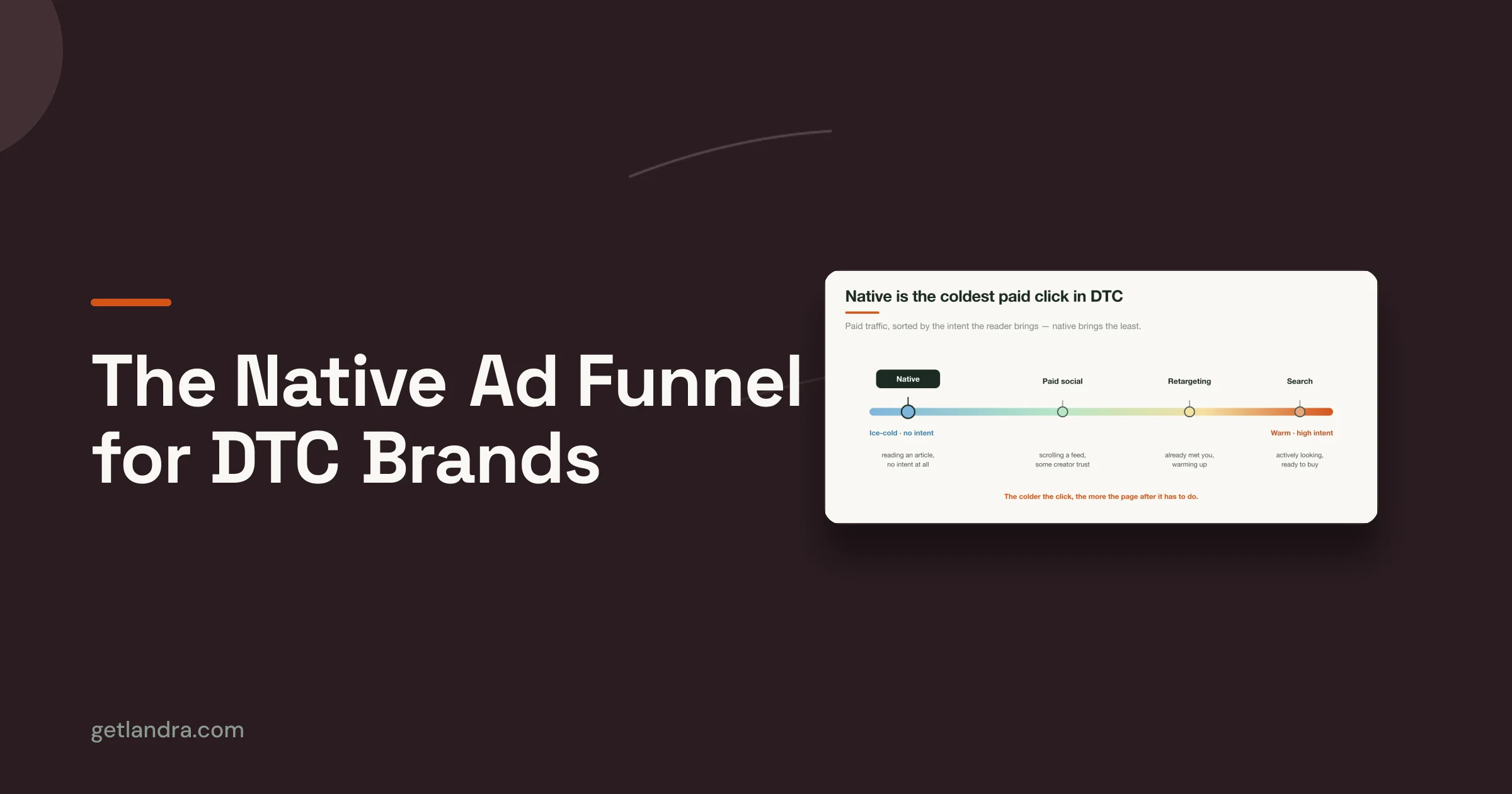
For DTC brands buying cold traffic, the decision changes again. A product page often isn't the right first touch, because the ad promise needs context before the sale. That's where Landra stands out, since it's built specifically for AI-generated advertorials, listicles, and presell pages that can be published quickly and iterated without a development bottleneck Landra compare page.
Use the simplest rule possible. If your team's bottleneck is testing, choose a specialist. If the bottleneck is funnel continuity, choose an all-in-one platform. If the bottleneck is cold-traffic conversion, choose a pre-sell engine that creates the bridge between ad and offer.
Before you decide, map your primary traffic source, your team's technical comfort, and the step after the page goes live. That one exercise usually makes the right option obvious. For marketers who want the fastest path to a publishable, editorial-style pre-sell page for DTC traffic, a conversation with conversion rate optimisation expert pricing can also help clarify whether you need a specialist tool or a broader funnel rebuild.
If you're trying to turn cold traffic into warmer intent faster, Landra is built for that exact job. It generates editable, mobile-first advertorials and listicles from a brand URL, then publishes them to Shopify, Webflow, HTML, or a Landra URL in minutes. For performance marketers comparing Leadpages alternatives, it's one of the most direct ways to test a pre-sell page before you invest in heavier production.