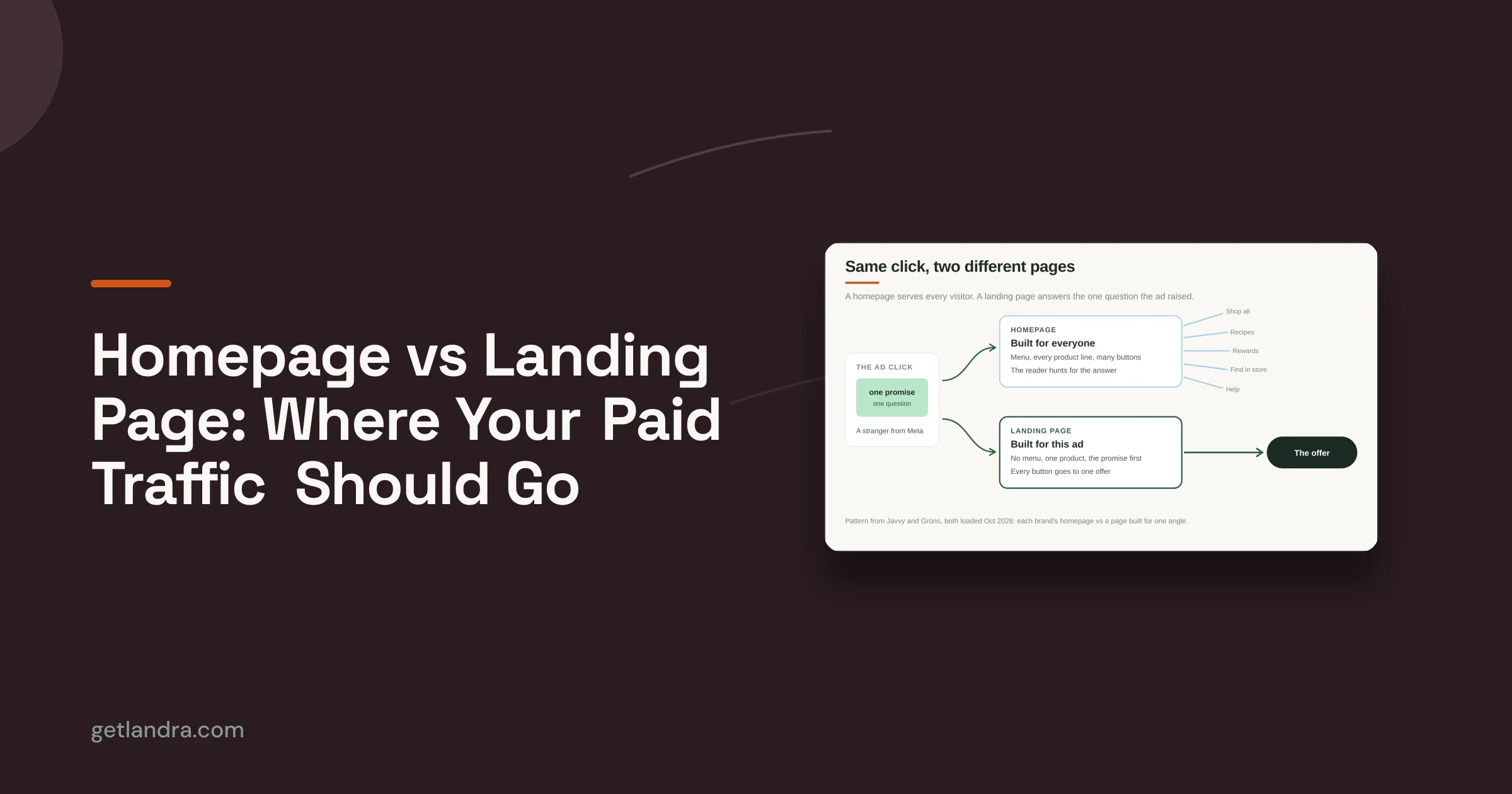


You've launched a strong TikTok or Meta creative, watched the click-through rate move, and then sent that expensive traffic straight to a product detail page built for browsing rather than persuasion. The ad creates curiosity, but the PDP asks the shopper to do too much work before they understand the problem, the product, or the reason to buy now.
That gap is where one pager AI fits. For DTC teams, it isn't mainly a text-generation shortcut. It's a way to produce advertorials, listicles, and presell pages that connect a paid-social promise to checkout, with enough speed to test angles before the media opportunity disappears. The category's core promise is speed plus structure, with independent tools promoting complete one-page summaries in minutes rather than lengthy manual workflows (RiverEditor's investor one-pager generator).
Table of Contents
- What One Pager AI Actually Looks Like in a Paid Social Funnel
- How an AI One Pager Gets Built From a Product URL
- The Three One-Pager AI Formats DTC Brands Use Most
- Why DTC Teams Are Replacing PDPs and Agencies With AI One Pagers
- One Pager AI vs Manual and Agency-Built Landing Pages
- Best Practices for Shipping AI One Pagers That Actually Convert
- When to Use One Pager AI and When to Skip It
What One Pager AI Actually Looks Like in a Paid Social Funnel
A shopper sees a short video on TikTok. The opening hook presents a problem, the product appears as the solution, and the call to action earns a tap. On Meta, the same sequence might begin with a static image, creator testimonial, or before-and-after concept. The shopper clicks, expecting the next page to continue the story.
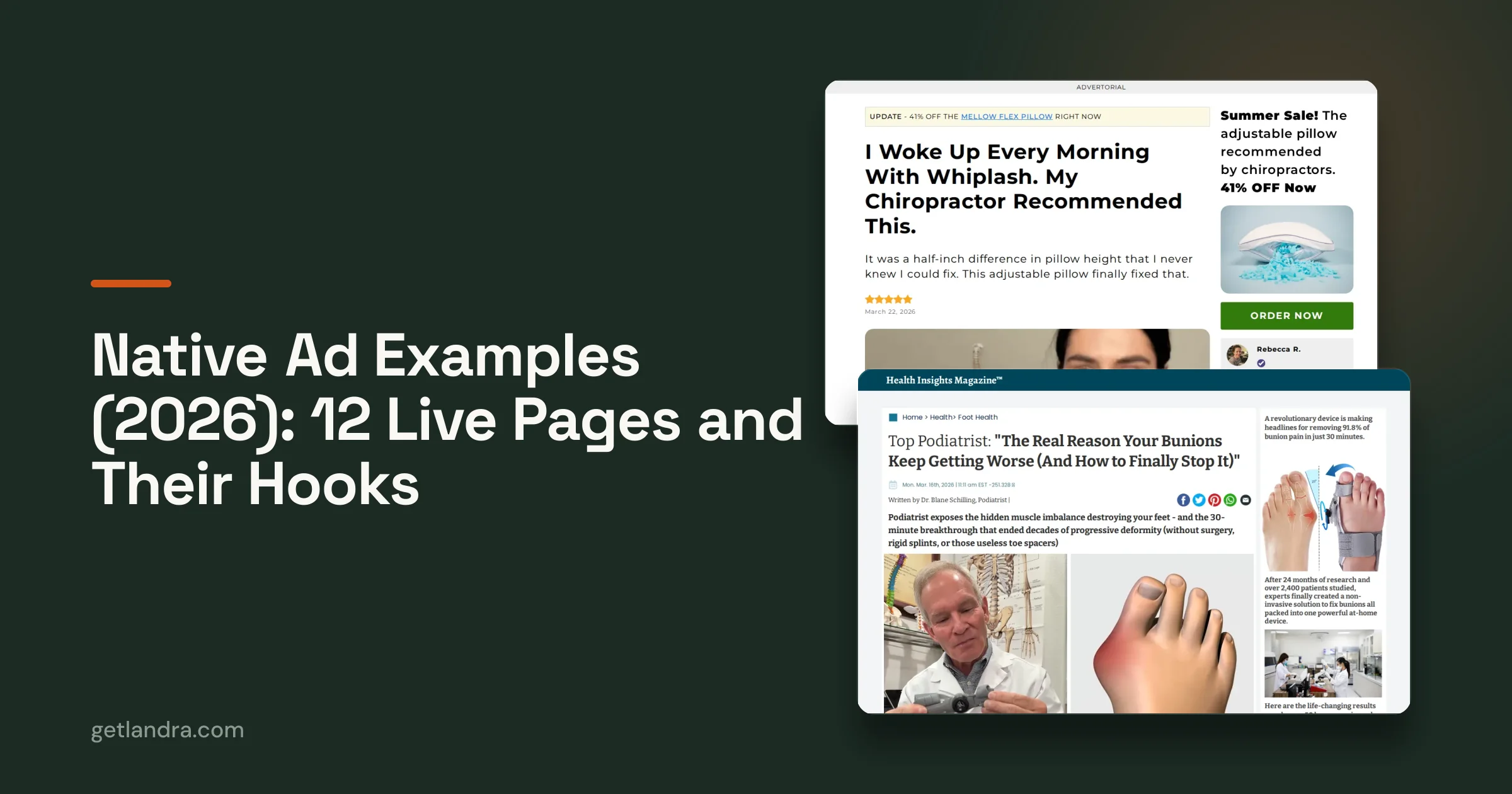
Instead of landing on a generic PDP, they arrive at a single-scroll AI-generated advertorial. The headline extends the ad's angle, the hero image establishes context, the body copy explains the problem, and the CTA moves the reader toward the product page or checkout. The page isn't trying to reintroduce the entire brand. It's acting as the conversion bridge between media spend and purchase intent.

The page carries the ad's unfinished argument
A practical definition helps. An AI one-pager is a conversion-focused landing page whose structure, headline, copy, images, and CTA are generated or assembled by an AI page builder from a product URL and a short brief.
The useful output isn't more words. It's a page with a deliberate reading path.
- The opening confirms the visitor arrived at the right place.
- The problem framing gives the ad's promise more context.
- The product explanation connects features to the shopper's situation.
- The proof layer reduces uncertainty through reviews, demonstrations, or approved evidence.
- The CTA provides a clear next action without forcing the visitor to browse a full catalog.
That sequence matters most with cold traffic. A shopper who has never heard of the brand may need a short presell experience before they're ready for product details. The page also needs to feel native to the ad. A creator-style video followed by a stiff corporate landing page creates friction, even if both assets are individually polished.
Practical rule: Build the one-pager around the ad's promise, not around every fact available on the product page.
For teams still sending all paid traffic to PDPs, the operational distinction is substantial. A dedicated page lets the media buyer test a new angle without redesigning the storefront. Guidance on how to build paid social landing pages follows the same principle, align the landing experience with the intent created by the ad.
How an AI One Pager Gets Built From a Product URL
Most AI page builders follow the same basic pipeline, even when the interface makes the process look instantaneous. Knowing the stages helps you identify where quality comes from and where human review remains necessary.
Start with the source and the brief
The marketer supplies a product URL and a brief. The URL gives the system access to approved product information, offers, ingredients, reviews, images, and existing positioning. The brief supplies what the source page usually lacks, such as the target audience, campaign angle, offer priority, and desired CTA.
A weak brief produces generic output. “Make a landing page for this product” leaves the system to guess the reader, objection, and buying context. A stronger brief specifies the traffic source, the ad hook, the prospect's problem, and the action the page should drive.
Let the system choose a structure
The builder then selects or recommends a page archetype. An advertorial uses narrative explanation and editorial-style framing. A listicle organizes the argument around a ranked set of reasons, benefits, or comparisons. A presell page stays closer to checkout, reinforcing the offer and resolving final objections.
The structure determines how much persuasion happens before the CTA. It also determines whether the reader feels they're consuming an article, scanning a recommendation, or confirming a decision they've nearly made.

Generate copy, visuals, and a publishable page
The AI drafts headlines, subheads, body copy, proof blocks, and CTAs from the product information and brief. It may pull product imagery from the source page or create supporting visual concepts, depending on the platform and plan. Marketers need to check whether the copy accurately represents the product rather than merely sounding persuasive.
Publishing is the final stage. A usable output should support tracking parameters, pixels, variant URLs, and a deployment path that fits the existing stack. Shopify, Webflow, hosted URLs, and HTML export serve different operational needs, so the publishing layer matters as much as the writing interface.
For teams evaluating a URL-to-landing-page for DTC brands, the key question is whether the system produces an editable draft or a locked page. Inline editing, section rewriting, and duplication make it possible to preserve human judgment while still accelerating production.
The creative feeding the funnel also deserves attention. If the page angle changes but the ad remains generic, the test becomes difficult to interpret. A resource for performance-focused ad creatives for Meta can help teams align the asset that earns the click with the page that must convert it.
The Three One-Pager AI Formats DTC Brands Use Most
The format isn't cosmetic. Each page type makes a different promise to the reader, and that promise determines which persuasion task the page performs.
Advertorials create context for cold traffic
An advertorial uses a narrative, editorial-style frame. It may open with a problem, a discovery, a product mechanism, or a customer situation before introducing the offer. That format works when the shopper has interest but not enough trust to move directly from ad to checkout.
The strength is contextual persuasion. The page gives the buyer a reason to keep reading and makes the product feel relevant before asking for a purchase. The risk is over-writing. If the page buries the product or makes unsupported editorial claims, it can reduce trust and create compliance problems.
Listicles help comparison-minded shoppers
A listicle presents the product through a numbered structure, such as reasons to consider a solution or factors that separate one option from another. Readers can scan it quickly, while the numbered frame creates a clear progression through benefits, proof, objections, or use cases.
This format is useful when the ad already suggests comparison or selection. It also gives the marketer modular sections that are easier to revise. Teams that want to generate AI listicles for DTC brands should still decide whether the ranking reflects genuine buyer priorities or dresses generic copy in numbered formatting.
Presell pages reinforce an existing decision
A presell page sits closest to checkout. The visitor may already understand the product, but they still need reassurance about the offer, proof, delivery, usage, or value. The page should remove hesitation rather than restart the discovery process.
| Format | Reader Frame | Best Traffic Temperature | Primary Job |
|---|---|---|---|
| Advertorial | Editorial discovery | Cold | Build relevance and reduce resistance |
| Listicle | Ranked evaluation | Cold to warm | Organize benefits and comparison logic |
| Presell page | Offer confirmation | Warm | Resolve objections before checkout |
The wrong template can make a good campaign look weak. A long advertorial may slow a warm buyer who only needs offer clarity, while a short presell page may underserve a cold visitor who doesn't yet understand the problem. The AI builder's template library is therefore a strategic lever, not just a design convenience.
Why DTC Teams Are Replacing PDPs and Agencies With AI One Pagers
DTC teams usually don't replace PDPs because PDPs are useless. They replace the default workflow because paid social demands more message-specific pages than a storefront team can comfortably produce by hand.
A typical agency-built advertorial can cost roughly $2,000 and take one to two weeks, with meaningful edits adding further delay, according to the publisher information supplied for this article. That timeline creates a bottleneck. By the time the page is ready, the ad hook may have fatigued, the offer may have changed, or the media buyer may have moved to a different audience.
Speed changes the testing economics
AI one-pagers shift the unit of work from “commission a page” to “produce and evaluate an angle.” Subscription tools in the provided product information are described in the range of $30 to $100 per month, with claimed production of 10 to 30 pages per month. Those figures are product-positioning details, not a guarantee of performance, but they illustrate why teams view AI as a testing layer rather than a one-off creative expense.
The performance benefit comes indirectly:
- More angles per media budget: Lower page-production friction lets a team test more hooks without commissioning a new project each time.
- Faster reaction to fatigue: A weak opening can be replaced while the campaign is still active instead of waiting through another production cycle.
- Better alignment between ad and landing page: Each creative concept can receive a page that continues its argument.
- More useful learning: When the page changes with the hook, the team can inspect the complete ad-to-checkout path rather than judging the ad in isolation.

Faster publishing only matters if the team uses the saved time to test, review, and improve. An AI page that ships quickly but carries a weak claim or mismatched promise is still wasted media spend.
Page speed adds another constraint. Google treats Largest Contentful Paint of 2.5 seconds as the upper boundary for a good user experience, and 2026 landing-page reporting associates additional delay with falling conversions, including an approximate 7% decline for each extra second beyond that point (Digital Applied's landing-page data). That's why the useful AI output isn't merely a persuasive draft. It's a lightweight, mobile-first page that doesn't turn fast production into slow loading.
One Pager AI vs Manual and Agency-Built Landing Pages
The choice isn't “AI or quality.” The comparison is between volume, speed, control, and review depth.
An agency is strongest when the page is a flagship asset. You can brief a team on strategy, custom photography, brand voice, design systems, analytics, and legal review. That process costs more and takes longer, but it can produce a page with a level of bespoke control that an automated draft won't match.
A freelancer often occupies the middle ground. They can preserve a fragile brand voice and respond to feedback more personally than a template-driven system, while avoiding the overhead of a larger agency. The trade-off is limited capacity. A freelancer may be excellent for one important page and less practical when the media team needs a family of angles.
AI one-pagers win when the job is repeatable. An AI builder can create a structured first draft from a product URL, let the marketer edit it, and duplicate the page for another hook. The value comes from reducing the cost of iteration, not from eliminating judgment.
| Dimension | AI One Pager | Freelancer | Agency |
|---|---|---|---|
| Cost per page | Lower at recurring volume | Moderate and project-based | Highest for bespoke production |
| Turnaround | Minutes for a first draft | Several working days | Often one to two weeks |
| Iteration cost | Regeneration and inline edits | Additional project time | Additional fees or billable work |
| Creative control | Strong structural control, human review required | High voice control | Highest strategic and production control |
| Best use | Advertorial volume and rapid testing | Important pages with sensitive voice | Flagship launches and full creative production |
The precise economics depend on page complexity, internal review, and tool limits. A fast draft still needs someone to inspect claims, proof, visuals, tracking, and the transition to checkout.
For teams that want a visual starting point without building every component from scratch, prebuilt ecommerce designs from Zandovi can provide another reference point. Templates and AI solve different problems, though. Templates supply a repeatable visual system, while AI one-pagers attempt to produce the persuasive structure and copy around a particular product.
The practical answer is usually a hybrid stack. Use AI for volume, angles, and early structure. Use a freelancer or agency when the campaign depends on distinctive voice, original production, complex product education, or extensive legal oversight.
Best Practices for Shipping AI One Pagers That Actually Convert
A generated page isn't ready for paid traffic when the copy finishes rendering. Treat it like a performance asset that needs a pre-launch inspection.
Start with the mobile reading path
Paid-social visitors often arrive on phones, where a crowded hero, oversized image, or delayed CTA creates immediate friction. Put the ad's promise near the top, keep the first scroll focused, and make the CTA easy to find without forcing the reader through decorative sections.
Mobile landing-page datasets cited in 2026 reporting show average conversion around 4.1% on mobile versus 6.3% on desktop, with average load time at 3.1 seconds on mobile versus 2.5 seconds on desktop (Colorlib's landing-page statistics). Those figures make mobile review a required workflow, not a final polish step.
Test speed before reviewing the prose
Check the page on a real phone and a constrained connection. Google's “good” threshold for Largest Contentful Paint is 2.5 seconds, so compressed images, limited scripts, and a clean first render deserve attention before launch (Google's Core Web Vitals guidance).
Then inspect the actual content:
- Claim accuracy: Confirm every product benefit, ingredient statement, testimonial, and comparison against approved source material.
- Brand voice: Remove generic hype and phrases the brand wouldn't use in an email, product page, or customer-support reply.
- Ad consistency: Make sure the landing headline continues the exact problem or desire established by the creative.
- Compliance: Review health, financial, transformation, urgency, and testimonial language before publication. Independent guidance on AI one-pager tools emphasizes human review for clarity, accuracy, flow, and branding (Venngage's one-pager generator guidance).
- Tracking: Confirm UTMs, pixels, events, and destination links before spending media.
Launch standard: If a buyer could misunderstand the product after reading the page, the draft isn't finished.
Build a repeatable testing loop
Don't generate one page and declare the system successful. Create distinct versions around different hooks, objections, offers, or CTA language, then keep the media setup clear enough to interpret the results.
Evidence on performance is mixed. One 2026 case study reported an AI-generated landing page beating a human-written control by 37% in conversion rate, with 52 seconds more time on page and an 18% lower bounce rate, while another roundup found first-party AI variants matched or beat human controls only about 48% of the time (Webbb.ai's AI landing-page case study coverage). The lesson is straightforward. AI can produce a strong challenger, but it doesn't guarantee a winner.
When to Use One Pager AI and When to Skip It
Many DTC teams keep their PDPs and add AI one-pagers when paid social requires more message-specific pages than a storefront team can produce by hand. The format fits a simple commercial question: can a new angle, offer, or audience insight move cold traffic toward checkout?
Use it when you need:
- A fast angle test: Match a new ad hook, problem, audience insight, or offer with a dedicated page before investing in a full build.
- A focused cold-traffic bridge: Give shoppers the context behind the ad before sending them to the PDP.
- Multiple variants: Compare openings, proof structures, advertorial narratives, listicles, or calls to action without commissioning separate agency builds.
- A repeatable presell workflow: Start with a stable offer and approved source material that the system can turn into an editable page.
AI one-pagers are less suitable when the buying decision requires substantial research or claim review. High-ticket products may need detailed comparisons, specifications, financing information, and human reassurance. Regulated categories, including supplements and finance, may require legal approval for each meaningful claim. Brand-led campaigns can also favor human direction when voice and visual consistency matter more than production speed.
Keep the PDP as the destination when shoppers expect catalog navigation, product variants, account features, or broad store exploration. A one-pager narrows attention around one campaign message. That focus can support conversion, but it limits browsing when the buying journey depends on comparing products.
Use this rule:
If traffic is cold, the decision is relatively low involvement, and speed-to-test matters more than bespoke polish, use an AI one-pager. If traffic is warm, the product is high value, or legal review is central, keep a human-built page or PDP in the stack.
Assign each page a specific job, then measure the path from ad click to checkout. Conversion rate alone cannot show whether a faster page lowered CAC, improved message fit, or just shifted drop-off to the PDP.
Landra generates editable, mobile-first advertorials, listicles, and presell pages from a product URL, with publishing options for Shopify, Webflow, hosted pages, and HTML workflows. Visit Landra to turn a paid-social angle into a testable page and connect the ad message to checkout.