
An AI ad copy generator earns its keep in one specific way: it produces hooks, headlines, and primary text in volume, so a small team can test like a big one. What it does not do is know your customers, verify your claims, or carry your taste, which is why raw output ships badly and filtered output wins. This guide covers the realistic division of labor, a workflow that works for advertorial and listicle funnels specifically, and how the winning ad copy becomes the page that follows the click.
What AI ad copy can and cannot do
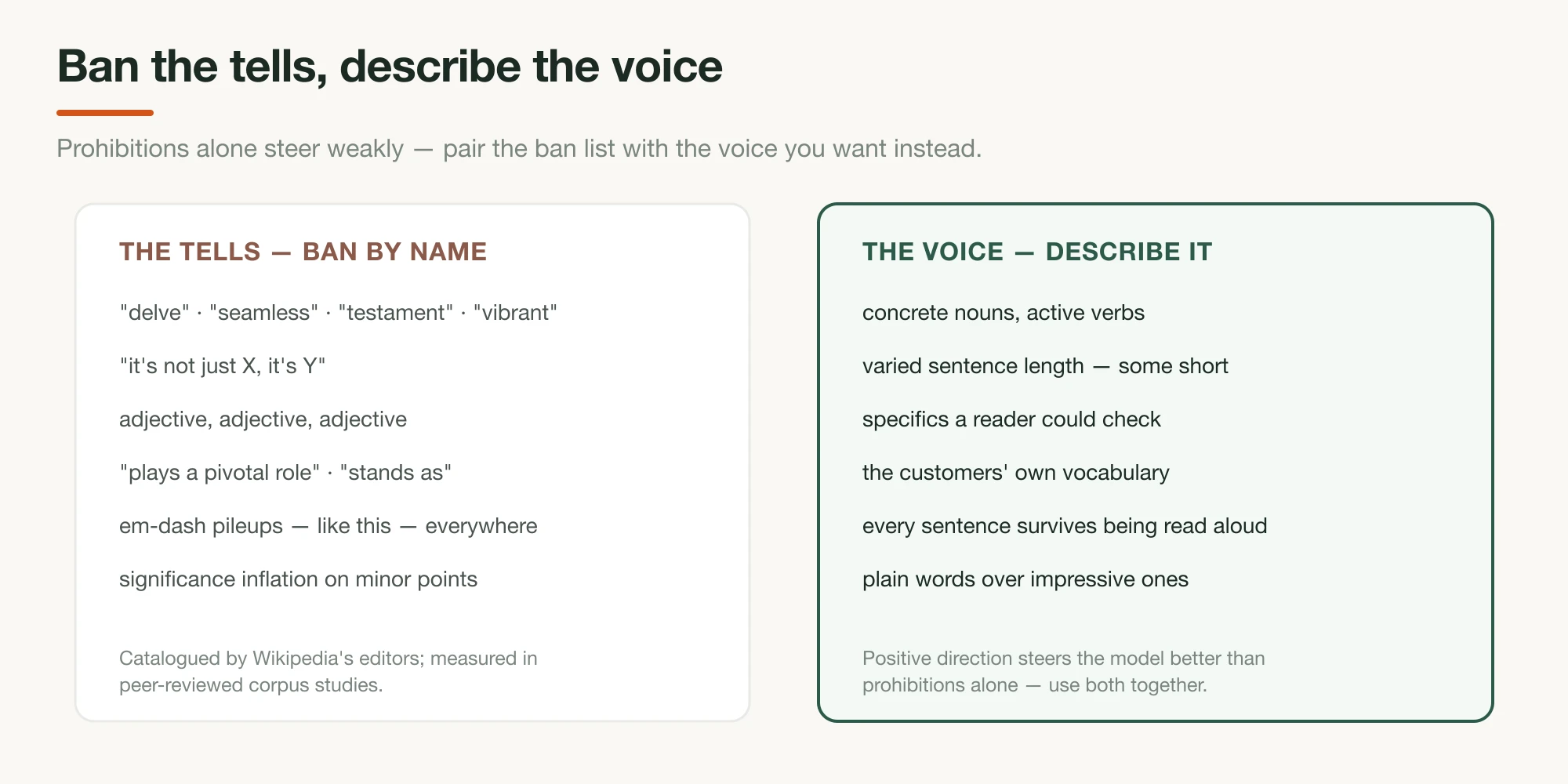
The strengths are real. Given a product and an audience, a model will produce twenty distinct hooks in the time a person drafts two, cover angles you would not have thought to try, and rewrite the same idea for different awareness levels on request. Volume and variety are exactly what paid social consumes, since creative fatigues in weeks and the platforms reward fresh angles.
The weaknesses are just as real. Models invent specifics with confidence, so any number, ingredient claim, or comparison in generated copy must be checked against what you can substantiate. They default to generic marketing cadence unless fed your actual voice. And they have no idea which of the twenty hooks will work, because nobody does before the auction. Treat the generator as an angle machine and yourself as the filter, and both parties do the job they are good at.
Ad copy for advertorials and listicles
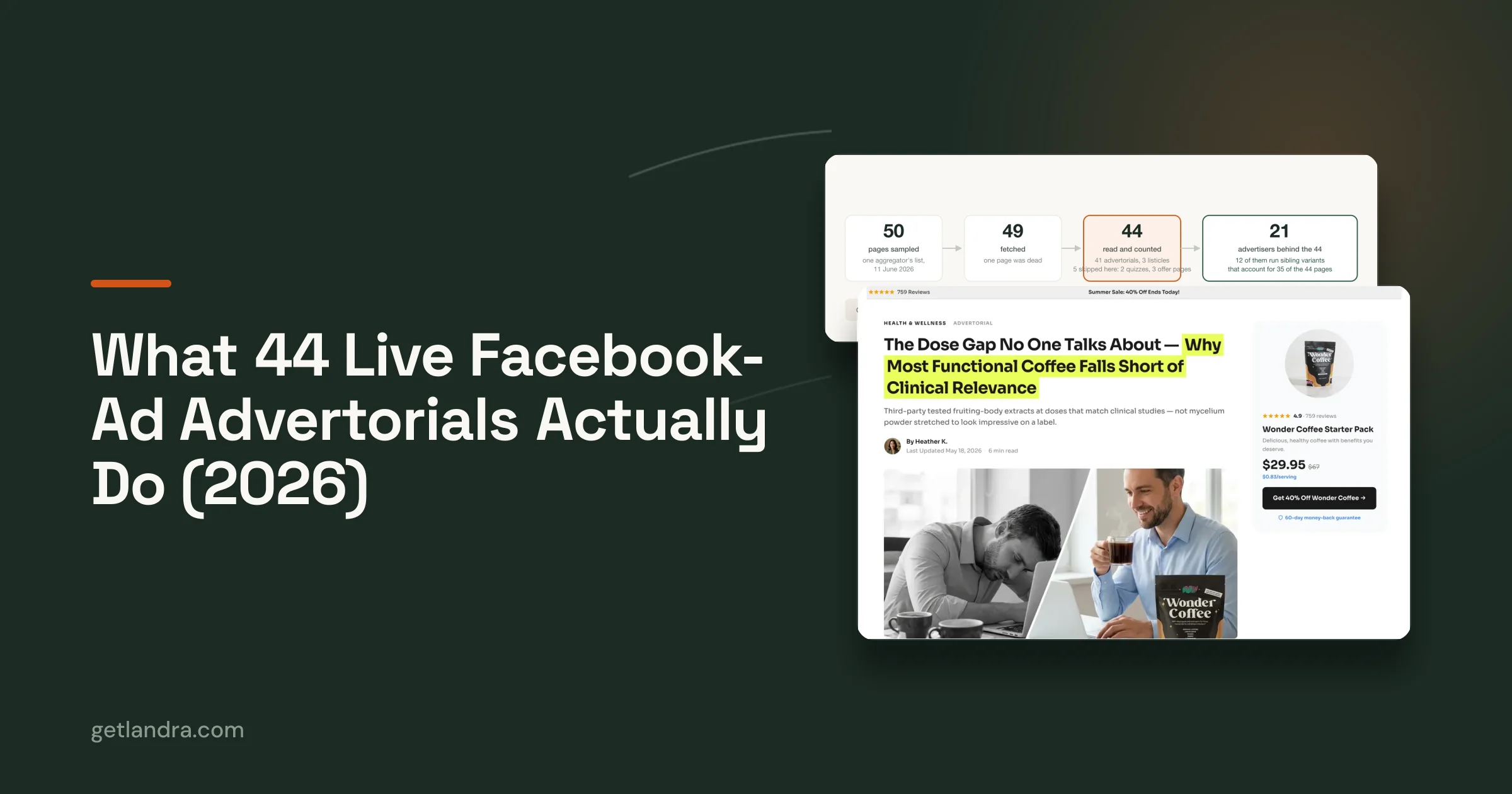
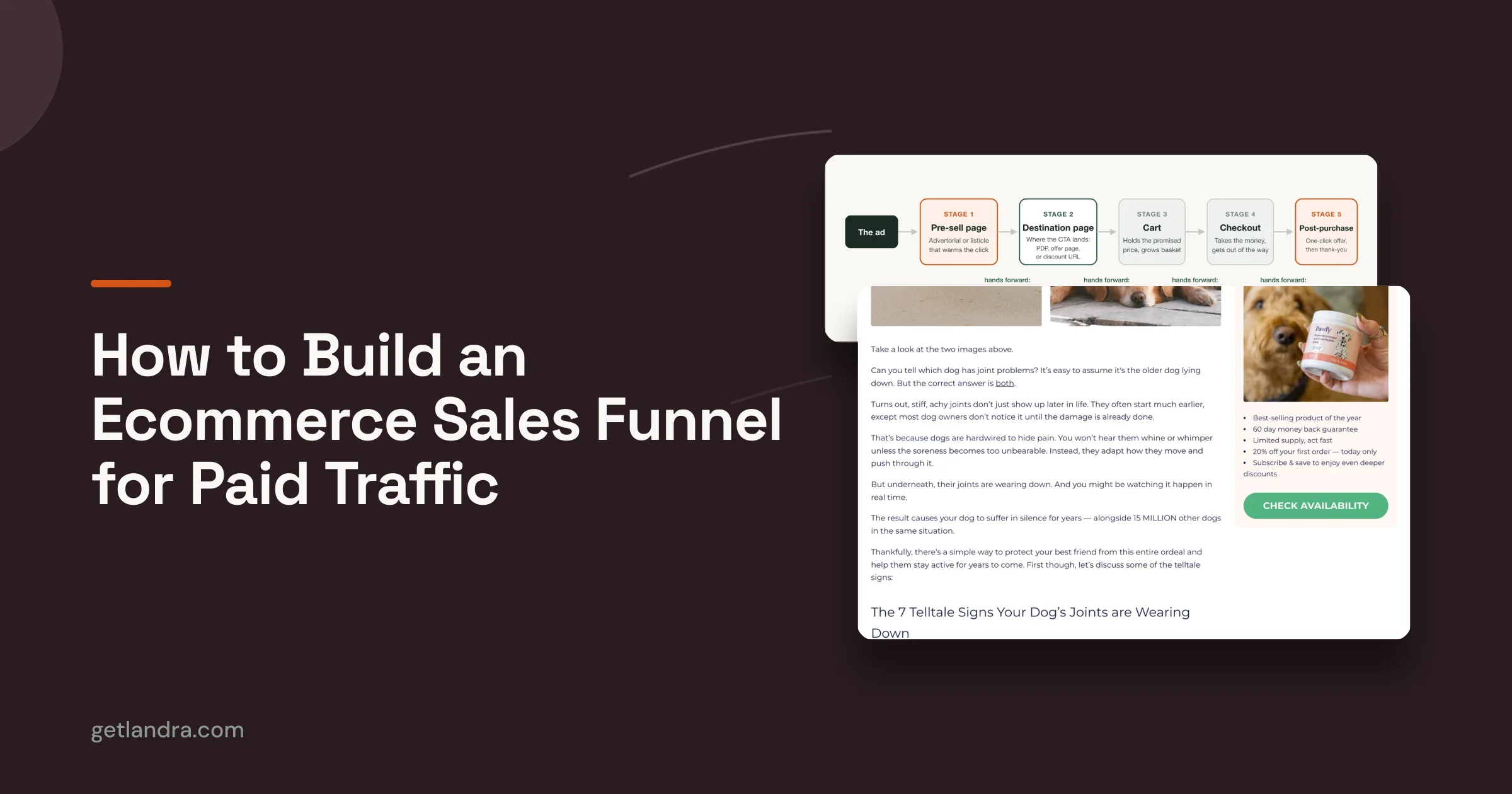
Presell funnels put one extra demand on ad copy that ordinary campaigns do not: the ad and the page must read as one continuous piece. An advertorial ad opens the story the page will finish, in the pattern of a confession or a discovery, and the click feels like turning the page rather than leaving the feed. A listicle ad teases the countdown, promising seven reasons or five signs, and the page delivers the list the ad sold. That congruence is the whole trick, so generate the hook and the page lead as one unit, in the same vocabulary, rather than writing ads for a page that already exists in a different voice.
Workflow and prompting tips
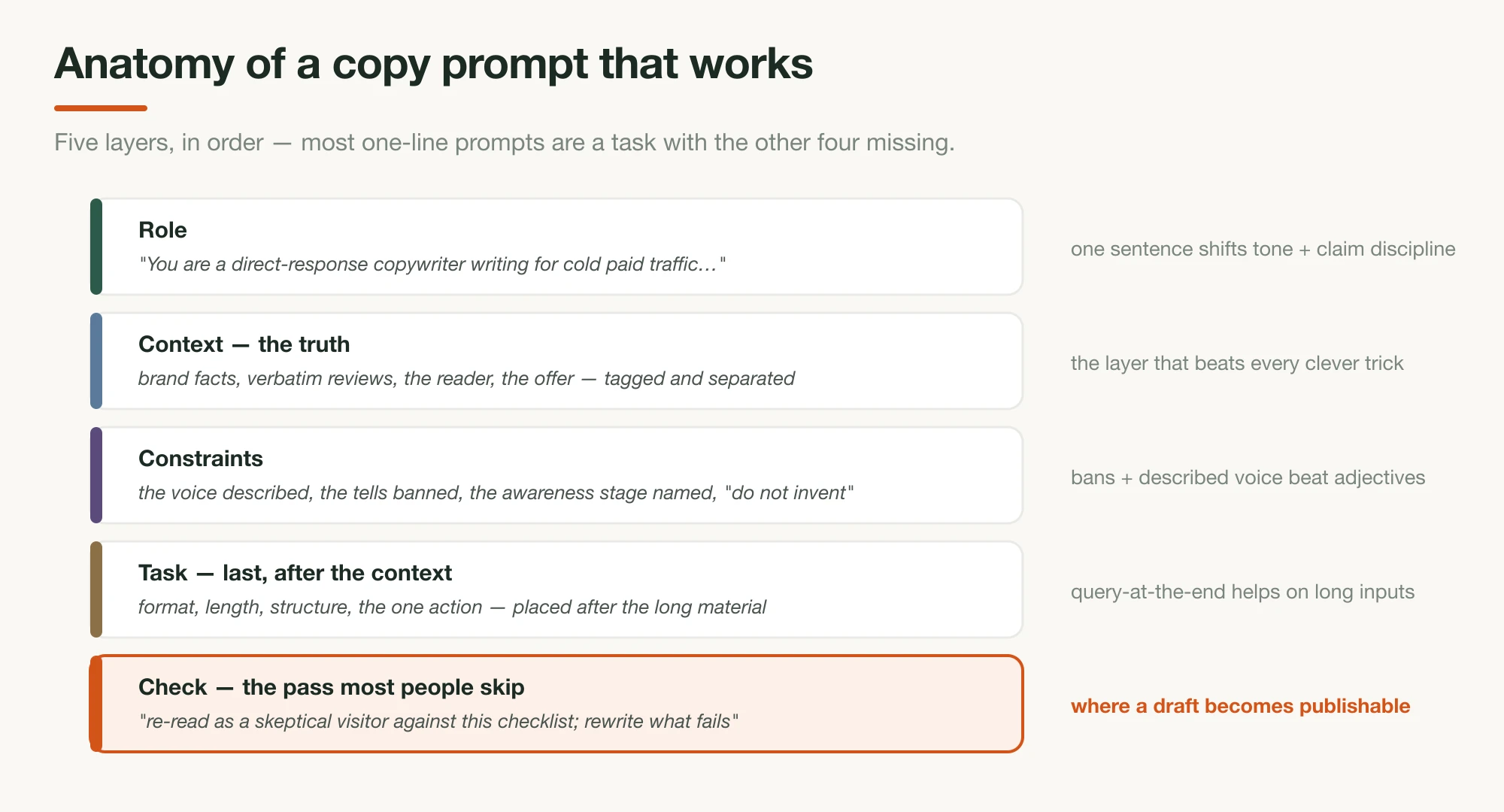
Feed the model your customers before asking for copy: paste in real reviews, support tickets, and survey answers, because voice-of-customer language outperforms invented language and the model can only reuse what it has seen. Ask for twenty hooks, not three, and ask for them across awareness levels, from problem-aware to product-aware, since cold and warm audiences need different openings. Ban what you cannot say up front by listing forbidden claims and words in the prompt, which is cheaper than editing them out later. Then filter hard, keeping the three to five hooks a skeptical customer would stop for, and iterate on the winner by asking for variations of it specifically rather than another random batch.
If the copy craft itself is the gap, the how to write an advertorial framework covers the persuasion mechanics that make good raw material for these prompts, and ten Claude prompts for advertorial copy turns the five layers above into copy-paste briefs.
Keeping brand voice and staying compliant
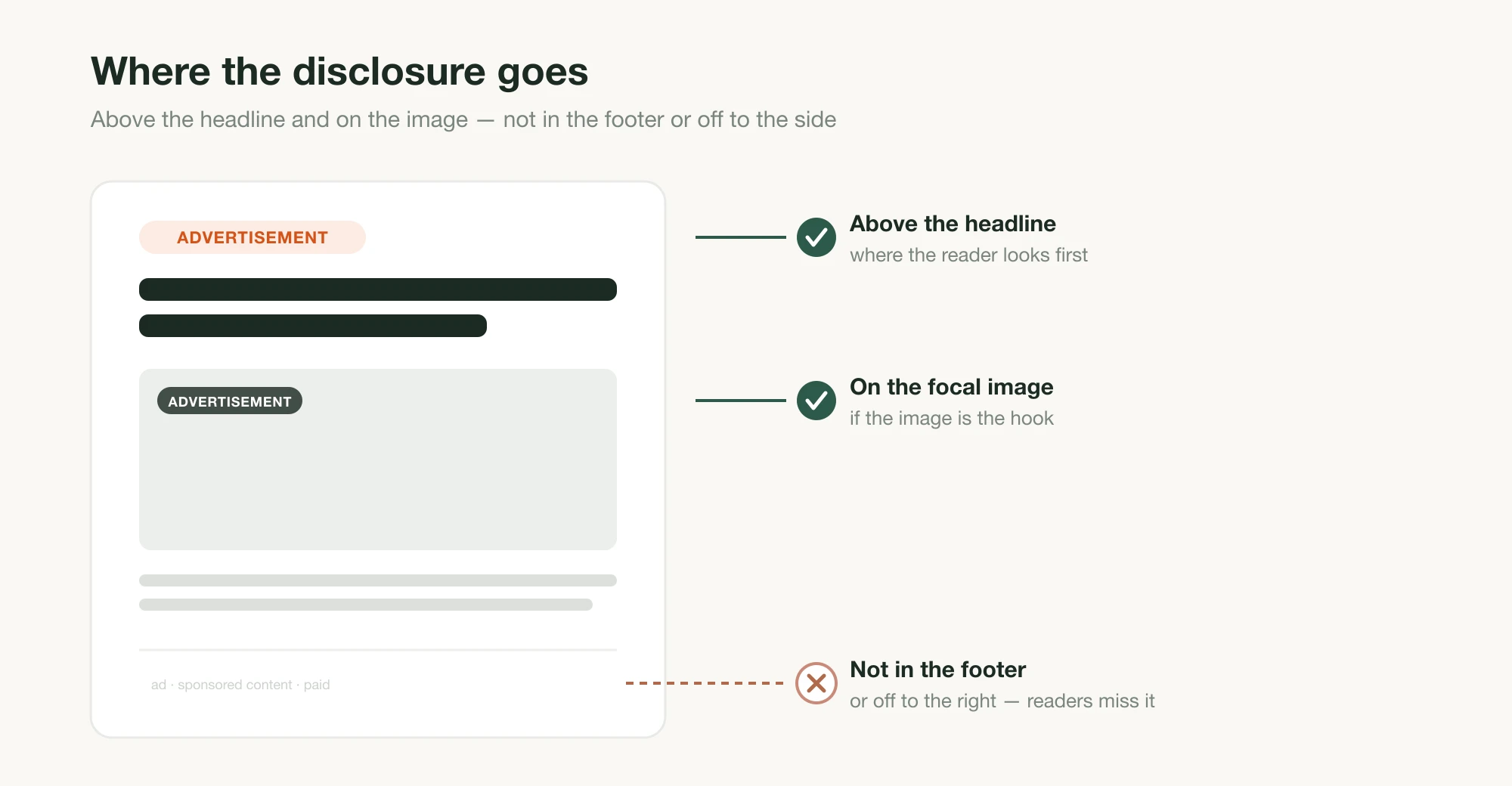
Voice first: give the model a short style card, three adjectives, a sample paragraph you love, and a list of words you never use, and regenerate anything that sounds like everyone else. Compliance second, and this one is not optional. Every claim in generated copy needs a source you control, health and personal-attribute framing gets ads rejected on Meta regardless of who wrote them, and when the copy extends past the ad into an advertorial-style page, that page is an advertisement and needs a visible label saying so. AI speeds up writing, and it speeds up writing violations just as efficiently, so the review step is where a human stays permanently employed.
From ad copy to a full page
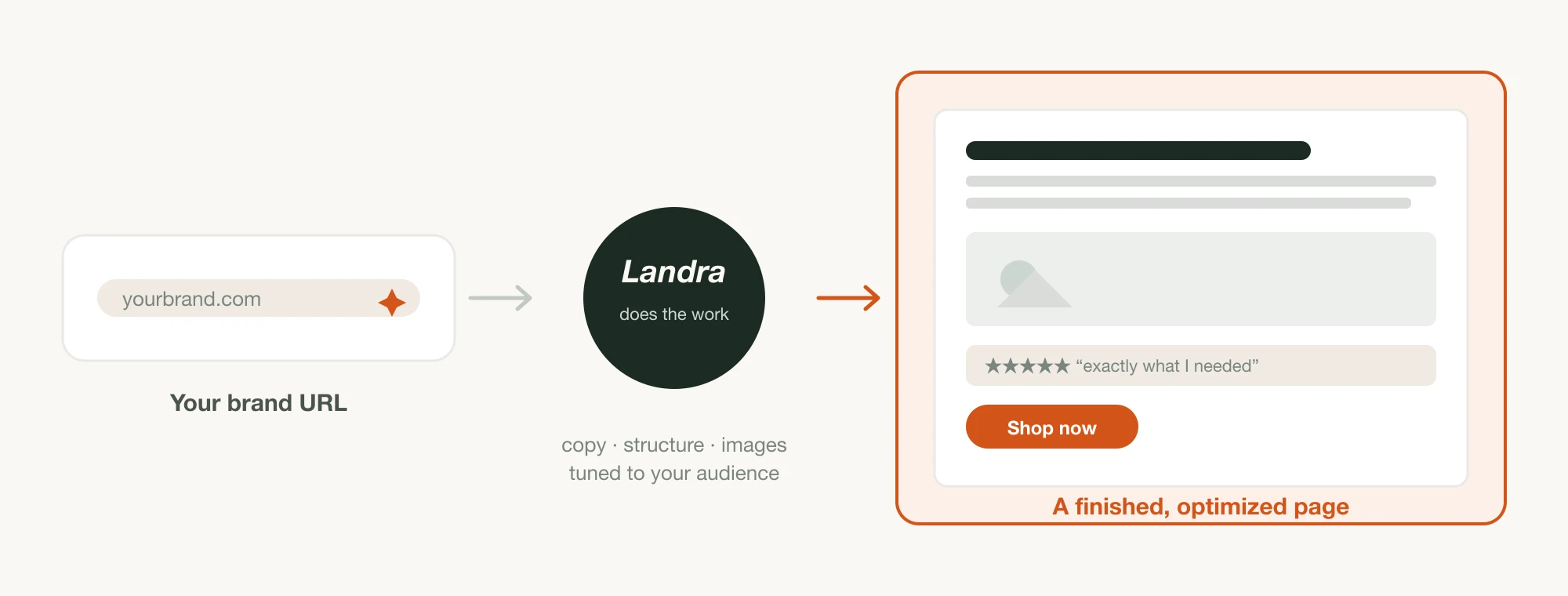
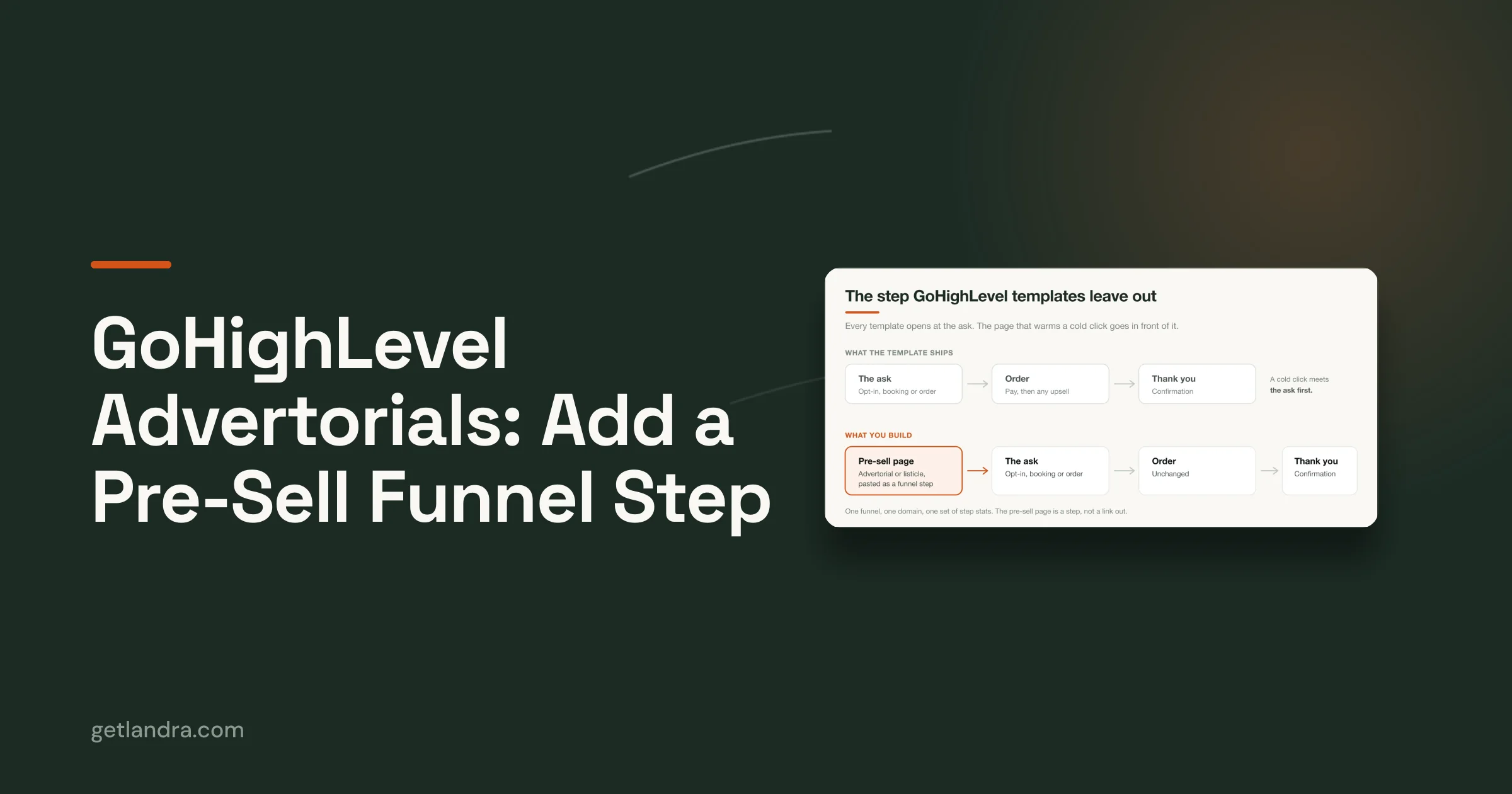
The hook is half the asset, because the click it earns is only worth what the page does with it. This is where the workflow closes: take the winning hook and make it the headline and lead of the page itself. Landra's advertorial generator and listicle generator build the full page from your product URL, and since everything is editable inline, matching the page to a specific winning ad is a headline and lead edit rather than a rebuild. Ad copy tools and page tools used separately leave a seam in the funnel exactly where the visitor decides whether to trust you. Generating both sides of the click from the same product context removes it.
From winning hook to finished page
The next time a generated hook outperforms, give it a page that continues the sentence. You can create that page with Landra free, on the 14-day trial then from $19/mo, built from your product URL and edited to match the ad in minutes, so the funnel reads as one piece from feed to checkout.
Frequently asked questions
What is an AI ad copy generator?
Software that produces ad hooks, headlines, and body text from a description of your product and audience. The good ones are volume tools, useful for exploring many angles fast, with a human choosing what actually runs.
Will Meta reject ads written by AI?
Not for being AI-written. Meta's policies judge the content, so unsupportable claims, health framing, and mismatched landing pages get rejected whoever the author was. Generated copy needs the same compliance pass as human copy.
How many ad copy variants should I test at once?
Three to five genuinely different angles beats ten variations of one idea. Generate wide, filter to the few a real customer would stop for, and save the close variations for iterating on whichever angle wins.
How do I keep AI ad copy in my brand voice?
Put the voice in the prompt: a sample paragraph, a few defining adjectives, and a banned-word list. Voice-of-customer material helps even more, since models echo the language they are given far better than they invent it.
Is AI ad copy safe for health and wellness products?
Only with a strict claims list. Models will happily generate promises you cannot substantiate, and health categories carry the tightest platform rules, so the human review step matters most exactly where the copy is easiest to get wrong.