
There are two very different products hiding behind the phrase "AI advertorial generator," and the gap between them is what this piece is about. One hands you a blank advertorial template and an AI helper, and you fill it in: write the copy, place the images, wire the CTA, ship it. The other takes your brand URL, analyzes your product and brand to understand them, and writes the finished, optimized advertorial. Both market themselves with the word "generate." Only one of them actually generates the page.
We went looking for the difference the only way that settles it: we searched the term in June 2026, opened every tool that ranked, and classified what each one actually returns when you ask it for an advertorial. The results don't sort by price or polish. They sort by how much of the page the tool hands you done, and most of them hand you a lot less than the word "generator" implies.
What an "AI advertorial generator" actually returns
Search the term and you get four different products wearing one label. Most are not generators in the sense you'd expect: a tool that takes your brand URL, figures out your product and brand, and writes the finished page. They're either the wrong tool entirely, a piece of the job, or a blank template with an AI button. Here's the split we found, in order of how much of the page they leave you to build:
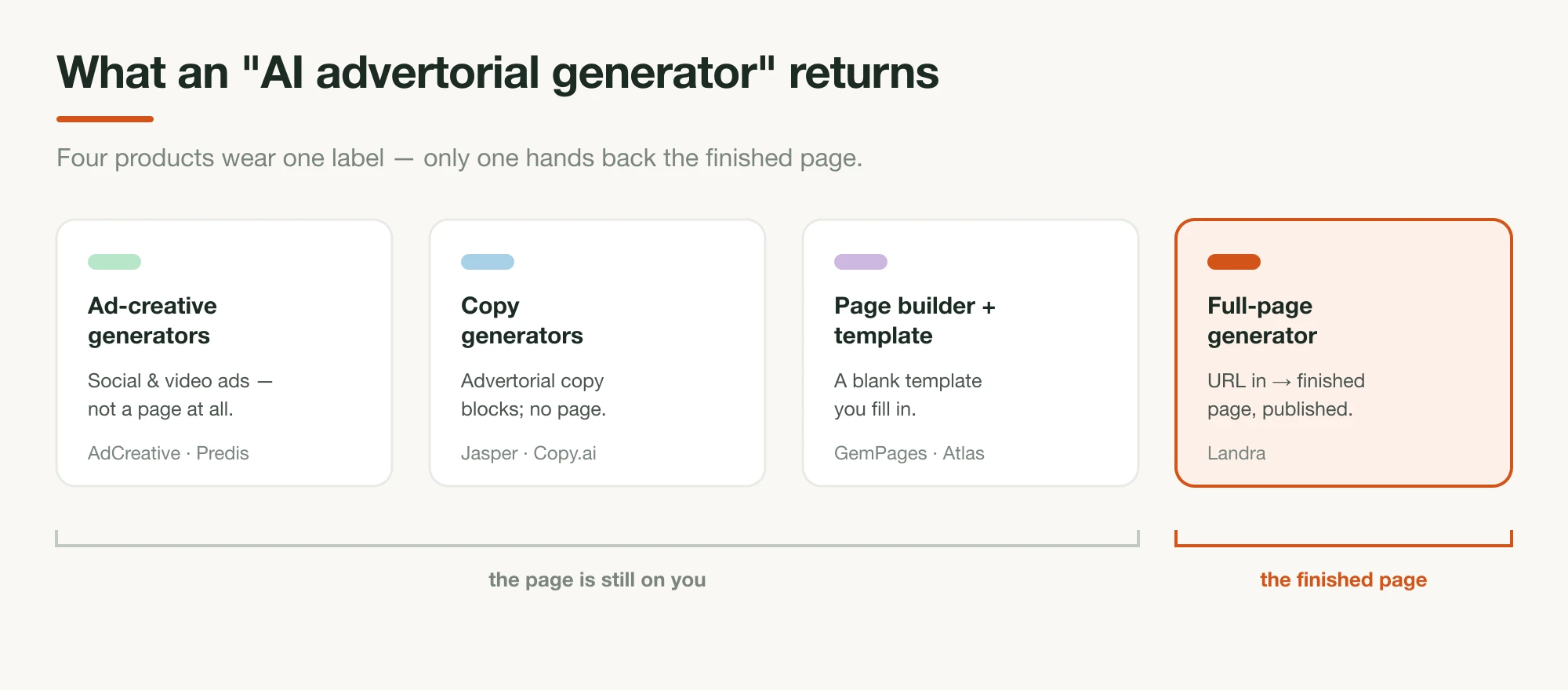
- Ad-creative generators: the wrong thing. AdCreative.ai, Predis, Zeely, and Canva Grow generate social, video, and display ad creatives — the thing your audience clicks, not the page they land on. They're excellent at their job and a poor fit for this one. An advertorial is the page the ad points to; these tools make the ad. Conflating the two is the single most common mistake when shopping the term.
- Copy generators: words only. Jasper, Copy.ai, and Writesonic (from about $16/mo as of June 2026) write advertorial and landing-page copy blocks on demand. You get text, often good text, but no page, no images, no structure, no publish. Good copy still takes a real brief (getting the copy right is its own discipline), but it's no longer the part nothing else can do for you, as we'll get to.
- Page builders with an advertorial template: you fill it in. Shopify-native builders like GemPages and its Atlas line ship advertorial and listicle page types with AI content blocks. You start from a template instead of a blank page, but you still assemble the layout, write the long-form copy, place every image, and tune the structure yourself. This is the bucket most people actually mean, and it's a builder, not a generator.
- Full-page generators: the finished page. A true generator analyzes the brand behind a URL and writes the whole optimized advertorial: copy written to a real audience, conversion structure, images, compliance, and a publish step. This is the category the word "generator" implies, and barely anything lives here. PagePilot generates URL-to-page for dropshipping product pages with AI images; Landra generates the full advertorial or listicle. Almost everything else in the search results is one of the three buckets above.
The reason the buckets matter is that they solve different bottlenecks. If your problem is the ad, you want bucket one. If it's a paragraph of copy, bucket two. If it's the layout, bucket three. Only if your bottleneck is the whole page does bucket four (the one most people picture when they type "advertorial generator") actually apply. And that's the bucket with the fewest real entries.
Template-filler vs. generator: the comparison that matters
The dividing line isn't price, AI quality, or how many templates a tool ships. It's how much of the finished page you still have to build after the tool does its part. A template-filler hands you scaffolding; a generator hands you the page. Below is the side-by-side across the six things an advertorial actually needs — copy, conversion structure, images, compliance, publish, and price — using verified June 2026 facts.
| Capability | Template-filler (most "generators") | True full-page generator |
|---|---|---|
| Copy | AI blocks or a blank field — you write the long-form story | Written for you, to a named audience, from your brand facts |
| Conversion structure | A template skeleton you assemble and tune | Best-practice advertorial/listicle structure built in |
| Images | You source, generate elsewhere, or upload | Generated to match the product, placed in the page |
| Compliance (ad disclosure) | On you to add | Disclosure pieces injected into the page |
| Publish | Manual; varies (Shopify-native ones publish) | Straight to Shopify, a URL, or HTML export |
| Pricing (Jun 2026) | ~$29–$47/mo (GemPages, Advertorial Wizard) | Landra: 14-day trial, then from $19/mo |
Pricing verified June 2026 from each tool's site; tools change prices — check before buying.
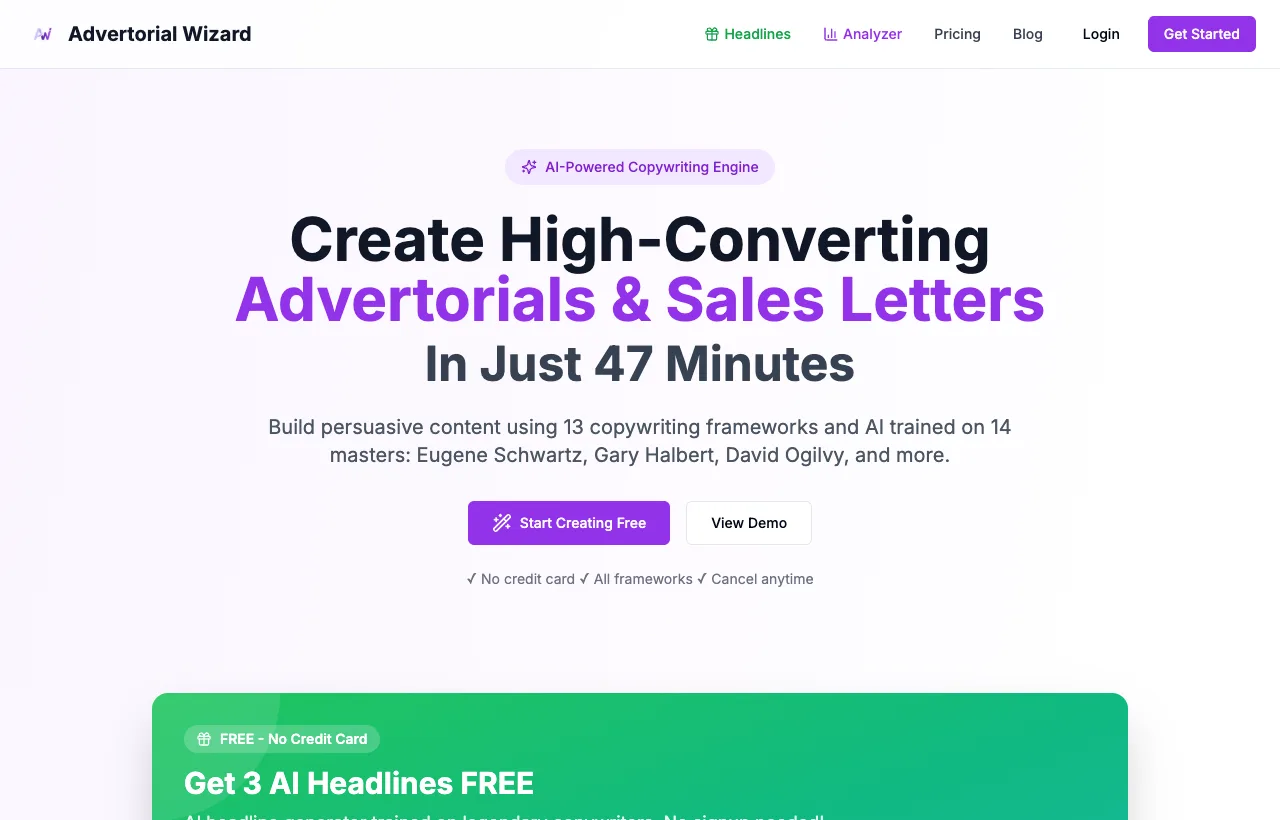
A few of these tools are honest about being a template, and good at it. Advertorial Wizard is a copy-focused generator that builds a 15-block advertorial with named frameworks (AIDA, PAS) and responsive HTML output for about $47/mo. It's a genuine copy generator with structure, but it stops at HTML; it doesn't generate or place images, and it doesn't publish. (Its marketing leans hard on big numbers: the company says it was "trained on 14 copywriters with $2.4B tracked sales" and has produced "10,000+ advertorials," per press materials; those figures are the company's own and unverified, so weigh them as marketing, not measured results.) PagePilot, at $39–$99/mo, is closer to a true generator — URL in, a Shopify page with AI product images out — but it's built around dropshipping product pages, not the long-form editorial advertorial. So for the long-form advertorial specifically, PagePilot is the genuine second entry, a category of two, really.
Why the bottleneck moved off the copy
Here's the part building Landra actually taught us. The copy still takes a real brief: a model can't invent your customer's real objections, your proof points, or your brand voice, which is why getting it right is its own discipline. But once you've fed it those facts, a frontier model gets you a competent draft cheaply, and that's the shift. The expensive, can't-be-bought-cheaply part is no longer the copy. It's everything around it.
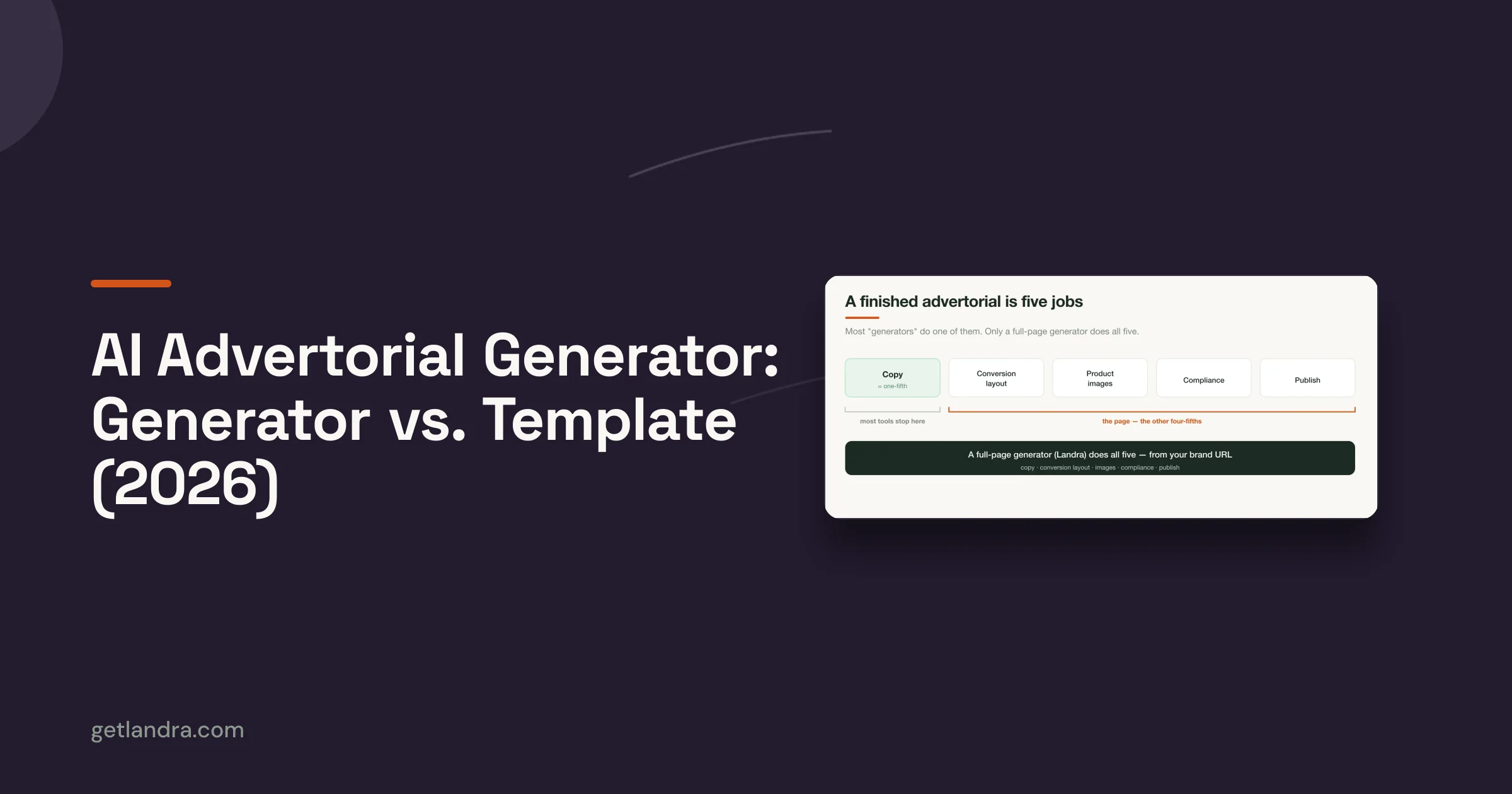
What's genuinely hard now — what separates a page from a wall of text — is everything around the copy: laying it out in conversion-built components instead of generic blocks, generating images that match the actual product and sit in the right slots, holding the product back until the editorial framing has done its work, injecting the ad-disclosure pieces, and making the whole thing publish to a live Shopify theme without a day of fiddling. The copy is maybe a fifth of the work. The page is the other four-fifths, and that's exactly the four-fifths the copy generators and template-fillers leave on your plate.
That's why the market splits the way it does. Most "AI advertorial" tools attack the visible problem (the words) because it's the easy, demoable one. But once a model drafts competently, the bottleneck moves to the page, and almost nothing generates the page.
Which one you actually need
Match the tool to the bottleneck, not to the marketing. The honest answer for most DTC teams is that a template is fine if the layout is your only gap, and a generator is the answer if the gap is the whole page. Work down this list:
1. If you just need the ad creative
Use an ad-creative generator (AdCreative.ai and the like), but know you're shopping a different product. These make the social and video assets your campaign runs; they do not make the advertorial the ad clicks through to. You'll still need a page for the click to land on. Don't let an ad-creative tool's "generate" button convince you the landing page is handled.
2. If you have a designer and just want a head start on layout
Use a Shopify page builder with an advertorial template, GemPages and similar (around $29/mo as of June 2026). You get a starting skeleton and live product data, and you supply the copy, the images, and the conversion tuning. This is the right call when you already have the copy and a person who likes pushing pixels, and your only gap is not starting from a blank canvas. For the full field of these, see the best advertorial software for DTC.
3. If you want to write the copy yourself with AI
Use a copy generator (Jasper, Copy.ai, Writesonic) or, better for advertorials specifically, a disciplined prompting workflow in a frontier model. Our Claude prompts for advertorial copy is the copy-generator path done well. You'll get strong copy and then own the rest: structure, images, disclosure, and publishing. If you want to run that whole pipeline by hand, the full DIY route is in how to create an AI-generated advertorial: it's real work, but it's the honest, control-everything path.
4. If your bottleneck is the whole page
Use a full-page generator, the one most people mean when they search "advertorial generator," and the one with the shortest list of real options. You give it a URL and an audience; it returns the copy, conversion structure, images, ad disclosure, and a publish step, then hands you an editor to refine. This is the path when you don't want to assemble anything: PagePilot for dropshipping product pages, Landra for the long-form advertorial or listicle, detailed below.
Landra: the full page, not the template
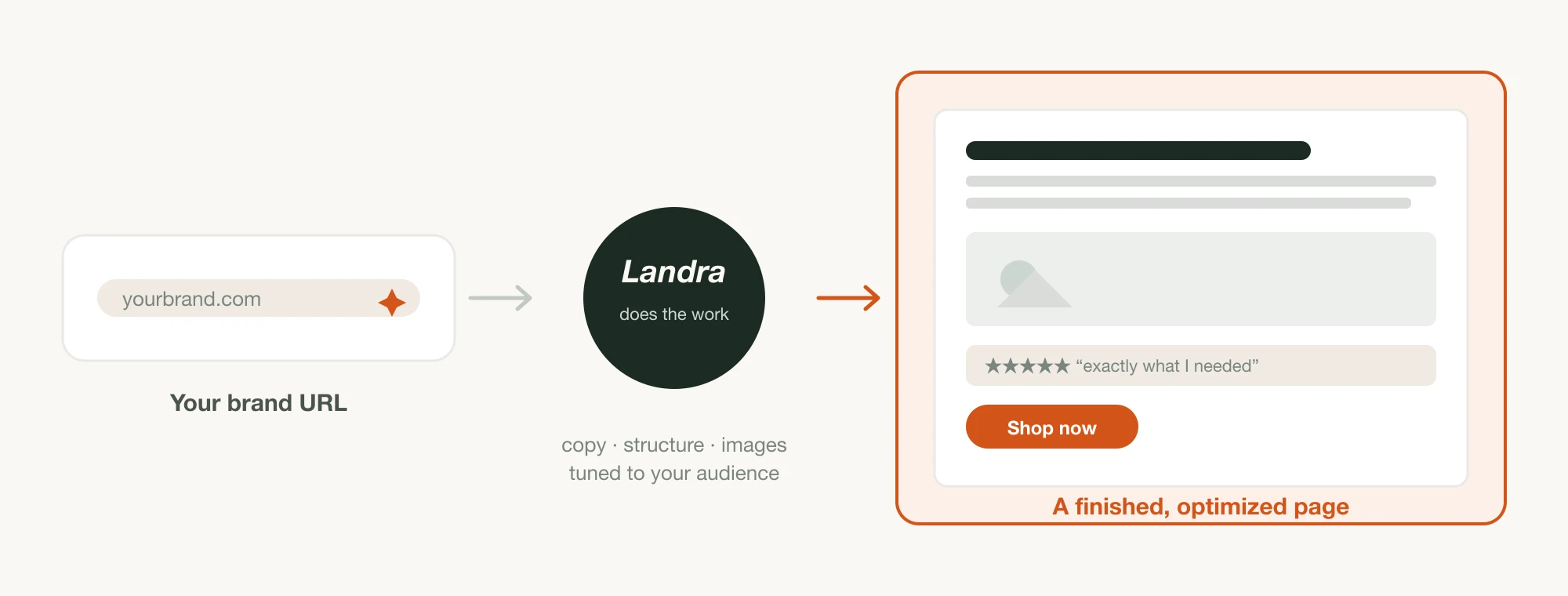
Landra is the rare entry in the full-page-generator bucket. You give it a brand URL and the audience you're targeting, and it builds the whole optimized page — the narrative copy written to that specific customer, the conversion structure laid out in proprietary DTC components built to convert, AI images generated to match your product and placed in the page, the ad-disclosure pieces injected — as an advertorial or a listicle, then drops you into a click-anything visual editor to refine it. When it's ready, it publishes straight to your Shopify store, a Landra URL, or a clean HTML export, with no copy-paste step, mobile-responsive out of the box.
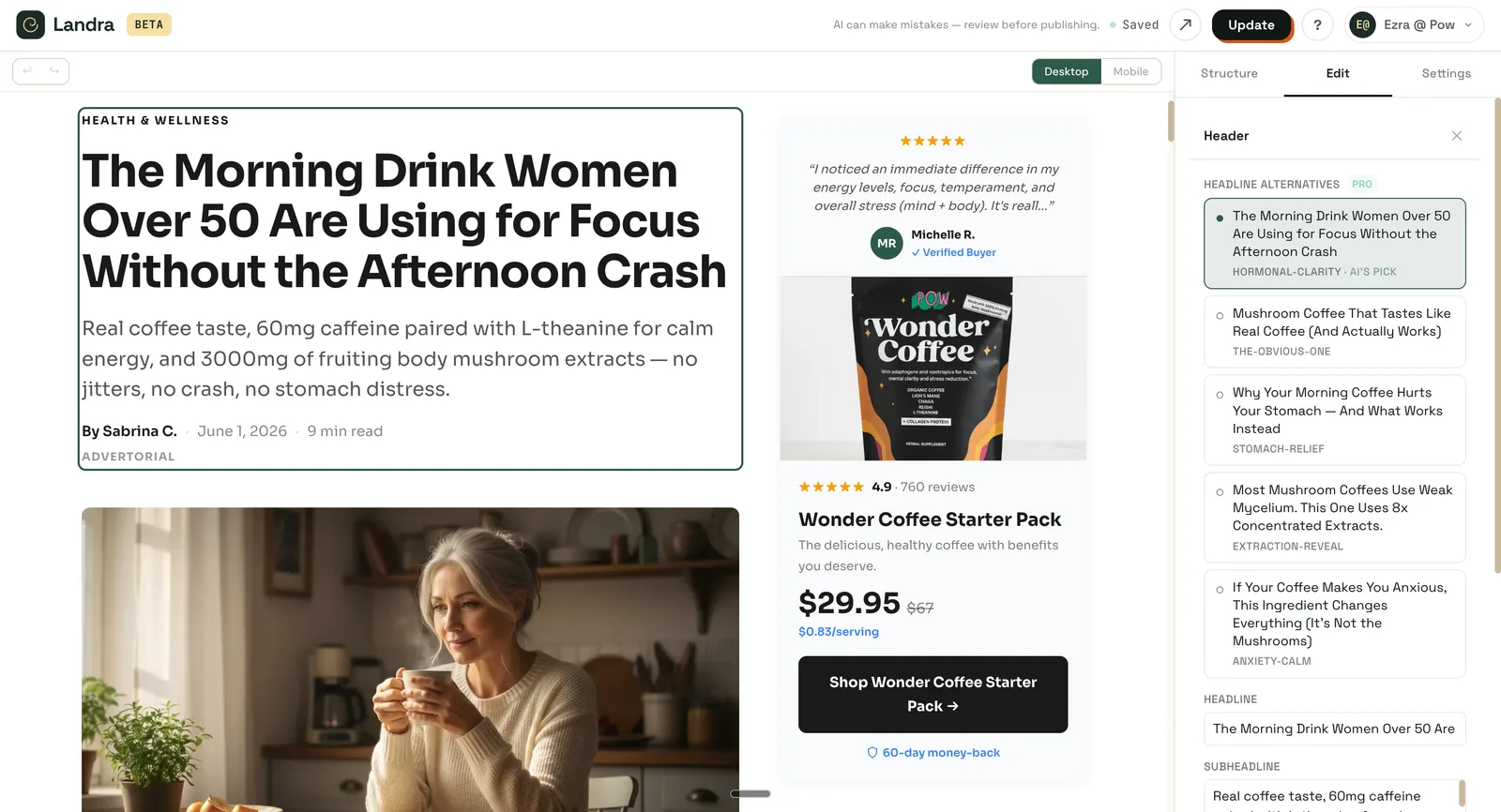
The distinction this whole piece is about is the distinction Landra is built on. A template-filler hands you a blank advertorial layout and an AI button; you're still the one writing, placing, and tuning. Landra hands you the page. The difference isn't who writes the copy; it's whether you walk away with a canvas to assemble or a finished, optimized advertorial you can ship. Because the format's best practices are built into how it generates, the page you get is more optimized than a fine one you'd assemble yourself from a template, without doing all the thinking yourself.
Pricing sits right in the template-filler range, not above it: a 14-day free trial, then from $19/mo (Starter), with Pro at $79/mo and Pro Plus at $199/mo adding more pages and Pro features, so the finished page costs no more than the tools that hand you a blank one. For the broader field of tools, including the funnel and Shopify-native builders, the best advertorial software roundup sorts them all by job.
Why generators became a 2026 DTC trend
Owned-domain advertorials are a named 2026 DTC growth tactic, and that's exactly why a generator earns its place: the better the format converts, the more the constraint shifts from the page itself to how fast and how well you can stand one up.
Running advertorials on your own domain — exactly the page a generator produces and publishes — is one of the named DTC growth trends of 2026. In an April 2026 field report, operator Nik Sharma flags owned-domain advertorials as a tactic brands are leaning into, because the editorial pre-sell does warming the product page can't. The conversion math backs it up: per a DTC landing-page benchmark from MHI Growth Engine (February 2026), advertorial and editorial landing pages tend to convert cold traffic at roughly 2–5%, versus 1.5–3.5% for a typical product page.
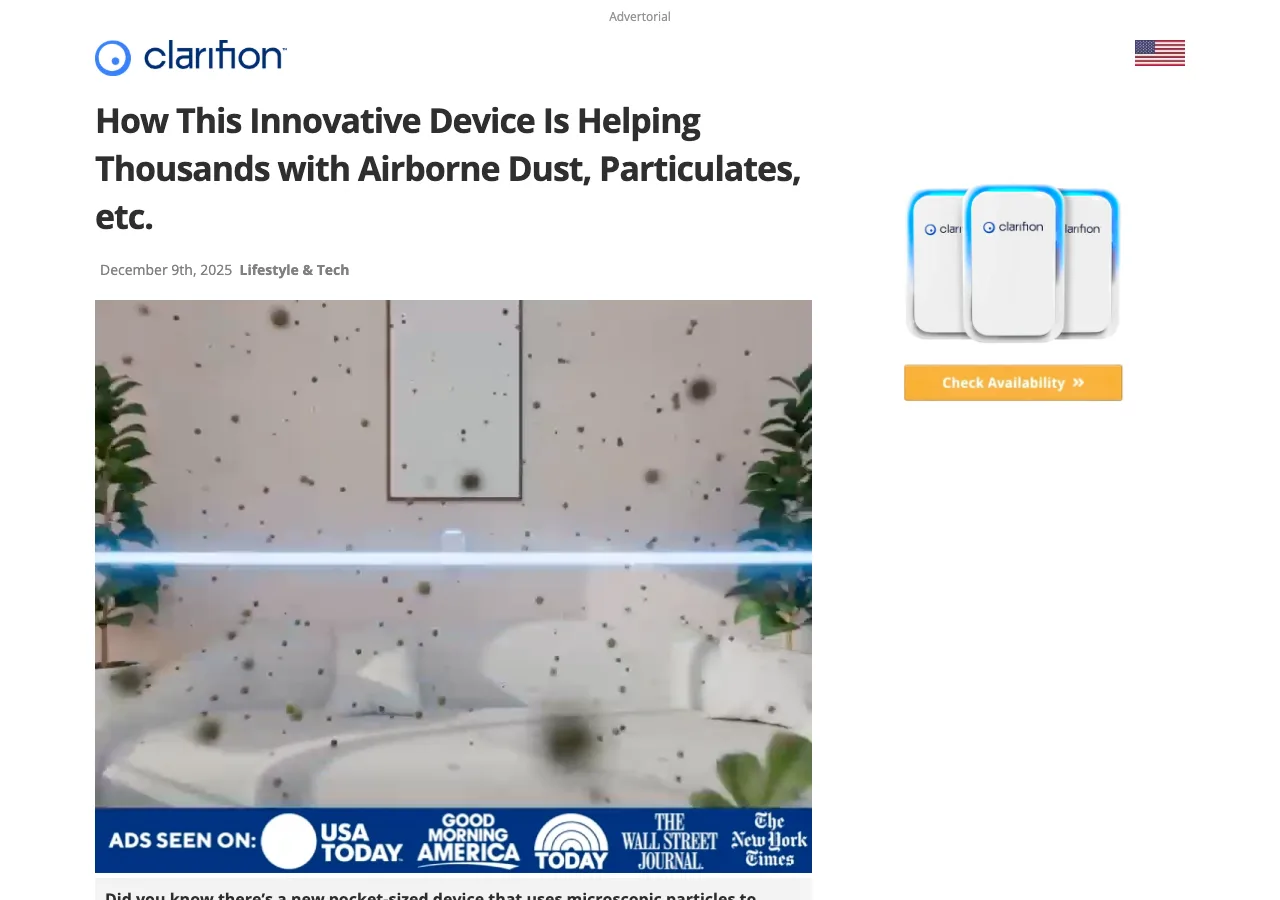
If the format is a 2026 trend and the pages convert, the bottleneck becomes production: how fast and how well you can stand up a real advertorial. That's the gap a generator closes and a template doesn't. A live example of the format done right: Clarifion's advertorial carries a clean, conspicuous label ("THIS IS AN ADVERTORIAL AND NOT AN ACTUAL NEWS ARTICLE") above editorial-style copy, the kind of finished, compliant page a generator should hand you, not a blank one you assemble and hope you remembered the disclosure.
The honest answer
Most "AI advertorial generators" generate a template, not a page, and that's fine if a template is all you need. So the question that actually settles your choice isn't which tool has the slickest demo; it's which part of the job is your bottleneck. Match the two and the answer falls out:
- Bottleneck is the ad creative? An ad-creative generator, but you still need a page for the click.
- Bottleneck is just the layout? A Shopify page builder with an advertorial template (around $29/mo).
- Bottleneck is the copy? A copy generator, or a disciplined prompting workflow, and own the rest of the page yourself.
- Bottleneck is the whole page? A full-page generator like Landra. It reads your brand from a URL and writes the whole page: copy, structure, images, compliance, and publish.
The word "generator" is doing a lot of work in this category, and most of the time it overpromises. Read what the tool actually returns, not the verb on its homepage. To go deeper on the format itself, start with what an advertorial is; to build one entirely by hand, the AI-advertorial DIY pipeline is the full walkthrough.
Frequently asked questions
What is an AI advertorial generator?
It is a tool that uses AI to produce an advertorial pre-sell page. The catch is that most are template-fillers — they generate a blank advertorial layout you fill in. A true generator takes your product URL, analyzes your brand and product to understand them, and writes a fully optimized advertorial — the copy, the conversion structure, the images, and the publish step — with no blank canvas to assemble.
Do AI advertorial generators write the copy and build the whole page?
Most do not. Copy generators like Jasper write words but no page; page builders with an advertorial template give you the layout but you write the copy and place the images. Only full-page generators read your brand from a URL and write a complete, optimized advertorial — copy, structure, images, and publish together.
Is an AI advertorial generator the same as an AI ad generator?
No — and conflating them is the most common mistake. AI ad generators (AdCreative.ai, Predis, Canva Grow) make social and display ad creatives, not pages. An advertorial generator makes the long-form editorial landing page the ad clicks through to. They sit on opposite ends of the funnel.
What does an AI advertorial generator cost?
As of June 2026 it varies by bucket. Copy-only generators like Advertorial Wizard run about $47/mo; URL-to-page generators like PagePilot start around $39/mo; Shopify page builders with advertorial templates start around $29/mo. Landra runs a 14-day free trial, then from $19/mo.
Are AI-generated advertorials any good?
They can be, if the generator is grounded in your real brand facts and the format is built for cold traffic. There are two quality risks: an ungrounded model — one that has not been fed your real objections, proof points, and brand voice — invents generic, fabricated-sounding copy; and using a generic copy or ad tool for a job it was not built for. A page generator tuned for advertorials and listicles, working from your real brand facts, produces a far better-converting page than a blank template you rush to fill.
Can a generator publish the advertorial for me?
Some can. PagePilot and Shopify-native builders publish to Shopify; copy and ad generators do not publish pages at all. Landra publishes straight to Shopify, a Landra URL, or clean HTML export, so there is no copy-paste step between the generated page and a live one.