

Most advice on contextual targeting advertising is stuck a decade behind reality. It still treats contextual as a placement tactic. Pick a few relevant pages, exclude risky categories, call it done. That's not why DTC brands are leaning on contextual now, and it's not where the performance gains come from.
The old version was dumb keyword matching. The useful version is about message alignment. If the page context signals what the shopper is thinking about right now, your ad should reflect that mindset, and your landing page should continue the same narrative instead of dropping the click onto a generic product page. That's the difference between “relevant media buying” and a conversion system.
Table of Contents
- The Resurgence of Contextual Advertising
- Contextual Versus Behavioral Targeting
- How Modern Contextual Targeting Actually Works
- Platforms and Inventory for Contextual Campaigns
- The Creative-Context Sync for Higher Conversions
- Measuring Contextual ROI in a Privacy-First World
- Implementation Checklist for DTC Brands
The Resurgence of Contextual Advertising
Calling contextual advertising “old school” misses what changed. The weak version relied on exact keywords and broad topic buckets. The modern version evaluates the full environment. It looks at meaning, tone, suitability, and format. That makes it far more useful for brands that need relevance without depending on personal tracking.
The market tells the story. The worldwide contextual advertising market was valued at about US $100 billion in 2017 and grew to US $200 billion by 2022, a 100% increase in five years, with 2024 vendor estimates ranging from $203 billion to $301 billion according to academic research summarizing contextual advertising market growth. The exact market definition varies by vendor, but the direction is clear. Contextual isn't a fallback anymore.

Why DTC teams are treating it as a primary channel
Direct-to-consumer brands don't need another lecture about privacy. They need a way to buy media that still feels performance-oriented when third-party cookies are less reliable and audience tracking is less durable. Contextual works because it uses a signal the marketer can still trust. The content being consumed in that moment.
That matters more than many teams admit. Someone reading ingredient comparisons, routine guides, or product reviews is already giving you a live intent signal. You don't need to know their full browsing history to infer what kind of message will land.
Practical rule: Contextual targeting advertising works best when you stop asking “Who is this user?” and start asking “What mindset does this page reveal?”
What changed from the old model
Modern contextual buying is better because the evaluation unit changed. Instead of matching ads to isolated words, platforms can interpret the environment with much more nuance. That means fewer absurd matches, tighter brand suitability controls, and better creative choices.
For DTC, that shift is especially important because most brands aren't losing on product quality. They're losing on message mismatch. The ad says one thing, the page context implies another, and the landing page resets the conversation entirely. Contextual fixes the first part. Creative and landing page sync fix the rest.
Contextual Versus Behavioral Targeting
The cleanest way to explain the difference is this. Contextual targeting acts like a helpful librarian. It recommends something based on what you're reading right now. Behavioral targeting acts more like a store clerk who followed you across five stores and keeps pitching products based on what you looked at earlier.
One approach focuses on the current environment. The other depends on a profile built from past actions.

The practical difference in media buying
Behavioral targeting asks: what has this person done before?
Contextual asks: what are they consuming now?
That changes how a campaign gets built. With behavioral, you spend time chasing segments, identity resolution, exclusions, lookalikes, and audience decay. With contextual, you spend more time defining meaningful environments, classifying intent-rich content, and deciding which creative belongs in each context.
For DTC brands, that often leads to cleaner strategy. Instead of saying “target women interested in fitness,” you can say “show this offer next to beginner strength content, routine-building content, or recovery content, and change the narrative by content type.”
Side-by-side comparison
| Factor | Contextual targeting | Behavioral targeting |
|---|---|---|
| Primary signal | Page content and environment | User history across sites or sessions |
| Timing | What the person is engaging with now | What the person did before |
| Privacy profile | Higher, because it doesn't require a persistent profile | Lower, because it depends on tracking and user-level history |
| Creative logic | Best when copy mirrors page mindset | Often uses one message across a broad audience pool |
| Typical failure mode | Broad topic targeting with generic creative | Over-reliance on stale audience data |
The performance argument is stronger than many marketers expect. Contextual targeting generated 50% more clicks and 30% higher conversion rates than non-contextual alternatives, while purchase intent rose by 63% and 79% of consumers said they prefer contextual ads over behavioral tracking methods, according to contextual targeting performance benchmarks.
Contextual often feels less creepy to the shopper and more actionable to the media buyer. That's a rare combination.
Where behavioral still has a role
Behavioral targeting isn't useless. It still helps in retention, remarketing, and some CRM-driven workflows where the brand has legitimate first-party signals. But many DTC teams used it as a crutch. They relied on tracking to compensate for weak offer framing and lazy landing page strategy.
That's why contextual is winning attention. It forces sharper thinking. You have to understand the moment, not just the audience bucket. In practice, that usually leads to better ads.
How Modern Contextual Targeting Actually Works
Contextual is still underrated because too many marketers picture crude keyword matching. That model is outdated. Modern systems evaluate semantics, sentiment, and visual elements in real time, then use those signals to decide whether an impression is worth buying, according to AI Digital's explanation of programmatic contextual targeting.

Context is a buying signal, not a category tag
A good contextual campaign does not pair every ad with every page. The choice depends on what the page is doing to the reader. Is it helping them compare options, solve an urgent problem, validate a purchase, or browse casually? That difference changes whether your ad feels timely or irrelevant.
Modern platforms score that environment across several inputs:
- Semantic meaning: What is the page about, beyond a few repeated terms?
- Sentiment: Does the content frame the topic with confidence, concern, skepticism, or urgency?
- Visual context: Do the images, video, and layout support the kind of product story you want to tell?
- Suitability: Is the page appropriate for the brand, offer, and level of claim you plan to make?
Older assumptions no longer hold true. A page about “acne” is not one context. A dermatologist explainer, a harsh product review, and a skincare routine roundup can all carry different conversion potential.
What happens in the decision layer
Contextual signals feed the bid decision before the impression is purchased. If the page matches your targeting rules, suitability standards, and creative map, the platform bids. If it does not, it skips the impression.
A strong setup usually has three parts:
Content analysis
The system parses page text, structure, and, in some cases, image or video signals.Label assignment
The page is classified into a contextual segment. That can be broad, such as fitness or skincare, or narrower, such as ingredient comparison, recovery routines, or product alternatives.Creative selection
The platform serves the ad variant that fits the page context, not just the campaign budget or audience pool.
Here's a simple explainer video for the mechanics and setup logic:
Why this matters for DTC execution
For DTC brands, the opportunity is not just better media filtering. It is message control. If the system can identify whether someone is reading educational content, product comparisons, or problem-aware content, the ad can match that stage and send traffic to a landing page that continues the same narrative.
That is the difference between a contextual campaign that gets cheap clicks and one that converts. A page about “best running socks for blisters” should not receive the same creative and landing page as a page about marathon recovery tips. The first needs proof, comparison language, and friction-reducing product details. The second may respond better to comfort, performance, and routine-based framing.
Many teams miss this because they buy context well and message badly. They set detailed inclusion rules, then run one generic headline and send every click to the homepage. That is the same mistake many brands make in Facebook ads optimization for conversion-focused campaigns. Better targeting cannot rescue weak narrative continuity.
The buyer does not need to know the person. The buyer needs to know whether the page creates the right buying mood for the offer.
That is the job. Read the page. Match the message. Continue the story on the landing page.
Platforms and Inventory for Contextual Campaigns
Not all contextual inventory is equal. The channel you choose affects how much control you have over taxonomy, suitability, reporting, and creative variation. DTC teams usually make better decisions when they stop thinking in terms of “best platform” and start thinking in terms of inventory type plus operational fit.
Walled gardens and managed environments
Google Display Network, YouTube, and major retail or publisher ecosystems are often the easiest starting point. The setup is familiar, the inventory is broad, and teams can generally launch without heavy technical support.
The trade-off is control. You may get simpler buying workflows, but less transparency into why specific environments perform better. For a brand that mainly wants to test contextual demand without retooling its workflow, that simplicity can still be useful.
Open web DSPs and specialist contextual layers
DSP-led buying is where contextual gets more advanced. Contextual labeling systems map content into standardized taxonomies such as IAB categories, then layer in sentiment and suitability tiers. Those signals act as pre-bid filters that help the bidder decide whether to bid and which creative to serve, as described in AI Digital's guide to contextual advertising decisioning.
That opens up better campaign design, but it also demands more discipline. You need clearer inclusion logic, cleaner exclusions, and a stronger creative map. Teams that already think carefully about campaign structure often do better here than teams that want a plug-and-play setup.
Native networks for narrative-driven offers
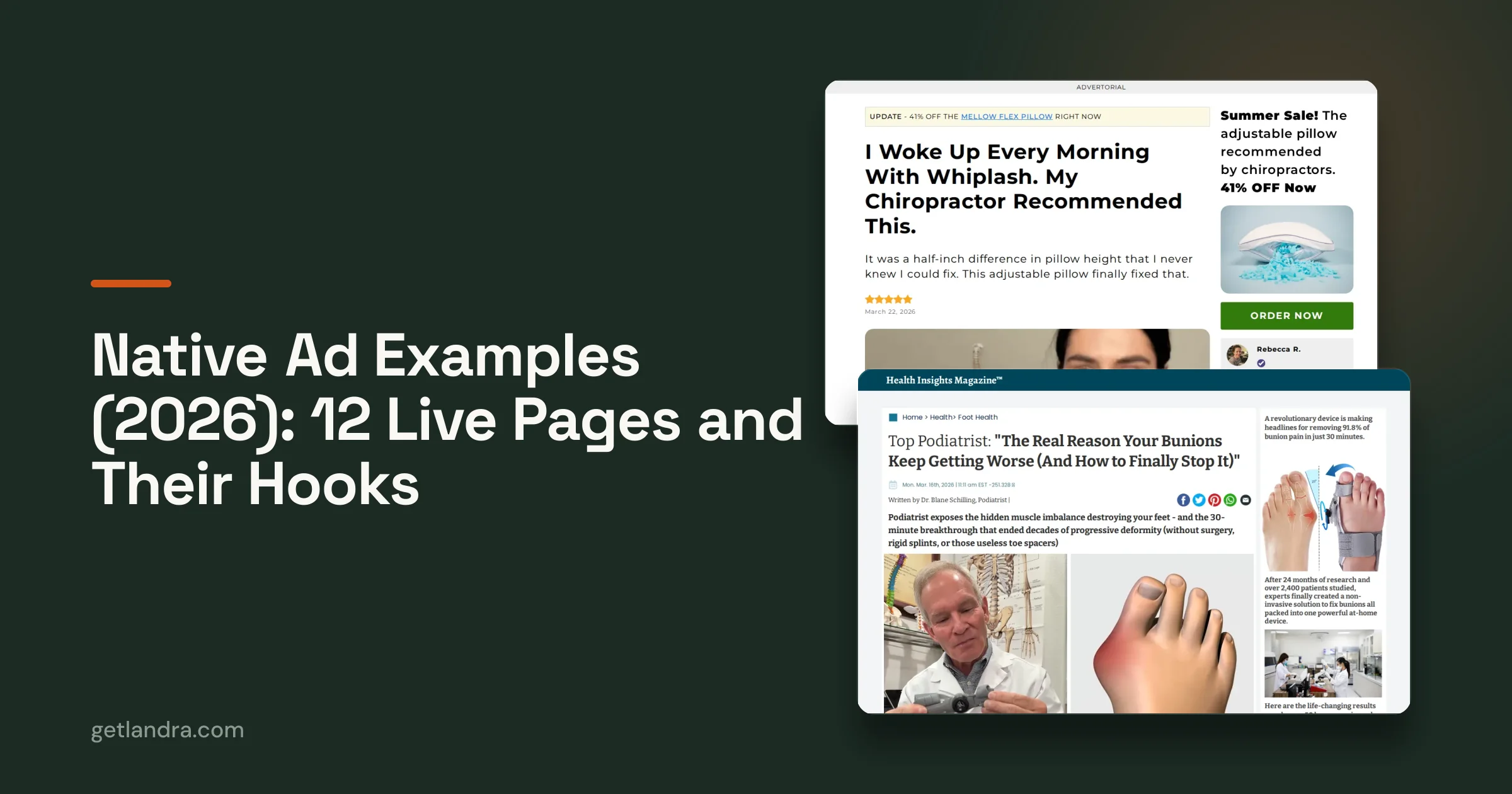
Native inventory is often a strong fit when the ad click leads into educational or editorial-style pre-sell content. The environment already conditions the user to consume a story, comparison, or recommendation. That makes native a practical option for products that need more explanation before the sale.
If your team also runs paid social, it helps to compare how contextual traffic behaves against broader acquisition channels. A useful reference point is this guide to Facebook ads optimization for conversion-focused campaigns, especially when you're deciding whether your bottleneck is targeting, creative, or landing page continuity.
How to choose without overcomplicating it
Use a simple filter:
- Choose easier platforms first if the team is new to contextual and needs launch speed.
- Choose DSP-led buying if the brand needs more precise suitability rules and more context-specific creative delivery.
- Choose native environments when the product needs a longer narrative before purchase.
The mistake is picking inventory before defining the buyer mindset you want to reach. Platform choice should follow message architecture, not the other way around.
The Creative-Context Sync for Higher Conversions
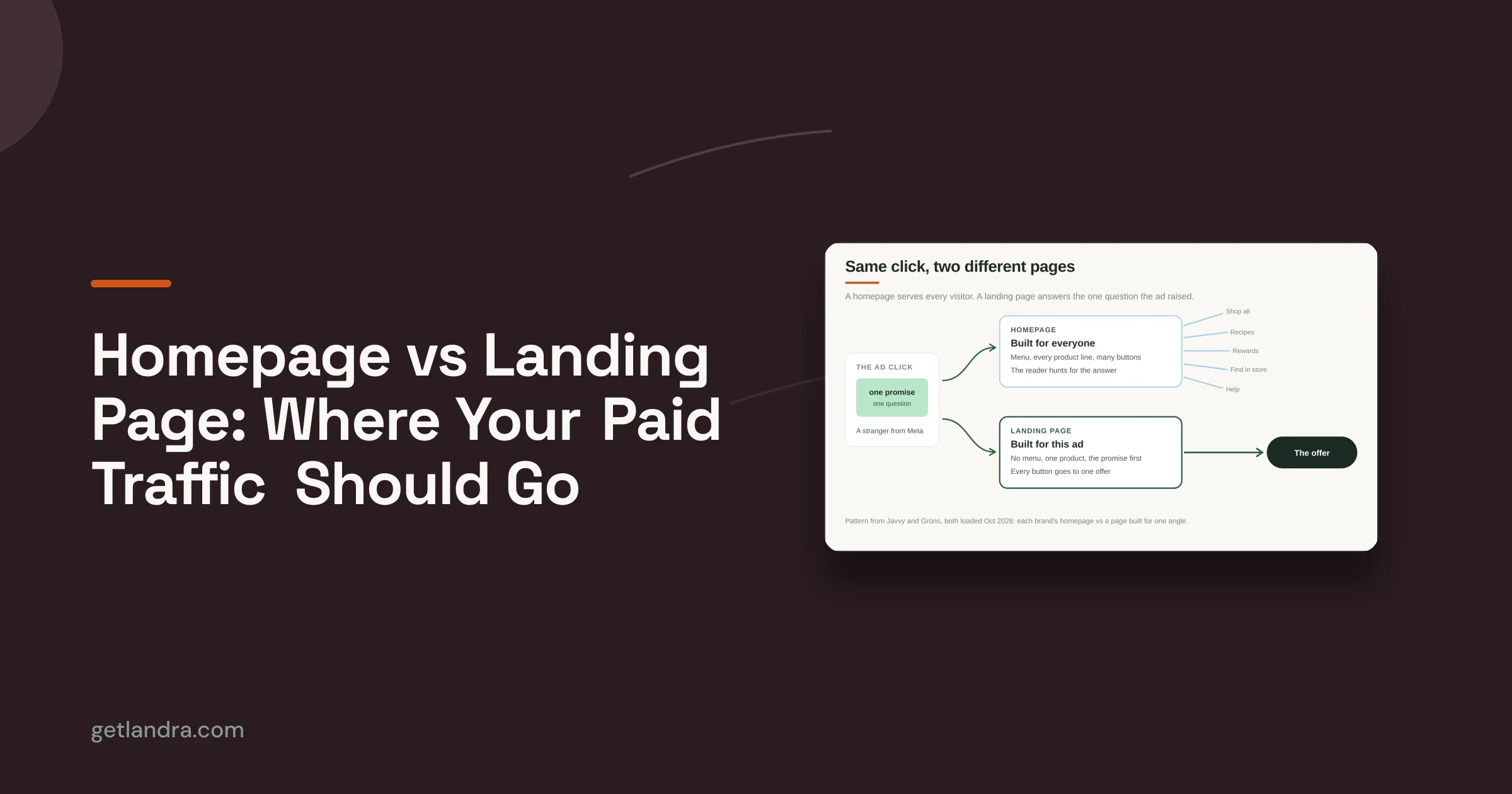
Most contextual strategies break when the brand buys relevant placements, then runs a generic ad, then sends the click to a product page that ignores the reason the person clicked in the first place.
That isn't contextual strategy. It's contextual media with disconnected conversion assets.
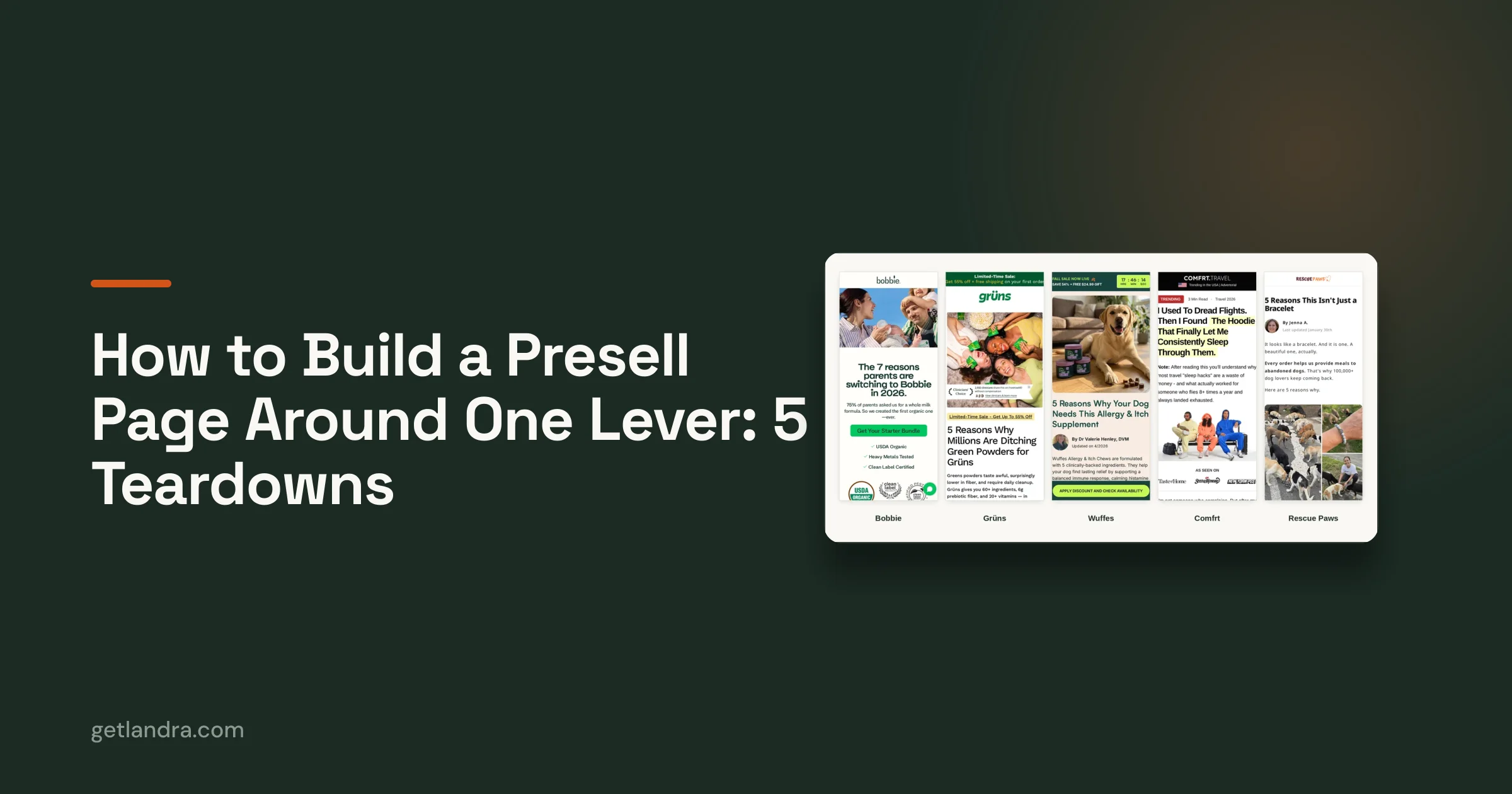
There's a documented Creative-Context Sync gap in most approaches. When cold traffic is sent to generic product pages, performance suffers. Pre-sell pages such as advertorials that align the ad promise with the contextual mindset can deliver 2 to 3 times higher conversion rates, according to MGID's write-up on contextual targeting and aligned pre-sell pages.
The real job of contextual creative
A contextual campaign shouldn't just match topic. It should match intent cluster.
A page about “best protein sources for recovery” signals a different mindset than a page about “why your workouts stall after week six.” Both may fit the same product category. They should not receive the same ad angle.
Think in clusters like these:
Research mode
The shopper wants explanation, comparison, or proof. Ad copy should promise clarity. Landing pages should feel editorial and structured.Problem-aware mode
The shopper feels friction and wants relief. Ads should name the issue cleanly. Landing pages should diagnose before they sell.Decision-near mode
The shopper is evaluating options. Ads should sharpen the differentiator. Landing pages should reduce hesitation, not restart the education.
If the ad says “learn why this works,” the landing page can't open like a storefront shelf tag.
A workable DTC framework
Instead of building one campaign per product, build one campaign around a product category with multiple narrative paths.
| Context cluster | Ad angle | Best landing page style |
|---|---|---|
| Educational article | Explain the mechanism | Advertorial |
| Comparison or review content | Frame the product against alternatives | Listicle or comparison page |
| Problem-focused content | Lead with symptom or frustration | Narrative pre-sell page |
| Routine and lifestyle content | Position the product as part of a habit | Soft-sell editorial page |
The key is continuity. The click should feel like the next sentence, not a hard reset.
What usually fails
Three patterns show up again and again:
Broad contextual categories with one universal ad
The targeting might be decent, but the message is too flat to capitalize on the context.Strong ad, weak destination
The ad mirrors the article well, then the landing page drops the visitor onto a cluttered PDP with no narrative bridge.Too many creative variants without a system
Teams produce angles randomly, without naming context clusters or defining what each page is supposed to do.
A simple operational fix is to create a matrix before launch. List your top contextual environments, assign one message angle to each, and choose the landing page structure intentionally. If you need help thinking through editorial-style pages, this breakdown of how to write an advertorial is a useful reference for matching persuasion style to traffic temperature.
What works better in practice
The best-performing contextual flows usually feel obvious in hindsight. The page context attracts the click. The ad acknowledges that context. The landing page extends the same idea with more proof, more framing, and fewer distractions.
That's why DTC brands should stop treating contextual targeting advertising as a placement tactic. It's really a sequencing tactic. The placement starts the conversation. The ad continues it. The landing page closes it.
Measuring Contextual ROI in a Privacy-First World
The hard question isn't whether contextual can drive results. It's whether your team can prove it without leaning on user-level identity. That's where many programs stall.
A documented test showed a 46% CAC reduction when ads were routed to a narrative pre-sell page instead of a product page, according to Consult TV's discussion of contextual-era measurement and pre-sell alignment. The tactic mirrors contextual alignment well. The challenge is attribution. You need a way to show that the lift came from the context and the narrative fit, not random noise.

What to measure instead of chasing perfect identity
Privacy-first measurement works better when you evaluate performance in layers.
Placement quality first
Look at content match, suitability, and whether the traffic comes from the contextual segments you intended to buy.Engagement next
Review how different contextual segments influence ad interaction and on-site behavior.Conversion outcomes after that
Compare aggregate conversion rates by context cluster, creative variant, and landing page type.Business impact last
Use lift testing, holdouts, or geo-based experiments where practical to estimate incrementality.
A practical measurement model
Don't ask one dashboard to do everything. Use a stack of methods.
| Method | What it helps answer |
|---|---|
| Aggregated reporting | Which contextual segments and creative paths are producing the strongest on-site actions |
| Holdout testing | Whether contextual exposure is creating lift beyond baseline demand |
| Geo or market splits | Whether results persist outside platform-reported attribution |
| Page-level analysis | Whether the landing page narrative is amplifying or wasting the contextual click |
A calculator won't solve attribution, but it does help pressure-test assumptions before you scale spend. This conversion rate calculator for ecommerce landing pages is useful when you want to model what different conversion scenarios mean for acquisition economics.
Better contextual measurement starts with cleaner campaign design. If contexts, creatives, and landing pages are all mixed together, you can't tell what caused the result.
The reporting habit that makes this workable
Name everything with intent. Your campaign structure should reveal the contextual segment, the creative angle, and the destination type. If a report can't tell you whether “research content + proof-led ad + advertorial” beat “problem-aware content + symptom-led ad + PDP,” the setup is too messy.
That level of structure matters more than perfect attribution. Advertising operations don't need omniscience. They need enough clarity to know what to scale, what to cut, and what to rewrite.
Implementation Checklist for DTC Brands
Start with a narrow setup. Broad contextual campaigns usually waste budget because they blur together very different mindsets.
Launch checklist
Define context clusters before you buy media
Don't start with publisher lists. Start with the moments that matter to the product. Research, problem-aware, comparison, routine-building, and review-driven environments are usually easier to work with than broad interest categories.Map one message angle to each cluster
Write ads that reflect the mindset of the page, not just the product category. If the context is educational, lead with explanation. If the context is comparison-heavy, lead with differentiation.Choose the landing page format deliberately
Some contexts deserve an advertorial. Others fit a listicle, comparison page, or softer editorial transition. The page should continue the promise made in the ad.Apply suitability and exclusion rules early
Don't wait for bad placements to show up. Define what environments fit the brand and what environments don't.Structure campaigns for readable reporting
Name campaigns so the context, creative angle, and destination are obvious in reports.Review performance by cluster, not just total campaign
The aggregate number can hide the fact that one contextual segment is carrying the whole account.
Top pitfalls to avoid
Using generic product-page traffic paths
Contextual clicks need message continuity.Buying broad categories with no narrative variation
Relevance at the placement level won't fix flat creative.Treating measurement as an afterthought
If the test design is weak, the learning will be weak too.
Contextual targeting advertising isn't a downgrade from audience targeting. For DTC, it's often a more disciplined way to buy attention. It forces the team to line up media, message, and page experience. That's why it's becoming the default.
If your team wants to turn contextual clicks into stronger pre-sell experiences, Landra helps DTC brands generate advertorials, listicles, and other narrative landing pages from a product URL in minutes. It's built for brands that need faster testing, cleaner message-to-page continuity, and editable mobile-first pages without a long production cycle.