
A Facebook ads landing page is a dedicated page built for one campaign, matched to one ad, with one job. Sending Meta traffic to a homepage or a generic product page is the most common and most expensive shortcut in paid social, because the click was earned by a specific promise and the page either continues that promise or breaks it. This guide covers why the dedicated page wins, what goes on it, the compliance layer Meta enforces, and the fastest way to build one.
Why Facebook ads need a dedicated landing page
Three reasons, and they compound.
- The first is message match. Your ad stopped a scroll with a specific hook, and a page that opens with that same hook in the same vocabulary keeps the momentum, while a homepage restarts the conversation from zero.
- The second is intent. Meta traffic is interruption traffic, colder than search, so the visitor needs context before a price, and product pages assume the opposite.
- The third is Meta's own quality machinery. The platform evaluates the post-click experience as part of ad quality, and pages that load slowly, mislead, or frustrate visitors drag on delivery and cost.
A dedicated page lets you control all three instead of inheriting whatever your site happens to do.
Advertorial and listicle pages for cold traffic
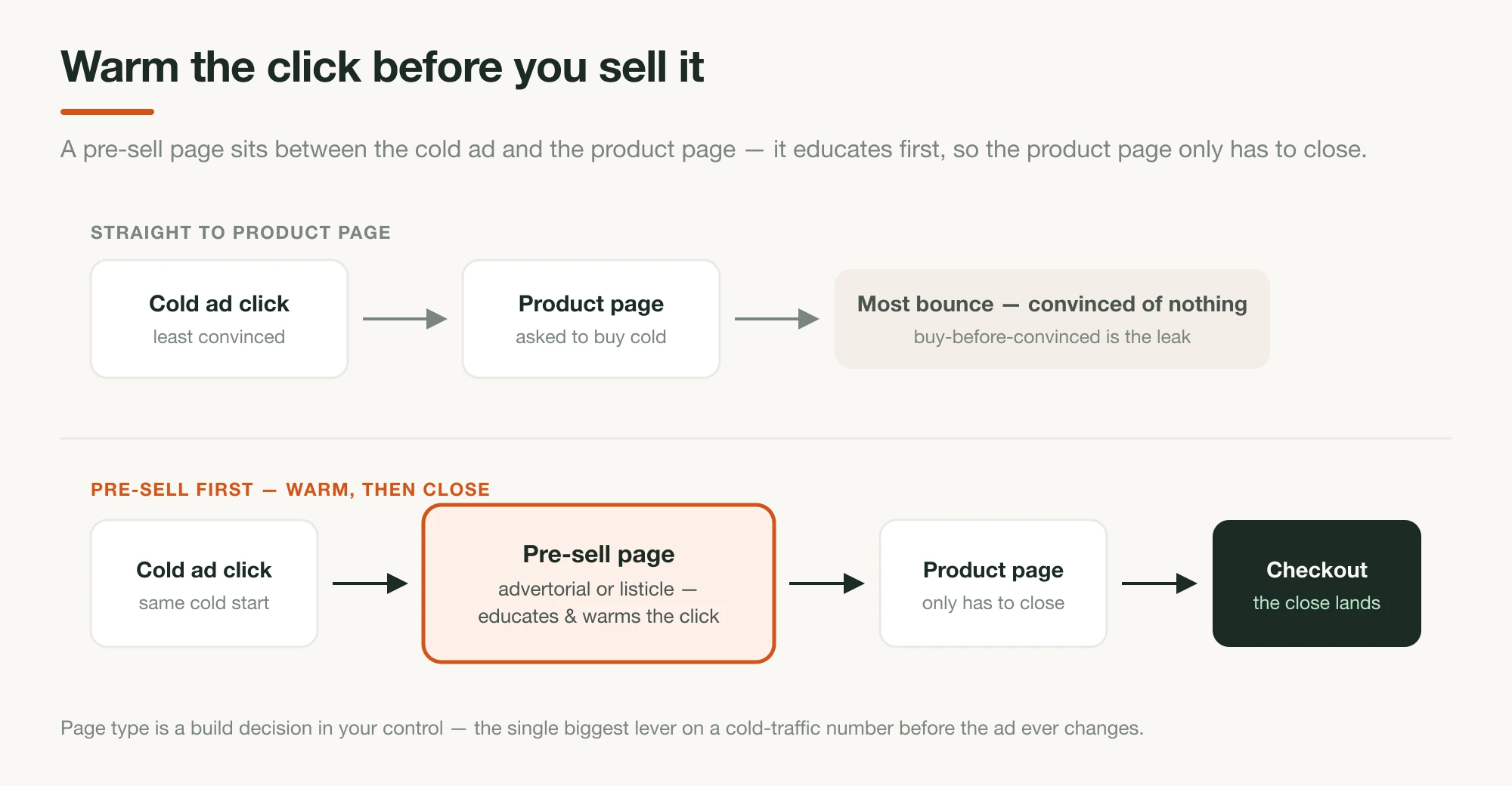
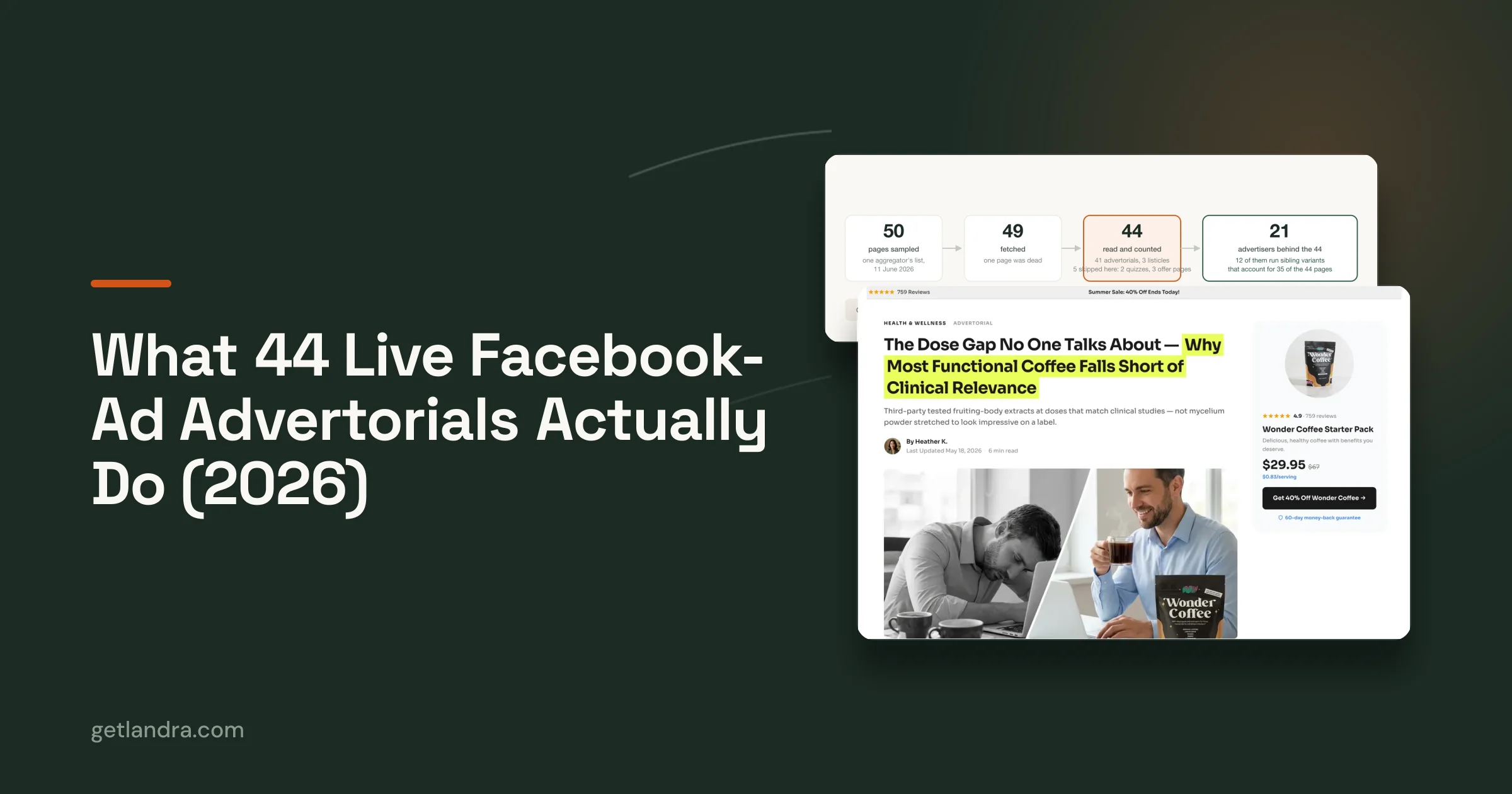
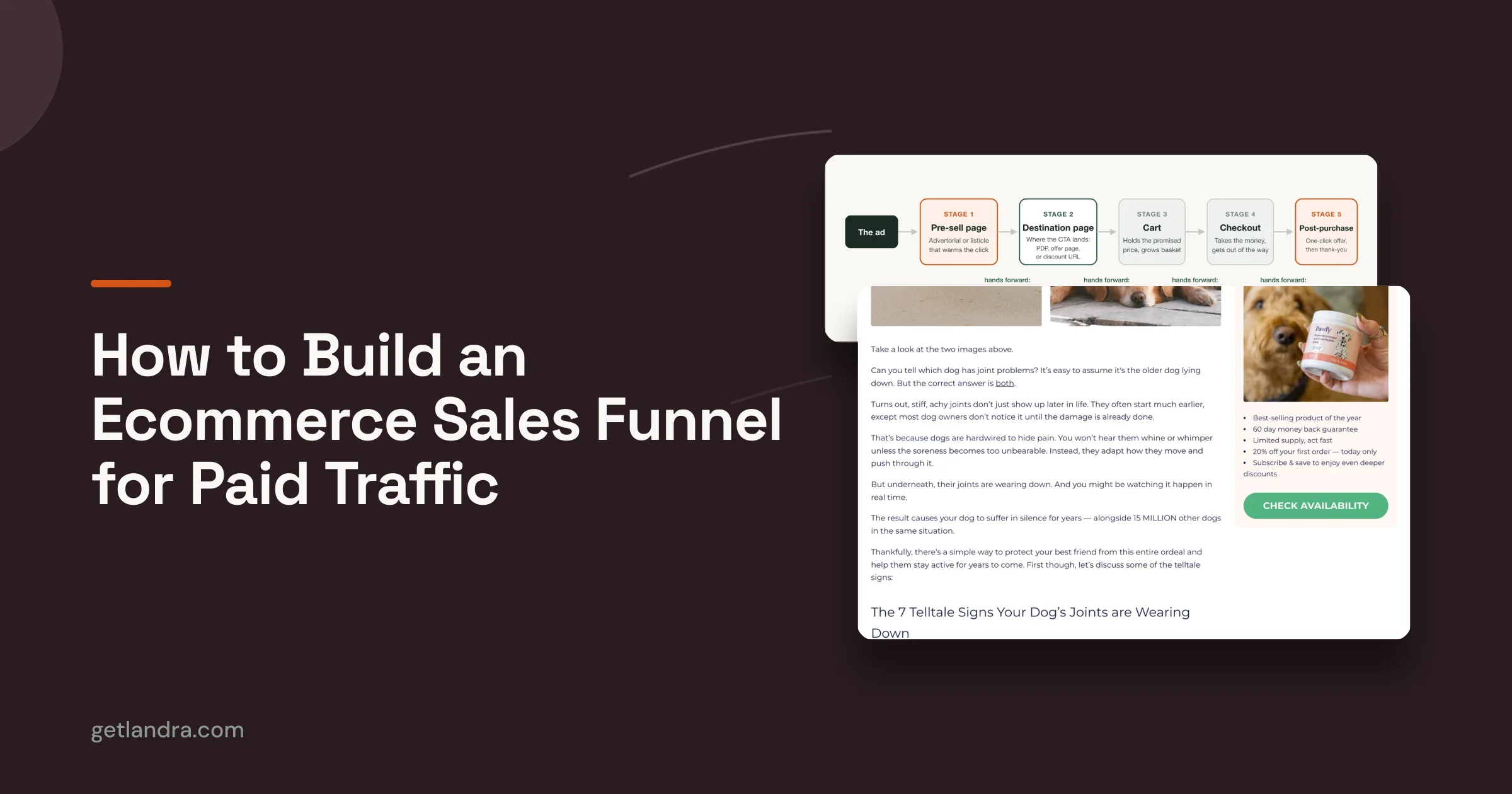
For cold Meta and TikTok audiences, the two page formats with the strongest track record are the advertorial and the listicle. The advertorial reads like an article, opening on the visitor's problem and introducing the product only after the groundwork earns it. The listicle makes the same argument as a numbered rundown, which suits products with several distinct benefits. Both work because they match the visitor's awareness level: someone who clicked out of curiosity gets education before a pitch. Landra's advertorials for paid social overview covers how these formats are tuned specifically for cold Meta and TikTok campaigns, so this guide will stay on the general build.
The anatomy of a high-converting page
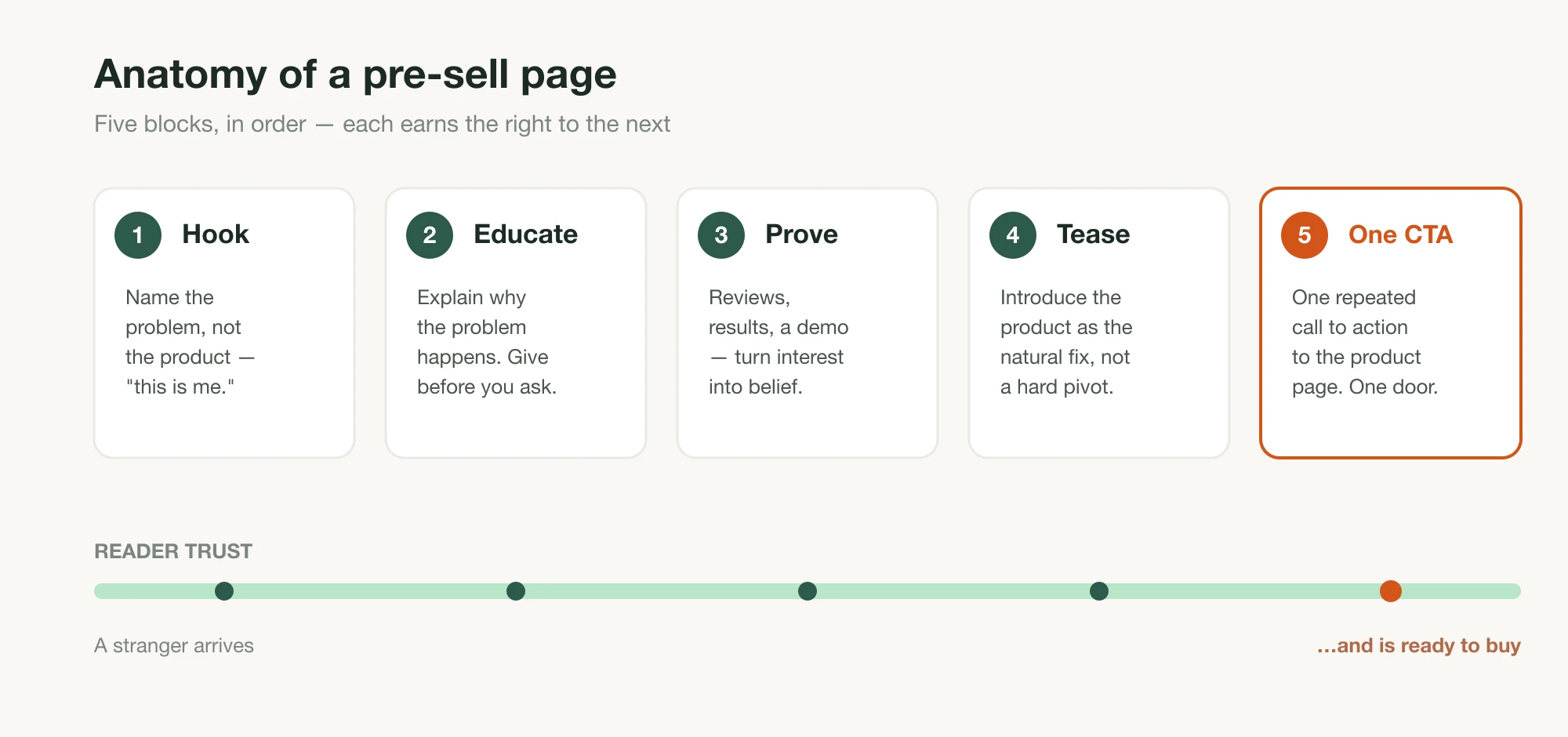
- Design for the phone first, because that is where nearly all Meta traffic arrives, and test the page on mobile data rather than office wifi.
- The headline should restate the ad's hook, close to word for word, since message match is measured in the first two seconds.
- Keep one column, fast-loading images, and text people can actually read.
- Give the page a single call to action and repeat it, with no navigation menu, no footer link farm, and no exits except the offer.
- Stack proof near the decision point: reviews with specifics, ratings, guarantees.
- Keep the measurement honest, with the pixel and Conversions API firing on the events you actually optimize toward, so Meta's delivery system learns from real signals.
Compliance for Meta
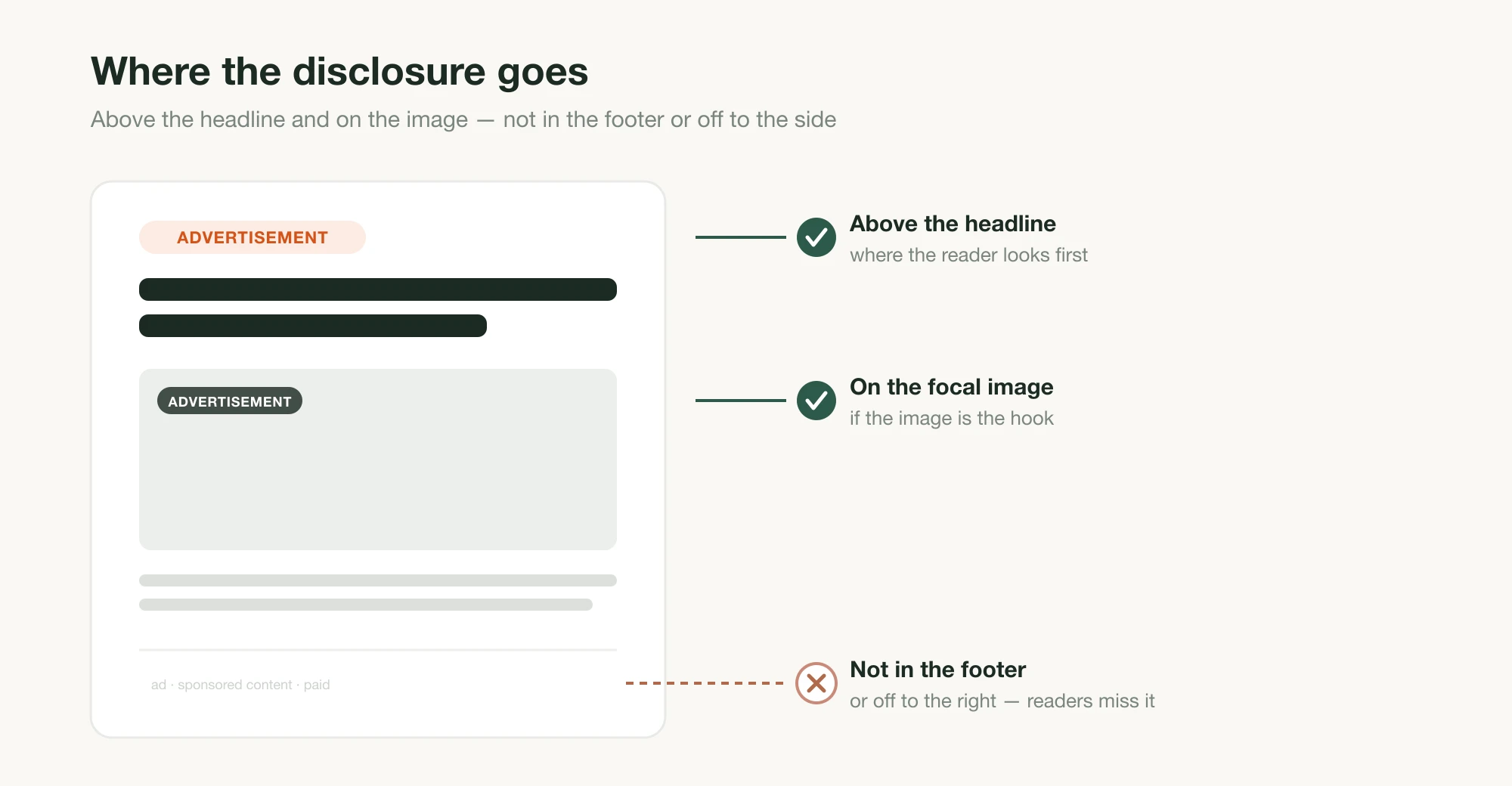
Meta reviews the landing page as part of the ad, so the page can get an ad rejected all by itself. The rules that matter most for DTC pages: the page must function, load, and match what the ad promised, with no bait and switch between claim and content. Health and personal-attribute claims are the fastest route to rejection, so avoid before-and-after overreach and anything implying knowledge of the viewer's condition.
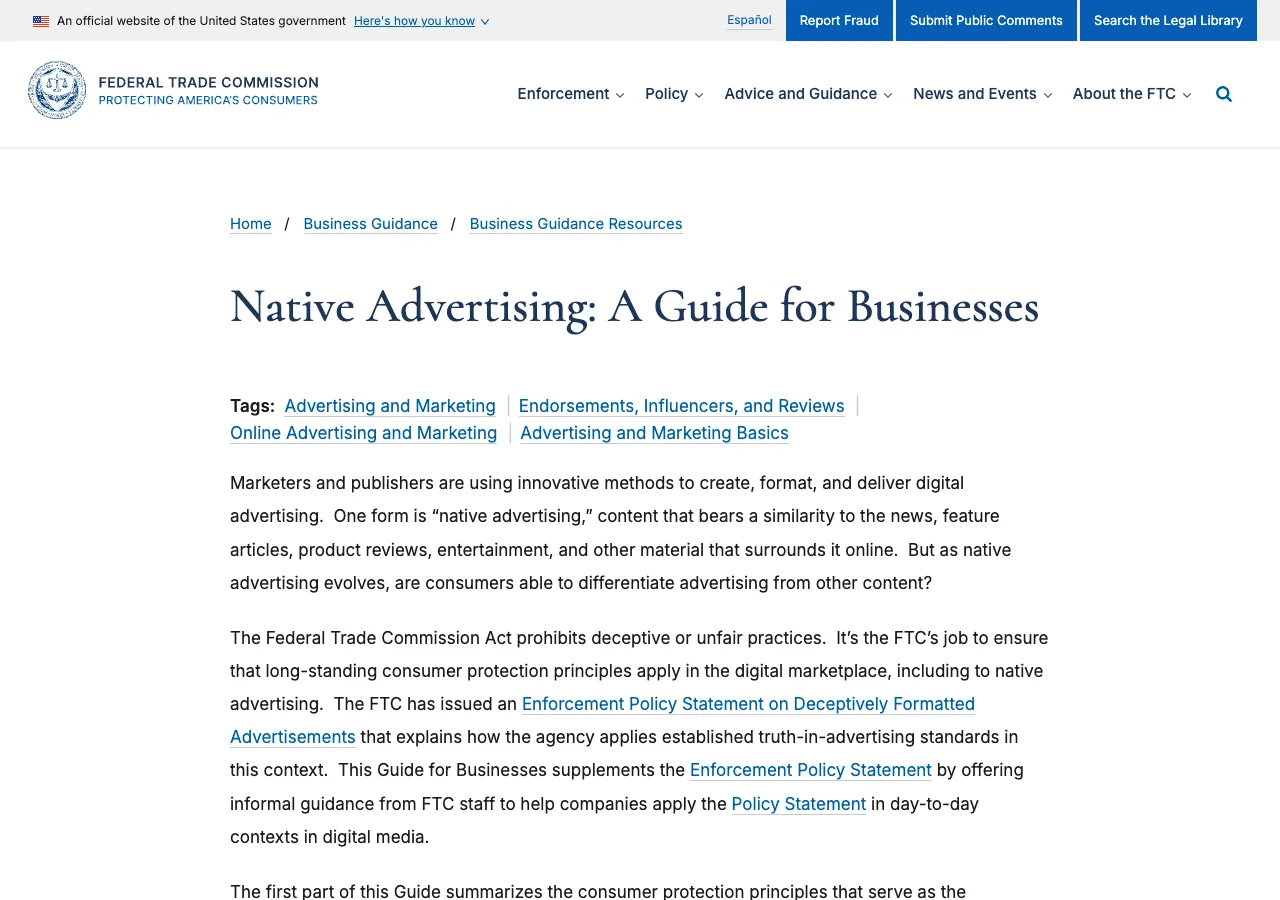
Advertorial-style pages add one more layer, since they are ads formatted as articles: the FTC requires a visible label such as Advertisement at the top, and honest sourcing throughout, with no invented experts or publications.
Running the page through the free advertorial compliance checklist before launch catches most of this in a few minutes.
Building one quickly with AI
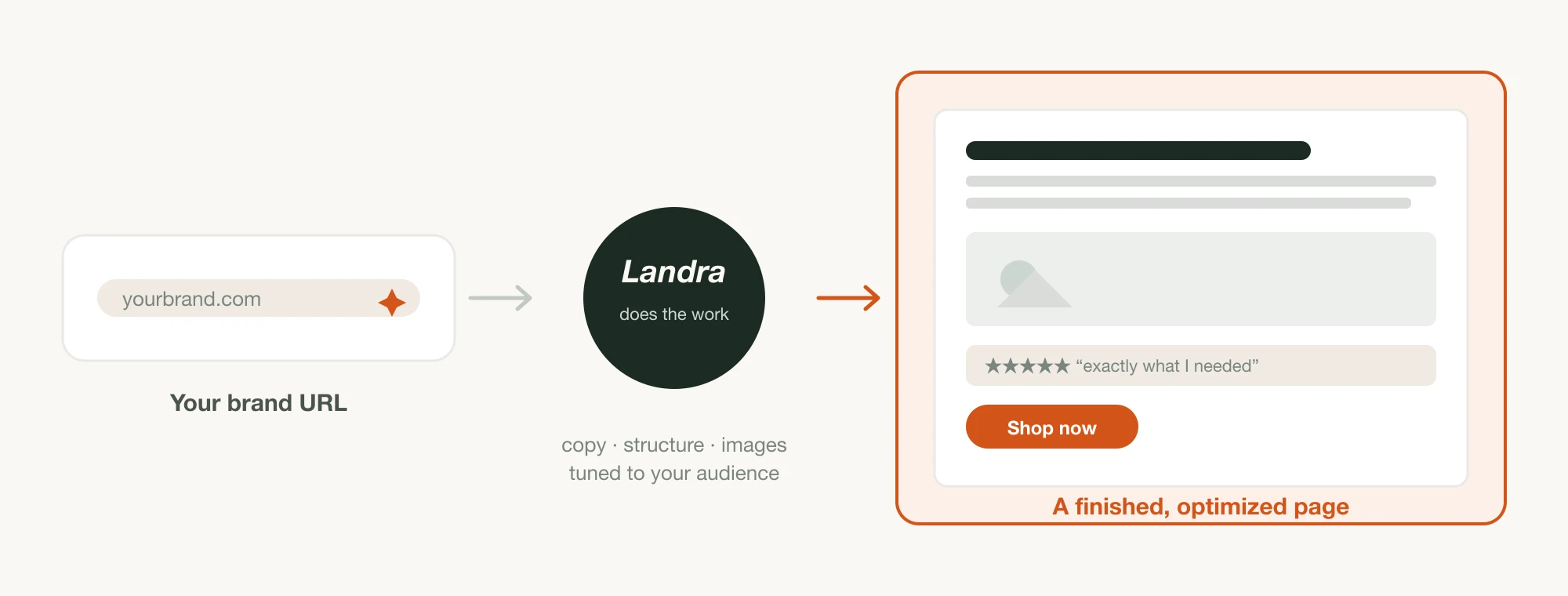
The manual version of everything above is a day or two of work per page, which is why so many campaigns end up pointed at product pages. The compressed version: paste your product URL into Landra's advertorial generator, and it writes the page, builds the mobile-first layout, generates images, places the disclosure, and publishes to Shopify, Webflow, HTML export, or a hosted URL. Everything stays editable inline, so matching the page to a specific ad hook is a headline edit rather than a rebuild. That speed matters strategically on Meta, where creative fatigues quickly and the brands that win are usually the ones testing a new angle while competitors are still in the design queue.
Match your next ad with a page built for it
Before your next campaign launches, give its best hook a page of its own. You can create your first page with Landra free, on the 14-day trial then from $19/mo, publish it in an afternoon, and let it compete with your product page on live Meta traffic.
Frequently asked questions
Can I just send Facebook ads to my homepage?
You can, and it will usually cost you. Homepages serve every visitor and therefore serve none specifically, so the ad's promise dissolves on arrival. A dedicated page matched to the ad almost always converts cold traffic better.
Does landing page speed affect my Facebook ads?
Yes, twice. Slow pages lose visitors before they render, and Meta factors post-click experience into ad quality, which influences delivery and cost. Test on a phone over mobile data before launch.
Do Facebook ad landing pages need a disclosure?
Advertorial and listicle style pages do, since they are ads formatted as content. A visible Advertisement label at the top satisfies the FTC's expectation and keeps the editorial frame honest.
Should I use my product page or an advertorial for cold traffic?
Product pages work for warm audiences that already know you. For cold prospecting, an advertorial or listicle between the ad and the product page gives the visitor the context a product page assumes they already have.
What should the headline of a Facebook ads landing page say?
Whatever the ad said, continued. Message match is the single cheapest conversion lever on the page, and the headline is where the visitor checks, in about two seconds, that they landed in the right place.