

Most advice about lead generation for a marketing agency is backwards. It starts with channels. Run LinkedIn outreach. Launch Google Ads. Publish more content. Send more cold emails.
That sounds practical, but it skips the core problem. Most agencies don't have a traffic problem first. They have a positioning, offer, and conversion problem. More traffic just makes those weaknesses more expensive.
The market already generates plenty of activity. Organizations generate an average of 1,877 leads per month, yet 44% of sales reps are too busy to follow up, which means volume alone doesn't fix pipeline quality or revenue leakage. It also isn't cheap. The mean cost per lead across industries is $198.44, with B2B paid campaigns averaging $310 per lead, according to Exploding Topics' lead generation statistics roundup. If you buy clicks before you build the system behind them, you pay to create clutter.
Strong agency pipelines come from an integrated system. Clear positioning. Tight ICP. Message-match landing pages. Pre-sell assets that warm up cold visitors. Fast routing. Disciplined follow-up. Measured economics. That's what turns attention into conversations worth having.
Table of Contents
- Foundations First Why Most Agency Lead Gen Fails
- Choosing Your Engine The Four Core Acquisition Channels
- From Click to Conversation Designing High-Conversion Assets
- The Art of the Follow-Up Outreach Cadences and Scripts
- Building Your Lead Management Machine
- Measuring What Matters CAC LTV and Scaling Your Wins
- Frequently Asked Questions About Agency Lead Gen
Foundations First Why Most Agency Lead Gen Fails
Agency lead generation fails when activity is confused with strategy. More outreach, more ad spend, and more content do not fix weak positioning. They just spread the weakness across more channels.
The pattern is predictable. A generalist agency pushes traffic to a generic service page, collects a mix of low-fit inquiries, then decides the channel "doesn't work." In practice, the channel often did its job. The core breakdown happened earlier. The agency never made it clear who it serves, what problem it solves, and why the right buyer should care now.
Positioning decides lead quality before any campaign starts
If your agency says it helps "brands grow online," the buyer has to fill in every important blank. Do you work with SaaS or local service businesses? Are you built for a founder-led company or a mature marketing team? Do you solve pipeline problems, conversion problems, or retention problems? Buyers rarely do that work for you.
Specificity filters and attracts at the same time. An agency that helps multi-location clinics increase booked consultations will pull in fewer inquiries than a broad "full-service" firm. Those inquiries are more useful. They convert faster, need less education, and create fewer sales calls that go nowhere.

That clarity changes downstream performance in practical ways:
- Targeting gets tighter. Media spend and prospecting lists focus on accounts with real fit.
- Messaging gets sharper. Ads, emails, and sales pages can address one urgent problem instead of several soft ones.
- Sales friction drops. Prospects arrive with the right expectations about service, budget, and outcomes.
- Qualification gets easier. Bad-fit leads opt out before they consume sales time.
One quick test works well here. If a prospect cannot tell within a few seconds whether your agency is for a company like theirs, the positioning is still too broad.
Weak systems create bad leads long before follow-up starts
A lot of agencies call it a traffic problem because traffic is visible. The harder truth is that poor system design creates bad leads before anyone books a call.
That system has three parts.
| Layer | What it answers | What breaks without it |
|---|---|---|
| Positioning | Why choose you | Generic messaging and price shopping |
| ICP definition | Who should buy | Low-fit leads and poor close rates |
| Process design | What happens next | Slow follow-up and dropped opportunities |
Miss one layer and the rest of the funnel gets expensive. Broad positioning attracts curiosity instead of buying intent. A loose ICP fills the pipeline with companies that can never close. A vague next step turns genuine interest into stalled conversations.
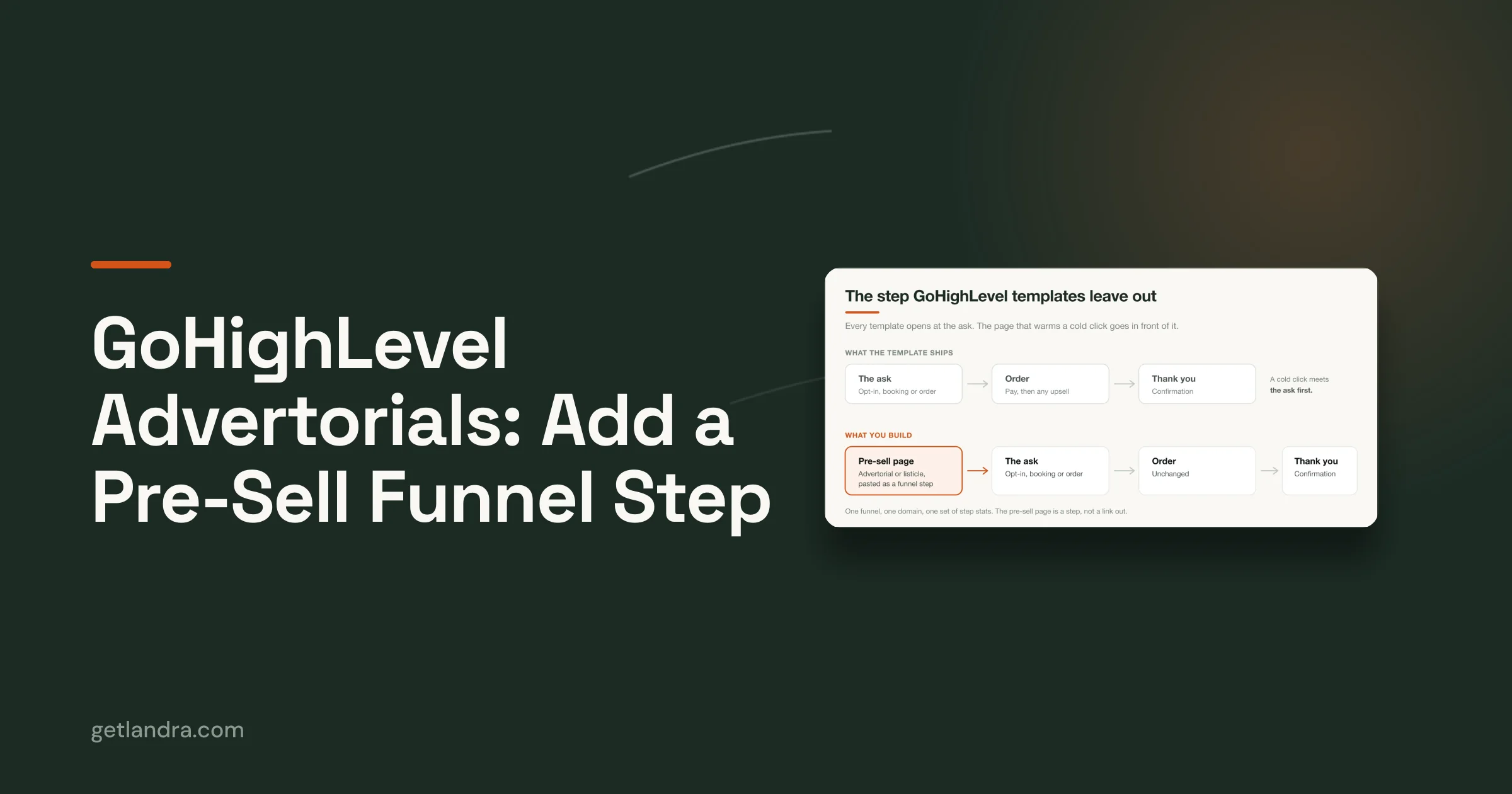
This is why I push agencies to design the funnel before they scale the channel. A simple qualification path, a clear promise, and the right pre-sell step will outperform a prettier campaign aimed at the wrong audience. If your team needs a starting structure, these sales funnel templates for lead qualification and conversion flow are useful for mapping what should happen before and after the inquiry.
High-volume lead gen is often a symptom of weak filtering
More leads can mean stronger demand. It can also mean your message is too loose.
Broad offers attract broad response. An agency promoting SEO, PPC, social, web design, branding, and automation to "any business that wants growth" will usually get attention from the wrong mix of companies. Some are too small. Some need a different service. Some want cheap execution, not strategic help. The sales team then burns time sorting noise from opportunity.
High-quality lead gen works differently. It uses positioning, offer design, and conversion assets to pre-qualify before the call. A strong pre-sell page should answer four things fast: who this is for, what problem it solves, what outcome is realistic, and what the next step looks like. That approach lowers lead volume in many cases. It also improves close rate, sales efficiency, and client fit.
Document the basics before you add another channel
Before you spend more on acquisition, write down four items and make the team use them:
- Best-fit client profile. Industry, company size, urgency, buying authority, and signs they can implement.
- Core pain point. One expensive problem you solve better than the alternatives they are considering.
- Offer structure. Audit, strategy sprint, pilot, or managed service. Pick the entry point that matches buyer risk tolerance.
- Disqualifiers. Budget mismatch, weak internal owner, poor timing, unrealistic expectations, or a business model you should not serve.
This work is less exciting than launching campaigns. It is also where good lead generation starts. Agencies that skip it stay busy and call that momentum. Agencies that do it build an acquisition system where every channel pulls toward the same kind of client.
Choosing Your Engine The Four Core Acquisition Channels
Agencies usually stall because they treat channels like collectibles. They add SEO, paid social, outbound, and partnerships all at once, then wonder why none of them produce consistent pipeline. A better approach is simpler. Choose one primary acquisition engine that matches your sales motion, then add a second channel that offsets its weaknesses.

Volume is the wrong goal here. The job is to create a repeatable path to qualified conversations with buyers who already understand why your agency is relevant. That only happens when the channel, the offer, and the conversion path fit together.
Content and SEO
Content and SEO suit agencies that already know what they want to be known for. If positioning is sharp, this channel compounds. Strong service pages, comparison pages, category education, and opinionated articles can attract prospects who are already problem aware and actively evaluating options.
It is slower than paid traffic and less direct than outbound. It also tends to produce better-informed leads because the prospect has consumed your thinking before the first call.
A common mistake is publishing broad educational content with no commercial angle. Traffic goes up. Pipeline does not. The fix is to build content around buying moments, not just keywords. "Agency vs freelancer," "how to choose a partner," "cost of fixing X problem," and "why Y approach fails for Z company type" usually outperform generic how-to posts for agencies selling strategic services.
Paid social
Paid social buys speed. It also charges tuition fast.
Use it when three things are already true: you know your ideal buyer, you have a clear point of view, and you can send clicks to a page built for one audience and one action. If any of those pieces are missing, paid social becomes an expensive diagnostic tool.
For B2B agencies, LinkedIn is often the obvious test bed because the targeting maps cleanly to job title, company size, and industry. That does not make it the default choice. High click costs punish weak offers. Broad targeting fills calendars with curious people who will never buy. Paid social works best for narrow offers, higher contract values, and teams that can test creative, audience, and landing-page angles every week instead of every quarter.
Cold outreach
Cold outreach gives fast market feedback. It also exposes sloppy positioning faster than any dashboard will.
If replies are low, the problem usually is not "outbound is dead." It is one of four issues: the list is wrong, the problem is not urgent, the message sounds like every other agency, or the ask creates too much friction. Outreach still works, but it works best when it is tightly segmented and tied to a real business trigger such as a hiring push, a pricing change, a new funding round, weak search visibility, poor conversion paths, or obvious gaps in paid acquisition.
The trade-off is operational. Good outreach needs list quality, account research, disciplined follow-up, and fast qualification. Agencies that try to automate all of it usually get low reply quality and burned domains. Founder-led or strategist-led outreach often performs better early on because the message carries real judgment instead of generic personalization.
Partnerships and referrals
Partnerships produce fewer leads on paper and better leads in practice. A strong introduction from a web development firm, CRM consultant, RevOps partner, or niche advisor can outperform a month of ad spend because trust is transferred before the first meeting.
This channel is harder to force. It depends on clarity. Partners refer agencies they can describe in one sentence and trust to protect their reputation.
That is why vague positioning kills referral growth. If a partner cannot quickly understand who you help, what problem you solve, and when to introduce you, referrals stay occasional instead of predictable.
How to choose without spreading yourself thin
Use stage, proof, and deal economics to pick your engine.
- New agency, limited proof, founder still selling. Start with cold outreach and relationship-driven referrals. You need direct buyer conversations and sharp feedback.
- Agency with a clear niche and case studies. Build content and SEO around high-intent topics that support evaluation, not just awareness.
- Agency with a validated offer and room to test budget. Add paid social after the landing experience is built for a single audience and offer.
- Agency with adjacent specialists already serving your ICP. Put real effort into partnerships. For some agencies, this becomes the highest-quality channel in the mix.
One practical rule helps here. Do not add a new channel until the current one has a clear message, a clear conversion asset, and a clear follow-up path. If you need a simple way to map those handoffs, these sales funnel templates for lead capture and conversion are a useful planning reference.
The winning setup is rarely four channels running at once. It is usually one channel that creates demand now, plus one channel that compounds trust over time.
From Click to Conversation Designing High-Conversion Assets
Most agencies lose deals before sales ever gets a chance. The leak happens between the click and the conversation. Traffic arrives from an ad, an email, or a LinkedIn message, then gets dumped onto a homepage that tries to say everything to everyone.
That handoff kills intent.

Why homepages waste expensive intent
A homepage has too many jobs. It has to introduce the brand, explain services, support navigation, reassure existing clients, help recruitment, and answer broad questions. A campaign click has one job. Convert a motivated stranger into the next sensible step.
When agencies send paid or outbound traffic to a general website, they create friction right after earning attention. The message the prospect clicked on disappears. The page asks them to figure out relevance on their own. That break in continuity is one of the most common reasons campaigns underperform.
A major pitfall is landing page misalignment, where ad messaging doesn't match the page content. Using A/B testing platforms to optimize headlines and form lengths for pages targeted with high-intent keywords is a critical technical step to improve conversions, according to Unbounce's guide to lead generation for marketing agencies.
If your ad promises a free audit and the click lands on a services overview, the visitor doesn't think, "This agency has multiple capabilities." They think, "This isn't what I clicked for."
What a conversion asset must do
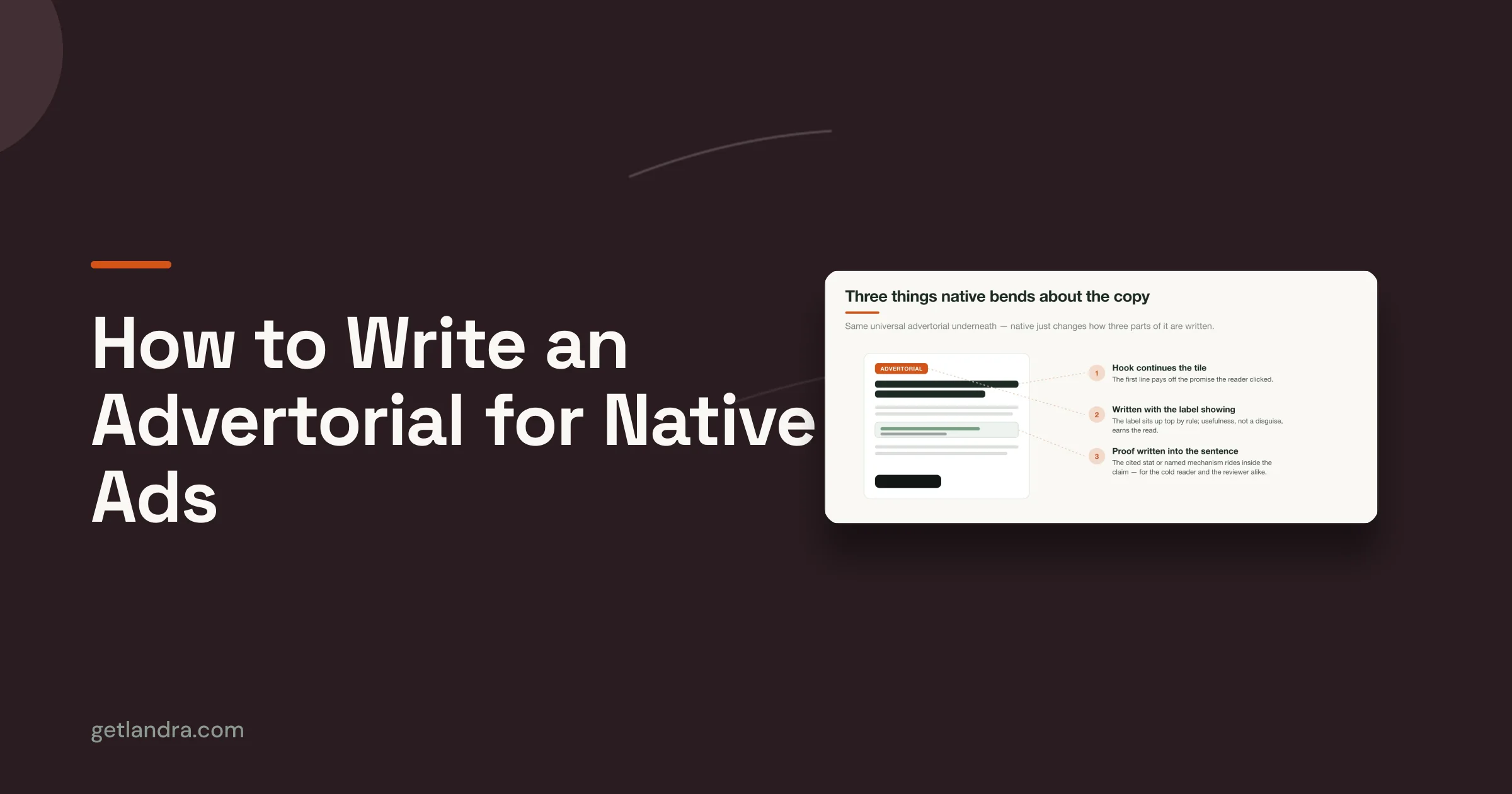
A conversion asset isn't just a prettier page. It has a specific job in the funnel. It needs to continue the conversation started by the click, lower resistance, and make the next action feel logical.
For agency lead generation, strong conversion assets usually do five things well:
- Carry forward the original promise. Same pain point, same angle, same offer.
- Frame the problem clearly. Show the visitor you understand the issue behind the click.
- Introduce proof in the right order. Not a giant brag wall. Relevant examples, process snapshots, or before-and-after contrasts.
- Reduce cognitive load. One page, one audience, one action.
- Pre-qualify softly. Give enough specificity that low-fit visitors opt out before sales spends time.
If you're weighing the strategic role of a campaign page versus a general site, this breakdown of a landing page vs website is useful because it highlights why each asset should do different work.
Pre-sell pages work because they change the temperature of the click
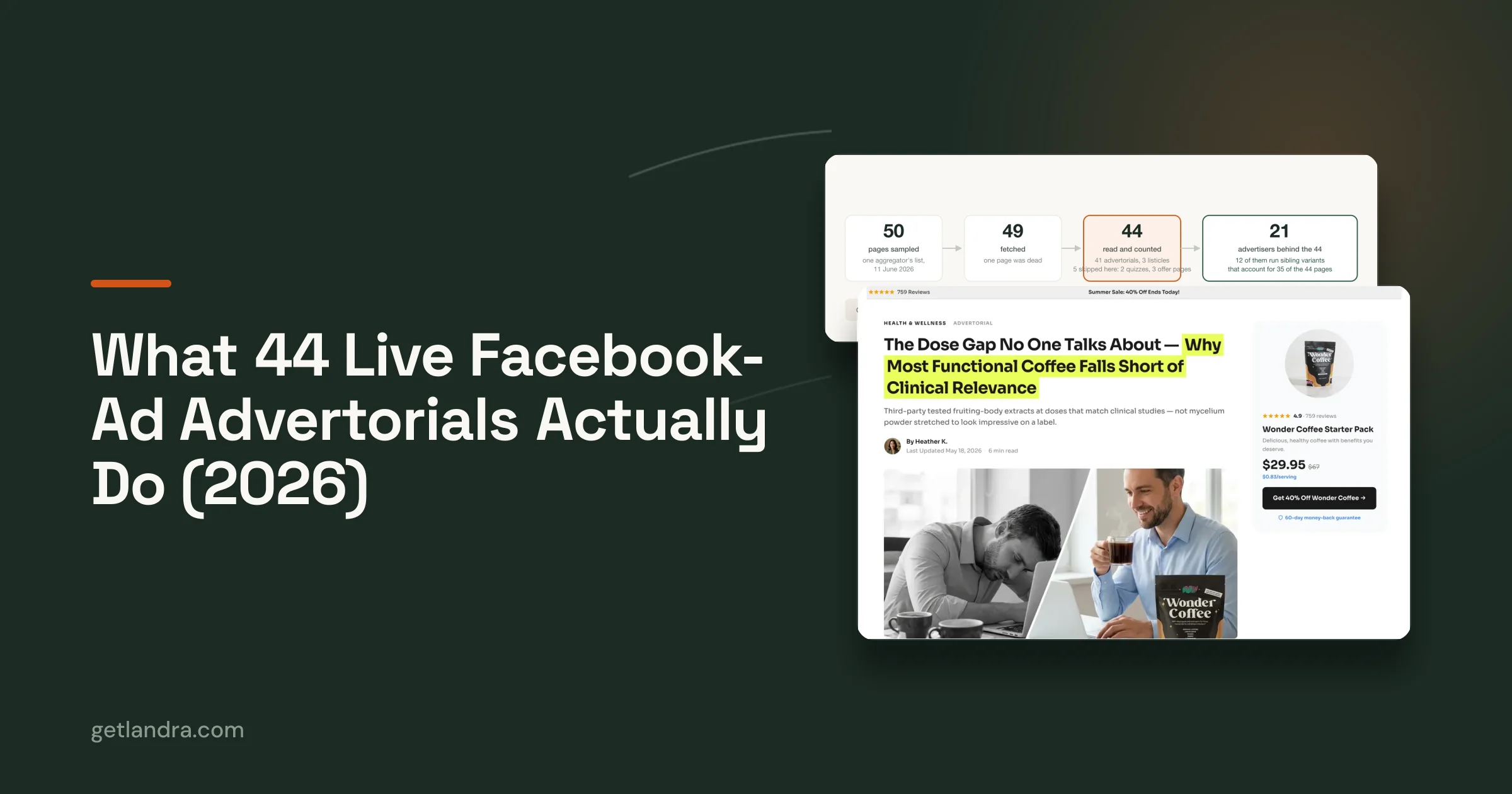
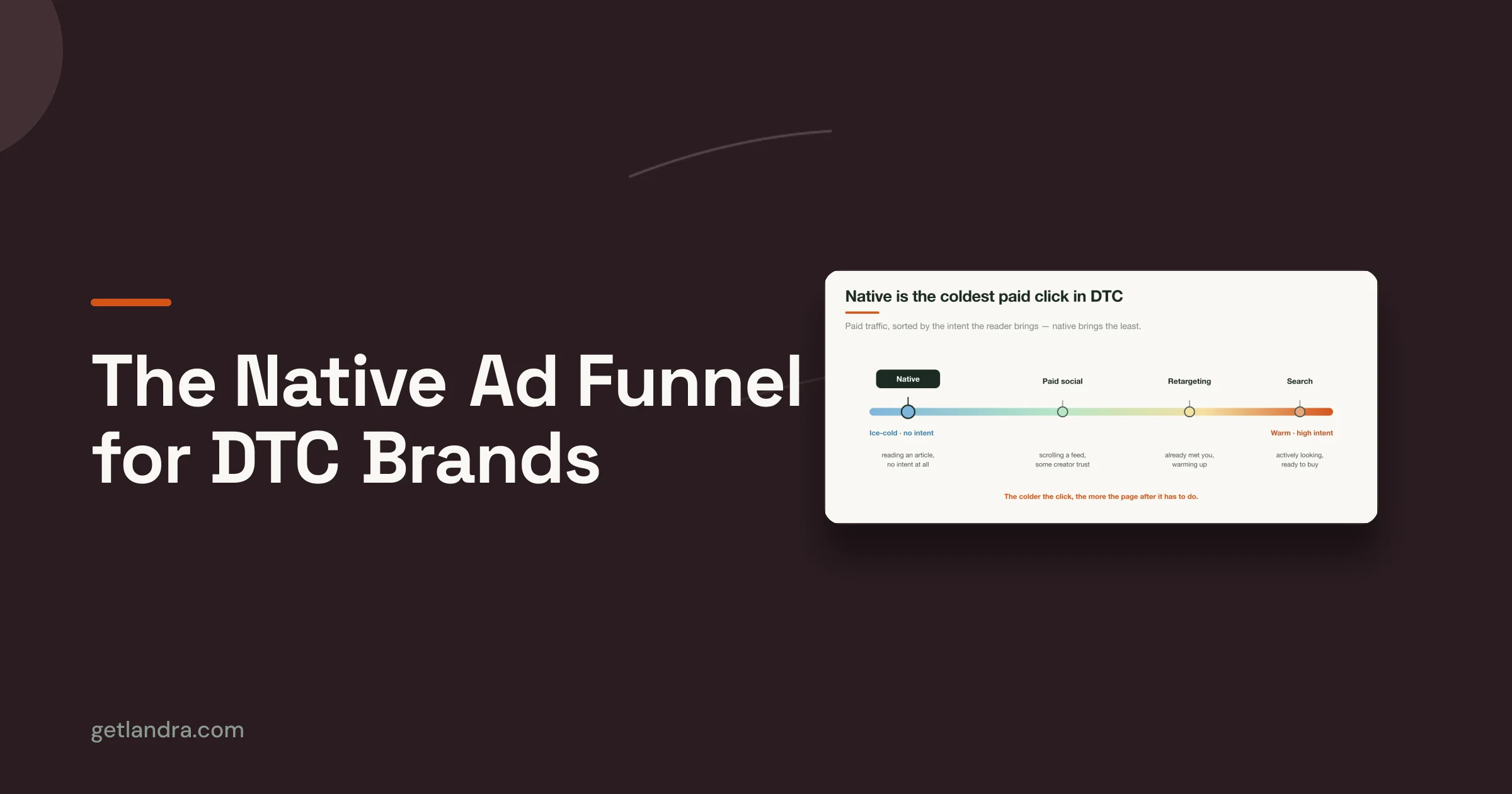
Cold traffic rarely converts because it lacks context, not because the audience is always wrong. That's where pre-sell pages matter. Instead of asking for a call too early, they educate, frame, and persuade before the main conversion ask.
Pre-sell formats can take different shapes:
- Editorial-style pages. These read more like analysis than promotion. Good for surfacing a hidden problem or reframing a poor assumption.
- Listicles and comparison pages. Useful when buyers are evaluating categories, approaches, or provider types.
- Problem-solution pages. Best when the pain is obvious and urgency is already present.
- Assessment-led pages. Strong when qualification matters more than raw form fills.
The key isn't format. It's sequencing. Cold visitors need to understand why the problem matters, why your approach is credible, and why the next step is worth their time.
Here's a useful format to study in action before you build your own pages:
A practical asset stack for agencies
You don't need dozens of assets. You need the right few.
| Funnel moment | Asset type | Best use |
|---|---|---|
| Cold paid traffic | Pre-sell page | Warm up low-awareness visitors |
| High-intent search | PPC landing page | Match keyword and offer tightly |
| Outbound follow-up | Mini case page or audit page | Support relevance after first touch |
| Mid-funnel nurture | Webinar replay, checklist, teardown | Build trust without forcing a meeting |
| Bottom-funnel | Booking page with proof and qualification | Help serious buyers self-select |
The strongest agencies build assets that mirror buyer intent, not internal org charts. Prospects don't care that you have six departments. They care whether this page helps them understand their problem and make the next decision.
The Art of the Follow-Up Outreach Cadences and Scripts
A lead isn't a meeting. A meeting isn't a qualified opportunity. The gap between those steps is where most agencies either annoy prospects or disappear too early.
The better approach is a cadence built around useful touches. Each follow-up should add context, not repeat the same ask in slightly different wording.
A value-first cadence that doesn't feel like spam
A clean cadence mixes channels because buyers don't all respond in the same place. Some reply by email. Some notice you on LinkedIn first. Some ignore the first few touches and answer when you finally say something specific enough to matter.
Use a sequence like this:
| Day | Channel | Action |
|---|---|---|
| 1 | Send a short note tied to a specific problem or trigger | |
| 2 | View profile and engage with a recent post if relevant | |
| 4 | Follow up with one useful observation or missed opportunity | |
| 6 | Send a connection request with a non-pitch note | |
| 8 | Share a relevant resource, teardown, or brief point of view | |
| 11 | Message after connection, ask a contextual question | |
| 14 | Close the loop politely with a low-pressure final note |
That structure works because it feels like professional persistence, not automation theater.
Buyers don't mind follow-up. They mind follow-up that creates no new value.
A few rules make this cadence better:
- Keep the ask small. Ask for perspective, not a long demo.
- Change the angle. Don't resend the first message with "just bumping this."
- Use observations, not slogans. Specificity earns replies.
- Stop when the signal is clear. Silence after multiple useful touches usually means timing or fit isn't there.
Scripts you can adapt immediately
Cold prospecting email
Subject: Quick thought on your acquisition flow
Hi [Name], I noticed your team is pushing traffic to a broad services page for a very specific offer. That usually creates drop-off because the click promise and the page don't match.
We help agencies tighten that handoff so the first conversion step feels more relevant and easier to act on. If useful, I can send a short teardown with the friction points I'd fix first.
LinkedIn connection request
Hi [Name], saw your recent post on pipeline growth. Strong point about quality beating raw lead volume. Thought it made sense to connect.
Follow-up after content download or webinar
Hi [Name], thanks for checking out the resource. One question often tells me whether the next step is worth it: are you trying to improve lead volume, lead quality, or follow-up speed first? Each one needs a different fix.
Re-engagement for an old lead
Hi [Name], circling back because these conversations often stall when the timing is wrong, not because the issue goes away. If this is still on your radar, reply with the main blocker and I'll point you in the right direction, even if that doesn't lead to a call.
Notice what's missing. No fake urgency. No chest-thumping. No "just following up." Strong outreach sounds like a competent operator trying to be useful.
Building Your Lead Management Machine
Lead gen rarely breaks at the top of funnel. It breaks in the handoff.
Agencies spend weeks tuning offers, landing pages, and outreach. Then a qualified inquiry waits six hours for a reply, gets logged under the wrong pipeline, or lands with an account executive who has no context. The result is predictable. Good leads feel cold by the time someone finally picks them up, and the team blames channel quality instead of the operating system behind it.

Use a simple pipeline before you buy more tools
HubSpot, Pipedrive, Close, or another lightweight CRM is usually enough. The tool matters less than whether every lead has a clear status, a clear owner, and a clear next action.
Start with stages like these:
| Stage | Meaning | Owner action |
|---|---|---|
| New | Lead entered system | Assign owner immediately |
| Contacted | First response sent | Schedule next task |
| Qualified | Fit confirmed | Collect need, budget, timing, authority |
| Meeting set | Call booked | Prep context before call |
| Proposal | Scope under review | Track objections and next step |
| Closed won or lost | Outcome recorded | Capture reasons and source quality |
This setup does more than organize records. It shows where revenue leaks. If leads pile up in Contacted, speed or follow-up discipline is the issue. If they reach Qualified but stall before meetings, the problem is often weaker than the team wants to admit: bad positioning, a vague next step, or a poor match between the inquiry and the sales conversation.
Score leads for prioritization, not for decoration
Lead scoring gets bloated fast. Agencies do not need a 40-field model that nobody trusts. They need a simple way to decide who gets a fast, personalized response and who goes into nurture until intent is clearer.
Score on four things:
- Firmographic fit. Industry, company type, service alignment, geography if it affects delivery.
- Commercial fit. Budget range, contract potential, urgency, sales cycle reality.
- Behavioral signal. Demo request, audit request, repeat visits to offer pages, detailed replies.
- Authority signal. Founder, owner, marketing lead, or another stakeholder tied to spend.
That is enough to make better routing decisions.
The form itself also affects score quality. Agencies that ask vague questions get vague leads. Agencies that ask one or two sharp qualifying questions can filter out poor-fit inquiries before sales ever touches them. If you're tightening that first conversion step, this breakdown of sign-up page structure and conversion basics is a useful reference.
Automation should protect speed and consistency
Automation works best when it removes delay and admin work. It fails when teams use it to avoid judgment.
Useful automations are boring by design:
- Instant assignment. Route new leads by service line, source, territory, or account owner.
- Task creation. Every stage change creates the next follow-up task automatically.
- Reminder logic. If a lead sits untouched, the system flags it before it goes stale.
- Nurture branching. Lower-intent leads get relevant content and check-ins without clogging the active sales queue.
- Context capture. Push form answers, page history, and source notes into the record so the first reply does not sound blind.
That last point matters more than many teams realize. A lead management machine should not just move records. It should preserve context from click to conversation. If someone came through a niche service page, requested a teardown, and answered a qualification question with a clear pain point, the rep should see all of that before replying.
Set operating rules your team can actually follow
Process breaks when it lives in a slide deck instead of the CRM.
Set a few hard rules:
- Every new lead gets an owner immediately.
- Every open opportunity has a scheduled next action.
- No stage allows a lead to sit without a timestamped follow-up task.
- Closed-lost records require a reason code.
- Disqualified leads get tagged by cause, not dumped into a generic bucket.
These rules sound basic because they are. They also separate agencies with a usable pipeline from agencies with a messy contact database and a lot of opinions.
A CRM should force decisions. If it only stores names and notes, it is not managing leads. It is archiving them.
One final trade-off is worth being direct about. More automation creates speed, but too much automation can flatten nuance. High-value agency leads often need a human response that reflects their source, problem, and buying stage. Use the system to make that response faster and sharper, not generic.
Measuring What Matters CAC LTV and Scaling Your Wins
Agencies rarely have a lead problem. They have a measurement problem.
A full pipeline can hide weak positioning, low-intent traffic, and expensive channels that never produce durable clients. The agencies that scale profitably track client economics and conversion quality, not just inquiry volume.
What to measure if you want better clients, not just more leads
Raw lead count has limited value. A contact form submission from a poor-fit buyer still consumes sales time, follow-up effort, and forecasting attention. A smaller flow of qualified leads from the right niche usually produces better margins and a more stable pipeline.
That is why channel reporting needs to go past top-of-funnel activity. Measure the points where quality shows up.
- CAC. Total sales and marketing cost divided by new clients won.
- LTV. The revenue a client produces across the relationship. Some agencies also subtract delivery costs for a stricter view of account value.
- Conversion rate by channel and stage. Track how each source turns into meetings, qualified opportunities, proposals, and closed business.
- Speed to first meaningful contact. Fast response matters, but speed only helps if the reply reflects the lead's context and buying stage.
- Payback period. How long it takes to recover acquisition cost from collected revenue.
As noted earlier, benchmark numbers can help with orientation. They should not drive strategy by themselves. A niche agency with strong positioning can outperform broad market averages with lower volume, while a poorly positioned agency can hit benchmark conversion rates and still grow the wrong way.
Simple formulas that keep growth honest
You do not need complicated reporting to make good decisions. You need consistent definitions and the discipline to review them by channel.
| Metric | Formula | Why it matters |
|---|---|---|
| CAC | Sales and marketing spend / new clients won | Shows what growth actually costs |
| LTV | Average client revenue across the relationship | Shows what each win is worth |
| Channel conversion rate | Conversions / inputs from that channel | Reveals lead quality by source |
| Payback view | CAC compared with early client revenue collected | Shows cash pressure and scaling risk |
The key is to calculate these at the channel and offer level, not only across the business. Blended metrics can hide a lot. One campaign may look acceptable in a combined dashboard while still producing expensive, low-retention clients. Another may generate fewer leads, but those buyers close faster, stay longer, and need less convincing because the positioning already did part of the sales work.
That distinction matters if this guide's broader system is going to work. Better lead generation for marketing agency growth does not come from piling on channels. It comes from sending the right prospect into the right message, then measuring whether that path produces profitable clients.
How to decide what to scale
Scale the paths that are profitable, repeatable, and operationally manageable.
If paid social produces meetings but CAC keeps rising, the answer is not always "turn it off" or "spend more." First check the offer, the pre-sell asset, and the audience quality. Weak conversion assets often make a decent channel look broken. The reverse is also true. A flashy campaign can make a bad-fit audience look promising for a month or two before retention exposes the problem.
If outbound creates fewer opportunities but those accounts close at a higher rate and expand after 90 days, keep investing there and tighten targeting further. If content consistently attracts category-fit buyers, improve the conversion path before adding another acquisition engine. More traffic does not fix a weak handoff from interest to sales conversation.
A simple operating rule works well here. Increase spend only after a channel clears three tests:
- It brings in buyers that fit the agency's niche and offer.
- It converts into revenue at a CAC the business can support.
- The result can be repeated without adding process chaos or margin erosion.
That is how strong agencies scale wins. They treat acquisition like a portfolio, but they judge each channel by downstream business value, not surface activity. Protect the channels that bring in high-fit clients. Improve the assets that shape conversion. Cut the sources that keep the team busy without producing profitable growth.
Frequently Asked Questions About Agency Lead Gen
How much should an agency budget for lead generation
Start from economics, not from what peers say they're spending. If your average client value is strong and your sales cycle supports paid acquisition, you can justify a more aggressive budget. If your offer is still being validated, spend lightly and use outreach, partnerships, and founder-led content to learn first.
A practical rule is simple. Don't scale spend until you can explain why your current leads convert or don't.
Who should make the first lead gen hire
Usually not a junior SDR as the very first move. Early on, the founder or senior operator still holds the clearest market insight. That person should shape messaging, qualification logic, and objection handling.
The first hire often works best as a hybrid operator. Someone who can manage CRM hygiene, research accounts, coordinate follow-up, and keep the machine moving while senior people handle sales conversations.
How long do content and SEO take
Longer than most agencies want, and that's why many quit too early. Content compounds when it targets specific buyer questions, supports a clear niche, and routes readers into relevant conversion assets. If you expect immediate pipeline, pair content with outbound or partnerships so you aren't waiting on one channel to do everything.
What's the fastest way to improve results without adding a new channel
Fix the handoff between attention and action. Tighten message match. Improve the offer. Reduce friction on forms. Route leads faster. Follow up better.
Most agencies don't need another traffic source first. They need to stop leaking intent they already paid for or worked to earn.
If you want to build faster conversion assets instead of sending cold traffic to generic pages, Landra is built for that job. It generates pre-sell landing pages such as advertorials and listicles from a brand or product URL, gives you an editable draft quickly, and helps teams test warmer click-to-conversation experiences without the usual page production slowdown.