

Most advice about sales funnel templates is stuck in the wrong frame. It treats the funnel like a software diagram. Awareness, interest, decision, action. Then it hands you a generic builder and calls it a day.
That works on whiteboards. It breaks on paid social.
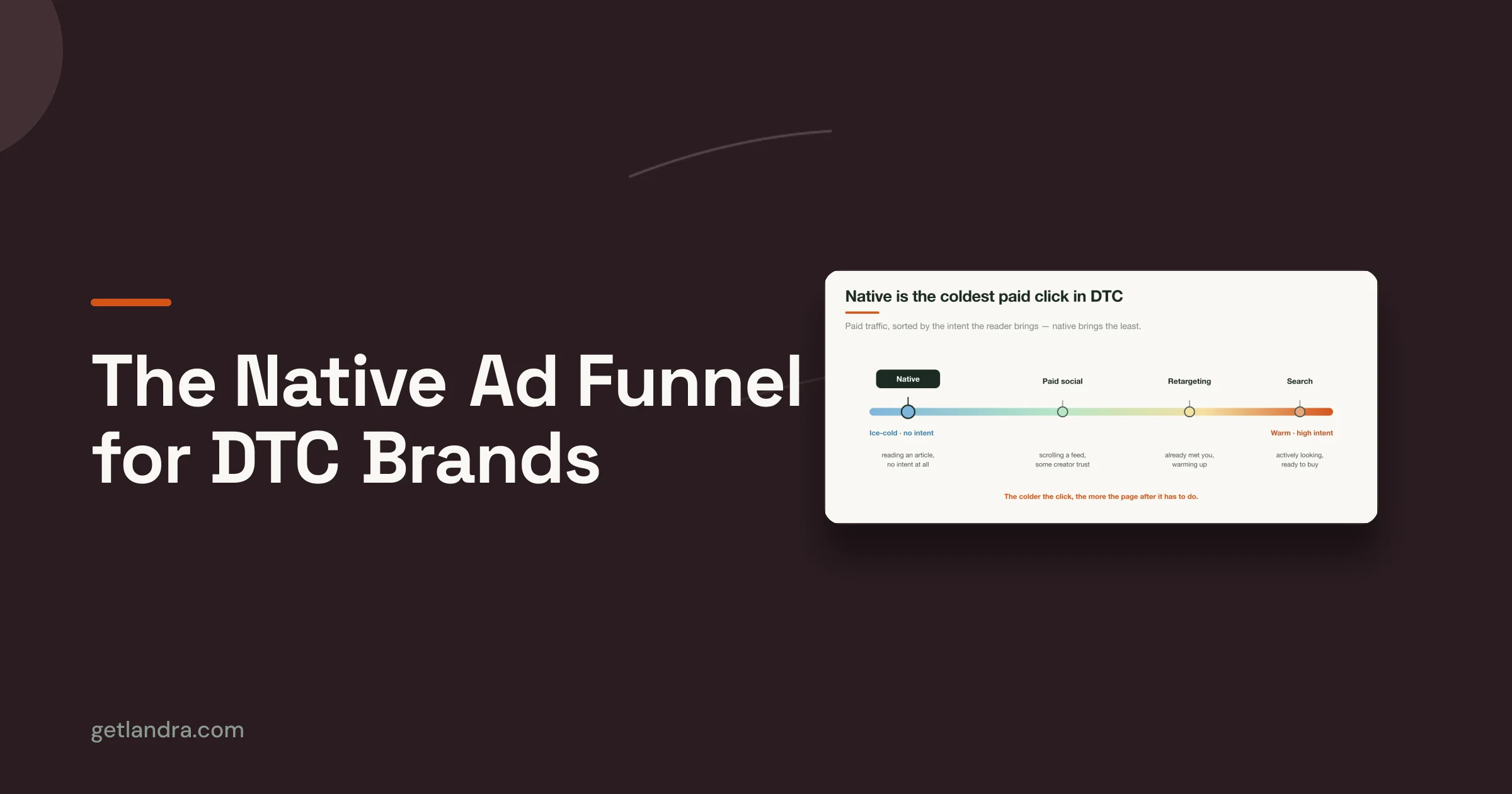
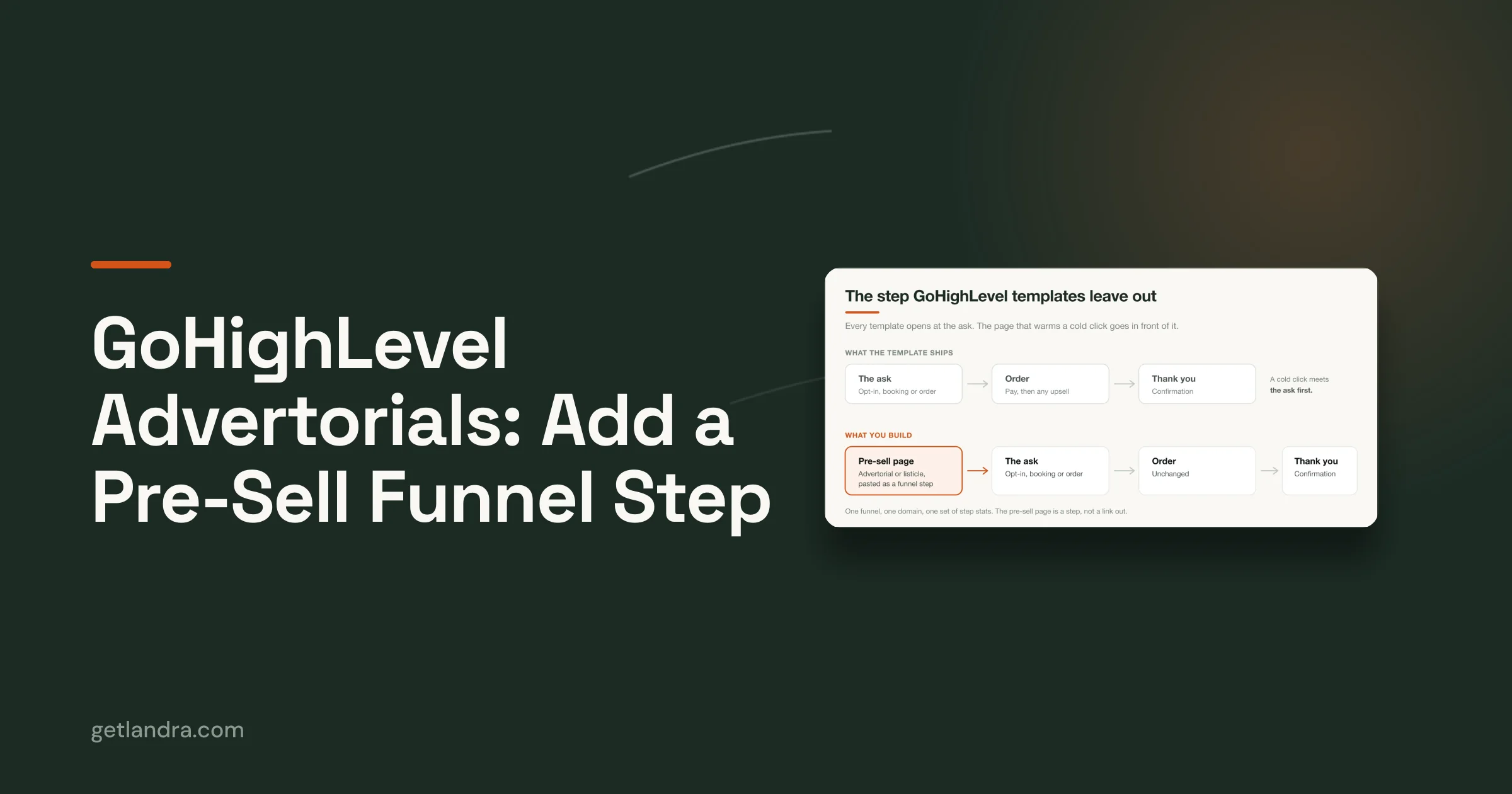
Cold Meta and TikTok traffic usually doesn't need a bigger funnel map first. It needs the right first page. That's the core template decision. Send unaware or skeptical traffic straight to a product page and you'll force people to make a buying decision before they've earned enough context. That's why the gap matters. Mainstream funnel resources still focus on B2B stage planning, while DTC teams need practical pre-sell structures for paid social traffic, especially advertorials and listicles built for mobile-first reading and fast iteration, as noted in Mural's sales funnel template overview.
A structured funnel still matters. The classic four stages are awareness, interest, decision, and action, and a useful template maps content to each stage instead of treating every lead the same, as explained in Teamgate's guide to free sales funnel templates. But for paid social DTC, the choice that usually matters first is simpler: advertorial, listicle, lead-gen page, long-form sales page, or direct-response Shopify page.
Table of Contents
- 1. Landra
- 2. ClickFunnels
- 3. Unbounce
- 4. Instapage
- 5. Leadpages
- 6. Systeme.io
- 7. Zipify Pages Shopify-native
- Top 7 Sales Funnel Templates Comparison
- Your First Funnel A Simple Decision Framework
1. Landra

A lot of brands buy "funnel" software when the core decision is simpler. What should the first page be?
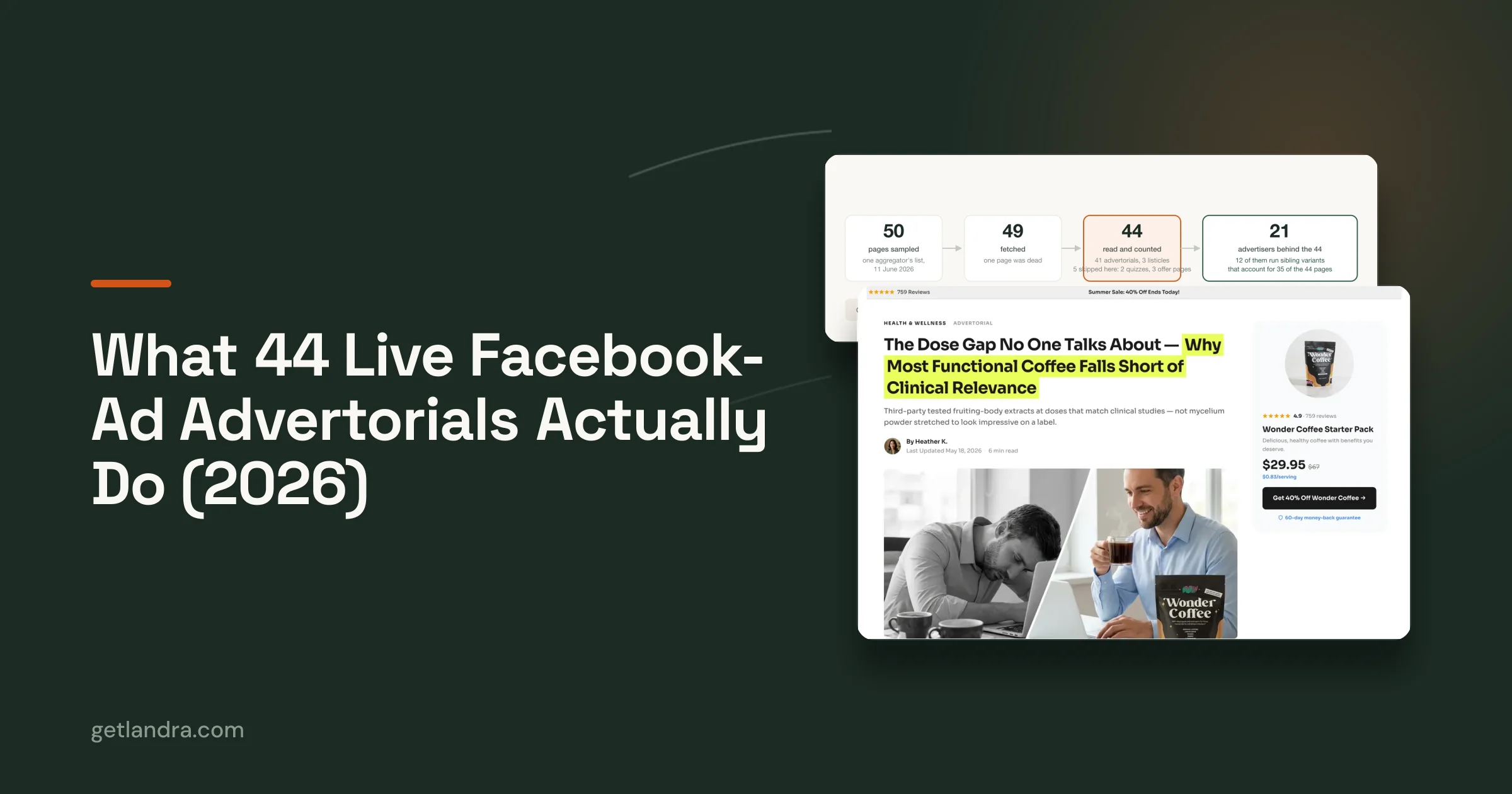
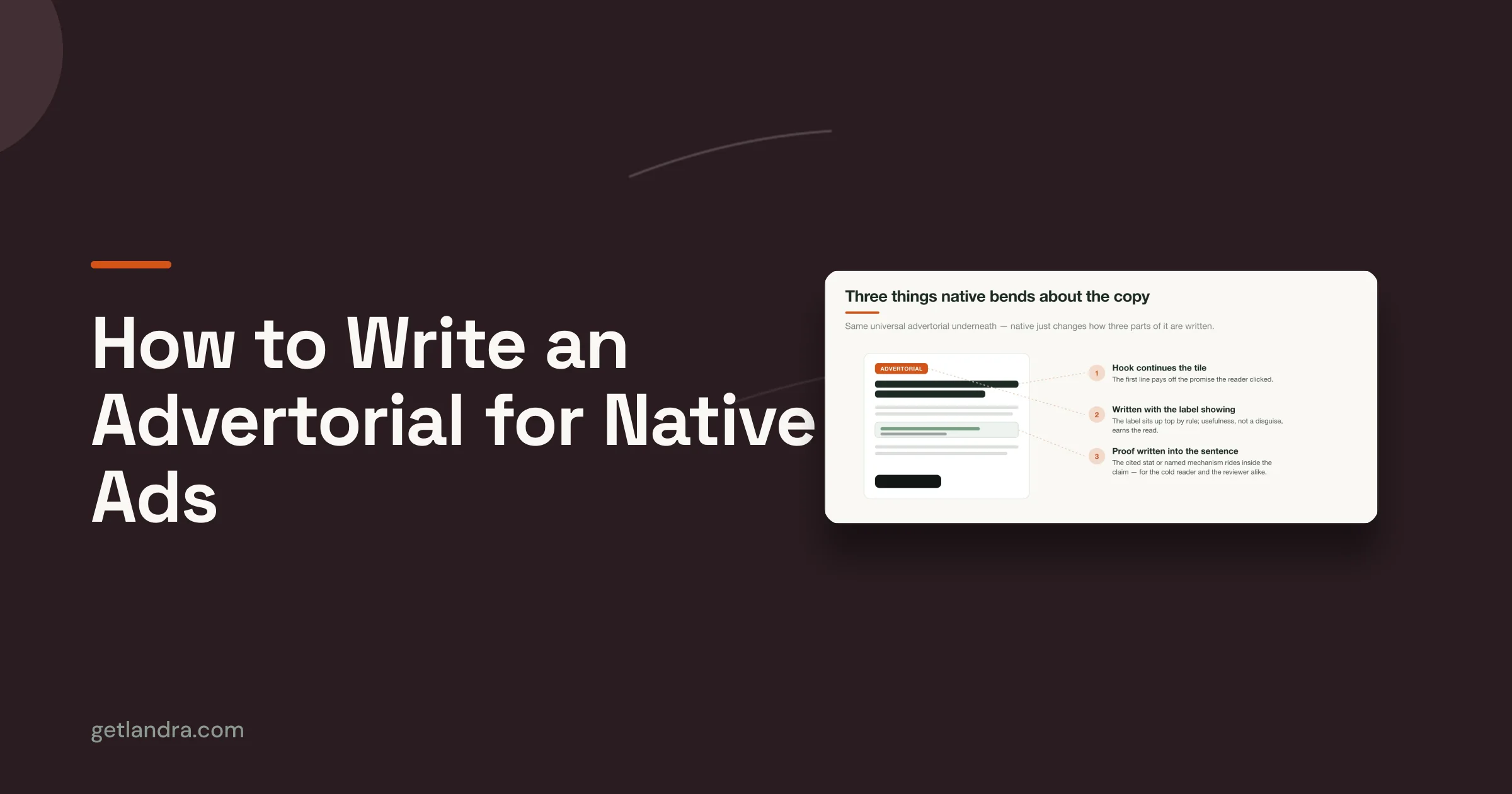
Landra is built around that question. Instead of handing you a blank canvas and calling it a template, it starts with the page types that matter for paid social DTC. Advertorials, listicles, and pre-sell pages. That matters because cold traffic from Meta or TikTok usually should not land straight on a product page. It needs context, proof, and a reason to keep reading.
You give Landra a product or brand URL. It generates a mobile-first draft using your brand voice, product details, reviews, and supporting proof. From there, teams can edit inline, duplicate variations fast, and publish to Shopify, a hosted Landra URL, Webflow, or export HTML.
Why Landra fits paid social better than generic builders
Generic builders are fine if the job is "make a page." Paid social usually needs a more specific job. Match the ad angle to the right first-page format, then get the click ready to buy.
That is the part many tools skip. They treat all landing pages like interchangeable layouts. They are not. An advertorial works differently from a lead-gen page. A listicle works differently from a straight product pitch. If you're still sorting out the difference between a site built for browsing and a page built for conversion, this breakdown of landing page vs website conversion paths is useful context.
A practical rule applies here. Cold clicks need a page that continues the sale the ad started.
Where it wins and where it does not
Landra is strongest when speed and page type matter more than funnel complexity. Teams can launch angle tests without rebuilding from scratch, which is exactly what paid social operators need when hooks fatigue fast and creative strategy changes weekly.
What works:
- Cold traffic pre-sell: Advertorial and listicle formats give unfamiliar prospects more context before asking for the purchase.
- Fast iteration: Inline editing and duplication make it easier to test hooks, claims, and page structures quickly.
- Flexible publishing: Shopify, Webflow, hosted pages, and HTML export fit the stack many DTC teams already use.
What does not:
- Full storefront builds: Landra is for conversion pages, not a complete ecommerce site or content hub.
- All-in-one funnel ops: Teams that need checkout flows, upsells, email automation, and post-purchase logic in one platform will need other tools in the stack.
That is why Landra earns the top spot here. It frames "sales funnel templates" the way paid social teams should frame it. As a choice of first page type for cold traffic, not a bloated sequence builder. If your funnel lives or dies on the first click, Landra is the better fit.
2. ClickFunnels

ClickFunnels is the opposite of Landra. It isn't focused on one high-performing first page type. It's built for the whole sequence. Opt-in page, sales page, checkout, order bump, upsell, downsell, follow-up. If that's your operating model, the product makes sense.
That said, many DTC brands overbuy this category. They think they need a full funnel machine when the problem is that their first click lands on the wrong page. If you're trying to sort out landing page vs website differences for conversion paths, this distinction matters. A website browses. A landing page converts. ClickFunnels leans hard into the second.
Best use case
ClickFunnels is a solid fit when you're selling an offer that needs a controlled sequence. Info products, lead capture into follow-up, simple direct-response offers, or funnels where order bumps and upsells matter more than a native Shopify merchandising experience.
Its appeal is simple. One account, one builder, one place for pages, commerce, and follow-up tools. Teams that hate stitching together five apps usually like that.
Trade-offs
The trade-off is focus. ClickFunnels is broad, not specialized for pre-sell advertorials or Shopify-native DTC merchandising.
Use ClickFunnels when your business model depends on the sequence itself. Skip it if your main bottleneck is getting cold traffic to care before they hit the store.
A few practical realities:
- Good for controlled flows: You can build linear journeys without much technical help.
- Less Shopify-first: Brands deep in Shopify often find it less natural than a native app stack.
- Heavier platform choice: You need enough funnel complexity to justify it.
Use ClickFunnels if you're buying a funnel system, not just a page builder.
3. Unbounce

Unbounce has been a reliable landing page platform for years because it does one thing well. It helps teams build pages fast and test them seriously. If your operation runs on paid traffic and iteration, that matters more than flashy all-in-one claims.
The big strength here is experimental discipline. Unbounce is for marketers who want to swap headlines, sections, offers, and layouts without dragging engineering into every change. If you're refining landing page design best practices for paid traffic, it's a familiar toolset.
Where Unbounce is strongest
Unbounce is strongest when the page is the experiment. You have one offer, multiple audience angles, and a team that looks at test results instead of launching pages and hoping.
This also lines up with one of the clearest case studies on funnel structure. A multi-step funnel redesign with progress indicators and reduced friction improved application conversion rates by 56% and reached a 40.78% overall conversion rate in The Copy Cartel conversion funnel case study. Unbounce isn't that case study itself, but it's the kind of platform you use when you care about page-level friction, abandonment points, and testable changes.
What to watch
Unbounce is not the best fit when you need a full ecommerce funnel inside one platform. It's more page-first than commerce-first.
What works:
- Strong testing culture: Good for teams that treat pages like assets under continuous CRO.
- Large template base: Fast starting point for lead-gen and sales pages.
- Simple publishing: Useful when speed matters more than stack complexity.
What doesn't:
- Not a full funnel stack: Checkout, upsells, and post-purchase flows aren't its center of gravity.
- Can be too generic for DTC pre-sell: You may still need to create your advertorial logic yourself.
Use Unbounce when testing matters more than owning the entire funnel in one account.
4. Instapage

Instapage sits in the premium end of the landing page market. You buy it when your team is already spending meaningfully on paid acquisition and the cost of slow page production is bigger than the software bill.
This platform is good at collaboration. Marketers, designers, and stakeholders can work on variants without turning every change into a backlog item. That's useful when campaigns move fast and the media team can't wait around for page updates.
Who should buy it
Instapage fits teams that publish lots of variants and care about workflow as much as page design. Reusable blocks, collaboration, and testing support matter when you're producing page families across products, audiences, or channels.
There's also a strategic reason to think beyond the last click. A full-funnel marketing approach has produced 64 to 110% higher conversion rates than remarketing alone in this full-funnel marketing case study on SlideShare. That doesn't mean every team needs Instapage. It does mean landing pages work better when they're part of coordinated messaging across awareness, interest, and decision stages.
Where teams overbuy
Instapage gets expensive fast if your process is simple. If you only need a handful of pages and you're not running active experimentation, you'll pay for capability you won't use.
Operational advice: Premium landing page software only pays off when the team has enough traffic, enough variants, and enough discipline to act on test results.
Use Instapage when your bottleneck is production speed and experimentation across paid campaigns, not when you're just trying to get your first pre-sell page live.
5. Leadpages

Leadpages is what many smaller teams need, even if they don't say it that way. It is practical. It has a large template library, simple publishing, and a low-friction path from idea to live page.
That makes it useful for lead-gen pages, promo pages, basic sales pages, and lightweight campaign launches. If your team isn't asking for advanced funnel logic or deep ecommerce customization, the simplicity is a benefit.
Why smaller teams like it
Leadpages works best when speed and predictability matter more than sophistication. You can get pages live without turning the build into a project.
The appeal of templates is real when they're used correctly. A sales funnel template gives teams a structured roadmap from awareness through purchase, helping them define what content and messaging belong at each stage rather than improvising every campaign, as described in Apollo's sales funnel template guide. Leadpages fits that mindset well. It helps teams ship clean, straightforward pages without overengineering the process.
Limitations
The weak spot is depth. Leadpages doesn't pretend to be a full DTC pre-sell specialist or a complete post-purchase funnel system.
A few trade-offs:
- Good for straightforward launches: Lead capture, promo pages, and simple sales pages are easy to spin up.
- Less suited for advertorials: You can build them, but the platform isn't centered on that format.
- Better for simpler funnels: Once the flow gets more layered, other tools fit better.
Use Leadpages when you want solid sales funnel templates without paying for enterprise workflow features you won't touch.
6. Systeme.io

Systeme.io is for scrappy operators. If you want pages, email, automations, checkout, and courses in one place without a heavy software stack, it does the job.
This isn't the most elegant option for a polished DTC brand. It is, however, a practical way to validate offers and basic sequences without wiring together multiple tools.
When it makes sense
Systeme.io makes sense when the business is still proving the funnel, not polishing every page to perfection. Lead magnets, webinar flows, simple sales funnels, and low-friction launches are its natural home.
The useful part is consolidation. One tool handles enough of the process that you can test the offer and follow-up logic before investing in a more specialized stack.
Where it falls short for DTC
DTC operators should be realistic here. Systeme.io isn't Shopify-native, and that matters if your business depends on storefront control, merchandising, and native ecommerce workflows.
Cheap all-in-one software can be a smart first step. It becomes a bad fit when the store, not the funnel builder, is where your real complexity lives.
What works:
- Fast validation: Good for getting a complete funnel live with minimal overhead.
- Broad feature set: Pages, email, automations, and checkout in one account.
- Friendly for lean teams: Less tool sprawl, less setup friction.
What doesn't:
- Weaker ecommerce alignment: DTC brands with established Shopify operations will feel the mismatch.
- Less specialized page logic: Pre-sell advertorial work usually needs more DTC-specific structure.
Use Systeme.io when budget and speed matter more than Shopify-native depth.
7. Zipify Pages Shopify-native

Zipify Pages is what many Shopify brands should look at before they buy a generic landing page builder. It lives inside Shopify, publishes directly there, and reflects ecommerce use cases better than most broad page tools.
That matters more than people think. Separate hosting, subdomains, and awkward integrations create friction fast. Shopify teams usually want pages that work with the store, not around it.
Why Shopify teams choose it
Zipify is built for ecommerce page types. Long-form sales pages, promo pages, bundles, lead capture, and product-focused landing pages are all native use cases. For teams actively looking at Shopify landing page templates for conversion-focused campaigns, that alignment saves time.
It also suits brands that want direct-response style pages without leaving the Shopify environment. Analytics and checkout compatibility are cleaner when the page builder is native to the platform that processes the sale.
Best and worst fit
Zipify is a strong fit for brands already committed to Shopify and running paid traffic into focused campaign pages. It is less compelling if your real need is AI-generated advertorials or educational pre-sell pages built from a product URL in minutes.
- Best for Shopify execution: Campaign pages, product pushes, promos, and direct-response ecommerce pages.
- Less ideal for pre-sell education: You can build warm-up pages, but that's not the product's sharpest edge.
- Worth it when fully utilized: The value shows up when you lean on its ecommerce-specific blocks and workflows.
Use Zipify Pages when Shopify is the center of your stack and you want the page builder to stay there.
Top 7 Sales Funnel Templates Comparison
Software matters less than page type fit. For paid social DTC, the primary decision is usually about the first page cold traffic sees. Advertorial, listicle, lead-gen page, direct-response landing page, or full funnel.
Use the table that way. Do not treat every tool as if it solves the same problem.
| Product | Best First Page Type | Implementation Complexity 🔄 | Resource Requirements ⚡ | Expected Outcomes ⭐📊 | Ideal Use Cases 💡 | Key Advantages |
|---|---|---|---|---|---|---|
| Landra | Advertorials, listicles, pre-sell pages | Low, AI-generated drafts in minutes 🔄 | Low, subscription plus brand site access; little design work ⚡ | High for cold traffic warm-up and pre-sell testing ⭐📊 | DTC brands running Meta or TikTok traffic to educational pre-sell pages 💡 | Fast draft creation, built for paid social page types, publish to Shopify and Webflow, inline editing |
| ClickFunnels | Multi-step opt-in and sales funnels | Medium, sequence setup takes work 🔄 | Medium to High, subscription, learning curve, integrated email and checkout ⚡ | Moderate to strong when the whole funnel matters more than the landing page ⭐📊 | Course launches, info products, lead capture funnels, upsell flows 💡 | Native checkout, order bumps, upsells and downsells, broad funnel template library |
| Unbounce | Direct-response landing pages | Medium, page builder plus testing setup 🔄 | Medium, best for teams running steady experiment volume ⚡ | High for single-page CRO and paid traffic iteration ⭐📊 | PPC pages, paid social landing pages, offer testing, rapid variant production 💡 | Strong testing tools, flexible builder, large template library |
| Instapage | Personalized landing pages at scale | Medium, collaboration and personalization add setup overhead 🔄 | High, premium pricing and traffic-based plans ⚡ | Very high for teams that need workflow control and experimentation depth ⭐📊 | Enterprise campaigns across paid search and paid social, agency delivery, high-volume programs 💡 | Real-time collaboration, advanced experimentation, personalization features |
| Leadpages | Lead-gen pages and simple promo pages | Low, template-led and easy to launch 🔄 | Low to Medium, flat pricing and light setup ⚡ | Good for straightforward campaigns that do not need much customization ⭐📊 | Small teams running lead capture, webinar registration, local offers, quick promos 💡 | Easy to use, large template gallery, unlimited pages and traffic on paid plans |
| Systeme.io | Basic funnel pages plus email capture | Low, simple all-in-one setup 🔄 | Very Low, low-cost plans with built-in email and checkout ⚡ | Good for validation and low-budget funnel testing ⭐📊 | Early-stage operators, course creators, low-budget launches, simple opt-in funnels 💡 | All-in-one stack, low cost, quick deployment |
| Zipify Pages (Shopify-native) | Product pages, promo pages, bundles | Low, Shopify-integrated builder 🔄 | Medium, app cost plus a Shopify store ⚡ | High for ecommerce campaigns tied closely to storefront and checkout ⭐📊 | Shopify merchants building focused campaign pages, product pushes, bundles, promos 💡 | Deep Shopify fit, ecommerce-specific blocks, smoother analytics and checkout alignment |
The trade-off is simple. Some tools help you build the whole machine. Others help you put the right first page in front of cold traffic fast.
That distinction saves time and budget. If the offer needs belief-building, a generic landing page template often underperforms a strong advertorial or listicle. If the offer is already clear and demand exists, a tighter direct-response page usually wins.
Your First Funnel A Simple Decision Framework
Cold traffic does not need a bigger funnel. It needs the right first page.
Paid social teams waste weeks comparing software categories before they answer the only question that matters upfront. What should a stranger see after the click? For DTC, that choice usually decides more than the rest of the funnel map.
Start with buyer awareness, not platform features. If the product needs explanation, trust, or a stronger angle, send traffic to a pre-sell page first. Advertorials work when the sale depends on story, mechanism, or proof. Listicles work when comparison does the heavy lifting and the page needs to be skimmed fast. Lead-gen pages work when the product will not close on first visit and collecting intent is the primary goal.
Direct landing pages still have a place. They win when the category is familiar, the offer is clear, and the click already carries buying intent. In that case, tools like Unbounce, Leadpages, and Instapage are often enough. If the business needs the full sequence, checkout, follow-up, upsells, then ClickFunnels or Systeme.io can be the better fit. If Shopify runs the operation, Zipify usually makes more sense than forcing an external stack into the workflow.
The mistake is simple. Teams buy software for the funnel they imagine, then send traffic to a page type that does not match the audience.
Better tooling will not save weak page strategy. Cold traffic that needs warming will bounce from a polished product page just as fast as it will from a mediocre one.
Keep the decision tight. Choose the first page type based on awareness. Then choose the tool that helps you build and test that page fast. For many paid social DTC brands, the right starting point is an advertorial, listicle, or lead-gen page, not a larger funnel stack.
If cold traffic is going straight to product pages and struggling, fix the entry page before adding more software. As noted earlier, Landra is built around that job. It converts a product URL into an editable, mobile-first advertorial, listicle, or pre-sell page that a team can launch and iterate quickly.