

Most advice about value proposition examples starts in the wrong place. It starts with slogans, not choices. A good value proposition isn't a cute line on a homepage. It's the sharpest argument for why a buyer should trust your offer over the next tab they're about to open.
For DTC brands, that argument has to do real work. It has to help a cold prospect understand the promise, help a performance marketer justify spend, and help a growth team decide whether the page is worth testing at all. The strongest propositions are built around measurable proof, not feature fog, because buyers compare outcomes fast and they judge credibility fast too, especially when paid traffic economics are on the line, as noted in the guidance from Marketing Profs.
That's why the best examples aren't really about famous brands. They're about framing. One product can carry ten different value propositions, depending on the audience, the traffic source, and the conversion goal.
Table of Contents
- 1. Speed-to-Market Value Proposition
- 3. Conversion Rate Lift Value Proposition
- 3. Conversion Rate Lift Value Proposition
- 4. Brand Context Preservation Value Proposition
- 5. Editorial Credibility Value Proposition
- 6. Listicle and Comparison Page Value Proposition
- 7. Presell Page Warm-Up Value Proposition
- 8. Content Variant Testing Value Proposition
- 9. Mobile-First Performance Value Proposition
- 10. Publishing Flexibility and Stack Integration Value Proposition
- 10 Value Propositions Compared
- From Example to Execution Your Next Steps
1. Speed-to-Market Value Proposition

A speed-first value proposition works when the market window is short and the offer needs to move before attention fades. For DTC teams, that usually means seasonal drops, reactive angles, trend-chasing creative, or campaign ideas that die if they sit in a queue. The message should be blunt. Launch faster. Test sooner. React while the moment still matters.
That's the contrast. Traditional agency timelines can stretch into a week or two, while a generated page can be ready in minutes, which changes how teams plan campaigns and how aggressively they can test. If you're running a supplement brand and the hook is tied to a seasonal health angle, the value isn't “better copy.” It's the ability to go live while the audience still cares. The same logic applies to fashion brands that want to spin up multiple angles in a single day, such as sustainability, luxury, or affordability.
Practical rule: speed is a campaign lever, not a strategy by itself. If the page ships fast but doesn't match the offer, the traffic still dies.
Use this framing when the buyer's pain is delay. Keep the promise tied to a concrete operational outcome. “Turn a product URL into a live page fast enough to test this week” is stronger than “save time,” because it tells the buyer what changes in their workflow and why that matters now.
3. Conversion Rate Lift Value Proposition
This is the strongest performance angle because it speaks the language buyers already use. Conversion, CAC, and ROAS decide whether a landing page gets budget or gets cut. A value proposition built around lift works best when it can point to a direct comparison, especially against a product detail page.
The cleanest proof point is simple. A dedicated pre-sell page can outperform a product detail page by 2–3× conversion rates according to the brief, and strong value props perform best when they are backed by measurable proof, as outlined in Marketing Profs. For DTC teams, that means the proposition should frame the page as a conversion asset, not a prettier wrapper. If the traffic is cold, a direct product page often asks the visitor to do too much work.
A practical example is the brand that sends paid social traffic to an advertorial instead of the PDP. Another is the skincare brand that uses a clearer pre-sell angle to turn a weak cold-traffic conversion rate into a stronger one on the same audience. The point is not to promise magic. It is to show that small changes in framing can change the economics of the click. If you want a page that helps visitors move faster, how video elements boost signups on landing pages is a useful angle to study.
Use a direct comparison when the buyer needs to justify the page internally. If the page can improve conversion rate, the rest of the funnel gets easier to defend. The sharpest way to say it is simple. A higher-converting page buys more room for paid traffic, more room for testing, and more room for scale. If you need to pressure-test the business case, a conversion rate calculator helps make the trade-off concrete.
3. Conversion Rate Lift Value Proposition

This is the cleanest performance-marketing angle because it speaks the language buyers already use. Conversion, CAC, and ROAS are the numbers that decide whether a landing page gets budget or gets cut. A value proposition built around lift is strongest when it can point to a clear comparison, especially against a product detail page.
The verified benchmark here is simple. A dedicated pre-sell page can outperform a product detail page by 2–3× conversion rates according to the brief, and a strong value prop is most effective when it is backed by measurable proof, as outlined in Marketing Profs. For DTC teams, that means the proposition should frame the page as a conversion asset, not a prettier wrapper. If the traffic is cold, a direct product page often forces the visitor to do too much work.
A practical example is the brand that routes paid social traffic to an advertorial instead of the PDP. Another is the skincare brand that uses a clearer pre-sell angle to turn a weak cold-traffic conversion rate into a stronger one on the same audience. The point is not to promise magic. It's to show that message alignment and reduced distraction can improve the economics of the same media spend.
The best conversion proposition says less about the page and more about the buyer's next decision.
Use the internal calculator once you have a baseline. Landra's Conversion Rate Calculator is useful because it forces the conversation back to expected revenue impact instead of abstract copy quality. That's the right standard for any page claiming lift.
4. Brand Context Preservation Value Proposition
AI-generated copy breaks down when it sounds generic. That's the risk this proposition has to solve. The buyer isn't asking for “more content.” They're asking for content that still sounds like the brand after automation touches it.
The strongest framing here is on-brand at scale. The pitch should make it clear that the system reads the website, proof, reviews, and ingredients before drafting, then stores that context for future pages. That matters for brands with strong positioning, because one sloppy page can flatten a premium voice into bland wellness language or make a values-led brand sound like every other ecommerce store.
A luxury wellness brand needs different language from a bargain supplement seller. An ethical fashion label needs copy that naturally reflects sustainability and fair-trade values, not a generic “made better” statement pasted onto every page. That's where brand context becomes the proposition. It reduces the need to remind the system who the brand is every single time.
Practical rule: if the first draft doesn't sound like the brand, fix the input, not just the output.
Use this angle when the buyer cares about consistency across campaigns, channels, and seasonal launches. The promise is not just that the page will be written. It's that the brand won't have to re-explain itself every time a new asset is generated. That's a real operational advantage, and it's one that cautious teams understand quickly.
5. Editorial Credibility Value Proposition

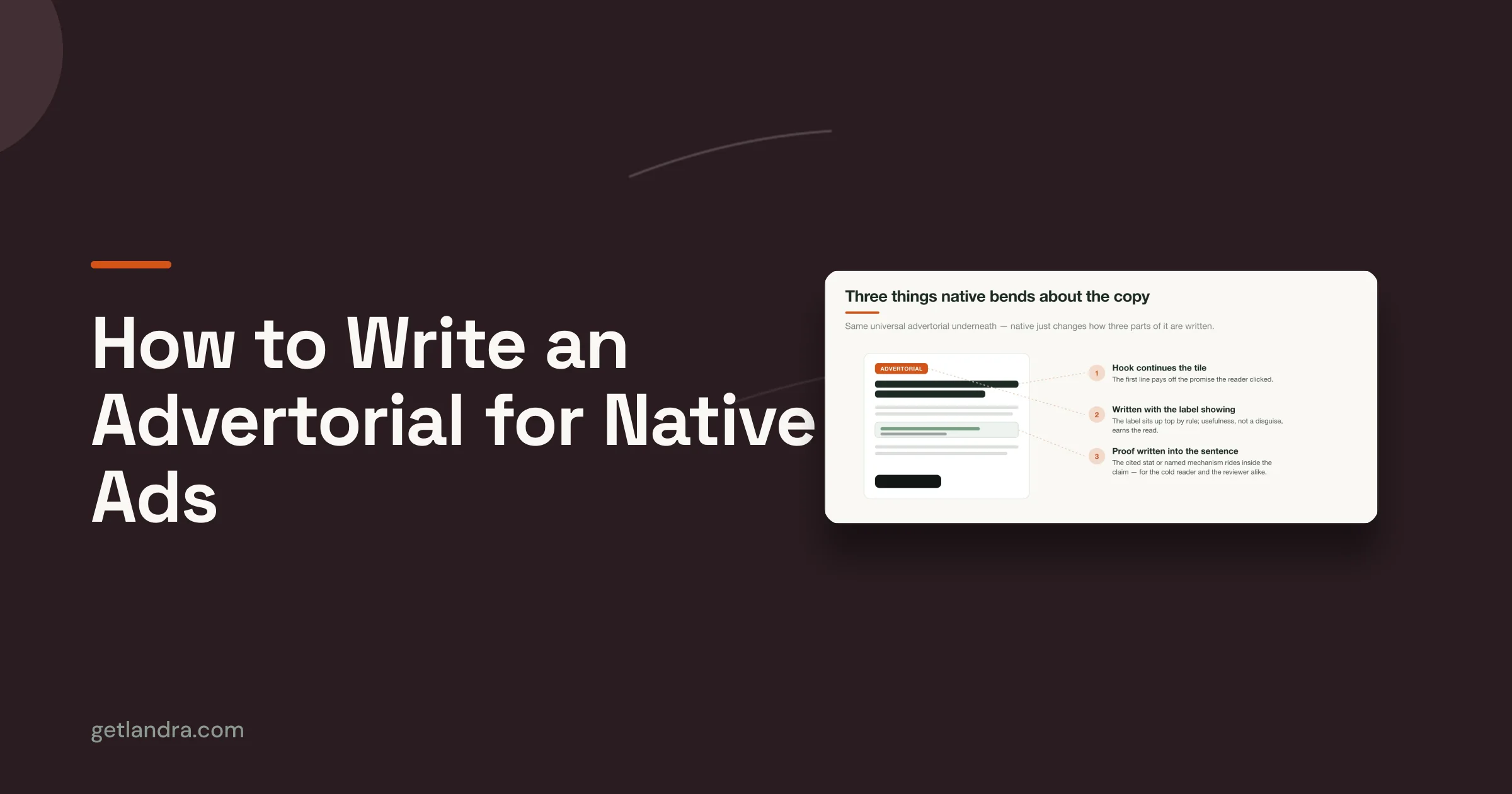
Advertorials work because they borrow the rhythm of editorial content. That doesn't mean pretending to be a newsroom. It means using a narrative structure that helps skeptical traffic understand the problem before they meet the product. The proposition here is about trust formation, not immediate product push.
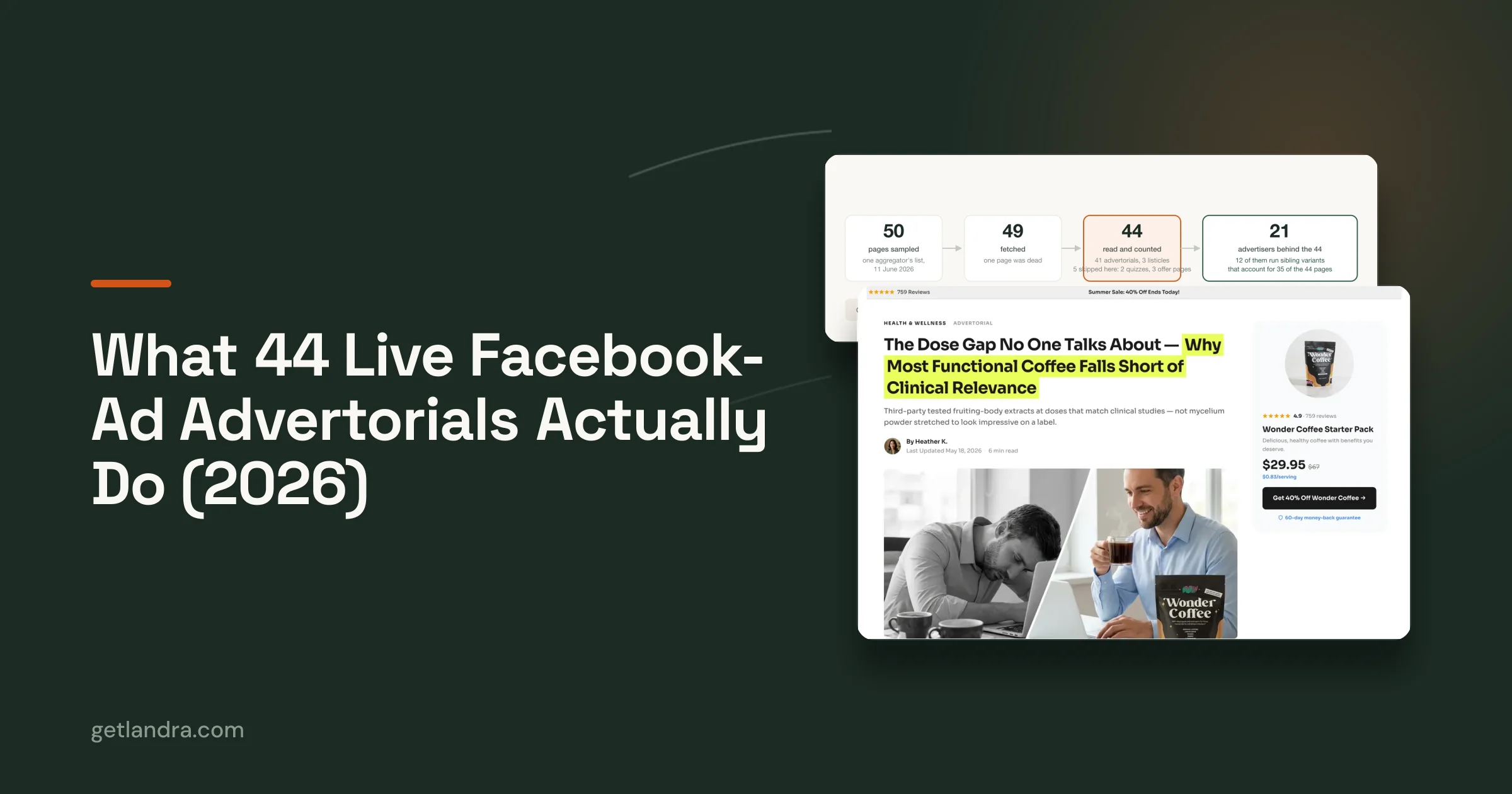
This format fits when the audience needs context. Cold visitors often ignore direct-response ads because the claim arrives too early. A better advertorial opens with the pain, the question, or the unexpected insight, then earns the product mention later. That's why the headline should lead with reader benefit, not brand bragging. A supplement brand can frame the issue around low energy, while a skincare brand can frame the issue around ingredient confusion or alternative solutions.
The source brief points to the need for proof points, and that's the part many teams skip. Testimonials, research citations, and before-after signals all matter because editorial tone alone doesn't create credibility. It has to be supported. The proposition should say, in effect, “this page teaches first, then sells.” That is more believable than “buy now.”
For DTC brands with skeptical audiences, this is often the difference between a dead cold-traffic ad and a page that earns the next click. If the traffic doesn't trust the product category yet, editorial framing is not fluff. It's the bridge.
6. Listicle and Comparison Page Value Proposition
Comparison pages work when the buyer already knows they need a category and just wants to choose the right option. That makes them perfect for high-intent searchers and consideration-stage shoppers. The proposition is simple. Help me compare, then show me why your product wins.
Listicles earn their keep. A mattress brand can build a “best for side sleepers” page and rank its own product at the top, but the credibility comes from the structure, not the ranking alone. A coffee equipment brand can do the same with home espresso machines under a budget ceiling. The page feels useful because it's organized around criteria buyers already use, such as comfort, support, price, or feature fit.
Salesforce's framing of a value proposition, target customer, pain points, solution, benefits, differentiation, and proof, is useful here because comparison content naturally forces all of those elements into one page, as outlined in Custify's value proposition examples guide. The best comparison pages don't hide competitors. They compare transparently, then make the case for why the featured product is the better fit.
Use the internal guide where structure matters most. Landra's feature comparison table guide is relevant because comparison pages live or die on scannability. If the reader can't quickly see why one option is better, the page loses its edge. Keep it useful. Keep it ranked. Keep it readable.
7. Presell Page Warm-Up Value Proposition
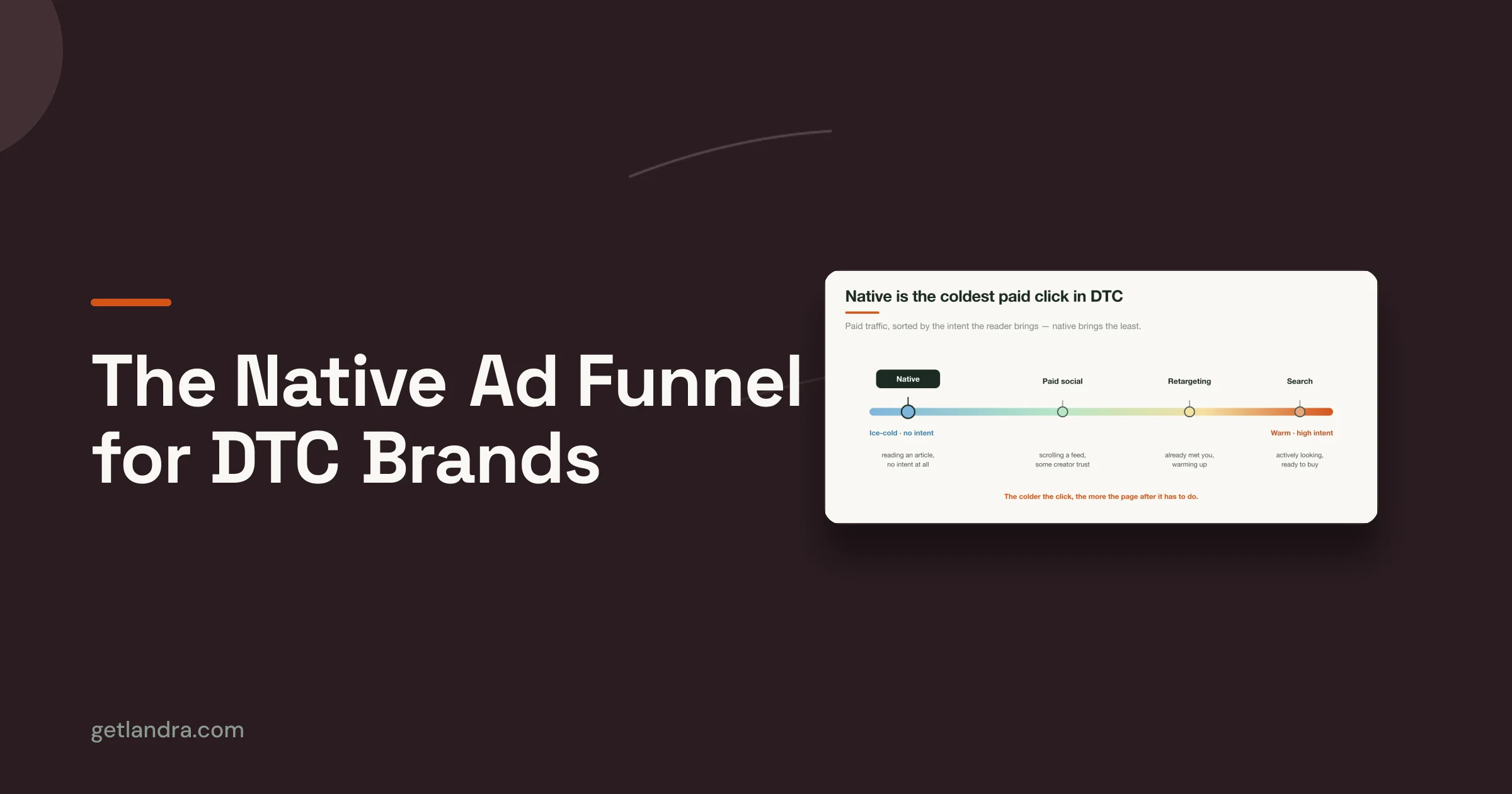
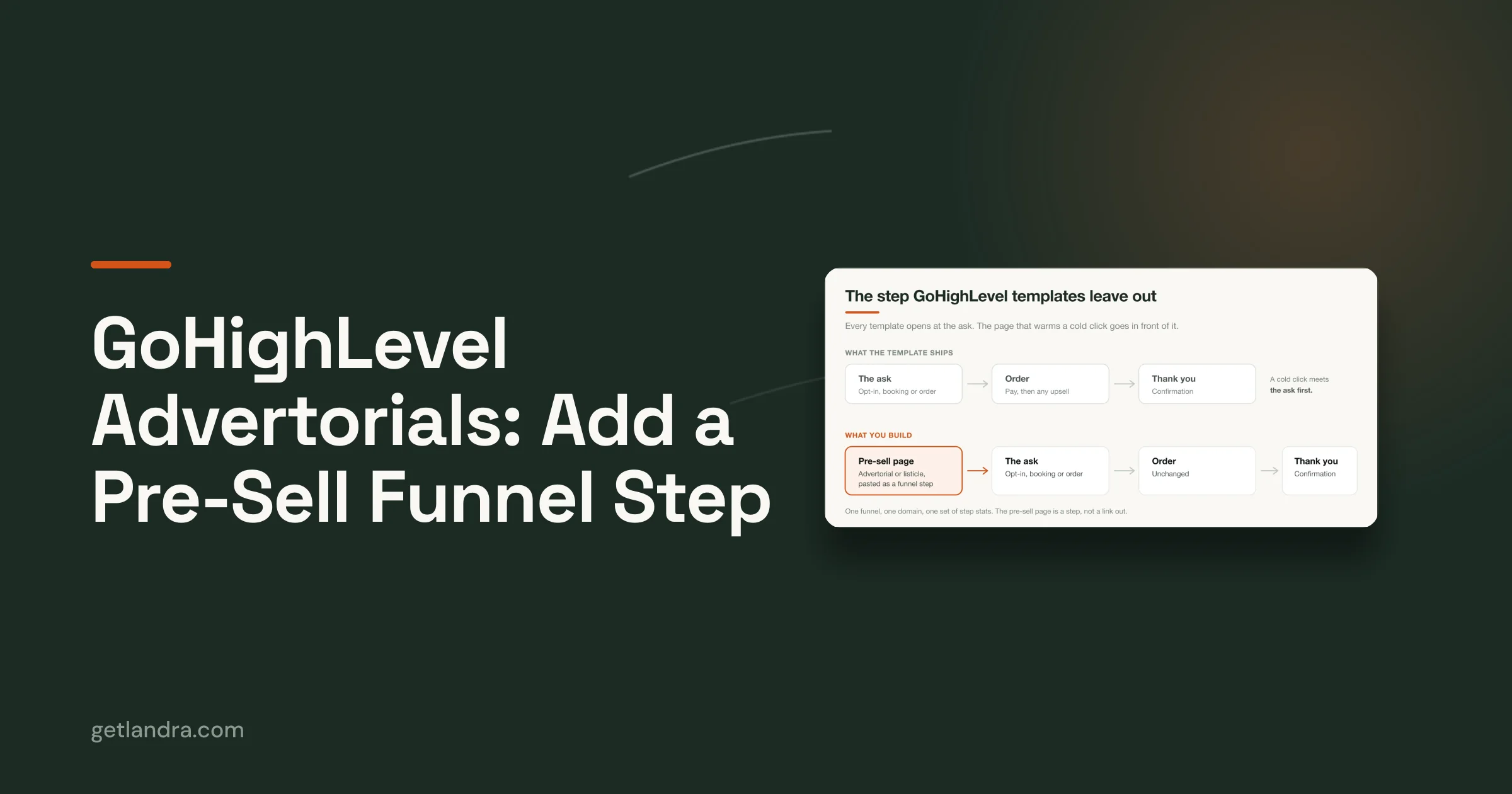
Cold traffic doesn't always fail because the product is weak. Sometimes it fails because the buyer isn't ready. A presell page solves that problem by warming the visitor before they land on the product detail page. That makes the proposition about reducing friction after the ad click.
This is especially useful for higher-consideration offers. A supplement brand can use a presell page to explain ingredient benefits and third-party certifications before sending the visitor to the PDP. A beauty brand can use the page to build trust through brand story, reviews, and guarantee language before asking for the cart. The point is to move the buyer from curiosity to intent.
The structure needs discipline. Keep it short enough to skim, and make the CTA singular. Multiple competing links only dilute the flow. The page should not try to close the sale and educate the buyer and collect another click all at once. It should do one job, prepare the visitor for the product page.
The brief includes a useful operational note here. Presell pages are best used with lower-trust audiences, such as cold traffic or new-to-brand visitors. That's the right boundary. Retargeting traffic often doesn't need the same amount of warming. Save the extra narrative for the people who still need convincing.
8. Content Variant Testing Value Proposition

A lot of teams say they “test messaging,” but they rarely test enough distinct angles to learn anything useful. The value proposition here is not just speed. It's fast learning. When one product can generate multiple page variants quickly, the team can test pain-first, benefit-first, social-proof-first, price-first, sustainability-first, and luxury-first without rebuilding the workflow every time.
That's the advantage. You compress the learning cycle. A performance team can run different advertorial angles across the same budget and isolate which message deserves scale. A growth team can tailor pages for new parents, fitness enthusiasts, and budget-conscious buyers, then see which segment responds to which claim. The proposition should make the testing intent obvious. It's not “more pages.” It's “more evidence, faster.”
Practical rule: don't generate variants until you've written the hypothesis. “Does audience X respond better to benefit Y or pain point Z?” is a real test. “Let's see what happens” is not.
Many pages fail because they're generated quickly but not built for measurement. Use UTM structure, consistent naming, and enough budget and time to let the data settle. The winning message should end up in a playbook, not a screenshot folder.
9. Mobile-First Performance Value Proposition
Paid social traffic lives on mobile first. That makes mobile design part of the value proposition, not a separate design concern. If a page loads slowly, feels cramped, or asks for too much scrolling before the CTA appears, the message gets weaker no matter how strong the copy is.
The brief gives a clear contrast, a mobile supplement landing page on Meta traffic loaded in 2.1 seconds, and a desktop-designed page on the same audience loaded in 4.2 seconds, with the mobile version converting higher. Use that kind of comparison carefully, because it shows what performance marketers already know, mobile-first structure matters when the click happens in-feed. TikTok audiences are especially sensitive to that native feel. Vertical layouts, swipe-friendly interactions, and above-the-fold clarity are not nice-to-haves.
The proposition here should sound like this. “Built for paid social, not retrofitted for it.” That's the part buyers understand. They don't want a desktop page squeezed into a phone screen. They want a page that respects the interaction pattern of the channel.
For implementation, the design guidance matters as much as the claim. Validate page speed on throttled 4G, check rendering before launch, and keep the first screen focused on the core promise. If the offer is strong but the mobile experience is clumsy, the conversion loss starts before the reader even reaches the body copy.
Use the internal design guidance once here. Landra's landing page design best practices belong in the workflow for any team that cares about mobile traffic quality.
10. Publishing Flexibility and Stack Integration Value Proposition
The best software doesn't force a brand to rebuild its stack around one tool. It fits the stack the brand already has. That's the proposition here. Publish where the workflow makes sense, without custom development or vendor lock-in.
This matters more than teams admit. A Shopify brand may want cold traffic to hit a Landra-hosted presell page while proven product pages stay inside Shopify collections. A Webflow team may want to export advertorials into the CMS and keep version control in one place. An agency may want HTML export so it can white-label the page and resell it cleanly. The offer stays the same, but the operational path changes by team.
That flexibility is persuasive because it lowers implementation anxiety. Buyers don't just ask, “Will this page convert?” They ask, “Can my team ship this without creating another mess?” A value proposition that answers that question is stronger than one that only talks about creative output.
A clean way to frame it is simple. New SKU goes to Shopify. Cold-campaign presell goes to a Landra URL. Long-term proven pages move into the native site stack. That kind of routing logic is what operational buyers want to hear.
10 Value Propositions Compared
| Title | 🔄 Implementation Complexity | ⚡ Resources & Speed | 📊 Expected Outcomes | Ideal Use Cases | 💡 Quick Tip |
|---|---|---|---|---|---|
| Speed-to-Market Value Proposition (Time-to-Launch Format) | Low, no-code generation, one-click publish | Low developer effort; ⚡ 5‑minute page creation and duplication | ⭐⭐⭐⭐ Fast campaign launches; supports same-week A/B tests; 46% reported CAC reduction | Performance marketing, trend/seasonal campaigns, rapid audience tests | Treat 5‑min builds as sprint baseline; run a light QA checklist post‑generation |
| Cost Efficiency Value Proposition (Budget Optimization Format) | Low, subscription setup and tier selection | Predictable monthly cost vs. variable agency fees; scales better with volume | ⭐⭐⭐ Lower cost-per-page with scale; potential 60% agency cost reduction for agencies | Scaling DTC ($1M–20M ARR), agencies with recurring page volume | Audit current production costs and model 6–12‑month ROI before selecting a tier |
| Conversion Rate Lift Value Proposition (Performance Metrics Format) | Medium, requires segmentation, attribution setup | Moderate analytics and testing resources; needs traffic splits for valid tests | ⭐⭐⭐⭐ 2–3× conversion lift vs. PDPs in many cases; 46% CAC reduction example | Paid social performance teams optimizing ROAS and CAC | Establish PDP baseline, segment cold vs. warm traffic, and run 2–4 week cohort tests |
| Brand Context Preservation Value Proposition (On-Brand Generation Format) | Medium, upfront brand-data ingest and governance | Time investment upfront (30–60 min); ongoing context refresh quarterly | ⭐⭐⭐ Improved brand consistency and fewer revision cycles across variants | Premium DTC and brand-driven companies concerned with voice | Seed brand context thoroughly and assign a brand-voice guardian to review outputs |
| Editorial Credibility Value Proposition (Advertorial Format) | Medium, requires narrative design and compliance review | More content/time per page; longer reads may need editorial QA | ⭐⭐⭐⭐ Builds trust for cold traffic; often 2–3× uplift vs. direct product ads | Cold audiences, skeptical segments, products needing education | Include clear 'Advertisement/Sponsored' disclosure and 3–5 proof points |
| Listicle and Comparison Page Value Proposition (Structured Comparison Format) | Low–Medium, content structuring + substantiation | SEO and content maintenance effort; slower organic payoff than paid | ⭐⭐⭐ Good SEO traction for comparison queries; drives high‑intent discovery over months | Multi‑SKU brands, buyer guides, CPG and SaaS tier comparisons | Ground rankings in objective criteria and refresh listicles quarterly |
| Presell Page Warm-Up Value Proposition (Intent-Building Format) | Medium, funnel design decision and routing rules | Adds a funnel step; moderate copy/proof asset needs | ⭐⭐⭐ Reduces checkout friction and improves downstream PDP conversion for higher‑price items | DTC selling $50+ products or high‑friction first purchases | Keep presell to 1–2 minute skim; use a single clear CTA and A/B test routing |
| Content Variant Testing Value Proposition (Experimentation Framework Format) | Medium–High, requires testing discipline and analytics | Low production time per variant but needs budget and tracking infrastructure | ⭐⭐⭐⭐ Enables rapid 4–8 variant tests, faster insights and winner identification | Growth/performance teams running frequent creative experiments | Define hypotheses, test 1–2 variables per variant, set min budget and duration |
| Mobile-First Performance Value Proposition (Paid Social Optimization Format) | Low, mobile-first defaults but requires device validation | Optimized for 90%+ mobile; sub‑3s target load times improve ad metrics | ⭐⭐⭐⭐ Better CPC and conversion on paid social; ~10–15% per 1s load improvement | Meta/TikTok paid campaigns, mobile-heavy audiences (Gen Z, social shoppers) | Validate on throttled 4G, monitor Core Web Vitals and prioritize above‑the‑fold CTA |
| Publishing Flexibility and Stack Integration Value Proposition (Multi-Channel Deployment Format) | Medium, choose publish path and manage integrations | Supports Shopify/Webflow/Landra/HTML; some integration/testing overhead | ⭐⭐⭐ Reduces vendor lock‑in; enables multi‑channel deployment and white‑label exports | Agencies and brands with mixed CMS stacks or multi‑channel needs | Start experiments on Landra URL, then migrate proven pages to Shopify/Webflow for long‑term hosting |
From Example to Execution Your Next Steps
The point of these value proposition examples is not to memorize lines. It's to learn how the same offer can be framed for different jobs. A speed angle works when the market moves fast. A cost angle works when production spend is under pressure. A conversion angle works when the buyer needs proof. A brand-fit angle works when voice consistency matters. The offer stays stable, but the message should change with the audience and the channel.
That's the mistake too many organizations make. They write one proposition, paste it everywhere, and then wonder why cold traffic, warm traffic, agencies, and founders all react differently. Different traffic has different objections. Different objections need different framing. The smartest DTC teams treat the value proposition as a working asset, not a slogan.
Start with the biggest value lever in your own offer. If speed is the advantage, lead with speed. If proof is the advantage, show proof. If the product wins on creative flexibility, make that the center of the page. Strategyzer's value proposition framework is useful here because it forces the conversation back to customer jobs, pains, and gains instead of generic copy polish. The same goes for the strategic fit question raised in Harvard Business School Online's guidance on strengthening a proposition with facts.
If your current page reads like a brochure, rewrite it like a decision tool. State the customer problem. Show the outcome. Prove the difference. Then test it against the version you're using now. That's how a value proposition stops being decoration and starts doing its job.
If you want to turn one product URL into multiple high-converting value proposition examples without waiting on agency timelines, Landra gives you the fastest path. It builds advertorials, listicles, and presell pages that are ready for Shopify, Webflow, HTML export, or a Landra URL, so you can test the angle that fits the audience.