

You're probably in this spot right now. Meta or TikTok is sending clicks. Shopify shows traffic. The ad team says the creative is working because click-through rate looks fine. Then sales don't follow. Visitors hit the product page, bounce, and your CAC gets uglier by the week.
Most brands diagnose that problem the wrong way. They blame traffic quality, blame the offer, or start swapping button colors on the product page. Sometimes those things matter. Usually, the problem is simpler. The click and the page don't match.
That's where conversion rate optimization comes in. Not as a bag of small website tweaks, but as the discipline of fixing the gap between what the visitor expected and what your site gave them.
Table of Contents
- Why Your Paid Traffic Is Not Converting
- What Is Conversion Rate Optimization Really
- Why CRO Is Mission-Critical for DTC Brands
- The Four-Step Cycle of Effective CRO
- High-Impact CRO Tactics to Implement Today
- Common CRO Pitfalls and Your Next Steps
Why Your Paid Traffic Is Not Converting
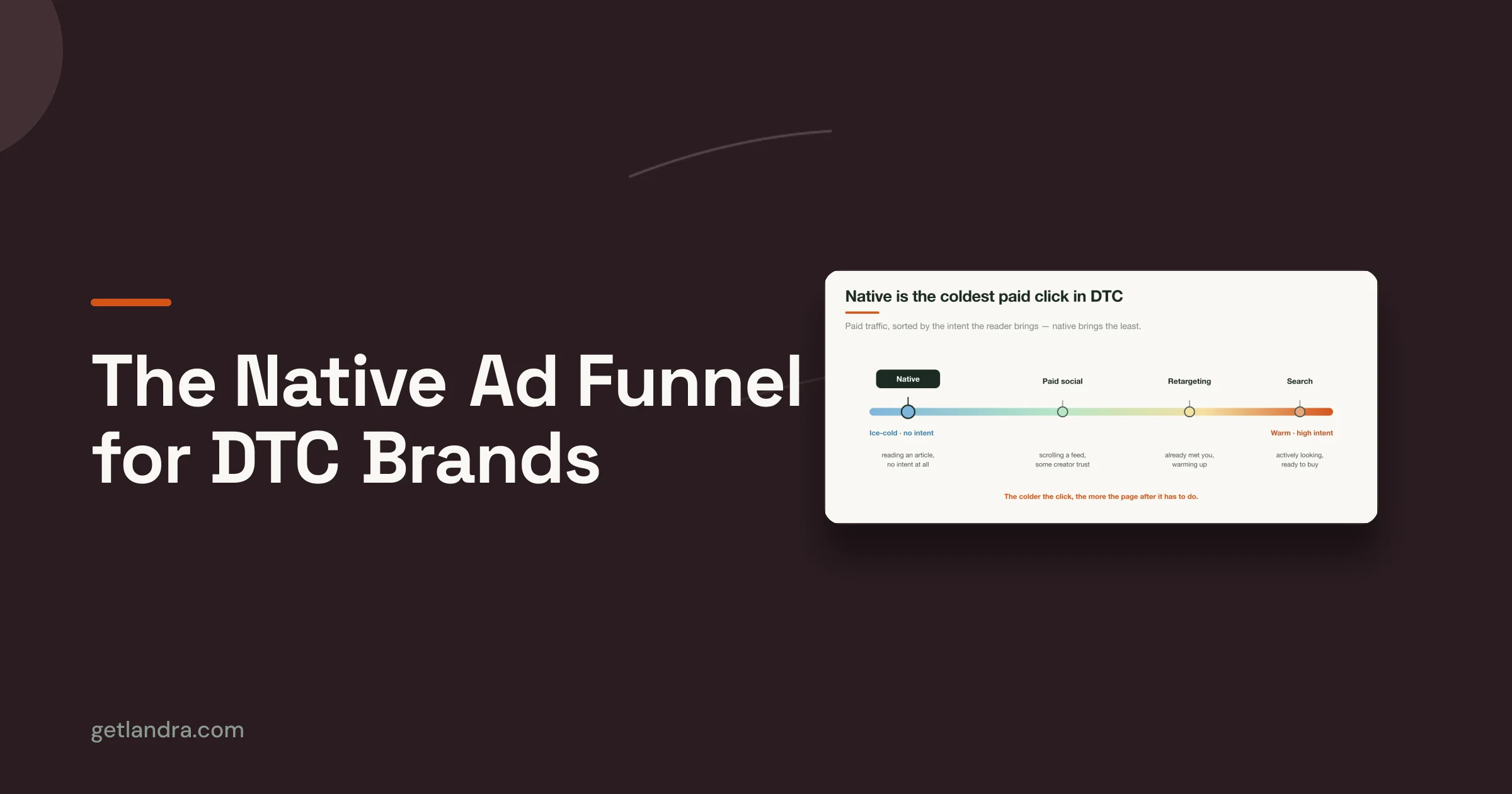
A cold click is not a buying decision. It's a raised hand.
That matters because most DTC brands send paid social traffic straight to a product page built for someone who already knows what they want. The page is trying to close. The visitor still needs to be convinced. That's a mismatch of intent, and it burns ad spend fast.
Product pages are good at answering bottom-funnel questions. Price. Variants. Shipping. Ingredients. Reviews. They're much worse at handling the job your ad created, which is to turn interrupted attention into real buying intent. If the ad made a promise, the page has to continue that story instead of dropping the visitor into a catalog template.
Paid traffic often fails because the page asks for commitment before it earns belief.
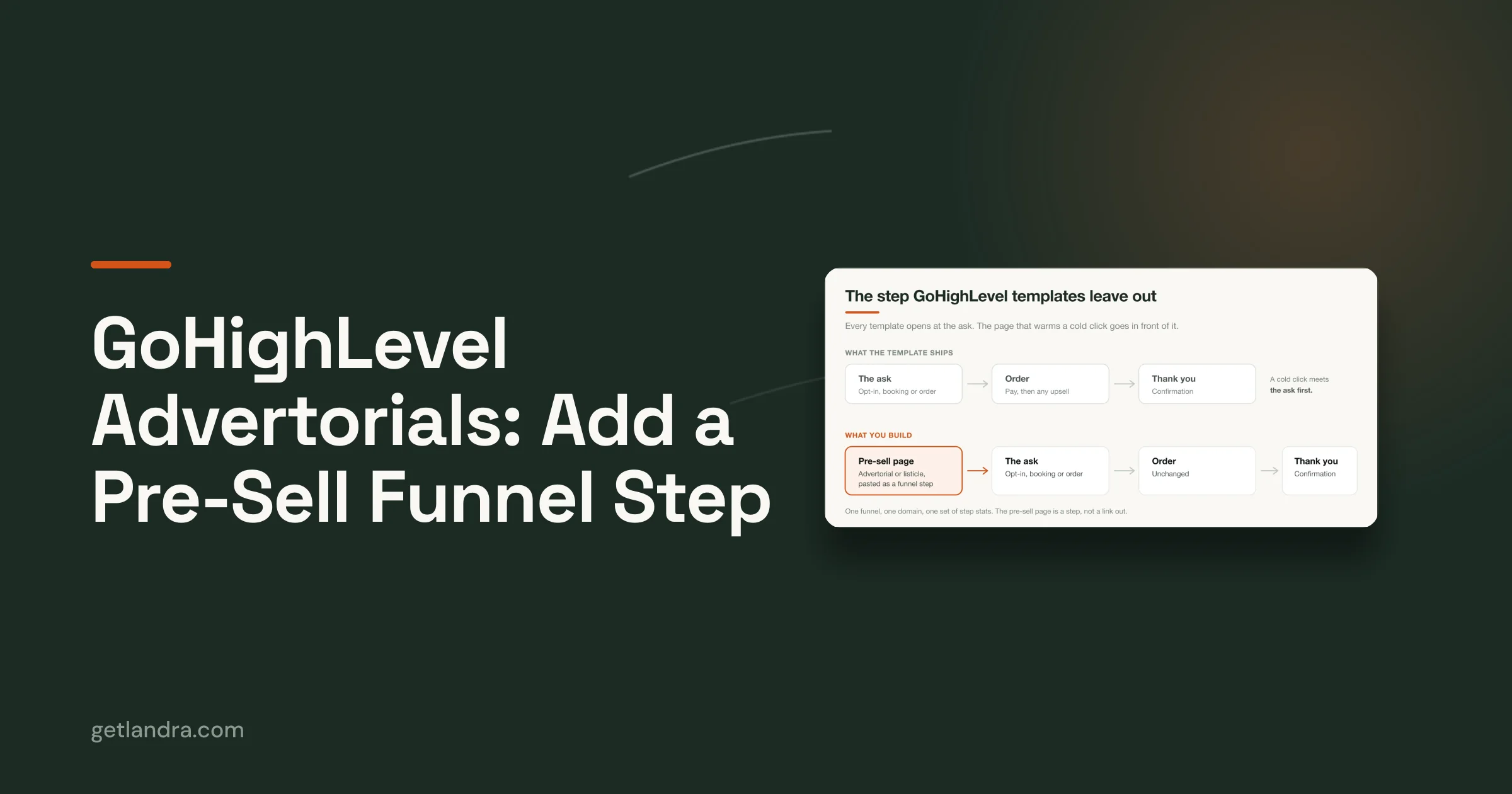
This is why smart brands separate the destination by traffic temperature. Warm traffic can often handle a direct route to the PDP. Cold traffic usually needs context first. An advertorial, listicle, or presell page gives you room to explain the problem, frame the product, and reduce skepticism before asking for the sale.
If you've ever wondered whether a campaign should send traffic to a focused landing page instead of a broader site experience, this breakdown of landing page vs website differences for conversion-focused traffic is useful.
That's the practical answer to what is conversion rate optimization. It's the work of removing the mismatch between click intent and page experience so more of the traffic you already paid for completes a valuable action.
What Is Conversion Rate Optimization Really
Conversion rate optimization, or CRO, is the process of increasing the percentage of visitors who take a desired action. That action might be a purchase, an email signup, a lead form submission, or a click into the next step of the funnel.
The simple definition that matters
The basic formula is straightforward:
| Term | Meaning |
|---|---|
| Conversions | The number of people who completed the action you wanted |
| Visitors | The number of people who saw the page |
| Conversion rate | Conversions divided by visitors |
But the formula is the least important part. The point is this: CRO makes every visit more valuable.

Consider a performance engine. Paid ads and SEO are the fuel. CRO is the tuning. If the engine is badly tuned, pouring in more fuel just wastes money faster. If the engine is tuned well, the same fuel produces more speed.
CRO isn't about getting more traffic. It's about getting more from your traffic.
That's not a semantic difference. It's a budget difference.
Why this matters more than buying more clicks
The opportunity gap is large. The global average website conversion rate in 2026 is 2.35% across industries, while the top 10% of websites reach 11.45%, which is nearly 4.9 times higher than the median according to these 2026 CRO benchmarks from ConvertCart.
That gap tells you something important. Better performance usually doesn't come from luck or better-looking pages alone. It comes from systems. Better alignment between traffic source and landing page. Better offers. Better forms. Better sequencing. Better testing.
Here's where many brands get it wrong:
- They treat CRO like decoration. They obsess over colors, spacing, and tiny visual edits while ignoring offer clarity and message fit.
- They isolate the page from the funnel. They judge a landing page without looking at the ad, audience, and click intent that fed it.
- They expect one test to solve everything. Good CRO compounds. It rarely arrives as one heroic redesign.
If you want the blunt version, what is conversion rate optimization really? It's commercial efficiency. It's the discipline of turning traffic cost into revenue with less waste.
Why CRO Is Mission-Critical for DTC Brands
DTC brands don't get the luxury of sloppy post-click experiences. Paid social punishes it.
A shopper on Meta or TikTok didn't wake up searching your SKU. They were scrolling, saw a promise, and clicked because something about the angle hooked them. If the next page behaves like a sterile product shelf, conversion drops. The click loses momentum.

Cold traffic is not product-page traffic
This is the distinction most brands miss. A PDP is a closing page. Cold social traffic is discovery traffic.
That's why routing everyone to the product page is often lazy media buying disguised as funnel strategy. You're asking a visitor with mild curiosity to act like they already trust you. They won't.
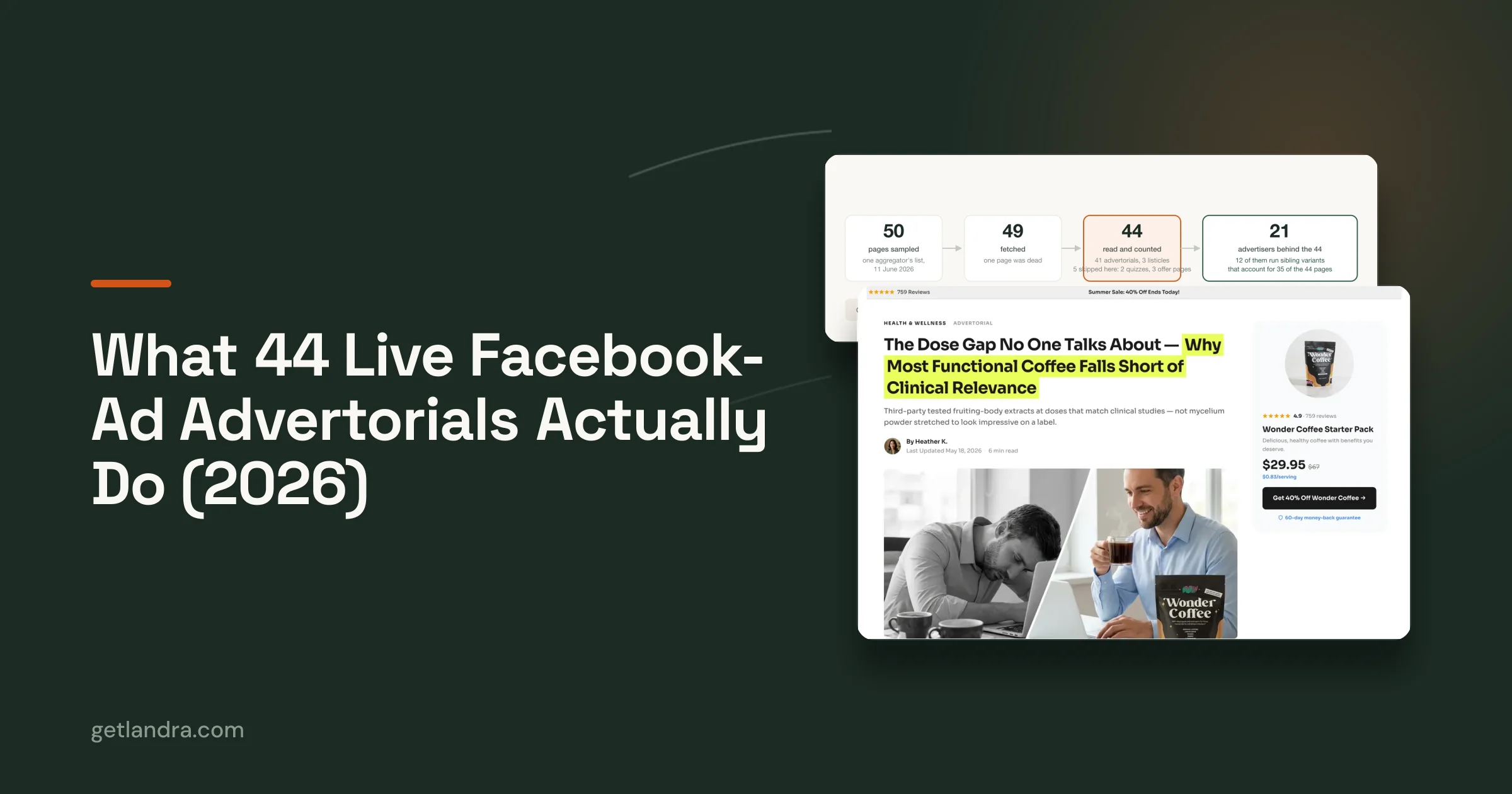
The data point that matters here is blunt. Cold Meta/TikTok traffic under-converts 2–3× on product detail pages versus dedicated pre-sell pages, and one benchmark test found a 46% CAC reduction when the same ads were sent to a narrative advertorial instead of the product page, as discussed in this GrowthHackers community post on pre-sell page performance.
For DTC operators, that changes the center of gravity. CRO doesn't start on the PDP. It starts one step before it.
If you want context on where your own numbers sit, these DTC landing page conversion benchmarks for 2026 are a better reference point than broad ecommerce averages.
What message match actually looks like
Message match sounds abstract until you look at a real paid social flow.
| Ad promise | Bad destination | Better destination |
|---|---|---|
| “Why athletes switched to this magnesium” | Generic PDP with variant selector | Presell page explaining the problem, proof, and use case |
| “3 mistakes causing breakouts” | Collection page | Editorial-style page that teaches first, then introduces product |
| “The kitchen tool replacing 5 gadgets” | Product detail page with short bullets | Story-led page showing use cases, objections, and comparison framing |
The better destination doesn't just repeat the ad headline. It continues the argument.
A pre-sell page does three jobs a standard PDP usually can't do well enough for cold traffic:
- It reframes the visitor's problem. That increases attention.
- It builds belief before the pitch. That lowers resistance.
- It hands warmer traffic to the product page. That improves the odds of a sale.
A useful explainer on the mechanics of this kind of routing sits below.
Practical rule: If the ad is educational, curiosity-driven, or objection-led, the page should continue that format before asking for the purchase.
That's why CRO for DTC brands is strategic, not cosmetic. The biggest win is often not making the product page prettier. It's sending traffic to the right page in the first place.
The Four-Step Cycle of Effective CRO
CRO works when you treat it like a repeatable operating loop. It fails when the team throws random ideas at a page and hopes one sticks.
The process is simple enough to run inside a lean ecommerce team, but it needs discipline.

Step one starts with the leak, not the idea
Most weak CRO programs begin with opinions. Strong ones begin with drop-off.
Start by finding the part of the funnel where intent is highest and friction is worst. That might be the landing page click-through to PDP. It might be add-to-cart. It might be checkout completion. Don't guess.
Then form a hypothesis. Not “let's test a new design.” Something tighter, such as: visitors aren't clicking through because the headline describes the product instead of the outcome.
A useful four-step loop looks like this:
Analyze
Look at analytics, heatmaps, session recordings, ad comments, customer support questions, and checkout behavior. Find the biggest leak first.Hypothesize
Write down what you think is wrong, why it's happening, and what change should improve the outcome.Experiment
Run an A/B test or route a traffic segment to a new page version. Keep the test tied to one clear business question.Learn and implement
Roll out the winner, document the result, and use the learning to shape the next test.
Good CRO teams document what they expected to happen before the test starts. That forces clear thinking and makes post-test analysis more honest.
Testing without math is just rearranging furniture
This is the part people skip because it feels technical. Skipping it is expensive.
Effective CRO protocols mandate documenting alpha, power, and MDE assumptions before launching an A/B test, and they should target the step with the largest drop-off for the biggest cumulative impact, according to Lucky Orange's guidance on statistically valid CRO testing.
You don't need to become a statistician, but you do need to stop calling every short-term movement a win.
A practical testing checklist:
- Define the primary metric. Purchases, click-through to PDP, completed checkout, or qualified lead.
- Set the minimum detectable effect. Know what size win is meaningful before traffic starts flowing.
- Estimate test runtime. Don't stop a test because one variant looks ahead after a few days.
- Segment traffic. Paid social visitors often behave differently from email or branded search visitors.
- Record the context. Offer, creative angle, audience, device mix, and landing page route all matter.
Here's the trade-off. The stricter your process, the slower each test feels. But the looser your process, the more fake wins you implement. And fake wins destroy months of learning.
High-Impact CRO Tactics to Implement Today
If you want faster gains, stop chasing low-impact edits. Start with the changes that affect economics: load speed, message clarity, CTA relevance, social proof, and page routing.
That's where most of the money sits.
Start with the bottlenecks that change economics
The fastest way to waste a CRO sprint is to “optimize” a page that nobody sees or to test a tiny element on a page with a major trust problem.
Here are the moves I'd prioritize first for a DTC brand buying paid traffic:
- Fix page speed before polishing copy. A one-second improvement in page load time can boost conversions by 7%, according to The Frank Agency's CRO statistics roundup. If the page drags, nothing else gets a fair trial.
- Match the CTA to the audience. The same source notes that personalized CTAs convert 202% better than generic calls to action. “Shop now” is often too blunt for cold traffic. A CTA that reflects the visitor's intent usually performs better.
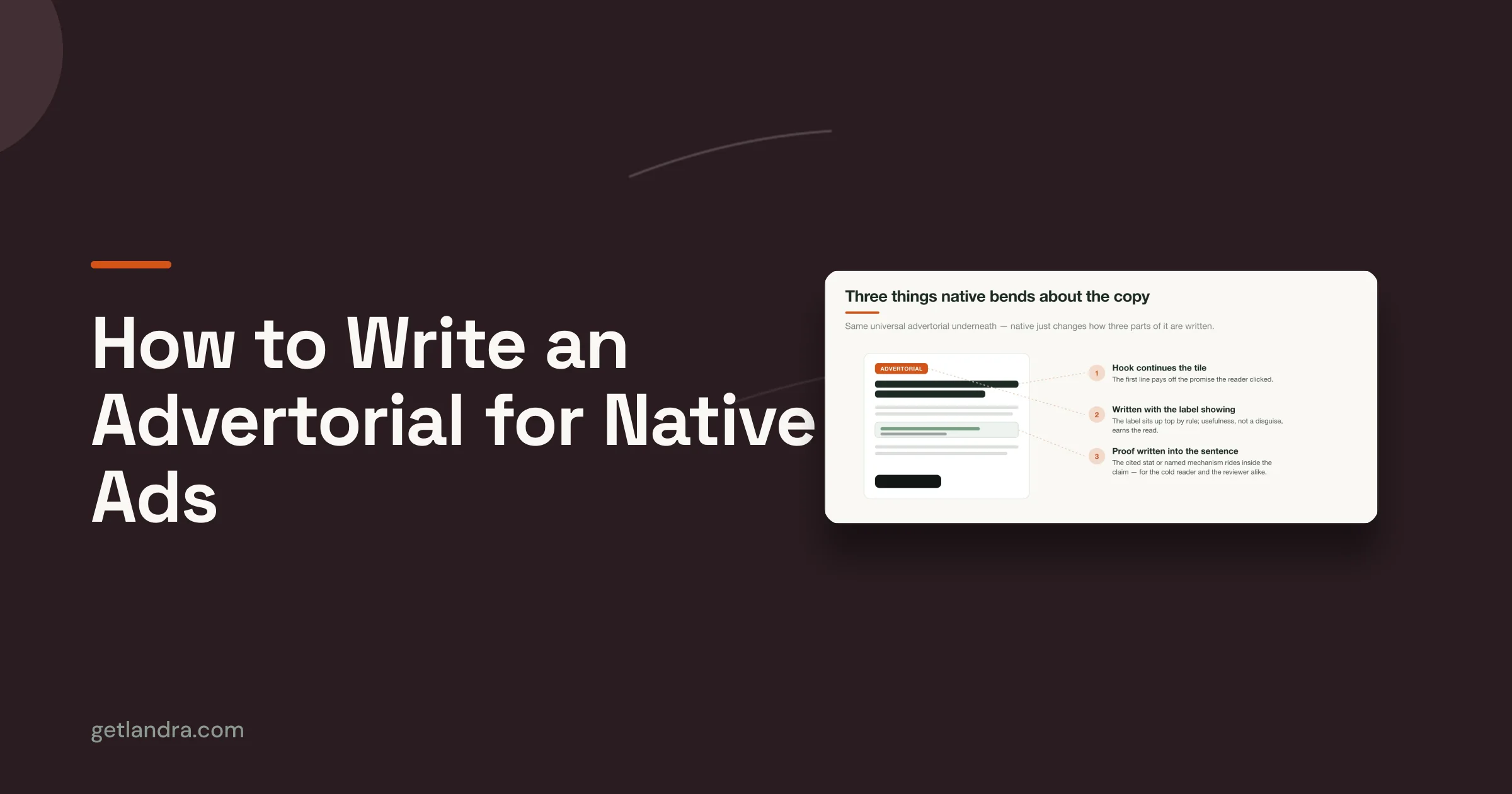
- Lead with the outcome, not the catalog data. Above the fold, explain what problem the product solves and why this click was worth taking.
- Use proof where skepticism appears. Reviews, UGC, creator clips, and customer quotes belong near moments of hesitation, not buried at the bottom.
- Route cold traffic to a pre-sell page. This is often a stronger first test than redesigning the PDP.

A lot of teams need practical examples more than theory. This collection of landing page design best practices for conversion-focused pages is worth reviewing if your current pages look good but still don't convert.
Tactics that usually beat cosmetic edits
The mistake is thinking all CRO tasks have equal upside. They don't.
| Tactic | Why it tends to matter | What to watch |
|---|---|---|
| Mobile-first layout cleanup | Paid social traffic lands on phones first | Thumb reach, scroll friction, stacked sections |
| Pre-sell vs PDP routing test | It fixes intent mismatch earlier in the funnel | Click-through to PDP, purchase rate, CAC trend |
| Stronger above-the-fold value prop | Visitors decide fast whether to keep reading | Bounce behavior and engagement depth |
| Proof inserted near objections | It reduces anxiety at the decision point | Add-to-cart rate and checkout starts |
| CTA rewrites by traffic source | Different visitors need different next steps | CTR to next step, not just button clicks |
If a test doesn't plausibly change revenue or CAC, it probably belongs lower on the list.
A few implementation notes matter:
- Don't bury the angle from the ad. If the ad sells a mechanism, the page should open with that mechanism.
- Don't overload the hero with every feature. Pick the strongest claim and support it.
- Don't treat UGC as decoration. Put it where a skeptic needs reassurance.
- Don't over-test microcopy while the route is wrong. A mediocre pre-sell page often beats a polished product page for cold traffic because the strategy is better.
That last point is the one most brands learn late.
Common CRO Pitfalls and Your Next Steps
The biggest CRO mistakes aren't technical. They're judgment errors.
Mistakes that waste time
Some patterns show up over and over:
- Testing without a real hypothesis. “Let's try a new layout” is not a hypothesis. It's design drift.
- Calling tests too early. Short-term swings create false confidence.
- Optimizing the wrong step. If the main leak is between ad click and page engagement, checkout tweaks won't rescue the funnel.
- Copying another brand's winner. Their traffic, offer, price point, and customer awareness level may be completely different.
- Confusing engagement with intent. More scroll depth or longer time on page only matters if it leads to the next action.
The bigger lesson is that strong results come from a system. That lines up with the broader benchmark gap. The median website conversion rate for 2026 is 2.35%, while top-decile performers reach 11.45%, and that gap reflects a systemic approach rather than isolated tactics, according to Digital Applied's 2026 conversion benchmark analysis.
The tool stack that makes CRO workable
You don't need a giant stack. You need the right categories:
- Analytics tools such as Google Analytics 4 to see traffic, funnels, and source-level performance.
- Behavior tools such as Hotjar or Lucky Orange to watch recordings, heatmaps, and on-page friction.
- Testing tools such as VWO or native landing page testing workflows to compare variants without rebuilding the site each time.
Start with one funnel. Pick one paid traffic route. Find the biggest mismatch between promise and page. Then test the page that should have been there in the first place.
If your paid social traffic is landing on product pages and stalling, Landra helps DTC brands create mobile-first pre-sell pages like advertorials and listicles in minutes from an existing product URL. It's built for testing message match faster, without waiting on a full design and dev cycle.