
Your ad is approved, the campaign is ready, and the new advertorial looks convincing on your phone. Then someone flags the landing page: the headline promises more than the ad, a customer quote implies a health benefit you can't substantiate, and the advertising disclosure sits below the opening image.
You don't have an ad-copy problem alone. You have a mismatch between what the visitor was promised, what the page implies, and what your evidence supports. Fixing the headline won't necessarily fix the testimonial, comparison graphic, or checkout terms.
Editorial-style presell pages deserve a deliberate review because they borrow the presentation of independent reporting. A byline, ranked list, expert portrait, or magazine-style masthead can change how a buyer interprets an otherwise ordinary product claim. Review those elements together, not as separate creative assets.
A useful advertising compliance checklist pairs every audit question with an evidence file. The answer shouldn't be “the copywriter checked it.” It should be an approved claim log, an original testimonial, a disclosure screenshot, or a tested consent record.
Use the checks below before publishing advertorials and listicles, then repeat the relevant checks whenever you change the ad hook, offer, audience, or page. This is a practical review framework, not legal advice. Health claims, sensitive targeting, and jurisdiction-specific requirements need qualified review rather than a marketer's best guess.
Table of Contents
- 1. Clear Advertisement Labeling for Native and Editorial-Style Pages
- 2. Material Connection Disclosure for Endorsements and Affiliate Relationships
- 3. Substantiation of Product and Performance Claims
- 4. Authentic Reviews and Testimonials Under the FTC Consumer Reviews Rule
- 5. Health and Supplement Claim Disclaimers
- 6. Platform Ad Policy Compliance for Meta and TikTok
- 7. Accurate Pricing, Discount, and Urgency Claims
- 8. Privacy, Tracking, and Consent Disclosures
- What Each Compliance Check Covers and What to Keep on File
- Turn This Checklist Into a Pre-Publish Routine
1. Clear Advertisement Labeling for Native and Editorial-Style Pages
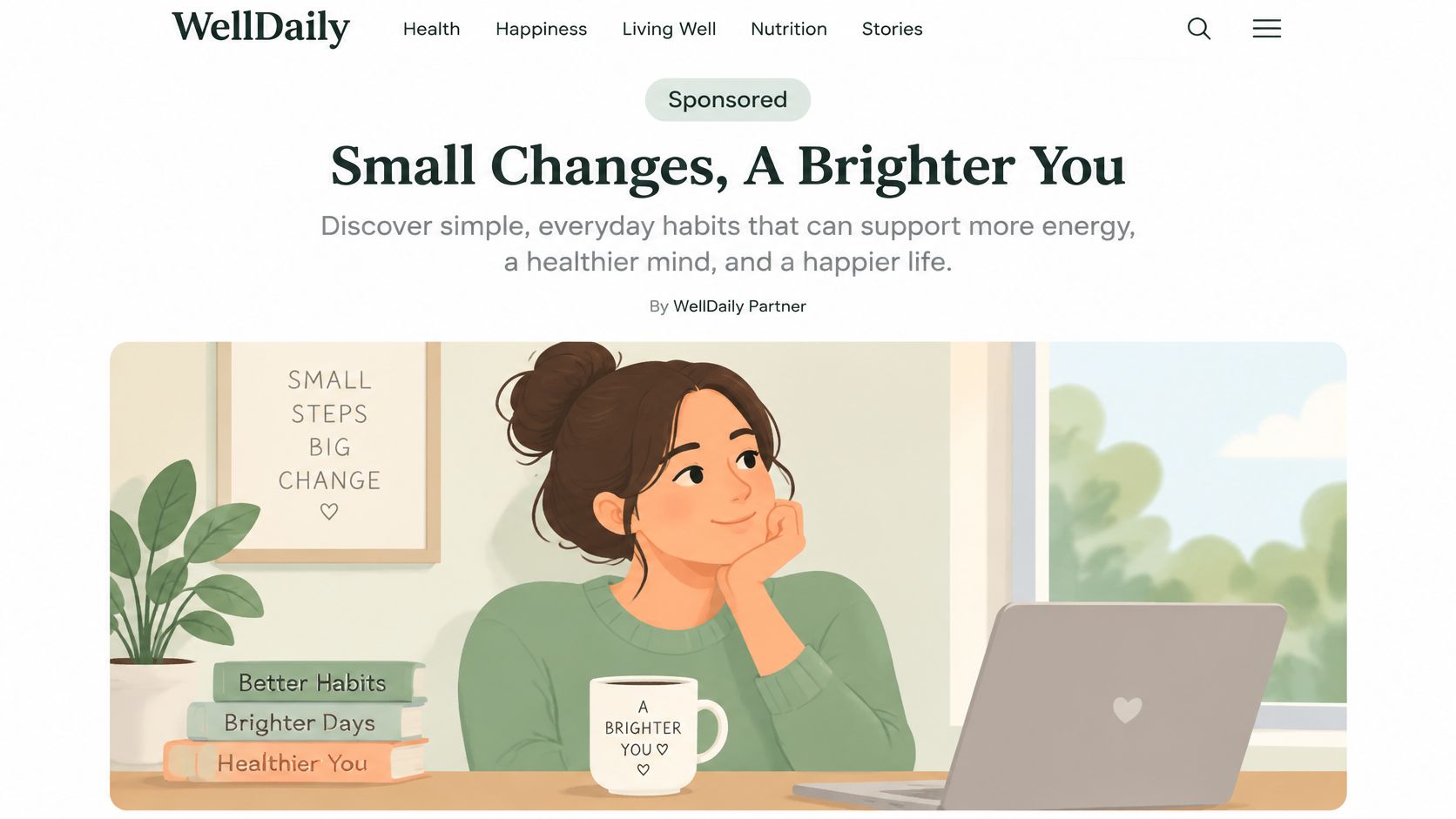
Audit question: Will a visitor recognize the commercial purpose before interpreting this page as independent editorial content?
Start with the first mobile screen. If the page resembles a magazine feature, its advertising label shouldn't require scrolling past the headline, decoding a publisher logo, or opening a footer link.
Disclosure failures remain a practical problem. In its analysis of influencer advertising during 2024, the UK Advertising Standards Authority found that 57% complied with its disclosure rules, while 34% contained no disclosure at all. Those findings concern influencer ads, not advertorial pages, but they illustrate why disclosure needs an explicit review step.
Check the first impression, not just the label
Say a skincare ad opens a ranked list of moisturizers. The page has a magazine-style masthead, a writer biography, and a preferred product at the top. A small commercial disclosure beneath the final recommendation doesn't resolve the independent impression created at the beginning.
Use plain wording such as Advertisement, position it prominently near the headline, and keep the treatment consistent across variants. The guide to advertorial compliance for DTC brands provides additional context for reviewing editorial-style layouts.
- Label visibility: Check contrast, font size, spacing, and placement on the actual published page.
- Publisher identity: Make sure the masthead and byline don't imply an independent publication that doesn't exist.
- Variant consistency: Verify that duplicated pages retain the disclosure after headline and hero-image changes.
Evidence file: Save desktop and mobile screenshots showing the disclosure, headline, masthead, and opening content together. Include the published URL and page version so the reviewer's approval matches the page receiving traffic.
2. Material Connection Disclosure for Endorsements and Affiliate Relationships
A creator's permission to reuse a video doesn't answer whether visitors understand the creator's relationship with your brand. Permission, authenticity, and disclosure are separate checks.
Audit question: Does each recommendation reveal any relationship that could affect how the audience evaluates it?
The FTC's revised Endorsement Guides address material connections such as payment, free products, employment, and other relationships when a significant minority of the audience may not understand or expect them. They also explain that an endorsed performance claim generally needs the evidence the advertiser would need to make that claim directly.
Practical rule: A page-level advertising label and an endorsement disclosure answer different questions. One identifies commercial content; the other explains the recommender's relationship.
For example, suppose a kitchenware listicle quotes a creator who received a free pan and earns affiliate commission. Calling that person a cooking enthusiast doesn't explain either connection. Put a clear explanation beside the recommendation rather than assuming visitors saw the creator's original caption.
Keep the relationship attached to the asset
Store disclosure instructions with the approved quote, image, or video. Otherwise, a designer can move the endorsement into a new section and accidentally leave its disclosure behind.
Your creator brief should specify the relationship, required disclosure wording, placement expectations, and responsibility for corrections. Teams automating influencer marketing for lean teams should make these fields part of the asset handoff, not optional notes.
Evidence file: Keep the creator agreement, payment or gifting record, approved disclosure wording, original content, and screenshots of its published use. For affiliate recommendations, retain the commission arrangement and identify which links participate.
3. Substantiation of Product and Performance Claims
Audit question: Can we produce evidence for every objective promise before the campaign goes live?
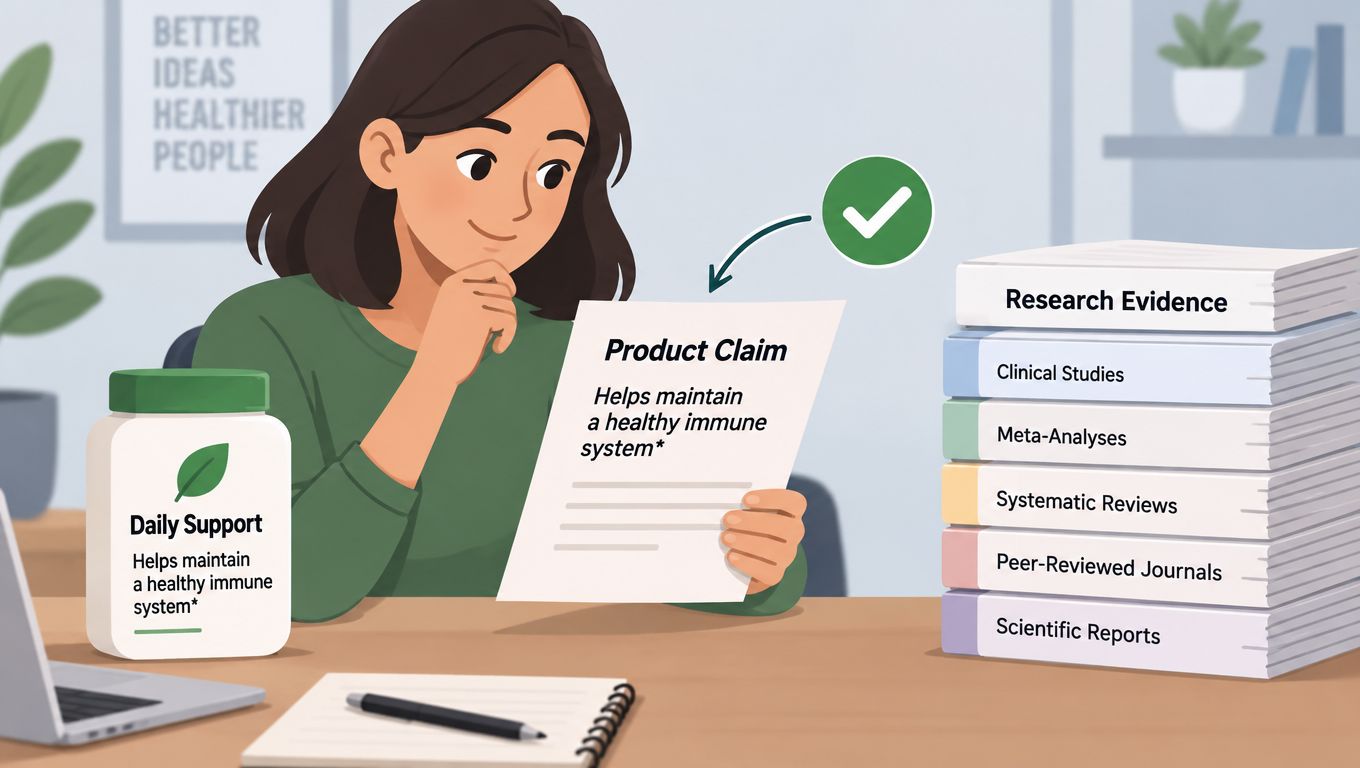
The FTC's advertising guidance for small businesses states that advertising must be truthful, non-deceptive, fair, and supported by evidence. Expert endorsements also require appropriate qualifications and the kind of evaluation, examination, or testing normally used by experts in that field.
Build a claim-to-source log before polishing the prose. Include headlines, image text, comparison labels, charts, captions, and statements repeated from customer quotes. A claim doesn't become exempt because it appears inside a story.
Match the evidence to the actual promise
Suppose a listicle describes a travel bottle as leakproof during flights. A supplier specification describing the lid material doesn't establish performance during air travel. Either obtain suitable testing or remove the unsupported promise.
The same discipline applies to rankings. If a product wins your comparison because of price and capacity, explain those criteria instead of implying superiority across every possible use.
- Exact claim: Copy the published wording, including qualifications.
- Supporting record: Attach the test, study, specification, or calculation that supports it.
- Scope and limits: Note the product version, conditions, audience, and outcomes covered.
- Decision: Record approval, required edits, or rejection, with a named owner.
Evidence file: Keep the claim log and underlying documents together. A link to a supplier's changing webpage is weaker operationally than a retained, dated document.
When building compliant advertorial landing pages, review AI-generated wording against the evidence rather than merely softening adjectives. Changing a definitive promise into a tentative one doesn't automatically make the underlying claim supportable.
4. Authentic Reviews and Testimonials Under the FTC Consumer Reviews Rule
Audit question: Can we trace every testimonial to a real person's actual experience, and have we preserved its meaning?
Treat authenticity as a publication requirement, not something a plausible customer name or review badge establishes. For a formal Consumer Reviews Rule assessment, have your reviewer confirm the current requirements against the specific review practices you use. Don't treat an authenticity check alone as a complete legal review.
A practical review starts with the original record. Suppose a customer writes that a pillow felt comfortable but didn't improve their sleep. Publishing only the comfort statement beneath a sleep-improvement headline could imply a result the customer explicitly rejected.
Preserve context as well as wording
Keep the original submission and compare it with the proposed excerpt. Check the surrounding headline, customer photograph, product identification, and results language too. An accurate excerpt can still appear in a misleading context.
- Source verification: Match the quote to a review submission, customer correspondence, or other reliable experience record.
- Editing review: Flag omissions, paraphrases, and changes that could alter meaning.
- Presentation review: Don't present invented identities, synthetic portraits, or composite stories as documented customers.
- Outcome review: Ask whether the page makes an exceptional result look routine.
A real testimonial isn't a substitute for evidence supporting the product claim it communicates.
Evidence file: Retain the original review, verification record, reuse permission where appropriate, edited version, and final placement screenshot. Keep internal records secure rather than exposing customer information in a shared creative folder.
For supplement pages, use the guidance to avoid fake reviews in supplement marketing as a review aid, while keeping authenticity and health-claim approval as separate decisions.
5. Health and Supplement Claim Disclaimers
A disclaimer is not permission to publish a stronger health promise than your evidence supports. Review the promise first, then determine which qualifications and product-specific disclosures belong with it.
Audit question: What health outcome will a reasonable buyer infer, and is that outcome supported?
The FTC's endorsement guidance explains that endorsements must be truthful and that advertisers need adequate support for objective claims, including those conveyed through testimonials or expert endorsements. Unusually strong results also need careful treatment so consumers aren't misled about what they can generally expect.
Review the whole health story
Say a supplement advertorial uses cautious product copy but opens with a story about a person abandoning medication after using the product. The narrative can communicate a treatment claim even if the product description uses restrained language.
Review the headline, symptom descriptions, expert imagery, testimonial, and call to action together. Don't assume that replacing a disease term with a wellness phrase resolves the implication.
- Claim meaning: Describe the outcome the visitor is likely to understand, not merely the wording the writer intended.
- Evidence fit: Check whether the support applies to the finished product, relevant use, and advertised outcome.
- Disclaimer review: Have a qualified regulatory reviewer determine the applicable labeling and advertising disclosures.
- Typical outcomes: Establish what buyers can generally expect before featuring dramatic individual results.
Evidence file: Keep a health-claim review memo, supporting evidence, approved wording, disclaimer placement, and the reviewer's decision. Identify unresolved questions explicitly.
Avoid treating supplement-label requirements and advertising requirements as interchangeable. A copied FDA disclaimer isn't a universal approval stamp for an advertorial, and a generic statement about variable results doesn't establish that an advertised outcome is typical. If the claim remains unsupported, remove it rather than adding more fine print.
6. Platform Ad Policy Compliance for Meta and TikTok
Audit question: Does the complete ad-to-page journey match the current rules for the platform, category, audience, and destination?
Review Meta and TikTok separately. Keep the current official policy text used for each review in your campaign records, particularly for restricted categories. An approval notification is an operational status, not your evidence that every claim and disclosure is sound.
Suppose a TikTok creative introduces a cosmetic product as part of a daily routine, but the destination page describes it as an alternative to a medical procedure. The destination makes a materially stronger promise than the creative. Reviewers need to compare them side by side.
Audit delivery as well as creative
The European Commission's explanation of the Digital Services Act describes advertising transparency, restrictions involving sensitive-data targeting and minors, and protections against manipulative interfaces. These are reasons to review audience settings and the conversion experience alongside copy, while distinguishing platform obligations from your own responsibilities.
- Promise consistency: Compare the ad hook, page headline, featured result, offer, and checkout destination.
- Audience suitability: Review geography, age settings, exclusions, and sensitive-interest assumptions.
- Variant coverage: Inspect personalized headlines and alternate destinations, not just the default URL.
- Policy record: Save the relevant policy version and your approval notes.
A tool such as the ShortGenius Meta ad creator can be part of creative production, but your team still needs to approve the resulting asset and its destination together.
Evidence file: Save the final ad, rendered landing page, targeting settings, policy review, and platform decision. Keep conservative backup wording if useful, but don't use alternate pages or redirects to conceal the actual destination from review.
7. Accurate Pricing, Discount, and Urgency Claims
Audit question: Can operations verify every price, saving, stock message, and deadline the visitor sees?
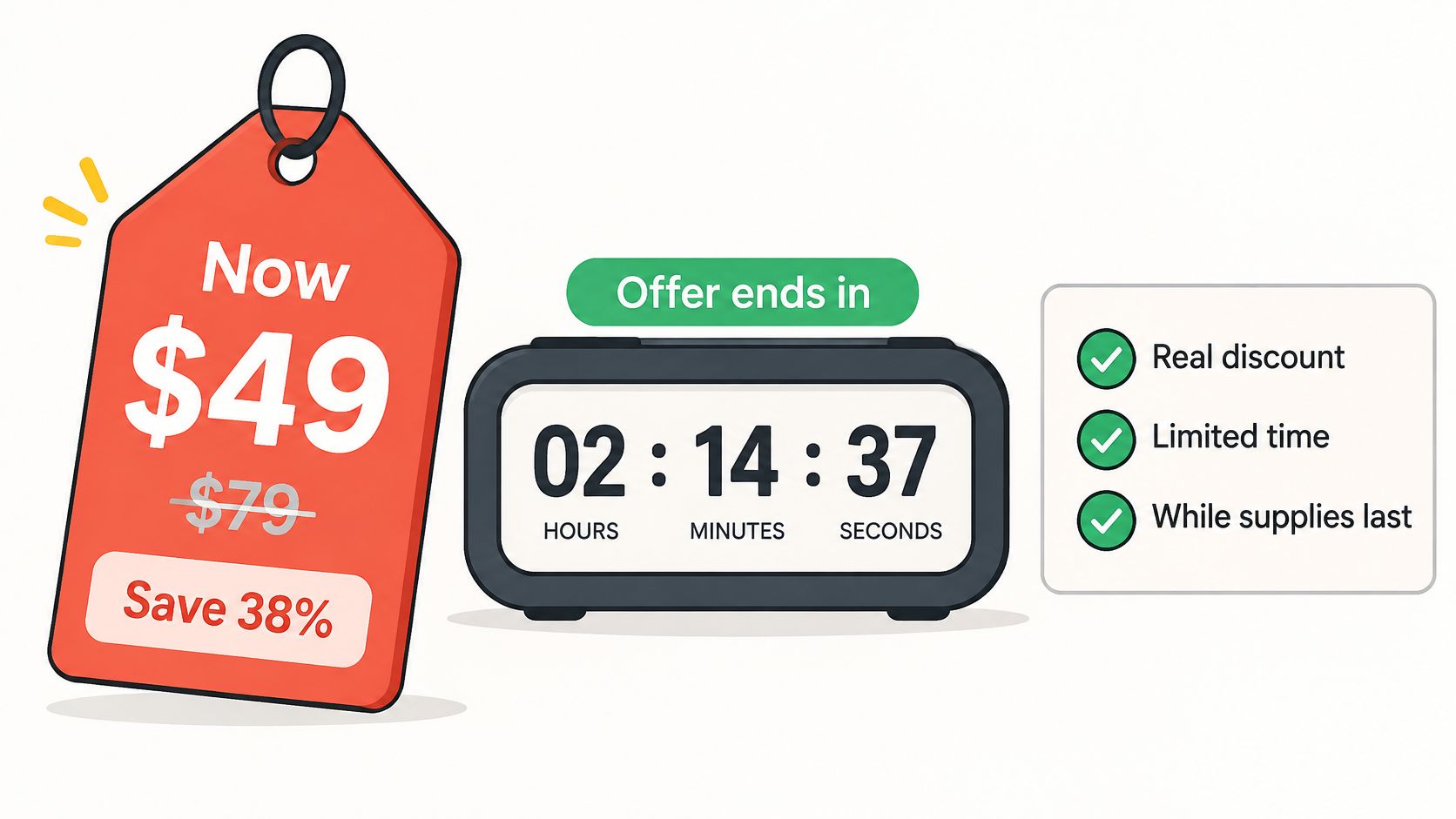
A countdown that resets after refresh is easy to spot during an audit. More subtle problems appear when a genuine promotion ends but an old advertorial keeps receiving traffic, or when the page advertises savings against a comparison price nobody can document.
In an EU-coordinated consumer-protection sweep of 399 retail websites and apps, authorities found dark patterns on 148 properties and concluded that at least 37% potentially violated the Unfair Commercial Practices Directive. Audit the rendered interface, not just the promotional copy stored in your editor.
Connect the offer to an operational record
Suppose a presell page advertises a bundle discount, but the primary button opens a subscription with a different purchase commitment. The audit needs to catch that difference before visitors reach checkout.
- Price basis: Retain the history or calculation supporting the reference price and advertised saving.
- Deadline behavior: Confirm what happens when the promotion ends, including cached and duplicated pages.
- Stock accuracy: Tie availability messages to a reliable inventory process.
- Total commitment: Make delivery charges, recurring billing, trial conditions, and material restrictions visible near the decision.
Launch gate: If the offer owner can't explain what makes a deadline or stock warning true, remove it.
Evidence file: Keep the offer brief, pricing history, discount calculation, promotion settings, inventory source, and screenshots of the page and checkout. Test refreshes, returning visits, and mobile layouts.
A quieter offer with verifiable terms is preferable to urgency your team can't defend. Don't trade clarity for a timer because it makes the page look more conversion-focused.
8. Privacy, Tracking, and Consent Disclosures
Audit question: Does the page explain what it collects, and do its controls behave as promised?
Open the published page in a clean browser session. Use browser developer tools, the network panel, and your tag manager's preview mode to inspect scripts before and after the visitor interacts with consent controls.
A privacy-policy link doesn't demonstrate that tracking behavior matches the notice. Likewise, a form submission record doesn't necessarily explain which marketing permission the visitor gave.
Test collection, choice, and downstream use
Say a sleep-product listicle offers a downloadable guide. The visitor submits an email address for the guide, but an integration also adds the record to an SMS workflow after a later checkout. Trace those steps instead of assuming every downstream use follows from the original submission.
For EU platform advertising, the Digital Services Act summary describes requirements to identify advertising, the party on whose behalf it appears, its payer, and meaningful information about principal targeting parameters. Don't confuse platform transparency duties with your separate landing-page privacy and consent obligations.
- Tracking inventory: Record pixels, analytics, embedded tools, data destinations, and purposes.
- Choice behavior: Test acceptance, rejection, preference changes, and returning visits.
- Form clarity: Explain the promised delivery and distinguish additional marketing choices.
- Jurisdiction review: Have the appropriate reviewer assess applicable privacy and messaging requirements rather than assuming email and SMS follow identical rules.
Evidence file: Retain the tag inventory, consent configuration, notice version, form wording, test results, and permission records. Use separate, unchecked marketing choices as a clear design approach where appropriate, with legally reviewed wording.
Use cookie compliance research for ecommerce competitors for comparison, not as proof that copying another store's banner meets your obligations.
What Each Compliance Check Covers and What to Keep on File
| Item | Governing Rule | Where It Applies | Evidence to Keep | Main Risk |
|---|---|---|---|---|
| Clear Advertisement Labeling for Native and Editorial-Style Pages | FTC Act Section 5; FTC Native Advertising Guide (2015) | Entire advertorial page, with a clear label near the top and visible on mobile | Copies or screenshots showing label placement across page versions and devices | Readers may mistake the ad for independent editorial content, inviting enforcement or platform rejection |
| Material Connection Disclosure for Endorsements and Affiliate Relationships | FTC Endorsement Guides, 16 CFR Part 255, revised 2023 | Endorsements by paid spokespeople, influencers, affiliates, or recipients of free products | Contracts, creator briefs, disclosure examples, and compliance monitoring records | Undisclosed relationships may mislead consumers and expose advertisers to liability |
| Substantiation of Product and Performance Claims | FTC Act Section 5; FTC Advertising Substantiation Policy Statement | Objective express or implied claims, especially health, safety, and financial claims | Claim log and supporting studies or documentation available before publication | Unsupported claims may trigger FTC or state enforcement |
| Authentic Reviews and Testimonials Under the FTC Consumer Reviews Rule | FTC Consumer Reviews and Testimonials Rule, 16 CFR Part 465 | Reviews and testimonials across marketing channels, including landing pages | Verified customer records, original reviews, and records of edits or typical-results disclosures | Fake or misrepresented reviews, or suppression of negative reviews, may lead to civil penalties |
| Health and Supplement Claim Disclaimers | DSHEA; FDA structure/function claim guidance; FTC Act Section 5 | Supplement health claims, testimonials, and before-and-after results | Product-specific claim review and support for health-related statements | Disease claims may cause a supplement to be treated as an unapproved drug |
| Platform Ad Policy Compliance for Meta and TikTok | Meta Advertising Standards; TikTok Advertising Policies | Ad creative and destination pages, including claims, imagery, and landing-page consistency | Current policy checks and records of reviewed ad and page versions | Rejection, account restrictions, or disabled accounts |
| Accurate Pricing, Discount, and Urgency Claims | FTC Guides Against Deceptive Pricing, 16 CFR Part 233; FTC Act Section 5 | Reference prices, discounts, countdowns, stock claims, trials, and subscriptions | Price history, promotion end dates, inventory records, and offer terms | Deceptive pricing or fabricated scarcity may prompt enforcement and erode trust |
| Privacy, Tracking, and Consent Disclosures | CCPA/CPRA; CAN-SPAM Act; TCPA | Tracking, data collection, privacy notices, email forms, and SMS sign-ups | Privacy policy versions, consent records, opt-out records, and form disclosures | Privacy or messaging violations may lead to lawsuits, fines, or loss of consumer trust |
Turn This Checklist Into a Pre-Publish Routine
Assign a page owner before production starts. That person doesn't need to make every legal decision, but they do need to ensure every audit question has an answer, an evidence record, and an approver. A checklist with unresolved entries shouldn't become approved just because the media launch is scheduled.
Create a campaign folder containing the ad creative, page copy, claim log, testimonial sources, commercial disclosures, offer records, privacy tests, and final screenshots. Use version names that connect the approved page to the ad sending traffic there. Reviewers shouldn't have to guess whether the live headline is the one they signed off.
Define what blocks publication
Separate routine edits from questions that require escalation. A missing disclosure screenshot is a production task; an unsupported health outcome is a claim decision. Neither should disappear inside a general comment asking the writer to make the page safer.
- Block launch: Unsupported objective claims, unverifiable testimonials, unresolved offer terms, or tracking that contradicts the approved consent behavior.
- Require specialist review: Health implications, sensitive targeting, unclear jurisdictional obligations, and unfamiliar review practices.
- Reopen approval: Changes to the ad promise, product, price, testimonial, audience, tracking setup, or material page structure.
- Archive the decision: Record who approved the release, what they reviewed, and any conditions attached.
Our free Compliance Checklist and guides with fill-in templates and pre-publish checklists can provide a starting structure. They don't replace evidence for your product or approval of your particular campaign.
We don't pre-screen generated content for advertising-rule compliance or guarantee its accuracy. Your team remains responsible for reviewing, editing, and approving every generated page before publication. Treat generated copy as a draft, especially when it introduces comparisons, scientific explanations, expert authority, or customer outcomes.
Review the live page after publishing
Open the actual destination from the ad on a phone. Check that the correct variant loads, the label remains visible, the offer matches, and the primary button reaches the intended purchase option. Confirm that consent controls and forms work outside the editor preview.
Keep that live verification with the approval record. When the team duplicates the page for another audience or promotion, carry forward the evidence, then recheck anything the new version changes.
The working standard is straightforward: every promise has support, every commercial relationship is understandable, and every material choice works as presented. That gives performance marketers room to write persuasive pages without relying on hidden qualifications or an approval notification as their compliance process.
Landra turns a product URL into an editable, mobile-first presell page, including advertorials and listicles. Visit Landra to build your draft and use the free Compliance Checklist to organize the evidence and approvals you need before publishing.