

You've launched a promising Facebook or TikTok campaign, the creative earns attention, and the product page receives visitors. Then the numbers stall. Cold prospects land on a generic product detail page, fail to understand why the offer matters, and leave before they reach checkout. Your team knows the campaign needs a better bridge, but a traditional agency workflow can make every new angle feel slow and expensive.
An AI powered landing page builder gives DTC teams another route. Instead of starting with a blank canvas, the platform can turn a product URL, brand context, and campaign objective into an editable advertorial, listicle, or presell page. The important distinction is that AI should support the entire performance workflow, not just write a headline. The page still needs credible messaging, a clear path to purchase, fast mobile rendering, useful integrations, and a practical testing process.
Table of Contents
- Introduction to AI Powered Landing Page Builder
- Understanding AI Powered Landing Page Builders
- Core Features and Generation Workflows
- Examples of Presell Pages
- Performance and Integration Considerations
- Vendor Evaluation Checklist
- Implementation Tips for Paid Social
- Landra Differentiators and ROI Benchmarks
Introduction to AI Powered Landing Page Builder
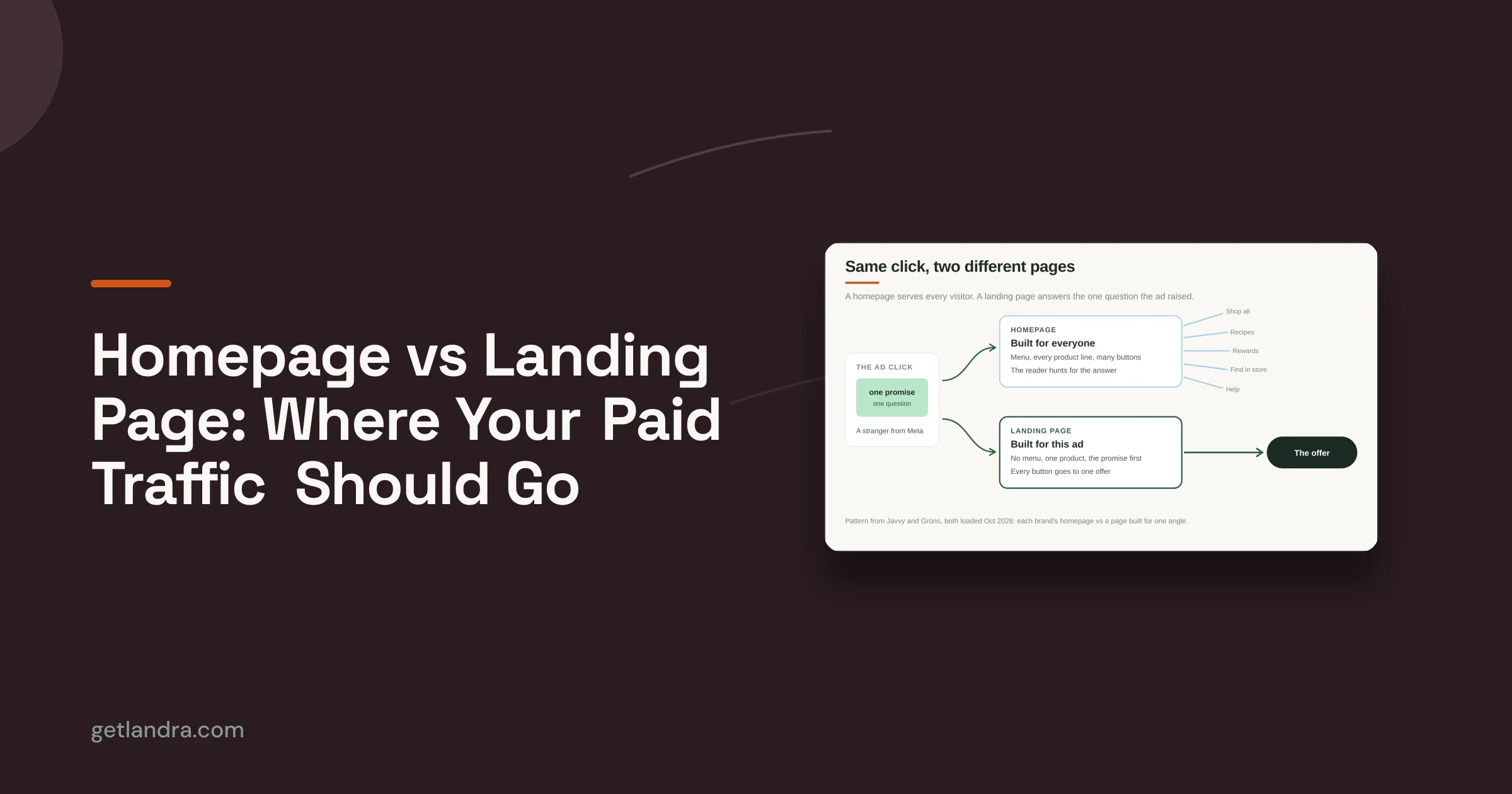
A cold visitor rarely needs more product information. They need the right explanation in the right order. A presell page can connect the promise in an ad to the problem your product solves, answer objections, introduce proof, and then direct the visitor toward the product page with more purchase intent.
The category is expanding quickly. The AI-powered website builder market reached USD 3.24 billion in 2026, up from USD 2.69 billion in 2025, which implies roughly 20% year-over-year growth in one year, according to market coverage of AI-powered website builder growth. That demand reflects a practical need: marketers want to produce and refine campaign-specific pages without waiting for a full design and development cycle.
The promise isn't “press a button and guarantee conversions.” AI can produce a useful first draft quickly, but your team must verify claims, align the page with the ad, check compliance, and monitor the published experience. By the end of this guide, you'll have a framework for understanding the technology, assessing vendors, improving paid-social workflows, and deciding whether a platform such as Landra fits your process.
Understanding AI Powered Landing Page Builders
An AI-powered landing page builder combines generative content, layout decisions, brand analysis, and publishing tools in one workflow. Traditional WYSIWYG software gives you a blank or templated page and asks you to arrange sections, write copy, select images, and connect forms. Manual agency production adds strategy, copywriting, design, development, review, and launch coordination.
A useful analogy is a made-to-measure suit. A drag-and-drop editor gives you an off-the-rack garment and lets you adjust it. An AI builder takes your measurements, suggests a cut, chooses materials that match your brief, and gives you an editable first version. You still inspect the stitching, but you don't begin with fabric scattered across a table.

What the system actually uses
A capable builder can use a product URL, existing brand pages, approved images, customer reviews, offer details, and audience information. It then organizes those inputs into a page type suited to the campaign:
- Advertorial: A narrative that introduces a problem, explains a discovery, develops curiosity, and presents the product as a relevant solution.
- Listicle: A scannable ranked or numbered format that helps readers compare reasons, benefits, or use cases.
- Presell page: A warm-up experience designed to prepare a visitor before checkout or a product detail page.
The output should remain editable. Your team needs to change claims, replace images, adjust the call to action, and remove unsupported language without rebuilding the page from scratch.
Where it belongs in the stack
The builder sits between acquisition and conversion. Ads send traffic to the page, analytics records behavior, the CRM or email platform receives leads, and the commerce system handles the purchase. Publishing options and integrations matter because a page that can't pass clean data into your existing stack creates operational work after the copy is finished.
The wider market context supports this shift. The AI-powered website builder category reached USD 3.24 billion in 2026, with roughly 20% year-over-year growth, as documented in the AI website builder market estimate. For Shopify teams evaluating how AI can support storefront operations, Shugert's technical Shopify expertise offers useful context on agentic storefront development and technical implementation.
Core Features and Generation Workflows
The strongest workflow starts with context, not decoration. Give the platform a product URL and a clear campaign brief, then inspect what it understood before accepting the page structure.

A practical generation sequence
Input the product information. Provide the product URL, audience, offer, traffic source, and desired action. A product page alone may describe features, but it may not tell the system which objection your Meta or TikTok campaign needs to address.
Review brand interpretation. Check the proposed voice, benefits, proof, and visual direction. If the tool confuses a product feature with a customer outcome, correct the context before generation.
Choose the page frame. An advertorial suits a problem-led narrative. A listicle works when readers need a quick set of reasons or comparisons. A presell page can combine education, proof, and a transition to checkout.
Generate alternatives. Ask for multiple headline directions, hero treatments, section orders, and calls to action. One draft may be polished but poorly matched to the ad angle.
Edit and publish. Inline editing should let a marketer change copy, images, and structure directly. Variant duplication is valuable because it turns a winning base page into a testing system rather than a one-off asset.
A beauty brand might use a narrative opening about a familiar skincare frustration, followed by ingredient education, customer experience, and a product transition. A supplement brand may choose a listicle that organizes benefits around daily routines and buying objections. A fitness product could use a presell page that explains why tracking a behavior matters before introducing the device.
The category has broad commercial demand. One independent estimate places landing page builders at USD 2.15 billion in 2025 and projects USD 3.99 billion by 2032, as reported in landing page builder market research. That growth makes workflow quality more important, because basic page creation is becoming easier to find across many products.
Watch the embedded walkthrough for a visual example of how an AI page-generation workflow can move from brief to editable output.
For a deeper look at the narrative format, use this guide to AI-generated advertorials as a reference for shaping the page around reader awareness rather than stacking product features.
Examples of Presell Pages
Presell formats become easier to evaluate when you tie them to a campaign problem. The following examples are useful models, but they aren't reported case studies or performance claims. Treat them as planning scenarios for your own testing.

Beauty advertorial
A skincare team is running cold social ads around dull-looking skin. Instead of sending visitors directly to a product page, the team briefs the builder to create an editorial story about the underlying routine problem. The draft uses approved customer language, explains the product's ingredients, and places proof after the reader understands the problem.
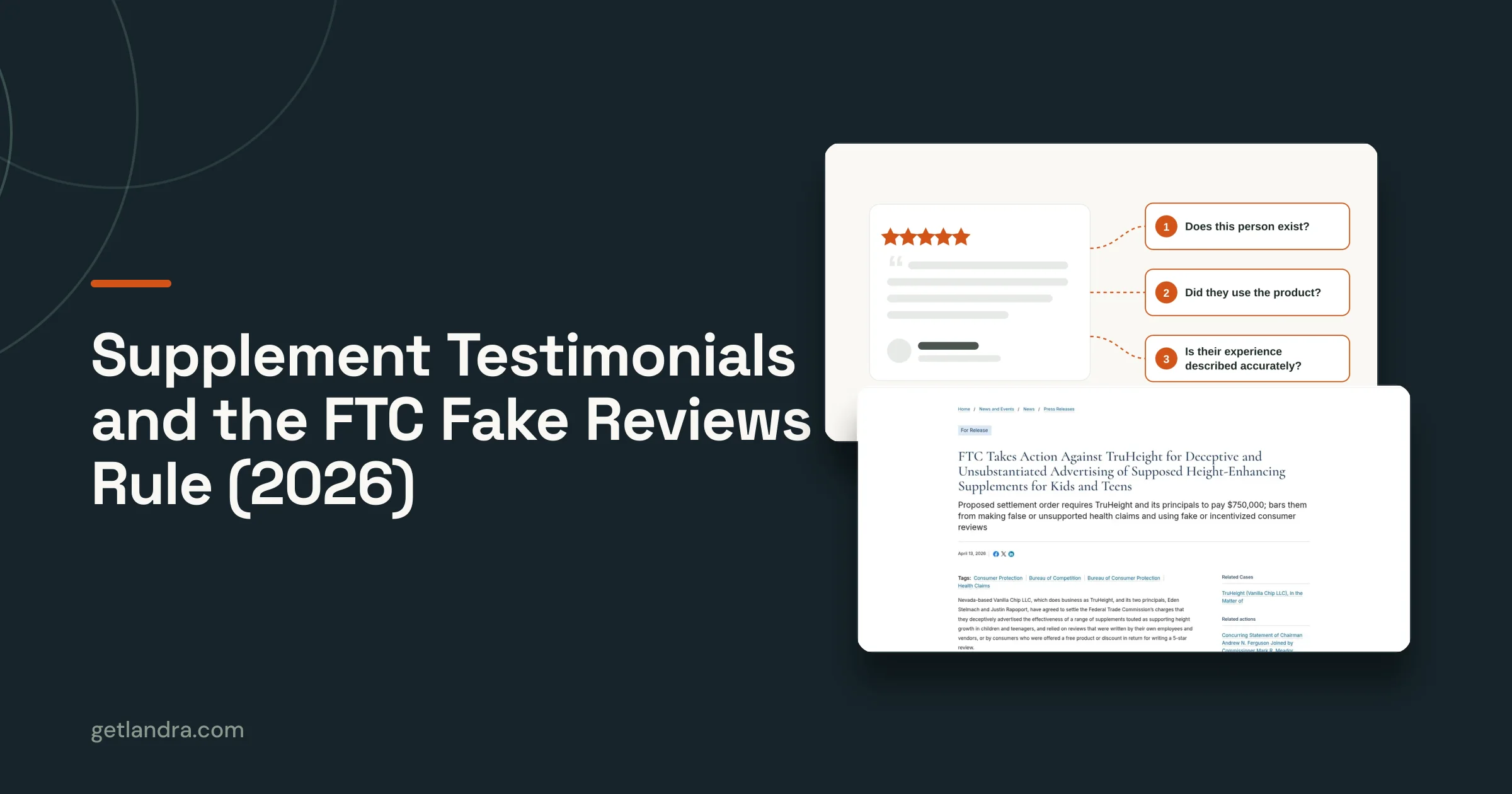
The marketer removes unsupported superlatives, checks every review reference, and keeps the call to action consistent with the ad. The lesson is simple: AI can arrange the narrative, but the brand must control evidence and compliance.
Supplement listicle
A supplement brand wants to address several buying questions, including routine fit, ingredients, and ease of use. A listicle can present those points as distinct reasons, allowing a mobile visitor to scan the page without reading every paragraph.
The prompt should define the intended audience and approved claims. The team can then create alternate openings, such as a daily-routine angle or an ingredient-literacy angle, while keeping the offer and destination consistent. This format works best when each item adds a different reason to continue, rather than repeating the same benefit in new wording.
Fitness tracker presell
A fitness brand is buying TikTok traffic from short videos about inconsistent habits. A warm-up page can begin with the behavior problem, explain why visibility helps people build awareness, and introduce the tracker after the reader recognizes the gap.
That sequence gives the ad somewhere meaningful to lead. The page doesn't need to imitate the video or exaggerate the outcome. It needs to preserve the campaign's central idea, answer the next question, and make the product transition feel logical.
Performance and Integration Considerations
Generation speed can't rescue a slow published page. Google research reports that when mobile load time increases from one second to ten seconds, the probability of a visitor bouncing rises by 123%, according to Google's mobile page-speed benchmarks. For paid traffic, that means the builder's technical output deserves the same scrutiny as its copy.

What to inspect before launch
Ask the vendor or your developer to inspect the rendered page, not just the editor preview. Look for a lean DOM, appropriately sized images, deferred noncritical scripts, efficient font loading, and a clear above-the-fold path. Interactive elements can help engagement, but unnecessary animation and third-party requests add weight.
Google's research also reports that as page complexity grows from 400 to 6,000 elements, conversion probability falls by 95%, reinforcing the need to control structural bloat. A visually rich page isn't automatically persuasive. If a mobile visitor must wait for decorative assets before understanding the offer, design has become a conversion liability.
Choose the right publishing path
Your output should match your operating model:
- Shopify publishing works when the page needs to live close to the store, product data, and checkout experience.
- A hosted URL can reduce developer involvement and make campaign launches straightforward.
- HTML export gives technical teams more control over hosting, scripts, and deployment.
- Webflow or another connected CMS can suit teams that already manage marketing pages there.
Integration also affects lead handling. Confirm that forms, analytics events, UTM parameters, and purchase transitions pass into the systems your media buyers and retention teams use. Marketers looking beyond sales pages can also review practical guidance on how to create high-converting registration pages, especially when the conversion action is a signup rather than a purchase.
Practical rule: Treat the generated page as production code with marketing consequences. Test it on an actual mobile connection, then inspect the path from ad click to conversion event.
Vendor Evaluation Checklist
A vendor demo can make every builder look capable. Your evaluation should focus on what happens after the first draft, because category reviews divide products into drag-and-drop speed tools, hybrid design-developer platforms, and generative prototyping systems, with post-generation workflow as the key differentiator. See the 2026 category review of AI landing page builders for that three-tier framing.
Start with a campaign brief that resembles your real work. Use an actual product URL, a real audience, approved proof, and the page format you expect to deploy. Then score each vendor against the same questions.
| Criteria | Why It Matters |
|---|---|
| Generation quality | The first draft should reflect the product, audience, offer, and traffic angle rather than produce generic copy. |
| Brand context retention | Saved brand information reduces repeated briefing and helps keep language, visuals, and claims consistent. |
| Editing flexibility | Inline editing lets marketers correct details without waiting for developers or rebuilding the page. |
| Page format options | Advertorials, listicles, and presell pages serve different awareness levels and campaign narratives. |
| Mobile performance | Lean markup, compressed assets, and limited dependencies protect the experience after the ad click. |
| Publishing outputs | Shopify, hosted URLs, Webflow, or HTML export should fit your existing deployment process. |
| Testing workflow | Variant duplication, A/B testing, and clear experiment management turn production into iteration. |
| CRM and analytics integrations | Leads and behavioral events need to reach the systems that manage follow-up and attribution. |
| Compliance controls | Your team should be able to review testimonials, health claims, disclaimers, and advertorial disclosures. |
| Commercial fit | Compare generation limits, storage, publishing access, collaboration, and support against campaign volume. |
Don't award a high score because a tool produces attractive screenshots. Give points for reproducibility. Can another marketer on your team create a second page without extensive help? Can you change the offer quickly? Can you identify which page version received traffic and which event it produced?
A good evaluation also includes a failure test. Deliberately provide an ambiguous product benefit or an incomplete proof set and see whether the platform asks for clarification, makes an unsafe assumption, or produces copy that requires heavy correction. The result tells you more than a polished demo.
Implementation Tips for Paid Social
Begin with the message, not the template. Write down the ad's promise, the audience's problem, the proof you can substantiate, and the action you want the visitor to take. Feed that brief into the builder alongside the product URL so the generated page has a defined conversion job.
Build a repeatable launch routine
Save the brand profile. Add approved tone, visual rules, product facts, customer language, and restricted claims. Review the stored context before launching a new campaign.
Match the opening to the ad. A video about a routine problem should lead to a page that continues that problem narrative. Don't force every campaign into the same hero template.
Generate competing angles. Create a product-education version, a problem-led version, and a proof-led version. Keep the destination and tracking conventions clear so comparisons remain meaningful.
Tag every route consistently. Use a stable UTM naming system for platform, campaign, ad set, creative, and page variant. If the page passes visitors to a product detail page, preserve the tracking information through that transition.
Connect analytics before buying traffic. Verify page views, scroll or engagement events where useful, outbound clicks, add-to-cart actions, and purchases. A high click-through rate without downstream sales can indicate a weak bridge or misleading promise.
For broader campaign planning, Landra's landing pages for paid social campaigns provide a relevant example of how presell assets can sit between paid creative and checkout. You can also pair page development with an AI ad copy generation tool, but keep the ad and landing-page claims under the same human review process.
Trend coverage says static hero sections are no longer enough, and over 60% of new SaaS and AI landing pages use interactive proof and storytelling for cold-traffic engagement, according to AI landing-page design trend coverage. Use that direction carefully. A live demo, product walkthrough, or proof section should clarify the offer, not add scripts that slow the page or distract from the call to action.
Landra Differentiators and ROI Benchmarks
Landra is designed for DTC teams that need pre-sell pages, rather than only general-purpose website layouts. It analyzes a product or brand URL and produces editable advertorial, listicle, or presell pages that can be published to Shopify, a Landra-hosted URL, Webflow, or exported as HTML. The workflow is built around mobile-first pages, inline editing, saved brand context, headline alternatives, and duplicated variants.
The platform's stated production workflow creates publishable drafts in under five minutes from a product or brand URL. Its page structures draw on direct-response patterns observed in 8–9-figure DTC programs, while the editor keeps marketers in control of the final wording, images, claims, and section order.
How to read the ROI evidence
Landra's internal benchmarks report 2–3× higher conversion than direct product-detail-page traffic and a 46% CAC reduction when the same ads route through a Landra advertorial instead of the product page. These are Landra-reported benchmarks, not universal outcomes. Your result will depend on offer strength, traffic quality, creative-message alignment, page speed, attribution, and the quality of the control experience.
Use Landra's advertorial conversion research as a starting point, then validate the economics with your own controlled comparison. Measure the full funnel, including cost per click, presell engagement, outbound product clicks, add-to-cart rate, purchase conversion, revenue, and CAC. A page that improves an intermediate metric but weakens completed purchases isn't a successful test.
The practical differentiator is workflow fit. If your team repeatedly needs editorial-style pages for paid-social campaigns, a purpose-built presell system can reduce the gap between campaign insight and deployable page. It still requires disciplined review, technical QA, and honest measurement.
Landra turns a product URL into an editable, mobile-first advertorial, listicle, or presell page for DTC campaigns, with publishing options that fit Shopify, Webflow, hosted URLs, and HTML workflows. Visit Landra to test a campaign-specific page, review the generated copy and structure, and compare its performance against your current product-page destination.