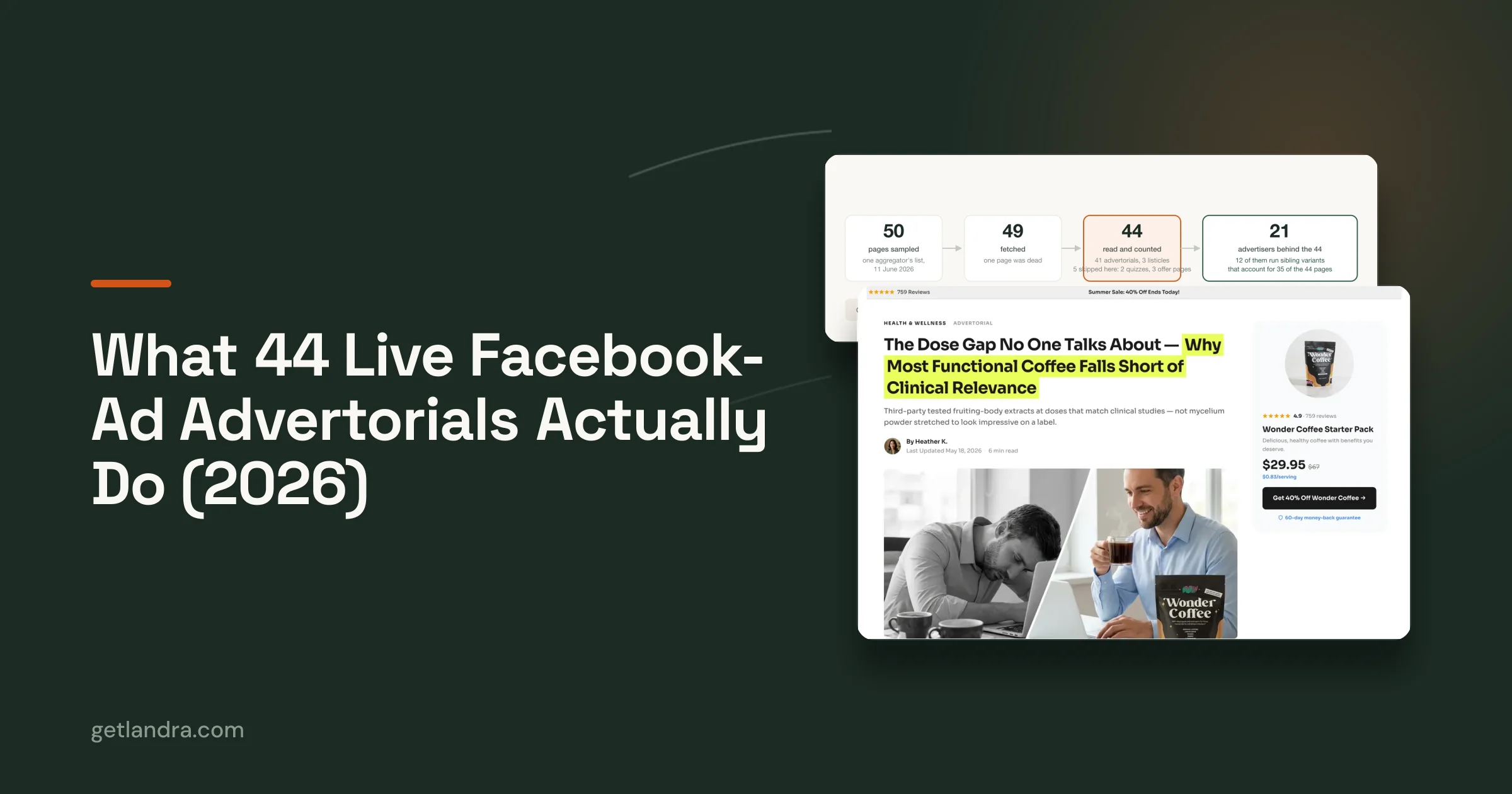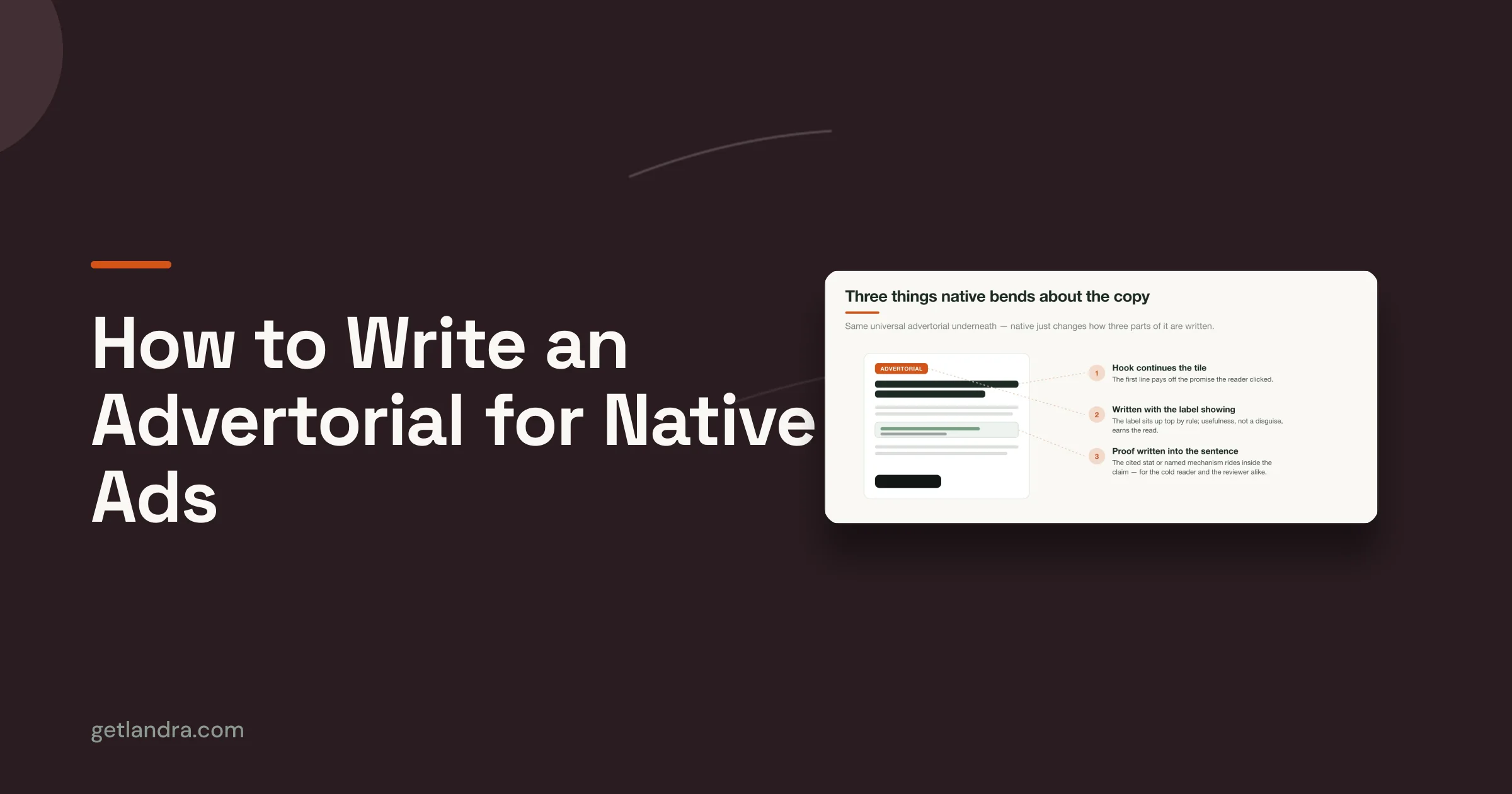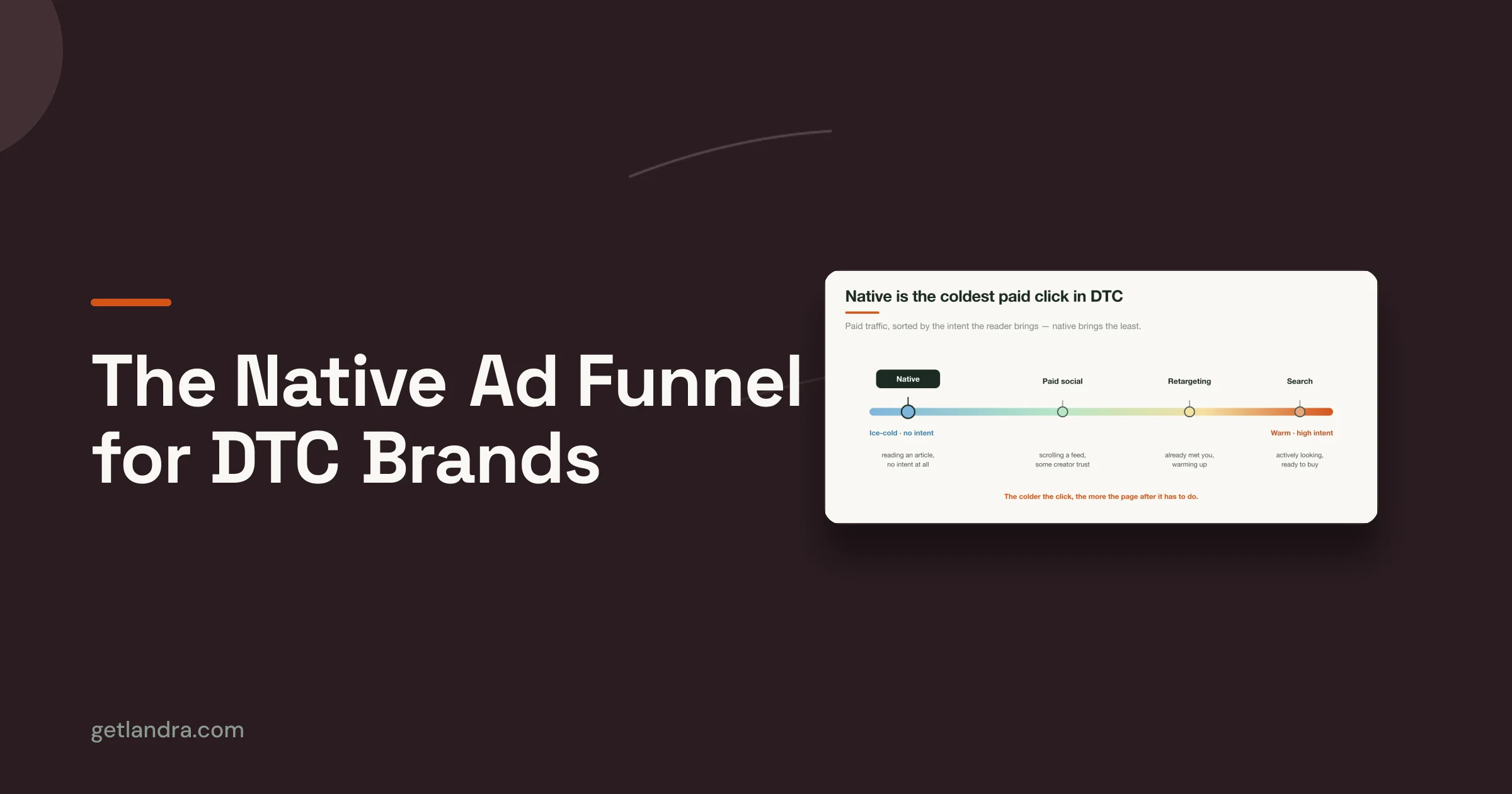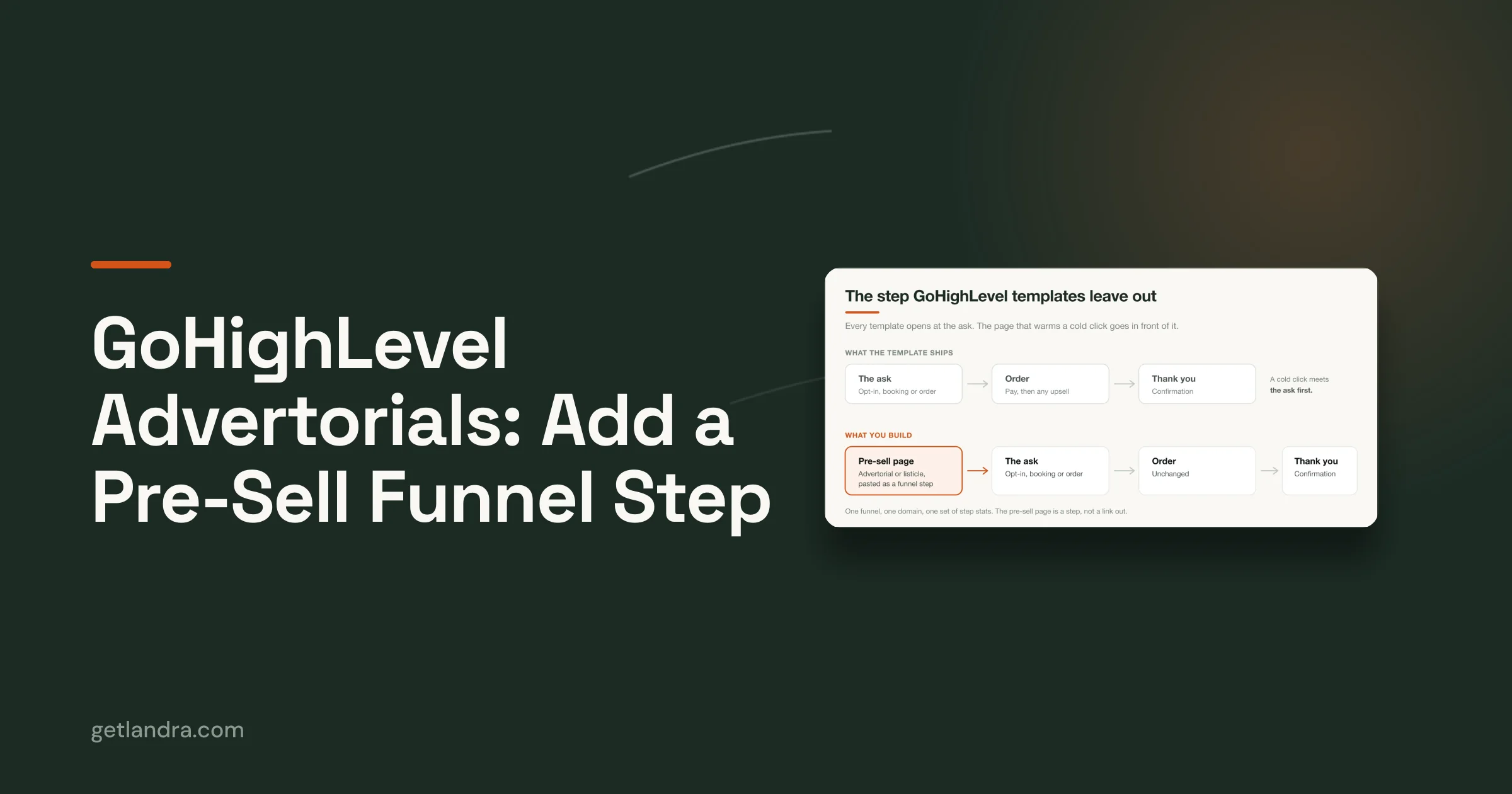


The usual advice says to pick the cheapest Unbounce replacement and move on. That misses the core problem. Performance teams don't lose money because they chose the wrong button color, they lose money because the page type doesn't match the traffic. A cold Meta or TikTok click needs a different path than a standard opt-in page, and a presell page needs different structure, proof, and pacing than a generic landing page.
That's why the best unbounce alternatives split into two camps. One camp is for general-purpose landing pages, testing, and collaboration. The other is for specialized presell content like advertorials and listicles, where the page has to warm up the click before it asks for action. The market reflects that split, with comparison roundups now spanning dedicated landing-page builders, all-in-one marketing suites, and broader site platforms, not just one type of tool. For broader context on adjacent form and capture workflows, see this Growform multi-step form alternative.
Table of Contents
- 1. Landra
- 2. Instapage
- 3. Leadpages
- 4. Swipe Pages
- 5. Webflow
- 6. Framer
- 7. Shogun Page Builder
- 8. GemPages
- 9. Replo
- 10. PageFly
- Top 10 Unbounce Alternatives: Feature Comparison
- Final Thoughts
1. Landra
Landra is a strong choice when the job is not just building a page, but building a page that pre-sells. It takes a product URL, reads the site's offers, reviews, ingredients, and tone, then generates an editable advertorial, listicle, or pre-sell page tuned for cold paid social. That makes it especially relevant for DTC teams that need the page to do more than capture a lead.

Why it wins for presell traffic
The strategic advantage is straightforward. Most landing page builders optimize for structure, while Landra optimizes for persuasion before the click reaches checkout. Cold traffic often underperforms on product detail pages, so Landra is built to create the warm-up layer that generic builders usually leave to copywriters or agencies.
That difference matters for performance marketers. If you send paid social traffic straight to a PDP, you are asking the product page to do two jobs at once, educate and convert. A presell page separates those jobs and gives the visitor a reason to keep reading before the offer appears. That is often the cleaner path for Meta or TikTok traffic that needs context before action.
Landra also fits real production workflows. It publishes to Shopify, Webflow, a Landra URL, or exported HTML, so it can slot into existing stacks without forcing a rebuild. The editor is fully inline, duplication is fast for variant testing, and saved brand context keeps the next draft close to the last one instead of starting from scratch.
Practical rule: If your ads are going straight to a PDP and the traffic keeps feeling cold, the page format may be the problem, not the media buy.
The main trade-off is scope. Landra is well suited to advertorials, listicles, and pre-sell pages, but it is not trying to replace a full CMS or a highly custom interactive build. For teams running Shopify or Webflow stores, that is usually a strength, not a weakness. You get a tool that stays focused on the presell job instead of turning into another general-purpose site builder.
Landra's own site positions the product around fast generation, mobile-first output, and direct-response structure. It also reports benchmarks of 2–3× conversion lift vs. standard product pages and a first-party test showing a 46% reduction in CAC when ads were routed to a Landra advertorial instead of the PDP, which is why it stands out in this category. For DTC brands that need a page they can ship, edit, and test quickly, Landra's website makes the use case clear.
2. Instapage
Instapage is the better fit when your problem is coordination at scale, not content strategy. It's built for performance marketers who need a landing-page system with server-side A/B testing, collaboration, and ad-to-page alignment without waiting on developers. The product sits at the enterprise end of the market, which is exactly where it makes sense for larger paid media teams.

When experimentation matters more than speed
Instapage is strongest when multiple stakeholders touch every launch. Its collaboration layer helps designers, marketers, and reviewers work on the same page without the usual screenshot churn. The platform also leans hard into testing discipline, which is why teams that care about hypothesis tracking and page-level iteration often land here.
That said, Instapage is not the leanest option. It makes the most sense when your team already has enough traffic, budget, and campaign complexity to justify a premium tool. If you're building a few pages a month and don't need that level of control, you'll feel the overhead before you feel the benefits.
A good way to think about it is this. Instapage is for optimization systems, not one-off pages. If your team runs many campaigns, wants reusable components, and needs clearer control over testing, it's a strong Unbounce substitute. If your team mainly needs pre-sell content for cold traffic, a specialized tool can get you closer to the actual job.
The website is Instapage, and the positioning is clear enough that you can tell within minutes whether the workflow fits your team's process or feels heavier than necessary.
3. Leadpages
Leadpages makes sense when you want predictable traffic handling and a simpler buying decision. It's a practical fit for smaller teams, agencies, and solo marketers who want landing pages, testing, and lead capture without enterprise complexity. The biggest structural difference is that Leadpages is marketed with unlimited traffic on paid tiers, which removes the uncertainty that comes with visitor caps.

Best when traffic volume is the stress point
This is the builder to consider when you're tired of doing budget math every time a campaign starts working. Because traffic is unlimited on paid plans, the operational question shifts from “can this page handle it” to “is the page converting.” That's a healthy place to be for performance teams that want fewer platform surprises.
Leadpages also sits closer to the simple, fast side of the market. AI-assisted page creation, dynamic text replacement, A/B testing, lead enrichment, and built-in forms cover the basics well enough for lead gen and straightforward conversion work. What you don't get is the same depth of design freedom or site-building flexibility that tools like Webflow can offer.
Use Leadpages when: you want low-friction page publishing, no traffic anxiety, and a cleaner package for lead capture.
The practical drawback is hierarchy. The deeper analytics and heavier optimization features live higher up the stack, so you may outgrow the lighter tiers if your workflow becomes more experimental. That's fine if your goal is operational simplicity. It's a poor fit if you need a specialized presell format or more brand-controlled editorial layouts.
For a detailed comparison of lead-gen page builders for eCommerce, see lead gen page builders for eCommerce. For the tool itself, the official site is Leadpages.
4. Swipe Pages
Swipe Pages is the practical choice for PPC teams that care about speed, especially on mobile. It's one of the clearest mobile-first alternatives in the category, with AMP support, server-side A/B testing, and dynamic text replacement. For paid media buyers who obsess over page load and mobile experience, that combination is hard to ignore.

Fast pages without too much bloat
The reason Swipe Pages keeps showing up in comparison roundups is that it's unapologetically focused. It isn't trying to be a whole marketing suite. It wants to help you launch fast pages, keep them light, and keep the mobile experience clean.
That makes it especially useful for campaigns where the page itself is part of the media performance problem. If your traffic is mobile-heavy, the AMP option gives you a tighter path to speed than many general-purpose builders. The trade-off is that AMP also constrains some scripts and embeds, so teams that depend on richer integrations need to test carefully.
The platform also keeps its value proposition straightforward with published traffic tiers and overage rules, which is important if you're scaling paid traffic in bursts. That kind of clarity matters more than people admit. Once a campaign starts to hit, hidden limits create friction, and friction wastes spend.
A fast page that doesn't support the scripts your team actually needs is still a bad page.
Swipe Pages is a smart Unbounce alternative for teams that prioritize page speed and mobile conversion over deep brand systems. The official site is Swipe Pages, and it earns its place by staying close to the job.
5. Webflow
Webflow belongs in this list because a lot of teams don't need a landing-page vendor, they need a flexible website platform that can also host landers cleanly. It gives marketers and designers much more control over layout, CMS structure, and brand fidelity than most page builders. That's valuable when the landing page has to look like part of the core site, not a bolt-on campaign asset.

Better for design systems than one-off conversion hacks
Webflow works best when the page is part of a larger brand system. You can manage reusable components, publish across a CMS, and keep a tighter grip on visual consistency than you usually get from classic landing-page software. That's one reason it shows up so often in broader Unbounce alternative roundups.
The downside is obvious to anyone who has built in Webflow for conversion campaigns. It gives you more freedom, but it expects more judgment. It's less opinionated about CRO than dedicated landing tools, so teams need discipline around messaging, page hierarchy, and testing.
There's also a workflow trade-off. If your priority is rapid presell production for paid social, a tool like Landra is more direct because it starts from the conversion format itself. If your priority is a brand-tight page that lives inside a more mature site structure, Webflow is the better foundation.
For teams already thinking in components, design systems, and reuse, Webflow is a serious contender. For a guide on shaping Webflow pages around conversion, see turning choice into conversion Webflow. The official platform is Webflow.
6. Framer
Framer fits teams that need speed, polish, and a clean editing experience without a heavy build process. The interface feels closer to a modern design tool than a legacy landing-page builder, and that matters for performance teams that need to move from concept to live page without a long handoff. If your workflow depends on fast visual editing and your pages need to look refined on first publish, Framer makes that path straightforward.
Strong for brand pages, less complete for CRO stacks
Framer's strongest case is speed to a polished page. The staging environment lets teams preview changes before publishing, and branching supports parallel work on different versions of a page. That lowers the risk of moving quickly, especially when designers and marketers are working on the same asset.
It also helps that the editing flow stays approachable for marketers who want visual control without dealing with a heavier CMS. For teams that publish branded landers, launch pages, or campaign pages that need to stay visually tight, that simplicity has real value.
The trade-off is conversion depth. Some of the more advanced testing and hosting needs sit outside the core product, so teams that depend on frequent experiments may need add-ons or a separate CRO stack. If you are running a direct-response program, that extra layer matters because it changes both cost and workflow.
Practical rule: Choose Framer when visual speed matters more than built-in CRO depth.
A useful way to judge Framer is by page type. It works well for brand-led landing pages, product announcements, and campaign pages that need strong presentation. It is less convincing for teams that treat every page as a testing environment and need more control over experimentation from day one. For marketers building presell content, the question is whether the page needs to behave like a design-led asset or a direct-response machine.
For motion-heavy pages, Framer also sits comfortably in a broader modern web workflow. Teams that want animation patterns similar to React animation with Framer Motion often appreciate that mindset, because the platform rewards polished interaction as much as static layout. The website is Framer, and it is a credible option if your landing page work sits closer to design production than to day-to-day media operations.
7. Shogun Page Builder
Shogun makes the most sense for Shopify and BigCommerce brands that want landing pages to stay close to the storefront. It's ecommerce-native, which matters when the page has to connect cleanly to product, checkout, and merchandising workflows. That makes it a strong choice for teams that want campaign pages without leaving their commerce stack.
Good fit for storefront-native campaigns
The value here is continuity. Shogun lets merchants build pages with reusable sections, direct-to-checkout elements, and scheduling features that keep campaign work inside the ecommerce ecosystem. That reduces the translation cost between the landing page and the store.
Its A/B testing and personalization options also matter for brands that are already running structured experimentation. The challenge is that the advanced layers can add complexity, especially when multi-store content sync enters the picture. For larger operators, that can be useful. For smaller teams, it can become more platform than they need.
Shogun is best when your landing pages are not separate from commerce, they're part of commerce. That makes it attractive for product launches, promo pages, and storefront campaigns where the handoff to checkout has to stay tight. If your primary need is editorial-style presell content, though, it's less specialized than Landra.
The platform's website is Shogun Page Builder, and its reputation is strongest among teams that think in storefront operations rather than standalone lead gen.
8. GemPages
GemPages is a solid middle ground for Shopify teams that want more conversion features without jumping to the heaviest tools. It combines page building with funnels, upsells, AI-assisted content, and a generous free entry point. For many growing stores, that combination is enough to get meaningful campaigns live without a big upfront commitment.

Useful when the page and funnel blur together
GemPages is strongest when the landing page isn't isolated from the rest of the journey. If you're building a funnel that includes upsells or post-purchase flows, the tool keeps those pieces close together. That's a practical advantage for Shopify teams that don't want to stitch together too many apps.
The upside is cost-value balance. The platform offers a free plan, paid tiers, and enough structure to support real campaigns. The downside is that some of the more useful enterprise-style features sit higher up the stack, so high-growth teams need to watch how the plan math evolves as usage increases.
GemPages is not the most specialized presell tool in this list. It's a general ecommerce builder with a CRO mindset. That makes it useful for stores that need flexibility and speed, but less ideal if the entire goal is to create an advertorial that warms cold traffic before the product page.
For Shopify brands that want page creation plus funnel logic, it's a sensible alternative. The website is GemPages, and it earns attention because it keeps the workflow practical.
9. Replo
Replo is built for Shopify teams that care about performance and iteration. It's one of the stronger options when the landing page has to feel native to the store but still support campaign-specific experiments. That makes it a natural fit for DTC brands running frequent paid launches, influencer pages, and promotional landers.
Built for campaign velocity inside Shopify
The strength of Replo is not just page editing. It's the combination of Shopify-native integrations, storewide analytics, and A/B experiments that make it feel built for active testing. When a team is already living in Shopify, that removes a lot of friction.
Replo also has a strong library and a production-minded workflow. That matters when campaigns need to move from idea to live asset quickly. The trade-off is price. It sits on the premium side compared with basic builders, so the value only becomes obvious when your team is testing and iterating often.
For that reason, Replo is best for teams with a real experiment cadence. If you publish occasionally, the feature set can feel more than you need. If you launch constantly, the speed and Shopify-native depth are easy to justify.
For a direct comparison of DTC-oriented workflows, see Replo vs for DTC brands. The official platform is Replo.
10. PageFly
PageFly is the practical, low-friction Shopify option for teams that want flexibility without a big spend. It's long-standing, widely used, and broad enough to cover landing pages, product pages, collection pages, and home pages. The forever-free plan is a real advantage for stores that want to start small and learn the system before committing.
Best for stores that need range, not specialization
PageFly works because it's broad. It handles a lot of page types, integrates with many Shopify apps, and gives teams enough flexibility to create useful campaign pages without overbuilding the stack. For younger stores or lean operations, that can be exactly the right level of complexity.
The trade-off is that advanced CRO is not the center of gravity. Teams that want deep testing, more advanced experimentation, or specialized presell page structure will often need extra tools or theme-level work. That's fine if you want a dependable Shopify page builder. It's less ideal if you need the page to act like a direct-response asset for cold traffic.
PageFly's strength is availability and breadth. It gives stores a workable path into page creation without locking them into a high-cost system. The website is PageFly, and it remains a credible choice for stores that want a broad, flexible builder with a low barrier to entry.
Top 10 Unbounce Alternatives: Feature Comparison
| Product | Core focus ✨ | Performance & UX ★ | Value / Price 💰 | Best for 👥 | Unique selling points ✨ |
|---|---|---|---|---|---|
| Landra 🏆 | AI advertorials, listicles & presell pages | Mobile‑first speed; direct‑response drafts; publish in <5min ★★★★★★ (5.0) | 💰 Starter→Pro Plus; 14‑day trial; first page free | 👥 DTC brands, performance marketers, small teams | ✨ Generates on‑brand advertorials from a product URL; inline visual editor; tuned for cold Meta/TikTok; reported 2–3× lift & 46% CAC ↓ |
| Instapage | Enterprise-grade landing pages & experimentation | Server‑side A/B tests; collaboration; personalization ★★★★★☆ (4.5) | 💰 $$, premium plans for scale | 👥 Performance teams, enterprises | ✨ Server‑side testing & ad‑to‑page personalization; robust collaboration |
| Leadpages | AI page builder + CRO layer | Smart Traffic routing; manual A/B; heatmaps on higher tiers ★★★★☆ (4.3) | 💰 $, transparent, SMB friendly; unlimited traffic on paid plans | 👥 Small teams, agencies, lead gen focused stores | ✨ Fast AI drafts; unlimited traffic on conversion plans; simple pricing |
| Swipe Pages | AMP & mobile‑first landing pages | Extremely fast AMP pages; server‑side tests; good mobile UX ★★★★☆ (4.2) | 💰 $, competitive SMB pricing | 👥 PPC teams prioritizing mobile speed | ✨ First‑class AMP support; Mobile Slides for UX |
| Webflow | Visual site builder + CMS, exportable code | High design fidelity; scalable hosting/CDN; SEO controls ★★★★★☆ (4.6) | 💰 $–$$, plan math at scale | 👥 Designers, agencies, brands needing brand‑tight landers | ✨ Full design/CMS control; exportable static builds; large ecosystem |
| Framer | Design‑centric, fast shipping sites | Fast editor with staging & branching; add‑on A/B testing ★★★★☆ (4.4) | 💰 $, core pricing + add‑ons | 👥 Design teams wanting Figma‑like UX | ✨ Staging/branching; rapid design iteration; AI credits for features |
| Shogun Page Builder | Ecommerce‑native page builder (Shopify/BigCommerce) | Storefront‑native elements; A/B testing add‑ons; fast publishing ★★★★☆ (4.3) | 💰 $–$$, tiered for stores & multi‑store | 👥 Ecommerce brands on Shopify/BigCommerce | ✨ Direct‑to‑checkout elements; multi‑store sync; content scheduling |
| GemPages | Shopify conversion builder with funnels & upsells | CRO elements, funnels, post‑purchase upsells; Instant Landing Page on higher tiers ★★★★☆ (4.1) | 💰 $–$, strong price/value; free plan available | 👥 Shopify stores wanting upsells & funnels | ✨ Integrated post‑purchase upsells; GemAI for content/image layout |
| Replo | High‑performance Shopify landers with AI workflows | Fast, Shopify‑native pages; A/B testing & analytics ★★★★☆ (4.2) | 💰 $–$$, premium for active testing | 👥 DTC teams running frequent paid campaigns | ✨ Deep Online Store 2.0 support; experts network; native tracking |
| PageFly | Long‑standing Shopify page & section builder | Flexible page types; broad integrations; forever‑free tier ★★★★ (4.0) | 💰 $, forever‑free plan; low cost to start | 👥 Cost‑conscious Shopify stores | ✨ Large template/community; generous free tier for trial |
Final Thoughts
The smartest way to choose between unbounce alternatives is to stop asking which one is “best” in the abstract. The core question is whether your primary job is testing general-purpose landing pages or shipping specialized presell content that warms cold traffic before the product page. Once you separate those use cases, the list gets much shorter and the decision gets much cleaner.
For enterprise-style optimization, Instapage is compelling because it leans into collaboration and experimentation. For simpler lead gen with cleaner traffic handling, Leadpages removes a lot of budget anxiety. For mobile speed, Swipe Pages is a focused fit. For Shopify-native page work, Shogun, GemPages, Replo, and PageFly each solve a different level of ecommerce complexity.
That said, a lot of performance marketers are really looking for something else. They don't just need a page builder, they need a system that turns ads into a more persuasive first touch. That's where specialized tools matter. If you're running cold Meta or TikTok traffic and your product page keeps underperforming, the page format itself may be the bottleneck.
Landra stands out because it starts from that exact problem. It turns a product URL into an editable advertorial, listicle, or pre-sell page quickly, then gives you the control to publish, duplicate, and test without waiting on an agency cycle. For teams that care about speed, mobile-first output, and direct-response structure, that's a more strategic answer than a generic builder swap.
The broader market is still fragmenting. Some teams want an all-in-one suite. Others want a pure page builder. A growing number want the warm-up layer that sits between the ad click and the checkout page. Choose the tool that matches the traffic, the offer, and the job the page has to do.
If you're looking for a faster way to turn paid traffic into a conversion-ready pre-sell page, Landra is built for that job. It creates advertorials, listicles, and presell pages from your product URL, then lets you refine and publish them fast. For performance marketers who need better cold-traffic flow without agency delays, it's worth a serious look.