
A customer avatar template for a DTC brand should ask the questions your landing page has to answer: the moment the problem shows up, what the buyer blames, what they already tried, what will stop them, and what makes it safe to try. Below is a template with eight of those questions, filled in from a real Protalus page, and a blank copy you can paste into a doc.
Most templates you'll find ask something else. Here's why that matters, and then the template.
What most customer avatar templates ask for
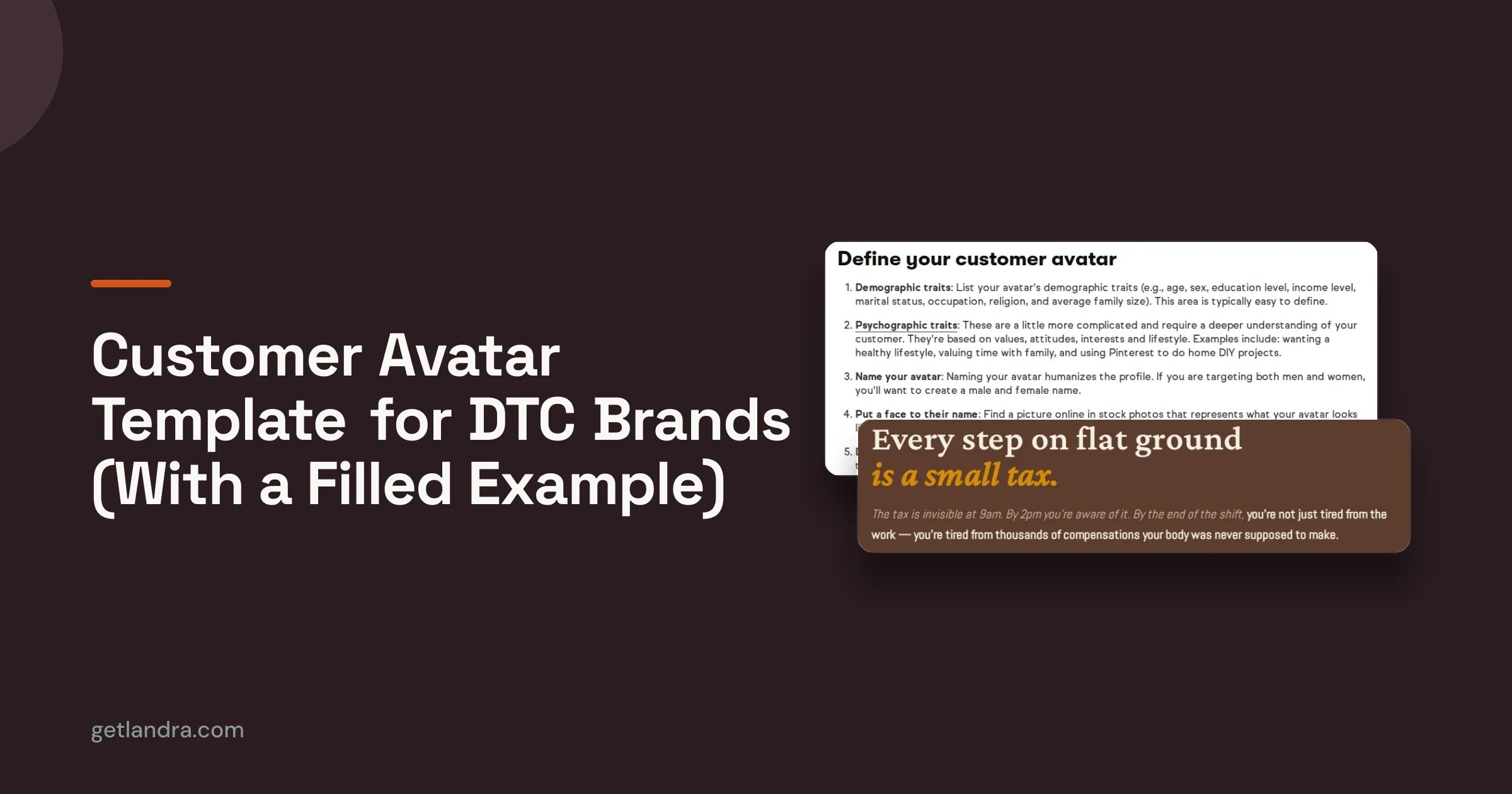
Keap's guide How to create your customer avatar ranks for this search and comes with a downloadable template. Its "Define your customer avatar" section is typical of the format:
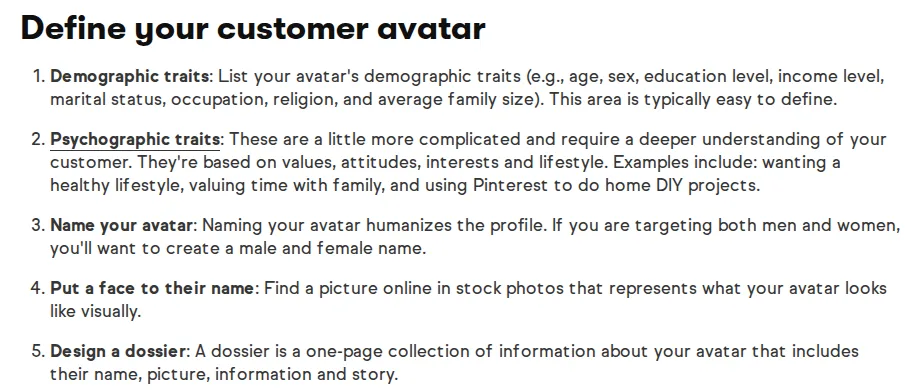
Age, sex, income, "values, attitudes, interests and lifestyle", a name, and "a picture online in stock photos". That's useful for picking an audience in Meta and for deciding who to interview. But put it next to a blank landing page and ask what the first line should say. "Sarah, 38, two kids, likes yoga" doesn't tell you.
The same guide gets closer further down. It asks what the avatar was "hoping to solve or accomplish" and suggests you "Dig into the valuable feedback within your customers' reviews". That's the part a landing page runs on, so our template starts there.
The customer avatar template: eight questions
Each question is a part of the page. If you can't answer one, that's the section of the page that will be weak.
| # | Question | Where it goes on the page |
|---|---|---|
| 1 | Who is your buyer, in one sentence about their situation? | Who the headline speaks to |
| 2 | When does the problem show up? | The opening, the moment the reader recognizes |
| 3 | What do they blame for it? | The belief the page has to change |
| 4 | What have they already tried, and why didn't it work? | Why the old fix failed, before your product |
| 5 | What words do they use? (exact quotes, with a source) | Headlines, subheads and the reviews you pick |
| 6 | What will they say to talk themselves out of it? | The objection section |
| 7 | What do they need to believe before they buy? | The explanation of why your product works |
| 8 | What would make it safe to try? | The guarantee and the offer next to the button |
Question 1 is about a situation, not a demographic. "Stands on a hard floor for an 8-hour shift" tells you what to write. "Male, 35 to 54" doesn't.
A filled example: the Protalus insole page
Protalus sells insoles, and it sends readers to an advertorial called "Why does flat ground steal your energy?". We don't know what avatar doc Protalus wrote, if any. But the page reads like it was written to one buyer the whole way down, so we filled in the template from what the page says. Every quote below is from the page as we loaded it on 20 Nov 2026.
| # | Question | The Protalus page |
|---|---|---|
| 1 | Who is the buyer? | Someone on their feet for a whole shift. The page counts "12,000 Average steps per 8-hour shift" |
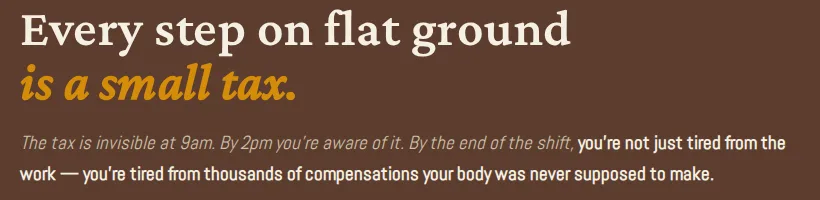
| 2 | When does the problem show up? | "The tax is invisible at 9am. By 2pm you're aware of it." |
| 3 | What do they blame? | Themselves. The page answers it directly: "You are not unfit. You are not weak." |
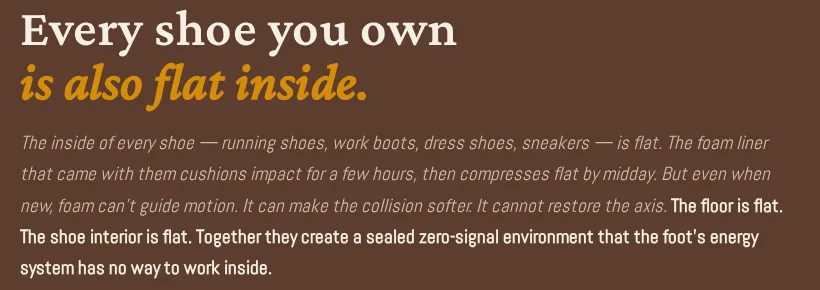
| 4 | What have they tried? | The insole that came with the shoe. "The foam liner that came with them cushions impact for a few hours, then compresses flat by midday." |
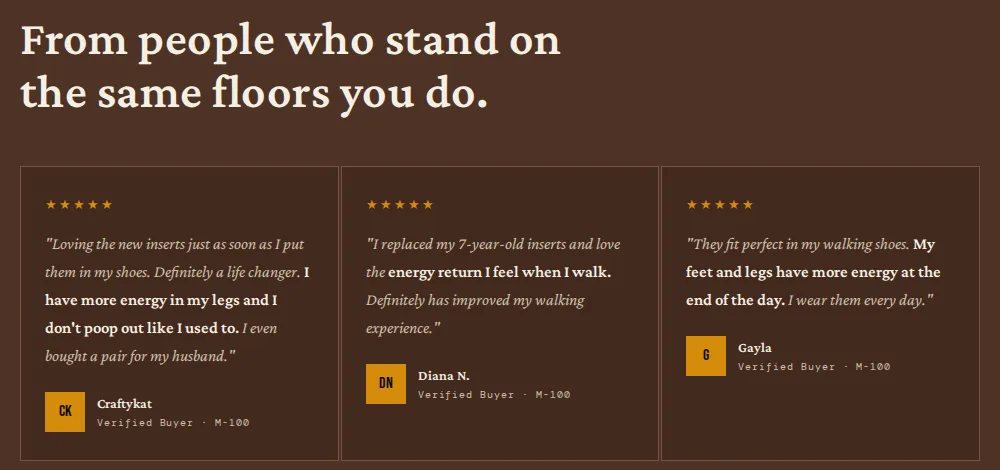
| 5 | What words do they use? | "I have more energy in my legs and I don't poop out like I used to." (a verified buyer review on the page) |
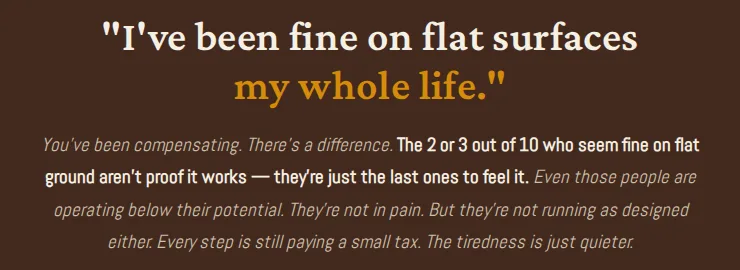
| 6 | How will they talk themselves out of it? | "I've been fine on flat surfaces my whole life." |
| 7 | What do they need to believe? | That the floor is the problem, not their body: "The floor is the problem · Not your body" |
| 8 | What makes it safe to try? | "90 days to let your body be the judge." Plus the cost per day: "18¢ Per day to give the spring its axis back" |
Notice what's missing. The page never says how old its reader is or what they earn. It still speaks to one person, because it knows when their day goes wrong.
Here's question 2 on the page. It's the line a reader recognizes from their own afternoon:
Question 4 comes before your product does. The page explains why the insole that came with the shoe stopped helping, so the reader isn't asked to trust a new insole for the same reason the old one failed:
And question 6. The page writes the reader's own objection as a headline, in quotes, and answers it right under it:
Question 5 shows up in the reviews the page chose. Out of the 99,000+ reviews the page counts, all three it shows talk about having more energy, the same problem the page opened with:
So the avatar does more than shape the copy. It also tells you which reviews to show.
Copy this customer avatar template
Paste this into a doc and fill in one copy per avatar. Keep the source link next to every quote, so anyone who writes the page can check the words.
CUSTOMER AVATAR: [short label, e.g. "on their feet all shift"]
Product: [what this avatar buys]

1. Who is your buyer, in one sentence about their situation?
   [situation, not demographics]

2. When does the problem show up?
   [the moment, in their words if you have them]

3. What do they blame for it?
   [the belief the page has to change]

4. What have they already tried, and why didn't it work?
   [product or fix] -> [why it failed, in their words]

5. What words do they use? (copy exactly, keep the link)
   "[quote]" (source: [link])
   "[quote]" (source: [link])
   "[quote]" (source: [link])

6. What will they say to talk themselves out of it?
   "[objection]" -> [your answer]

7. What do they need to believe before they buy?
   [the one reason your product works for them]

8. What would make it safe to try?
   [guarantee, trial, price framing]

Ad targeting notes (optional): [age, gender, interests]
Demographics go at the bottom, as targeting notes. They're useful when you set up the ad. They just don't write the page.
Where the answers come from
The template only works if the answers come from buyers, not from a brainstorm. In order of how much we'd trust them:
- Your own reviews, support emails and post-purchase surveys. These are people who already bought. Their words for the problem go straight into question 5.
- Reviews of what your buyer tried before you. The 1 to 3 star reviews of a competitor's product answer question 4 for you: what they tried and why it let them down.
- Reddit threads and YouTube comments where your buyer asks for help. This is where you hear the problem before anyone has sold them anything.
- Your competitors' landing pages. They show which avatar is already being sold to and in what words. Our guide on how to find a competitor's landing pages from their ads walks through it.
Copy quotes exactly. If you tidy a buyer's words, you lose the reason you collected them.
One avatar, one page
If two buyers need different answers to question 2, they need two pages. A shift worker whose legs give out by 2pm and a runner with knee pain might buy the same insole. They won't stop scrolling for the same opening line.
Once you have the avatar, the next step is the page brief: which ad the page is for, what the reader needs answered and what you can prove. Our post on how to brief a DTC landing page picks up there. If you're not sure how much the reader already knows when they land, the 5 stages of awareness helps you place them.
Where Landra fits
Landra's customer avatar generator fills in the research part for you. It reads Reddit threads, YouTube comments, reviews and competitor pages, keeps only the quotes it can find word for word on the source page, and links each one. Then you can build an advertorial or a listicle written to that avatar. 150+ active brands use Landra, including 8-9 figure brands (7-day trial, plans from $47/mo).
Frequently asked questions
What is a customer avatar template?
A fill-in profile of one specific buyer: who they are, the problem they are trying to solve, what they have tried, what they doubt and the words they use. A template for DTC landing pages should ask the questions the page has to answer, not just demographics.
What should a customer avatar include?
The situation the buyer is in, the moment the problem shows up, what they blame, what they already tried and why it failed, their exact words with sources, the objection they will raise, what they need to believe before they buy, and what makes it safe to try.
Do I need demographics in a customer avatar?
For ad targeting and for choosing who to interview, yes. For the page itself, rarely. The Protalus page in this post never says how old its reader is or what they earn, and it still speaks to one person the whole way down.
How many customer avatars should a DTC brand have?
As many as you have pages that need different openings. Keap suggests tackling them "one at a time" and starting with "the market that brings the most profit". Each avatar gets its own page, so the reader sees their own problem in the first line.
Where do I get the answers for the template?
From what buyers already wrote. Your reviews, support emails and post-purchase surveys come first. Then Reddit threads and reviews of the products your buyer tried before yours. Copy their words exactly and keep the link to where each quote came from.