
If people click your ads but don't buy, and you don't have many reviews yet, more trust badges won't fix it. A stranger needs a reason to believe a brand they have never heard of. Get your first five real reviews, let a page that reads like a third party introduce you, and put a real founder and a specific guarantee where the doubt is.
This came up in an r/ecommerce thread from June 2026 with 44 comments that ranks on Google. A founder selling electronics over $100 wrote that their site converts at "1-3%" from "membership/loyalty programs and a couple of niche marketplaces". Cold traffic from paid social was "basically flat". The ads had "over 10% ctr and under $1 cpc".
The site already had "trust badges, customer videos, clear guarantees, transparent policies" and a founder story. What it didn't have was a deep review base. Their own read was that cold visitors "have zero relationship with the brand yet". We agree. Here's what we'd do, in order.
Why badges and guarantees aren't enough
The warm traffic in that thread converted because someone else had already vouched for the brand. A loyalty program member trusts the program. A marketplace buyer trusts the marketplace. As one commenter put it, "the trust is borrowed".
A click from a Meta ad comes with nothing borrowed. The badge says the checkout is secure. It doesn't say anyone like the visitor has bought this and was happy. That's the question reviews answer, and it's the one the page leaves open.
Five reviews do most of the work
You don't need hundreds of reviews to close that gap. Medill's Spiegel Research Center found this:
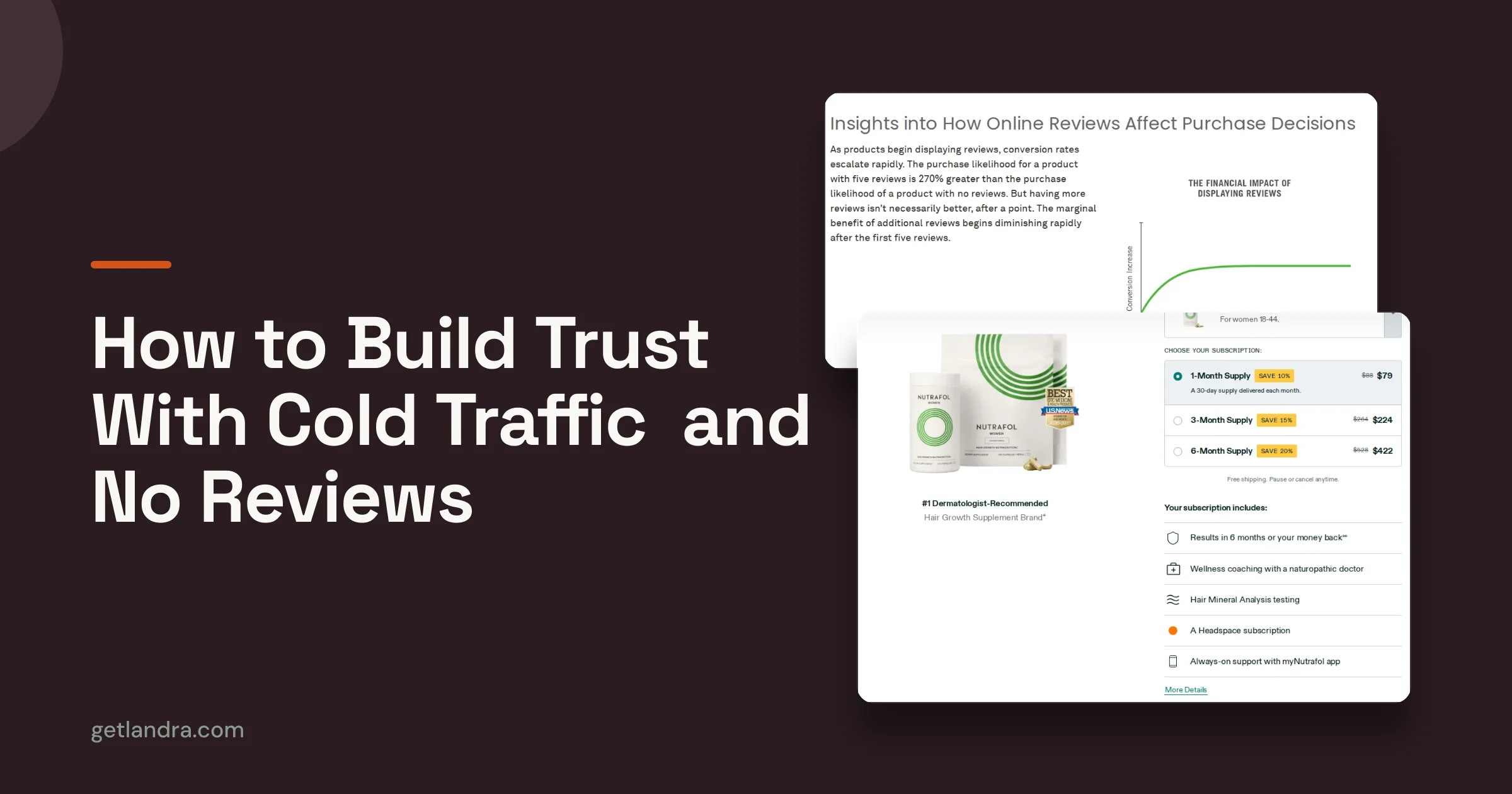
"The purchase likelihood for a product with five reviews is 270% greater than the purchase likelihood of a product with no reviews. But having more reviews isn't necessarily better, after a point. The marginal benefit of additional reviews begins diminishing rapidly after the first five reviews."
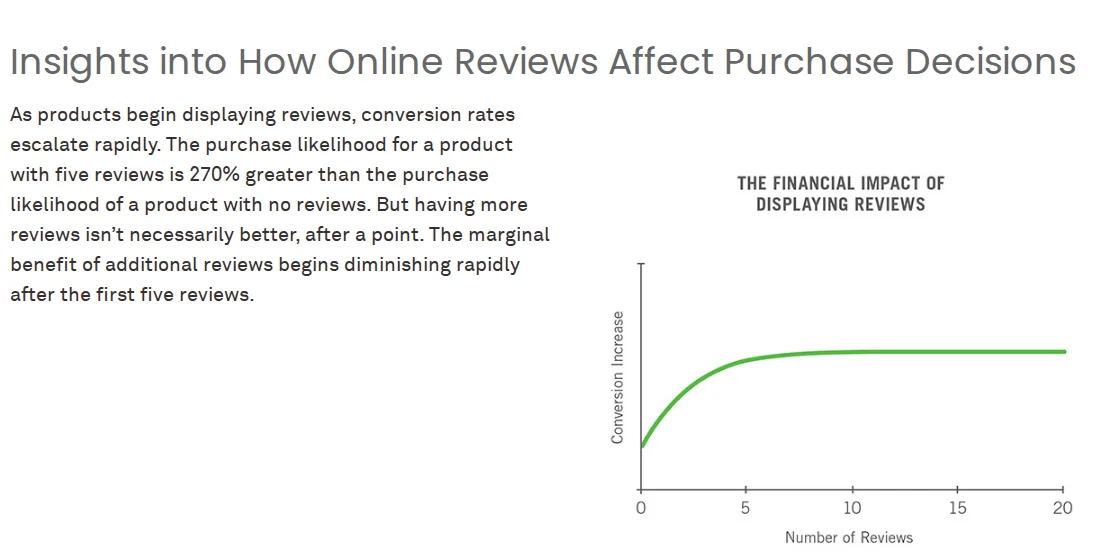
The same research has three more findings that matter for a new store:
| Finding (Spiegel Research Center) | What it means for you |
|---|---|
| 5 reviews vs 0: purchase likelihood 270% higher | Your first milestone is five reviews per product |
| Showing reviews lifted conversion 190% on a lower-priced product and 380% on a higher-priced one | The pricier the product, the more those first reviews matter |
| Purchase likelihood typically peaks at a 4.0 to 4.7 star rating | A few honest 4-star reviews don't hurt you. A wall of 5.0 can |
| "Verified buyer badges" improve "the odds of purchase by 15%" | Turn on the verified buyer label in your review app |
The founder in the thread sells electronics over $100. By Spiegel's numbers, that's exactly where a handful of reviews moves the most.
Step 1: Get your first five real reviews this week
The founder in the thread said many buyers "email me to tell me they love our product and will recommend it", but "don't actually leave a review when requested to". It's the fastest fix on this list.
- Answer those emails and ask if you can quote them. Their name, their words, on the product page. Ask for a photo of the product in use if they have one.
- Ask for a short video instead of a written review. A commenter in the thread suggested it for the buyers who email but never write a review.
- Ask every buyer, not just the happy ones. Send the request once the product has arrived and they have had time to use it.
You can say thank you for a review. You can't pay for a good one. The FTC's rule on consumer reviews is clear on this:

So the same thank-you for any honest review is fine. A discount only for 5 stars is not. Writing reviews yourself, or having staff write them without saying so, is covered by the same FTC rule. We went through what it means for testimonials in our post on the FTC fake reviews rule.
Step 2: Let someone else introduce you
Until you have those reviews, you can do for ad clicks what the loyalty program does for its members. Send the click to a page that introduces you the way a third party would, instead of straight to the product page.
That's what an advertorial or a listicle does. The page opens on the reader's problem, explains what causes it and what they've tried, and only then brings in your product as one answer. The reader meets the brand through the problem they already care about, not through a product page from a name they don't know.
Which kind of listicle reaches the coldest traffic is its own question. Our guide to listicle frames for cold traffic ranks them: problem-led reaches the coldest, then best-of, then product-led. It also covers why a brand ranking itself #1 on its own page is the weakest version.
If you run one of these, label it. An advertorial still needs a clear disclosure, and our advertorial disclosure guide covers how.
Step 3: Put a real person with a real reason on the page
A founder story only helps if there's a real reason behind it. Sundays for Dogs is an example. Its "Why I Made Sundays" page is bylined "By Dr. Tory Waxman" and opens with "As a veterinarian, I wanted to be able to recommend better food to dog parents."
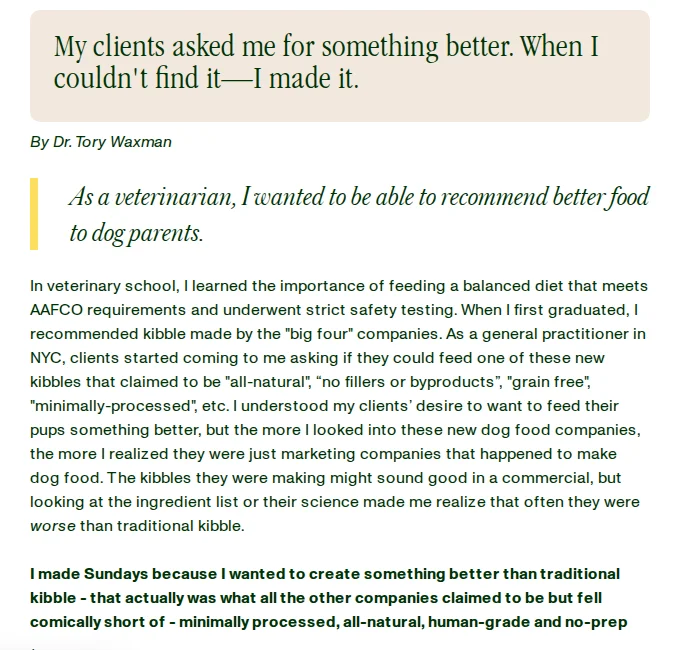
The page tells a stranger who is behind the product, why they're qualified, and why they made it. "As a general practitioner in NYC, clients started coming to me asking if they could feed one of these new kibbles". That's a reason a stranger can check, and it doesn't need a single review.
Not everyone in the thread liked this idea. One commenter wrote that "putting your face on a ecomm site makes it feel smaller and less like a well established store." That's a fair warning for a store that sells many products. For a considered purchase from a new brand, we'd still lead with who you are and why you made it, just not with a selfie and no reason.
Step 4: Put the guarantee where the doubt is
A guarantee on a policy page does little for someone deciding at the button. Baymard's 2026 survey of 1,083 US online shoppers shows why that matters. Leaving out the people who were "just browsing", these are the top reasons they abandoned a cart:
| Reason for abandoning (Baymard, 2026) | Share |
|---|---|
| Extra costs too high (shipping, tax, fees) | 40% |
| Delivery was too slow | 20% |
| I didn't trust the site with my credit card information | 19% |
| The site wanted me to create an account | 18% |
| Returns policy wasn't satisfactory | 13% |
| I couldn't see / calculate total order cost up-front | 12% |
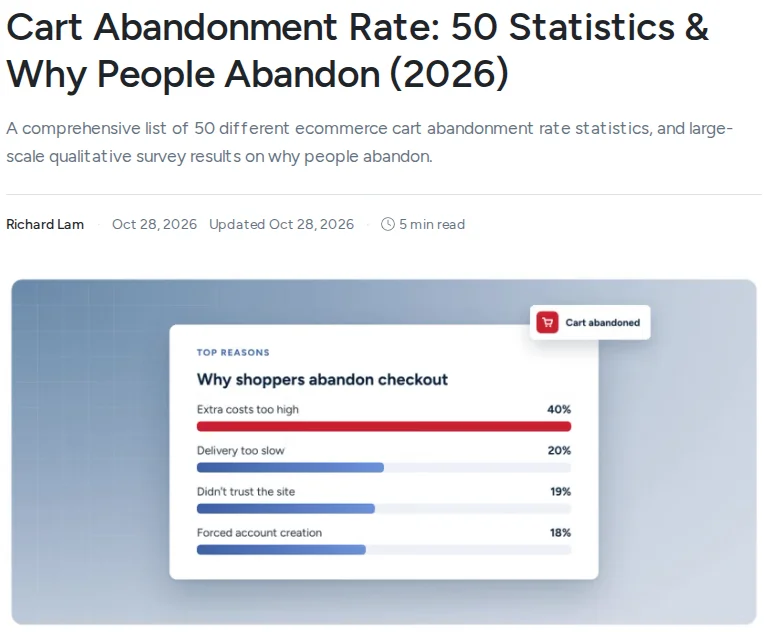
Trust and returns are both on that list, and both get decided next to the button. Nutrafol puts its guarantee inside the buy box on its Real Growth Guarantee page, as the first line under "Your subscription includes:", "Results in 6 months or your money back".
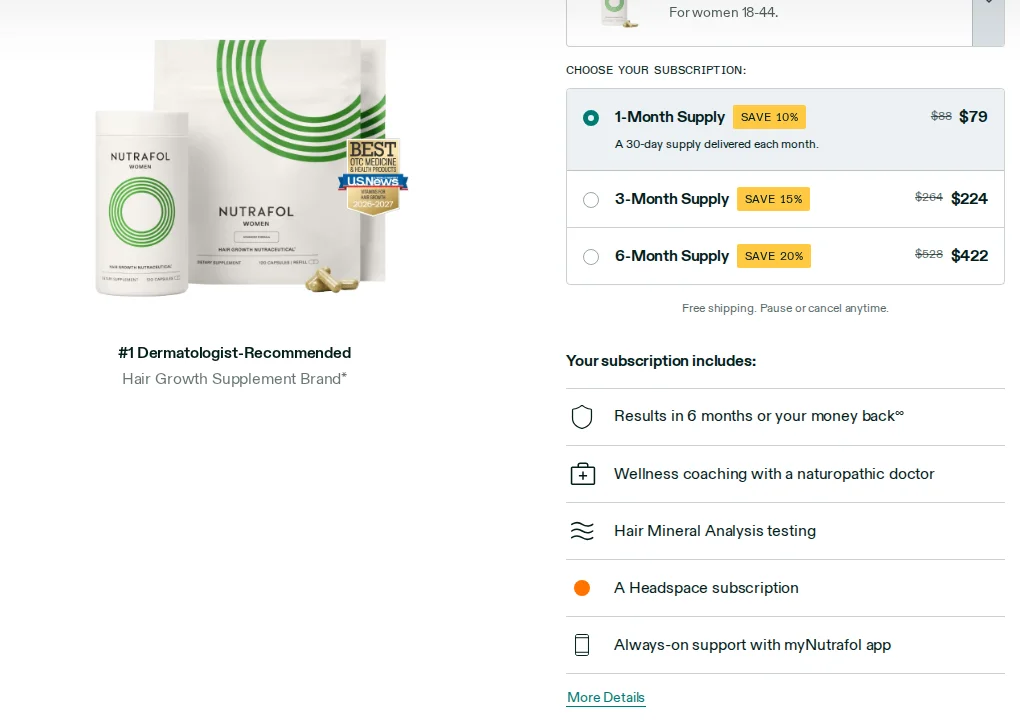
Further down, the page spells it out: "If you don't see results after 6 months, we'll refund your full subscription." It also links to the conditions. Nutrafol has plenty of reviews, but the move works for a brand with none. Write the guarantee as a specific promise (how many days, what you refund, who pays return shipping), put it next to the button, and put the total cost with shipping there too.
Step 5: Ask buyers what almost stopped them
The last tip from the thread is the cheapest. Add one question to your post-purchase survey: was there anything that almost stopped you from buying? A commenter suggested it, and it's the only way to hear the doubts of the people who got past them.
Then use their words. If three buyers say they weren't sure it would work with their setup, that line goes on the page, with the answer, above the button.
Where Landra fits
For Step 2, Landra builds an advertorial or a listicle from your product URL, so you can send ad clicks to a page that introduces the brand before the product page. 150+ active brands use it, including 8-9 figure brands (7-day trial, plans from $47/mo). We recommend checking your page to make sure we got everything right before it goes live.
Frequently asked questions
How do I build trust with customers when my store has no reviews?
Get your first five real reviews by asking every buyer, and quote the customers who already email you. Until then, send ad clicks to a page that introduces you the way a third party would (a listicle or an advertorial), show a real founder with a real reason the product exists, and put a specific guarantee next to the button.
How many reviews does a new product need?
Spiegel Research Center found that the purchase likelihood for a product with five reviews is 270% greater than for a product with no reviews, and that the benefit of more reviews "begins diminishing rapidly after the first five reviews". Five is the first milestone to aim for.
Can I give customers a discount for leaving a review?
Only if it does not depend on what they say. 16 CFR 465.4 bans incentives "conditioned expressly or by implication on" a review "expressing a particular sentiment, whether positive or negative". Offering the same thank-you for any honest review is a different thing from paying for good ones.
Do trust badges work for traffic from ads?
They rarely close the gap on their own. In one r/ecommerce thread with 44 comments, the founder already had trust badges, customer videos, clear guarantees and a founder story. Traffic from partner channels converted at 1 to 3% and traffic from ads barely converted. What the cold visitors were missing was a reason to believe a brand they had never heard of.
Should I put my face on my store?
If you have a real reason the product exists, yes, tell it with your name on it. Sundays for Dogs is written by its veterinarian founder. One commenter in the same thread warned that a founder face can make a store feel smaller, so lead with the reason and the credential, not just a photo.