
This week we're building something into Landra that made us put a name to a thing we'd been seeing on every cold-traffic page worth studying: there isn't one kind of listicle landing page. There are three. And they're not interchangeable: pick the wrong one for your traffic and the page reads fine and still bounces.
Almost every "listicle examples" roundup lumps them together, so nobody names the distinction. Here it is, with real live pages for each, ranked for cold traffic, and a worked example that runs the same product through all three.
The three listicle frames
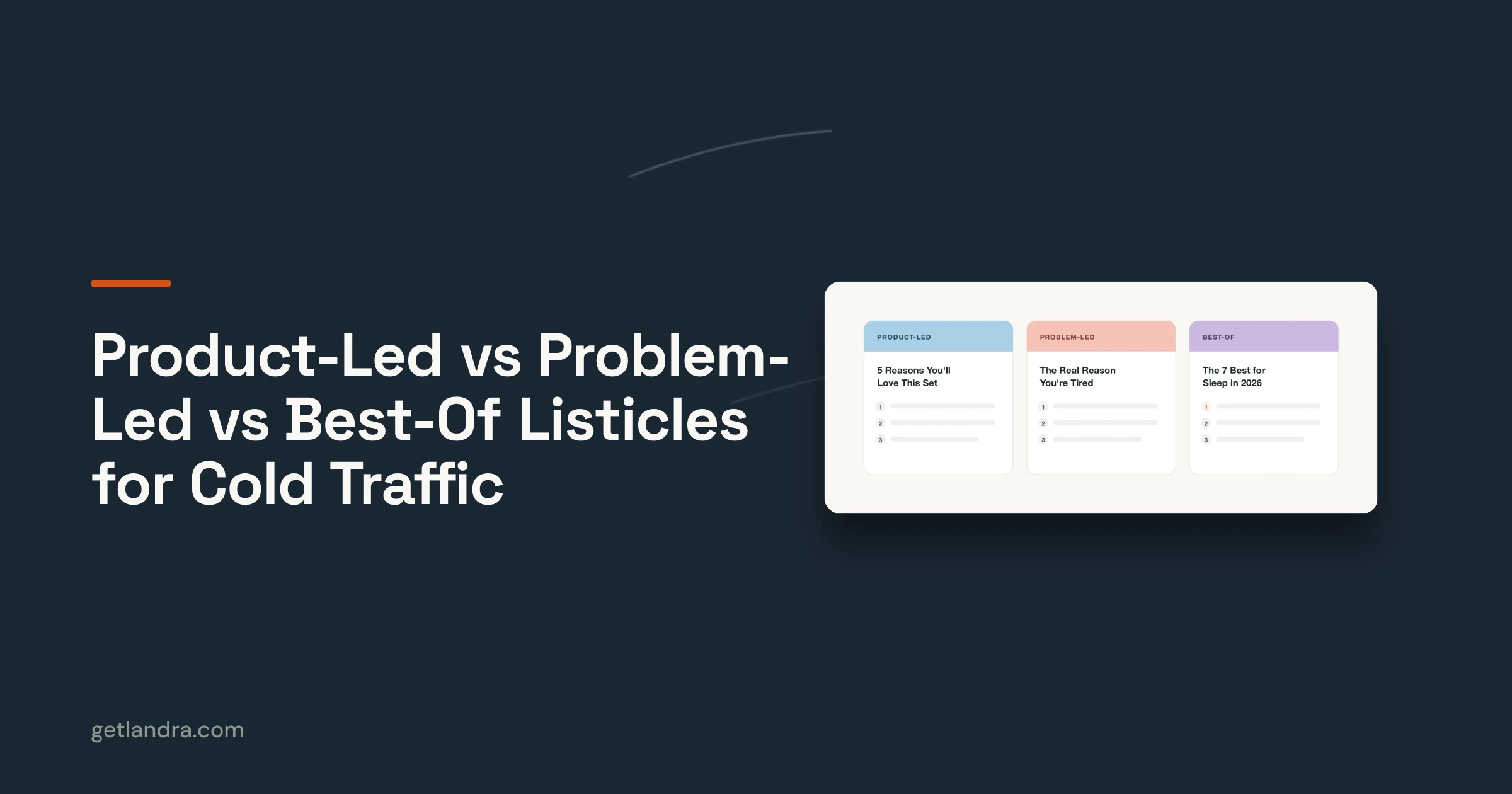
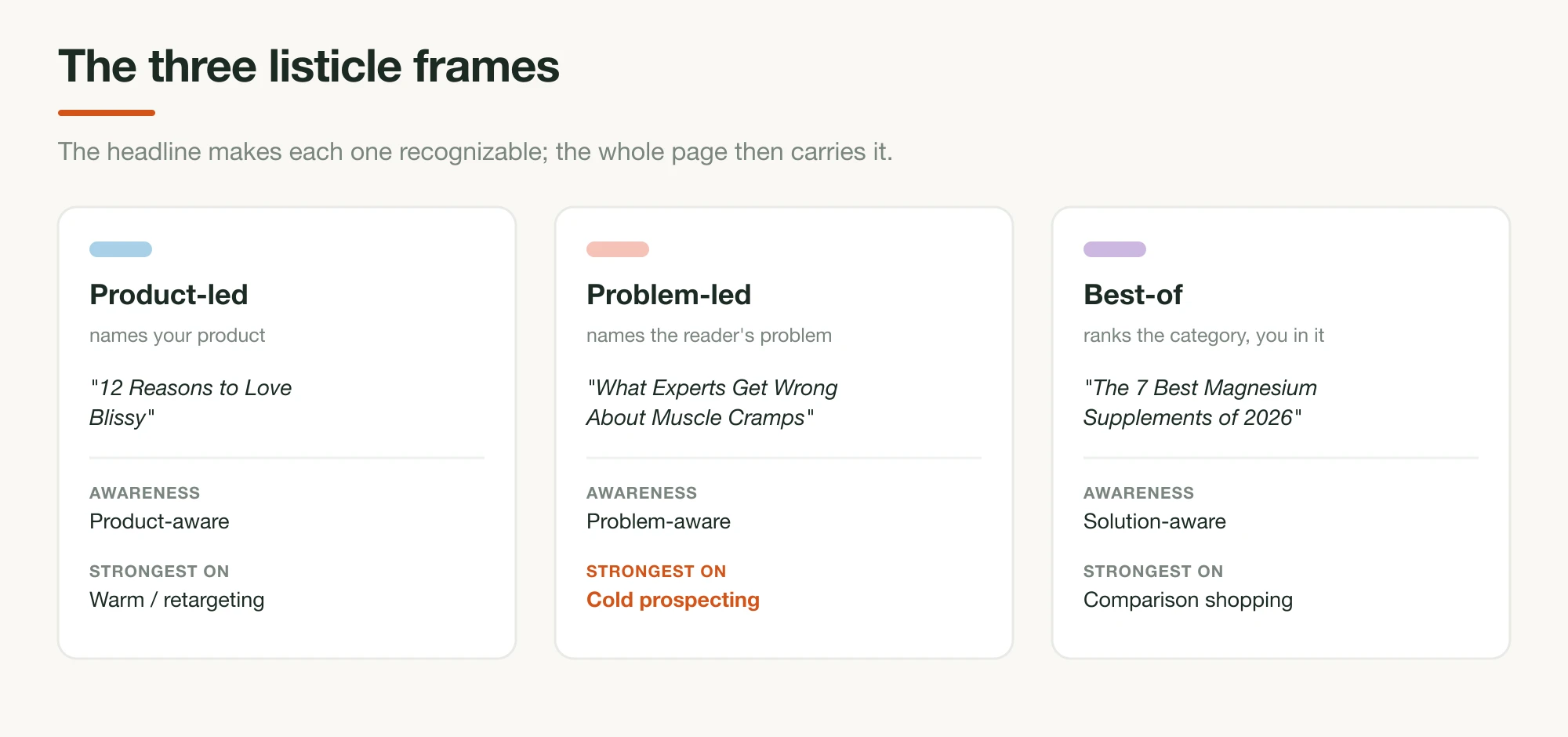
A listicle landing page can be framed three ways — and the headline is where the frame announces itself, but it's the whole article that carries it. Product-led names your product, then lists the reasons to choose it. Problem-led names the reader's problem, then walks them to your product as the fix. Best-of ranks the whole category, your product among the options, and lets the comparison make the case. The frame isn't a headline style you bolt on; it's the page's entire approach to educating the reader, and each one meets a different stage of awareness, which is why a frame that converts one kind of traffic will bounce another.
The reason the headline does the deciding is that it's the only part most readers actually read. Nielsen Norman Group's analysis of 45,000+ page views found users read at most about 28% of the words on a page, and 20% is likelier (2008) — and in a follow-up NN/g describes headlines as "gatekeepers" that decide whether the paragraph below gets read at all. So the headline isn't a label on the page; it's the filter that picks who stays, and then the frame it set up has to pay off in every section below, or the reader it pulled in bounces anyway. That's why the frame is a real strategic choice that runs the length of the page, not a copy tweak on line one.
Frame 1: Product-led, the warmest
A product-led listicle puts your product in the headline ("5 Reasons [Product]…") and lists reasons to choose it. It's the warmest of the three frames because it assumes the reader has already decided they want the category and is now weighing your product. That makes it strongest for retargeting, email, and brand-aware traffic, and weakest on a stranger who hasn't agreed they have the problem yet.
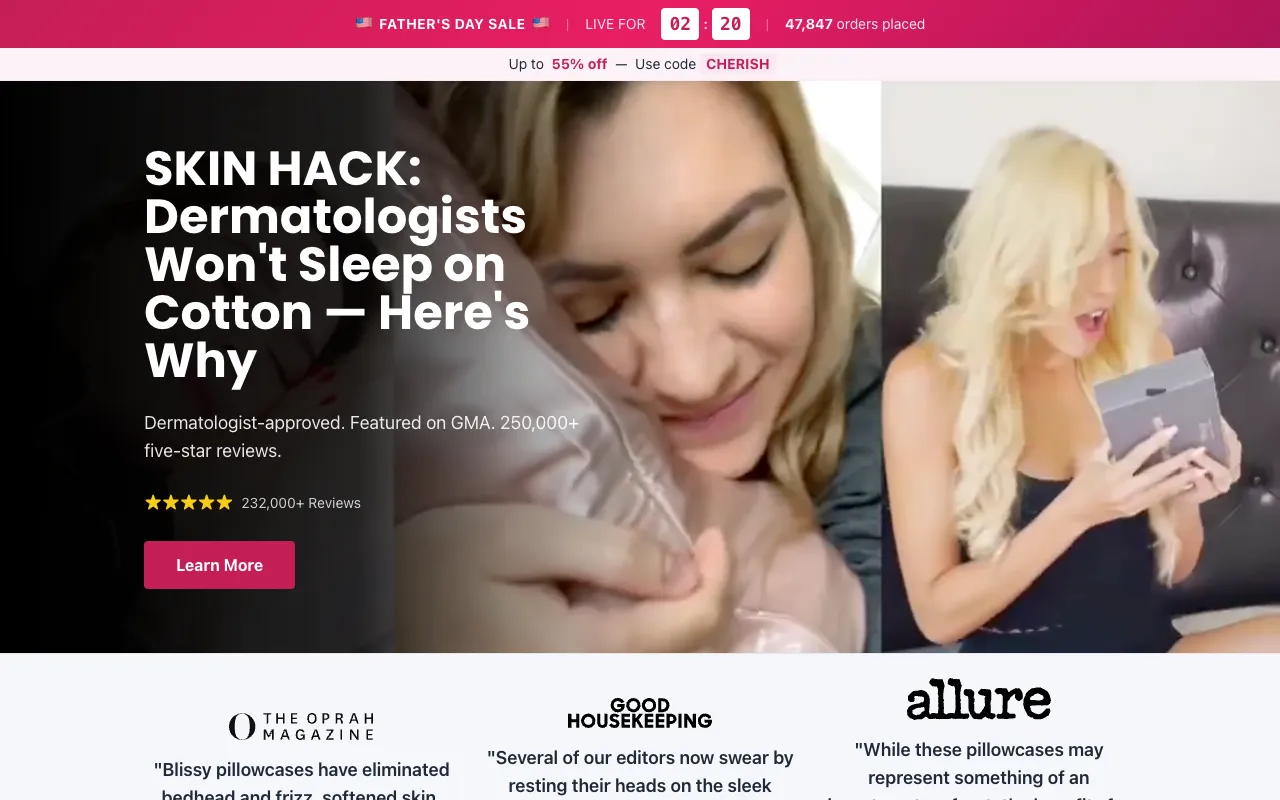
Blissy's page runs a "12 Reasons to Love Blissy" list, the product named right in the headline, with each reason a benefit of the pillowcase. It's the warmest frame at work: the list assumes you're already weighing the product, so it leans on stacked social proof (a 232,000-review claim, press logos) rather than on convincing you the problem exists.
The reverse case: that wall of social proof is exactly how a product-led page can still reach cold traffic. A "232,000+ reviews" or "1,000,000+ customers" claim is curiosity bait a stranger will click before they care about the product. The proof, not the product name, does the cold-traffic work. Without it, a product-led headline on cold traffic is the riskiest of the three: it asks someone to evaluate your product before they've admitted they need one.
Frame 2: Problem-led, the coldest-reaching
A problem-led listicle names the reader's problem instead of your product — Mama Bear Oasis opens with "What Most Experts Got Wrong About Muscle Cramps," never naming the product in the hook. It reaches the coldest traffic of the three because it meets a problem-aware reader exactly where their attention already sits: on the pain, not on shopping. The product doesn't appear until the problem has done the pulling.
The honest catch: pure problem-led listicles are rarer than the tidy framing implies. The colder you push, the more the page leans editorial: the problem-led slot is usually a listicle-advertorial hybrid. Mama Bear's cramps page is really a narrative advertorial; Hike Footwear's "I Tried 7 Different 'Comfort' Shoes. Only One Actually Worked." is a numbered list, but it leads with the problem (aching feet, wasted money) and the comparison, not the shoe. That's the tell: cold traffic wants narrative before it wants a clean list. Both pages also lean on personas and claims you'd want to substantiate before copying, so take the frame, not the fake-newsroom shortcuts.
The reverse case: problem-led can over-educate. A most-aware buyer who just wants the deal doesn't need their problem re-explained for 600 words; send that traffic somewhere shorter. The strength on cold traffic is the exact weakness on warm.
Frame 3: Best-of, the comparison frame (and its credibility knife-edge)
A best-of listicle ranks the category — "The 7 Best Magnesium Supplements of 2026" — with your product in the list. It speaks to a solution-aware reader who's settled on the category and is now comparing options; the DTC agency SplitBase maps "best [category]" traffic to exactly this stage. Its power is borrowed credibility — a ranking reads as independent verification. Which is also its trap.
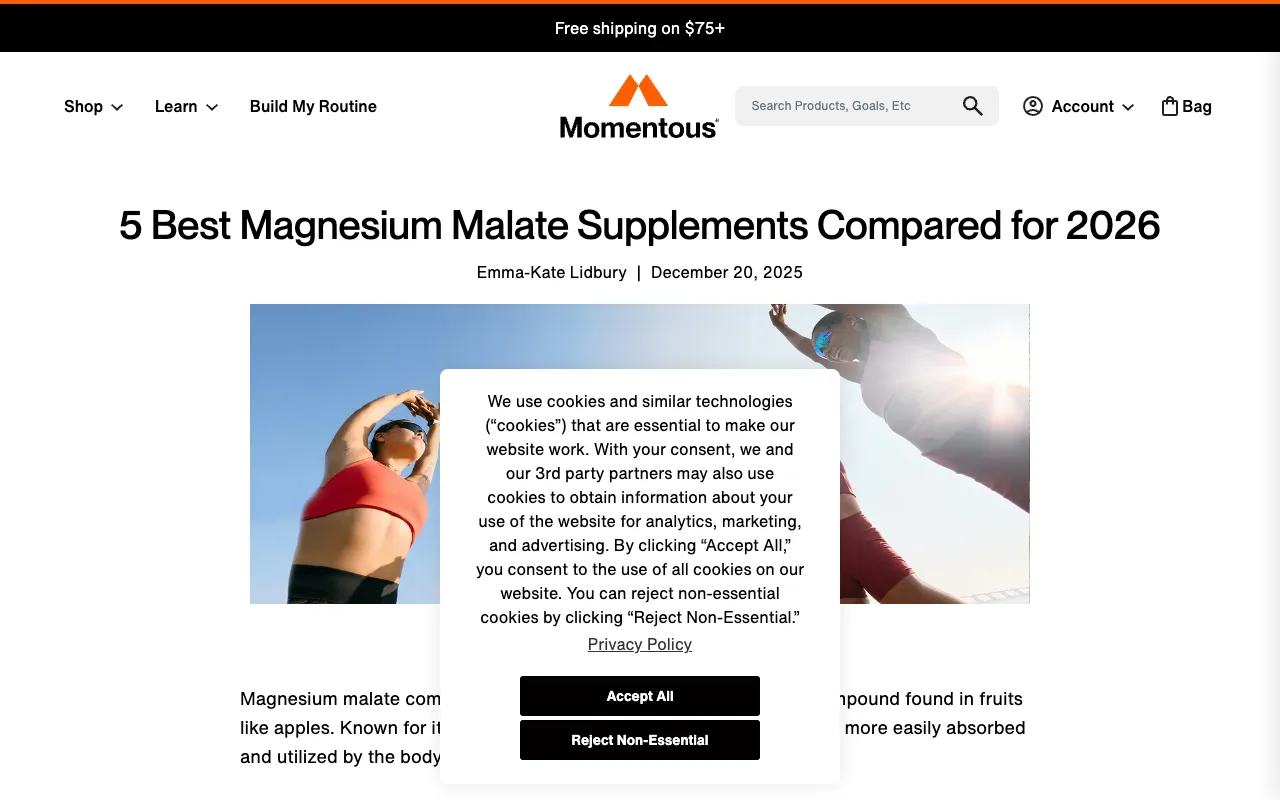
Here's the knife-edge, and our actual position on it: the best-of frame works because it feels objective — so a brand ranking itself #1 on its own domain has manufactured the very objectivity that makes the format persuasive. Momentous's "5 Best Magnesium Malate Supplements Compared for 2026" does precisely that: a category ranking on the brand's own /blogs/ path, its own product at #1, with no advertising or "this is ours" disclosure. Compare Healthline's "8 Best Magnesium Supplements… According to Dietitians," which is third-party and discloses its affiliate relationship up front.
The credibility is real but it's transferred, not owned. A study of 21,000+ brand mentions across AI answer engines, reported by Stan Ventures, found nearly 90% of third-party brand mentions came from list-style or comparative articles, ~80% of them in the top three positions. That's the format's power, and it accrues to brands that get into someone else's list, not ones that publish their own. So the honest play is one of two: earn placement in genuine third-party best-ofs (which doubles as your AEO strategy — being the brand that AI answer engines cite), or run your own best-of and be transparent that it's yours.
The reverse case: a brand-owned best-of can still convert a warm, final-comparison shopper who already trusts you and just wants help picking the variant; the conflict of interest matters less to someone who's effectively sold. It's a closing tool for warm traffic more than an acquisition tool for cold.
Ranked for cold traffic
Coldest-reaching to warmest, the order is problem-led → best-of → product-led, but read it as a ceiling, not a fence. The headline frame sets the coldest reader the page can hold; it doesn't stop a warmer reader from converting on any of the three.
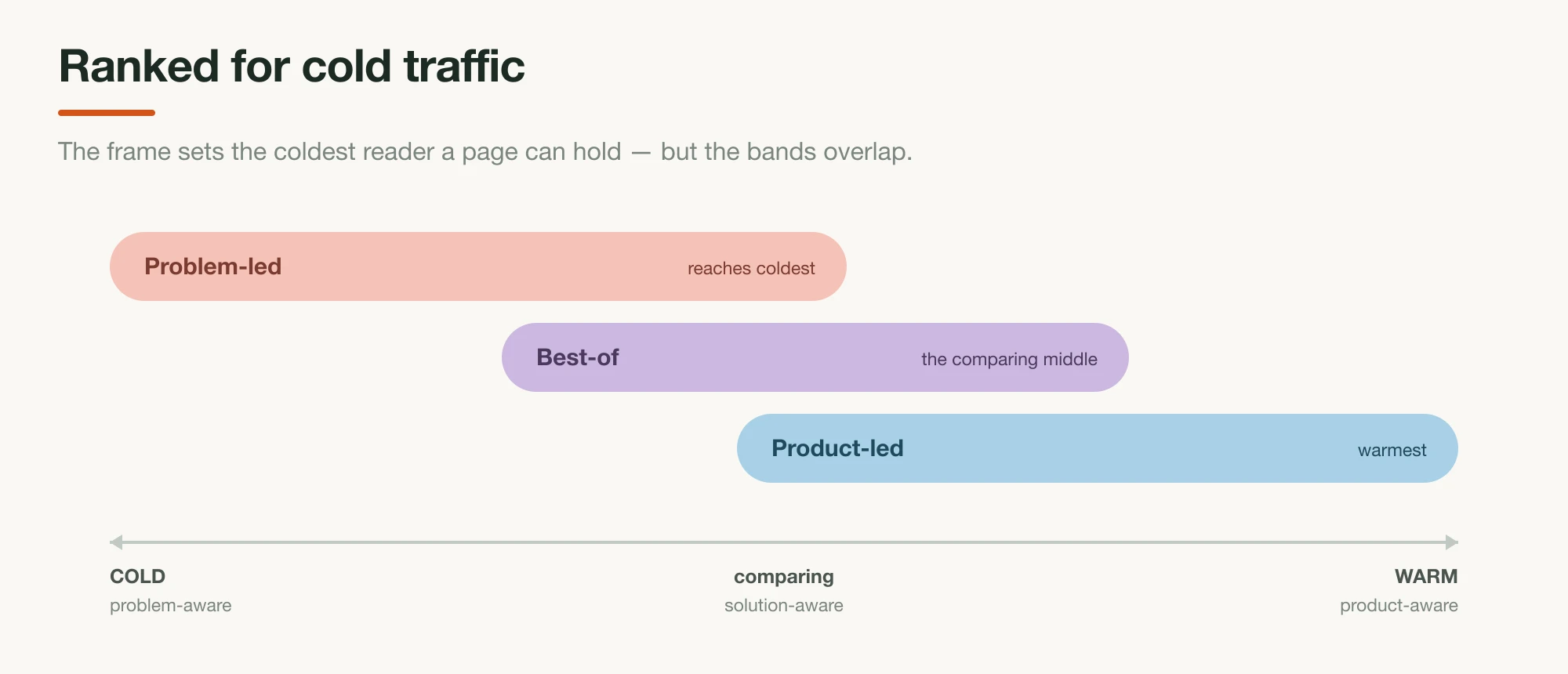
- Problem-led reaches coldest — it needs nothing from the reader but the feeling of the problem.
- Best-of sits in the solution-aware middle — the reader's already shopping the category.
- Product-led is warmest — it assumes the reader's evaluating you.
The overlaps are where the reverse cases live: social proof can drag product-led colder; an editorial best-of can warm-close; a problem-led page can over-serve a ready buyer. Match the frame to where your traffic actually is, which, on paid social, is usually one stage colder than the brand thinks (most cold clicks are problem-aware, not unaware; see advertorial vs listicle).
One product, three ways to educate and convert
The three frames aren't three headlines for one page; they're three ways to educate and convert the same reader, and the headline is just where each one announces itself. Take a magnesium glycinate for sleep. The same product can be sold three ways:
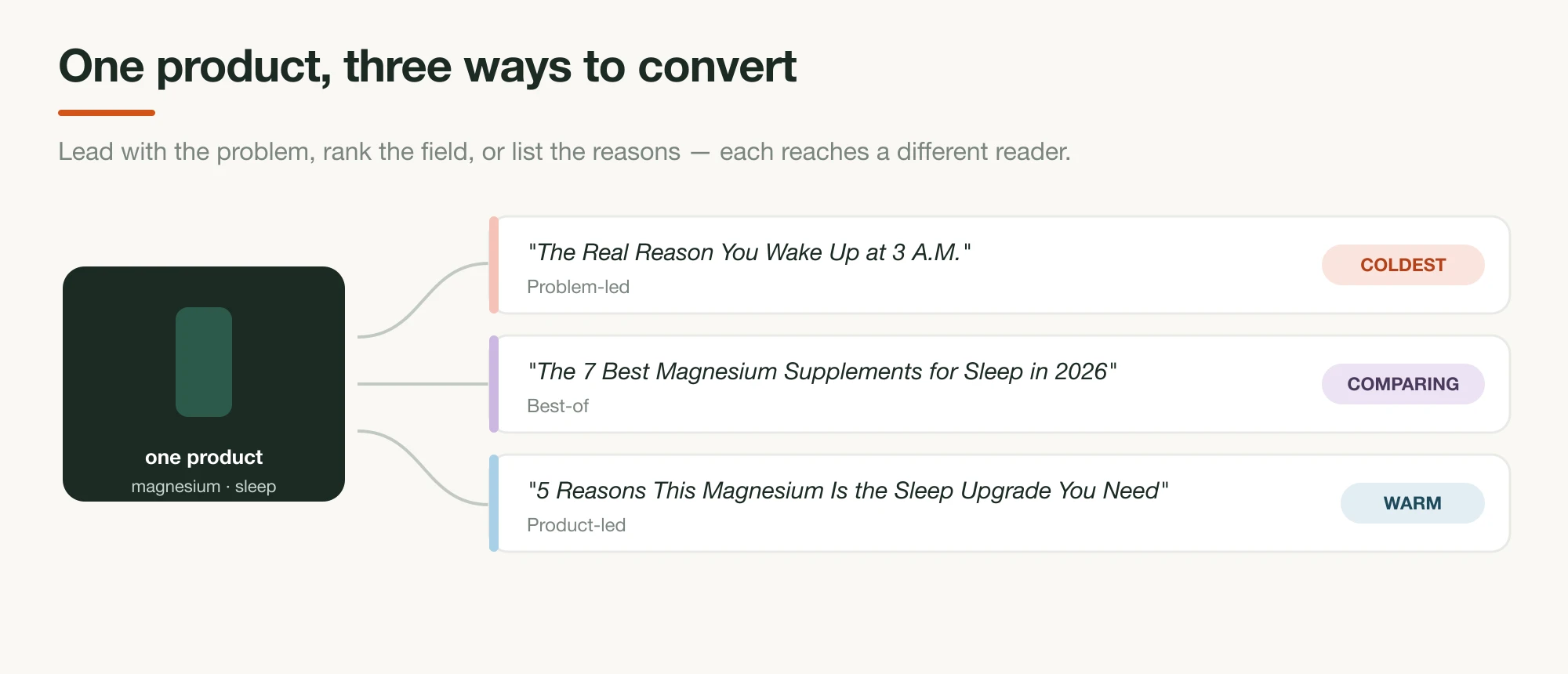
- Problem-led — teach the problem first ("The Real Reason You Wake Up at 3 A.M. — and How to Fix It"), then reveal the product as the fix. Reaches the coldest prospecting.
- Best-of — educate by comparison ("The 7 Best Magnesium Supplements for Sleep in 2026") and let the ranking make the case. For solution-aware searchers weighing options.
- Product-led — list the reasons to choose it ("5 Reasons This Magnesium Is the Sleep Upgrade You've Been Missing"). For retargeting and brand-aware traffic.
Same product, same offer, but three different paths to the sale, and the headline is the fork in the road that decides which reader takes it.
How to pick, and let the frame do the work
Choose by how cold your traffic is and how aware it is of the problem: the colder and less aware, the more you lean problem-led; the warmer and more decided, the more product-led earns its place; best-of when they're mid-comparison. Then write the headline to that frame, because the headline is the part that sets the ceiling.
This is the choice we're building directly into Landra, and building it is what made us name the three frames in the first place. You tell Landra the product and the audience you're targeting, and it writes the whole listicle in the frame that fits that reader, headline included, laid out in proprietary DTC components built to convert and published straight to Shopify. The decision this guide walks through by hand is the one Landra makes for you, tuned to the traffic you name.
The honest answer
The listicle was never one format. It's three, and the headline only tells you which one you're reading. The page then has to commit to it all the way down: name the product and the page lists the reasons for someone already sold on the category; name the problem and it educates a stranger one stage colder; rank the category and it plays the comparison straight — as long as the ranking is honest. Pick the frame for the traffic, then carry it through every section. For the format question above this one, see advertorial vs listicle; for the craft inside the list, how to write a high-converting listicle.
Frequently asked questions
What are the different types of listicle landing pages?
Three, defined by what the headline leads with: product-led (names your product, e.g. "12 Reasons to Love Blissy"), problem-led (names the reader's problem, e.g. "What Experts Get Wrong About Muscle Cramps"), and best-of (ranks the category with your product in it, e.g. "The 7 Best Magnesium Supplements of 2026"). Each speaks to a reader at a different stage of awareness.
Which listicle works best for cold traffic?
A problem-led listicle reaches the coldest traffic, because it meets a problem-aware reader where their attention already is — on the pain, not on shopping. Best-of sits in the middle (solution-aware, comparing options), and product-led is warmest (it assumes the reader already wants your product). But the frames overlap, and each can work outside its home stage with the right setup.
Do best-of listicles work for DTC brands?
Yes, but with a catch. The format converts because a ranking reads as independent verification — which is exactly what a brand can't manufacture for itself. A brand ranking its own product #1 on its own domain (it happens) is the weakest, riskiest version. The stronger play is to earn placement in genuine third-party best-of lists, or to run your own and be transparent that it's yours.
What is the difference between an advertorial and a listicle?
An advertorial is an editorial-style narrative pre-sell page; a listicle presents the argument as a numbered list. They overlap — the coldest-traffic pages are often a problem-led listicle-advertorial hybrid. For the format-level decision, see our guide on whether an advertorial or a listicle converts better; this piece is the layer underneath it — how the headline frame changes who a listicle can convert.