

Most demand generation advice starts with the wrong question: How do we create more top-of-funnel volume? For DTC brands buying attention on Meta and TikTok, the harder question is more useful: How much of that attention can you turn into profitable demand?
A click isn't demand. A video view isn't demand. Even a new email address may be worthless if the message, offer, and buying experience don't match what the shopper expected. A modern demand generation strategy has to connect creative, pre-sell content, checkout, retention, and measurement to the economics that matter, including contribution margin, blended acquisition efficiency, and payback period.
That approach is supported by the broader economics of content-led demand creation. Benchmark summaries report that content marketing generates about 3 times more leads per dollar while costing 62% less than traditional outbound marketing, and that B2B companies that blog generate 67% more leads per month than those that don't, as summarized by Marketful's B2B content marketing statistics. DTC teams should adapt the lesson, not copy the B2B funnel: useful content works when it reduces uncertainty and moves the right buyer closer to a purchase.
Table of Contents
- What Demand Generation Strategy Actually Means for DTC Brands
- Demand Generation Versus Lead Generation, Growth, and Performance Marketing
- The Four Core Components of a Modern Demand Gen System
- Channel Tactics Across the Paid Social Funnel
- Measurement and Attribution for Pipeline-First Demand Gen
- Why Pre-Sell Pages Belong Inside the Demand Gen Stack
- A 90-Day Framework to Build Your Demand Generation Plan
- Common Questions DTC Teams Ask About Demand Generation
What Demand Generation Strategy Actually Means for DTC Brands
Demand generation isn't a contest to collect the largest audience. It's a revenue system for turning unfamiliar people into qualified buyers through repeated, relevant experiences.
For a DTC brand, that system begins with the promise in the ad. It continues through the page that receives the click, the offer that makes the product understandable, the checkout experience that removes friction, and the lifecycle messages that create another buying opportunity. If any link breaks, the team may still report reach and traffic while the P&L absorbs the failure.
A volume-first model asks whether a campaign produced enough clicks, views, or visitors. A payback-period model asks whether the traffic produced customers whose contribution margin can support acquisition and future growth. Those are different operating philosophies. The second one forces the team to connect creative angles, audience quality, landing-page behavior, purchase rate, repeat purchase, and spend.
Demand gen owns the path to purchase
The practical definition is simple:
- Audience creation: Reach people who recognize a problem, desire an outcome, or identify with a specific use case.
- Message matching: Carry the ad's language, emotional angle, proof, and objection handling onto the next page.
- Revenue alignment: Judge the system by qualified demand, customer economics, and revenue contribution rather than activity alone.
This is why DTC demand gen shouldn't be isolated from performance marketing. The person writing the ad needs visibility into the page. The person building the page needs feedback from customer support and retention. The media buyer needs to know whether a cheap first purchase creates healthy contribution margin or merely flatters the platform dashboard.

For a broader explanation of the operating model, demand generation strategy is a useful reference. The key DTC adaptation is that “pipeline” doesn't have to mean an MQL sitting in a CRM. It can mean a qualified flow of shoppers progressing from cold attention to product understanding, checkout, and profitable customer value.
Practical rule: If the team can't explain how an ad angle changes the next page, the campaign isn't a demand generation strategy. It's a traffic purchase.
Demand Generation Versus Lead Generation, Growth, and Performance Marketing
These terms overlap, but they don't describe the same job. Confusing them creates bad ownership. A brand may call a campaign “demand gen” while measuring it like direct response, or call a landing-page test “growth” while nobody owns the resulting revenue.
| Function | Primary Job | Core Metric | Channels | DTC Fit |
|---|---|---|---|---|
| Demand generation | Create and develop qualified interest | Qualified demand, pipeline value, revenue contribution | Paid social, content, SEO, creators, email, partnerships | Coordinates the entire path from unfamiliar audience to buyer |
| Lead generation | Capture existing interest and contact information | Qualified leads, form completion, lead-to-customer movement | Forms, quizzes, email capture, gated assets, trials | Useful for subscriptions, high-consideration products, and owned-audience growth |
| Growth marketing | Run experiments across acquisition, product, and lifecycle | Experiment impact, activation, retention, customer value | Product flows, onboarding, email, paid media, referrals | Best for finding repeatable loops beyond a single campaign |
| Performance marketing | Buy and optimize measurable acquisition | CAC, conversion rate, blended efficiency, payback | Meta, TikTok, Google, affiliate, display | The execution layer that scales demand and harvests intent |
Lead generation captures demand that already exists. Demand generation helps create the conditions for that demand to become specific, trusted, and actionable. A quiz can collect an email address, but the quiz doesn't automatically make the prospect ready to buy. The surrounding education, proof, offer, and follow-up do the heavier work.
Growth marketing is broader than campaign management. It might include improving onboarding, increasing second-purchase behavior, or finding a referral loop. Performance marketing is narrower, and more operational. It governs targeting, bidding, creative testing, budget allocation, and acquisition reporting.
For teams building the capture layer, Landra's lead generation funnel guide gives useful context on how visitors move through staged experiences. DTC brands usually fuse demand generation and performance under one roof because paid social creative and landing-page experience are inseparable. Splitting them into B2B-style departments often creates a familiar failure: one team gets credit for cheap clicks, another inherits weak conversion, and finance sees the final bill.
The better model assigns one owner to the full path. Creative, media, page, offer, and lifecycle teams can specialize, but they should share a commercial scorecard.
The Four Core Components of a Modern Demand Gen System
A demand generation strategy becomes usable when the team can turn it into four operating components: ICP definition, offer architecture, content production, and channel mix. Leave one out and the system develops a predictable weakness.
1. Define the ICP beyond demographics
An effective DTC ICP isn't just age, location, or household profile. It includes the situation that causes someone to act, the language they use to describe the problem, the objection that stops them, and the proof they trust.
Build audience segments around:
- Buying triggers: A new routine, a failed alternative, a seasonal need, or a specific life event.
- Desired outcomes: The practical and emotional result the product must deliver.
- Creative hooks: The opening idea that earns attention from that particular segment.
- Resistance points: Price, complexity, skepticism, ingredients, delivery, fit, or switching cost.
A useful ICP brief should hand a copywriter several distinct ad angles, not one bland persona paragraph.
2. Build an offer architecture
Cold traffic rarely responds to the same offer that works for returning customers. Map the role of each offer:
- Hero offer: The primary product and the clearest reason to buy now.
- Pre-sell offer: The narrative, comparison, quiz, bundle explanation, or education that makes the product easier to choose.
- Basket-building offer: A bundle, subscription, add-on, or threshold that improves order economics without confusing the first purchase.
The offer architecture should answer one question: what does this shopper need to understand before checkout? A high-AOV product may need education and proof. A familiar low-friction product may need a sharper hook and a simpler path.
3. Create a content system, not occasional content
Quarterly blog publishing won't sustain a paid-social demand engine. The system needs ad-native creative every week, including hooks, demonstrations, founder explanations, customer objections, comparisons, reviews, and variations of winning angles.
Turn each successful message into several assets. A problem-aware ad can become a short video, a listicle section, an email, a search article, and a pre-sell headline. The point isn't to repeat copy mechanically. It's to preserve the core promise while adapting the format to the channel and stage.

4. Choose channels around contribution margin
Paid social creates reach and tests messages quickly. SEO compounds around problem-aware and branded demand. Email and SMS monetize permission. Creators and partnerships add credibility and reach audiences that a platform's targeting may not reliably find.
Don't allocate budget because a channel looks fashionable. Allocate it according to the role it plays, the quality of customers it produces, and the time required to recover acquisition cost.
A DTC team can use this video resource as additional context while designing the operating system. The four components interlock: the ICP shapes the offer, the offer shapes the content, the content determines channel fit, and channel data improves the ICP.
Channel Tactics Across the Paid Social Funnel
Paid social should do more than harvest people who already want the product. It should create recognition, teach the problem, and give the right audience a reason to continue. The pre-sell page then converts that initial relevance into stronger buying intent.
| Funnel Stage | Paid Social | SEO | Email & SMS | Partnerships & Creators |
|---|---|---|---|---|
| Discovery | Broad creative, problem-led hooks, education-first videos | Problem and category content | Light welcome capture | Introductions through trusted voices |
| Evaluation | Retarget engaged viewers and page visitors with proof, comparisons, and objections | Reviews, comparisons, buying guides | Nurture around use cases and objections | Demonstrations, reviews, creator explainers |
| Purchase | Product proof, offer reminders, urgency used responsibly | Branded and product-intent pages | Cart recovery, offer reminders, product education | Creator-specific offers and purchase guidance |
| Retention | Customer audiences, replenishment, cross-sell | Support and usage content | Post-purchase education, replenishment, cross-sell | Advocacy, referrals, customer stories |
Paid social has two distinct jobs
For prospecting, build creative around a clear problem or desired outcome. Avoid sending every cold click to a product-detail page because the platform can optimize for purchase. A cold shopper often needs a bridge that explains why the product matters and why this version deserves consideration.
For retargeting, use behavioral signals. Someone who watched a substantial portion of a video needs a different message from someone who reached the pre-sell page but abandoned before checkout. The first may need proof. The second may need reassurance about shipping, ingredients, fit, returns, or the offer.
Let each channel prove its role
SEO should earn attention from people actively researching a problem or category, then route them into the same offer and lifecycle system as paid traffic. Email and SMS should focus on permission-based follow-up, first-purchase completion, product education, and the second purchase where customer value is built.
Partnerships and creators can supply context that polished brand ads often lack. Give each partner a distinct brief, landing-page angle, and tracking method. A creator who explains a use case should not send traffic to a generic page with no connection to that explanation.
Set a primary KPI before launch. Paid social may own qualified purchases and payback. SEO may own assisted revenue and new demand capture. Email may own incremental revenue and repeat behavior. Partnerships may own new-customer quality rather than raw traffic.
Measurement and Attribution for Pipeline-First Demand Gen
Platform reporting is useful, but it isn't a complete financial truth. Meta and TikTok can help a team decide which creative deserves another test. They shouldn't be the only judge of whether the business should increase spend.
Privacy changes, delayed conversions, view-through behavior, organic demand, email influence, and returning customers all complicate the path from impression to purchase. The solution isn't to find one perfect attribution window. It's to use several measurement layers for different decisions.
Use three measurement layers
Platform data supports fast creative and delivery decisions. Watch thumb-stop behavior, click quality, landing-page engagement, and purchase signals inside the platform, but treat them as directional.
Blended attribution tools help with shorter-window budget decisions. A unified store, customer, spend, and channel view can expose differences between platform-reported performance and blended business performance.
Incrementality testing answers the question that attribution cannot: did the channel create additional demand, or did it claim demand that would have converted anyway?
Practical tests include geographic experiments, audience holdouts, and structured spend pauses. Keep the test question narrow. A vague “does Meta work?” test creates noise. A focused question about a specific audience, creative family, or funnel route produces a decision.

Put commercial metrics above click metrics
Choose a north-star measure that reflects the business model. That might be CAC payback, blended MER, contribution profit, qualified pipeline value, or customer value after the first order. CTR and CPC still matter, but they shouldn't determine strategy by themselves.
For creator and influencer programs, teams also need a consistent method to measure influencer campaign revenue, including tracked links, codes, new-customer quality, and assisted behavior where the data supports it.
A practical weekly report should show spend, new customers, contribution margin, blended efficiency, payback, and major funnel conversion points on one page. Add channel-level views underneath. The team can use ad performance insights from Landra to sharpen the creative and page questions, but leadership needs the blended commercial view.
Reporting rule: Use platform data to decide what to test, blended data to decide where to look, and incrementality to decide what deserves more budget.
Why Pre-Sell Pages Belong Inside the Demand Gen Stack
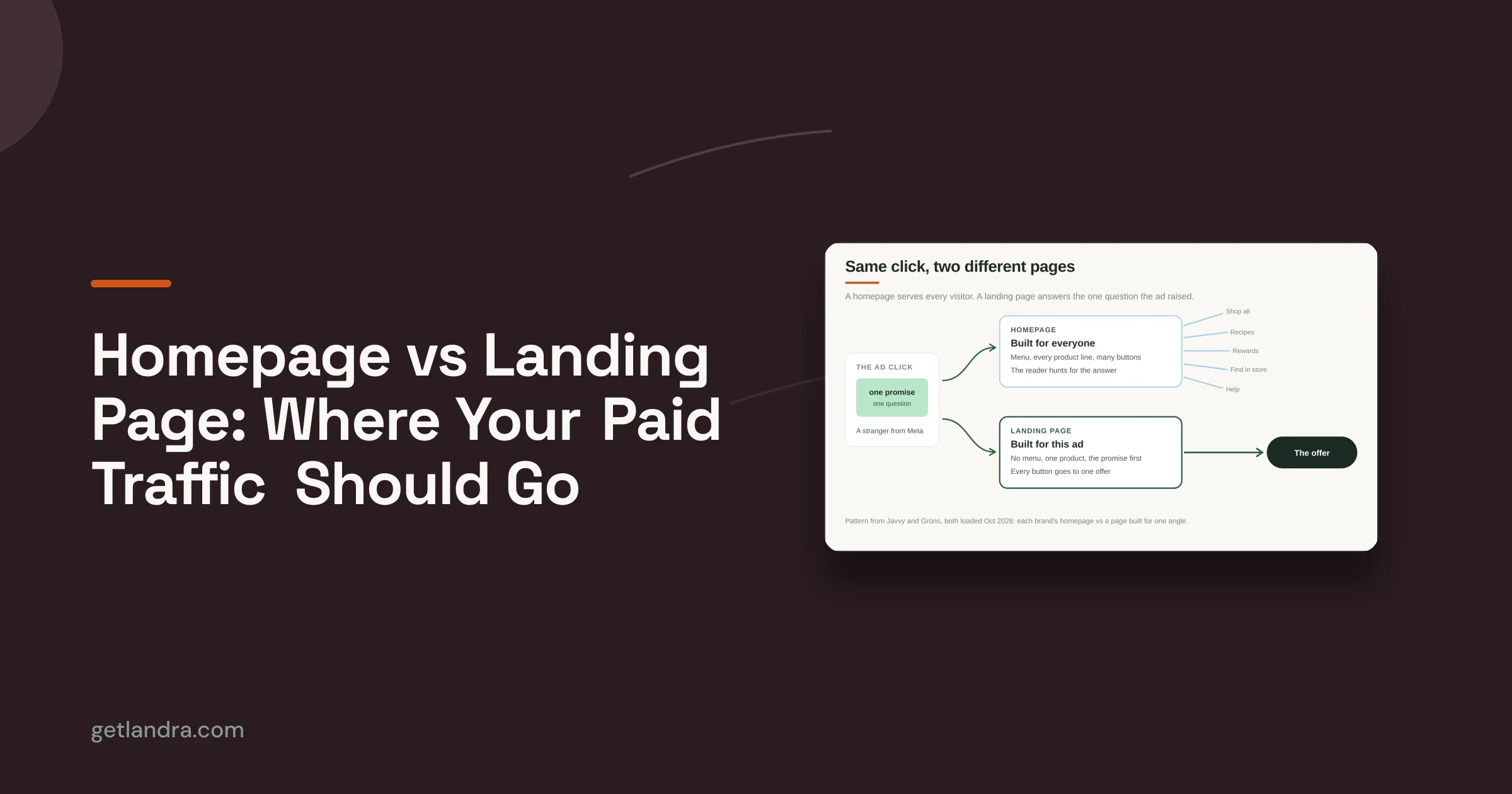
A cold Facebook or TikTok click usually shouldn't land on a generic product page. The product page is built to help a shopper evaluate a known product. Cold traffic often needs to understand the problem, see why the category matters, and believe the proposed solution before it can evaluate the product fairly.
That missing bridge is the pre-sell page. It sits between the ad and checkout, carrying the same angle into a more complete argument. The page isn't a trick for forcing weak traffic through a longer funnel. It's a message-match and qualification layer.
A useful pre-sell page typically includes:
- A connected hook: The headline and opening should reflect the ad's promise, not introduce a new story.
- Offer-specific proof: Reviews, demonstrations, or explanations should support the exact angle being sold.
- One clear next action: The page should guide the reader toward the product or offer without competing CTAs.
- Objection handling: Answer the concern the shopper is likely to have before they reach the cart.
- Enough education: Explain the mechanism, use case, comparison, or routine when the product needs context.
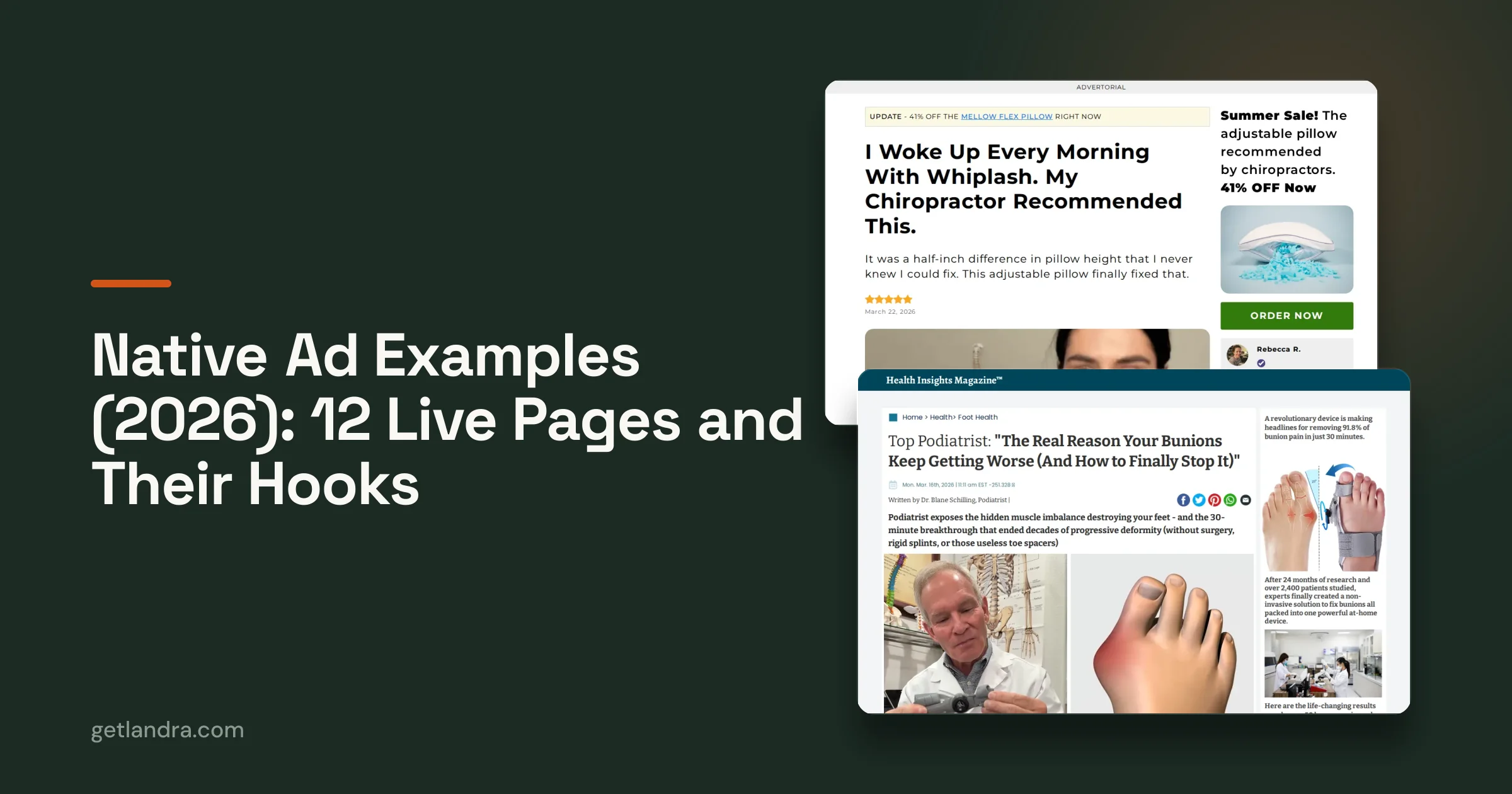
An advertorial-style page can use a narrative opening and editorial flow. A listicle can organize several reasons, use cases, or comparisons for a shopper who wants to scan. A video-led page may work better when the product depends on demonstration or personality, particularly for TikTok-native traffic.
The right format depends on the offer. Bundles need explanation. Trials need expectation-setting. High-AOV products need confidence, proof, and a reason to act now rather than postpone the decision. A short product page can win when the category is familiar and the offer is simple. Longer copy earns its place when it reduces real uncertainty.
For execution details, use this guide to pre-sell pages for DTC. The test should compare message routes, not merely page length. Keep the ad angle, audience, offer, and destination relationship clear enough that the result teaches the team something.
A 90-Day Framework to Build Your Demand Generation Plan
A demand generation plan doesn't need a massive strategy deck. It needs a sequence of decisions, owners, launch dates, and kill criteria. Use three 30-day sprints.
Days 1 through 30, establish the foundation
Document the best customer segments, buying triggers, objections, existing creative angles, and current offer structure. Audit every major ad-to-page route. Mark where the headline, proof, product promise, and CTA break alignment.
Instrument the measurement stack before increasing spend. Define the commercial metric leadership will use, then create a weekly report that reconciles platform data with store revenue and contribution economics.
Assign one owner to each workstream:
- Audience and research: Customer insights, support themes, reviews, and purchase context.
- Offer and page: Product merchandising, pre-sell route, bundles, and checkout handoff.
- Creative: Hooks, formats, demonstrations, proof, and testing backlog.
- Measurement: Spend, revenue, new-customer quality, payback, and experiment design.
Days 31 through 60, launch the system
Ship at least one destination experience for each priority paid-social angle. Build a creative matrix that maps audience, hook, proof type, format, offer, destination, and follow-up message.
Launch prospecting and retargeting separately enough to understand their jobs. Create lifecycle flows for welcome, browse, cart, post-purchase education, replenishment, and cross-sell. Don't judge every asset by the same conversion expectation. A discovery video and a cart reminder have different responsibilities.
Teams that need a repeatable operating layer can also use templates that turn tasks into repeatable systems, then adapt the templates to their own owners and reporting definitions.
Days 61 through 90, optimize and reallocate
Review performance by message, not only by campaign. Promote angles that produce healthy customers, not just cheap visits. Cut routes where the ad promise and page experience remain misaligned after meaningful iteration.
Stress-test attribution assumptions with a holdout or geographic experiment where practical. Compare new-customer economics, contribution margin, and payback across funnel routes. End the sprint with a decision log showing what the team will scale, revise, pause, or remove.
Your working template should contain five fields for every initiative: objective, owner, weekly action, success metric, and kill criteria. Add a final question: What evidence would make us stop spending on this route? If nobody can answer it before launch, the plan isn't ready.
Common Questions DTC Teams Ask About Demand Generation
How is demand generation different from brand marketing? Brand marketing builds recognition and preference. Demand generation connects that preference to an operating path that moves a shopper toward a qualified purchase. The two overlap, but demand gen has a harder commercial obligation.
What budget does a sub-$2M team need? There isn't a responsible universal budget. Start with the contribution margin you can deploy, the payback period the business can tolerate, and the creative and measurement capacity available to support the spend. A small team should fund a route it can learn from, not spread money across every channel.
How long before pipeline impact appears? Paid social can produce immediate purchase signals, while SEO, creator relationships, and content libraries compound more gradually. Measure early movement through message engagement and qualified page behavior, but make scaling decisions from customer economics rather than impatience.
Does demand generation work with a low AOV? It can, but the system has less room for expensive education. Use sharper creative, lower-friction pages, bundles, subscriptions, and lifecycle follow-up to protect contribution margin.
What if first-click attribution looks bad? Don't defend the channel with a louder dashboard. Compare blended revenue, new-customer quality, payback, and incrementality. If the route creates additional profitable demand, weak first-click credit doesn't make it worthless. If it doesn't, attractive engagement metrics won't save it.
The brands that win treat demand as a system, not a campaign.
Landra helps DTC teams turn product URLs into editable, mobile-first advertorials, listicles, and pre-sell pages for paid-social traffic. If your ads are earning clicks but your product pages aren't carrying the message forward, visit Landra and build a tighter ad-to-checkout path.