

Below are free, copy-paste templates for the two page formats that convert cold traffic best: the advertorial and the listicle. Each template is a complete section-by-section structure you can rebuild in any page builder or hand to a writer as a brief. The sequence is the asset here, because in presell pages the order of sections does more work than the design around them.
What makes a high-converting template
Good presell templates share four properties. They match cold-traffic awareness, opening on the reader's problem rather than the product, because a stranger has no reason to care about your brand yet. They delay the pitch, introducing the product only after the groundwork earns it. They carry one call to action, repeated, with no navigation to wander into. And they build the ad disclosure into the structure rather than treating it as an afterthought, since the format is legally an advertisement. Both templates below follow all four rules, so resist the urge to reorder them before testing them as written.
Advertorial template
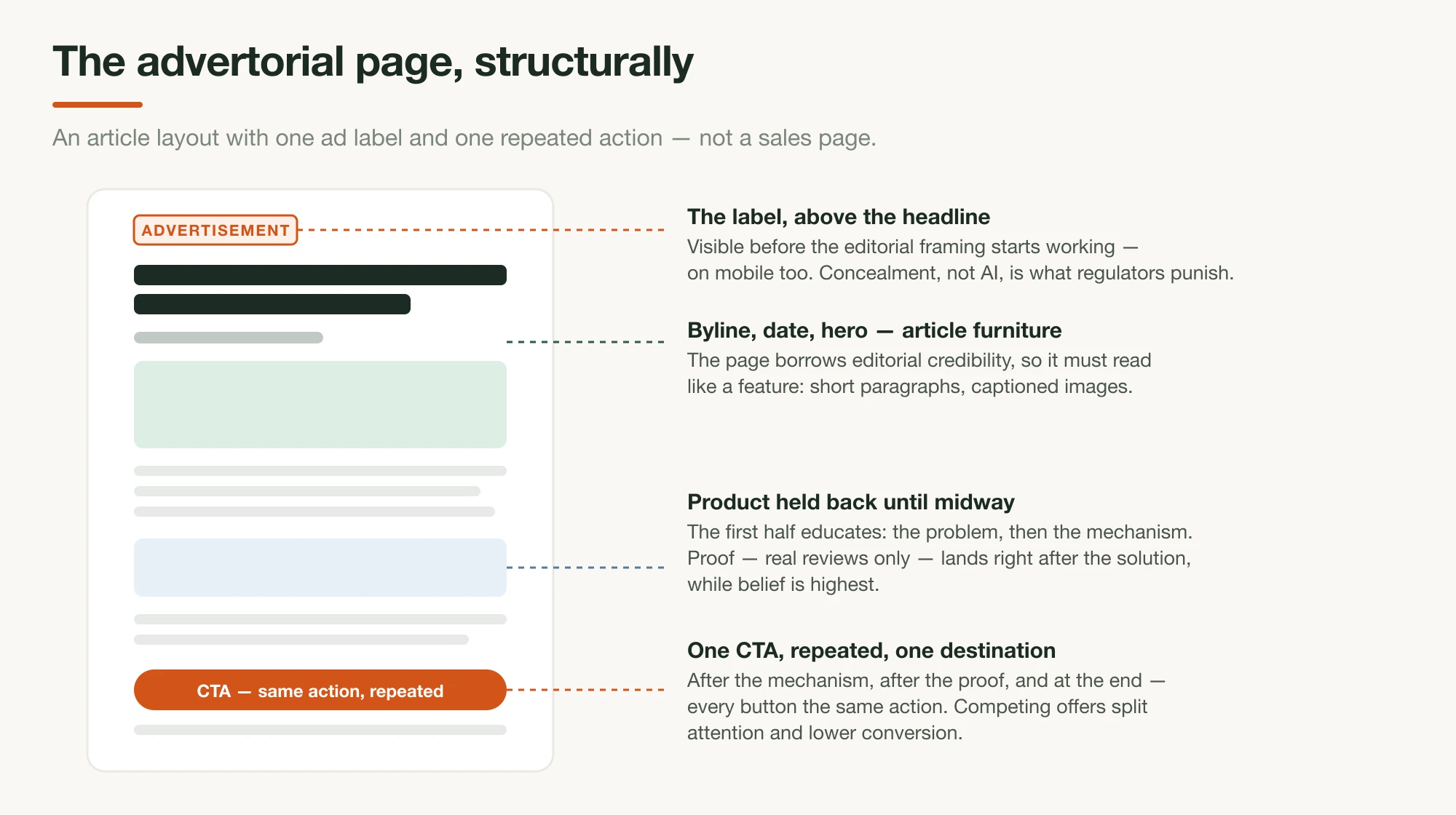
This is the classic story-driven advertorial format, suited to products with an emotional problem behind them, such as sleep, skin, pain, or energy.
| Slot | What goes in it |
|---|---|
| Disclosure label | A visible Advertisement tag at the very top of the page. |
| Editorial headline | Written like an article title, curiosity plus specificity, with an optional byline and date. |
| Problem lead | Two to four short paragraphs describing the reader's situation in their own vocabulary, no product mentioned. |
| Failed alternatives | A section on why the common fixes disappoint, which builds credibility and anticipation. |
| Mechanism | The explanation of what actually addresses the problem, framed as information rather than promotion. |
| Product turn | The product enters as the embodiment of that mechanism, just past the page's midpoint. |
| Proof stack | Reviews, ratings, usage numbers, or before-and-after context, with specifics beating superlatives. |
| Offer and CTA | The deal stated plainly with one button, repeated from here to the end of the page. |
| FAQ and guarantee | Three to five objections answered, plus the risk reversal. |

Listicle template
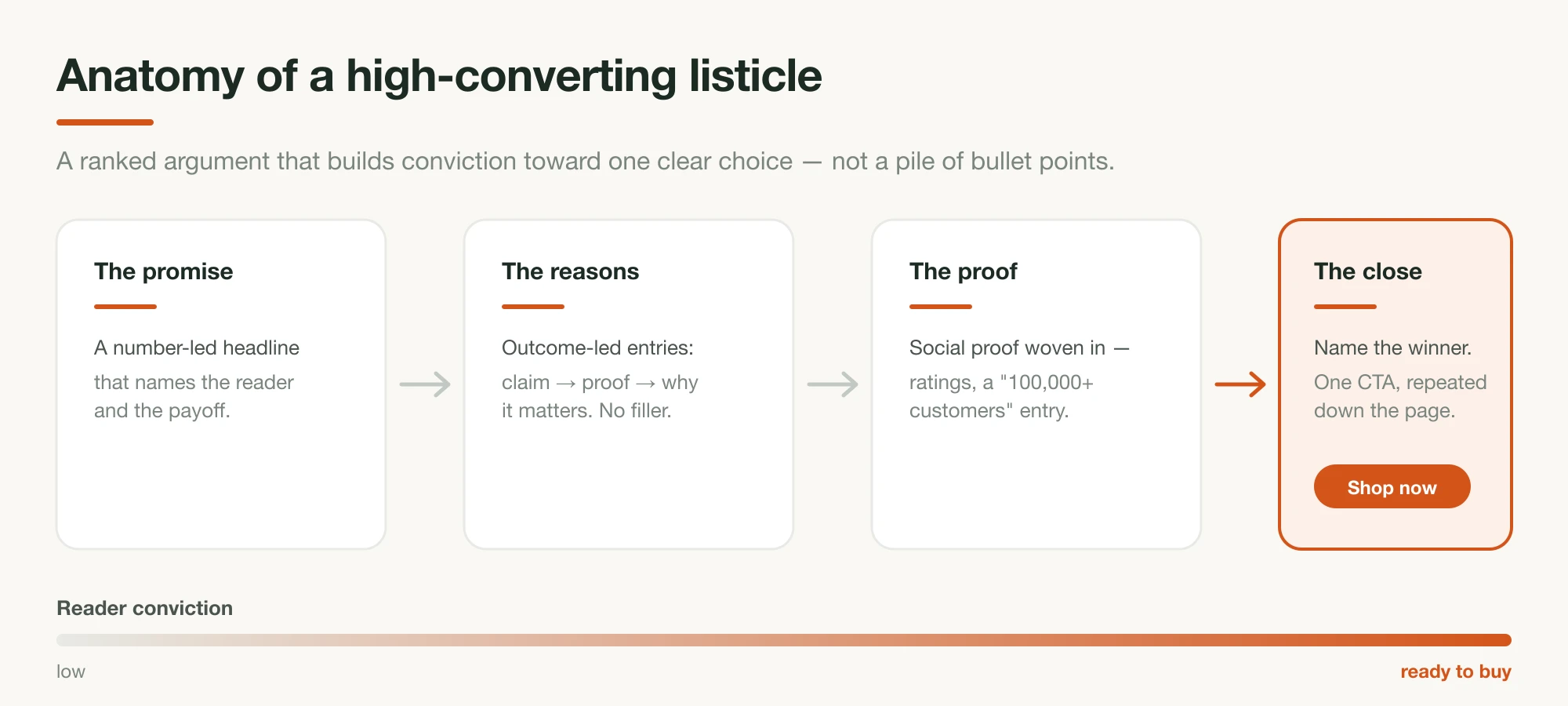
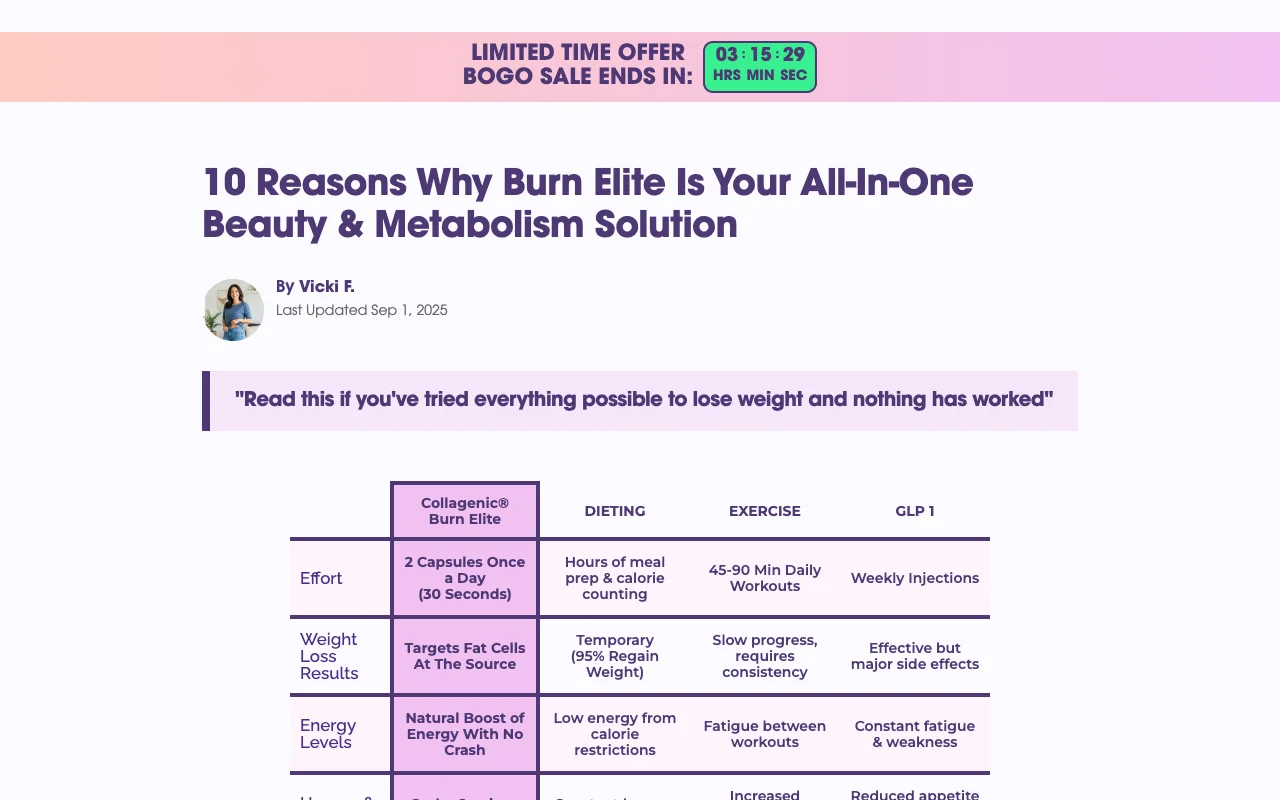
The listicle wraps the same persuasion in a numbered format, and it suits products with several distinct benefits, household and everyday items especially. The classic version runs seven items.
| Slot | What goes in it |
|---|---|
| Disclosure label | Exactly as above. |
| Numbered headline | A count plus a promise, in the pattern of seven reasons or five signs. |
| Short intro | Two or three sentences framing the problem and promising the list delivers the answer. |
| Items one and two | Strong standalone points that establish credibility, each with a subhead, 40 to 80 words, and an image. |
| First CTA block | A soft product mention after item two or three, once the page has given real value. |
| Items three through six | The argument built benefit by benefit, with the product woven in as the recurring solution. |
| Item seven | The strongest point saved for last, leading directly into the offer. |
| Final CTA block | The offer, the button, and a proof element beside it. |
| Short FAQ | Two or three objections, answered briefly. |
How to use these templates
Treat each numbered section as a slot and write to the slot, keeping one angle per page so the headline promise and every section serve the same idea. Rebuild the sequence in whatever tool you use, style it to read like content rather than a promotion, and point every button at the same destination. When a page underperforms, swap the angle or the lead before you touch the structure, because the sequence is rarely the problem. If you want help with the sentences themselves rather than the skeleton, the how to write a high-converting listicle guide covers the copy side of the second template in depth.
Turning a template into a live page with AI
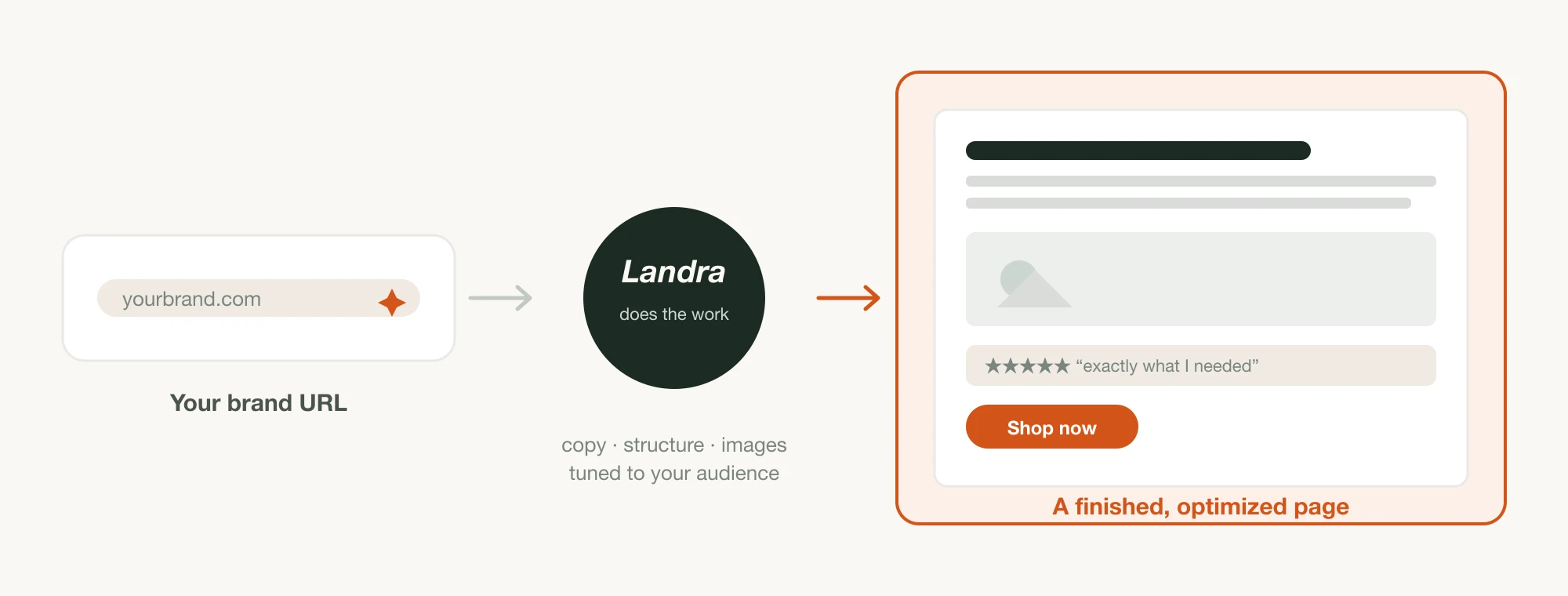
These templates are also, in effect, what Landra automates. Paste a product URL into the advertorial generator or the listicle generator and it produces the full structure above with the copy, images, and disclosure filled in, publishing to Shopify, Webflow, HTML export, or a hosted URL. Everything is editable inline, so the practical workflow is generate the skeleton and draft, then edit the sections where your judgment adds the most: claims, proof, and voice. Manually, one of these templates is an afternoon of work per page. Generated, it is minutes per variant, which changes how many angles you can afford to test.
Turn a template into a page today
Pick whichever template matches your product, or skip the manual assembly entirely: generate your first page with Landra free, on the 14-day trial, and start from a filled-in structure instead of a blank one.
Frequently asked questions
How long should an advertorial template run when filled in?
Between 800 and 1,500 words for most DTC products, which is enough to complete every section without padding. Expensive or complicated products can support more, and cutting sections shortens a page better than thinning all of them.
How many items should a listicle template have?
Seven is the workhorse because it feels substantial without dragging. Five works for simple products, and going past ten usually means several weak items are diluting the strong ones.
Do listicle pages need a disclosure too?
Yes. Any page that exists to sell and dresses as content is an advertisement under FTC guidance, so the label at the top applies to listicles exactly as it does to advertorials.
Can I use the same template for every product?
The structure transfers, and the angle should not. Run the same skeleton with a different lead, headline, and mechanism per audience, which is how one template becomes a testing program instead of one page.
What is the difference between a template and an angle?
The template is the section order, and the angle is the argument poured into it. Most performance gains come from testing angles inside a fixed template rather than redesigning the structure each time.