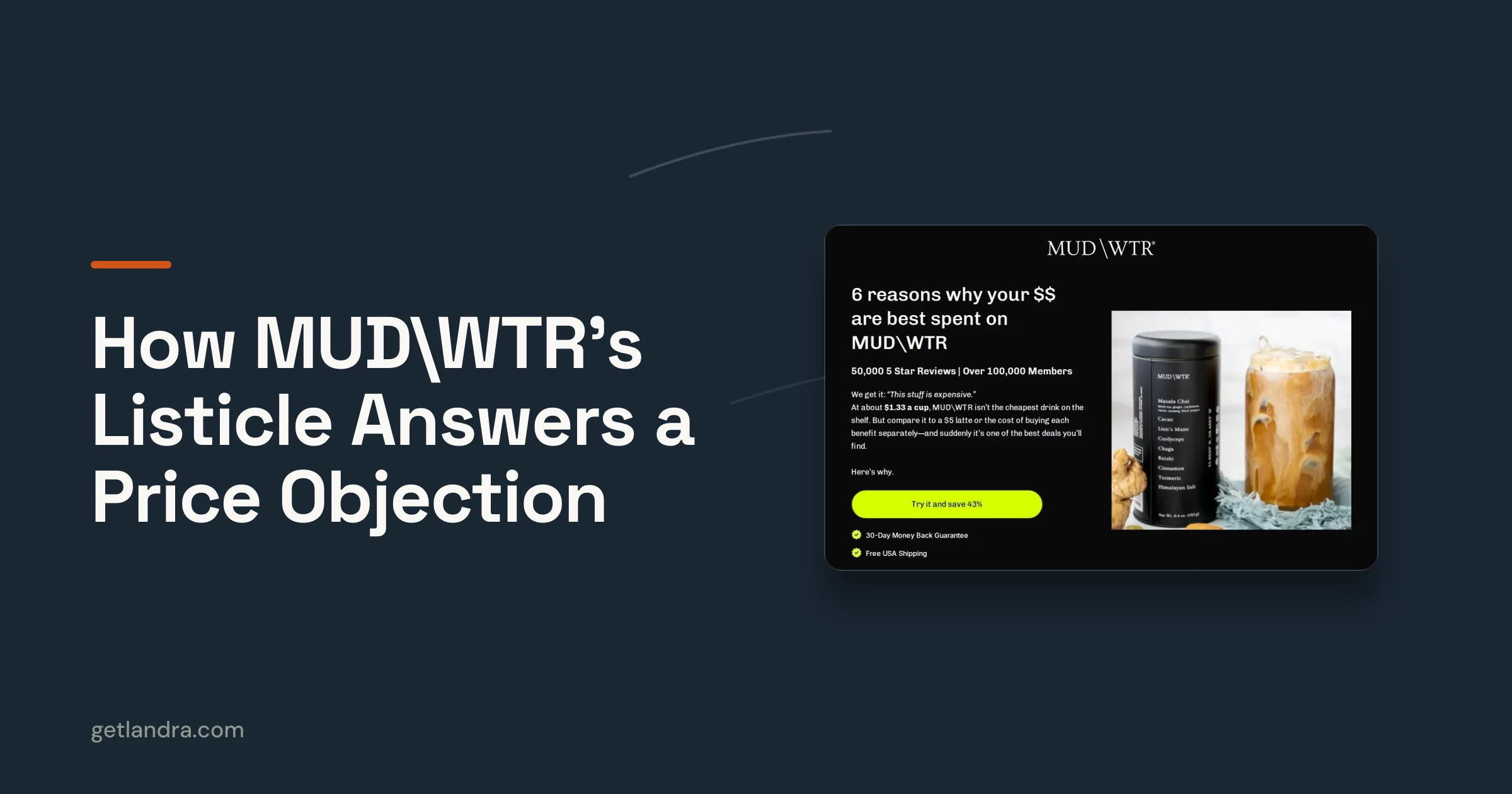

MUD\WTR sells a mushroom coffee alternative, the same aisle as Pow, my functional matcha and coffee brand. One of its landing pages is a listicle built around a single objection: the price.
The page is “6 reasons why your $$ are best spent on MUD\WTR”. We captured it in October 2026 for our swipe file entry and rechecked every quote below against the live page on 24 October 2026.
What's worth studying is the order. The page names the objection, prices each thing the drink is said to replace, and only then adds it all up beside the cup price.
What does the MUD\WTR six-reasons page do?
It is a listicle that treats price as the reader's main doubt. It quotes that doubt at the top, then uses six numbered reasons to explain what the money buys. Three of those reasons put a daily price on a separate purchase, and the last reason totals them against “$1.33 for MUD\WTR.”
Each reason ends with the same “Try it and save 43%” button, plus “30-Day Money Back Guarantee” and “Free USA Shipping” lines underneath. A reader who is convinced after reason two can act there. A reader who still has doubts keeps scrolling to the next reason.
The figures on the page are the brand's claims. We have not checked them, and nothing here says what a buyer would actually save.
How does the page open on the price objection?
The page starts with the reader's own objection, in quotes, before it lists a single benefit. Under the headline it reads “We get it:” and then “This stuff is expensive.” The next line agrees with the reader and shows the number straight away.
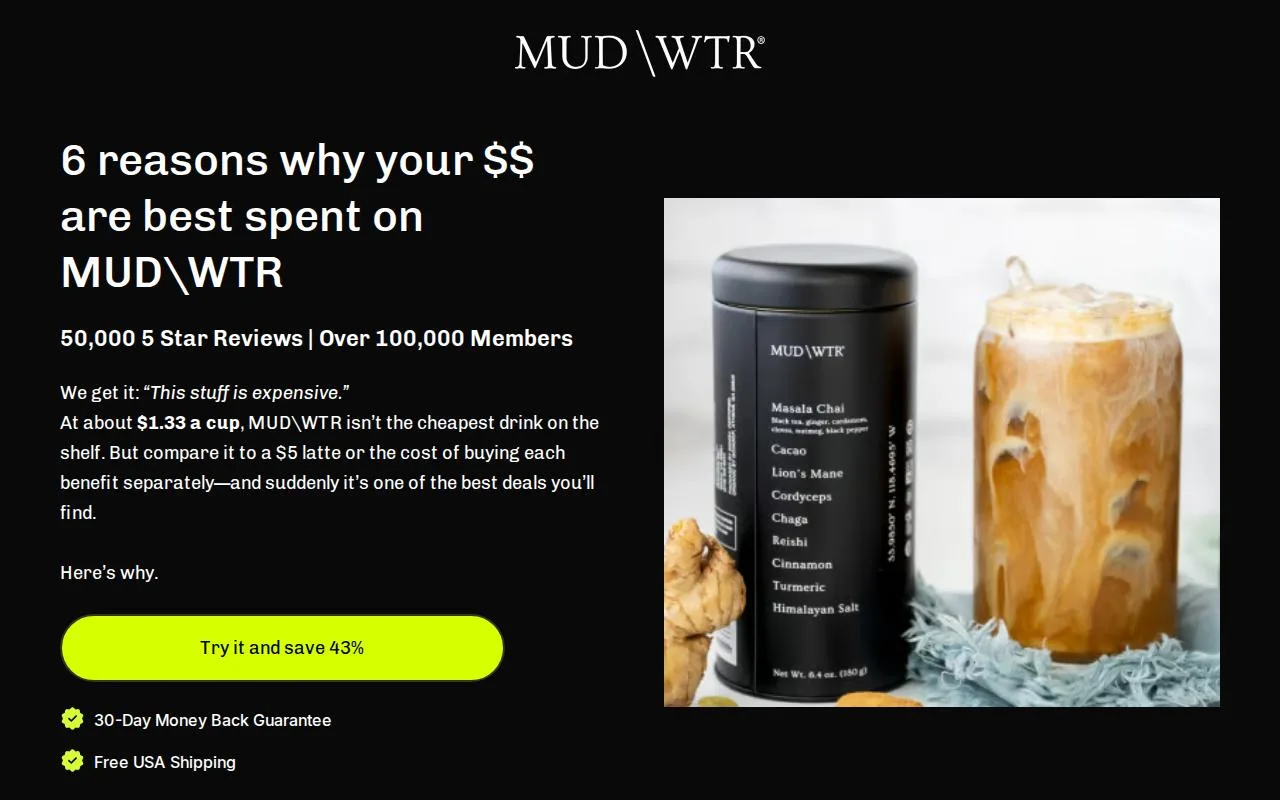
That line says that at “about $1.33 a cup”, MUD\WTR “isn’t the cheapest drink on the shelf.” Then it sets the terms for the rest of the page: “But compare it to a $5 latte or the cost of buying each benefit separately”.
So before reason one, the reader knows the question the page is going to answer, and knows the answer will be a comparison. Each of the six reasons then works as evidence for the price.
How do the reasons build the comparison?
Three of the six reasons each introduce a purchase the reader might make instead (reason one names two), and put a daily price on it inside that reason. By the time the total arrives, the reader has already met every item in it, one at a time, next to the benefit it pays for.
1. Caffeine and L-theanine against a latte
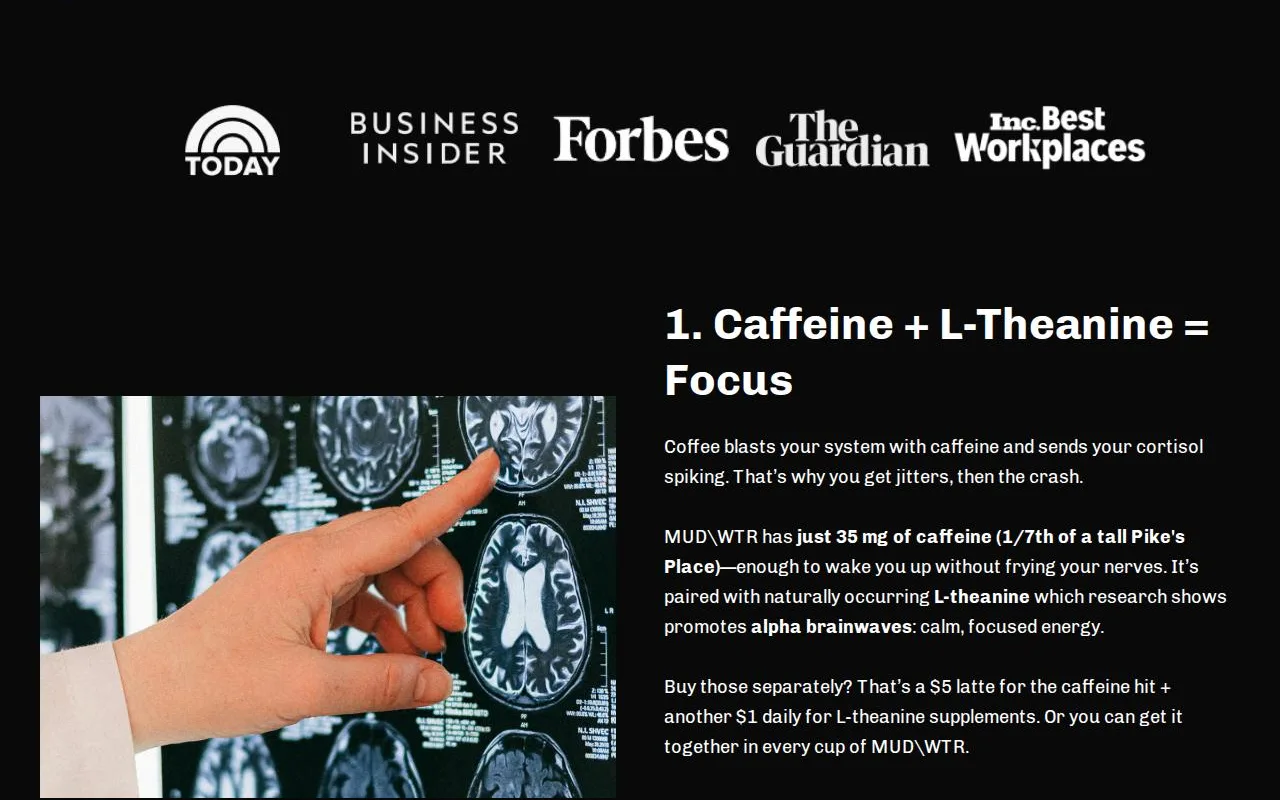
Reason one is about caffeine and L-theanine. It closes with a question and a price: “Buy those separately? That’s a $5 latte for the caffeine hit + another $1 daily for L-theanine supplements.”
2. A prebiotic supplement

Reason two is about gut health. Its last line is “Buying a separate prebiotic supplement adds about $1 a day.” Then: “With MUD\WTR, it’s already included.”
3. Mushroom capsules
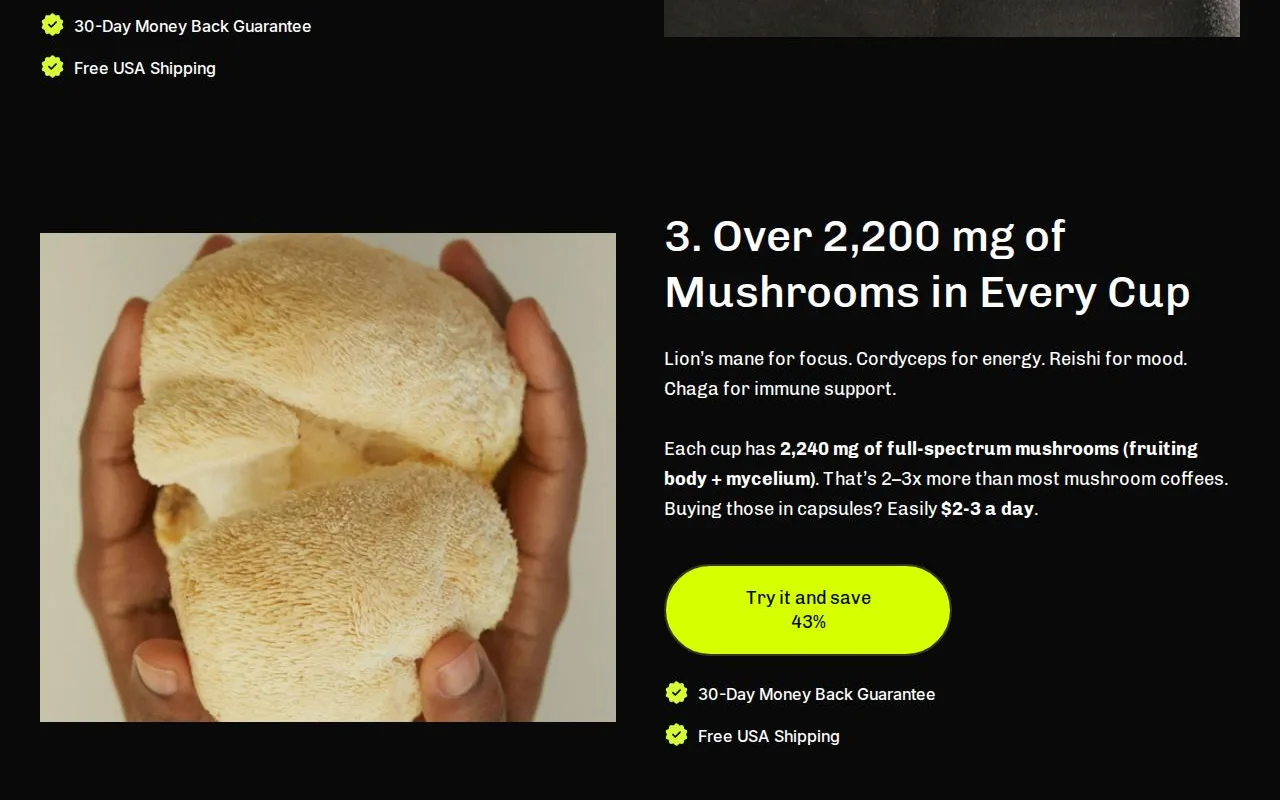
Reason three is about the mushroom blend. It ends with “Buying those in capsules? Easily $2-3 a day.”
Each of these lines sits at the end of the reason it belongs to. The reader learns what the ingredient is for, then what it would cost on its own. That is a different experience from a single savings number with no explanation of what went into it.
Why do two reasons explain the higher cost instead?
Reasons four and five don't add anything to the comparison. They explain why the price is higher than it could be. Both use the same sentence shape: they admit the cost, then say what it buys. That keeps the page honest with a reader who already thinks the drink is expensive.
Reason four, on organic ingredients, says “Organic costs more, but it means sustainable farming practices, reduced exposure to conventional pesticides, and of course, Non-GMO.”
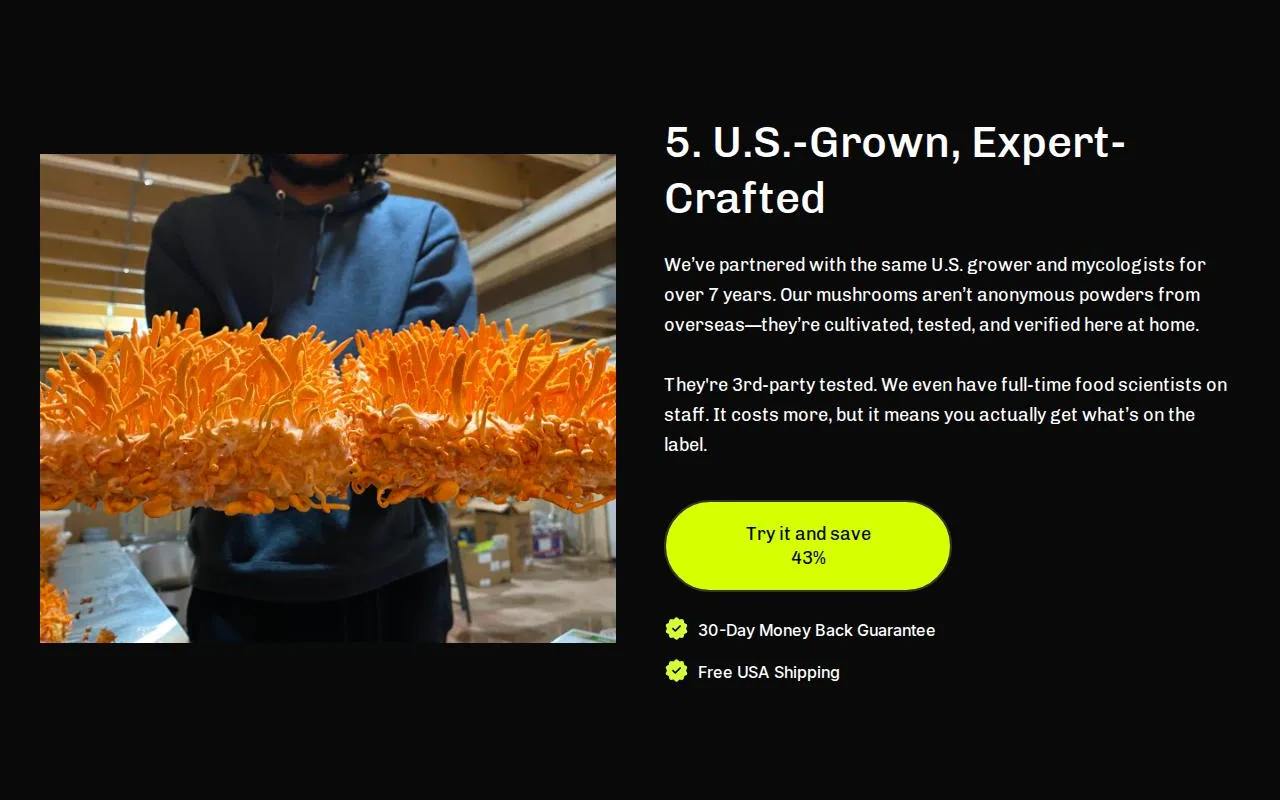
Reason five, on where the mushrooms are grown, says “It costs more, but it means you actually get what’s on the label.”
Both lines accept that the price is high and give a reason for it. On a page that opens with “This stuff is expensive.”, that keeps every reason pointed at the same question.
How does the last reason total it up?
Reason six is the only place the page adds everything together. Its heading is “$1.33 a Cup vs. the Alternatives”. It lists each purchase the earlier reasons introduced, with a price, and puts the cup price on the last line, so the comparison and the offer sit side by side.
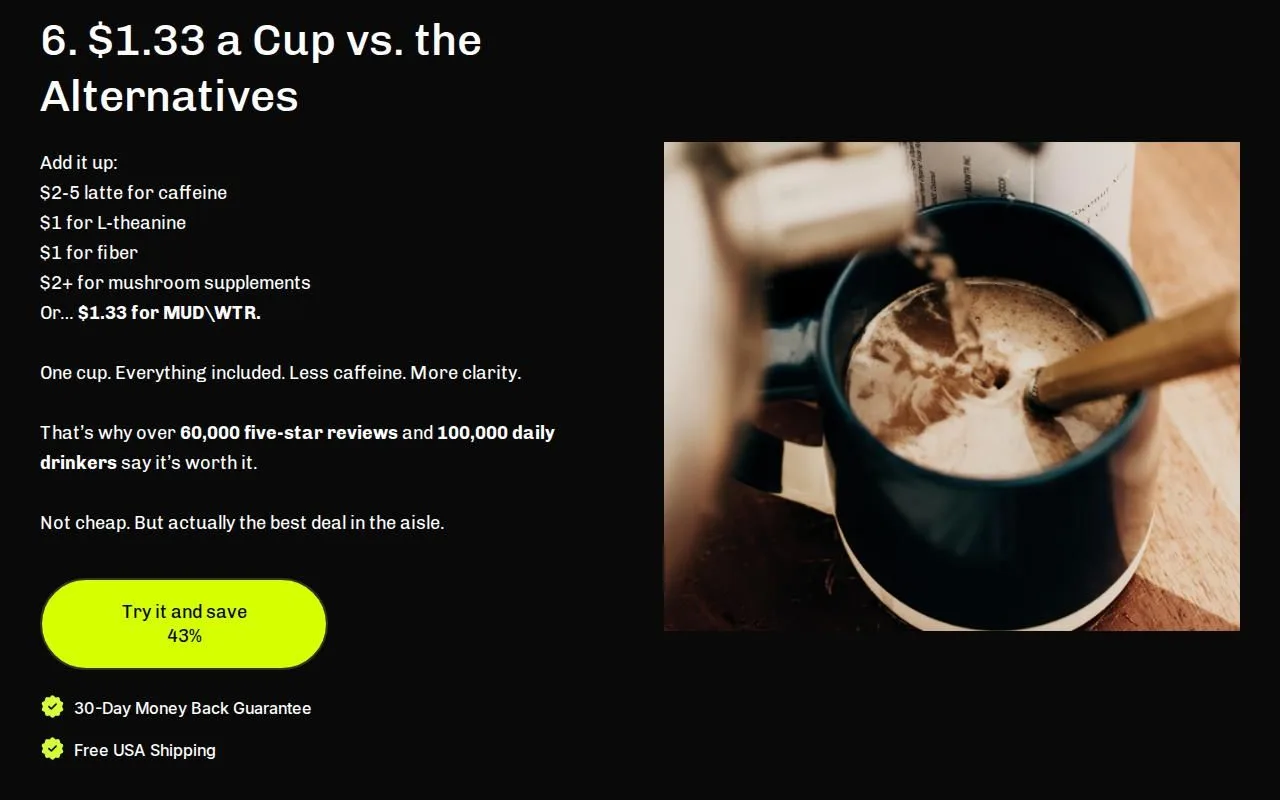
The list on the page reads:
- “Add it up:”
- “$2-5 latte for caffeine”
- “$1 for L-theanine”
- “$1 for fiber”
- “$2+ for mushroom supplements”
- “Or… $1.33 for MUD\WTR.”
The section closes on “Not cheap. But actually the best deal in the aisle.” That is the objection from the top of the page, answered in the same plain words. The button sits right under it.
What should you check before copying this?
Check that your buyer really makes the purchases in your comparison. A total built from things your reader never buys does not explain their cost. Use comparable quantities, current prices and a stated purchase basis, and keep the math close enough to the offer that a reader can check it.
A few things to settle before you write the list:
- Is each alternative something your customers actually buy? Pull the list from reviews, support tickets and post-purchase surveys, not from your ingredient panel.
- Are the quantities comparable? A daily dose against a daily serving. A month against a month.
- What is your price based on? If the per-serving price depends on a subscription or a bundle, say so next to the number.
- Does the same figure appear everywhere? Your per-serving price and guarantee should read the same in the opening, the reasons and the offer.
The goal is a comparison your reader can check in their head and agree with. If they can't, the list reads as a sales trick and the objection gets stronger.
How can you build this on your own landing page?
Start from the objection in your buyer's own words, list the purchases your product replaces, price each one where you explain it, and add them up beside your offer. MUD\WTR's page runs that order across six reasons, with a button after every one.
1. Quote the objection near the top
Use the words your customers use in reviews or support tickets. Put it before the first benefit, so the reader knows what the page is answering.
2. Give each alternative its own reason
Explain what the ingredient or feature does, then what it would cost to get it separately. One alternative per reason keeps the math easy to follow.
3. Admit the cost where it is real
If something makes your product more expensive, say so and say what it buys. Reasons four and five on the MUD\WTR page do this in one sentence each.
4. Total it up beside the offer
Repeat every price from the earlier reasons in one list, with your price last. Put the button directly underneath.
For more listicle structures, see how to write a high-converting listicle, seven listicle teardowns and Javvy's listicle playbook. If you are choosing between a product-led and a problem-led list, start with the three listicle frames for cold traffic.
Frequently asked questions
What is the MUD\WTR six-reasons page?
It is a listicle landing page at mudwtr.com/pages/6-reasons-price with the headline "6 reasons why your $$ are best spent on MUD\WTR". Each of the six numbered reasons argues that the drink is worth its price, and each one ends with the same "Try it and save 43%" button. We captured it in October 2026 and rechecked the copy on 24 October 2026.
Is this page an advertorial?
No. It is a listicle: a numbered list of reasons in the brand's own voice, with no article framing or editorial narrator. We file it under listicles in our swipe file for the same reason.
Are the savings on the page real?
We did not check them. The latte, L-theanine, fiber and mushroom-supplement prices are the brand's own comparisons. This post looks at how the page orders the comparison, not at whether any reader would save that amount.
How do I answer a price objection on my own landing page?
Write the objection in your buyer's words and put it near the top. List the purchases your buyer already makes that your product could replace, and price each one where you explain it. Then add them up beside your offer, with the quantities and purchase basis stated, so readers can check the math.
When does a cost comparison like this backfire?
When the basket is one your reader never buys. A buyer who has never paid for an L-theanine supplement will not count it as a saving. Use alternatives your customers actually mention, with comparable quantities and current prices.