

A headline with a 1.39% average click-through rate can look like a failure until you understand the environment it came from. In a randomized-control dataset covering 22,743 headline experiments and more than 105,000 variations, the median CTR was 1.07%, which means tiny changes in framing can matter when most impressions never become clicks. The research also found that, for headlines of about 15 words, each additional negative word increased CTR by 2.3%, while a positive word reduced it by about 1.0%. (Banerjee and Urminsky headline research)
That's the practical reality of paid social. You're not decorating an ad with a clever sentence. You're deciding whether a cold prospect stops, understands the promise, and spends the next few seconds with your offer. This guide treats how to write headlines as a conversion discipline, with formulas, placement-specific rewrites, and a testing workflow you can apply in Landra's editor.
Table of Contents
- Headlines Are a Conversion Lever, Not Just Words
- What Makes a Reader Actually Click
- Seven Headline Formulas You Can Swipe Today
- Rewriting the Same Headline for Meta, TikTok, and Advertorials
- Mobile-First Headline Rules and a Pre-Publish Checklist
- A Repeatable A/B Testing Workflow for Headlines
- Your Headline Publishing Checklist
Headlines Are a Conversion Lever, Not Just Words
Many teams still review headlines like brand copy. They ask whether a line sounds polished, distinctive, or "on voice." Those questions have value, but they come after the commercial question: does the headline earn the next action?
A paid impression is an opportunity with a cost attached. The headline sits near the first filter in that opportunity. If it fails, the body copy, product image, advertorial, and checkout never get a chance to do their jobs. A modest improvement in CTR can therefore change the number of qualified visitors entering the funnel without requiring a new offer or a complete landing-page rebuild.
Headline effectiveness is measurable, not merely subjective. A 2017 study of newspaper headlines in digital environments defined effectiveness through click-through rate and compared actual clicks with expected clicks, showing that headline evaluation had already moved toward statistical testing rather than editorial instinct. (Digital headline effectiveness study)
The cost of guessing
Paid traffic makes weak creative expensive because every untested impression consumes budget before you learn anything. A team can spend days refining a landing page while leaving the first sentence of the ad to intuition. That reverses the order of importance.
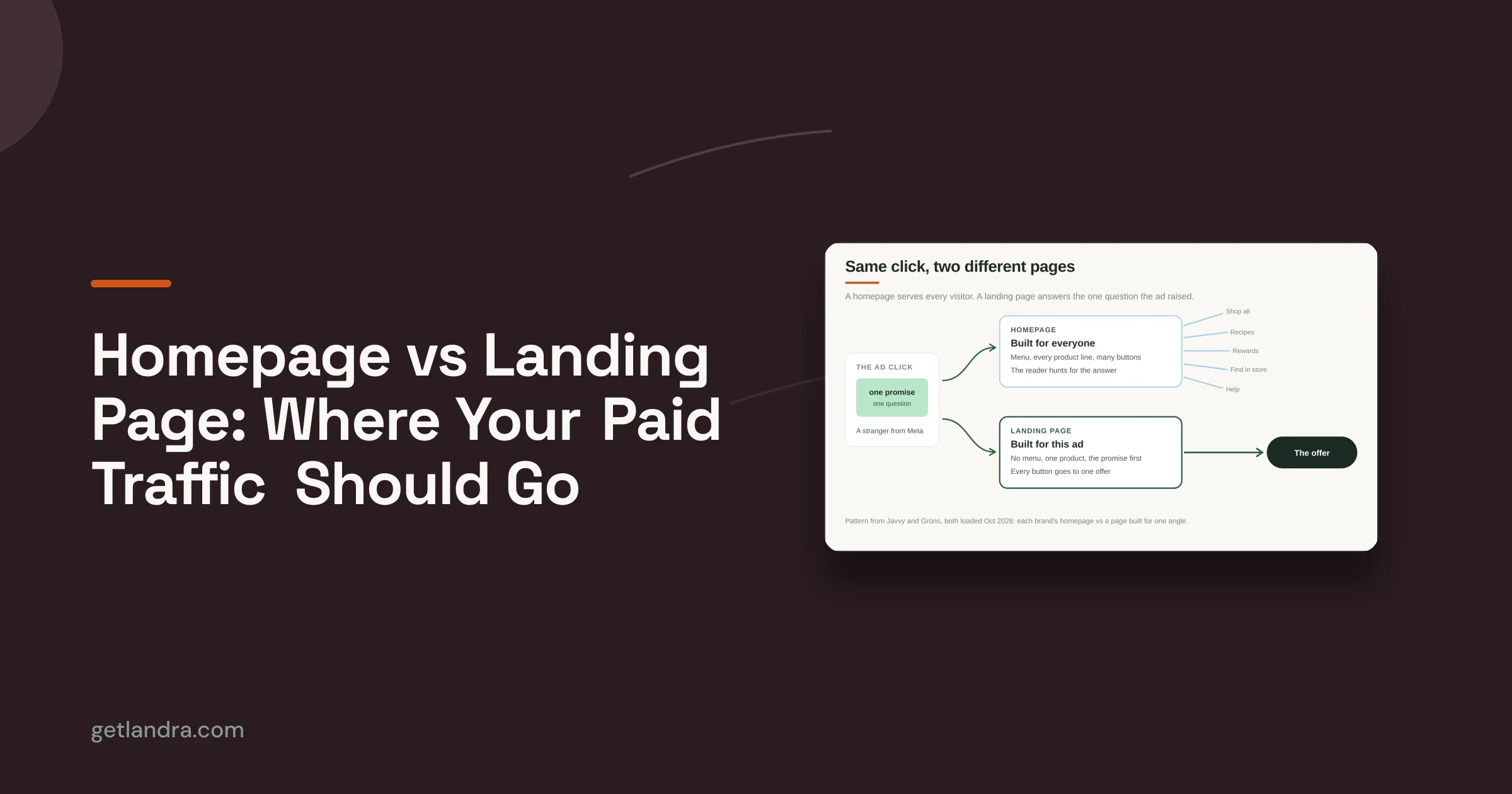
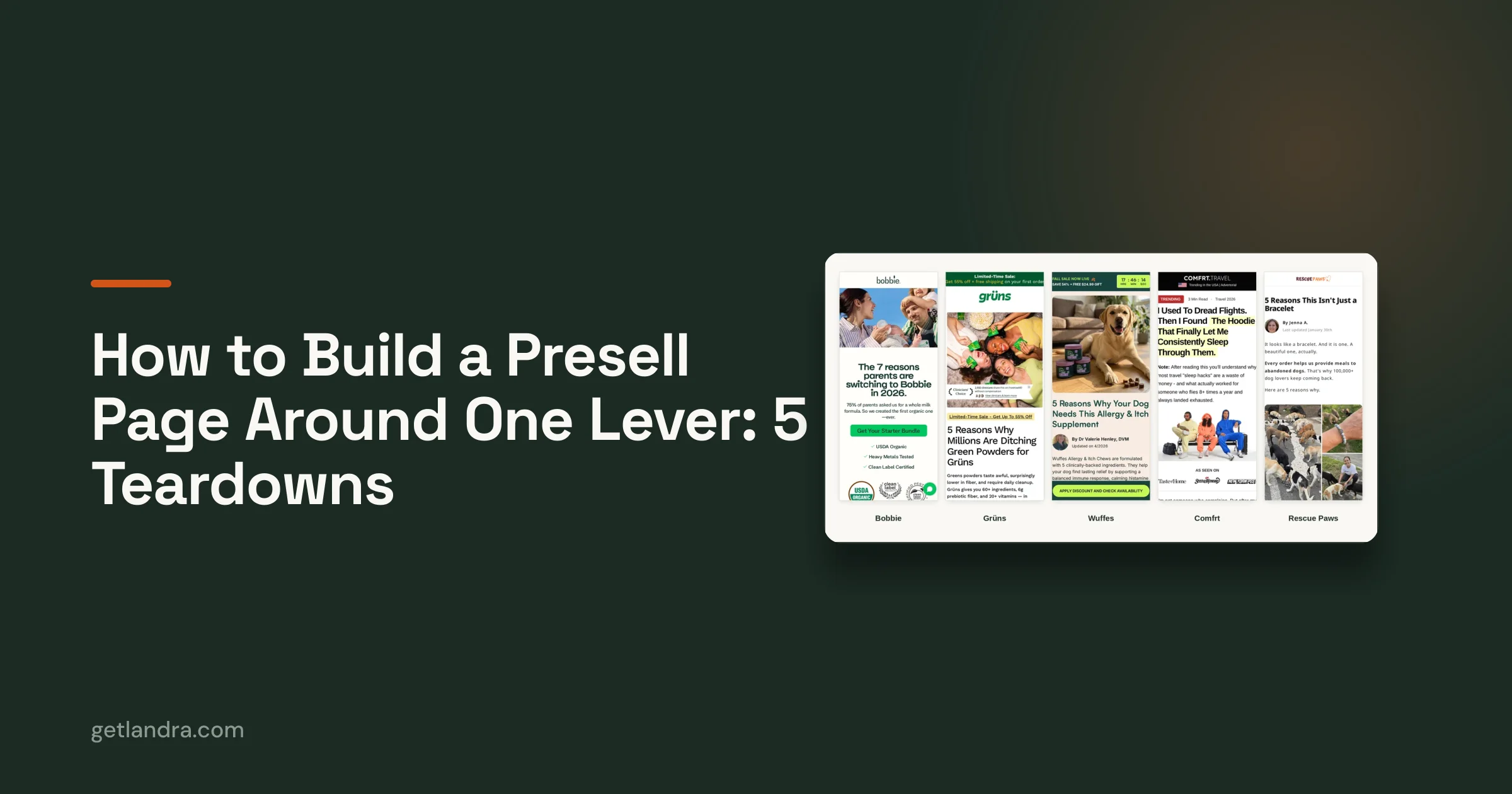
The same problem appears in pre-sell work. Before building pages, review your pre-sell page performance benchmarks, then make the ad promise and headline reinforce the page's actual argument. A mismatch creates friction even when each asset looks competent in isolation.
Practical rule: Treat the headline as a unit-economics variable. Log it, test it, and retire it when the data says it has stopped earning attention.
What the numbers change
A large-scale analysis found that 21 of 36 headline constructs had a statistically significant effect on CTR. That doesn't mean every dramatic phrase will work, or that negative language should become your default. It means wording deserves the same disciplined iteration you'd give audience targeting, creative angles, and checkout flow. (Headline construct analysis)
The useful mindset is simple: write several materially different hypotheses, not five cosmetic edits. Test the problem, promise, proof, or emotional frame one at a time. Your job isn't to predict the winner from a conference-room discussion. Your job is to create a clean enough test that the audience can choose.
What Makes a Reader Actually Click
A click usually requires three conditions at once. The reader must recognize the message as relevant to their current awareness, feel a question or unresolved tension, and believe the answer is worth the interruption. Remove any one of those, and the line may sound attractive while still failing in-feed.

Awareness sets the starting point
Awareness describes what the prospect already knows. An unaware reader may only feel a general frustration. A problem-aware reader recognizes the issue but hasn't chosen a solution. A solution-aware reader knows categories and is comparing options. A product-aware reader knows your product but needs a reason to act. The most-aware reader may only need the offer, proof, or next step.
The same product needs different language at each stage. Consider a reusable water bottle with a built-in filter:
- Unaware: “Why Does Tap Water Taste Different From One Kitchen to the Next?”
- Problem-aware: “Bad-Tasting Tap Water? Filter It Without Installing Anything.”
- Solution-aware: “A Portable Water Filter for Better-Tasting Tap Water Anywhere.”
- Product-aware: “The Bottle With a Built-In Filter for Commutes and Travel.”
- Most aware: “Get the Filter Bottle With Free Shipping Today.”
None of these is universally superior. Each one answers a different question in the reader's head.
Curiosity creates the gap
Curiosity is the distance between what the reader understands and what they want explained. A headline opens that gap with a specific unanswered question, not with random withholding. A 2024 study found that curiosity rises when a headline sparks a salient question and uses surprising, lower-valence framing. (Curiosity and headline framing research)
“New bottle available” creates no meaningful gap. “The water-filter mistake most travelers make with hotel taps” creates a possible explanation, provided the page delivers one. Curiosity earns a click only when the promised resolution is credible.
Relevance pays for the interruption
Relevance is the reader's private answer to “why should I spend time on this?” It can come from a personal need, a timely situation, a recognizable identity, or a clear outcome. Strong headlines signal that connection quickly.
The three lenses must work together. Awareness determines what you can reasonably say, curiosity supplies tension, and relevance justifies the click. Every formula below is only useful if it passes those three filters and accurately represents the destination.
Seven Headline Formulas You Can Swipe Today
A headline formula gives you a testable angle, not a finished ad. Generate several versions for one offer, then remove every claim the landing page cannot prove. The examples use one DTC product, a reusable bottle with a built-in filter.
- How-to: “How to [achieve outcome] without [common obstacle].” Example: “How to Get Better-Tasting Tap Water Without Installing a Filter.” Use it when the reader recognizes the problem and needs a clear path. In a paid-traffic test, compare the benefit-led version against a product-led control.
- Numbered list: “[Number] ways to [outcome] when [constraint].” Example: “7 Ways to Drink Better-Tasting Water While Traveling.” This fits listicle pages because the number sets a clear reading promise. Keep the page organized around the same promise, or the click will not convert.
- Question: “Why does [problem] happen when [context]?” Example: “Why Does Hotel Water Taste Strange, Even When It Looks Clear?” Use it to open an explanation for readers who have not yet chosen a solution. Test the question against a direct problem headline to see whether curiosity earns qualified clicks.
- Before and after: “From [painful starting point] to [desired state].” Example: “From Metallic-Tasting Tap Water to a Cleaner Sip Anywhere.” This works when the transformation is easy to understand and the page can substantiate both sides. Avoid implying a result the product cannot deliver.
- Secret or forbidden: “The overlooked [mechanism] behind [desired outcome].” Example: “The Overlooked Filter Detail Behind Better-Tasting Travel Water.” The angle can attract solution-aware readers, but fake secrecy damages trust. Test the mechanism against a plain explanation, especially in native placements.
- Specific outcome: “[Product category] for [specific use case].” Example: “A Built-In Filter Bottle for Commutes, Flights, and Hotel Rooms.” Use this when immediate clarity matters more than suspense. It gives cold traffic enough information to qualify itself before the click.
- Negative or polarizing: “Stop [common behavior] if you want [outcome].” Example: “Stop Buying Bottled Water for Every Short Trip.” This can create attention when the audience already feels the problem. The landing page must provide an honest reason, not manufactured outrage.
The formula is only the first variable. In Landra's editor, create variants that change one element at a time, such as the mechanism, outcome, or audience context. Track click-through rate alongside conversion rate. A sharper hook can win the click while bringing less qualified traffic.
For search-led content, apply the same discipline. This guide to how to write SEO article titles covers the balance between keyword clarity and a reason to click. Use the keyword naturally, then give the reader a specific outcome or question.
When a ranked structure matches the offer, use Landra to create listicle landing pages. Generate a broad set of headline variants, select the versions that match the audience's awareness level, and test them against a direct control. Keep the winning headline only if the downstream conversion rate supports the click-through lift.
Rewriting the Same Headline for Meta, TikTok, and Advertorials
A headline doesn't travel unchanged across feeds. The offer may stay constant, but the reader's context changes. Cold Meta traffic needs immediate problem recognition, an advertorial can earn attention through a narrative promise, and TikTok copy often works best when it sounds like a spoken discovery rather than a polished ad.
Use the same product and angle, then mutate the expression:
| Element | Meta, cold | Advertorial, warm | TikTok, native |
|---|---|---|---|
| Core job | Stop the scroll | Promise an explanation | Trigger a creator-style question |
| Example | “Bad-Tasting Tap Water? Filter It Anywhere.” | “Why Travelers Are Rethinking the Water They Drink on the Road” | “I didn't realize my hotel water tasted weird until I tried this” |
| Style | Direct, compact, sentence case | Editorial and explanatory | Conversational, first person |
| Proof placement | Near the headline or first line | Earned inside the page narrative | Delivered in the voiceover or caption |
| Price | Usually later in the ad | Usually after the mechanism and context | Usually after the hook and demonstration |
| Emoji use | Optional, only if native to the account | Rare | Possible, but don't use it to replace clarity |
The Meta version identifies a pain and offers a mechanism. The advertorial version creates a broader question, giving the page room to explain why the problem matters before introducing the product. The TikTok version sounds like a personal observation, which makes the transition into a demonstration feel less forced.
Keep the angle, rewrite the voice
Don't confuse consistency with duplication. Keep the underlying promise aligned across placements when the funnel depends on message match. Rewrite the opening when the placement demands a different reading behavior.
A cold user may give you a glance. An advertorial reader has already accepted a deeper click and needs a coherent reason to continue. A TikTok viewer may respond to an unfinished thought, a visible demonstration, or a creator's admission. The winning sentence structure changes because the attention contract changes.
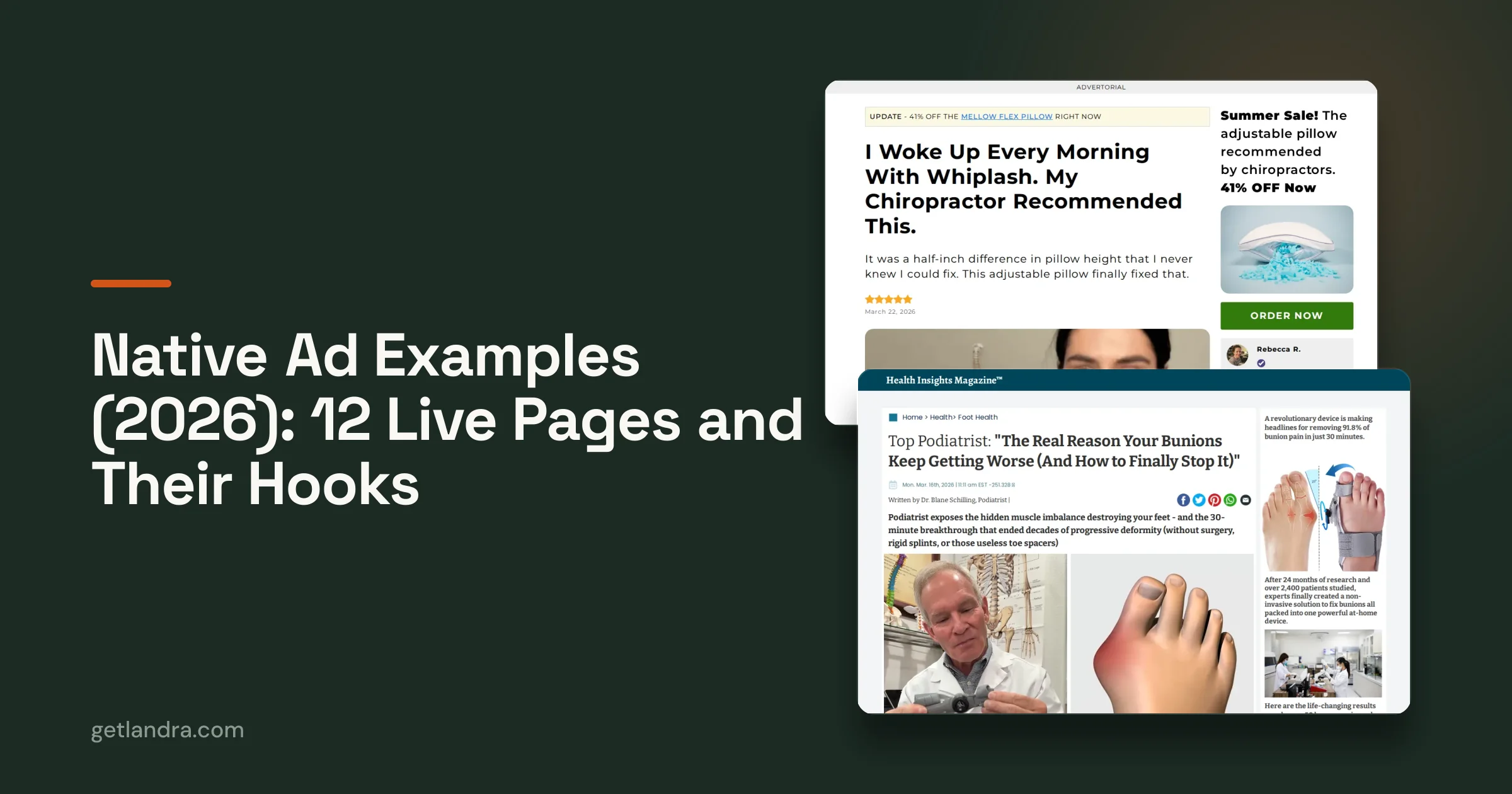
For teams shaping the spoken version, guidance on crafting short scripts that keep viewers can help translate a written hook into a natural voiceover. For the page itself, document how to build AI advertorials, then make sure the first page headline resolves the promise made in the ad.
The test isn't whether all three versions use identical words. It's whether a person who clicks feels that the next asset continues the same story.
Mobile-First Headline Rules and a Pre-Publish Checklist
A mobile headline earns or loses the click before the reader sees the full sentence. If the first visible words contain only a brand name or vague benefit, truncation removes the reason to continue.
Start with the problem, audience, or outcome. Keep the hook near the front, then inspect the actual placement preview. A headline that reads well in a desktop editor can break at the phrase carrying its meaning. If the final clause is required for clarity, rewrite the opening until it works on its own.
Mobile-First Headline Rules
Build the line around its rendered version, not the writing field. Check for:
- Meaningful line breaks: Keep related words together so the second line completes the first.
- A strong opening: Put the clearest pain, audience, or benefit near the front.
- Read-aloud rhythm: Remove keyword stuffing, awkward abbreviations, and wording nobody would say.
- Visual weight: Use typography that stays legible at small sizes, with enough contrast against the background.
- One primary idea: Do not combine a problem, feature list, discount, and testimonial in one sentence.
Length depends on the conversion goal. A large-scale analysis found that CTR was highest for titles between 81 and 100 characters, while post-click engagement was highest for shorter titles between 21 and 40 characters. (Data-driven headline length analysis) A click-focused variant and an engagement-focused variant may need different shapes. Use the finding as a test hypothesis, not a fixed rule.

Pre-Publish Checklist
Before launch, preview the headline on mobile and read the ad or page from the user's entry point. Check that the destination delivers the same promise as the headline. In Landra's editor, label the angle before publishing so the variant remains identifiable during later analysis.
- Preview the placement: Inspect the mobile render, not only the writing field.
- Check the first phrase: Confirm that the opening still communicates value when later text is hidden.
- Read aloud: Replace wording that sounds like a keyword report.
- Compare the context: Review the ad, headline, image, and destination as one experience.
- Save the variant: Record the angle and intended outcome before launch.
Rate the hook against a neutral version, not against your favorite draft. That comparison keeps aesthetic preference from standing in for click-through or conversion evidence.
A Repeatable A/B Testing Workflow for Headlines
Testing fails when teams change too many variables and then argue about what caused the result. A clean headline test starts with one deliberate difference: hook, angle, proof, or offer framing. If Version A leads with a pain point and Version B leads with a product feature, leave the image, audience, destination, and primary offer stable wherever the platform setup allows.
Choose the primary metric before launch. CTR answers whether the ad earns the click. Thumb-stop or early-view metrics answer whether the opening interrupts attention. On-page conversion answers whether the promise attracts the right visitor. Don't call a headline a winner because it raises clicks if it sends low-intent traffic that fails after arrival.
The operating cadence
- Pick one variable: Name the hypothesis in plain language, such as “A specific use case will beat a broad benefit.”
- Set a decision threshold: Base the required evidence on your account's current volume and volatility, not an arbitrary universal benchmark.
- Define the primary metric: Choose CTR, a platform attention metric, or on-page conversion before spending starts.
- Split traffic cleanly: Use platform testing controls or comparable ad-set structures, and avoid letting one version receive a materially different audience mix.
- Let the test collect evidence: Don't stop after an exciting early result or extend a clear loser because the copy feels better.
- Log the learning: Record the audience, placement, hypothesis, variants, metric, result, decision, and next test.
The evidence base supports this level of discipline. A meta-analysis of 8,977 headline experiments examined how concreteness affects clickthrough, and its pilot dataset reported an average CTR of 1.33% with a median of 1.04%. (Meta-analysis of headline experiments) Low baseline click rates make uncontrolled guesswork especially wasteful.

A practical guide to Keywordme ad creative testing can add structure to the broader creative process, but your headline log should remain specific enough to preserve the copy insight. If “specific use case” wins, write down which use case and for which audience. Otherwise, the team will repeat the test without knowing what it learned.
Testing principle: A losing headline is useful when it eliminates an angle. An undocumented loser is just wasted traffic.
Your Headline Publishing Checklist
A strong headline can still fail if it reaches the wrong audience, breaks on mobile, or promises a page that doesn't deliver. Use the editor as a publishing control panel, not only as a place to type a sentence.
Start with the traffic source. A cold Meta audience usually needs a clear problem or tangible outcome. A warm advertorial visitor can handle more narrative tension. A search reader may need the subject and keyword immediately. Match the awareness stage before polishing the wording.
Then run the headline through this order:
- Confirm the awareness stage: Identify what the reader already knows and remove claims that require knowledge they don't have.
- Lead with value or tension: Open with a tangible benefit, a specific problem, or a curiosity gap. Don't lead with a brand statement unless the brand itself is the reason for the click.
- Inspect the visible opening: Use the character counter and mobile preview to check that the first portion still communicates a complete idea.
- Strengthen the verb: Replace weak phrasing with clear action language, but avoid sensational claims you can't substantiate.
- Keep one primary idea: If the line needs several conjunctions, split the angle and create a second variant.
- Verify the destination: Read the headline beside the page's hero and first section. The promise should continue without a bait-and-switch.
- Label the variant: Use the variant field to record the angle, such as “problem aware,” “use case,” or “curiosity.”
- Prepare the comparison: Create a neutral control and one challenger that changes a meaningful element.
- Proofread the final render: Check punctuation, capitalization, line breaks, and the version shown on the actual device.
Accuracy matters as much as attention. Journalism guidance on health headlines warns against hype terms such as “breakthrough” or “miracle,” implying causation from correlation, and presenting relative numbers without absolute context. (Journalists Resource health headline guidance) Those standards apply beyond health. A high CTR can't repair a headline that destroys trust after the click.

Ship the test before you spend another hour refining a favorite line. The first loser gives you direction, and the first winner gives you a new control. In the next five minutes, open your editor, duplicate the current headline, label the angle, preview both versions on mobile, and queue the test.
Landra helps DTC teams generate editable advertorial and listicle pre-sell pages from a product or brand URL, then refine headlines, copy, images, and structure in a visual editor. Visit Landra to create your next headline variant and connect it to a mobile-first page built for paid social traffic.