
Copying a successful brand's funnel is popular advice. It's also a poor starting point. The page sequence might be visible, but the audience's existing knowledge, purchase history, and reasons for clicking usually aren't.
Most funnels fail before the first click because marketers choose a format before deciding what the visitor needs to believe. A skeptical shopper who doesn't understand the problem needs explanation. Someone comparing ingredients needs evidence. A returning customer who wants a refill needs a short route to checkout, not another origin story.
The useful question isn't whether advertorials outperform quizzes. It's whether your visitor needs education, comparison, personalization, or reassurance before buying.
For examples of marketing funnels, that distinction matters more than a gallery of famous campaigns. Start with awareness, then choose the shortest sequence that closes the buyer's knowledge gap.
- Cold traffic: Explain the problem and make the solution credible.
- Warm traffic: Help buyers compare, choose, and resolve objections.
- Hot traffic and customers: Remove buying friction, deliver value, and make returning worthwhile.
The examples below move broadly from cold acquisition toward purchase and advocacy. Some are page sequences; others are frameworks you can apply across those sequences. Use each one for the audience it fits, not as a mandatory collection of extra steps.
Table of Contents
- 1. Advertorial Pre-Sell Funnel
- 2. Listicle and Best-Of Comparison Funnel
- 3. Presell Warm-Up Funnel
- 4. AIDA Funnel (Attention, Interest, Desire, Action)
- 5. Awareness, Consideration, and Decision Funnel (TOFU, MOFU, BOFU)
- 6. AARRR Pirate Metrics Funnel
- 7. Launch Video Funnel (Video-Led Direct Response)
- 8. Quiz Funnel
- 9. Webinar and Value Ladder Funnel
- 10. Freemium and Referral Growth Funnel
- 10 Marketing Funnel Examples at a Glance
- Choosing Your Funnel and Building It Fast
1. Advertorial Pre-Sell Funnel
A cold Meta visitor might recognize dry skin without understanding why their current routine isn't helping. Sending that person straight to a serum's product page asks them to evaluate the solution before they believe the explanation.
The sequence: Paid-social ad → disclosed advertorial → product page → checkout.
The transition should feel continuous from the visitor's perspective.
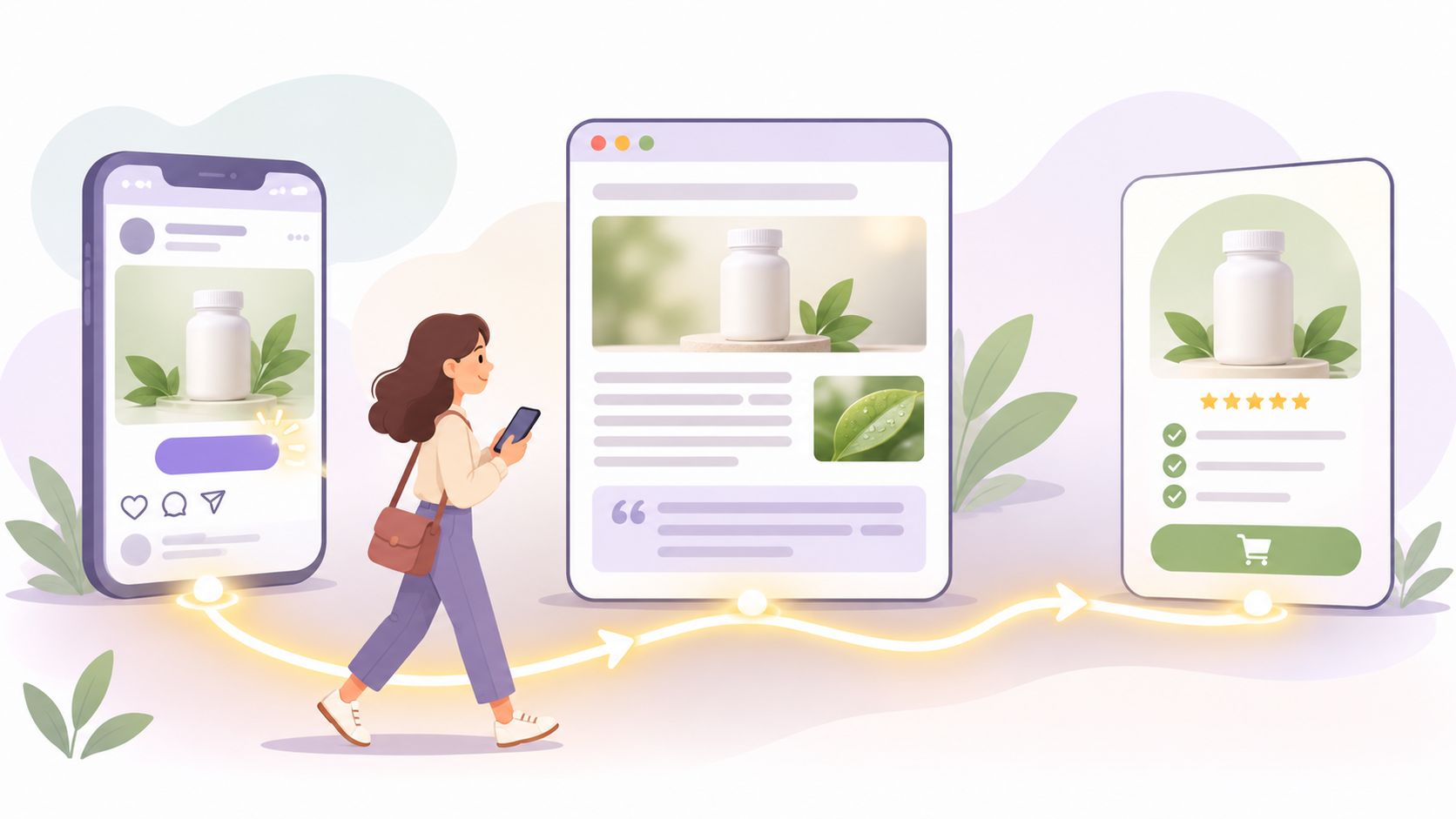
Say a skincare brand runs an ad about tightness after cleansing. Its advertorial explains the relevant skin-barrier issue, introduces the formulation, and presents substantiated ingredient information and genuine customer reviews before inviting readers to view the product.
The intended outcome is an informed purchase, not a click through an interesting story. Editorial styling can make an explanation approachable, but it mustn't disguise who's selling.
Ship a matched opening
Duplicate the page and test a problem-led opening against a customer-story opening while keeping the offer unchanged. Match both versions to the ad's actual promise, and disclose the commercial relationship clearly.
Practical rule: Borrow editorial clarity, not invented editorial authority. Don't manufacture scientists, endorsements, or independent investigations.
Compare purchase conversion and customer acquisition cost with a direct-to-product control. If readers enjoy the story but don't buy, examine whether the product connection arrives too late.
2. Listicle and Best-Of Comparison Funnel
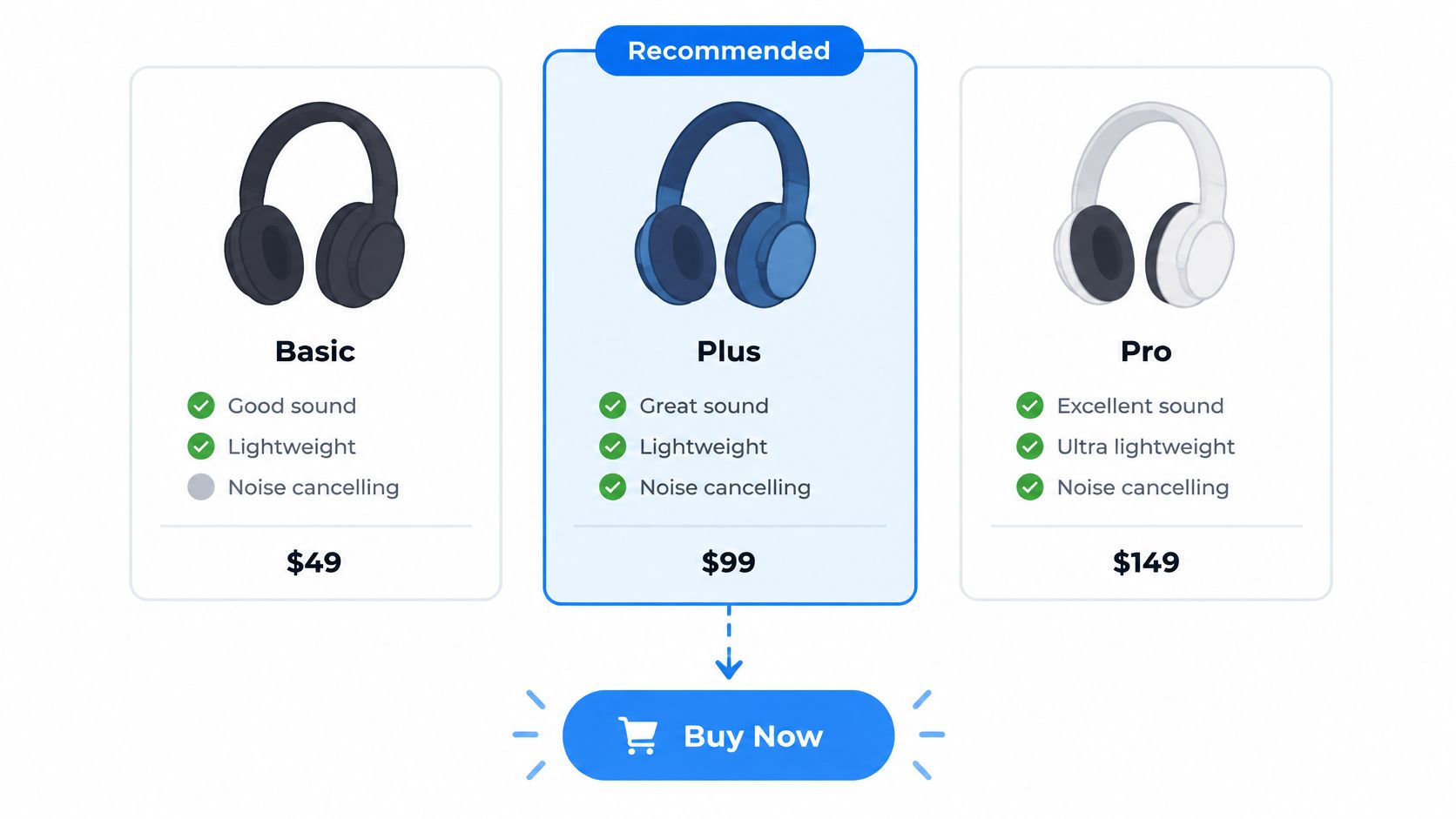
A buyer comparing mattresses for side sleeping already knows the problem. The decision now depends on criteria such as firmness, materials, return conditions, and suitability. A useful listicle brings those trade-offs into view instead of repeating a broad introduction.
The sequence is search or social ad → comparison listicle → selected product → checkout. This funnel fits solution-aware traffic: visitors know what kind of solution they want and need help choosing. The intended outcome is a purchase, not just more product-page clicks.
Say a skincare store compares retinol products for sensitive skin. It can explain formulation differences, note relevant cautions, and show who might prefer an alternative. That honest comparison gives readers a reason to trust the recommendation.
- Choose useful criteria: Compare the attributes buyers rely on, not just the features your product wins.
- Show the trade-off: State where the featured product may not suit someone.
- Keep claims checkable: Verify competitor details and disclose ownership or commercial relationships.
For paid-social traffic, create listicles for paid social around the ad's specific buying question. A focused comparison can meet shoppers at their current awareness stage; a broad roundup may draw clicks without helping them decide.
Track purchase rate from listicle entrants, not only outbound clicks. If visitors leave for product pages but purchases do not improve, revisit the criteria and how clearly the page explains the choices.
3. Presell Warm-Up Funnel
An advertorial develops a narrative. A presell warm-up page removes a specific obstacle between an ad and an offer.
For a kitchen gadget, that obstacle might be disbelief that it works on awkward ingredients. Use this sequence: demonstration ad → focused proof page → product page or checkout. The audience recognizes the solution but still needs reassurance.
Say the ad shows a compact chopper preparing vegetables. The warm-up page repeats that demonstration, explains cleaning and storage, adds relevant customer feedback, and gives a clear next step.
Keep the extra step accountable
A useful alignment example comes from home services, not DTC: MarketingSherpa documented an 18% increase in overall conversion rate across form submissions and phone calls in Precision Painting Plus's controlled landing-page experiment. Treat that as evidence for testing the whole business outcome, not as a forecast for your store.
Keep the main navigation out of the purchasing path, but retain access to essential policy and business information. Put relevant proof near the CTA and avoid competing offers.
The intended outcome is more purchases from the same incoming traffic. Test the warm-up page against direct routing with comparable audiences and creatives.
If the ad already explains everything and visitors arrive ready to buy, skip the presell. Extra persuasion can become extra friction.
4. AIDA Funnel (Attention, Interest, Desire, Action)
AIDA is a messaging framework, not a requirement to build separate pages for every stage. Use it when problem-aware visitors need a coherent explanation before they'll consider an offer.
Marketful traces the framework to Elias St. Elmo Lewis in 1898. Its practical value is the order of persuasion, not its age.
For a reusable cleaning product, the sequence might run from a waste-focused ad to a landing page that explains the refill system, demonstrates performance, and presents a starter kit.
- Attention: Match the headline to the reason the visitor clicked.
- Interest: Explain how the product addresses the relevant problem.
- Desire: Show credible proof, practical benefits, and suitability.
- Action: Make the next step specific and easy to understand.
The intended outcome is a purchase supported by understanding, rather than urgency alone. Use the Landra guide to buyer awareness to decide how much explanation belongs before the offer.
If visitors understand the benefit but doubt the claim, add proof. More emotional copy won't repair an evidence gap.
Ship a section-level revision this week: label each existing section by its job, then remove repetition. If several sections repeat benefits while none address skepticism, restructure before adding more copy.
5. Awareness, Consideration, and Decision Funnel (TOFU, MOFU, BOFU)
A returning shopper and a cold TikTok visitor shouldn't automatically land on the same page. TOFU, MOFU, and BOFU help you route traffic by intent, rather than make everyone complete the same journey.
Consider a coffee subscription. A cold audience receives an educational page about choosing beans. Comparison visitors see roast preferences, delivery options, and subscription terms. A returning subscriber reaches account management or a relevant reorder offer.
Give each audience a useful destination
- Awareness: Ad → educational advertorial → relevant product range.
- Consideration: Comparison content → suitable subscription → checkout.
- Decision: Product-specific reminder → clear offer → checkout.
The intended outcome changes by stage, but the business objective remains profitable customer acquisition. Don't treat an educational-page visit as equivalent to a completed order.
Use Landra's paid social funnel guide to map destinations before building more assets. Exclude purchasers from acquisition messaging where appropriate, and don't assume every recent visitor is ready for a discount.
An independent e-commerce case study reported conversion rate increasing from 1.8% to 4.7% during a campaign-specific landing-page and testing program. That's a reported program outcome, not proof that changing a page format alone caused the improvement.
Ship a routing change around a clear hypothesis, then evaluate purchases from comparable traffic.
6. AARRR Pirate Metrics Funnel
A subscription brand can acquire customers efficiently and still struggle if those customers never reorder. AARRR connects the acquisition experience to what happens after the first transaction.
The framework covers acquisition, activation, retention, referral, and revenue. It's useful across awareness stages, but its strongest contribution here is checking whether newly acquired buyers become valuable customers.
Use the stages to separate the work rather than compress everything into landing-page conversion.
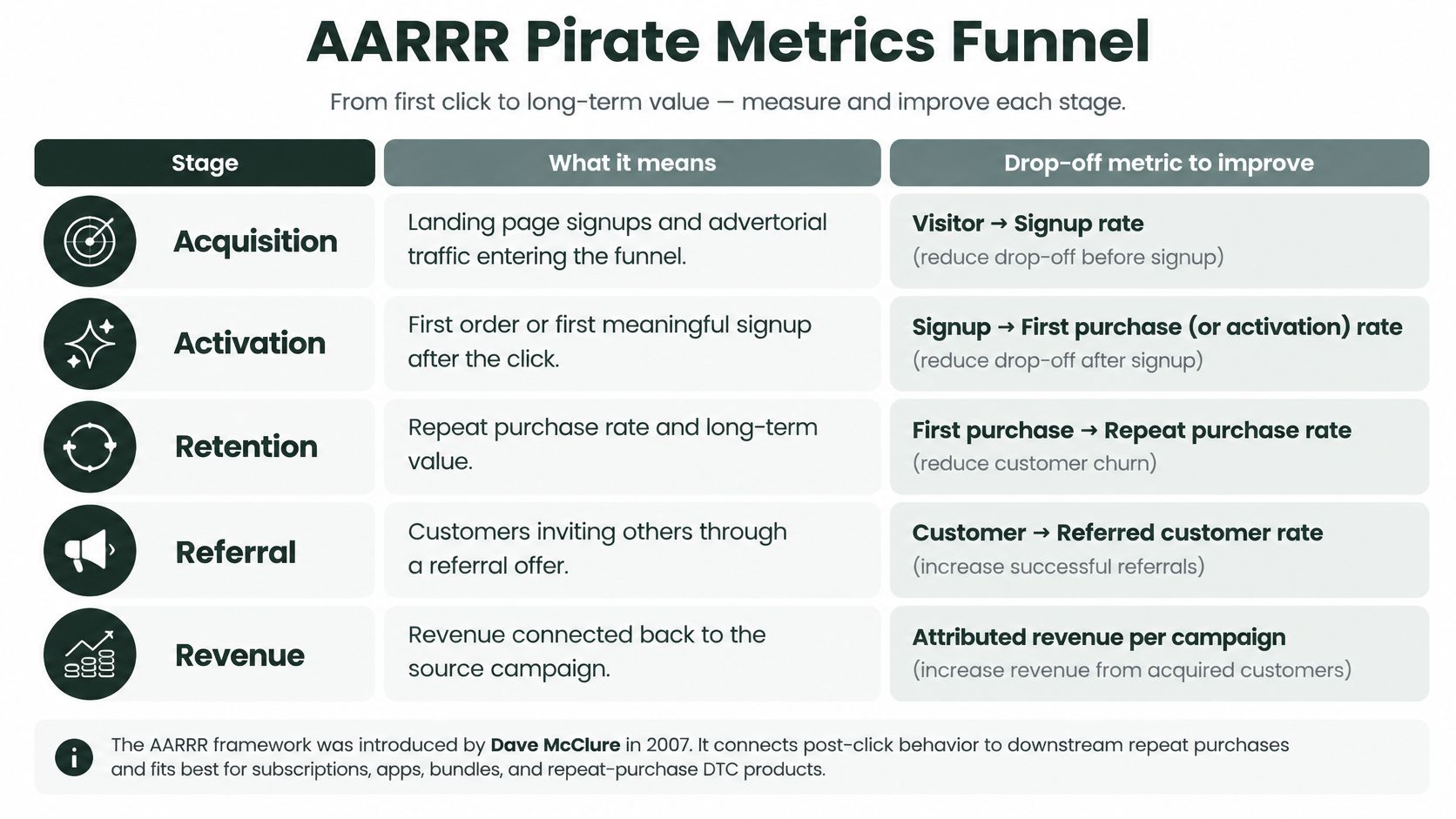
Say a replenishable household-products brand acquires shoppers through an advertorial. Its sequence continues through purchase, first-use guidance, replenishment reminders, and a referral invitation.
- Acquisition: Track qualified new visitors and customer acquisition cost.
- Activation: Define the first meaningful value event, such as completing setup.
- Retention: Monitor repeat purchasing by acquisition cohort.
- Referral: Count referred customers, not merely invitations.
- Revenue: Evaluate contribution after discounts, fulfillment, and acquisition costs.
The intended outcome is sustainable customer value. Don't call a campaign successful solely because its introductory offer converts.
Ship a cohort report linking acquisition source and landing-page variant to repeat orders. Keep activation distinct from payment when buyers must do something after checkout to experience the benefit.
That distinction helps you diagnose the right problem. Poor repeat purchasing may require better onboarding or a better product experience, not another headline test.
7. Launch Video Funnel (Video-Led Direct Response)
Video can introduce a product to cold viewers, but the visitor who clicks after watching may already be warm. Route by what the video explained, not by the platform where it ran.
The sequence is demonstration video → matching landing page → product or offer → checkout. For a travel bag, the video might show packing, compartment access, and carry options, while the destination answers questions about dimensions, materials, and returns.
Continue the argument after the click
A short ad may leave substantial explanation unfinished. The short-form AI ad blueprint offers a production starting point, but your landing-page structure should follow the buyer's remaining questions.
If viewers saw a complete demonstration, don't force them to replay it before finding product details. If the video only introduced the problem, provide the missing explanation before asking for the sale.
- Test the hook: Keep the destination stable while changing the opening creative.
- Match the promise: Repeat the demonstrated benefit in the landing-page headline.
- Check purchase quality: Evaluate refunds and customer feedback alongside acquisition cost.
The intended outcome is qualified demand that converts, not inexpensive video views.
Ship a hook test using the same offer and destination. If the strongest viewing performance produces weak purchasing, check whether the entertainment attracted people who don't need the product.
8. Quiz Funnel
A quiz fits shoppers who understand the category but don't know which product suits them. The sequence is ad or category page → preference questions → explained recommendation → product page → checkout.
A skincare routine finder shows how guided selection can simplify a crowded assortment.
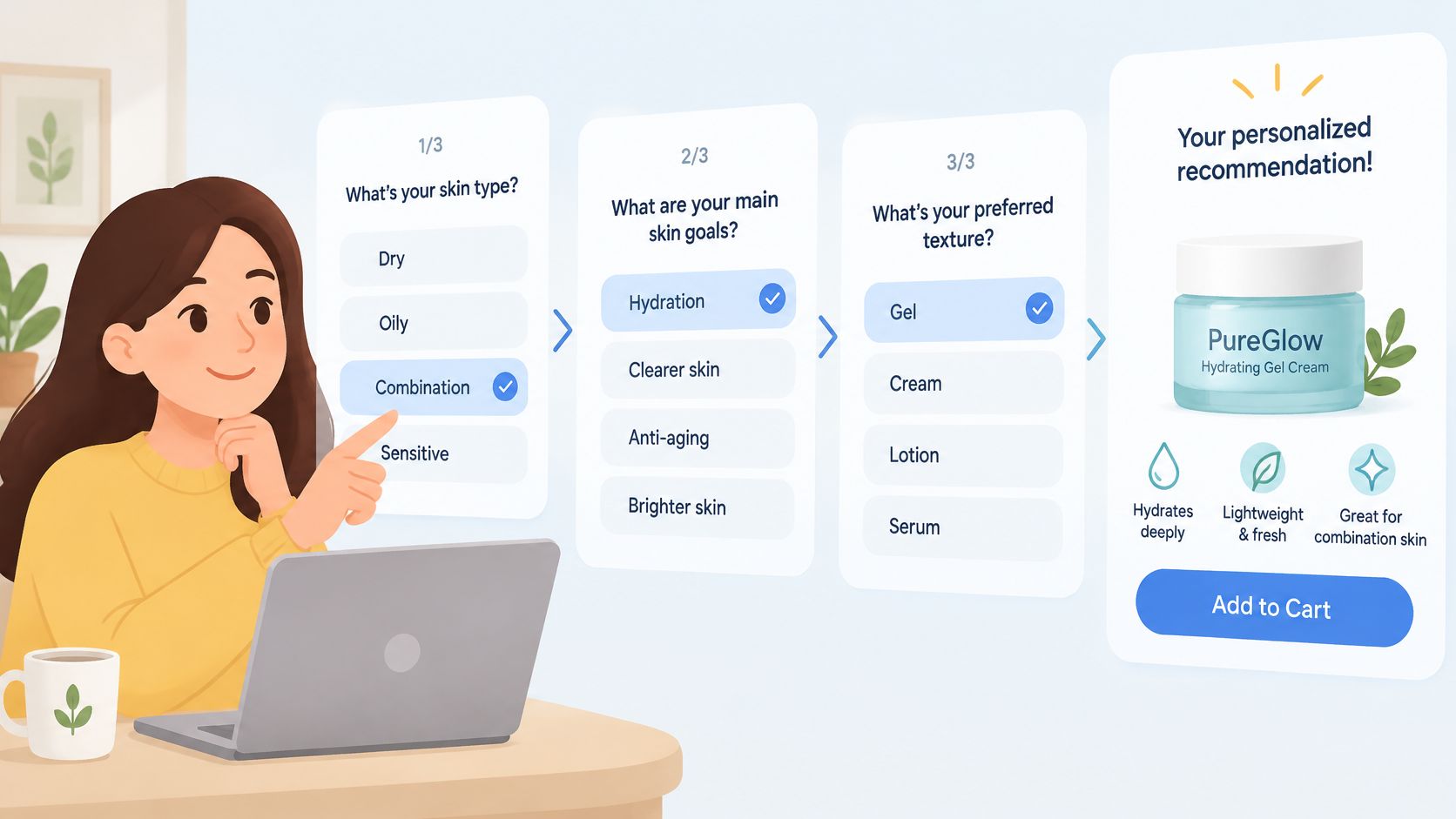
Say a store asks about skin feel, existing routine, and ingredient preferences. The result should explain why the recommended products fit those answers, rather than send every participant to the same expensive bundle.
The intended outcome is a suitable purchase, with preference data as a useful secondary benefit. Ask only questions that change the recommendation, and explain how submitted information will be used.
Earn the result-page click
Show meaningful value before asking for optional email follow-up. Keep marketing permission separate from the act of receiving a recommendation, and avoid presenting cosmetic preference questions as medical diagnosis.
This video provides an additional reference for the quiz-led journey.
Track completion and downstream purchasing separately. A frictionless quiz can still produce poor recommendations.
Ship a result-page test that adds a plain-language rationale and an alternative option. If shoppers already know the exact SKU they want, preserve a direct shopping route instead of forcing personalization.
9. Webinar and Value Ladder Funnel
A webinar asks for more commitment than a product page. Reserve it for high-consideration offers where teaching materially improves the buying decision.
For a specialist training business, the sequence might be educational content → registration page → live or recorded workshop → relevant paid program → onboarding. The audience is problem-aware and willing to invest attention, even if they're not ready to purchase.
A webinar for an ordinary replenishment product is usually unnecessary. A workshop for a complex home-growing system could be useful if buyers need to understand installation, maintenance, and suitability.
Use the commitment test: If the buyer can make a confident decision from a demonstration and clear specifications, don't require a webinar.
Make every step solve something
The free training should deliver a usable result. The paid offer should solve a deeper problem, not provide information deliberately withheld from the session.
- Before registration: State who the training suits and what participants will learn.
- Before attendance: Send useful reminders and explain preparation requirements.
- After teaching: Present the offer with clear scope, support, and terms.
The intended outcome is qualified paid enrollment or a suitable purchase, not the largest registration list.
Ship a tighter registration page before rewriting the presentation. Measure attended-to-purchase conversion alongside acquisition cost, and compare customer quality with less demanding routes.
10. Freemium and Referral Growth Funnel
Freemium works when customers can experience useful value before paying. It suits software, subscriptions, and services more naturally than physical products, where production and fulfillment costs make a free tier harder to support.
A typical sequence is free or low-cost entry → meaningful use → paid upgrade or repeat purchase → referral invitation → referred customer activation. The key trade-off is between making the free experience useful enough to build intent and reserving benefits that justify an upgrade.
For a meal-planning app, a usable free plan can cover basic meal planning, while advanced household planning sits behind a subscription. Prompt the upgrade when a user reaches that need, after they have experienced the basic service.
Separate referrals from affiliate recruitment
Customer referrals turn a satisfied user's introduction into a reason for a new customer to try the product. Affiliate recruitment creates a commercial promotional relationship. An invitation to join the affiliate program is therefore distinct from a post-purchase customer referral.
For a physical subscription brand, a transparent referral credit may be more practical than a permanently free tier. Choose the reward around the audience's buying stage, and make the terms clear:
- Choose a meaningful moment: Ask after successful use or positive feedback, rather than automatically after payment.
- Explain both sides: State the benefits for the referrer and the recipient.
- Protect the economics: Account for rewards, cancellations, and repeat purchasing.
Aim for incremental, retained customers, not referral-code usage alone. A code can show that a referral was used, but it does not establish that the incentive created a new sale.
Ship a focused referral landing page. Track whether referred customers activate and remain engaged, then expand rewards only when their contribution supports the cost.
10 Marketing Funnel Examples at a Glance
| Funnel | Primary Audience | Funnel Type | Best For |
|---|---|---|---|
| Advertorial Pre-Sell Funnel | Cold paid-social traffic | Editorial pre-sell | Educating prospects before a product offer |
| Listicle and Best-Of Comparison Funnel | Buyers comparing options | Ranked comparison | Reaching high-intent shoppers who want scannable guidance |
| Presell Warm-Up Funnel | Skeptical cold or warm visitors | Short-form pre-sell | Building intent before a product page or checkout |
| AIDA Funnel (Attention, Interest, Desire, Action) | Prospects moving from awareness to action | Four-stage messaging framework | Structuring persuasive ads, pages, and emails |
| Awareness, Consideration, and Decision Funnel (TOFU, MOFU, BOFU) | Audiences at different buying stages | Three-stage journey framework | Matching content and offers to visitor intent |
| AARRR Pirate Metrics Funnel | Growth teams and repeat-use customers | Five-stage growth metrics framework | Tracking acquisition through retention, referrals, and revenue |
| Launch Video Funnel (Video-Led Direct Response) | Social audiences drawn to video | Video-led direct response | Driving attention and sales with persuasive video |
| Quiz Funnel | Shoppers with varied needs or preferences | Interactive personalization | Recommending suitable products and collecting preference data |
| Webinar and Value Ladder Funnel | High-consideration prospects | Educational webinar and offer ladder | Building trust and selling higher-ticket products |
| Freemium and Referral Growth Funnel | Users suited to free entry and sharing | Product-led referral growth | Growing subscriptions, apps, or bundles through referrals |
Choosing Your Funnel and Building It Fast
Choose the funnel by the belief that's missing. Cold, skeptical shoppers need an explanation. Comparison-minded visitors need criteria and trade-offs. Product-aware buyers need proof, practical details, and a clear transaction. Customers need help getting value before they need another acquisition pitch.
Start with an audience and an offer. Write down what visitors already know, what they still doubt, and the next action you want them to take. Then choose the shortest useful route.
Measure the route, not just the page
Privacy-conscious measurement matters because you can't assume every purchase will map neatly to an individual ad click. CaliberMind's State of Marketing Attribution report addresses the shift toward first-party, aggregated, consent-aware, and modeled measurement.
Use consistent UTM naming and record page variant, product view, add-to-cart, checkout, and purchase events where consent permits. Reconcile purchases with store records, prevent duplicate purchase events, and retain acquisition-cohort reporting.
Pick a primary business metric, such as new-customer acquisition cost, with contribution and retention as guardrails. When platform reporting and store results disagree, avoid scaling solely on attributed ROAS; use a controlled holdout where feasible to test incremental impact.
Build for visitors who arrive informed
Not everyone needs warming up. Capgemini reported that 24% of consumers used generative AI in shopping experiences in 2024, which makes validation an important landing-page job alongside education.
A visitor arriving after an AI recommendation may want to verify specifications, review evidence, or check delivery terms. Make those answers easy to find, keep claims consistent, and track identifiable AI referrals separately without assuming you can observe every assisted journey.
Use the landing page and lead nurturing steps to connect the destination with relevant follow-up. Don't send everyone the same sequence regardless of what they read or purchased.
If production is the bottleneck, Landra turns a product URL into an editable, mobile-first advertorial, listicle, or presell page. You can refine the angle and proof, then publish to Shopify, a Landra-hosted URL, or export HTML without rebuilding the storefront.
Build a focused variant this week. Keep the offer and traffic comparable, define the decision rule before launch, and let purchasing behavior determine what you build next.
Landra helps DTC teams turn product URLs into editable pre-sell pages for the awareness stages their ads attract. Visit Landra to build an advertorial, listicle, or warm-up page, then test it against your current destination using purchases and customer acquisition cost.