

The popular advice is simple: pick the right keywords, write a compelling ad, and send the click to your product page. That advice is incomplete for a DTC brand. Paid search advertising is the conversion endpoint of a larger paid funnel, and the click is often won or lost before the searcher ever sees your checkout flow.
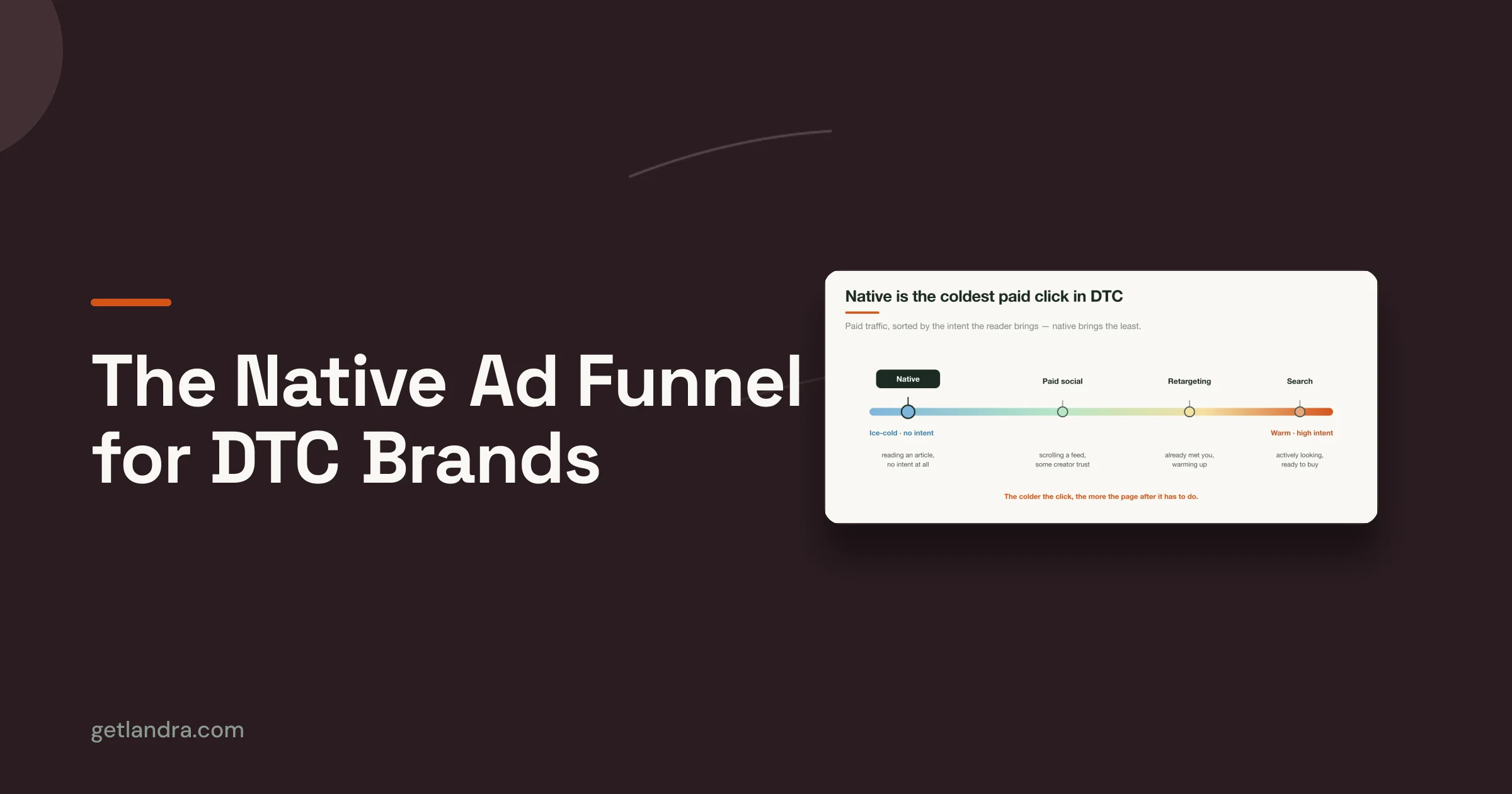
Your paid social ad creates the initial problem or desire. Your pre-sell page builds context and belief. Your search ad captures the buyer once intent becomes explicit. Your offer and landing page then decide whether the expensive click becomes revenue. Treating Google Ads as an isolated keyword machine leaves money on the table, especially when the same brand is running Meta or TikTok campaigns upstream.
The channel remains commercially important. In 2024, U.S. search advertising generated $102.9 billion, grew 15.9% year over year, and represented 39.8% of U.S. digital ad spending, according to the IAB/PwC Internet Advertising Revenue Report coverage. The opportunity is enormous, but so is the cost of sending qualified intent to a page that wasn't built to close it.
Table of Contents
- What Paid Search Advertising Actually Is in 2026
- How the Paid Search Auction Really Works
- Google Ads vs Microsoft Ads for DTC Brands
- Structuring Campaigns That Match Intent to Page
- KPIs That Actually Measure Paid Search Profitability
- Why DTC Brands Need Pre-Sell Pages in Front of Search Ads
- Common Pitfalls and a 30-Day Action Plan
What Paid Search Advertising Actually Is in 2026
Paid search is not a keyword-buying tactic. It is the conversion endpoint of a paid acquisition funnel, where intent becomes explicit and every mismatch can turn an expensive click into a bounce.
Paid social usually creates the first problem, desire, or product association. Display and video build familiarity or bring visitors back. Retail media reaches shoppers inside marketplaces. Search captures the moment a buyer types the words that reveal what they want next. For DTC teams running Meta or TikTok alongside search, the upstream work matters. The pre-sell page, creative, and offer shape how ready that person is before the search click happens.
A search engine results page, or SERP, may place a sponsored text ad above organic listings. Depending on the query, it can also show shopping placements, local results, product imagery, sitelinks, maps, and answer-first features such as AI-generated summaries. Your ad is competing for the next action across a page built from several commercial and informational formats, not against organic listings.

The market is broader than Google
Google is the right testing ground for many DTC brands, especially with a limited budget. It is not the whole market. A 2026 projection places global search advertising spend at $362.3 billion, with paid search spend above $350 billion and projected to reach $417.4 billion by 2028, according to search advertising market coverage. The same source cites an eMarketer projection that Google will hold 48.5% of search ad spending in 2026, with its share projected to fall below half for the first time in more than two decades.
That shift gives Amazon, Microsoft, retail media networks, and discovery platforms more room to capture commercially valuable searches. Start with Google, prove the economics, then test another channel only when you can measure incremental profit. Expanding for reach alone increases management overhead without proving that the traffic adds revenue.
AI changes visibility, not the job
AI Overviews and other answer-first SERP features can take attention before a traditional ad or organic result. Seer Interactive on paid search and AI-driven SERPs reports that ads may appear below AI-generated summaries, while visibility and click-through rates can decline.
Search ads still work, but message match, offer strength, and page quality carry more weight. If fewer users click, the ad must promise something specific, the pre-sell page must build the case, and the landing page must make the next step obvious. Skip expansion until those three elements can convert the intent you already pay to capture.
How the Paid Search Auction Really Works
A search auction is closer to a restaurant host deciding which reservation deserves the best table than to a simple highest-bidder-wins contest.
Your bid is the price you're willing to pay for a click. Your Quality Score is a diagnostic view of how well your keyword, ad, and landing page serve the searcher. Expected click-through rate, ad relevance, and landing-page experience all influence the platform's estimate of user value. The auction then determines whether your ad appears, where it appears, and what you pay.
Think like the restaurant host
A restaurant won't give its best table to the diner who offers the most money if that diner has a history of cancelling, orders nothing, and disrupts the service. Search platforms similarly evaluate more than your maximum bid.
A well-aligned ad can outrank a more aggressive bidder because it predicts a better user experience. When the search query, ad promise, and destination page agree, you improve the signals that influence rank and may reduce the effective price of traffic. The Google Ads benchmark discussion from WordStream reports 2026 benchmark ranges of roughly 3.17% to 6.64% for Google Search CTR and $2.69 to $5.42 for average CPC, with stronger performers reaching roughly 7% to 10% CTR.
Practical rule: Don't raise the bid first. Fix the mismatch between the query, the ad, and the page, then check whether the auction still needs more money.
Match types control the invitation list
Match types determine how broadly Google can interpret your targeting.
- Broad match gives the platform the widest room to find related searches. Use it when you have reliable conversion tracking, enough budget for exploration, and a clear negative-keyword process.
- Phrase match gives you more control while still allowing close variations around a central meaning. It often suits a growing DTC account that wants discovery without opening the gates completely.
- Exact match targets a tightly defined intent. A keyword such as
[nike running shoes]is more controlled than “running shoes,” though modern matching still considers meaning and context rather than only literal character strings. - Negative keywords block searches that don't belong. If you sell premium running shoes, terms such as “free,” “repair,” or “pattern” may deserve exclusion, depending on the offer and query data.
Use broad match for controlled discovery, phrase match for proven intent clusters, and exact match for terms where the economics or brand context demands precision. Don't build an account around match-type superstition. Build it around the quality of the searches each match type produces.
The video below provides a visual explanation of the auction sequence.
Google Ads vs Microsoft Ads for DTC Brands
Google usually deserves the first call for a DTC launch. It captures more search demand and offers a broader ecommerce toolkit. Microsoft Ads earns a test after Google reaches profitability, especially when importing campaigns requires little additional work.
Choose by marginal profit, not platform loyalty. Include media cost, tracking differences, creative production, monitoring, and cleanup before deciding whether the next dollar belongs on either channel. A cheaper click means little if the pre-sell page, ad promise, or offer fails to convert the buyer.
| Dimension | Google Ads | Microsoft Ads |
|---|---|---|
| Audience reach | Broader search demand and more Google inventory | Smaller audience across Microsoft and partner placements |
| Cost profile | Can be expensive in competitive categories | Clicks may cost less, but traffic still must convert |
| Audience fit | Strong default for broad DTC demand capture | Useful for added reach and specific audience contexts |
| B2B usefulness | Strong search intent and audience options | LinkedIn profile targeting capabilities |
| Ecommerce workflow | Search, Shopping, and Performance Max options | Search and shopping campaigns can often be imported |
| Management overhead | Priority when budget is limited | Add it only when incremental returns justify oversight |
Google no longer owns every valuable discovery surface. Amazon, retail media, and other channels have taken part of the market, so treat platform share as context rather than a buying rule. Judge both platforms by incremental contribution margin and conversion quality.
Where each platform earns budget
Use Google first when the budget cannot support duplicated testing. Keep the account focused, protect measurement, and provide clean product data before scaling Shopping or Performance Max. Because search closes demand created elsewhere, review the social pre-sell page, creative, and offer before blaming the platform for weak conversion. The Performance Max tactics for online stores guide offers practical ecommerce execution ideas.
Add Microsoft after Google campaigns are profitable and the imported structure will not create reporting confusion. Microsoft can bring incremental buyers, but a lower CPC is not a win until those buyers produce acceptable contribution margin. Check new-customer quality, assisted demand, and post-purchase value instead of comparing dashboard revenue without context.
Use this operating rule:
- Constrained budget: Run Google only.
- Profitable Google account: Import selected campaigns into Microsoft.
- Positive marginal ROAS on Microsoft: Keep both and allocate by incremental return.
- No clean conversion signal: Fix measurement before expanding platforms.
The import workflow makes the first Microsoft test inexpensive in operational terms. The costly mistake is allowing each platform to optimize toward a different conversion definition, then treating their dashboards as directly comparable. Standardize the primary conversion, validate revenue, and review results at the same attribution window before shifting budget.
Structuring Campaigns That Match Intent to Page
A DTC account should make the buyer's intent obvious from the campaign name, ad group, keyword, ad, and destination page. If a person searches for “best electrolyte powder for runners,” they shouldn't land on a generic homepage or a product page that assumes they already understand the category.
Start with the account, then separate campaigns by business purpose:
- Brand campaigns protect demand from people already looking for your company or product name.
- Non-brand campaigns capture category and problem-aware searches.
- Competitor campaigns target comparison behavior, but they need careful economics and compliant messaging.
- Shopping or Performance Max campaigns use product data and automated placement across eligible inventory.
Inside each campaign, build ad groups around a single intent cluster. “Running shoes” and “best running shoes” may overlap, but “running shoes for flat feet” asks a different question and often deserves different copy and a different page.
Map the query to the promise
Commercial signals include language such as buy, price, best, review, comparison, and specific product attributes. Informational searches can be useful upstream, but they often waste a bottom-funnel budget when your goal is immediate ecommerce revenue.
For each intent cluster, write ad copy that mirrors the searcher's language without forcing awkward keyword repetition. If the query asks for a solution to a specific problem, the headline should acknowledge that problem and the description should establish the product's relevant benefit, proof, and next step.
Use one primary ad concept per ad group while you establish the message. That doesn't mean you stop testing. It means you test a clear variable, such as benefit-led versus proof-led copy, rather than mixing unrelated promises in one bucket.
Build the landing-page handoff
The landing page must answer the same question the keyword asked. A category-intent query may need education and comparison. A branded product query may need a fast route to the offer. A competitor query may need a clear reason to switch.
The distinction between a landing page vs website matters here. A website supports many navigation paths. A paid search landing page should support the specific decision implied by the ad.
Page rule: If the searcher has to reinterpret your ad after the click, you've already paid for a problem.
Review the page on mobile, confirm the offer appears without unnecessary hunting, and inspect the search-term report after launch. Your account structure is only useful if it creates a clean feedback loop between intent, message, page, and purchase.
KPIs That Actually Measure Paid Search Profitability
Clicks and impressions tell you whether the campaign entered the conversation. They don't tell you whether the conversation paid for itself.
A DTC team should report CPA, ROAS, Quality Score, impression share, and conversion rate together. Each metric answers a different question, and none is sufficient alone.

The weekly scorecard
CPA tells you what it costs to generate the chosen action. For DTC, make sure the action means a completed purchase rather than an add-to-cart event that looks encouraging but doesn't pay the bills.
ROAS connects attributed revenue to ad spend. Separate platform-reported paid-search ROAS from blended ROAS. The first assigns credit within the advertising platform's attribution rules. The second compares total business revenue with total marketing or advertising spend. Both are useful, but they answer different questions.
Quality Score helps diagnose relevance. It isn't profit, and you shouldn't optimize it as a vanity grade. Use it to identify whether expected CTR, ad relevance, or landing-page experience is weakening the auction inputs.
Impression share shows how often you're present for eligible demand. Split lost share into lost to budget and lost to rank. Budget loss suggests constrained funding. Rank loss points toward bid, relevance, page experience, or competitive pressure.
The DTC ad performance metrics guide can help your team keep platform metrics separate from business outcomes.
Diagnose the system, not the symptom
If ROAS is low, don't immediately reduce bids. First check whether the search-term report contains irrelevant demand. Then inspect the ad-to-page match, the offer, and the quality of conversion tracking. A strong CTR with weak conversion rate often points to a page or offer problem. Weak CTR with strong post-click conversion can indicate that the ad isn't communicating the value clearly enough.
Your platform may report a conversion that your payment processor later refunds, cancels, or never records. Reconcile ad-platform purchases with store and payment data, then use the cleanest available purchase signal for bidding.
Measurement rule: Optimize toward the conversion that represents cash collected, not the event that makes the dashboard look healthiest.
Why DTC Brands Need Pre-Sell Pages in Front of Search Ads
Sending every paid search click to a product detail page is an expensive default for DTC brands.
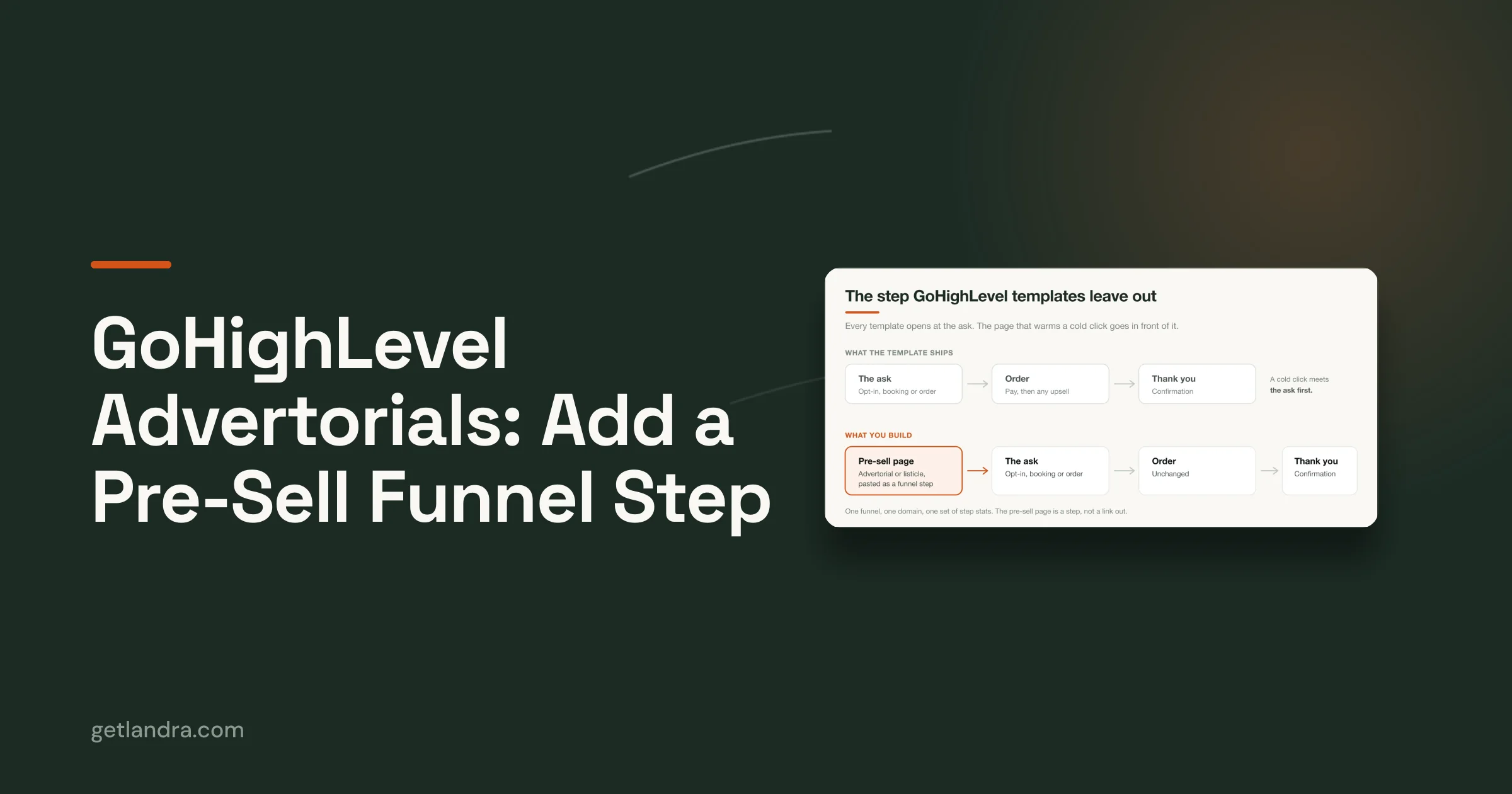
A PDP helps visitors evaluate and buy a specific product. A search ad for a category or problem-aware query often reaches someone who still needs context and proof. Those jobs require different pages. The ad earns the click, the pre-sell page builds understanding, and the offer closes the decision.
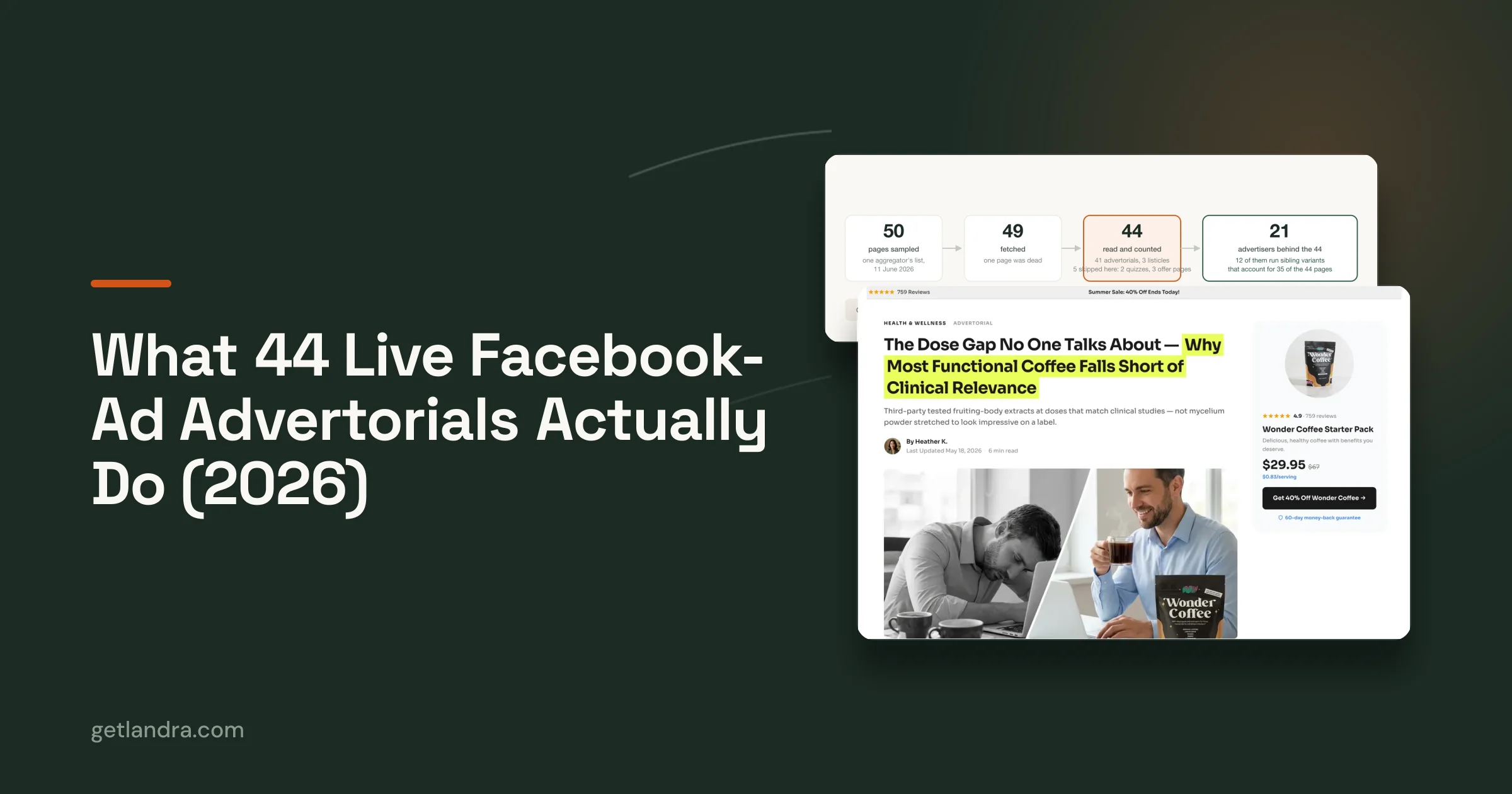
A pre-sell page might be an advertorial, ranked listicle, or editorial comparison. Match it to the query. Someone searching for the best solution to a problem may need the category explained, trade-offs clarified, and benefits framed before a direct product pitch feels credible. A generic store navigation path usually makes that visitor do too much work.
The page also gives paid social a useful handoff. Social creative can introduce the problem or objection, while search captures the later intent. If both channels send traffic to the same PDP, you lose the chance to address the questions that caused the buyer to delay.
When the extra page earns its place
Use a pre-sell page when the product needs education, the category is crowded, the purchase requires consideration, or a cold paid-social visitor later returns through search. High-AOV products and unfamiliar mechanisms usually benefit from a stronger bridge.
Skip it when the buyer knows the exact product, the purchase is naturally impulsive, the item is low-cost and familiar, or a repeat customer needs a fast reorder path. Extra clicks add friction when persuasion is unnecessary. Test the direct PDP first in those cases.
Landing-page experience also affects the auction's relevance assessment. A pre-sell page cannot fix a weak offer or irrelevant keyword. A focused page can, however, make the ad promise easier to fulfill than a generic PDP, which may improve the quality of the post-click experience.
Landra reports a 46% CAC reduction in a first-party test when the same paid ads went to a Landra advertorial instead of the product page, as described on Landra. Treat that as a reported first-party result, not a forecast. Category, traffic quality, offer, and execution determine whether the added step pays for itself.
If you want to test the format, tools that create pre-sell landing pages can generate an editable draft from a product URL for publication on an existing ecommerce stack. Decide the funnel role first. Software only reduces production work.
Common Pitfalls and a 30-Day Action Plan
Most wasted search spend doesn't come from one dramatic mistake. It comes from small breaks in the chain between query, ad, page, offer, and measurement.
Avoid these seven:
- Sending brand clicks to the homepage: Give branded searches a direct product, collection, or offer destination.
- Ignoring negative keywords: Review search terms and block irrelevant research, freebie, support, or employment intent.
- Set-and-forget bidding: Automation needs clean inputs and regular review. It isn't a substitute for judgment.
- Ignoring device and geo splits: A campaign can look acceptable overall while one device or location consumes budget without producing profitable orders.
- Weak ad-copy testing: Test distinct promises, proof, and offers. Don't rotate cosmetic wording and call it learning.
- Dirty conversion tracking: Remove duplicate purchase events and distinguish revenue from softer onsite actions.
- Separating search from paid social: Use social creative and audience objections to improve search messaging, then use search terms to sharpen the next social angle.
A practical four-week reset
Week 1, audit and tracking. Confirm purchase tracking, revenue values, attribution settings, search-term coverage, brand exclusions, negative keywords, and page destinations. Reconcile platform conversions against store records before changing bids.
Week 2, rebuild structure. Separate brand, non-brand, competitor, and shopping activity. Group keywords by one intent cluster, rewrite ads around that cluster, and remove destinations that don't answer the query.
Week 3, launch the page test. Choose the three ad groups with the clearest commercial intent. Put a focused pre-sell page in front of them, preserve the original destination as a control, and keep the offer consistent while you learn.
Week 4, test and document. Review search terms, CPA, paid-search-attributed ROAS, conversion rate, Quality Score diagnostics, and impression-share losses. Record what changed, what improved, and what should be rolled back.

Keep this checklist visible:
- Purchase tracking reconciled
- Negative keywords reviewed
- Brand and non-brand separated
- Intent mapped to page
- Ad promise matched to offer
- Device and location performance checked
- Pre-sell test documented
Pick the search ad group with the highest commercial intent, put a focused pre-sell page in front of it this week, and judge the result on profitable purchases rather than clicks alone.
Landra turns a product URL into editable advertorial and listicle pre-sell pages that can be published to Shopify, a hosted URL, or HTML. Visit Landra to build the page between your search ad and product detail page, then use it as a controlled test against your current destination.