

Most advice on how to reduce customer acquisition cost is too shallow to help. “Test more creatives” isn't wrong, but it's usually a dodge. If your funnel is misaligned, more ads just buy you more expensive failure.
That's why CAC keeps climbing for brands that are active, disciplined, and still stuck. The underlying problem usually sits deeper than CPMs or creative fatigue. You've got measurement gaps, weak handoffs between ad and landing experience, and a storefront that asks cold traffic to make a buying decision too early.
The brands that get control back stop treating CAC like a platform problem and start treating it like a systems problem. They diagnose the funnel in order, fix the biggest leaks first, and only then push scale. That matters even more now that AI has become a real operating lever. Brands using AI in acquisition have achieved CAC reductions of up to 50% according to Amra & Elma's customer acquisition cost statistics roundup. The point isn't that AI magically saves bad marketing. It's that faster testing, better targeting, and tighter personalization change the economics when the rest of the machine is built correctly.
Table of Contents
- Why Your Customer Acquisition Cost Keeps Rising
- First Know Your Numbers
- Diagnose the Leaks in Your Acquisition Funnel
- The High-Impact Optimization Levers
- Reduce CAC by Boosting LTV
- Build Your Experimentation Engine to Scale Wins
Why Your Customer Acquisition Cost Keeps Rising
The easy answer is that ad costs went up. Sometimes that's true. It's also incomplete.
CAC rises when a brand keeps paying to reach people who don't get enough context to convert. Paid social is the biggest offender because it introduces people who are curious, not committed. If you send that traffic straight from a Meta or TikTok ad to a product page, you're asking for a purchase before you've earned belief.
The problem is usually structural
Three things usually drive the climb:
- Weak intent transfer: The ad makes a promise, but the page doesn't continue the story.
- Bad measurement: Teams cut the wrong campaigns because attribution overweights the final click.
- Premature optimization: Brands tweak buttons, bids, and thumbnails while the core narrative is still broken.
That's why “just test more creatives” becomes expensive advice. More creatives can improve throughput at the top of the funnel, but they won't fix a page that doesn't answer skepticism, frame the problem, or create buying momentum.
Practical rule: If your ads get attention but paid traffic still under-converts, don't assume the ad is the problem first. Check whether the click lands in the right conversation.
Throwing budget at the issue makes it worse
I've seen teams respond to rising CAC by widening audiences, increasing spend, and refreshing creative faster. Those moves can help for a week. They rarely help for a quarter if the post-click experience is doing the damage.
A healthier way to reduce customer acquisition cost is to stop treating acquisition as one tactic. It's a chain. Every break in that chain adds waste. Your ad account feels the pain, but the leak often sits on the site, in the analytics, or in the handoff between curiosity and conviction.
First Know Your Numbers
If your measurement is sloppy, your optimization will be sloppy. That's how teams “improve” CAC on paper while profit gets worse.
Most brands need a simpler and stricter view of acquisition economics. Not more dashboards. Better definitions.

Stop trusting blended CAC
Blended CAC is useful for finance. It's dangerous for decision-making.
When you average everything together, you hide the truth. Branded search can mask a failing paid social program. Email can make retargeting look smarter than it is. Organic demand can flatter acquisition work that isn't creating demand.
Use a simple split:
| View | What it tells you | Where teams get misled |
|---|---|---|
| Blended CAC | Overall acquisition efficiency | It hides channel waste |
| Channel CAC | Whether each source earns its budget | It can still miss assist value |
| Campaign or audience CAC | Which angle is actually scalable | It becomes noisy if attribution is weak |
Look at blended CAC for business health. Use segmented CAC to make budget calls.
Fix the attribution view before you cut spend
Last-click reporting trains teams to overvalue the channel that closes and undervalue the channel that creates intent. That's how upper-funnel spend gets cut, branded search gets over-praised, and paid social gets judged too bluntly.
According to Performance Marketing Advisors on multi-touch attribution and CAC inflation, replacing last-click with multi-touch attribution typically reduces reported CAC inflation by 15–20%. That doesn't mean your media suddenly got cheaper. It means your reporting got closer to reality.
Last-click tells you who got credit. It doesn't tell you who did the work.
For a DTC brand, that distinction matters. Meta often creates the first serious product consideration. Search, email, or direct traffic may collect the conversion. If you optimize only for the closing touchpoint, you'll starve the channels that introduced the buyer in the first place.
Use a simple unit economics view
You don't need an advanced model to get honest. You need consistency.
Track these inputs on the same time window:
- Total acquisition cost: Ad spend, creative production, agency or freelancer cost, relevant software, and the team cost tied to acquisition.
- New customers only: Don't include repeat buyers in the denominator.
- Channel split: Paid social, search, affiliate, referral, SEO, partnerships.
- Customer lifetime value: Use the revenue you reasonably expect from the customer relationship, not a fantasy number pulled from your best cohort.
Then ask a blunt question: does this channel produce customers worth buying?
A lot of CAC discussions go off the rails because teams obsess over the acquisition number without pairing it to customer value. If a first order barely covers fulfillment and discounting, you need either a lower CAC or a stronger retention model. Usually both.
Diagnose the Leaks in Your Acquisition Funnel
Before changing campaigns, audit the journey. Not in theory. Click through it as a buyer would, and interrogate each step.
A clean diagnostic process beats random testing every time. If you don't know where the friction sits, you'll waste weeks polishing the wrong surface.
Start at the ad and work forward
Use questions, not assumptions.
- At the impression stage: Does the ad call out a problem, buyer type, or use case clearly enough to earn the click?
- At the click stage: Does the page continue the same promise, tone, and hook?
- At the product understanding stage: Can a first-time visitor tell what the product is, why it matters, and why they should trust it?
- At the purchase stage: Are there obvious blockers like confusing variants, weak mobile UX, slow load, hidden shipping surprises, or checkout friction?
- After purchase: Are you acquiring low-quality buyers who won't come back?
The best CRO work starts with this kind of staged review. If you need a deeper framework for auditing behavior on page, this guide to conversion rate optimization fundamentals is a useful reference point.
Read the drop-off by stage
Different leaks produce different symptoms. Don't treat them like one problem.
| Funnel stage | Common symptom | Likely issue |
|---|---|---|
| Ad to click | Good reach, weak click-through | The angle is generic or irrelevant |
| Click to landing engagement | Fast bounce | Message mismatch or low trust |
| Engagement to add-to-cart | People scroll but don't act | Offer, proof, or explanation is weak |
| Cart to checkout | Strong intent, weak completion | Friction, confusion, or price shock |
| First purchase to repeat | Orders happen, margins don't improve | Low retention quality |
Experienced operators separate themselves from busy ones. They don't ask “how do we lower CAC?” in the abstract. They ask “where is money leaking out of the path?”
If the ad earns the click and the page loses the customer, the ad account is not your first problem.
Separate conversion problems from offer problems
Not every high CAC issue is a funnel issue. Sometimes the offer just isn't compelling enough for cold traffic.
That usually shows up when people engage, read, and still don't move. They understand the product. They don't want it enough, or they don't want it at that price, in that bundle, with that level of certainty.
A quick way to separate the two:
- If people bounce fast, you likely have a message match problem.
- If they stay but stall, you likely have a persuasion or offer problem.
- If they buy once and disappear, you likely have a customer quality or retention problem.
Teams waste money when they collapse all three into “creative fatigue.” Fatigue is real. It's also an easy excuse.
The High-Impact Optimization Levers
Not all CAC levers deserve equal attention. The order matters.
Teams often start too low in the stack. They tweak button color, shorten forms, test CTA copy, and adjust bids while the cold traffic experience still makes no sense. That's backwards.
Fix message match before you touch micro-conversion tactics
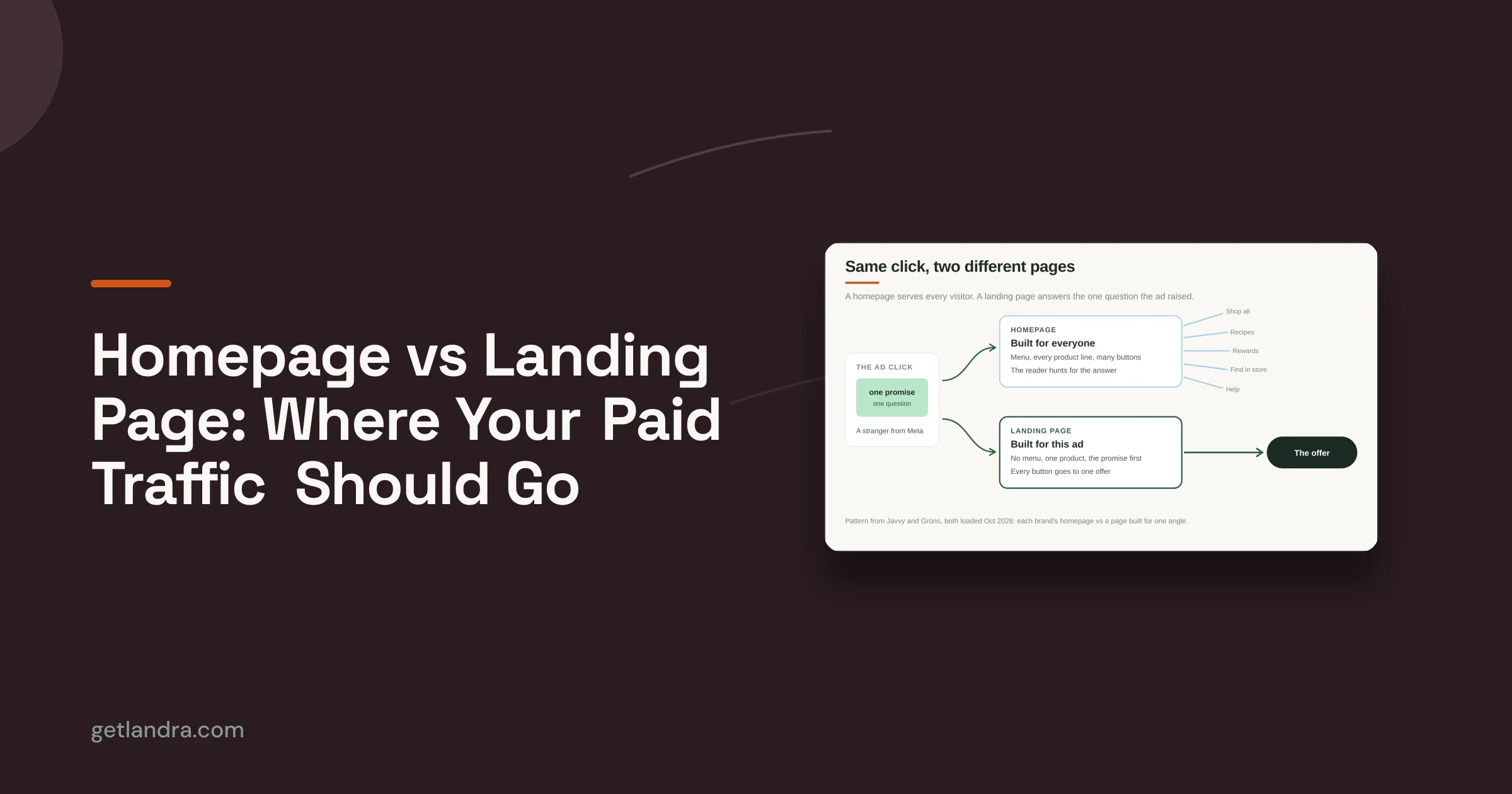
If your ad says one thing and your landing page says another, you're paying a tax on every click. The buyer feels it instantly. The promise that got attention disappears. The momentum breaks.
That handoff has to be tight:
- Same core claim: The page should continue the argument the ad started.
- Same audience: A page for broad traffic rarely converts specialized traffic well.
- Same emotional temperature: If the ad is problem-aware and urgent, the page can't open like a neutral catalog.
- Same next step: Don't shift from education to hard sell too abruptly.
This sounds obvious. It's still one of the most common reasons paid social CAC gets ugly.
The pre-sell narrative gap is where cold traffic dies
This is the most neglected lever in DTC acquisition. Cold traffic usually isn't ready for a product detail page. It needs a bridge.
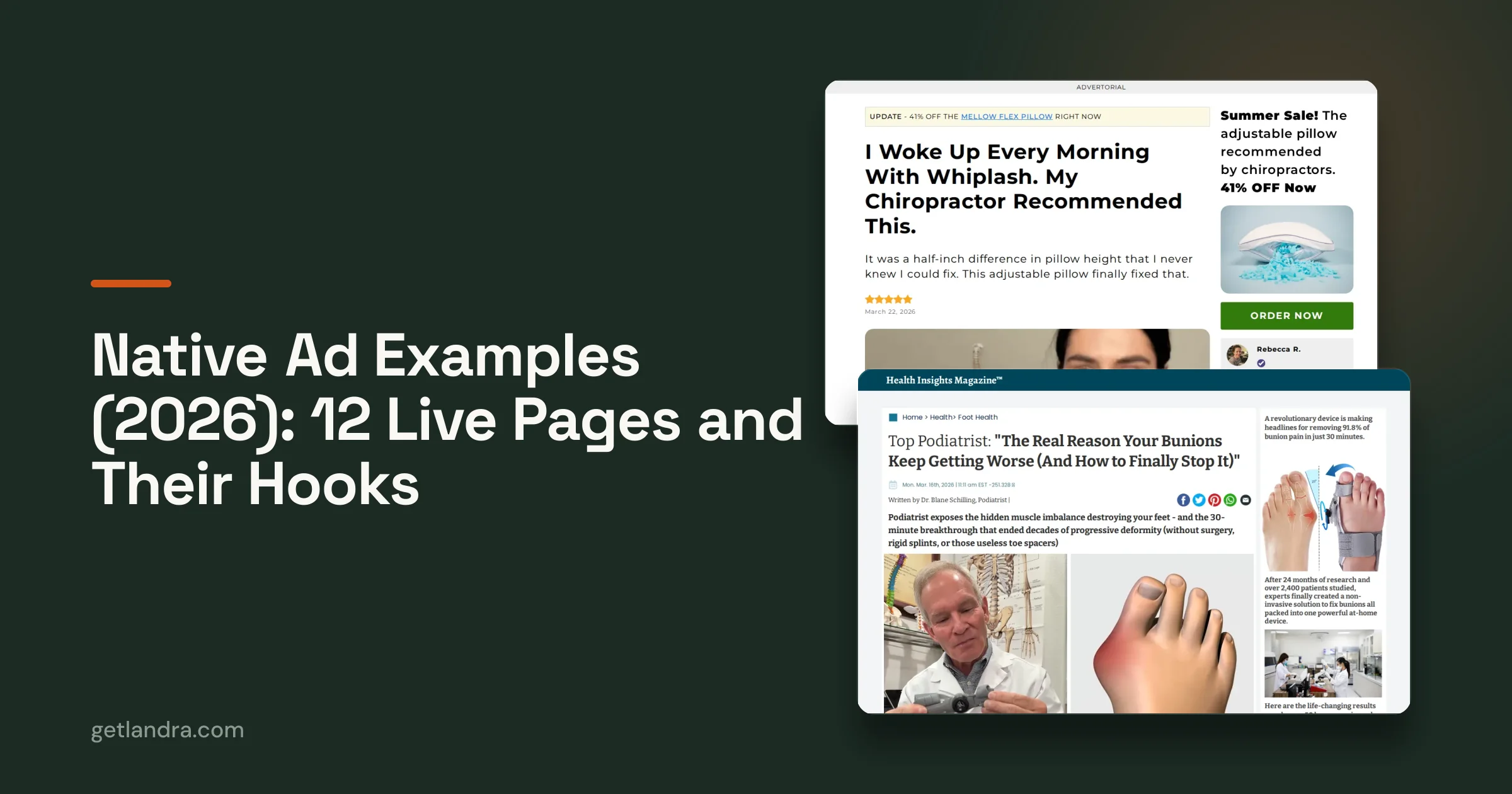
That bridge is a pre-sell page. Usually an advertorial, editorial-style page, or listicle that warms up the click before the sale. It frames the problem, introduces the mechanism, builds trust, handles objections, and only then pushes to product.

Most CAC advice lives in post-click optimization. That misses the bigger issue. As Baremetrics notes in its piece on CAC reduction methods, routing Meta and TikTok traffic to dedicated editorial-style pre-sell pages can cut CAC by 46% by closing the pre-sell narrative gap.
That tracks with what seasoned paid social teams see in practice. Cold traffic doesn't need less information. It needs the right information in the right order.
For teams running Meta, this is closely related to better Facebook ads optimization workflows. The ad angle and the pre-sell angle need to work as one unit, not as separate assets owned by different people.
The product page is for shoppers. Cold traffic often needs a story first.
What to optimize after the handoff is fixed
Once message match and pre-sell structure are right, then go lower in the funnel.
Focus on these in sequence:
Offer clarity
Make the deal easy to understand. Bundle logic, savings framing, subscription terms, and guarantees should be obvious.Proof density
Add the right trust signals where skepticism naturally appears. Not a random wall of reviews. Place proof next to claims that need support.Mobile consumption
Paid social traffic is impatient. If the page is hard to scan, overloaded, or visually chaotic on mobile, performance will suffer.Checkout friction
If people show intent and disappear late, clean up shipping surprises, field overload, and decision clutter.Creative expansion Only after the funnel converts should you broaden angles aggressively. Then new creatives have somewhere efficient to land.
The pattern is simple. Fix the argument first. Then improve the interface.
Reduce CAC by Boosting LTV
A lot of teams try to reduce customer acquisition cost while ignoring the other half of the equation. That's a mistake.
If customer value is weak, CAC pressure gets brutal. If customer value improves, you gain room to acquire more aggressively without wrecking margin. Good operators don't separate acquisition from retention. They model them together.

Retention changes what you can afford
Retention isn't just a lifecycle team concern. It changes acquisition math.
According to Deep Marketing on customer retention and CAC pressure, retaining an existing customer is 5 to 7 times cheaper than acquiring a new one. For DTC brands, that means a budget shift toward retention can lower overall cost structure even if top-of-funnel media stays expensive.
That's why some brands look “better at acquisition” than their peers. They're not always buying cheaper traffic. Sometimes they monetize the customer relationship better after purchase.
Where to build LTV in a DTC business
Start with the obvious money paths.
- Post-purchase email and SMS: Don't stop at order confirmation. Educate, cross-sell, reinforce product use, and ask for the second order before attention fades.
- Subscription design: If the product supports replenishment, make the recurring option compelling and easy to understand.
- Merchandising for repeat behavior: Build bundles, replenishment reminders, and complementary product paths around how people typically use the product.
- Community and content: For some categories, education and identity matter as much as discounting. Strong brands create reasons to return beyond the next promotion.
- Referral mechanics: Existing customers can become an acquisition channel if the experience is worth talking about.
Here's the hard truth. A brand with mediocre retention will always feel like CAC is the enemy. A brand with strong retention can tolerate more expensive acquisition because each buyer is worth more over time.
A short video can help frame that relationship in practical terms:
Use acquisition and retention as one model
Don't run these functions in silos.
Ask better operating questions:
| If this is happening | The real issue may be |
|---|---|
| CAC is high but payback looks acceptable | Retention is carrying acquisition |
| CAC is stable but profit is weak | Repeat rate or contribution margin is poor |
| New customer volume is up but cash gets tighter | You're scaling low-value buyers |
| Paid social looks volatile quarter to quarter | Your business depends too much on first-order economics |
The cheapest acquisition strategy is often a better second purchase strategy.
When teams align media buying, merchandising, lifecycle, and offer strategy, CAC stops being a single scary metric and becomes one input in a healthier growth model.
Build Your Experimentation Engine to Scale Wins
Lower CAC doesn't come from one big breakthrough. It comes from a repeatable testing system that turns insight into new control.
The challenge isn't a lack of ideas. Instead, cleaner test design, faster production, and stronger discipline are what's needed about what counts as a win.

Run fewer tests with cleaner hypotheses
Bad experimentation wastes spend because it mixes too many variables. Keep it sharp.
Use a simple template:
- Observation: What did you notice in the funnel?
- Hypothesis: What specific change should improve that stage?
- Variant: What single asset or step are you changing?
- Success metric: What will determine whether it worked?
- Next action: Scale, revise, or kill it.
If you're producing new page variants fast, tools like an AI landing page generator can reduce production drag and make it easier to test angles without waiting on full design cycles.
Create a tight feedback loop
Your growth team should have one shared loop between media, page, analytics, and retention.
- Media buyers report which hooks and audiences earn qualified clicks.
- Landing page owners translate those hooks into stronger post-click journeys.
- Analysts identify where the leak moved after each change.
- Lifecycle teams report whether the customers acquired are valuable.
That's how you keep gains. Not by celebrating one winning ad set, but by building a machine that keeps finding better handoffs, better offers, and better customers.
If your paid social traffic is dying on product pages, Landra is built for that exact problem. It generates mobile-first pre-sell pages like advertorials and listicles from your product URL, gives you an editable draft in minutes, and lets your team publish to Shopify, Webflow, a hosted URL, or export as HTML without a long production cycle. If you want to reduce customer acquisition cost by improving the ad-to-page handoff instead of endlessly tinkering around it, take a look at Landra.