

Direct response copywriting is salesmanship multiplied. It's writing built to trigger an immediate, measurable action, and it can scale a face-to-face sales conversion rate of 20% to millions of people simultaneously while beginner writers may charge $30 per hour, experts reach $150 per hour, project fees often land between $2,000 and $5,000, freelancers typically earn $50,000 to $150,000 annually, and the average salary for a direct response copywriter in 2022 was $65,310, with some top roles exceeding $80,000 in certain locations.
Most advice about copywriting still treats persuasion like a branding exercise. Write something polished. Sound clever. Protect the tone. Hope the audience remembers you later.
That's backward if you're buying traffic on Meta or TikTok.
Paid social punishes soft thinking. If the ad gets the click but the page doesn't create intent, you pay for curiosity and get nothing back. That's why old-school direct response matters more now, not less. It was built for accountability. The only question that matters is simple: did the copy produce a response?
For modern DTC brands, that response usually isn't vague. It's a click, an email opt-in, a checkout start, or a sale. Good direct response copy doesn't just describe a product. It creates momentum and earns the next step.
Table of Contents
- Why Direct Response Is Not What You Think
- The Unchanging Principles of Persuasion
- Direct Response vs Brand Copywriting
- Classic Formulas That Still Convert Today
- Applying DRC to Modern Paid Social Funnels
- How to Measure What Matters
Why Direct Response Is Not What You Think
A lot of people hear direct response copywriting and picture loud headlines, fake urgency, and pages screaming “Buy now” in red text. That stereotype misses the point.
Direct response isn't a style. It's a standard of accountability. The copy either moved someone to act, or it didn't. In that sense, it's stricter than most brand work because you can't hide behind aesthetics, impressions, or vague engagement.
The clearest definition still holds up. Direct response copywriting is “salesmanship multiplied”, which means taking the logic and persuasion of a one-to-one sales conversation and scaling it so a business can reach millions at once. It's also deeply performance-based. The reason the skill matters so much is simple: the writing is judged by whether a prospect bought, clicked, opted in, or converted, not by whether the copy sounded smart. That framing comes through clearly in this breakdown of direct response copywriting as salesmanship multiplied.
Two jobs, one clear difference
A brand ad can get away with atmosphere. A direct response ad can't.
If you're spending on paid traffic, every asset in the funnel needs a job:
- The ad's job is to earn attention and the click.
- The page's job is to turn attention into belief.
- The CTA's job is to convert belief into action.
That's why direct response keeps showing up in high-pressure channels. DTC brands don't need more nice-looking copy. They need copy that can survive scrutiny from a skeptical cold audience scrolling fast on a phone.
Practical rule: If the copy can't answer “what action should happen next?” it isn't direct response copy.
Why this matters more on paid social
Meta and TikTok traffic exposes weak messaging fast. A creative might interrupt the scroll, but interruption isn't persuasion. Plenty of campaigns fail because the ad promises discovery while the landing page jumps straight to a close.
That gap is where direct response earns its keep.
Strong direct response copy handles the same things a competent salesperson handles in real time. It names the problem, sharpens the stakes, explains why this offer is different, gives proof, and asks for a decision. Weak copy usually skips half of that and hopes the product page does the rest.
That's why asking “what is direct response copywriting” isn't academic. For a DTC operator, it's really asking: what kind of writing can make paid traffic convert instead of leak?
The Unchanging Principles of Persuasion
Direct response copy didn't come from growth-hack culture. Its core frameworks were shaped in the golden age of direct mail from the 1950s through the 1990s, when copywriters built offers, sales letters, and testing disciplines around one idea: results decide what stays. Claude Hopkins helped establish principles that still define the craft today. Test everything. Measure results. Write to one specific person. Lead with benefits. Don't assume anything works until the data says it does. That foundation is laid out in this history of direct response advertising.

The medium changed. The buyer didn't
The channel moved from envelopes to feeds. Human decision-making didn't.
People still ask the same questions before they buy:
- Is this for me?
- Why should I care right now?
- Can I trust this?
- What happens next?
That's why old direct mail logic maps so well to current funnels. A paid social ad grabs attention. A pre-sell page deepens interest. The offer page asks for action. The structure is modern. The persuasion mechanics are old.
If you want a useful companion framework for audience sophistication, Eugene Schwartz's awareness model still helps explain why different buyers need different copy angles. This guide to the five stages of awareness is a practical reference for that decision.
What strong direct response copy always includes
Not every funnel needs a long sales letter. Every converting funnel does need these ingredients.
- A sharp reader match. Good copy feels like it was written for one buyer, not a demographic bucket. “Women 25 to 44” is not a voice. A tired parent, a frustrated runner, and a first-time supplement buyer need different language.
- A clear value proposition. Buyers don't purchase features in isolation. They buy outcomes, relief, convenience, status, certainty, or speed.
- Believable proof. Claims create interest. Proof creates conviction. That proof can come from specifics, demonstrations, reviews, product details, or a clear explanation of why the mechanism makes sense.
- A direct next step. The CTA should feel like the natural continuation of the argument, not a button dropped onto the page at the last second.
Good direct response copy doesn't sound like writing. It sounds like a persuasive conversation with no wasted sentences.
A lot of copy fails because it confuses information with persuasion. Listing ingredients, specs, or product details may be accurate, but accuracy alone doesn't move a skeptical prospect forward. Direct response organizes information so it leads to a decision.
That's also why discipline matters more than inspiration. The best practitioners don't guess their way to performance. They make a case, put it in front of traffic, and let response decide.
Direct Response vs Brand Copywriting
Direct response and brand copywriting overlap, but they are not interchangeable. One asks for action now. The other shapes perception over time.
That distinction matters because teams often expect one asset to do both jobs. Then they wonder why the campaign sounds polished but doesn't convert.
Two jobs, two scoreboards
The easiest way to separate them is to look at what each type of copy is trying to produce.
| Attribute | Direct Response Copywriting | Brand Copywriting |
|---|---|---|
| Goal | Immediate action | Long-term perception |
| Primary question | Did the reader act? | Did the audience remember us favorably? |
| Typical actions | Click, opt in, start checkout, buy | Recall, affinity, recognition |
| Tone | Direct, specific, outcome-focused | Evocative, identity-driven, atmospheric |
| Audience focus | One buyer and one decision | A broader market impression |
| Measurement | Conversion behavior and business outcomes | Reach, recall, sentiment, share of voice |
| Offer handling | Front and center | Often understated |
| CTA style | Explicit and immediate | Softer or delayed |
Consider this analogy: direct response is a salesperson, brand copy is a billboard.
A salesperson has to move the conversation somewhere. A billboard can make you feel something and stay lodged in memory. Neither approach is wrong. They're wrong when they're used for the wrong task.
When brands get this wrong
The failure mode is common in DTC. A team launches paid social with beautiful creative and clean copy that signals taste, but it never really makes a case for buying. The ad earns curiosity clicks, then dumps people onto a product page that assumes intent already exists.
That setup asks cold traffic to behave like warm traffic.
Here's what usually separates the two approaches in practice:
Brand copy says the product represents a lifestyle.
Direct response says what problem it solves, why the solution matters, and why the buyer should take the next step now.
Brand copy protects tone.
Direct response protects clarity.
Brand copy often rewards subtlety.
Direct response rewards comprehension.
If the campaign depends on paid acquisition, clarity usually beats elegance.
The strongest brands know this and switch modes deliberately. They use brand work to shape demand and direct response to capture it. Problems start when a team treats all copy like brand copy, even inside a conversion funnel.
That's why “what is direct response copywriting” has a practical answer. It's copy written to close the distance between attention and action. Not eventually. Now.
Classic Formulas That Still Convert Today
Formulas get dismissed because people confuse them with templates. A formula isn't a script. It's a sequence for moving a reader from indifference to action.
Claude Hopkins helped refine frameworks such as AIDA and PAS, and those structures still show up in strong modern campaigns because they mirror how people process a buying decision. They aren't relics. They're compressed persuasion logic.
A simple visual makes the point fast.

AIDA for a cold audience
AIDA stands for Attention, Interest, Desire, Action.
Take a DTC sleep supplement as an example.
- Attention gets the scroll stop. “You're tired, but not sleepy. That's why bedtime keeps failing.”
- Interest explains the problem in a way the reader recognizes. Maybe they don't need another bedtime routine. Maybe they need help getting out of a wired state.
- Desire connects the product to a better outcome. Not “contains three ingredients,” but “helps make falling asleep feel less like a nightly fight.”
- Action asks for the next move clearly. Shop now, take the quiz, start your order.
This works because each stage earns the next one. A lot of weak pages jump from headline to CTA with very little argument in between.
If you write advertorials or pre-sell pages, headline structure matters early. These advertorial headlines that convert are useful examples of how to frame curiosity without drifting into clickbait.
PAS when the pain is obvious
PAS stands for Problem, Agitation, Solution. It's often stronger when the buyer already feels the issue in a concrete way.
Think about a smart home air purifier sold to apartment dwellers.
First, name the problem plainly. The apartment traps cooking smells, dust, and stale air.
Then agitate it. The buyer cleans constantly, but the space still feels heavy. Guests notice. Sleep feels worse. The home never feels fully fresh.
Then present the solution. The purifier doesn't just sit in a corner looking sleek. It helps the room feel cleaner, easier to live in, and less embarrassing when people come over.
PAS works when the reader already has tension. Your job is to articulate it better than they can.
AIDA is broader. PAS is sharper. Both still convert because they keep the copy from wandering.
Later in the funnel, video often carries the same sequence in a more dynamic format. This breakdown is worth watching if you want to see how direct response structure translates across media.
The mistake isn't using formulas. The mistake is using them mechanically. Buyers don't care that your copy followed an acronym. They care that the page understood their problem, built belief, and made the next action feel obvious.
Applying DRC to Modern Paid Social Funnels
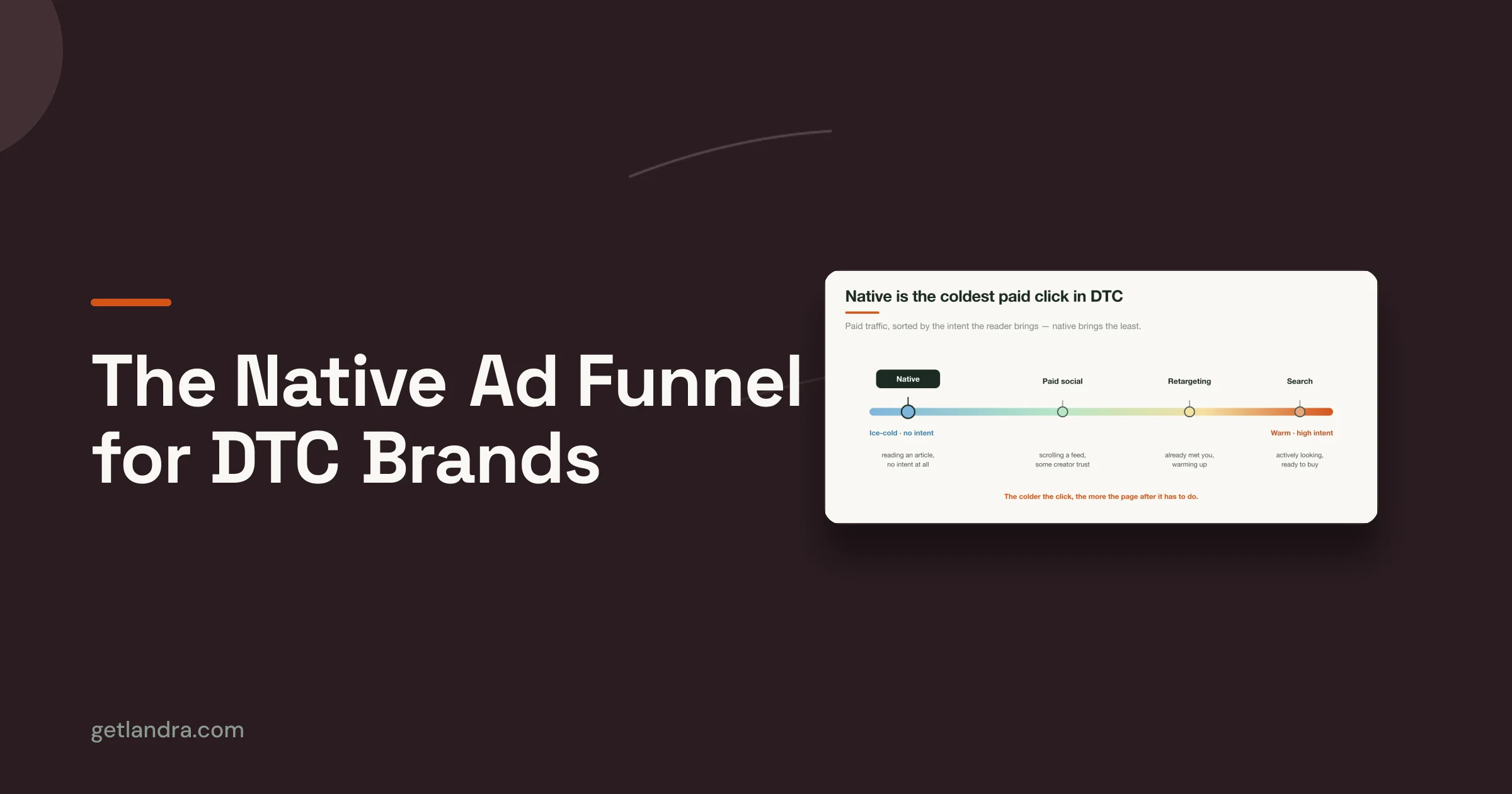
The biggest direct response mistake in modern DTC is sending cold traffic straight from a social ad to a product detail page and expecting that page to close. It usually won't.
A product page is built for a visitor who already wants the product category and mostly needs confirmation. Cold Meta and TikTok traffic often isn't there yet. That person clicked because the hook was interesting, surprising, relatable, or emotionally charged. They still need context.
That's where modern direct response has evolved.
According to Copyhackers' direct response copywriting analysis, a major misconception is that direct response is only “hard selling.” In practice, modern performance copy increasingly relies on warm narrative pre-sell pages, including advertorials, to build intent before the ask. The same source also notes that the Conviction stage is now best achieved through embedded social proof and narrative credibility on those pages, rather than relying on blunt discount pressure.

Why the product page often loses cold traffic
A cold visitor does not arrive with enough belief to process a standard PDP the way a returning shopper does.
The usual product page asks the visitor to do too much, too fast:
- Interpret the product without a story that frames why it matters
- Trust the brand before seeing enough proof
- Handle objections with minimal context
- Commit to purchase while still figuring out whether the problem is urgent
That's why “more direct” doesn't always mean “more aggressive.” On paid social, the better move is often to slow the pitch down just enough to earn the close.
The advertorial is the modern sales letter
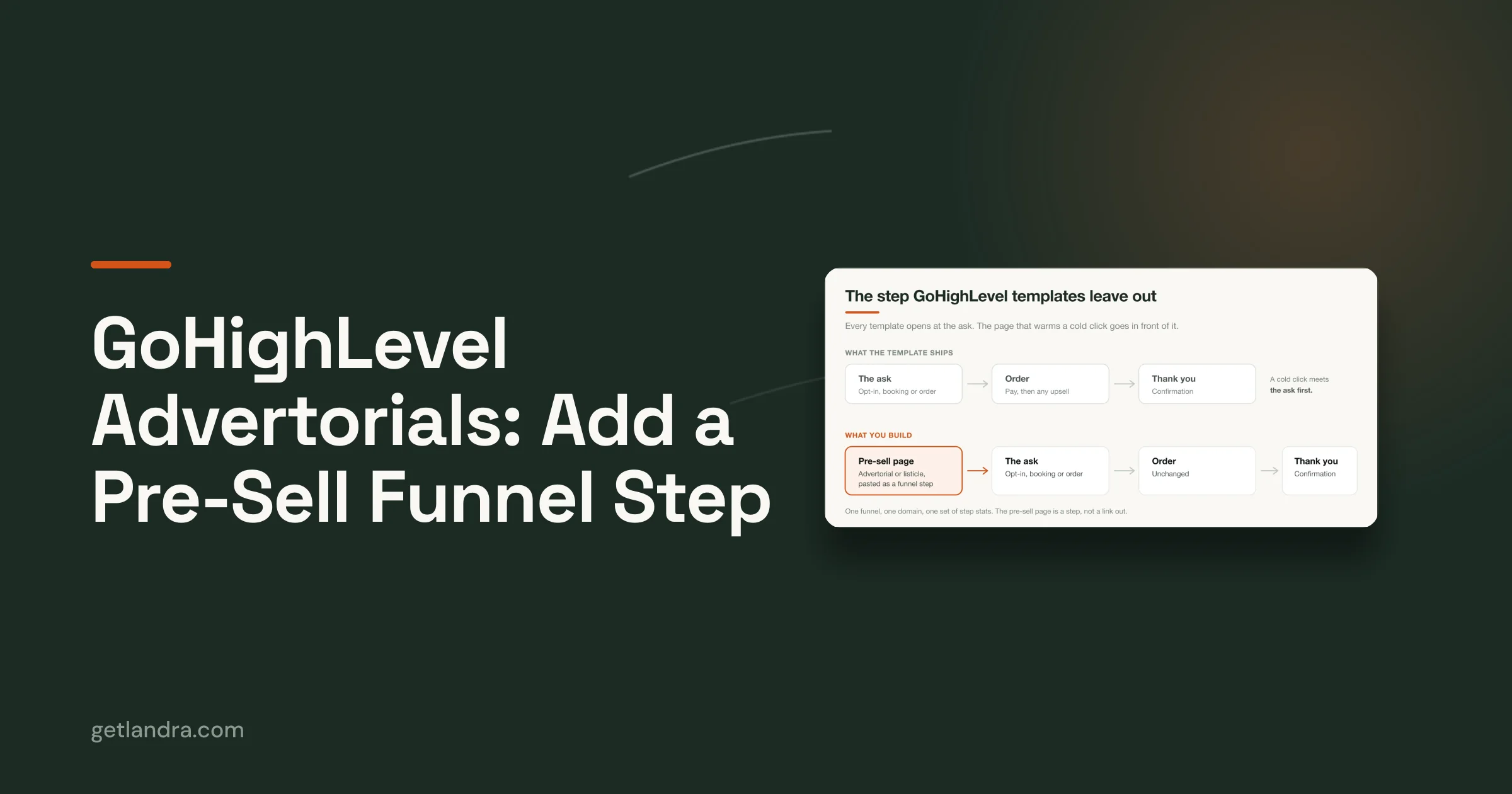
This is the part most generic guides miss. The digital descendant of the direct mail sales letter is often the pre-sell page.
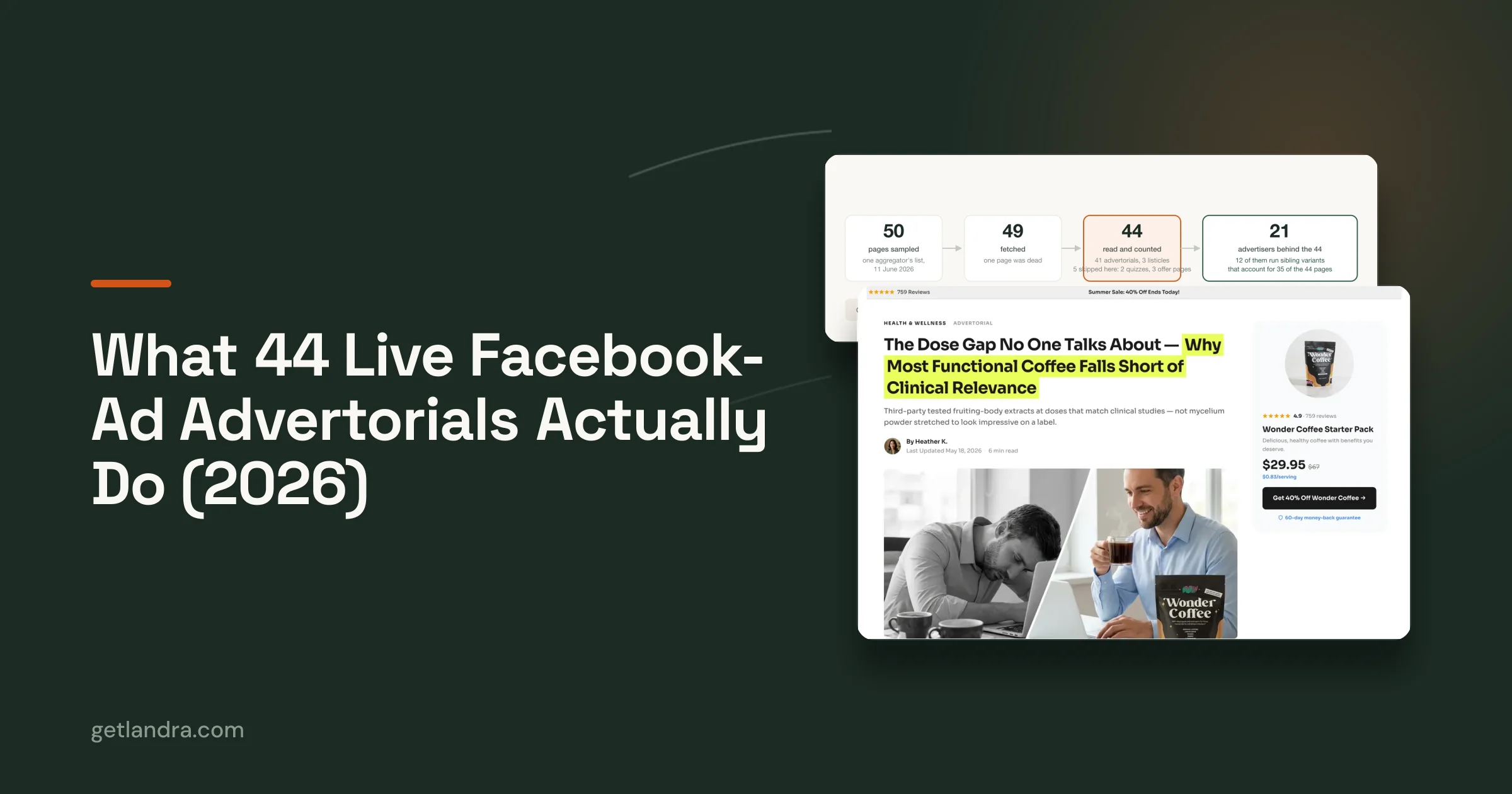
An advertorial, listicle, or editorial-style landing page gives cold traffic what a social click usually lacks:
- A narrative hook that matches the ad's promise
- A problem frame that makes the pain feel specific
- A mechanism or explanation that gives the product logic
- Social proof inside the story, not bolted on as decoration
- A cleaner transition to the offer page
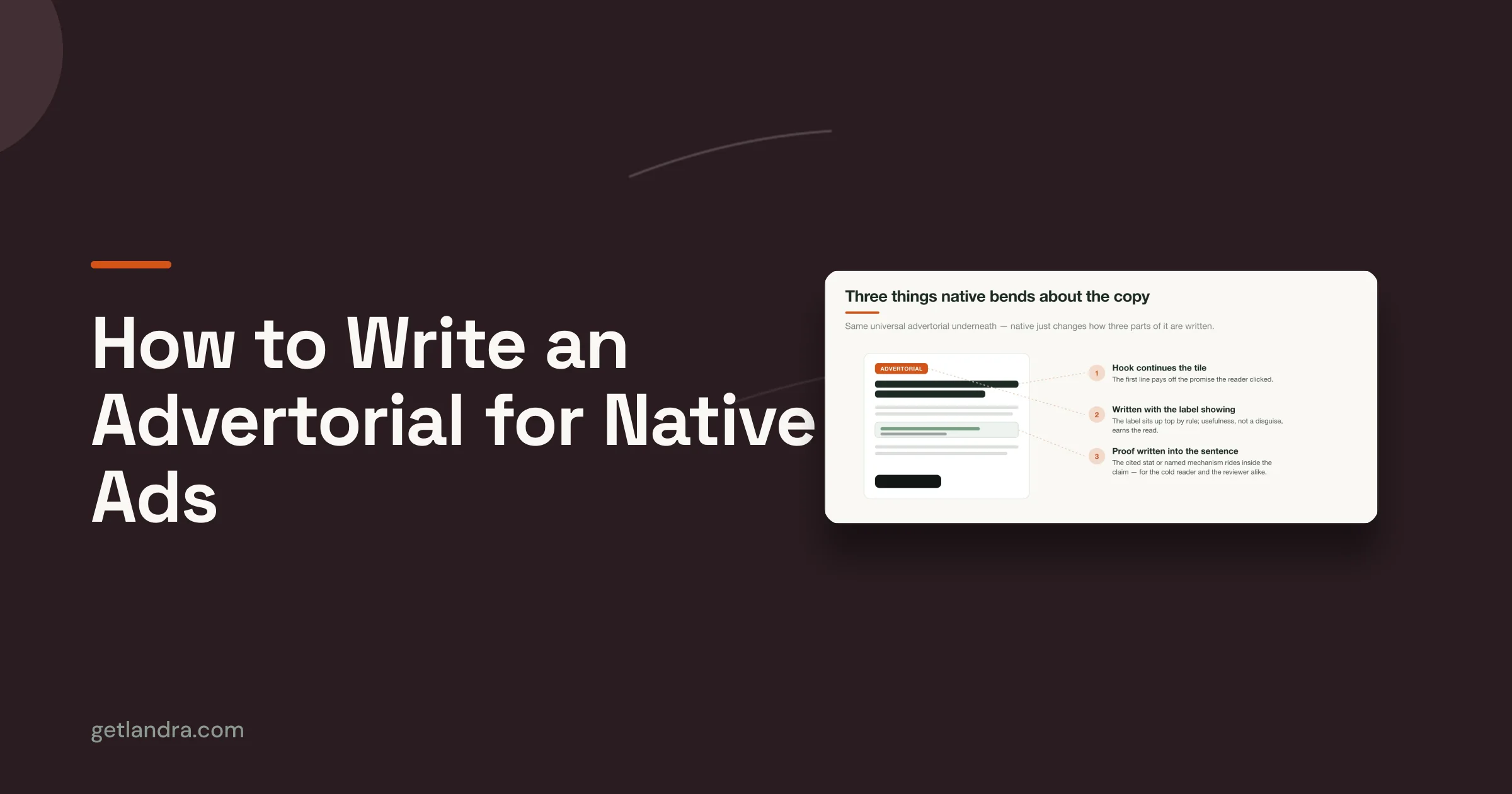
If you're building a native-style funnel, this native ad funnel for DTC brands is a useful example of how the pieces connect.
The best pre-sell pages don't replace direct response. They modernize it for skeptical traffic that needs belief before it needs a button.
This is why old-school principles are more relevant than ever. The fundamentals still apply. One reader. One problem. One argument. One next action. What changed is where those elements now live. On social traffic, they often need to be distributed across ad, pre-sell, and product page instead of crammed into the PDP alone.
When teams understand that, paid social starts making more sense. The ad isn't supposed to do all the selling. The product page isn't supposed to create desire from scratch. Each asset carries one part of the persuasion load.
How to Measure What Matters
Direct response becomes valuable the moment you stop treating copy as decoration and start treating it like a tested sales asset.
That means measuring the handoffs, not just the final sale. A strong hook with a weak landing page creates one kind of failure. A strong page with a weak CTA creates another. If you only look at the final number, you miss where the leak starts.
Track the handoff, not just the headline
For paid social funnels, the useful questions are practical:
- Did the ad earn the click?
- Did the landing page hold attention?
- Did the page build enough belief for the visitor to continue?
- Did the offer page close the sale?
That's why operators usually watch metrics such as click-through rate, landing page conversion rate, cost per acquisition, and return on ad spend. The exact benchmark changes by brand, offer, and traffic source, so the important part isn't memorizing industry averages. It's knowing which step failed.
A copy problem often gets misdiagnosed as a targeting problem. Sometimes the audience is fine. The page just asked for too much commitment before it built enough conviction.
Treat copy like a sales asset
The most useful direct response mindset is brutally simple: every draft is a hypothesis.
Change the headline. Test the lead. Rework the proof section. Tighten the CTA. Shift the promise so it matches the ad more closely. Then watch response, not opinion.
The market doesn't reward the copy your team likes most. It rewards the copy buyers act on.
That discipline is why direct response has lasted across print, email, advertorials, landing pages, and paid social. The channel changes. The scoreboard doesn't.
If you want better performance from cold traffic, don't ask whether the copy sounds on-brand first. Ask whether it makes the next step feel compelling, believable, and easy to take. That's the standard that matters.
If you want to build advertorials, listicles, and pre-sell pages without waiting on a full agency cycle, Landra helps DTC teams generate editable, mobile-first pages from a product URL in minutes. It's built for the exact gap most paid social funnels struggle with: warming cold Meta and TikTok traffic before the ask.