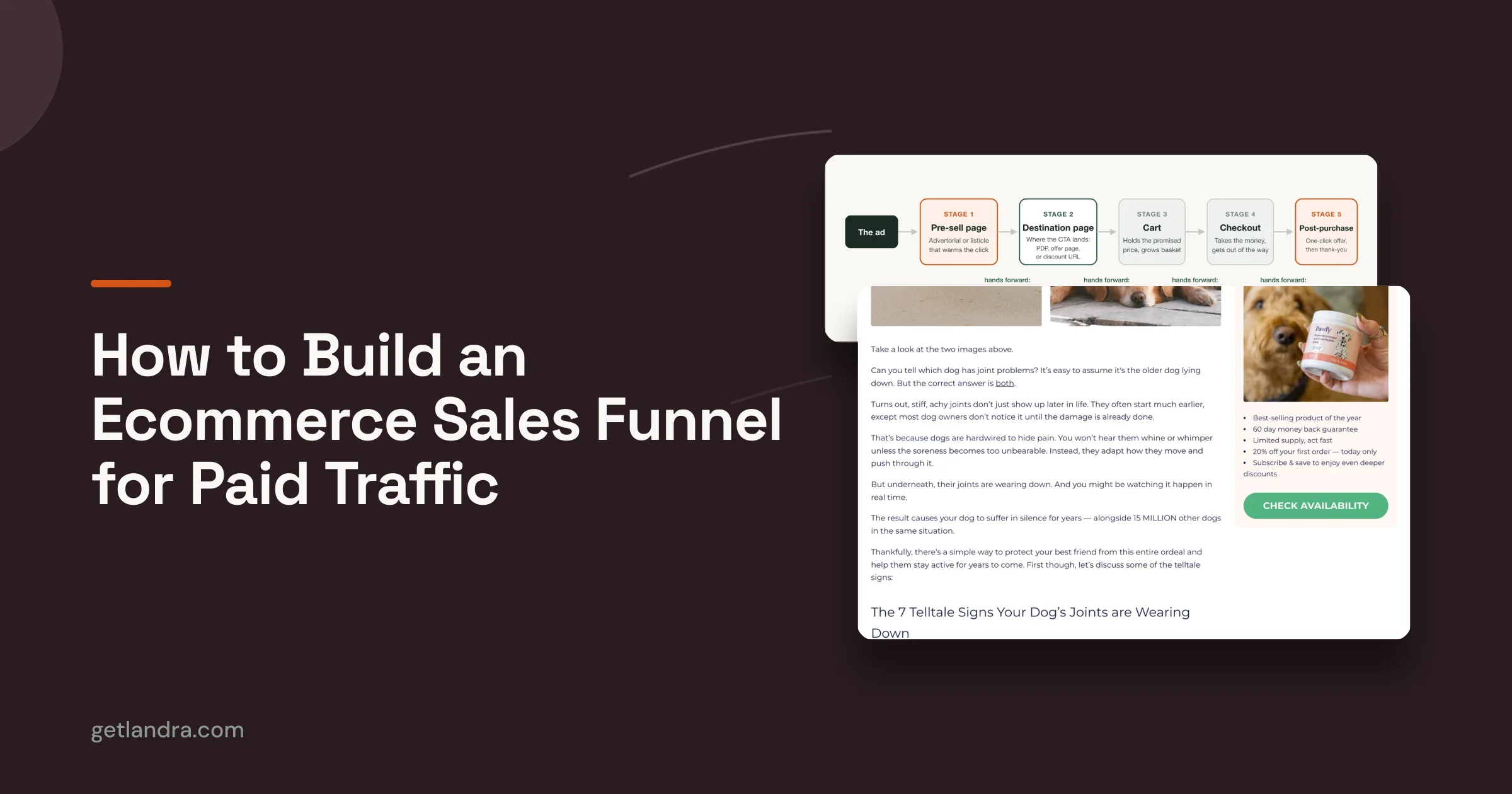


Scaling a DTC brand isn't a matter of turning up the ad budget and hoping the platform finds more buyers. That approach can increase revenue while worsening customer acquisition cost, slowing payback, and exposing weak product pages, thin retention, or unreliable attribution. Durable growth improves the chain between the promise in an ad, the page that receives the click, the checkout experience, the value a customer creates after purchase, and the data used to decide what happens next.
That chain matters because direct-to-consumer commerce is becoming a larger commercial model. The global DTC market is projected to grow from $225.5 billion in 2024 to $880.1 billion by 2034, a projected 14.3% compound annual growth rate, while U.S. DTC shoppers surpassed 110 million in 2023. These market figures help explain why strong brands increasingly invest in owned relationships, repeat purchases, and profitable offers rather than treating awareness as the finish line.
The 10 brand scaling strategies below form an operating system, not a channel checklist. Each connects to a Shopify-first execution loop, identifies the main constraint, and gives you practical implementation steps and KPIs. Landra can serve as an optional production layer when cold traffic needs an editorial pre-sell page before the product detail page, with editable pages that can publish to Shopify, a Landra URL, Webflow, or HTML. The same logic also supports SOV marketing for SaaS founders, where consistent positioning must carry across every customer touchpoint.
Table of Contents
- 1. Performance Marketing and Cold Traffic Optimization
- 2. Content-Led Growth and SEO Authority Building
- 3. Conversion Rate Optimization and Multivariate Testing
- 4. Product-Led Growth and Self-Serve Onboarding
- 5. Omnichannel Marketing and Unified Messaging
- 6. Direct-Response Copywriting and Persuasion Architecture
- 7. Paid Advertising Arbitrage and Creative Testing
- 8. Customer Retention and Repeat Purchase Optimization
- 9. Influencer and Affiliate Marketing Partnerships
- 10. Email List Building and Nurture Sequences
- 10-Strategy Brand Scaling Comparison
- Build the Growth Loop Before the Next Budget Increase
1. Performance Marketing and Cold Traffic Optimization
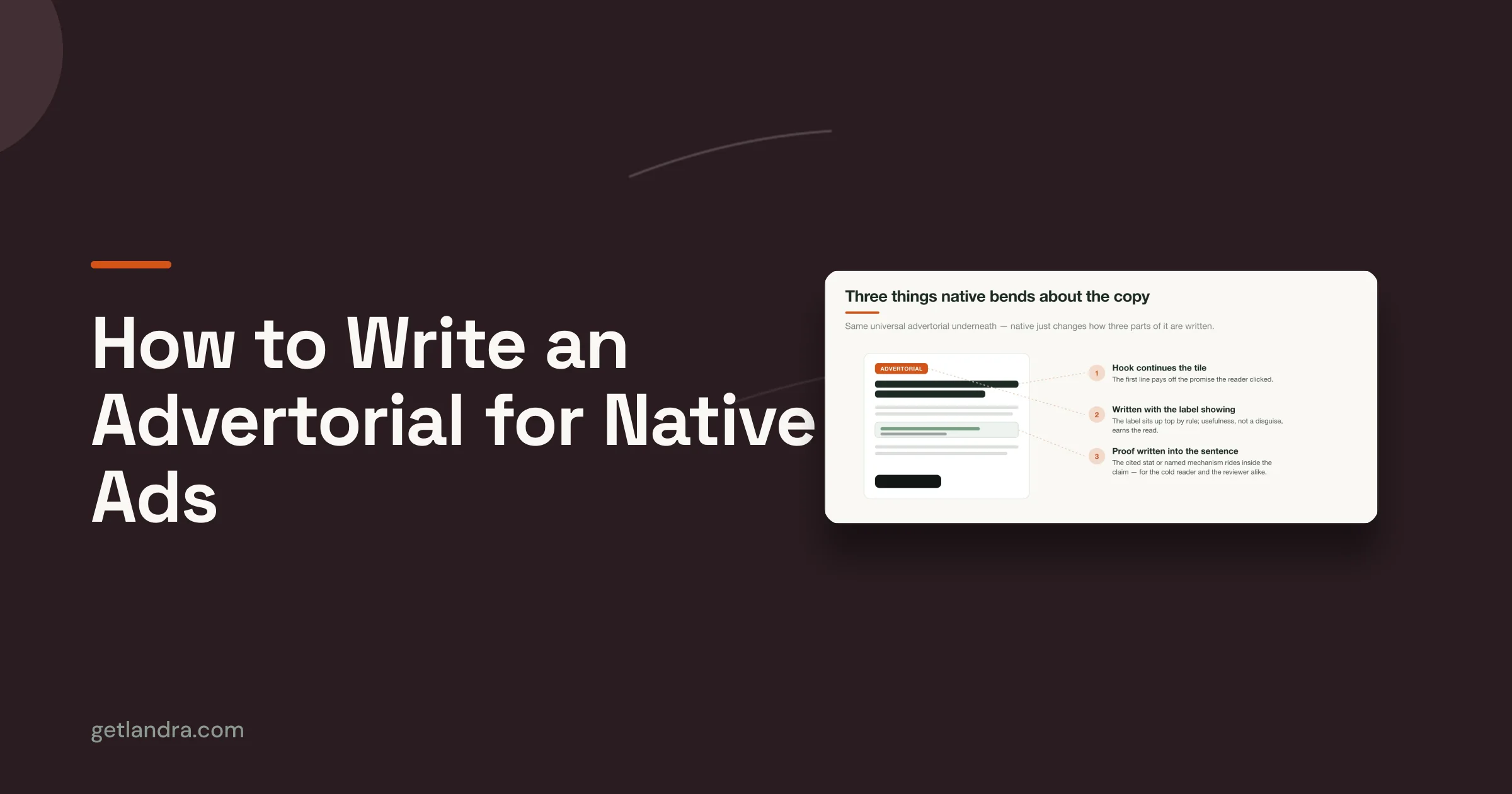
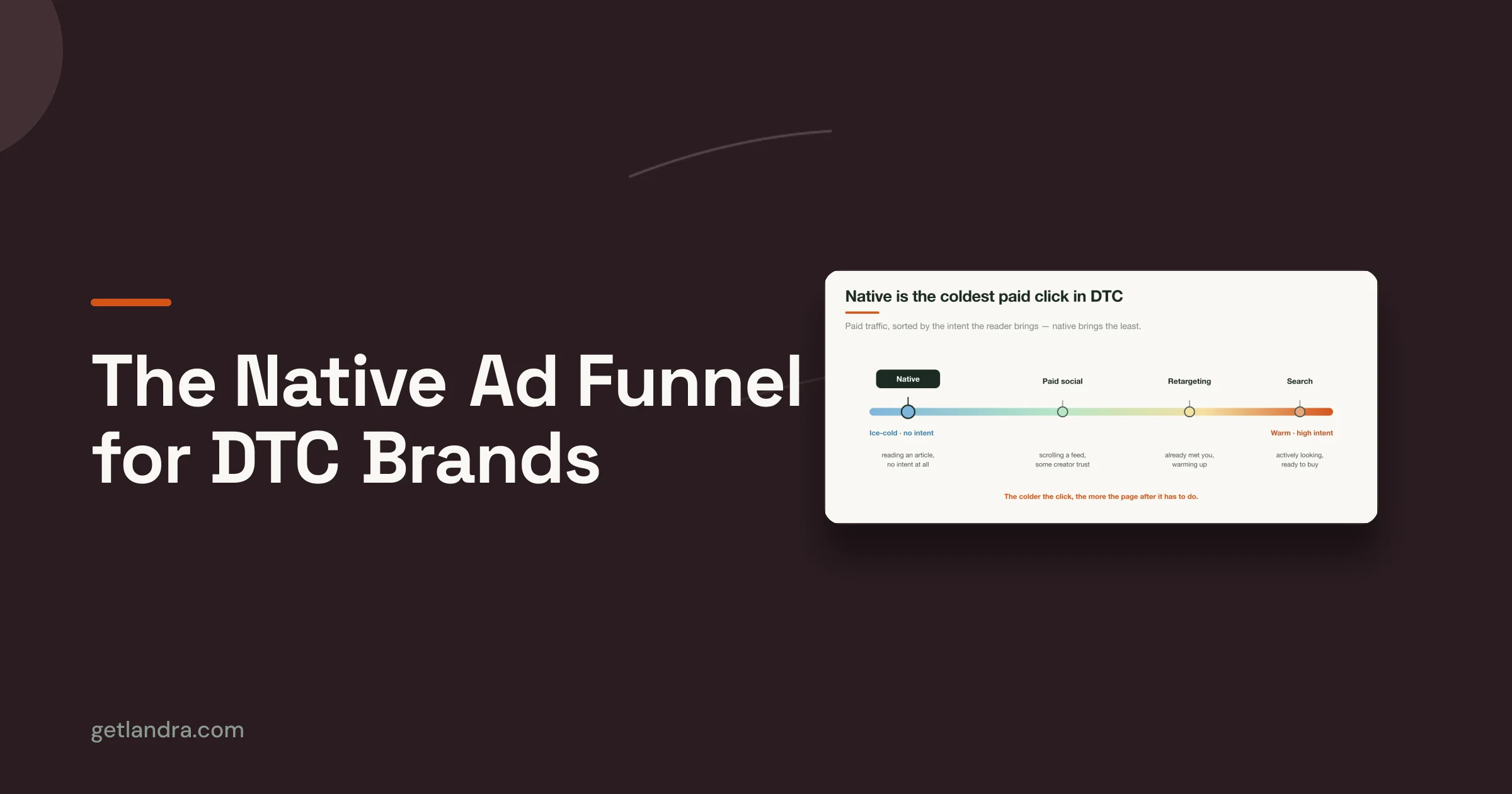
Cold traffic rarely arrives with enough context for a product detail page to do all the selling. A paid-social click from Meta or TikTok may show interest, but the visitor still needs a reason to believe, a clear explanation of the problem, and a credible bridge to the offer. Sending every visitor straight to a standard product page often forces one page to handle education, comparison, proof, and checkout intent at once.
A better route is to match the page format to the audience's awareness. A beauty brand might send ingredient-conscious TikTok traffic to an ingredient-focused advertorial. A supplement company could test a “best recovery supplements” listicle before checkout. A fashion brand might compare hero narratives, such as comfort, versatility, or trend relevance, instead of changing only the product image.
Practical rule: The colder the click, the more work your landing page must do before it asks for the sale.
Build the message chain
Start by mapping each audience segment to a specific angle. Use testimonials for skeptical buyers, ingredients or materials for informed buyers, and problem-led education for visitors who recognize the symptom but not the product category. Landra's advertorial configurations are designed for Meta and TikTok traffic, and its Headline Analyzer can help you compare several openings without rebuilding each page manually.
Create three to five headline variants per campaign, then attach UTM parameters that distinguish pre-sell traffic from direct product-page traffic. Watch landing-page engagement, add-to-cart rate, checkout initiation, purchase conversion, blended CAC, and payback. A page that earns more clicks but produces weak checkout quality hasn't solved the problem.
One benchmark reports that social landing pages average 1.2% conversion, compared with 3.1% for paid search and 5.2% for email. The landing-page benchmark makes the trade-off clear. Social traffic needs stronger message alignment, not just more retargeting.
Rotate creative and copy on a regular schedule, but keep the promise consistent between ad and page. For useful context on conversion rates for listicle pages, assess the page type as part of the funnel rather than judging the ad in isolation.

2. Content-Led Growth and SEO Authority Building
Paid acquisition gives you speed, but content gives your brand a discoverable explanation before a buyer is ready to purchase. The strongest editorial content doesn't read like a product catalog. It answers a question, compares alternatives, explains an ingredient, or helps a reader make a decision while creating a natural path to the product.
A supplement brand could publish a guide to choosing collagen products, while a beauty company might build a library around skin concerns, formulations, and routines. A software brand can use practical how-to content to capture people searching for solutions before they know which vendor to choose. These pages also create reusable material for email, partnerships, sales enablement, and retargeting.
Choose topics that can earn intent
Build topic clusters around category language, customer problems, ingredients, use cases, and comparisons. Don't publish broad articles merely because they have large search demand. A narrower query with obvious commercial intent can be more useful than an awareness topic that attracts readers who will never buy.
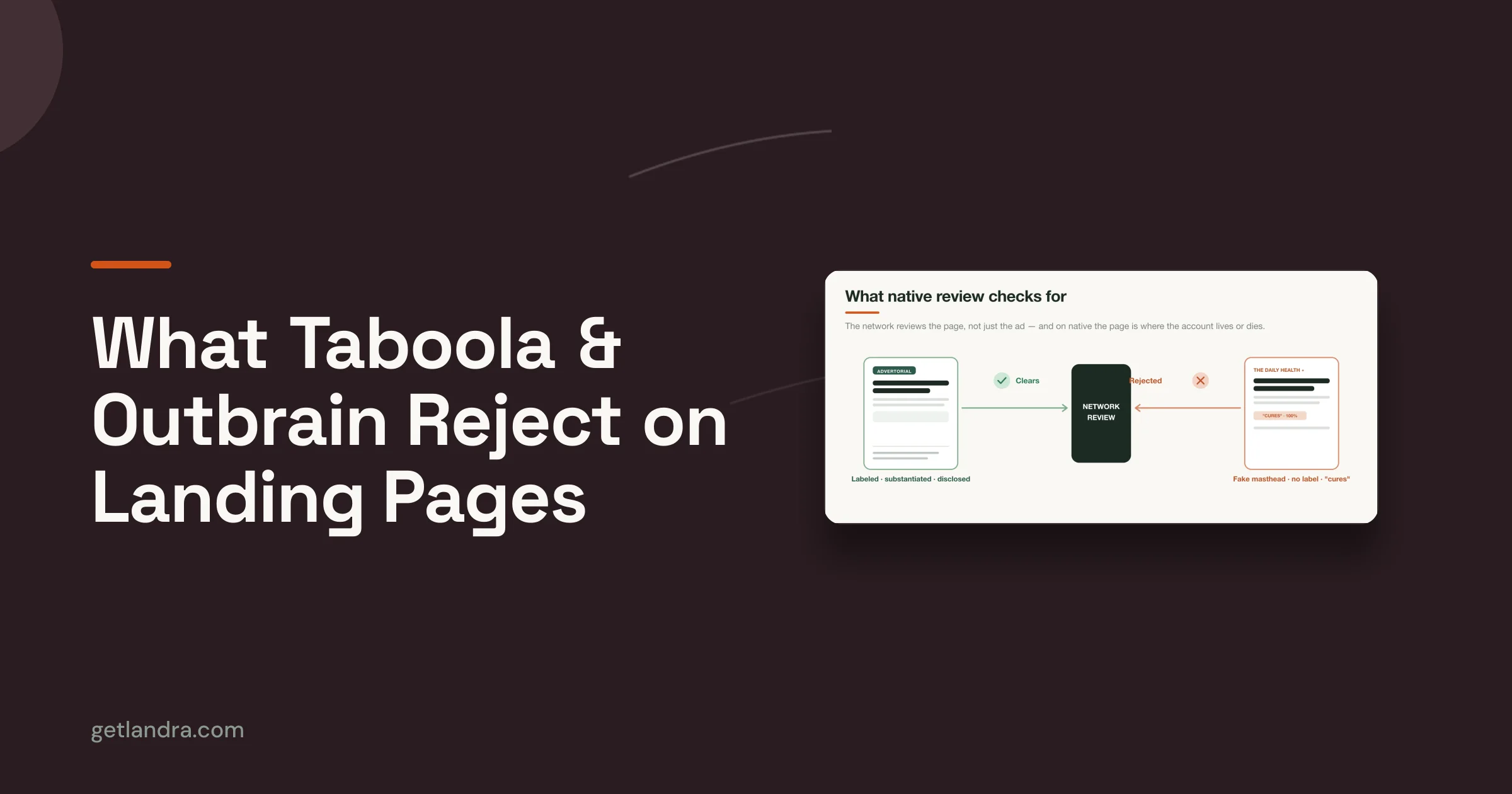
Use an editorial brief for every page. Define the reader, the decision being made, the evidence required, the product angle, and the internal links that move the visitor toward Shopify checkout. An AI-powered listicle landing page can accelerate structured drafts, but an editor still needs to verify claims, remove unsupported language, and make the comparison useful.
Publish consistently enough to learn which topics attract qualified visitors. Refresh pages when products, offers, or customer objections change, and use content marketing strategy and tools to keep production connected to distribution rather than treating publication as the final step.
Track non-branded impressions, qualified organic sessions, assisted conversions, email signups, product-page clicks, and revenue by landing page. SEO works poorly when the only KPI is traffic. It works better when the content team can identify which questions bring visitors who progress through the Shopify funnel.

3. Conversion Rate Optimization and Multivariate Testing
CRO is where acquisition work becomes more efficient, but testing without discipline creates noise. Teams often change the headline, hero image, offer, testimonial placement, and button copy at the same time, then call the result a learning. They may see a lift or decline, but they can't explain why it happened or reproduce it elsewhere.
Begin with the pages that already receive meaningful traffic. On Shopify, review the product page, cart, checkout handoff, post-purchase offer, and highest-spend landing pages. Identify the largest friction point, then write a test hypothesis that connects a change to a user problem. “Adding more copy” is not a hypothesis. “Clarifying how the product fits into a first-use routine may reduce hesitation among cold visitors” is one.
Test the decision, not the decoration
Useful tests include a problem-agitate-solve hero against a bestseller-and-proof hero, a product demonstration against static photography, or a bundle explanation against a single-item offer. Test one major variable per variant when you need a clean read. When several changes must ship together, label the test as a package test and avoid pretending you isolated the cause.
Landra's duplication feature can create several page variants quickly, while inline editing lets a team adjust copy, structure, and images without starting from a blank page. That makes it easier to optimize product landing pages while preserving a library of prior hypotheses.

Don't judge a variant on purchase conversion alone. Monitor click-through rate, add-to-cart rate, checkout initiation, purchase rate, average order value, refund behavior, and contribution margin. A cheaper conversion can still damage economics if it attracts low-value orders or relies on an offer your margin can't support. This conversion guide offers another useful lens for structuring the testing process.
4. Product-Led Growth and Self-Serve Onboarding
Product-led growth works when the product can demonstrate value before a customer commits. For a physical DTC brand, that doesn't always mean a freemium model. It can mean an interactive quiz, a sample pathway, a guided routine, a useful calculator, or a clear trial experience that reduces uncertainty before checkout.
Landra demonstrates this principle through free tools such as its Headline Analyzer and Conversion Rate Calculator. Notion, Figma, and Canva also built adoption around users experiencing enough product value to understand the paid case. The transferable lesson is simple: give prospects a meaningful first step, then make the next step obvious.
Connect the trial to the purchase decision
A presell page should explain the use case, the expected experience, the proof available, and what happens after signup or trial activation. Don't hide the activation work. If a user must configure a product, upload data, or complete a setup sequence, show that process before asking for commitment.
For Shopify brands, connect the education page to a product quiz, sample offer, subscription choice, or guided bundle. Use video walkthroughs and customer evidence only where they answer a real objection. A long demo that delays the primary action can reduce clarity.
Track trial or sample activation, time to first value, product-page progression, subscription selection, repeat purchase, and early cancellation. Test the offer structure and onboarding sequence, but don't treat a longer trial as automatically better. It may increase signups while attracting people who never reach value.
Use saved brand context to keep onboarding language consistent across presell pages, email, and Shopify content. The page should set an accurate expectation. Overpromising may improve initial conversion, but it creates support burden, refunds, and poor retention.
5. Omnichannel Marketing and Unified Messaging
Omnichannel marketing doesn't mean repeating the same sentence everywhere. It means carrying the same strategic promise through different contexts. A TikTok ad can create curiosity, an email can answer objections, a product page can explain specifications, and checkout can reinforce confidence. The wording changes, but the reason to buy remains recognizable.
A clean-ingredient beauty brand might lead with formulation in paid social, education in email, and proof on the product page. A sustainability-focused retailer can reinforce materials, sourcing, packaging, and care instructions across ads, content, and post-purchase communication. In each case, the customer shouldn't feel as if different teams are selling unrelated products.
Create a message operating system
Document your positioning in a short playbook. Include the primary customer problem, desired outcome, product mechanism, proof, objections, prohibited claims, offer logic, and approved vocabulary. Then map those elements to awareness, consideration, decision, and retention stages.
Use Shopify as the source of truth for product facts, offers, inventory language, and customer-facing policies. Sync landing-page changes with active email and ad creative. Landra's saved brand context can help generated pages stay aligned with the voice and evidence already present on the site, while HTML export can fit teams that manage pages outside the core storefront.

Segment messages for new visitors, cart abandoners, first-time buyers, repeat customers, and lapsed customers. Don't use a discount-first message for someone who already bought at full price, and don't send a loyalty message to someone who hasn't understood the product yet.
Measure assisted revenue, direct conversion, email engagement, repeat purchase, unsubscribe rate, and customer-support themes. The constraint is governance. Without a clear owner for claims and updates, omnichannel consistency becomes accidental.
6. Direct-Response Copywriting and Persuasion Architecture
Good direct-response copy doesn't rely on pressure. It organizes information in the order a buyer needs it. The page names the problem, explains why common solutions fall short, introduces the product mechanism, supplies credible proof, handles objections, and presents a clear next action.
That structure matters on advertorials and product pages because cold visitors need a narrative, while returning customers may need only reassurance and offer clarity. A supplement page might lead with a routine problem, explain the role of an ingredient, show how the product fits into daily use, then clarify sourcing and usage. A fashion page might prioritize fit, fabric, styling, delivery, and returns instead.
Write proof into the argument
Start with a direct-response draft, then edit it against the evidence your brand can support. Landra's AI Advertorial Generator can use a product URL to create a structured starting point, while its Headline Analyzer helps compare benefit-led and curiosity-led openings. Treat both as production tools, not substitutes for claim review.
Use testimonials that explain a specific experience rather than vague praise. Show reviews near the objection they address. If scarcity or inventory alerts are real, make the wording precise. Artificial urgency may produce short-term clicks, but it can damage trust and create customer-service problems.
Try softer and harder-sell variants, but keep the promise honest. Track scroll depth, proof-section engagement, CTA clicks, add-to-cart rate, purchase conversion, returns, and complaint language. The best copy doesn't merely make the page sound more exciting. It reduces the amount of uncertainty a buyer must resolve alone.
7. Paid Advertising Arbitrage and Creative Testing
Paid advertising arbitrage depends on finding a message, format, or audience combination that the platform hasn't priced as aggressively as the obvious alternatives. That advantage rarely lasts. Once more advertisers copy the creative or the audience becomes saturated, costs and attention change.
Creative testing therefore needs a production system, not occasional inspiration. Test a product demonstration against a founder explanation, a customer problem against a product benefit, and a native-style short video against a polished brand asset. On TikTok, the opening seconds and platform-native behavior matter. On Meta, the same concept may need different framing, pacing, or proof.
Separate variables across the funnel
Run creative tests with dedicated UTM structures and separate cold audiences from warm visitors. A strong ad can still fail if the landing page contradicts its promise, loads slowly, or presents a different offer. Test the ad and page as a connected pair, then isolate the strongest variable when the data gives you a reason.
Landra's Meta and TikTok advertorial configurations support mobile-first pre-sell pages, and duplication makes it practical to compare page angles alongside creative variations. Refresh hero images and opening copy when fatigue appears, but don't replace a working message without documenting why.
One benchmark analysis reports that pages loading in under 2 seconds convert 2.1 times higher than pages loading in 4 or more seconds, and that each additional second of load time reduces conversion rate by 7%. The DTC ad-account analysis supports treating speed as a media-efficiency issue, not merely a design preference.
Track thumb-stop or video engagement metrics, click-through rate, landing-page view rate, purchase conversion, CAC, contribution margin, and creative fatigue. The constraint is learning speed. If your team can't produce, tag, launch, and review variants consistently, more spend will only magnify uncertainty.
8. Customer Retention and Repeat Purchase Optimization
Acquisition gets attention because it is visible in the ad account. Retention determines whether the first order becomes a relationship. A Shopify brand should design the post-purchase experience before scaling acquisition, especially when products have a natural replenishment cycle, complementary categories, or a meaningful learning curve.
Start with the first order confirmation. Explain what happens next, how to use the product, where to get help, and when a customer should expect value. Then build education around the purchase category. A skincare customer may need a routine guide, while a supplement customer may need usage education and replenishment reminders.
Make the second order relevant
Segment customers by first purchase, product usage, order value, subscription status, and recency. Present a cross-sell only when it solves a logical next problem. A post-purchase presell page can explain a bundle or accessory, but it shouldn't interrupt the customer before the initial product has had a fair chance to work.
Use Landra's Presell Page Generator for educational upsell pages, then connect those pages to Shopify products and lifecycle campaigns. Test bundles, replenishment reminders, loyalty benefits, and member previews. Avoid blanket discounts that train customers to delay purchases.
Monitor repeat purchase rate, time to second order, subscription retention, churn, average order value, refund rate, support contacts, and revenue from existing customers. The benchmark to use is your own cohort behavior, not a generic promise about retention returns. Customer experience varies by category, price, product duration, and expectation.
A rising acquisition cost makes this work more important. One DTC benchmark reports that CAC increased 60% over five years, with median blended DTC CAC placed between $70 and $115 in some 2026 benchmarks. The CAC benchmark source also reports a median paid payback period of 9.4 months, compared with 5.8 months in 2020, so retention and payback should sit in the same operating review.
9. Influencer and Affiliate Marketing Partnerships
Influencer and affiliate partnerships can extend reach without requiring your internal team to create every asset. They also introduce a trade-off that paid media often hides: the creator's credibility belongs to the relationship, not to your brand. A partnership that sounds scripted may lose the trust that made the audience valuable.
Choose creators by audience relevance, content quality, comment quality, and ability to explain the product. A skincare creator can demonstrate routine placement. A fitness creator can explain when a supplement fits into training. A fashion creator can show styling context that a studio product image can't provide.
Give partners freedom inside a clear system
Provide approved product facts, prohibited claims, offer details, tracking links, and a page template. Don't write every sentence for the creator. Give them enough structure to remain accurate while allowing their natural voice to carry the recommendation.
Create dedicated landing pages for creator cohorts or audience angles. Landra can generate presell variants for different creator audiences, and Shopify links can preserve a consistent checkout path while UTM parameters or affiliate software attribute the referral. Compare creator performance by audience quality, not reach alone.
Track qualified clicks, new-customer conversion, average order value, repeat purchase, refunds, commission cost, and contribution margin after fees. A creator who drives fewer orders but stronger repeat behavior may be more valuable than one who produces a short spike. Refresh pages and creative with each cohort, but retain the winning proof and objection handling.
The main constraint is compliance and trust. Review claims before publication, disclose relationships where required, and don't ask creators to make promises your product evidence can't support.
10. Email List Building and Nurture Sequences
An owned audience gives you a way to continue the conversation after a paid click expires. Email and SMS won't repair a weak offer, but they can educate prospects, recover abandoned sessions, support onboarding, and create a repeat-purchase path without buying the same attention again.
Lead magnets should connect to the product decision. A skincare brand can offer a guide to common routine mistakes. A supplement company can publish ingredient education. A fashion retailer might offer a fit or wardrobe guide. The lead magnet should help the reader make progress, not merely hide a discount behind a form.
Design the sequence around uncertainty
A practical nurture sequence moves from problem recognition to education, proof, objection handling, and a relevant offer. Segment subscribers by acquisition source, product interest, purchase status, and engagement. Someone who joined through an ingredient guide should not receive the same first message as someone who abandoned a product page.
Use Landra's Listicle Generator for lead-magnet page drafts and its Advertorial Generator for educational presell content. Test subject lines and preview text with the Headline Analyzer, then connect each email to a matching landing page rather than sending every recipient to the homepage.
Track list growth quality, click rate, assisted revenue, unsubscribe rate, abandoned-cart recovery, first purchase, repeat purchase, and revenue per recipient. Don't optimize for list size if low-intent signups create deliverability or support problems.
Keep the Shopify catalog, inventory, discount rules, and customer segments synchronized with email automation. Refresh seasonal campaigns when the offer or customer objection changes, but preserve a record of what each segment received. The constraint is attention. Relevance beats volume, and a smaller engaged audience can be more useful than a large list with weak intent.
10-Strategy Brand Scaling Comparison
| Strategy | 🔄 Implementation Complexity | ⚡ Resource Requirements | ⭐📊 Expected Outcomes | 💡 Ideal Use Cases |
|---|---|---|---|---|
| Performance Marketing & Cold Traffic Optimization | Medium–High, multi-channel setup, landing-page ops | High ad spend; landing-page & creative production; tracking/integration | ⭐⭐⭐ Short-term conversion lift (2–3×); lower CAC (↑ROAS) | DTC brands scaling paid social to cold audiences; new product launches |
| Content-Led Growth & SEO Authority Building | Medium, ongoing content ops + technical SEO | Moderate ongoing content creation, SEO tools, editorial workflow | ⭐⭐ Sustainable organic traffic; higher LTV; long payoff (3–6 months) | Brands building long-term search authority and thought leadership |
| Conversion Rate Optimization (CRO) & Multivariate Testing | High, statistical rigor; test governance | Testing platform, analytics, sufficient traffic volume | ⭐⭐→⭐⭐⭐ Incremental, compounding conversion lifts; requires time/traffic | High-traffic pages or funnels needing measurable lift |
| Product-Led Growth (PLG) & Self-Serve Onboarding | High, product changes, onboarding design | Product development, support, trial infra, in-app guidance | ⭐⭐ Self-qualifying users; lower CAC over time; slower revenue recognition | SaaS/freemium products or tools where hands-on trials sell |
| Omnichannel Marketing & Unified Messaging | High, cross-team coordination + integrations | CDP/stack, creative assets, campaign orchestration | ⭐⭐ Improved brand recall & consistent conversion across channels | Brands with multiple touchpoints seeking unified experience |
| Direct-Response Copywriting & Persuasion Architecture | Medium, expert copywriting + compliance checks | Skilled copywriters, creative assets, testing capacity | ⭐⭐⭐ Rapid conversion uplift (often 2–3×) when well executed | Advertorials, presell pages, high-impact paid funnels |
| Paid Advertising Arbitrage & Creative Testing | Medium, fast creative/audience iteration | Significant ad budget, creative production, analytics | ⭐⭐ Rapid scale when winning creatives found; performance can degrade | Fast-scaling DTC brands focused on short-term ROAS gains |
| Customer Retention & Repeat Purchase Optimization | Medium, segmentation & program ops | CDP, email/SMS platforms, loyalty program resources | ⭐⭐→⭐⭐⭐ Higher LTV; predictable revenue; strong ROI vs new acquisition | Subscription and repeat-purchase businesses prioritizing LTV |
| Influencer & Affiliate Marketing Partnerships | Medium, partner mgmt + tracking | Creator fees/commissions, briefing assets, tracking links | ⭐ Variable reach-driven results; authentic trust but inconsistent ROI | Lifestyle, beauty, fashion brands seeking audience expansion |
| Email List Building & Nurture Sequences | Low–Medium, funnel setup and automation | Lead magnets, email platform, content creation | ⭐⭐⭐ High ROI (~$40:$1 reported); owned audience; repeatable revenue | Brands aiming to own audience, nurture leads, and recover carts |
Build the Growth Loop Before the Next Budget Increase
The 10 tactics work best in a deliberate order. Start with the point where the customer promise becomes an experience. If the ad says one thing, the landing page says another, and the product page leaves basic objections unanswered, expanding reach only sends more expensive confusion into the funnel.
First, audit message-to-page alignment and measurement. Review your highest-spend campaigns, Shopify landing pages, product pages, cart flow, checkout handoff, and post-purchase path. Confirm that UTMs, platform tracking, Shopify orders, email revenue, refunds, and contribution-margin calculations use compatible definitions. Last-click reporting can undercount upstream influence, which is why recent DTC coverage recommends multi-touch attribution, server-side tracking, and unified channel data while warning that brands may scale media faster than measurement quality. This DTC scaling analysis is useful when deciding whether your next investment belongs in audience expansion or analytics infrastructure.
Then fix the highest-impact page constraint. Mobile deserves priority because only 48% of mobile sites passed all three Core Web Vitals in 2025, compared with 56% of desktop sites. The web performance study lists Google's recommended “good” thresholds as 2.5 seconds for Largest Contentful Paint, 200 milliseconds for Interaction to Next Paint, and 0.1 for Cumulative Layout Shift. Treat those thresholds as operating targets for paid-social landing pages, not as a one-time technical project.
A practical 30-day rollout
Days 1 to 7, audit the Shopify funnel. Select one acquisition path with meaningful spend. Record the ad promise, landing-page promise, product-page proof, offer, checkout friction, post-purchase message, and measurement gaps. Establish baseline values for CTR, landing-page engagement, add-to-cart rate, purchase conversion, CAC, AOV, contribution margin, repeat purchase, and payback.
Days 8 to 14, choose one audience angle. Don't test every persona at once. Pick the audience with the clearest problem and create a page that matches its awareness level. If cold visitors need education, use an advertorial or listicle. If intent is already high, send them to a focused product page with the proof and offer exposed early.
Days 15 to 22, launch a small variant set. Create a few controlled page and creative variants. Change the opening angle, proof sequence, or product framing, but document the hypothesis before launch. Keep mobile speed, UTM structure, offer rules, and Shopify checkout behavior consistent so the comparison remains useful.
Days 23 to 30, review economics and preserve learning. Don't crown a winner from surface-level conversion alone. Compare CAC, AOV, margin, refund behavior, payback, and early repeat signals. Save the winning headline, objection, creative concept, audience definition, and page structure in a variant library. Record what failed too, because negative tests prevent the team from repeating expensive guesses.
Once the acquisition loop is clearer, strengthen owned retention. Build email and SMS education around the first purchase, create relevant replenishment or cross-sell paths, and make customer-support objections visible to the copy and product teams. After that foundation is stable, expand content, partnerships, and new audiences in controlled steps.
The broader economic case is straightforward. DTC e-commerce sales in the United States were estimated at $239.75 billion in 2025, representing 19.2% of total retail e-commerce, according to the market data cited earlier. That scale creates opportunity, but it also increases the cost of weak execution. Brands that own the customer relationship still need to earn attention, trust, conversion, and repeat behavior.
Scaling isn't one breakthrough channel. It's the repeatable loop of clearer promises, faster experiments, better customer value, stronger owned audiences, and disciplined measurement. Increase the budget only after the system can explain what the budget is buying and where the next constraint sits.
Landra generates editable advertorial, listicle, and presell landing pages from your brand or product URL, with mobile-first layouts and publishing options for Shopify, Webflow, Landra-hosted URLs, or HTML. Use it to create message-matched cold-traffic pages, duplicate variants, and move from a tested hypothesis to a live experiment faster by visiting Landra.