

Most Shopify CRO advice starts in the wrong place. It tells you to change the button color, add more reviews, shorten the checkout, or rewrite the product description, then wait for the conversion rate to rise. Those changes can help, but they won't rescue a funnel that sends skeptical, cold Meta or TikTok visitors straight to a product page before the visitor understands the problem, trusts the offer, or sees why the product fits.
Conversion rate optimization for Shopify is a traffic-aware funnel discipline. The right question isn't only, “How do we improve this page?” It's, “What does this visitor already know, what promise did the ad make, and which page should carry the next argument?” A product detail page is usually a closing argument. Cold traffic often needs a credible opening argument first.
Table of Contents
- Why Most Shopify CRO Playbooks Fail Cold Traffic
- Diagnosing Where Your Shopify Store Actually Leaks Revenue
- Prioritizing CRO Tests That Actually Move Revenue
- Shopify-Specific Fixes for Product Pages and Checkout
- When a Pre-Sell Page Beats the Product Detail Page
- Building a Measurement and Experimentation Workflow
- A 90-Day Shopify CRO Roadmap for DTC Teams
Why Most Shopify CRO Playbooks Fail Cold Traffic
A product page can explain ingredients, features, variants, shipping, returns, and reviews. It can still perform poorly when the visitor arrives with low awareness and no reason to believe the brand. Adding another testimonial to that page may improve trust for an interested shopper, but it doesn't necessarily solve the larger mismatch between the ad and the landing experience.
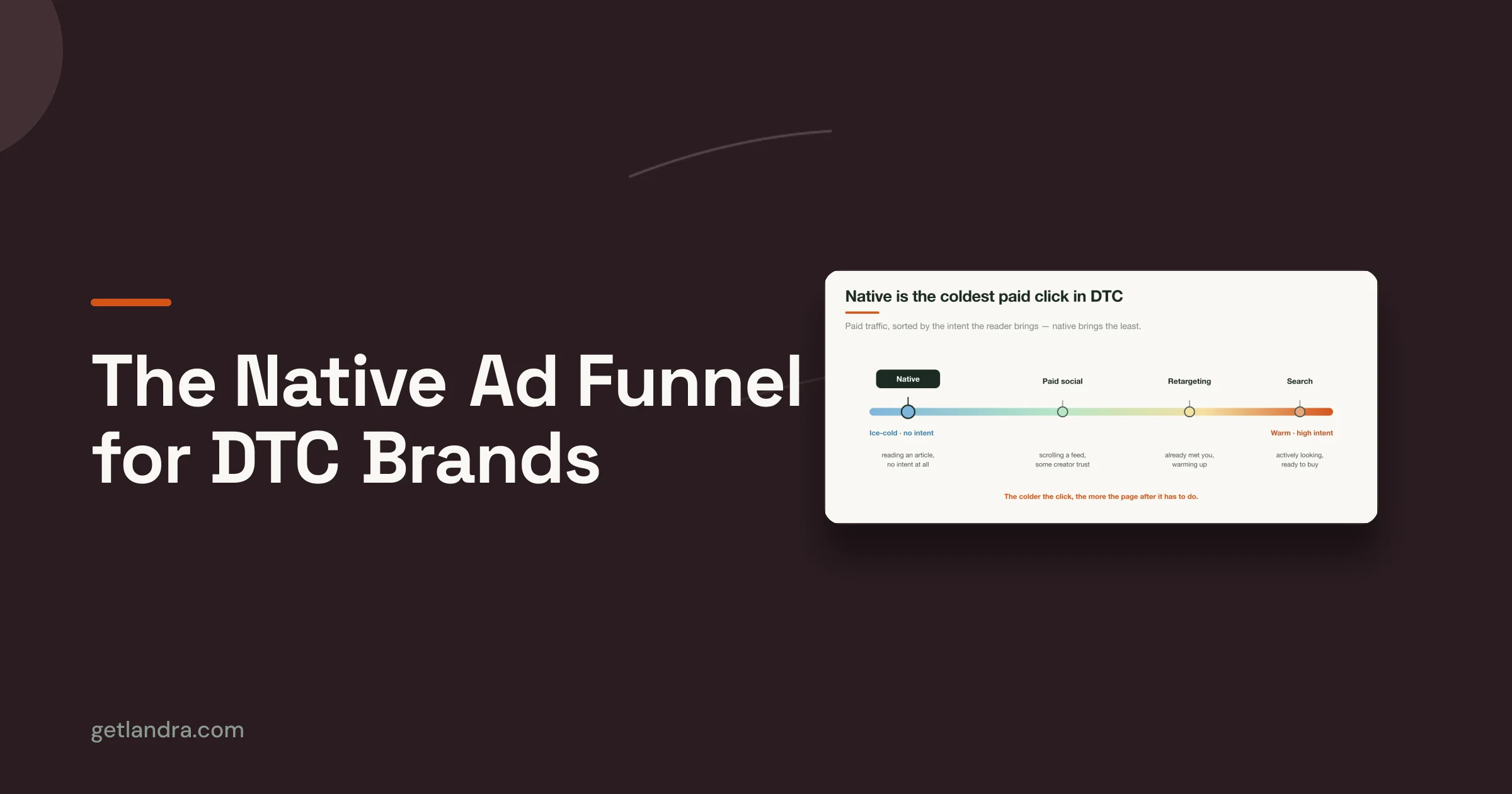
Paid social creates a particularly difficult version of this problem. A person scrolling TikTok or Meta may recognize a symptom, curiosity, or lifestyle aspiration, but they haven't necessarily decided to shop. The ad earns the click by interrupting attention. The landing page must earn the next commitment by clarifying relevance.
That's why generic advice such as “add more social proof” often underperforms. Proof matters, but proof only works when it answers the visitor's current objection. A cold visitor might still be asking what the product does, whether the problem is real, or why this brand deserves consideration. A returning visitor may only need reassurance about delivery or payment.
Practical rule: Match the page to the visitor's awareness stage before optimizing the page's individual components.
This is consistent with broader real conversion rate optimization advice, which treats CRO as a process of improving the journey rather than decorating a single screen. It also explains why websites hurt ad conversions when they give campaign traffic too many competing paths and too little message continuity.
The PDP isn't always the first conversion surface
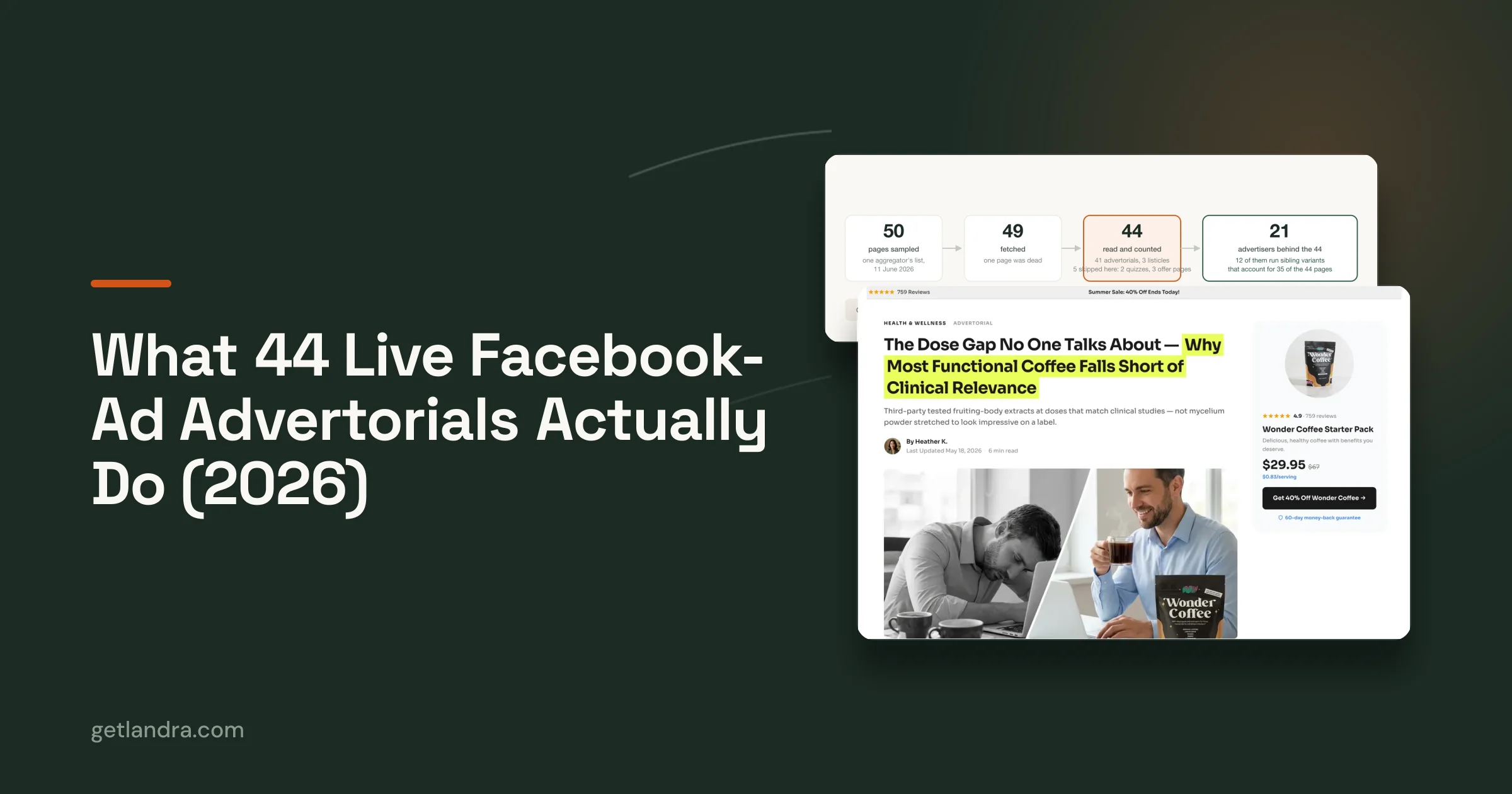
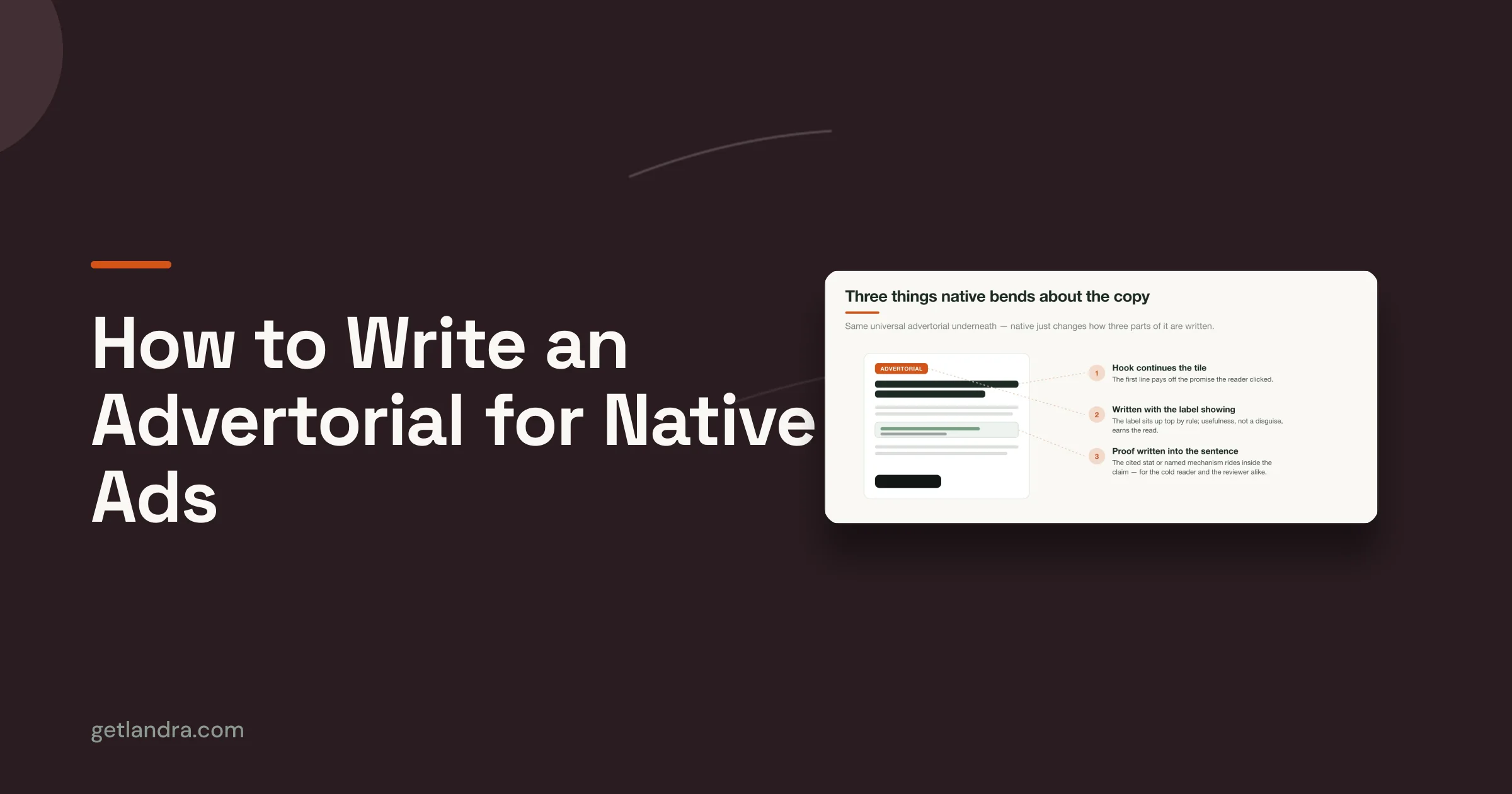
A product detail page makes sense for branded search, email, retargeting, and visitors who already understand the category. Cold traffic can need a pre-sell page, such as an advertorial, a ranked listicle, or a problem-led comparison, before it sees the product.
The format should follow the job:
- Advertorials build belief through a narrative, education, and a reason to investigate.
- Listicles organize alternatives around a problem and make the product feel like a considered choice.
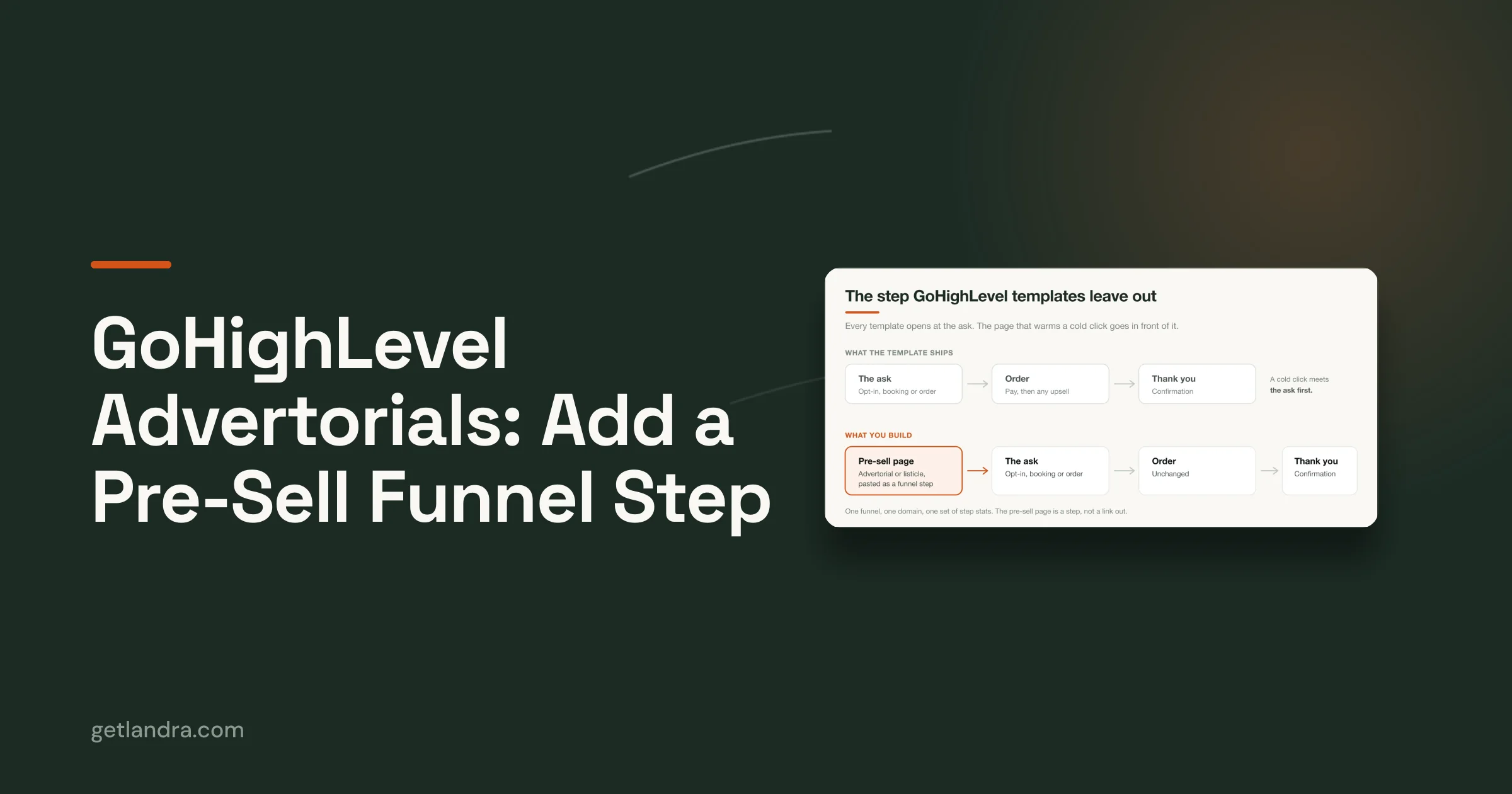
- Warm-up pages carry the ad's promise into a focused explanation before handing the visitor to Shopify.
- Product pages handle product-specific objections and purchase mechanics.
The strongest CRO programs don't ask every visitor to behave like a ready-to-buy shopper. They route traffic according to intent, then optimize each surface for the decision it needs to support.
Diagnosing Where Your Shopify Store Actually Leaks Revenue
Start with the funnel, not the theme editor. Shopify's store-level conversion rate is calculated from orders divided by visits, and a benchmark built from roughly 2,800 Shopify sites using 2023 data places the average store at about 1.4%. In the same benchmark, the top 20% of stores were above 3.2%, while the top 10% exceeded 4.7%. These figures are reported in the Shopify conversion rate benchmark analysis.
Those numbers are useful as orientation, not as a universal target. Category, traffic quality, device mix, price, repeat purchase behavior, and brand strength all change what “good” means. A working range of 1% to 4%, along with category variation such as food and beverage around 6.2%, beauty and personal care around 5.0%, and home and furniture around 1.4%, appears in Shopify conversion rate statistics and benchmarks. Compare like with like before labeling a store weak.

Segment before you diagnose
Pull performance by:
- Traffic source: Separate branded search, organic, email, affiliates, direct, Meta, TikTok, and other paid campaigns. A blended number can hide a strong returning-customer experience behind weak cold acquisition.
- Device: Compare mobile and desktop separately. Independent coverage cites a 3.4% desktop rate versus 2.0% mobile rate in one 2026 dataset, while another benchmark associates every 100 milliseconds of additional load time with roughly 3.5% lower conversion. Both claims appear in recent Shopify CRO analysis.
- Funnel stage: Review product views, add-to-cart actions, checkout starts, completed checkouts, and orders. Look for the first meaningful drop rather than assuming the final conversion rate identifies the cause.
- Product category: A high-consideration product and an impulse purchase shouldn't share the same expectation or page structure.
Checkout deserves its own diagnosis. Shopify checkout completion is often reported around 45% to 55% on a blended basis, while top-performing stores reach roughly 60% to 75%. Stores using Shop Pay are reported around 55% to 60%, compared with 45% to 50% without it, in Shopify checkout completion benchmarks. If checkout starts look healthy but orders remain weak, investigate upstream messaging, offer clarity, and product-page relevance. If checkout starts are strong but completion is poor, focus on payment, shipping visibility, errors, and friction.
Subscription brands should also isolate failed payments from ordinary checkout abandonment. Recovery logic belongs in the retention and payment layer, and this guide to failed payment automation for Shopify Plus merchants is relevant when involuntary churn is distorting revenue performance.
Prioritizing CRO Tests That Actually Move Revenue
A test backlog shouldn't be a collection of ideas from a swipe file. Rank each opportunity by revenue potential, implementation effort, confidence in the diagnosis, and time to impact, then add one more filter: where the change sits in the funnel.
A checkout fix can affect every shopper who reaches that stage. A hero headline test affects only visitors who understand enough to keep reading. That doesn't make the headline unimportant, but it changes its expected reach.
Use a simple scorecard:
- Confirm the symptom. Identify the segment, page, device, and funnel event involved. “Mobile conversion is low” is too broad. “Cold paid-social visitors on mobile view the PDP but rarely add to cart” is testable.
- Write the mechanism. Explain why the change should work. For example, “If shipping information appears beside the purchase decision, visitors will face less uncertainty before checkout.”
- Estimate effort. A Shopify setting, theme change, or copy revision may be fast. A new page template, data integration, or checkout customization may require more coordination.
- Choose the primary metric. Use completed orders or revenue per visitor when the change affects the purchase path. Use add-to-cart rate only when the test intentionally evaluates an earlier step.
- Define guardrails. Watch average order value, gross margin, refund behavior, subscription retention, and payment mix. A higher order rate can be a bad outcome if customers buy lower-margin bundles or return more products.

Test the bottleneck, not the most visible page
Teams often over-test product-page copy because the PDP is easy to edit and easy to debate. That can be the wrong use of capacity. If visitors don't understand the offer before reaching the page, a better pre-sell route may outperform another PDP variant. If visitors add to cart but disappear during payment, a new product-benefit headline won't address the leak.
Run one major structural test at a time when traffic or purchase volume is limited. Concurrent tests can work when audiences and surfaces are cleanly separated, but overlapping changes make learning harder. Every result should answer a question your next decision depends on, including a result that produces no clear improvement.
A disciplined testing program also avoids declaring victory from a small, noisy movement. Check whether the result holds across device, source, product, and new versus returning visitors. Then implement only after reviewing the commercial metric, not just the local page metric.
The case-study evidence supports a sequence rather than a single redesign. One mobile A/B program moved conversion from 2.63% to 3.90%, and another moved from 3.54% to 4.26%, with reported additional monthly revenue of roughly $48,000 to $55,000. The tests covered category pages, product pages, and cart or checkout pages, as documented in this Shopify CRO testing case study.
Shopify-Specific Fixes for Product Pages and Checkout
Once the leak is clear, make the smallest change that addresses the observed friction. Shopify gives you a fast operating base, but apps, scripts, theme customizations, and poorly structured sections can still create a slow or confusing experience.
Start on mobile. Put the product identity, core benefit, price, purchase option, and primary call to action close to the first decision point. Keep the image gallery useful rather than decorative, show the product in context, and place the answer to the most common objection near the element that creates the objection.
Product page changes should follow visitor questions
A practical PDP order looks like this:
- Recognition: Make the product and problem immediately clear.
- Relevance: Explain who it's for and what outcome it supports.
- Evidence: Add reviews, demonstrations, specifications, or usage context where they resolve doubt.
- Risk reduction: Show delivery, returns, guarantees, sizing, compatibility, or ingredients without forcing visitors to hunt.
- Action: Keep variant selection and the add-to-cart control obvious, especially during thumb scrolling.
Avoid stuffing every possible selling point above the fold. More modules can weaken the page when they slow loading or bury the first decision. A shorter page with sharper proof often beats a longer page that makes visitors work to find the offer.
If you need a dedicated campaign surface inside the Shopify ecosystem, review how to create a landing page before adding a collection of unrelated apps. The implementation choice should preserve tracking, mobile performance, and a clear handoff to the product or checkout flow.
Cart and checkout need different interventions
The cart should confirm the decision, not reopen every question. Show the selected variant, delivery expectations, returns, total cost, and the next action. Cross-sells should support the main purchase, not distract from it, especially for visitors who already showed strong intent.
In checkout, remove avoidable uncertainty. Enable guest purchase where appropriate, make payment options visible, validate discount behavior, and inspect error states on an actual phone. Accelerated payments can reduce repeated data entry, and the benchmark differences for Shop Pay make it a sensible candidate for controlled evaluation rather than an assumption.
For a broader principles-based reference, Crescade's conversion rate optimization guide offers useful context on product-page clarity, trust, and checkout friction. Treat external best practices as hypotheses. Your own segmented Shopify data decides which one deserves implementation.

When a Pre-Sell Page Beats the Product Detail Page
Cold paid traffic should not automatically go to the PDP. The right destination depends on how much belief a visitor needs before evaluating the product fairly. A product detail page works well when the ad has already explained the problem, mechanism, and offer. It often struggles when the visitor is still deciding whether the category or solution deserves attention.
An advertorial fits products that require explanation, compete in a crowded category, or face skepticism during the buying decision. It can define the problem, introduce a mechanism, explain why familiar solutions disappoint, and position the product as a logical next step. Commercial intent can remain visible. The page earns attention by presenting a clear, relevant argument.
A listicle fits visitors who understand the problem but need help comparing options. “Best solutions for a specific use case” and “what to look for before buying” provide a decision framework. The product can appear as one option within that framework, with the transition to Shopify happening after the reader understands the selection criteria. See Landra's take on presell pages for a closer comparison of these routes.
Route traffic by awareness and message
Use the ad's angle as the first routing signal:
- Problem-led creative: Test an educational or narrative page that names the pain and develops the reason to act.
- Comparison-led creative: Test a listicle that organizes alternatives and makes trade-offs explicit.
- Product-led creative: Send warmer audiences to the PDP when the ad has already handled the education.
- Offer-led retargeting: Keep the path short and remove distractions because the visitor has shown intent.
Page type and traffic source should be evaluated together. Shopify cited global ecommerce purchase conversion at 1.6% in Q3 2025, while other coverage placed landing-page medians around 1.8% to 2.35%, with top performers exceeding 8% to 11%. Email landing-page traffic was reported at 19.3%, while social traffic was reported at 1.2% in one benchmark. The definitions and limitations are covered in Shopify CRO statistics and landing-page benchmarks. These figures do not prove that every pre-sell page will outperform a PDP. They show why cold social and high-intent traffic should not share an automatic destination.

Landra can generate editable advertorial, listicle, and pre-sell pages from a product or brand URL, then publish them to Shopify, a hosted URL, Webflow, or HTML. The practical benefit is faster iteration. Marketers can duplicate a page, change the angle, and keep the ad-to-page message aligned without rebuilding the storefront.
The trade-off is a longer funnel. A pre-sell page adds another click and another exit point, so it must repay that cost through stronger education, relevance, or persuasion. Measure the complete path to purchase, not only the pre-sell page's click-through rate.
Building a Measurement and Experimentation Workflow
A useful CRO workflow has three layers: what happened, why it happened, and what changed after the intervention. Shopify analytics and a properly configured analytics platform provide the first layer. Session recordings, heatmaps, search behavior, reviews, chat logs, and support tickets add the second. An experiment log creates the third.
Start every test with a one-page brief:
- Audience: source, device, geography if relevant, new or returning status, and product context.
- Hypothesis: the observed friction, proposed change, and expected mechanism.
- Primary outcome: completed purchase or revenue per visitor when possible.
- Guardrails: average order value, margin, refunds, subscription health, and customer-quality signals.
- Decision rule: what you'll ship, revisit, or reject based on the evidence.
Don't optimize conversion rate in isolation. A cheaper bundle may increase orders while lowering contribution margin. A more aggressive offer may lift immediate revenue while damaging repeat purchase behavior. A faster page may improve engagement but fail to improve completed orders if the offer remains unclear.
Combine quantitative and qualitative evidence
Use quantitative data to locate the leak, then watch or read enough user evidence to understand its cause. If mobile visitors drop between product view and add to cart, inspect the first screen, variant selector, sticky purchase controls, image behavior, and shipping visibility. If checkout completion is weak, review errors, payment selection, address entry, and unexpected totals.
Store every result in a shared repository. Record the segment, implementation details, dates, primary outcome, guardrails, and interpretation. A “no lift” result still prevents the team from repeating the same assumption, and it may reveal that the issue belongs upstream in the traffic or offer rather than on the tested page.
Keep the stack lean. Shopify analytics, a behavioral tool, an experimentation platform, ad-platform reporting, and a page-building workflow can cover the core loop. Add another tool only when it answers a question the current stack can't answer reliably.
A 90-Day Shopify CRO Roadmap for DTC Teams
The first phase is diagnostic. Audit tracking, segment conversion by source and device, review the product-to-cart-to-checkout path, and watch real mobile sessions. Fix obvious technical issues, clarify shipping and returns, remove unused scripts or apps, and enable payment options that fit your customers. Don't launch a redesign before you know which leak matters.
The second phase tests structure. Run a focused PDP or cart experiment against the largest confirmed bottleneck, then test a cold-social route using an advertorial or listicle against the direct-to-PDP path. Keep the ad promise, page angle, offer, and product handoff coherent. Paid media and creative teams should agree on the audience hypothesis before launch, because a landing-page test can't compensate for an ad that attracts the wrong intent.
The third phase compounds learning. Ship durable winners, document losses, review revenue quality, and create new variants from the strongest message. Test category or collection navigation if shoppers struggle to find the right product, then return to checkout and mobile experience as traffic mix changes.
A useful weekly rhythm is simple: inspect performance, review qualitative evidence, choose one priority, write the hypothesis, launch, and record the result. After the initial roadmap, CRO becomes an operating habit rather than a quarterly emergency.
Landra helps DTC teams generate editable, mobile-first advertorial and listicle pre-sell pages from a product or brand URL, with publishing options that fit Shopify workflows. Visit Landra to create a page variant for your cold paid-social funnel and test it against your current product-page path.