

Most advice about native ads on Taboola starts with the wrong question. Marketers ask whether the traffic is cheap, whether the click-through rate looks healthy, or whether the platform can create awareness. Those questions matter, but they don't explain why one DTC campaign produces buyers while another produces a spreadsheet full of low-quality visits.
The more useful question is: what happens after the click? Taboola reaches people in editorial environments, often before they've formed a strong buying intention. A product detail page asks that cold visitor to understand the product, trust the claim, overcome objections, and purchase in one jump. That's usually too much work for a single pageview.
The campaigns that perform tend to treat media, creative, and the post-click experience as one system. The ad earns attention, the pre-sell page develops the argument, and the product page captures the demand that the first two steps created. That structure turns Taboola from a traffic source into a deliberate prospecting channel.
Table of Contents
- Why Taboola Is a Performance Channel in 2026
- Taboola Ad Formats and Publisher Placements
- Targeting and Bidding Mechanics for DTC Brands
- Creative and Landing Page Best Practices
- Measurement and Optimization Tactics
- Common Pitfalls and How to Avoid Them
- Integrating Taboola with Pre-Sell Advertorials
Why Taboola Is a Performance Channel in 2026
Taboola is still often filed under brand awareness, but that classification is too narrow. The broader native advertising market has moved from a niche format into a major digital advertising category. Market research estimates place global native advertising revenue at about USD 104.63 billion in 2024, with projections reaching roughly USD 346.86 billion by 2032 at a 16.2% CAGR, or about USD 399.79 billion by 2034 at a 14.1% CAGR. These are projections, not guarantees, but both point to sustained double-digit expansion according to Grand View Research's native advertising market analysis.
That growth makes sense from a performance perspective. Native placements meet users inside content environments, which can reduce the resistance associated with more disruptive ad formats. But lower interruption doesn't automatically create profitable acquisition. It creates a better opening for the advertiser's message. The conversion system still has to do the rest.
Taboola's scale makes the platform useful for structured testing rather than isolated launches. Its Trends data draws on roughly 75 million clicks across 50 billion impressions, a base large enough for directional engagement signals to inform creative and budget decisions, as documented in Taboola's native advertising guidance. More impressions let a team compare headline and thumbnail combinations with greater confidence, provided the team measures post-click quality rather than celebrating inexpensive visits.
Realize changes the buying conversation
Recent market coverage describes Taboola's Realize platform as an anchor for premium open-web supply and a sign of a more mature native market. The important shift isn't the platform name by itself. It's the move toward treating native as a measurable performance channel, with optimization tied to outcomes instead of traffic volume.
Taboola's public financial results also give the category a useful scale reference. A secondary industry summary reported approximately USD 1.9 billion in full-year 2025 revenue, an 8.3% increase, and more than 600 million daily active users across publishers worldwide. The same coverage identified North America as the largest regional native advertising market, assigning it more than 31.5% share and approximately USD 33.67 billion in 2024 revenue. Those figures come from native advertising market coverage and statistics.
Practical rule: Taboola doesn't rescue a weak offer or an abrupt product page. It gives a well-structured conversion path more opportunities to find qualified cold prospects.
For a useful overview of how native networks differ in inventory, formats, and buying models, the Evoteam guide to native advertising provides helpful context. Your media plan should also reflect the surrounding content environment, which is where a strong contextual targeting strategy becomes more valuable than broad audience labels alone.
Taboola Ad Formats and Publisher Placements
Taboola inventory makes more sense when you map each format to the user's reading state. An in-feed unit appears within a publisher's content stream, often alongside editorial headlines. A recommendation widget usually appears below an article, when the reader has finished the main story and is deciding whether to continue browsing. Interstitial experiences create a larger interruption and need stronger relevance because the ad occupies more of the user's screen.

For most DTC prospecting campaigns, start with the formats that preserve the reading flow. Native ad units and recommendation placements work well when the destination is an advertorial, editorial article, or listicle that feels like a logical continuation of the publisher experience. In-feed video can help when the product needs demonstration, but the first frame and opening seconds must communicate the problem quickly. A video that behaves like a brand film may earn attention without producing meaningful shopping intent.
Match placement to intent
A reader at the end of a health, lifestyle, finance, or news article isn't necessarily searching for your product. The reader is browsing. Your ad therefore needs to offer a clear reason to leave the current page, such as a useful explanation, a comparison, or a story about a problem the reader recognizes.
The thumbnail and headline are the core creative pair. The thumbnail should establish the subject or benefit at a glance, while the headline creates enough curiosity to earn the click without making a claim the landing page can't support. Editorial-style framing generally fits better than direct product commands because it respects the context in which the ad appears.
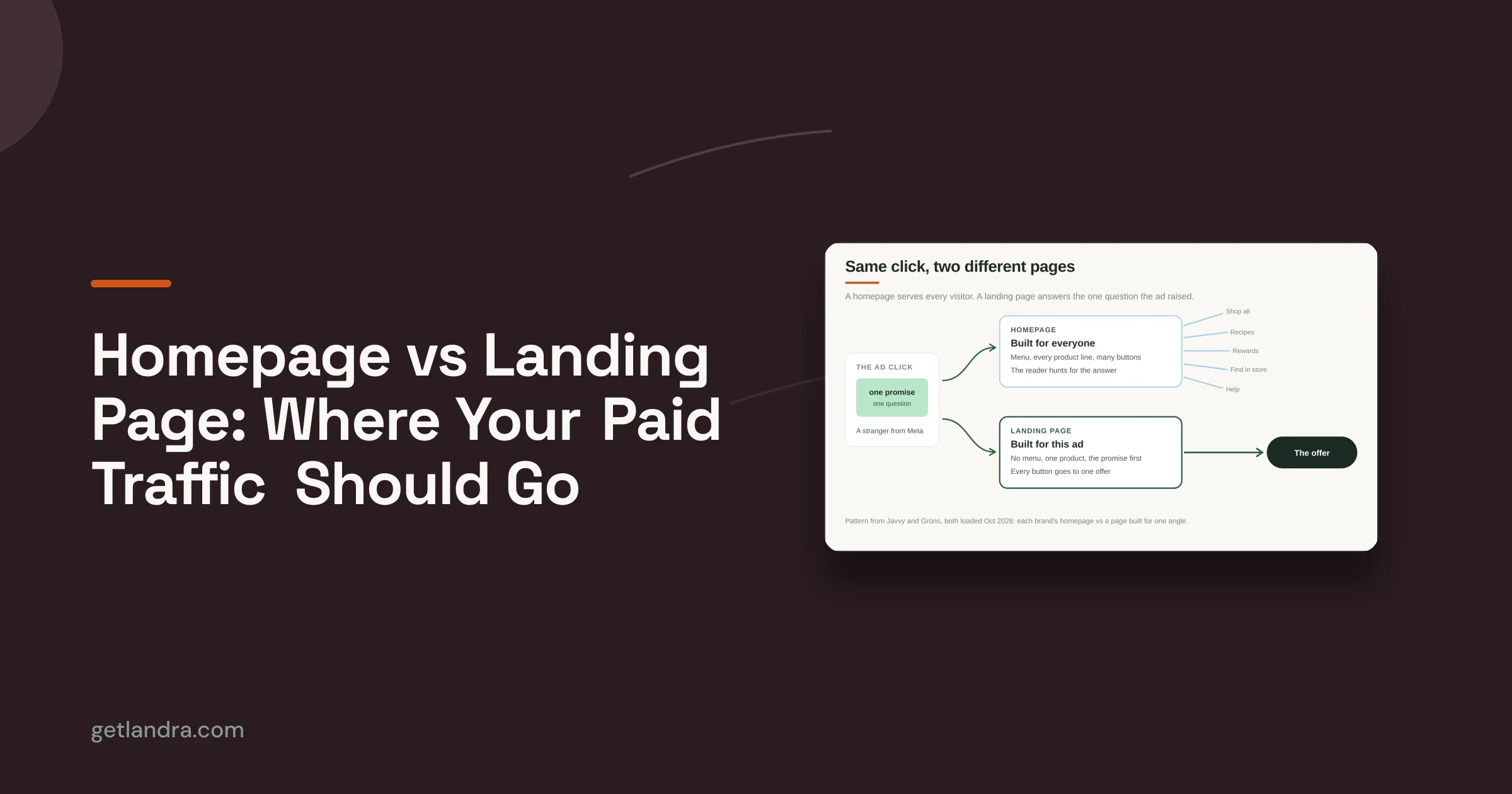
A product page can work for branded or highly motivated traffic, but cold native traffic usually needs a softer handoff. Send the reader to content that answers the first question behind the click, then make the next action obvious. If the ad says the reader will learn why a problem occurs, the page should begin with that explanation, not with a product grid and a discount banner.
Treat publishers as part of the test
Placement reporting can reveal more than a platform-level average. Review publisher domains, device patterns, page context, and downstream behavior. A placement that generates clicks but produces shallow sessions may be useful for awareness, but it shouldn't receive performance budget until it proves that visitors continue through the pre-sell experience.
Targeting and Bidding Mechanics for DTC Brands
Cold DTC traffic needs a campaign structure that can learn without becoming impossible to diagnose. Start by separating meaningful variables. Keep audience or contextual groups distinct enough that you can identify whether performance comes from the content environment, the device, the creative angle, or the offer. Combining every audience and every message in one campaign may simplify setup, but it makes optimization ambiguous.
Contextual targeting deserves a serious test rather than a token experiment. A skincare brand might compare lifestyle and wellness environments with broader news inventory. A financial product might prioritize personal finance content, while a home product could test renovation and household categories. The point isn't to assume that context guarantees intent. It gives the ad a relevant editorial neighborhood and creates a clearer hypothesis about why a visitor might engage.
Give the system enough signal
Taboola optimization is impression-threshold sensitive. A headline-thumbnail pair can't be judged responsibly after a handful of impressions or a few clicks. The platform's Trends dataset, based on approximately 75 million clicks and 50 billion impressions, illustrates why scale helps produce directional signals for allocation and testing, according to Taboola's published marketing guidance.
That doesn't mean spending without control. It means concentrating the test so each meaningful combination receives enough exposure to produce interpretable feedback. Run several editorial angles, but avoid creating so many tiny ad groups that none can gather useful evidence. Review the complete path from impression to click, engaged visit, checkout, and purchase.
Bids should support learning speed while respecting the account's economics. A bid that's too conservative may limit delivery and delay signal collection. A bid that's too aggressive can buy volume from placements that look active but don't generate qualified sessions. Adjust bids only after checking the quality of the traffic and the conversion path, not because a single day looks strong or weak.
Use AI for iteration, not judgment
Recent coverage reports that Taboola's AI-generated ads performed comparably to human-made ads in a 2026 study, with raw CTR of 0.76% versus 0.65%. The figures are reported in coverage of the 2026 native advertising landscape. The practical lesson isn't that human creative is obsolete. It's that automated generation can increase the number of credible variations available for testing.
A performance team still needs to choose the angle, verify claims, reject generic language, and inspect the destination page. AI can accelerate production, but it can't decide whether the promise is commercially honest or whether the pre-sell argument matches the product experience.
Creative and Landing Page Best Practices
Native creative succeeds when the ad and landing page feel like two chapters of the same story. The headline creates a specific expectation. The thumbnail gives the promise visual shape. The advertorial then delivers the explanation, evidence, and next step that the click implied.
A common failure starts with an attractive but vague headline, followed by a product page that opens with a hard sell. The visitor clicked for a discovery experience and receives a checkout-oriented page instead. That mismatch creates friction before the brand has answered basic questions about relevance, credibility, and use.

Build the page around the click motive
Use the ad angle to choose the page structure:
- Problem-led angle: Open by describing the problem in familiar language, explain why common fixes disappoint, then introduce the product as a considered solution.
- Benefit-led angle: Lead with the desired outcome, support it with product details and proof, and move to the offer after the reader understands the mechanism.
- Comparison angle: Use a listicle or comparison format when the buyer needs help distinguishing approaches, ingredients, materials, or product types.
- Discovery angle: Use an editorial narrative when the headline promises a new explanation, overlooked habit, or change in the category.
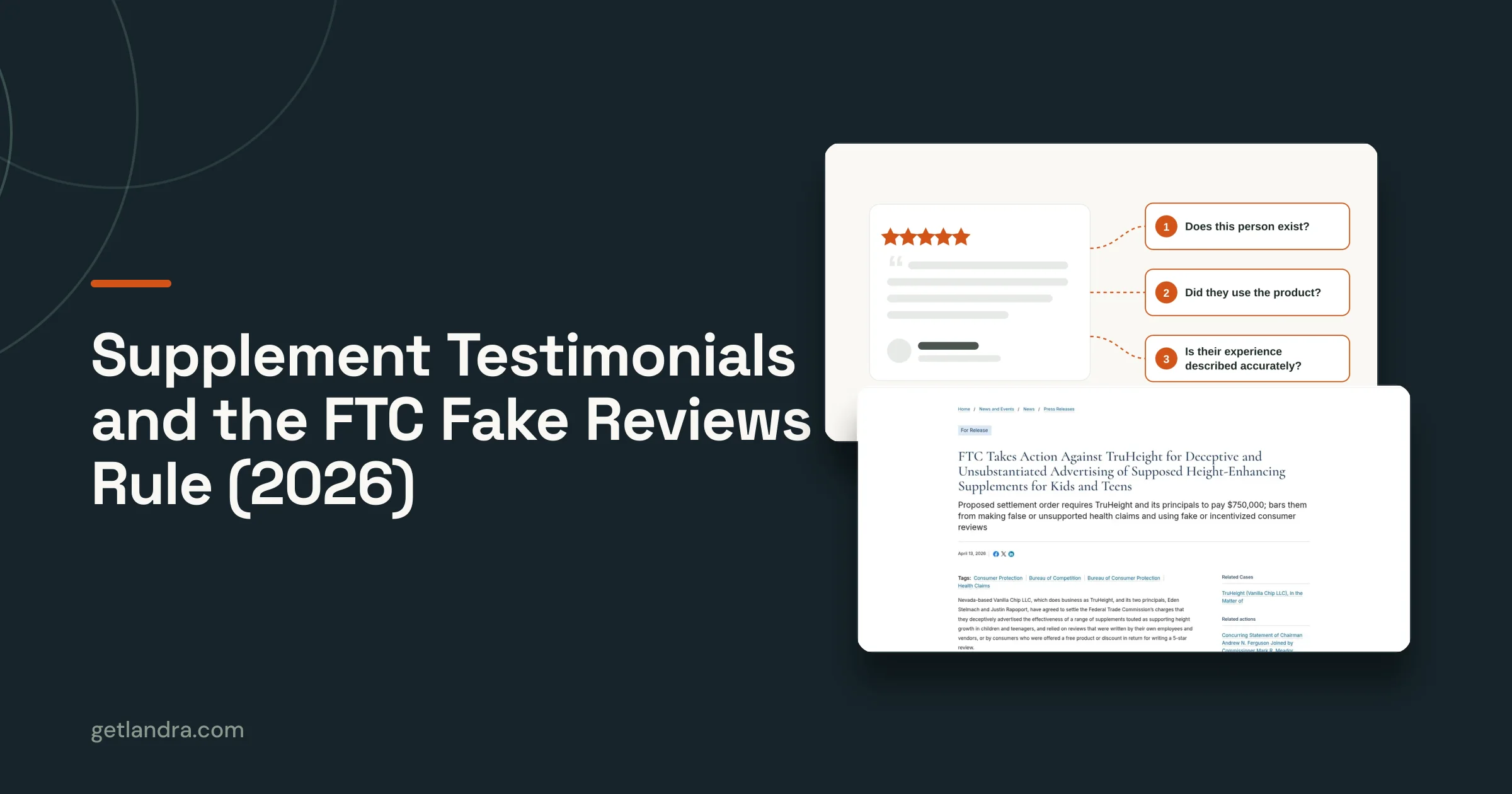
The page doesn't need to hide that it is advertising. Clear labeling, accurate claims, and a visible path to the offer protect both user trust and review compliance. The copy should sound editorial in structure, not deceptive in intent.
Make the first screen earn the next scroll
A strong pre-sell page normally establishes the headline promise immediately, then gives the reader a reason to continue. Use short sections, descriptive subheads, product-relevant images, proof that the brand can substantiate, and repeated but natural calls to action. Remove navigation that pulls cold visitors into unrelated parts of the store, but don't remove the information they need to evaluate the offer.
Landra's AI Advertorial Generator can turn a product URL into an editable, mobile-first advertorial draft, which makes it practical to test several page frames against different Taboola angles. For layout references outside native, these paid social landing page examples can help teams compare page hierarchy and CTA placement.
The same discipline applies to video. Use the embedded example as a reminder that the creative should establish the problem and transition naturally into the promised content.
Measurement and Optimization Tactics
CTR is useful for diagnosing the ad, but it isn't a business outcome. A Taboola campaign can attract curious readers and still fail to acquire customers at an acceptable cost. Track the full path, including landing-page engagement, progression to the product page, checkout initiation, purchase conversion, customer acquisition cost, and return on ad spend.
Use consistent campaign-level naming and tracking parameters so the same angle can be compared across placements and devices. Separate the advertorial path from the direct-to-product path. If both routes share one destination label, you won't know whether the pre-sell layer improved the economics or changed the attribution trail.
Prove contribution instead of trusting last click
Native traffic often participates in a longer journey. A visitor may read an advertorial on one device, return through branded search, and purchase later. Cookie loss and cross-device behavior make platform-reported ROAS useful for operational decisions, but insufficient for proving incremental demand.
Geo-holdouts and public service announcement tests offer a stronger design. Hold Taboola out of a comparable geographic area, or replace paid delivery with a neutral message in the test group, then compare total conversions against a control. The goal is to observe the difference in overall business results, not just the conversions assigned to Taboola.
Independent coverage has described increasing use of these methods and reported 91% to 97% incremental conversions in multi-account tests when Taboola or Outbrain was added to Facebook-only media plans. Treat that result as a reported test finding, not a universal benchmark, and review the methodology before applying it to your store. The relevant discussion appears in coverage of incrementality testing for native campaigns.
Measurement principle: If the channel looks profitable only inside its own attribution window, you haven't finished validating it.
Decide what deserves more budget
Scale a campaign when three signals agree: the creative earns qualified engagement, the pre-sell page moves visitors toward the offer, and purchase economics hold across more than one placement or audience condition. Increase exposure gradually enough to detect whether performance changes as inventory expands.
Kill or rebuild a test when the failure is clear in the path. High clicks with no engaged reading suggests weak targeting or misleading creative. Engaged reading with no product-page progression points to a pre-sell or offer problem. Product-page activity with no checkout often indicates a pricing, trust, or merchandising issue. Don't solve every failure with a higher bid.
Common Pitfalls and How to Avoid Them
Taboola campaigns usually fail for understandable reasons. The advertiser measures the wrong event, sends the wrong page, or creates too little variation to learn. Comparing each mistake with its corrective action makes diagnosis faster.

The failure patterns
| Pitfall | What it causes | Better approach |
|---|---|---|
| Optimizing for cheap clicks | The account rewards curiosity instead of commercial intent. | Optimize decisions around qualified sessions, checkout behavior, purchases, and CAC. |
| Sending cold visitors to a PDP | The page asks an unfamiliar visitor to buy before building context. | Test an advertorial or listicle that answers the click motive first. |
| Running one creative | You can't separate a weak angle from a weak channel. | Test multiple headline-thumbnail promises tied to distinct page frames. |
| Ignoring message continuity | The ad earns a click that the destination immediately contradicts. | Repeat the promised topic in the opening section and deliver the expected explanation. |
| Spreading spend too thinly | No individual combination receives enough exposure to produce useful feedback. | Concentrate the initial test around a manageable number of variables. |
A cheap click is not automatically a bad click. It becomes a bad buying signal when the team uses it as the final definition of success. Native users may need more explanation than search users, so a longer path can be healthy if readers engage, continue, and purchase at an acceptable CAC.
Fix the infrastructure before the bid
Check tracking before changing targeting. Confirm that the advertorial, product page, checkout, and purchase event pass consistent campaign information. Review publisher and device breakdowns, then compare the quality of visitors rather than relying on an account average.
Check creative and destination together. If a headline promises a guide, the page should look and read like a guide. If a thumbnail presents a product use case, the article should develop that use case before asking for the sale.
Diagnostic rule: When clicks arrive but purchases don't, inspect the promise and the page before blaming the audience.
Integrating Taboola with Pre-Sell Advertorials
The most reliable way to approach cold native traffic is to add a deliberate middle layer between the ad and the product detail page. An advertorial or listicle gives the visitor space to recognize the problem, understand the product's role, and decide whether the offer fits. The product page then handles specifications, variants, shipping, reviews, and checkout intent.
This structure matters because Taboola users aren't necessarily looking for your brand. They're reading publisher content and deciding whether your headline offers something worth investigating. A direct product page often starts too late in the persuasion sequence.
A practical workflow
Begin with the product URL and identify the angle the ad will test. The page can focus on a problem, a benefit, a comparison, or a discovery narrative. Keep each angle connected to claims, proof, and product details the brand can support.
Use a generator such as Landra to create an editorial-style draft, then edit it like a performance asset rather than publishing the first output without review. Tighten the headline, verify every claim, add credible proof, label the advertorial clearly, and place the CTA where it follows a completed argument.
A useful workflow looks like this:
- Choose one audience problem: Write the ad and page around the same reader concern.
- Create the pre-sell frame: Use a narrative advertorial for education or a listicle for comparison and scanning.
- Build message continuity: Repeat the central promise in the opening, body, and CTA without exaggeration.
- Publish the variant: Use a Shopify, hosted, Webflow, or HTML destination that fits the existing stack.
- Compare against the PDP: Run the same media logic toward the pre-sell page and the direct product page, then evaluate downstream economics.
- Duplicate the winner: Test a new opening or creative promise without changing every variable at once.
Landra's AI advertorial for DTC brands is designed for this type of workflow, with editable pages and outputs that can fit common commerce stacks. The tool is useful only when the marketer supplies sound positioning and reviews the draft for accuracy, compliance, and product relevance.

Judge the page by incremental economics
Don't assume the advertorial wins because it produces a higher click-through rate or longer reading time. Compare purchase conversion, CAC, revenue quality, and total channel results against the direct-to-product route. Then validate the conclusion with a holdout or PSA design when the budget and geography allow.
The core operating model is simple: Taboola supplies discovery, creative supplies the reason to click, and the pre-sell page supplies the missing context. Remove the middle layer only when the audience already has enough intent to skip it.
Landra turns product and brand information into editable advertorials, listicles, and pre-sell pages for DTC campaigns, with publishing options that fit Shopify and other common workflows. Visit Landra to create a Taboola-ready pre-sell page, test multiple angles, and compare the conversion path against sending cold traffic directly to your product page.