
Boosting a product post and calling it a media plan is how DTC brands burn money on X. Likes show up. Replies pile up from people who will never buy. Checkout stays quiet, and nobody can name the order the spend created. The popular advice still says post often, boost what gets engagement, and treat cheap clicks as proof the channel works.
That advice confuses attention with intent. Promoting on Twitter only pays when a live conversation has already validated the angle, the click lands on a page that matches that conversation, and you score the result on contribution margin and brand risk, not on applause.
Table of Contents
- Why Promoting on Twitter Is Not Just Boosting
- Turn Live Conversations into Qualified Demand
- Build X Campaigns Around One Audience Logic
- Make Creative Clear on a Fast Mobile Scroll
- Score Efficiency Against Brand and Revenue Risk
- Choose the Page That Finishes the Click
Why Promoting on Twitter Is Not Just Boosting
A cold click is not the same thing as an unaware shopper. Plenty of people on X are already arguing about a problem, a routine, or a product category. They just are not ready for a product detail page. Always-on boosting skips that distinction. It pays to shove a product tweet in front of whoever the auction can find, then celebrates replies that never become revenue.
The original ad product was built the other way around. In April 2010, Twitter launched Promoted Tweets, ordinary posts advertisers paid to place in front of a wider audience, starting in search. By October 2010, Promoted Tweets and Promoted Trends had moved beyond Twitter.com, which meant the company was already testing more placements within months of the launch, as the Economic Times timeline of the platform records. Promotion was an extension of public conversation, not a separate banner unit. You amplified a normal post. Targeting could follow intent, including search. Paid visibility sat inside the feed people already used.
That history still sets the job. Use X to hear what people already debate. Buy reach only after the same objection, use case, or comparison keeps showing up as specific questions rather than bait. Then send the click to a page that can finish the argument the ad started.
Recheck the audience before you budget
Scale on this platform is real and unstable, so do not write a quarterly plan off last quarter's planning tool. In January 2023, Twitter's own advertising tools put potential ad reach at about 556 million accounts worldwide, with the United States just over 95 million. The same DataReportal read later recorded a drop of about 68% in one three-month stretch, from 556 million to 177.2 million, before a later estimate of 372.9 million. Japan, India, Indonesia, and Brazil had all grown reachable users over the prior year, including Indonesia at 30% and Brazil at 27.6%, which is laid out in the DataReportal deep dive on Twitter's advertising reach.
Practical rule: Recheck country reach and the platform-reported audience before any media plan treats X as stable scale.
If you want to reach a targeted X audience, start from a conversation you can name, not from a boosted product tile. The rest of this guide is that sequence. Find the argument. Amplify only a message the argument has already proven. Send the click somewhere that can sell.
Turn Live Conversations into Qualified Demand
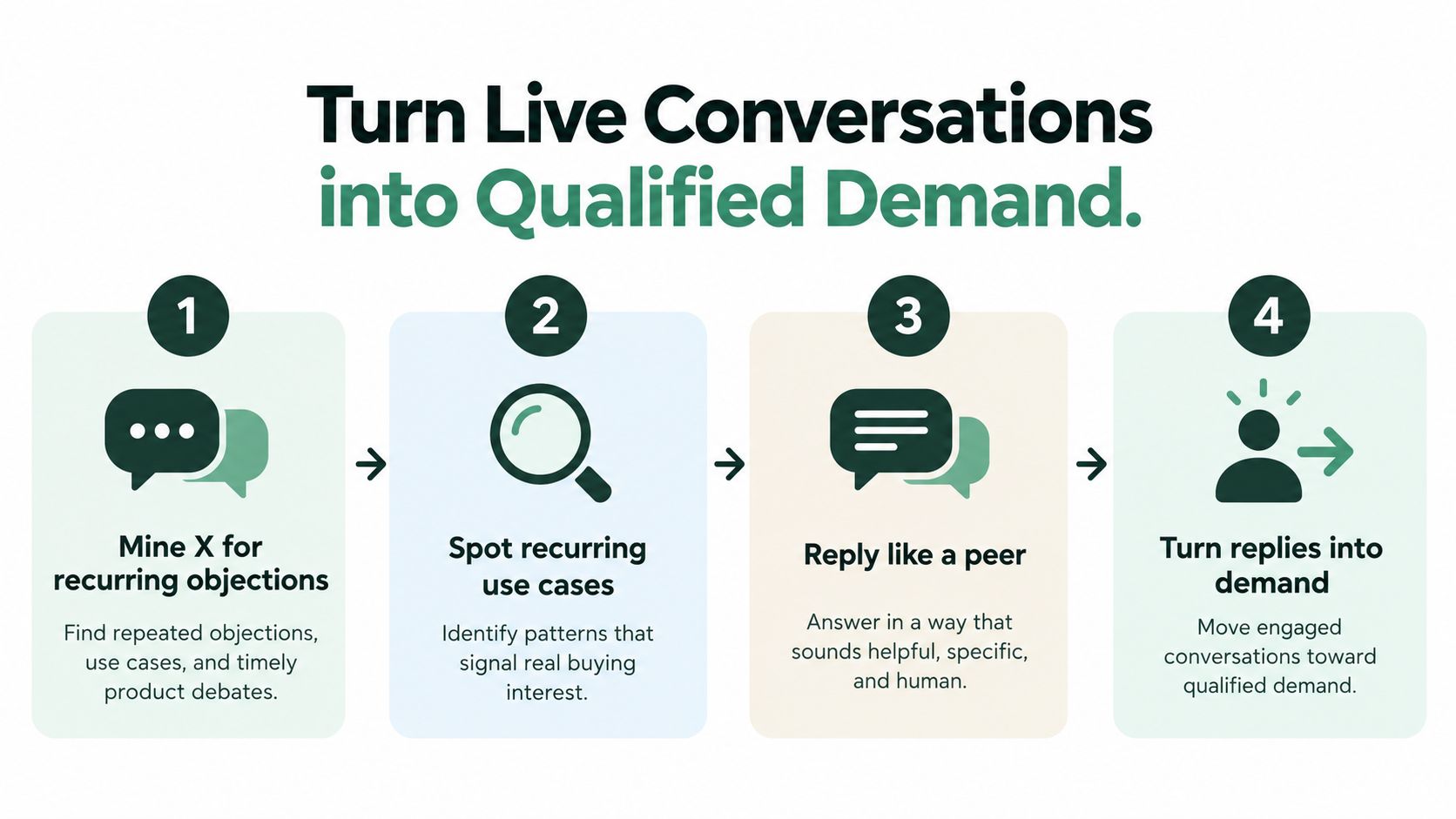
Stop treating the organic account as a content calendar and start treating it as a demand sensor. The posts worth paying for are usually replies, not the polished product tweet your brand account published on a Tuesday.
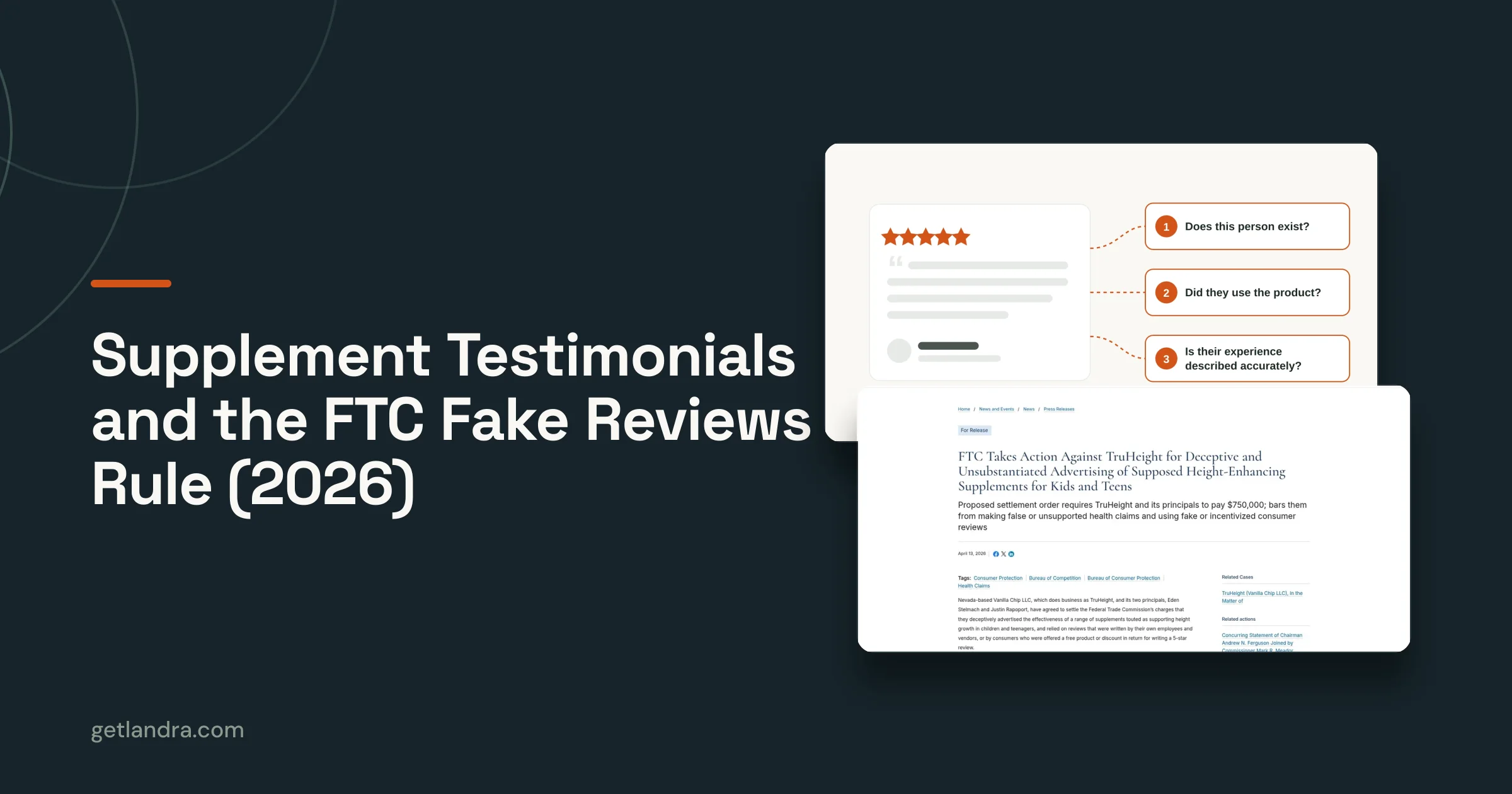
Search the phrases your buyers already use. Warranty complaints, "does this work," routine comparisons, ingredient skepticism, shipping gripes. Save the threads where the same objection appears more than once from different accounts. A single viral joke is not demand. A repeated, specific question is.
Reply like a person who has the product
Answer the actual sentence in front of you. Name the constraint, the use case, or the tradeoff. Do not paste a discount code into a complaint thread and call it community management. If you sound like an ad, people scroll. If you sound like someone who has used the product in that situation, they ask a follow-up. That follow-up is the signal.
Tag three sources separately in your sheet or UTM scheme before you spend a dollar.
- Organic replies: The angle, the objection, and whether the person asked a buying question.
- Creator mentions: Whether the mention matches a use case you can support, or just a vibe.
- Promoted posts: The same angle later, so you can see what paid reach added.
Watch comment quality and how long people stay with the post, not like count. Buy reach only after the same angle keeps pulling specific questions. "Love this" is not a gate. "Will this hold up if I train four days a week?" is.
A rebound is not a blank check
X advertising is still volatile, even when the headline spend number looks healthy. U.S. ad spending on X rose 62% year over year in the first half of 2025, yet Sensor Tower estimates showed many major advertisers still spent about 50% less on X in 2025 than in 2022, according to TechCrunch's report on X's ad business. A broad return of budget does not prove the channel is safe to run all day, every day, for your catalog.
Reply when the thread is teaching you the message. Promote when that message has repeated. Stay organic when the replies are jokes, pile-ons, or one-off outrage.
Route by the conversation, not by your default product URL. A problem reply goes to a problem-led pre-sell page. A comparison thread goes to a listicle. A proof question goes to a proof-led page. None of those should dump a distracted reader onto a product detail page that assumes the sale is already decided. Judge the test on assisted conversions, qualified sessions, and contribution margin. If those do not move, the topic was engagement, not demand.
Build X Campaigns Around One Audience Logic
Once an angle has earned paid reach, the campaign has one job. Name a single conversion before you open the ads manager. A qualified product visit, an email signup, or a purchase. If you cannot say which one the campaign is allowed to win, you will "optimize" toward whichever number looks least embarrassing on Monday.
Split the buying logic. Keywords, interests, follower look-alikes, and behavioral segments do not belong in one ad set. X's own optimization guidance says to use one primary audience-targeting type per campaign, while you still apply location and device filters. That guidance lives in the intro to optimizing campaigns on X. Separate mobile from desktop when the landing experience or the conversion rate differs. A thumb hitting a long page is not the same session as a desktop reader.
Hold every variable except the page
Run the validated promise against two destinations, and change nothing else. Same creative, same geography, same budget, same attribution window. One arm is the product detail page. The other is a dedicated advertorial built for the objection you already heard. If both the audience and the page change, you will not know which one moved the sale.
Ship three messages, not twelve vague variants.
- Problem-led: The objection from the thread, one action, no second offer.
- Proof-led: The evidence a skeptic asked for, still one action.
- Comparison or listicle-led: The options people were already stacking against each other.
Each post gets one core idea and one explicit call to action. Clever copy that hides the ask will collect replies and starve the pixel. If you need short product clips with a spoken line that matches the post, a video maker with natural voiceovers can turn the same validated script into a test asset without a separate production queue. The script still has to come from the conversation, not from a brand manifesto.
UTM parameters should encode campaign, audience, creative, and landing-page variant. Optimize to downstream revenue or qualified sessions. Likes and replies are diagnostics, not the objective. Benchmark data puts the median promoted-post CTR at 0.86%. That figure is a reference point, not a kill switch. Pause a variant only after it has enough clicks to compare conversion-rate confidence. A handful of impressions is auction noise.
Mixed objectives, a new audience, and a new creative in the same edit will teach you nothing except how fast a budget can disappear.
The failure mode is celebrating a reply spike while CAC and checkout conversion sit untouched. If the message does not align ad messaging with buyer intent, you are paying to talk to a segment you have not defined.
Make Creative Clear on a Fast Mobile Scroll
X is a visual feed that moves faster than your headline writer wants to admit. X states that 97% of users focus on visuals, and its best-practice sheet pushes eye-catching or product-focused creative, a short message, and an explicit action such as shopping or signing up. That guidance is in the X ads best-practices one sheet. The first frame has to show the product or the problem. A clever line that needs a second read loses to the next post.
Rotate the format, not the offer
Run this sequence and refuse to "improve" three things at once.
- Static image: The control for whether a still product or problem shot can stop the scroll.
- Short video: Same headline, offer, URL, and audience, so the motion is the only change.
- Text-led control: Proof that words alone are or are not enough for this angle.
Then read the full path, not the click. CTR, cost per click, engaged-session rate, pre-sell scroll depth, add-to-cart rate, and purchase conversion. Promote the winning combination into retargeting. Do not promote the format that merely got tapped.
| Format | Median CTR | What else to read |
|---|---|---|
| Image ads | 1.04% | Engaged sessions and add-to-cart, not the click alone |
| Video | 1.16% | Whether the first frame states the problem or the product |
| Carousel ads | 1.24% | Purchase conversion and contribution margin after the click |
Those medians come from the same X best-practice benchmarks. Carousel's higher click rate can still lose on margin. Format performance moves with the objective and the audience, so a prettier unit is not a better buyer.
Retarget on a clock, not on a vibe
X's API documentation indicates that people who see or engage with an advertiser's content can become eligible for later targeting within minutes. Engagement audiences can stay eligible for up to 90 days. Exposure audiences can stay eligible for up to 30 days. Use that window as a two-stage funnel. Prospecting sends cold readers to a low-friction advertorial. Retargeting comes back with proof, an offer, or a direct checkout message for people who already spent time with the angle.
A team running ai social media marketing can draft variants faster than a weekly design cycle, but speed does not fix a weak first frame. Long copy, unsupported claims, broken UTM strings, and retargeting without frequency or recency caps will turn a clean test into noise. Cap how often someone sees the follow-up, and stop chasing people who saw the ad once three weeks ago and never clicked.
Score Efficiency Against Brand and Revenue Risk
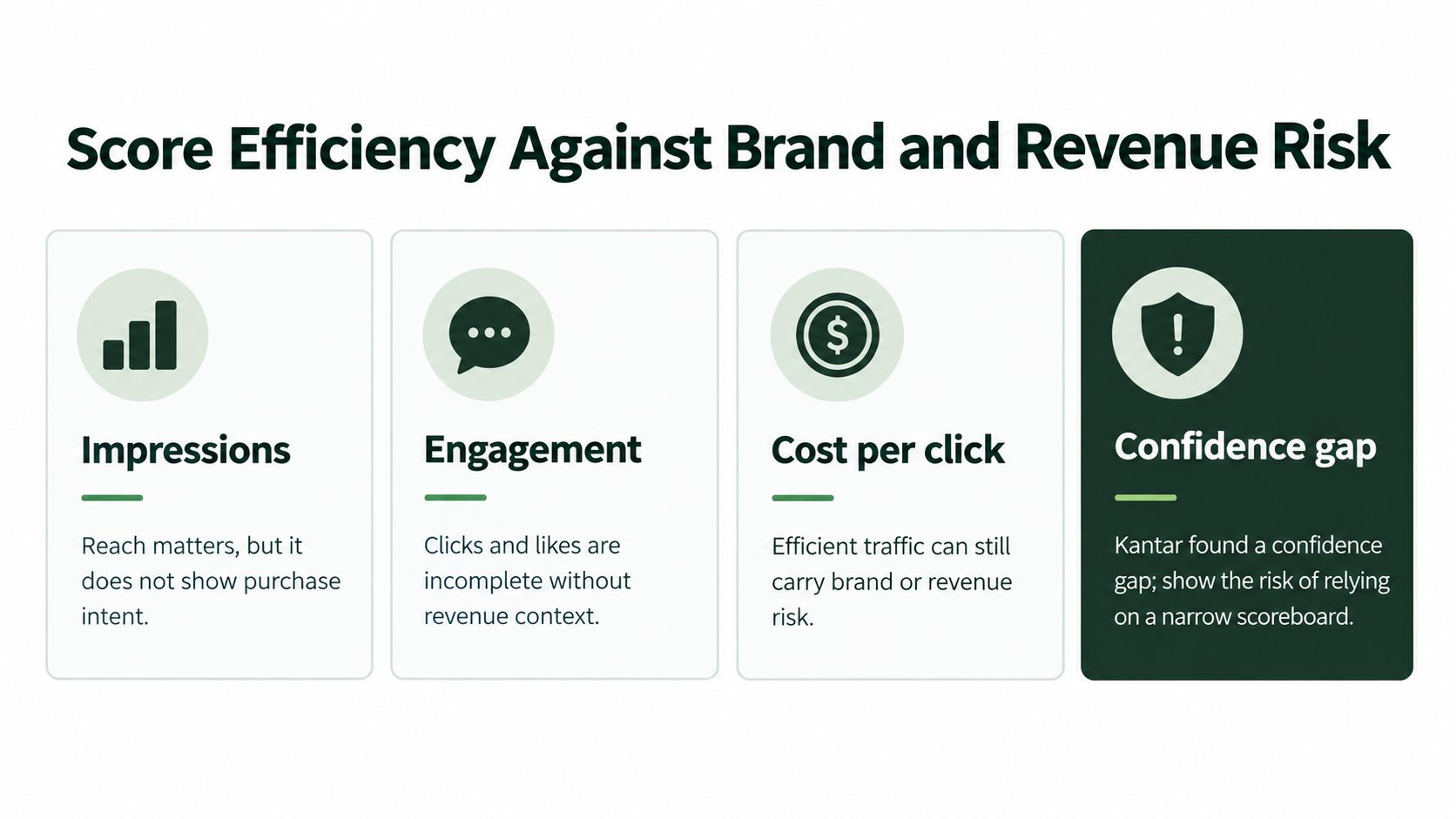
A cheap click is not a bargain until you know what sat next to the ad and what the session did afterward. Impressions, engagement, and cost per click are an incomplete scoreboard. They tell you the auction cleared. They do not tell you whether the buyer trusts you on Thursday.
Advertiser confidence and media math are badly out of line. Kantar reported that a net 26% of marketers planned to reduce X spending in 2025, while only 4% considered X ads brand-safe, compared with 39% for Google ads, as covered by WHDH on advertisers planning to pull back from X. X has also introduced inventory-sensitivity levels. Safer placements can cost more. Relaxed placements cost less. That gap is a risk discount. Treat it as a variable you measure, not as free efficiency.
Three layers on every test
Record all three before you scale. If a layer is blank, the test is not finished.
- Media efficiency: CPM, CTR, and conversion rate. This is the auction talking.
- Exposure quality: Content adjacency, suitability, geography, and whether the audience matches the conversation you validated.
- Business impact: Branded-search lift, assisted conversions, repeat purchase, and negative sentiment. This is the only layer that can justify more budget.
A smaller brand does not need a brand-safety department to make the call. Cap the test budget. Exclude sensitive inventory. Use third-party verification if you already pay for it. Compare incrementality with platform-attributed conversions, because the ads manager will claim credit the finance team will not recognize. If you are still learning understanding funnel KPIs with Landra, start with qualified sessions and contribution margin, then add sentiment as a veto, not as a vanity chart.
A low CPM next to polarizing content is not a win. It is a discount you may have to pay back in trust.
Apply a blunt rule. Go when efficiency holds, adjacency stays inside the sensitivity level you chose, and assisted revenue or repeat purchase shows up inside your attribution window. Hold when the click is cheap but the session is shallow or the adjacency log is messy. Stop when negative sentiment or unsuitable placements show up faster than qualified sessions. X can be a cost-efficient acquisition channel precisely because many buyers price in risk. That discount belongs on your scorecard. It does not belong in a victory slide.
Choose the Page That Finishes the Click
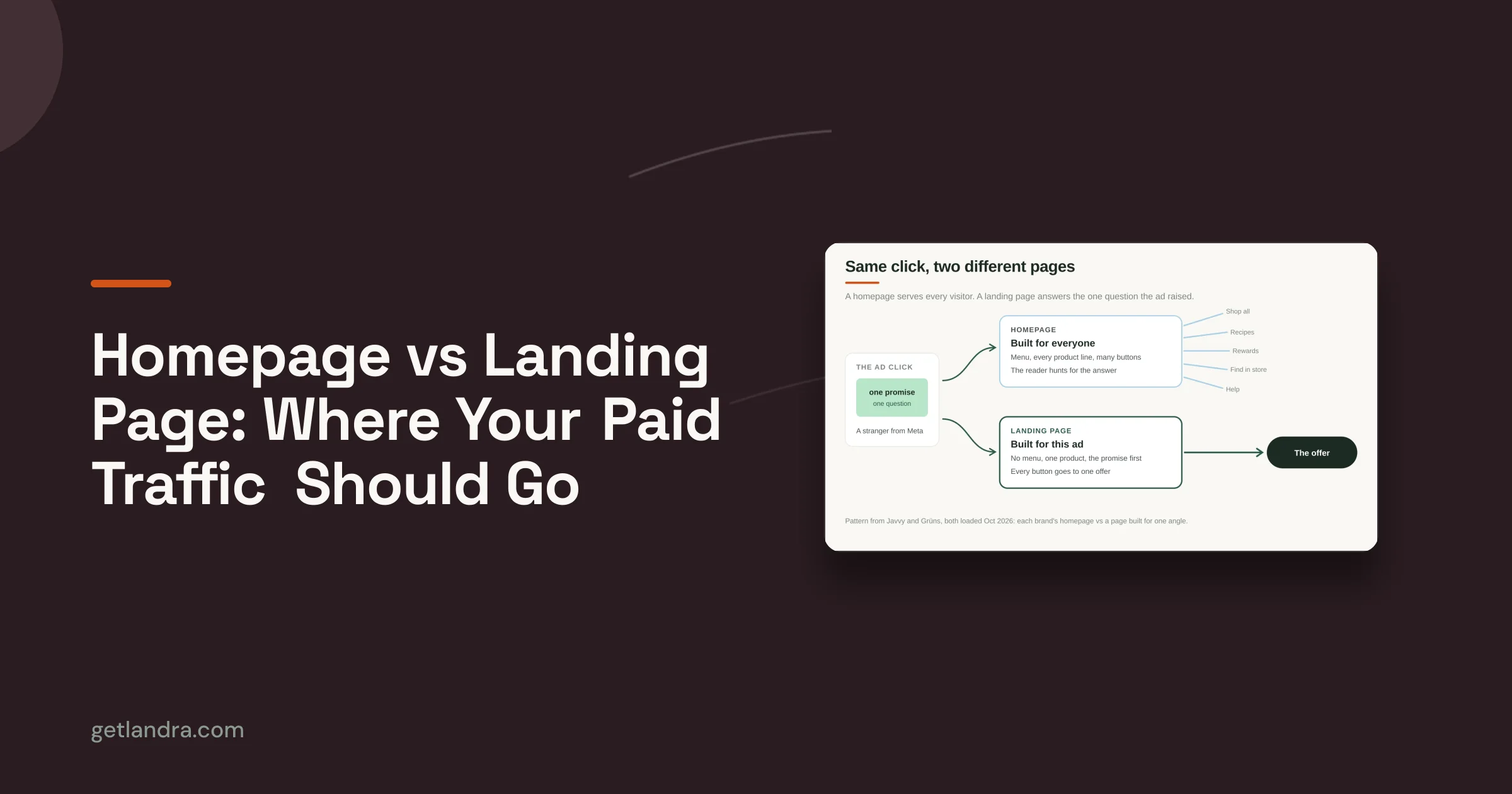
The ad's job was to earn the click from a conversation. The page's job is to finish it. Most cold X sessions arrive with a question, not with purchase intent. A product detail page is a closing argument. Deliver it too early and the reader bounces with the tab still open on the thread that brought them.
A quick look at how a pre-sell page is structured for that handoff:
Three destinations for one validated angle
Pick the route from the thread, not from habit.
Product detail page. Use it when the product is impulse, low price, and obvious in a single photo. The buyer does not need a belief shift. They need price, variant, and a buy button. If your replies are "link?" and the product explains itself, do not build a essay nobody asked for.
Problem-led or proof-led advertorial. Use it when belief is expensive. Skepticism about ingredients, results, fit, or "I've been burned before" means the PDP's gallery will not carry the sale. The page should open on the objection you already answered in public, then earn the product click.
Listicle. Use it when the thread is already comparing options. People stacking "best," "vs," or "worth it" do not want a single hero shot. They want the comparison they were having, with your product placed inside it.
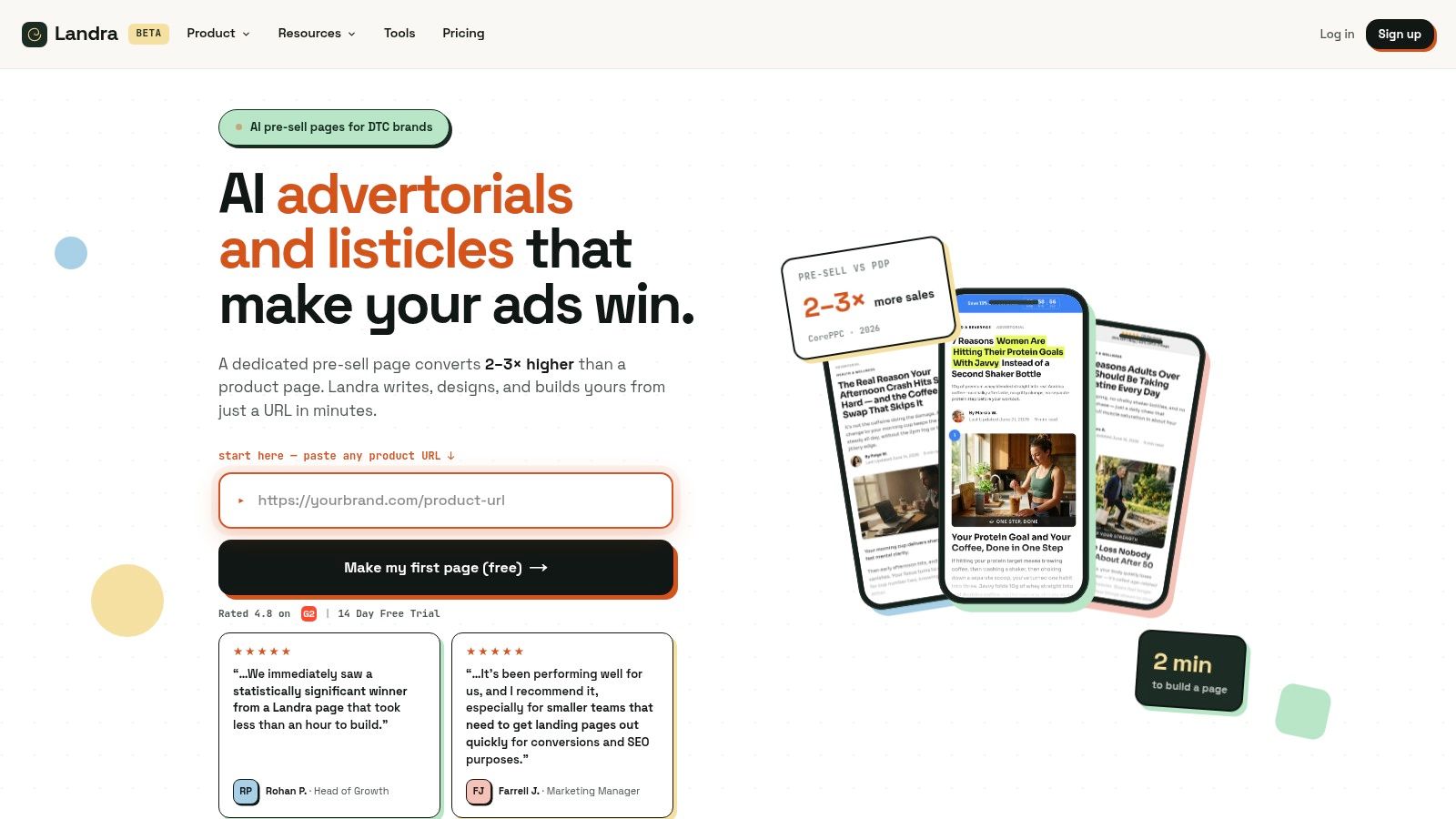
Landra's DTC landing page guide is a useful checkpoint for what that destination should contain before you spend. Landra is the practical way to build the second and third routes. It turns a product URL into an editable, mobile-first advertorial or listicle, and a non-technical team can publish to Shopify, a Landra URL, Webflow, or HTML, then duplicate variants without waiting on a developer. Waiting on an agency page often means a quote in the thousands and a one-to-two-week queue. Sending every ad to the PDP is faster and usually weaker when the click came from an argument, not from a shopper who already decided.
On-site benchmarks that claim a large conversion lift versus product pages, or a sharp CAC drop when the same ads hit an advertorial, are claims to test on your catalog. They are not a promise. Your margin, your offer, and your adjacency settings decide whether the lift is real.
See how a matched pre-sell page walks a cold click through the objection before the product:
This week, pick the conversation that already produced specific questions. Build one matched pre-sell variant. Run it against the PDP with the same promise, geography, budget, and attribution window from the campaign setup above. Keep the winner only if qualified sessions and contribution margin improve. If they do not, the angle was not ready for paid reach, and more boosting will not fix the page.
Landra builds the advertorials and listicles that turn a validated X conversation into a mobile-first pre-sell page, instead of dumping cold clicks on a product page that cannot finish the argument. You can generate a draft from a product URL, edit it inline, and publish to Shopify, Webflow, a Landra URL, or HTML without an agency queue. If you are ready to test one matched page against your PDP this week, start at Landra.