
There are two ways to write about a product. One makes people feel something about your brand over time. The other makes someone who has known you for four seconds do something right now: click, add to cart, buy. For a DTC brand spending real money on cold traffic, the second one is the difference between an ad that pays for itself and one that quietly drains the account.
That second kind of writing has a name and a hundred years of proof behind it: direct response. This guide covers what it is, the principles the old masters actually proved, the frameworks worth memorizing, and (the part most guides skip) how to map all of it onto the DTC pages cold traffic actually lands on.
What is direct-response copywriting?
Direct-response copywriting is copy engineered to produce an immediate, measurable action (a click, a lead, a sale) and judged solely by whether it drives that action at a profitable cost. Brand copywriting does a different job: it shapes long-term feeling and recall, and is measured in reach and sentiment. Direct response is measured in conversion rate and cost per acquisition.
The cleanest way to feel the difference is to read the two side by side. Brand: "Helping people move, one step at a time." Direct response: "Get fit in 30 days — start your free trial." One builds equity for later. The other asks for a decision now and can be tested, tracked, and improved tomorrow (Shopify, 2024). Both have their place, but only one is built to convert a stranger in a single paid visit.
Why direct response wins on cold DTC traffic
On cold paid traffic, direct response wins because the economics leave no room for anything else. A cold visitor doesn't know you, probably won't come back, and isn't being measured in brand sentiment. Every click was paid for, so the page has to earn the order in that session or the spend is gone. That's a direct-response problem by definition.
The math makes it concrete. DTC acquisition on Meta and TikTok is now a creative-and-copy fight more than a media-buying one. At typical margins a ~2:1 return on ad spend is roughly break-even, and 3:1+ is the working target (Creatify, 2026). Pretty brand copy doesn't move that number; copy that names a problem, proves a claim, and asks for one action does. It's why DTC brands hire specifically for it: "Senior Direct Response Copywriter (Supplements, DTC, Meta Ads, Landing Pages)" is a real, common job title, not a relic.
The five stages of awareness: the master key
If you learn one thing from the canon, learn this. In Breakthrough Advertising (1966), Eugene Schwartz defined five stages of customer awareness, and they decide both what you say and which page format you say it on:
- Unaware: doesn't feel the problem yet.
- Problem-Aware: feels the pain, but doesn't know solutions exist.
- Solution-Aware: knows solutions exist, but not that yours does it.
- Product-Aware: knows your product, but isn't convinced.
- Most-Aware: ready to buy; just needs the offer.
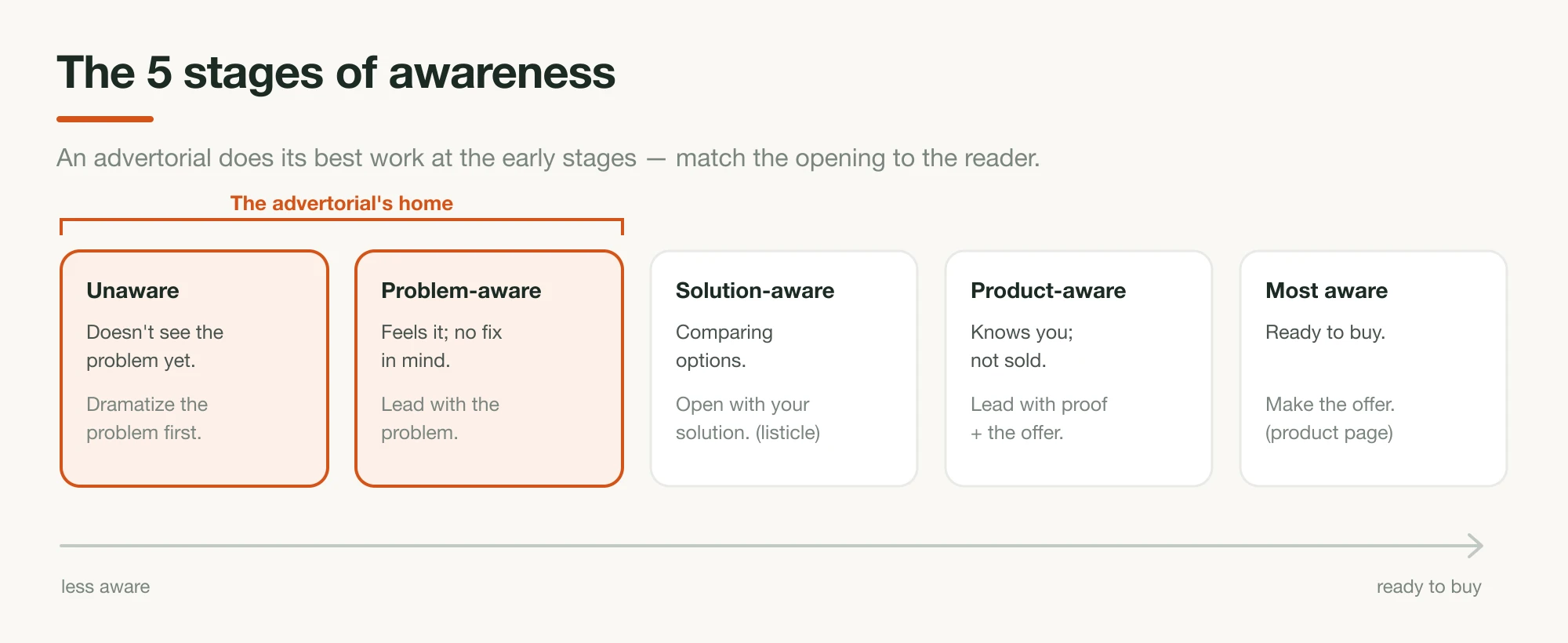
Here's the part that makes it the master key for DTC: cold paid traffic is mostly problem- and solution-aware. Those readers aren't ready for a product page — they need education and trust first. That's exactly the job of a pre-sell page: an advertorial for the problem-aware narrative, a listicle for the solution-aware comparison. Send a most-aware buyer straight to the offer; send a problem-aware stranger through a page that warms them up. Match the format to the stage and the copy half-writes itself. The five stages of awareness guide unpacks the full framework, including the stage-to-page-format map and the market-sophistication axis that picks your claim.
Schwartz also gave us the discipline's deepest principle: copy can't manufacture desire. "Copy cannot create desire for a product," he wrote, "it can only take the hopes, dreams, fears and desires that already exist in the hearts of millions of people, and focus those already existing desires onto a particular product." Gary Halbert said the same thing more bluntly: asked what edge he'd want selling hamburgers, he answered, "the only advantage I want is a starving crowd." Pick a market with real demand; channel it, don't conjure it.
The principles the DR canon proved
The old direct-response masters tested their way to a handful of durable rules. The ones worth internalizing:
- The headline is the ad. David Ogilvy, in Confessions of an Advertising Man, put it: "On the average, five times as many people read the headline as read the body copy. When you have written your headline, you have spent eighty cents of your dollar." Most of your conversion is decided before anyone reads a word of body copy.
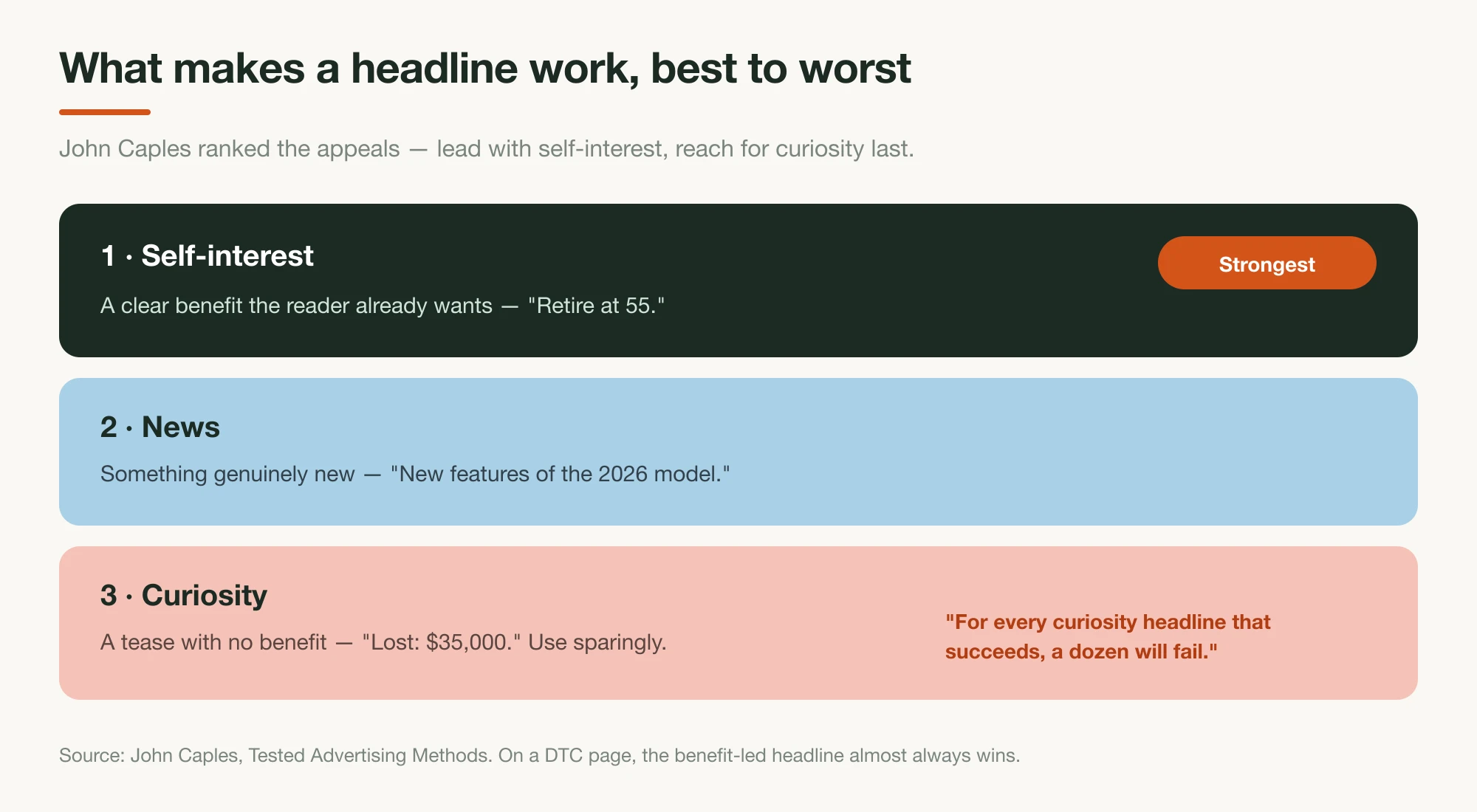
- Self-interest beats curiosity. John Caples ranked what makes a headline work, best to worst: self-interest (a benefit the reader wants), then news, then curiosity, and warned that "for every curiosity headline that succeeds, a dozen will fail." Lead with the benefit, not a clever tease.
- Every line sells the next line. Joseph Sugarman's "slippery slide": the headline exists to get the first sentence read, the first sentence exists to get the second read, and so on. Friction anywhere, a confusing claim or a wall of text, and the reader is gone.
- It only counts if you can measure it. Claude Hopkins built the whole discipline on Scientific Advertising (1923): copy exists to sell, and must be tested. That's the direct ancestor of DTC creative testing — run variations, keep the winner.
And the persuasion layer underneath all of it is Robert Cialdini's seven principles: reciprocity, commitment & consistency, social proof, authority, liking, scarcity, and unity. Every testimonial wall (social proof), expert endorsement (authority), and "only while supplies last" (scarcity) on a DTC page is one of these, applied.
The frameworks worth memorizing
Frameworks are just shortcuts to the same job; they keep you from forgetting a step under deadline. The four that earn their keep:
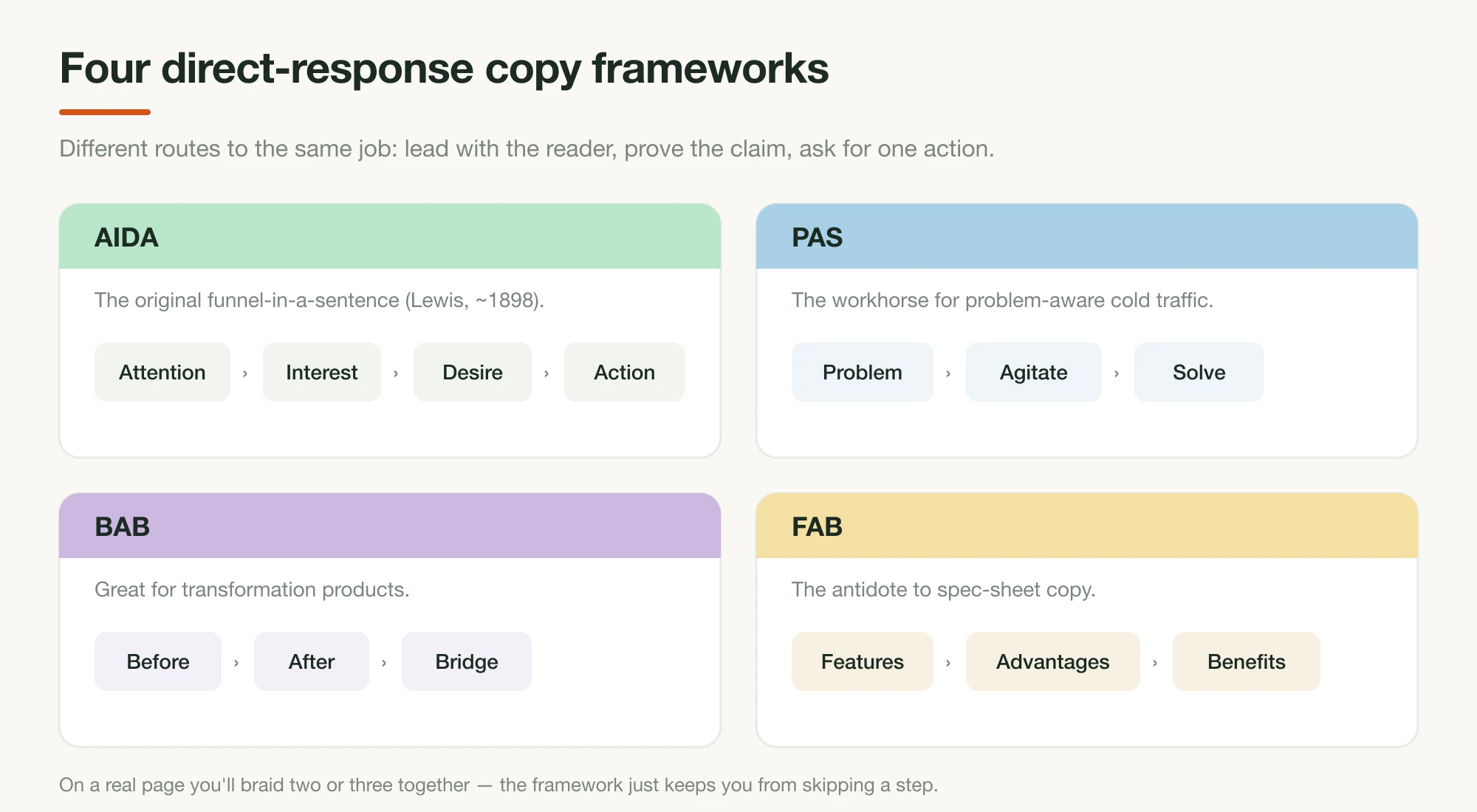
- AIDA: Attention → Interest → Desire → Action. The original funnel-in-a-sentence, commonly attributed to E. St. Elmo Lewis around 1898. Good default structure for a full page.
- PAS: Problem → Agitate → Solve. Name the pain, make the reader feel its cost, then present the product as relief. The workhorse for problem-aware cold traffic.
- BAB: Before → After → Bridge. Paint today's pain, paint the desired state, position your product as the bridge between them. Great for transformation products.
- FAB: Features → Advantages → Benefits. Translate what the product has into why it matters into how the reader's life improves. The antidote to spec-sheet copy.
(PASTOR and the 4 Ps, meaning Promise, Picture, Proof, Push, are longer-form cousins for sales pages.) Don't agonize over which to pick; on a real page you'll braid two or three together. The advertorial templates guide shows them assembled into full copy.
Write for how people actually read
Here's the humbling research every DTC writer should tattoo somewhere. Per the Nielsen Norman Group, users have time to read at most 28% of the words on an average page visit, and "20% is more likely" (Jakob Nielsen, 2008, across 45,000+ page views). They don't read; they scan, in an F-shaped pattern: sweeping across the top, then down the left edge.
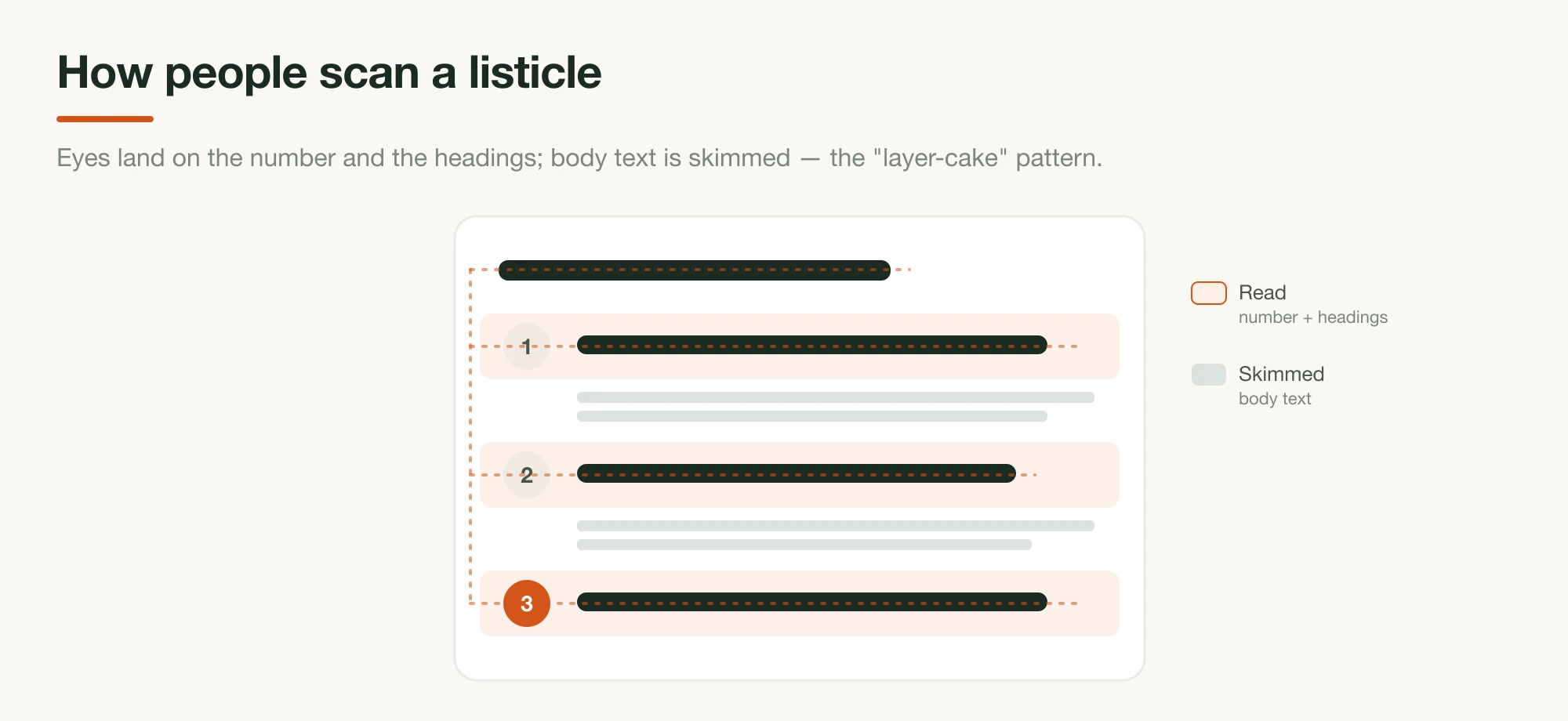
The implication for direct response is total: your headline, subheads, first sentences, and bolded phrases carry the argument, because those are the words that get read. A reader who only skims your headings should still get the pitch and the offer. In one CXL test, a clearer benefit-led headline beat its runner-up by 16.2% (CXL), a single case study, but it points the right way: front-load the benefit, and write so the page works at a glance.
Putting it together on a DTC page
Stack the pieces and a high-converting DTC page falls out: pick the awareness stage your cold traffic is in, choose the matching format (advertorial for problem-aware, listicle for solution-aware), lead with a self-interest headline, run PAS or BAB through the body, prove every claim with a Cialdini lever, format it for scanners, and close on one clear action. None of it is new. It's the same direct-response discipline Hopkins was testing in 1923, pointed at a Meta ad in 2026. (And it translates directly into prompt constraints if AI drafts your copy; see 10 Claude prompts for advertorial copy.)
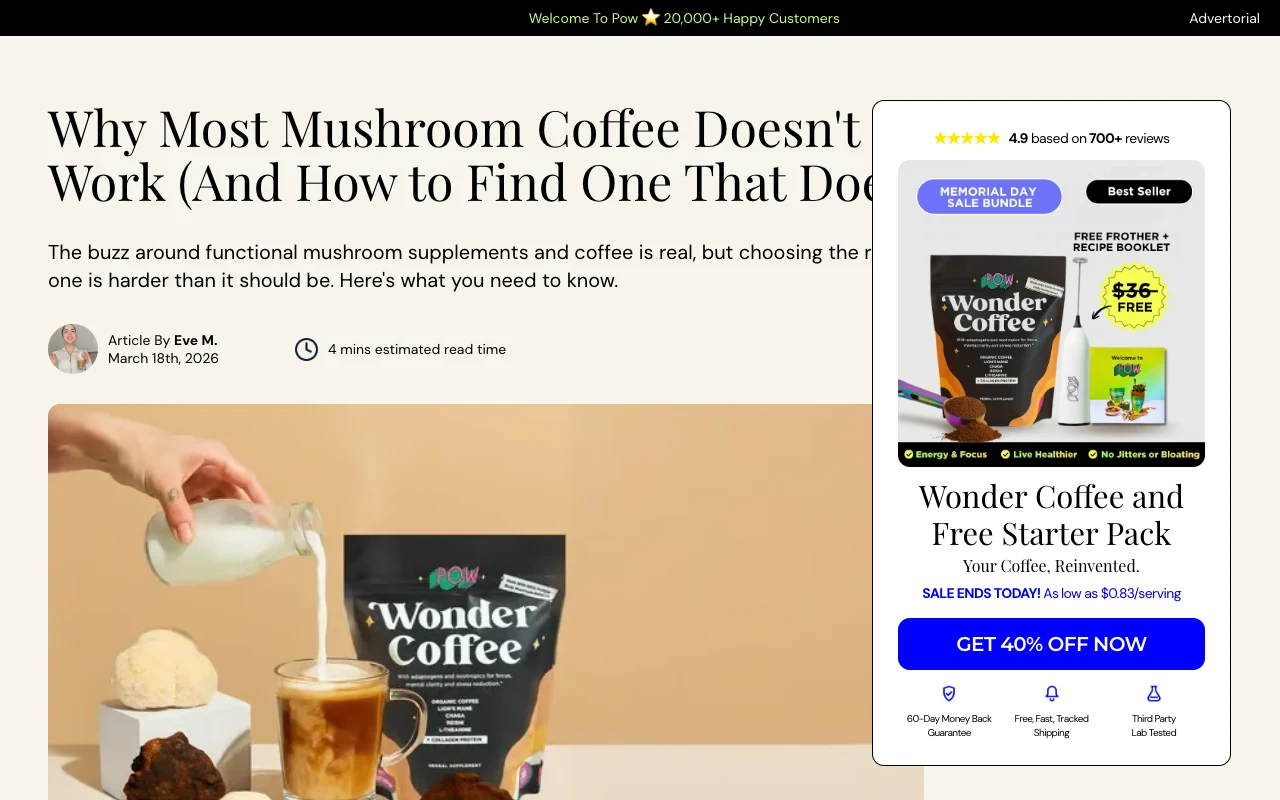
You can see every principle on a page like the one above: a self-interest headline doing 80% of the work, a PAS narrative through the body, social proof and authority stacked before the ask, and exactly one call-to-action. Read only the headings and you still get the pitch — because the writer assumed you would.
The catch is that doing all of that, by hand, for every product and audience, is slow, which is exactly the gap Landra closes. You give it the product URL and the audience; it analyzes your brand and product to understand them, then builds the conversion-optimized advertorial or listicle — copy structured on these principles, the page, and the images — tuned to the stage of awareness you're targeting. The discipline is built into how it generates, so you get the direct-response page without writing it line by line. Paste your brand URL and watch it build one.
Frequently asked questions
What is direct-response copywriting?
Direct-response copywriting is copy written to produce an immediate, measurable action — a click, a signup, a purchase — and judged solely by its ability to drive that action at a profitable cost. It contrasts with brand copywriting, which builds long-term recall and is measured in sentiment and reach rather than revenue today.
How is direct response different from brand copywriting?
Direct response asks for a specific action now and is measured by conversion rate and cost per acquisition. Brand copywriting builds awareness and feeling over time and is measured by reach and sentiment. On cold paid traffic, direct response is what pays back the ad spend in the same session.
What are the best direct-response copywriting frameworks?
The most useful are AIDA (Attention, Interest, Desire, Action), PAS (Problem, Agitate, Solve), BAB (Before, After, Bridge), and FAB (Features, Advantages, Benefits). They are shortcuts to the same job: open with the reader, build desire with proof, and ask for one clear action.
What are the five stages of customer awareness?
From Eugene Schwartz: Unaware (no problem felt), Problem-Aware (feels the pain, no solution known), Solution-Aware (knows solutions exist, not yours), Product-Aware (knows your product, not convinced), and Most-Aware (ready to buy, needs an offer). The stage decides your message and page format.
Does direct-response copywriting still work for ecommerce?
Yes — arguably more than ever. DTC acquisition on Meta and TikTok is a creative-and-copy fight, and the pre-sell pages, advertorials, and listicles that warm cold traffic are direct-response copy applied to a landing page. The discipline is exactly what converts paid clicks into profitable orders.